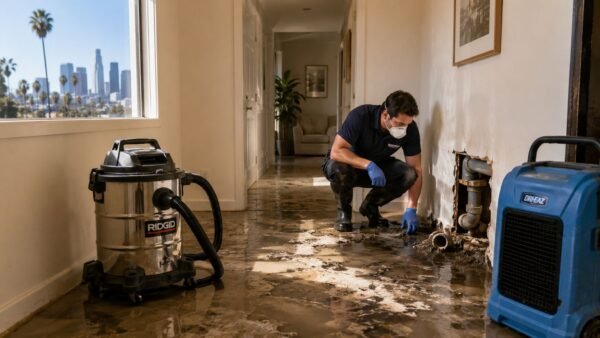

A winter storm stalls over Los Angeles overnight. Runoff starts moving off a hillside lot in Sherman Oaks, street drains back up, the power blinks, and the lower level takes on water before anyone hears an alarm. I see versions of that call every year after atmospheric river events, especially in homes with a sump pit, a working primary pump, and no backup power plan.
A battery operated sump pump is not just another add-on for a wet basement. For Los Angeles homeowners, it is part of a larger loss-control strategy that protects finishes, contents, and the insurance claim you would rather avoid filing in the first place. In neighborhoods with below-grade living space, older drainage systems, or hillside runoff exposure, the risk shows up fast and often with little warning.
The common failure point is simple. The primary pump depends on utility power, and storms are exactly when utility power becomes less reliable. If water enters the pit while the house is dark, the question becomes how long the system can still move water, how much water is entering, and whether the discharge path stays clear.
That is why backup planning should happen before the next storm watch, not after standing water reaches drywall and baseboards. A battery backup pump works best as one layer in a broader basement water damage prevention plan, alongside grading, drainage, alarms, maintenance, and a realistic response plan for severe weather.
This guide looks at battery backups the way a restoration professional does. Not as a product box on a shelf, but as a practical safeguard for Los Angeles homes that face winter storm runoff, localized flooding, and expensive interior water damage when one point of failure turns into a larger loss.
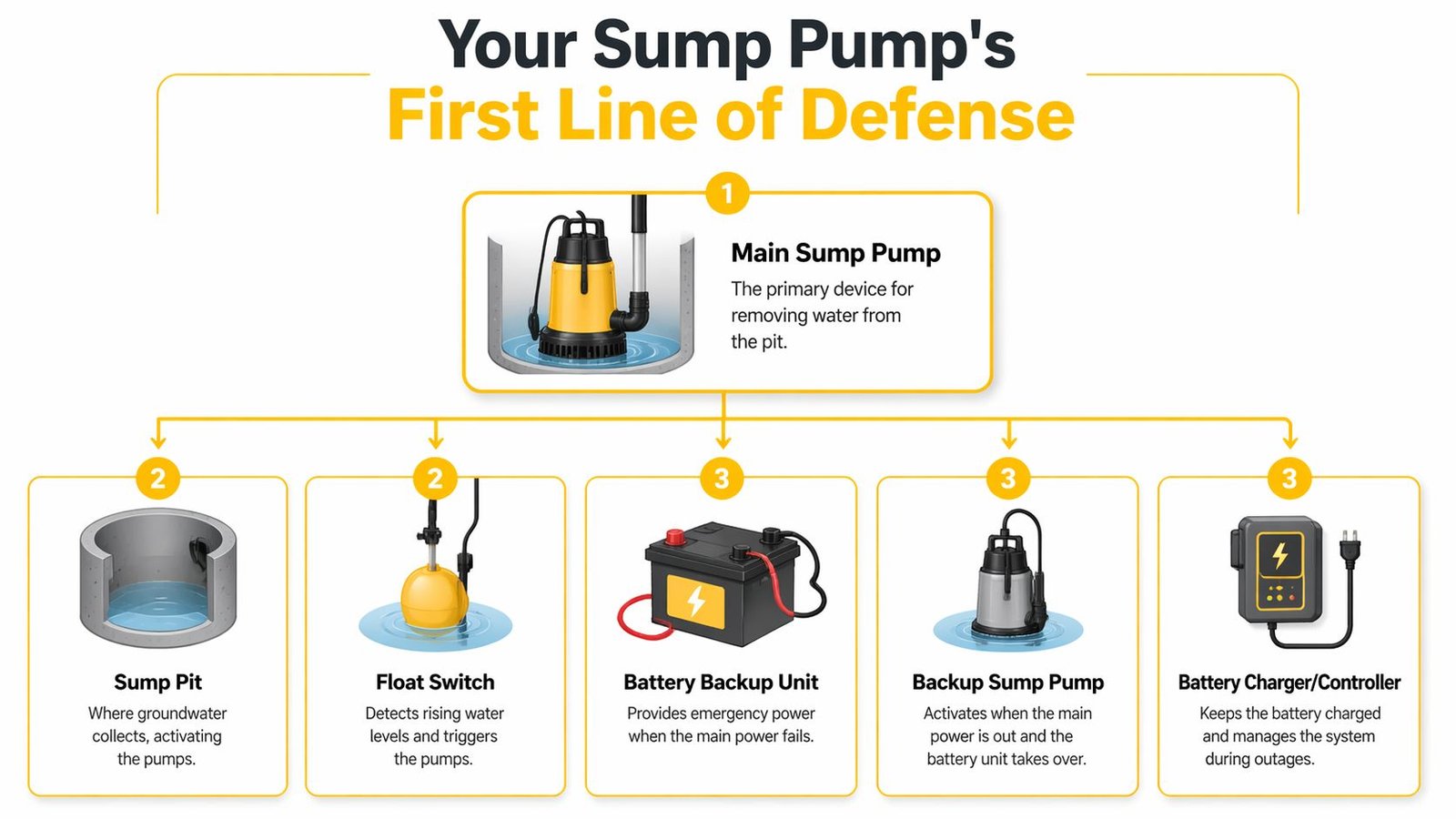
Your Sump Pump's First Line of Defense
A winter storm hits Los Angeles overnight. Runoff starts loading the drain system, the sump pit rises, and the one part of the setup that homeowners rarely think about becomes the deciding factor. Can the system still move water if the primary pump stalls, trips, or loses power?
A battery operated sump pump has one job. It gives your sump pit a second way to remove water automatically when the main pump cannot.
In restoration work, I do not treat a backup pump as a convenience item. In a finished lower level or any space with drywall, flooring, stored contents, or HVAC equipment nearby, it is part of loss control. A few hours of uncontrolled water at the pit can turn into category concerns, swollen baseboards, insulation removal, and an insurance claim that may not be worth filing.
The four parts that matter
Most residential battery backup systems depend on four working components:
- The DC backup pump removes water when the primary AC pump is offline or overwhelmed.
- The deep-cycle battery supplies stored power, usually through a 12V setup.
- The float switch detects rising water and signals the backup pump to start.
- The controller and charger keep the battery ready and alert you to charging or system problems.
If one of those parts fails, the backup may not respond when the pit rises. That is the trade-off homeowners need to understand. Buying a battery backup system is only the first step. Reliability comes from proper setup, testing, and maintenance.
Why homeowners in Los Angeles should care
Los Angeles is not Chicago, but that does not make sump backups optional in the right home. I see the need most often in properties with below-grade space, older drainage layouts, hillside runoff exposure, and garages or lower rooms that sit below surrounding grade. During winter storm periods, those homes can take on water fast.
Battery backup systems also solve a very specific problem. The primary pump may be in good condition and still fail to protect the house if utility power drops at the wrong time. That is why a backup belongs in the same conversation as exterior drainage corrections, water alarms, and a documented basement water damage prevention plan.
Practical rule: If your home depends on a sump pit, the system needs a secondary pumping method that works without house power.
That matters for insurance as well. Carriers generally expect homeowners to maintain the property and act reasonably to prevent repeat losses. A backup pump does not guarantee coverage, but it does show that the home has a basic mitigation measure in place for a predictable failure point.
What a battery backup does not solve
A backup pump buys time. It does not correct poor grading, a blocked discharge line, undersized drainage, or foundation water entry. It also does not fix a neglected sump pit full of debris or a primary pump that should have been replaced a year ago.
Professional-grade protection comes from the full system working together. The backup pump covers one failure point, and an important one, but it should sit inside a broader water management plan built for your property and your storm exposure.
How a Backup Sump Pump System Actually Works
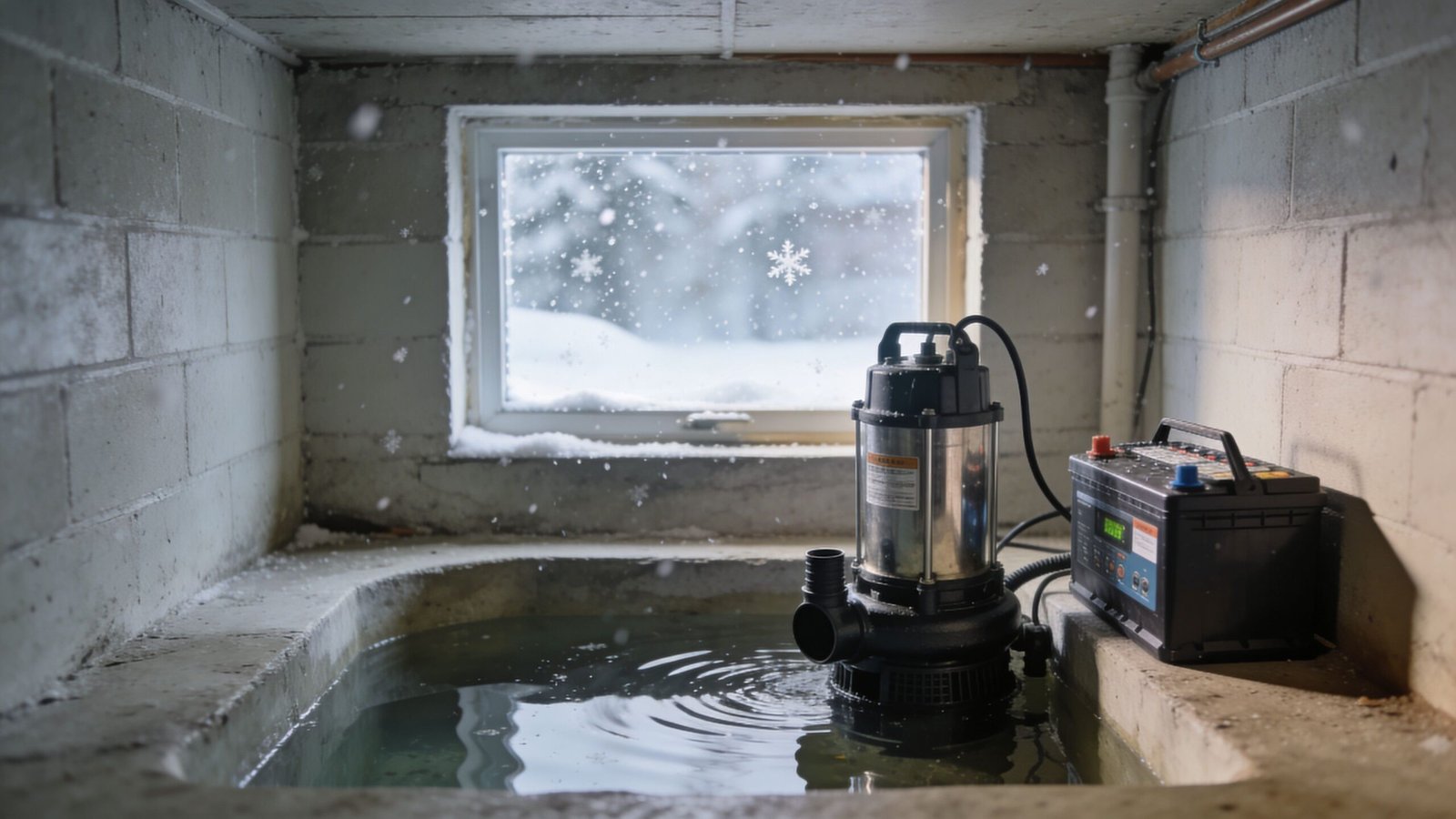
A winter storm hits the San Fernando Valley overnight. Soil around the foundation becomes super-saturated, hydrostatic pressure rises against the walls and slab edges, and the sump pit starts filling hard. Then utility power drops.
Your primary pump may still be in working condition, but an AC pump without house power does nothing. In Los Angeles, that failure often happens during the same storm cycle that creates the highest groundwater and runoff load.
The handoff from primary pump to backup
A properly installed backup system is always on standby. The battery stays connected to a charging unit. The controller monitors system status. A separate float switch or sensor watches the water level in the pit.
Once the water rises to the backup trigger point, the controller sends power from the battery to the backup pump. The pump then pushes water out through its discharge line or a shared discharge configuration, depending on how the system was installed.
That response needs to be automatic.
In actual loss events, homeowners are often asleep, away from the property, or dealing with a broader outage affecting the whole neighborhood. By the time someone notices standing water, drywall, flooring, stored contents, and lower wall cavities may already be involved.
What changes during a power outage
From the homeowner’s side, the transition is usually subtle. You may hear an alarm, see a warning light on the control box, or notice that the pit is still being controlled even though parts of the house are dark.
From my side, that is exactly what I want to see. Quiet, automatic operation prevents the kind of delay that turns a manageable pit event into a cleanup, dry-out, and claim.
Here’s a useful visual explanation of the process and common system layouts:
The parts doing the work
Most battery backup setups rely on the same core sequence:
- Power loss or primary pump failure: The main pump stops keeping up or stops running.
- Water level rises in the pit: Groundwater or runoff continues entering the basin.
- Backup float or sensor activates: The controller recognizes that the backup threshold has been reached.
- Battery power takes over: The backup pump starts discharging water.
- Alarm alerts the homeowner: Many systems signal that the backup is active or that service is needed.
Good systems also monitor battery condition. That matters because a dead or sulfated battery gives homeowners a false sense of protection. I see this mistake often in garages and utility spaces where the equipment looks installed but has not been tested in months.
Why automatic activation matters in real restoration work
Manual response plans sound fine until the event happens at 2 a.m., during a street outage, or while the homeowner is out of town. Water entry does not pause while someone looks for an extension cord, a wet vac, or a portable pump.
For Los Angeles properties, the backup pump should be treated as part of the larger water mitigation process used to reduce property damage after intrusion. It helps limit loss, protect finishes, and shorten drying time, but only if the system switches over fast enough and the discharge path is clear.
A backup pump is not just a convenience item. It is a control measure that buys time, reduces the chance of a severe water loss, and gives you a better chance of avoiding the kind of widespread damage that leads to invasive demolition and insurance disputes.
Sizing Your System for Realistic Runtimes
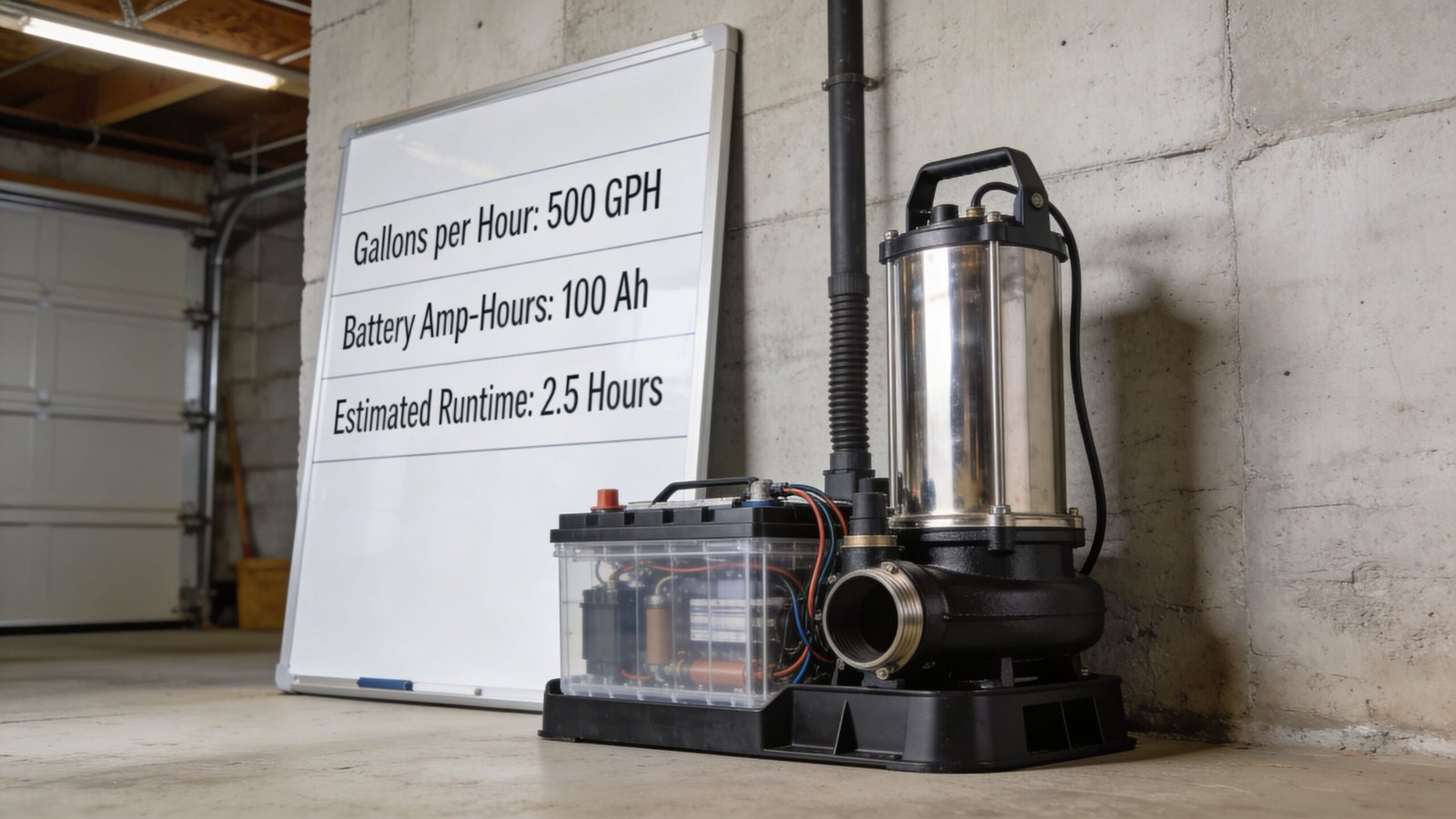
Runtime depends on four factors: battery capacity, pump amperage draw, water inflow volume, and cycle frequency. Homeowners usually focus on the battery label first, but in actual storm conditions, inflow rate and pump workload are what shorten protection fastest.
Start with the basic math
The starting point is simple. Compare the battery's amp-hour rating to the pump's amp draw, then treat that result as a rough ceiling, not a promise. A larger battery can extend runtime, but only if the pump is matched to the pit and the charging system is keeping that battery ready.
In the field, theoretical runtime rarely survives contact with a hard rain. Battery age, colder garage temperatures, vertical lift, pipe friction, and controller losses all reduce what you receive. That gap matters in Los Angeles because many homeowners only discover the limitation during a winter storm, after the primary pump has already failed or utility power is out.
A better sizing approach is to ask a more useful question: how long does the backup need to control water at your house, under your worst realistic conditions?
Why duty cycle changes everything
Backup pumps usually do not run continuously. They cycle on, clear part of the pit, shut off, and start again as water returns. CyberPower's explanation of sump pump backup runtime and duty cycle is useful here because it shows how intermittent operation can stretch runtime compared with nonstop pumping.
That is why two houses with the same battery can get very different results.
A lightly cycling pit may stay protected for a meaningful period. A pit taking on water fast can drain the battery much sooner, especially if the backup pump is undersized or pushing water through a long discharge run. I see this often in homes where the owner bought by advertised runtime instead of looking at actual water entry patterns.
Field note: "Runs for days" only applies when the pump gets rest between cycles. During heavy inflow, runtime can collapse fast.
What cuts runtime in the real world
Three conditions usually decide whether a backup system buys enough time to prevent a loss:
| Runtime factor | What it means for the homeowner |
|---|---|
| Water inflow rate | Faster inflow forces longer and more frequent cycles, which drains the battery sooner. |
| Battery condition | An aging or poorly maintained battery delivers less runtime than its original rating suggests. |
| Lift and discharge conditions | Higher lift, smaller pipe, or a restrictive discharge path makes the pump work harder each cycle. |
Site conditions matter too. Los Angeles homes are not all dealing with the same risk profile. A hillside property, a basement or lowered utility area, poor yard drainage, or stormwater flowing toward the foundation can turn an ordinary backup setup into an undersized one. Homes investing in resilience upgrades such as home microgrid systems may have more options for outage planning, but the sump backup still has to be sized around water movement first.
Size for loss prevention, not brochure language
A backup pump is part of a mitigation strategy. The goal is not to get the longest number on paper. The goal is to keep water inside the pit long enough to avoid wet drywall, damaged flooring, microbial growth, and a claim that turns into a dispute about maintenance, flood source, or delayed reporting.
For a home with light, occasional pit activity, a standard residential battery backup may be enough. For a property that sees repeated inflow during winter storms, more reserve capacity and a stronger backup pump usually make sense. That decision should be based on pit behavior, outage history, and how much damage would occur if the system lost the battle for even a few hours.
Once water escapes containment, the job changes from prevention to restoration. Many owners underestimate how long water damage restoration can take after structural materials get wet, and that delay is exactly why realistic runtime sizing matters.
Comparing Backup Sump Pump Options
Battery systems get most of the attention, but they aren’t the only backup option. Los Angeles homeowners usually end up comparing battery-powered, water-powered, and generator-supported setups.
The best choice depends on your property, utility conditions, and tolerance for maintenance.
Backup Sump Pump System Comparison
Modern 12V DC pumps can be stronger than many people assume. Some models reach 1,400 gallons per hour at a 9-foot lift, which is nearly double the 800 GPH common in many retail backup units, according to RadonSeal’s battery sump pump performance overview. That’s one reason battery systems remain the practical default in many homes.
| System Type | Pros | Cons | Best For |
|---|---|---|---|
| Battery backup | Automatic operation, works during grid outages, usually fits existing residential plumbing without major changes, strong performance available in better systems | Limited by battery condition and runtime, requires ongoing maintenance and eventual battery replacement | Most homes with a sump pit that need dependable backup during storms |
| Water-powered backup | No battery to maintain, can keep working as long as water supply conditions allow | Depends on municipal water pressure and plumbing suitability, not ideal for every home, can be a poor fit where supply reliability or configuration is questionable | Homes with appropriate water pressure and plumbing where battery maintenance is a concern |
| Generator-supported setup | Can support broader house systems, not just the pump | More expensive and more involved to install and manage, not a dedicated sump-only solution, slower to justify if the main concern is pit overflow | Homes already investing in whole-home emergency power |
What usually works best in Los Angeles
For most residential properties, battery backup wins because it’s independent of city water pressure and more practical than building a whole-house emergency power strategy around one flood risk.
Water-powered systems can be useful in the right property, but they’re more conditional. Generator-supported systems make sense when homeowners are already planning broad electrical resilience, and some owners exploring energy resilience look into home microgrid systems for backup power planning. That’s a larger decision than sump protection alone.
The best backup is the one your house can support consistently, not the one that sounds impressive in a product roundup.
For a home with a conventional sump pit and a clear flooding exposure, battery backup is usually the cleanest answer.
Professional Installation vs DIY Considerations
A battery backup sump pump is one of those systems that looks simple until you start listing the ways it can fail.
Homeowners often see a pump, a battery, and a few fittings and assume it’s a manageable weekend project. Sometimes it is. But the cost of getting one detail wrong is water on the floor when the system is finally tested under real pressure.
Where DIY installs go wrong
The most common failures aren’t dramatic. They’re small installation errors that don’t show up until the storm arrives.
- Bad check valve placement can allow backflow and repeated cycling.
- Poor discharge integration can create restrictions, air-lock conditions, or weak flow.
- Unsafe battery setup can leave the battery in a bad location, unstable housing, or poor ventilation.
- Questionable electrical work can create nuisance failures or safety problems near moisture.
Los Angeles homes add another layer. If a property is in a seismically active area, equipment should be secured and laid out with movement in mind. A loose battery box or poorly supported piping isn’t just sloppy. It’s another failure point.
Why electricians and plumbers matter here
Backup pump installations touch both plumbing and electrical safety. That’s where many DIY plans drift from simple to risky.
If you’re thinking through outlet placement or protection near utility areas, it helps to understand how ground fault circuit interrupters (GFCIs) protect circuits in wet-prone locations. That doesn’t replace licensed electrical work, but it does show why wet-area protection standards matter around sump equipment.
What professional installation buys you
Professional installation isn’t about making the setup look cleaner. It’s about making sure the system activates, pumps, discharges, alarms, and recharges the way it should.
A proper install typically includes:
| Installation concern | Why it matters |
|---|---|
| Battery placement and ventilation | Protects the battery and supports safe operation |
| Discharge configuration | Reduces the chance of poor flow or return water |
| Control and alarm setup | Helps the homeowner know when the system needs attention |
| Secure mounting and routing | Lowers failure risk from vibration, impact, or movement |
If the system fails because the install was rushed, the homeowner doesn’t save money. They just delay the bill until water damage makes it much larger.
Your Maintenance and Troubleshooting Checklist
The first hard rain of a Los Angeles winter is a bad time to learn your backup pump has a dead battery or a stuck float. By the time water shows up at the slab edge or starts wicking into stored contents, the problem has already moved from prevention to cleanup.
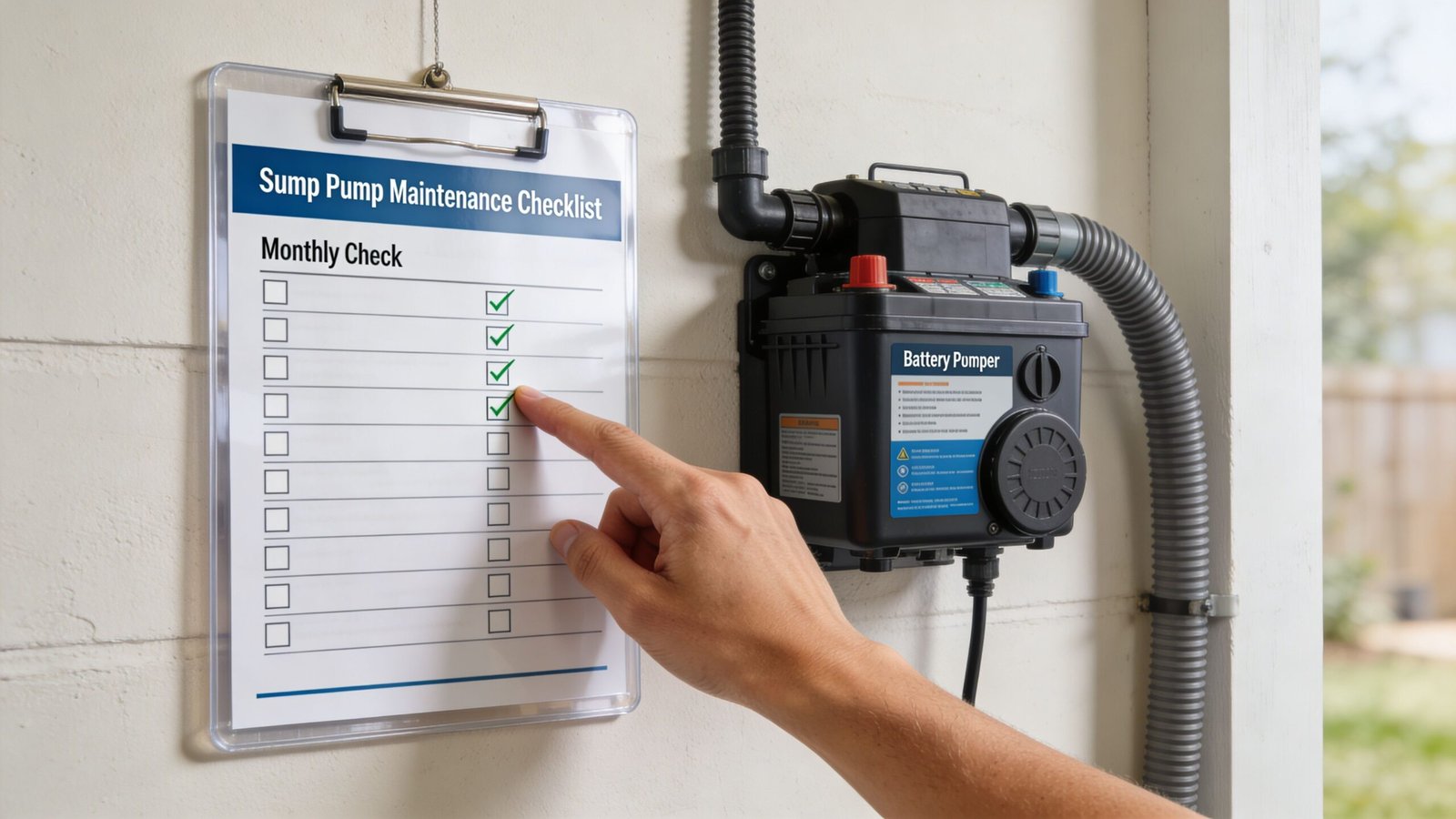
Battery operated sump pumps need routine attention. In restoration work, I see the same preventable failures over and over: corroded terminals, disconnected chargers, debris binding the float, and alarms that were silenced months earlier and forgotten. A backup system only protects the property if it can start, pump, and alert you under real conditions.
Monthly and seasonal checks
Check the system before storm season, then keep a simple monthly habit during wetter periods.
- Run a live test: Add water to the pit and confirm the backup pump activates, the alarm sounds, and the controller responds normally.
- Inspect the battery connections: Look for corrosion, loose terminals, damaged wiring, or moisture around the battery box.
- Check the pit and float: Remove debris, confirm the float moves freely, and make sure nothing can jam the switch.
- Watch the discharge performance: Water should exit cleanly without obvious restriction, surging, or flow returning to the pit.
- Listen for unusual cycling: Short cycling usually points to a switch problem, discharge issue, or changing water conditions that need attention.
One missed inspection can turn a manageable equipment issue into a mitigation job.
Annual review and battery planning
The battery is a wear item. As noted earlier, replacement timing depends on the battery type, usage history, and manufacturer guidance. Homeowners should treat battery age the same way they treat smoke alarm batteries or HVAC filter schedules. Put the date on the unit, keep the manual, and replace it before reliability becomes a guess.
An annual review should also include a full water test, charger check, alarm verification, and a close look at the discharge line. If the pump struggles under load or the recharge cycle looks abnormal, get it diagnosed before the next outage or storm event.
A backup pump that has not been tested is just equipment sitting in the corner.
Quick troubleshooting guide
| Symptom | Likely issue | What to do next |
|---|---|---|
| Alarm keeps sounding | Power loss, low battery, charging fault, or controller problem | Confirm utility power, check indicator lights, and inspect battery connections |
| Pump runs weakly or slowly | Battery degradation, discharge restriction, or high lift demand | Check the discharge path and stop assuming the runtime is adequate |
| No response during testing | Stuck float, wiring issue, failed battery, or bad controller | Take the system out of service until the fault is identified |
| Frequent cycling | Float setting issue, inflow changes, or partial obstruction | Inspect the pit, switch position, and discharge behavior |
| Moisture near walls or stored contents | Water is entering beyond the pit area or drainage is failing elsewhere | Look for broader warning signs and review how to detect water leaks in walls before damage spreads |
For Los Angeles homeowners, this checklist is part of a bigger water damage prevention plan. If the system shows repeated faults, if water enters faster than the pump can manage, or if you have had a near miss already, bring in a qualified waterproofing or restoration professional before the next storm tests the system for real.
The True Cost and Value of a Backup System
A Los Angeles homeowner usually experiences the full cost of a backup system at the worst possible time. A winter storm hits, power flickers, runoff finds the weak point, and water reaches the finished lower level before anyone gets to the pit. At that point, the invoice is no longer for a pump and battery. It is for water extraction, demolition, drying, cleaning, and repairs.
That is the right frame for this decision.
What you are actually paying for
A battery backup sump pump is a controlled prevention cost. The total includes the pump, battery, charger or controller, installation labor if the setup is done professionally, and future battery replacement. Cheap systems lower the entry price, but they also tend to give up runtime, pumping power, alarm quality, and long-term reliability. In the field, those are the corners that usually matter during a real outage.
For homes with a true water-entry risk, consumer-grade pricing can be misleading.
A better question is whether the system can keep the basement or lower level dry long enough to get through the outage, the storm peak, or the delay before a contractor can respond.
What one failure can trigger
Once water gets past the pit, costs rise fast. Drywall wicks. Baseboards swell. Flooring traps moisture. Stored contents absorb contamination and odor. If the space is finished, the job often shifts from simple cleanup to a restoration project with monitoring, demolition decisions, and reconstruction scheduling.
I see homeowners focus on the pump price and overlook the exposure. The backup system is there to reduce the chance of a five-figure water loss, tenant disruption, or a claim that drags on because maintenance records are weak or the failure looked preventable.
Insurance value is part of the equation
Coverage questions matter before the storm, not after it. Policy language can treat sudden water events, seepage, drainage issues, and backup-related losses very differently. Homeowners should review whether homeowners insurance covers water damage and compare that with their actual basement or crawlspace risk.
It also helps to review broader home insurance options for Los Angeles residents so the backup system, drainage plan, and policy details are working together instead of leaving gaps.
A maintained backup system will not force an insurer to approve a claim. It does show that the owner took reasonable steps to limit avoidable damage, and that can matter when the loss is being scrutinized.
The value is not the battery on a shelf. The value is a system that runs when utility power drops and water is still coming in.
For most Los Angeles properties with a sump pit, the comparison is straightforward. You are choosing between a predictable prevention expense and the much higher cost of emergency mitigation and repairs after a preventable failure.
Protecting Your Los Angeles Property Before the Next Storm
Los Angeles homeowners don’t need constant rain to have a water problem. They need one intense storm, one power failure, and one sump pit that can’t keep up without backup power.
That’s why a battery operated sump pump deserves a place in serious property planning. It protects the house during the exact moment the primary system is most likely to fail. The right setup is sized realistically, installed correctly, and maintained on schedule. Anything less leaves too much to chance.
For homeowners and property managers, the smart move is to think beyond the product box. Review the pit, discharge path, drainage conditions, lower-level finishes, alarm setup, and overall response plan. Insurance planning belongs in that same conversation, and owners comparing policy details may want to review home insurance options for Los Angeles residents so they understand how protection and preparedness fit together.
A backup sump system is not just plumbing equipment. It’s a mitigation tool. When it’s chosen well and kept ready, it can stop a short outage from turning into a major restoration job.
Frequently Asked Questions
| Question | Answer |
|---|---|
| Can a battery operated sump pump replace my main sump pump? | No. It’s a backup system, not the primary workhorse. It’s there to protect the home when the main pump loses power or can’t respond the way it should. |
| How do I know if my home needs a high-capacity backup instead of a basic one? | Look at how quickly your pit fills during storms, how often the primary pump cycles, and whether your property has a history of seepage or runoff concentration. Homes with heavier inflow need more margin, not just a cheaper backup. |
| Are retail backup pumps enough for serious storm conditions? | Sometimes, but not always. Some higher-performing 12V DC pumps move much more water than many homeowners expect, while lower-end retail units may be fine only for lighter loads. Matching the system to your actual pit conditions matters more than buying by brand familiarity alone. |
| What’s the biggest mistake homeowners make with these systems? | They install one and assume the problem is solved forever. Most failures come from poor sizing, neglected batteries, ignored alarms, or lack of testing before storm season. |
| Should I worry if the backup alarm sounds once during a storm? | Not automatically. It may simply mean the system is doing its job. You should still check whether the battery is charging properly afterward and confirm the alarm condition clears. Repeated or unexplained alerts deserve inspection. |
| When should I call a restoration professional instead of just a plumber? | Call a restoration professional when water has already escaped the pit, reached flooring or drywall, affected contents, or created damp conditions that may lead to microbial growth. At that stage, the issue is no longer only mechanical. It’s structural and environmental. |
If you want a professional evaluation of sump backup readiness, water intrusion risk, or active flood damage, contact Onsite Pro Restoration. Their IICRC-certified team serves Los Angeles area homes and commercial properties with emergency response, water mitigation, drying, documentation, and restoration support when fast action matters most.