
A simple burst pipe plumbing repair usually costs $400 to $2,000, but the total cost of burst pipe repair often lands closer to $3,000 to $15,000 or more once water extraction, drying, repairs, and possible mold work are added. If the pipe is underground or water sat too long, the bill can climb fast.
You walk into the kitchen in Sherman Oaks or wake up in a Glendale condo, and the floor is wet, the cabinet base is swollen, and part of the wall already looks darker than it should. At that point, most homeowners ask one question first: what is this going to cost me?
The hard part is that a burst pipe is rarely just a plumbing problem. The plumber stops the leak. The restoration crew deals with the water inside the structure. Then, if materials stayed wet too long, you may also be dealing with drywall removal, flooring repairs, and mold cleanup. That's why the cost of burst pipe repair in Los Angeles can vary so widely.
In older LA homes, especially in areas like Burbank and parts of North Hollywood, hidden pipe runs, slab construction, and aging lines make the situation more expensive than people expect. The good news is that homeowners who act quickly usually limit the damage. It also helps to start cataloging belongings for insurance security early if personal items were affected, because good records make later claim conversations much easier.
Table of Contents
- Introduction A Burst Pipe Is More Than a Plumbing Problem
- Your Bill Explained A Line-Item Breakdown
- Key Factors That Drive Your Final Cost
- Sample Burst Pipe Repair Costs in Los Angeles
- Will Homeowners Insurance Cover Your Burst Pipe
- How You Can Reduce Costs and Prevent Future Disasters
- Your Los Angeles Burst Pipe Emergency Answered
- Frequently Asked Questions About Burst Pipe Repair
Introduction A Burst Pipe Is More Than a Plumbing Problem
Most homeowners think the main charge will be the pipe itself. Sometimes it is, especially if the break is exposed under a sink or behind an access panel. But in real jobs, the larger expense often comes after the water escapes into drywall, flooring, cabinets, insulation, or lower levels of the house.
That's the part people don't see coming. By the time a ceiling stain appears or baseboards start to lift, water has usually already moved beyond the pipe location.
Practical rule: The faster you stop the water and start drying, the more control you keep over the final invoice.
Los Angeles homes add their own complications. Older supply lines, crawlspaces, finished garages, and slab-on-grade construction all affect access. A simple repair in a bathroom wall is one kind of job. An underground main line issue near the foundation is a very different one.
The cost of burst pipe repair also changes based on who needs to be involved. You may need a plumber first, then mitigation technicians with extraction equipment and dehumidifiers, then a contractor for rebuild work. In some losses, insurance will want detailed moisture documentation, photos, and itemized estimates before it approves the full scope.
If you're staring at wet drywall right now, focus on two things. Stop the water, and get the affected area assessed before trapped moisture spreads further.
Your Bill Explained A Line-Item Breakdown
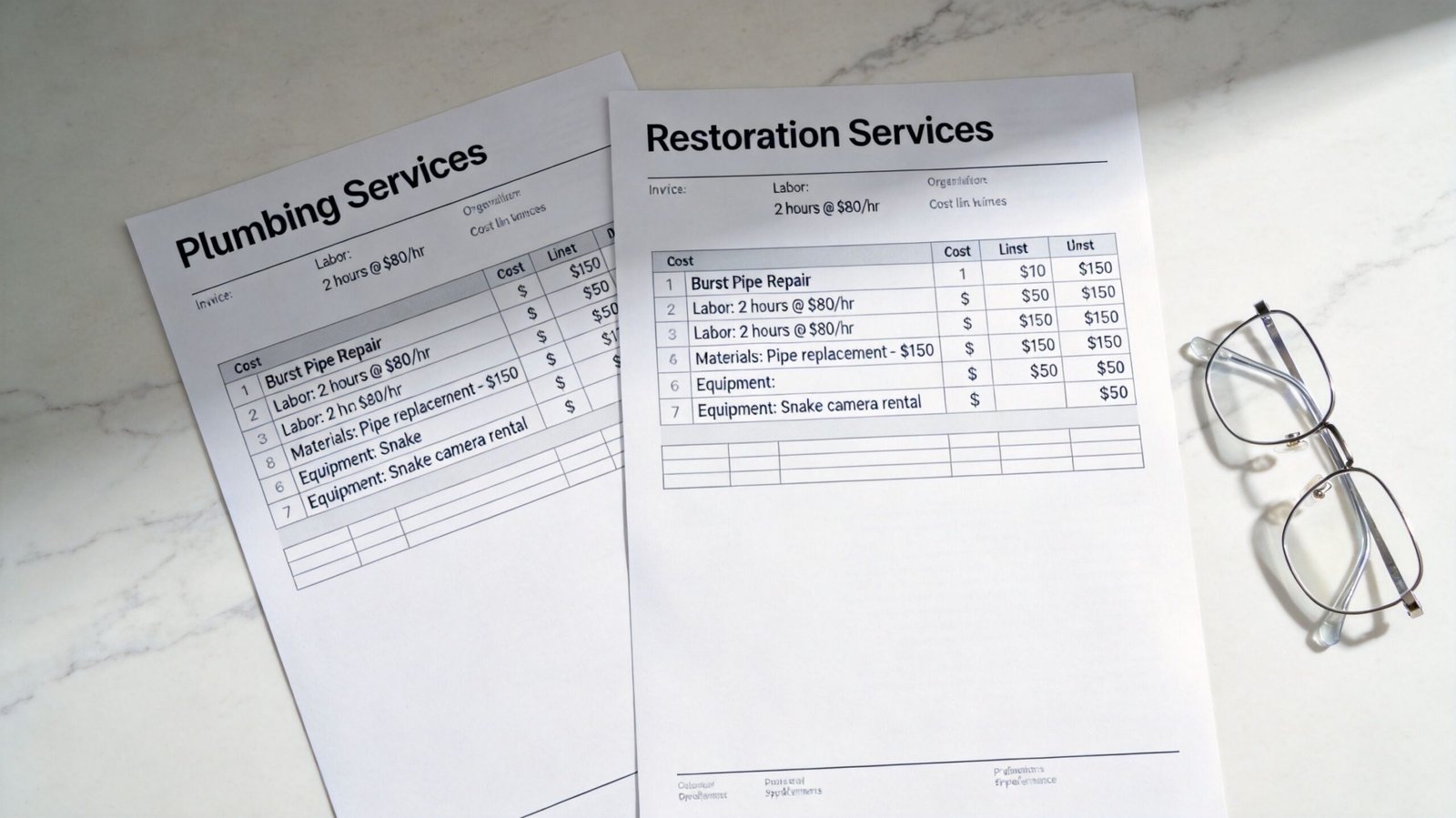
A burst pipe bill often confuses homeowners because it usually combines two separate scopes of work. One invoice covers stopping the leak and repairing the pipe. The other covers drying, cleanup, demolition, and repairs to the parts of the house the water reached.
That distinction matters in Los Angeles, where a pipe failure in an older wall, a slab-on-grade home, or a multi-level layout can trigger restoration costs that exceed the plumbing repair itself.
The plumber bill is only the first bill
The average cost to repair a burst pipe ranges from $400 to $2,000, according to Angi's burst pipe repair cost guide. That figure often reflects the plumbing side only. Angi also reports that labor makes up about 80% of that initial expense, with plumbers charging $45 to $200 per hour plus trip fees of $50 to $300.
In real jobs, material cost usually is not the main driver. Access is. Opening a wall, tracing the damaged section, shutting down the line, and making the repair safely often cost more than the pipe itself. Angi also notes combined materials and labor of about $150 to $250 per linear foot, which helps explain why a short exposed repair is very different from replacing a longer hidden run.
A few common pricing patterns show up again and again:
- Accessible repairs cost less: Exposed lines in kitchens, laundry rooms, or vanity walls are usually simpler to reach and faster to fix.
- Concealed or underground lines cost more: Repairs behind tile, inside ceilings, under floors, or below the slab usually require more labor and some demolition.
- Longer damaged sections raise both plumbing and rebuild costs: More pipe often means more openings, more drying, and more finish work after the leak is stopped.
The restoration invoice is where totals rise fast
Once water escapes the pipe, the job shifts from plumbing to property damage. The same source notes that secondary water damage restoration averages an additional $2,500 to $8,000 in many burst pipe losses.
That number gets real quickly in LA homes. Water can move into insulation, engineered flooring, cabinets, plaster, drywall, and lower rooms before the visible stain shows up. A plumber can complete the pipe repair in one visit, but the structure may still need several days of drying, moisture checks, and selective demolition.
A typical restoration invoice may include:
- Water extraction
- Containment to protect unaffected areas
- Dehumidifiers and air movers
- Moisture mapping and follow-up monitoring
- Removal of unsalvageable drywall, insulation, or baseboards
- Cleaning and antimicrobial treatment when appropriate
- Rebuild work after drying is complete
Drywall is a common cost multiplier because wet walls often need both demolition and reconstruction. If that is part of your loss, this guide to water damage drywall repair cost helps explain why the final total can climb well beyond the pipe repair alone.
From a restoration standpoint, the biggest mistake is treating the plumbing invoice as the whole loss. In many Los Angeles burst pipe claims, fixing the line is the smaller part of the bill.
Key Factors That Drive Your Final Cost
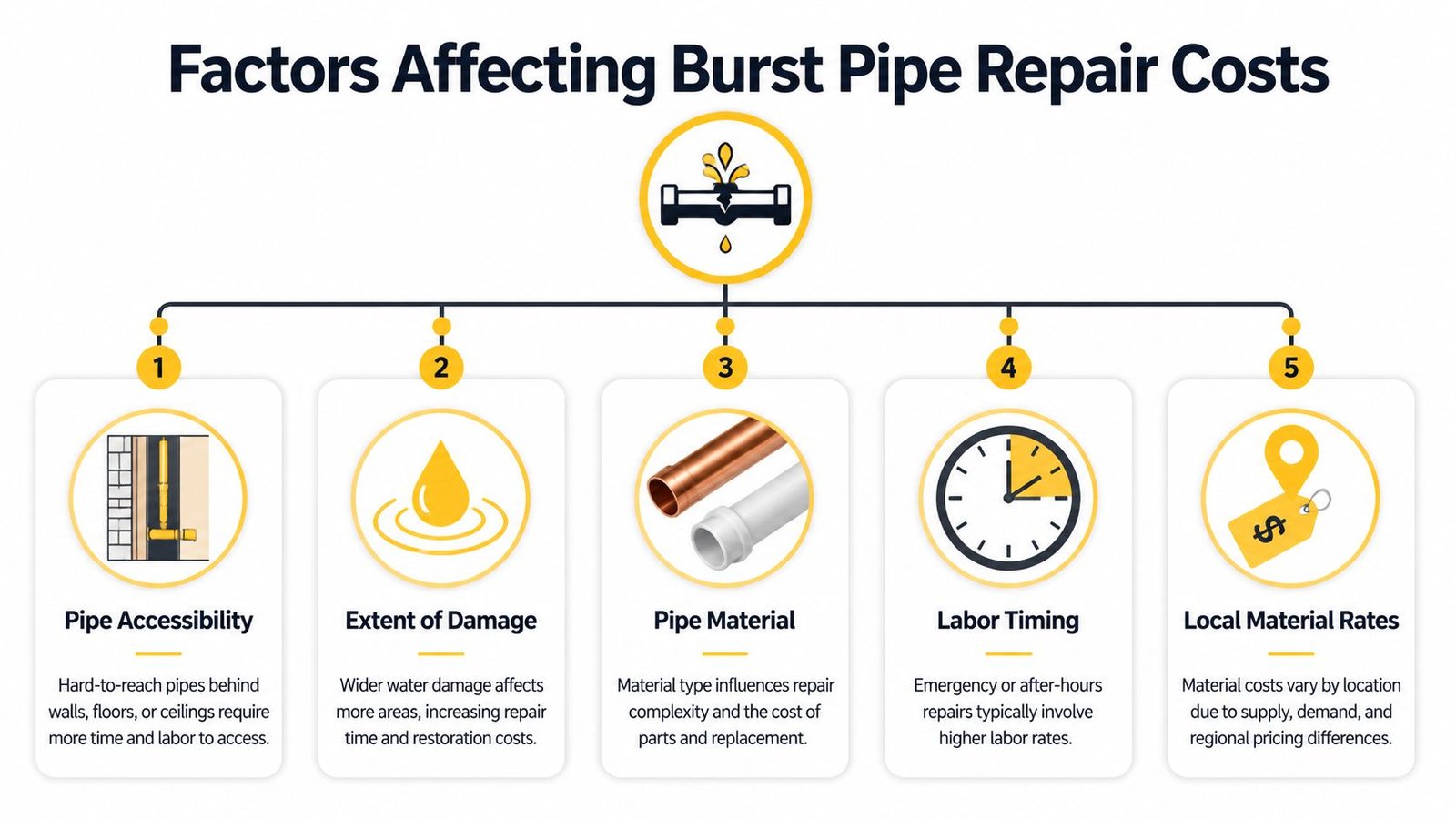
No two burst pipe jobs price out the same way. In practice, the final number is driven less by the dramatic moment of the burst and more by access, spread, and how long the structure stayed wet.
Location changes everything
An exposed line under a sink is one type of repair. A pipe behind tile, above a finished ceiling, or under a slab is another.
In Los Angeles, I see homeowners underestimate hidden line failures all the time. If the pipe is easy to reach, the plumber may complete the repair with minimal demolition. If it's behind plaster, inside a chase, or under flooring, both labor and rebuild costs rise because crews have to open materials just to reach the problem.
Underground failures are especially difficult because the damage isn't always obvious at first. You may notice reduced pressure, wet soil, unexplained moisture near the foundation, or water showing up far from the actual break. That's one reason homeowners often need a better grasp of what water mitigation involves after a plumbing failure, not just what a plumber does.
Time and water category shape the scope
A small rupture can become a major restoration loss quickly. According to RestoPros on burst pipe repair costs, a 1/8-inch pipe rupture can release about 11 gallons per minute, which can quickly create Class 2 or 3 water loss. The same source states that total restoration costs can reach $1,000 to $15,000+, and mold remediation can add another $1,500 to $10,000 if water sits for over 48 hours.
That time factor matters more than homeowners often realize. A resident who finds the leak early may only need localized drying. A resident who comes back after a weekend away may be dealing with soaked insulation, swollen cabinets, stained ceilings below, and microbial growth concerns.
Wet materials don't care whether the source was a tiny opening or a dramatic split. They react to exposure time.
Water type matters too. Clean water from a supply line is usually a better starting point than water that has moved through dirty materials or mixed with drain-related contamination. Once the category worsens, cleaning requirements and material removal can become more aggressive.
Materials and construction matter in Los Angeles
LA housing stock is mixed. You'll find newer condos in Glendale, mid-century homes in Burbank, and older properties in neighborhoods where original plumbing is still part of the story. Construction style affects both access and drying.
A few examples:
- Older wall assemblies: Opening and rebuilding finished surfaces can be more involved.
- Cabinet-heavy kitchens and baths: Water gets trapped behind toe kicks, under boxes, and along wall plates.
- Slab or underground lines: Locating and repairing hidden failures can turn a moderate job into a large one.
- Multi-level homes or units: Water can wick downward into ceilings, insulation, and flooring below.
If you want one takeaway, it's this: response time and access usually decide whether you're looking at the low end of the range or a much larger restoration project.
Sample Burst Pipe Repair Costs in Los Angeles
Some homeowners need a realistic frame of reference more than a theory. These examples show how the cost of burst pipe repair can look in actual LA-area situations.
Three common local scenarios
| Scenario | Plumbing Repair Cost | Water Damage Restoration Cost | Total Estimated Cost |
|---|---|---|---|
| Small accessible leak under a bathroom sink in a newer Glendale condo | $400 to $800 | Minimal to moderate drying and repair work can bring the total into the broader $1,000 to $4,000 restoration range seen in moderate areas when mitigation is needed, based on the earlier RestoPros-cited figures | Often on the lower end of the overall range |
| Burst supply line behind drywall in a Sherman Oaks single-family home | $400 to $2,000 | Commonly falls within the added $2,500 to $8,000 restoration range for secondary water damage noted earlier from Angi | Often lands in the mid-range total homeowners actually pay |
| Underground main water line break at an older Burbank property | $2,000 to $5,000 or more for the line issue, with trenchless methods running $6,000 to $20,000, according to HomeGuide's burst pipe repair cost overview | Restoration depends on how much interior or foundation-adjacent water intrusion occurred | Frequently the highest-cost scenario |
What makes the third scenario so stressful is the diagnostic uncertainty. An underground problem often starts as a suspicion, not a visible pipe break. Homeowners may first notice soggy ground, a spike in use, or unexplained moisture indoors. By the time excavation or trenchless options enter the conversation, the budget can change dramatically.
For urgent situations in Los Angeles, this is why many homeowners look for emergency water damage restoration in Los Angeles at the same time they call a plumber. If the line break has already affected interior materials, both sides of the problem need attention.
In older LA neighborhoods, the expensive jobs are often the ones you can't fully see at first.
Will Homeowners Insurance Cover Your Burst Pipe
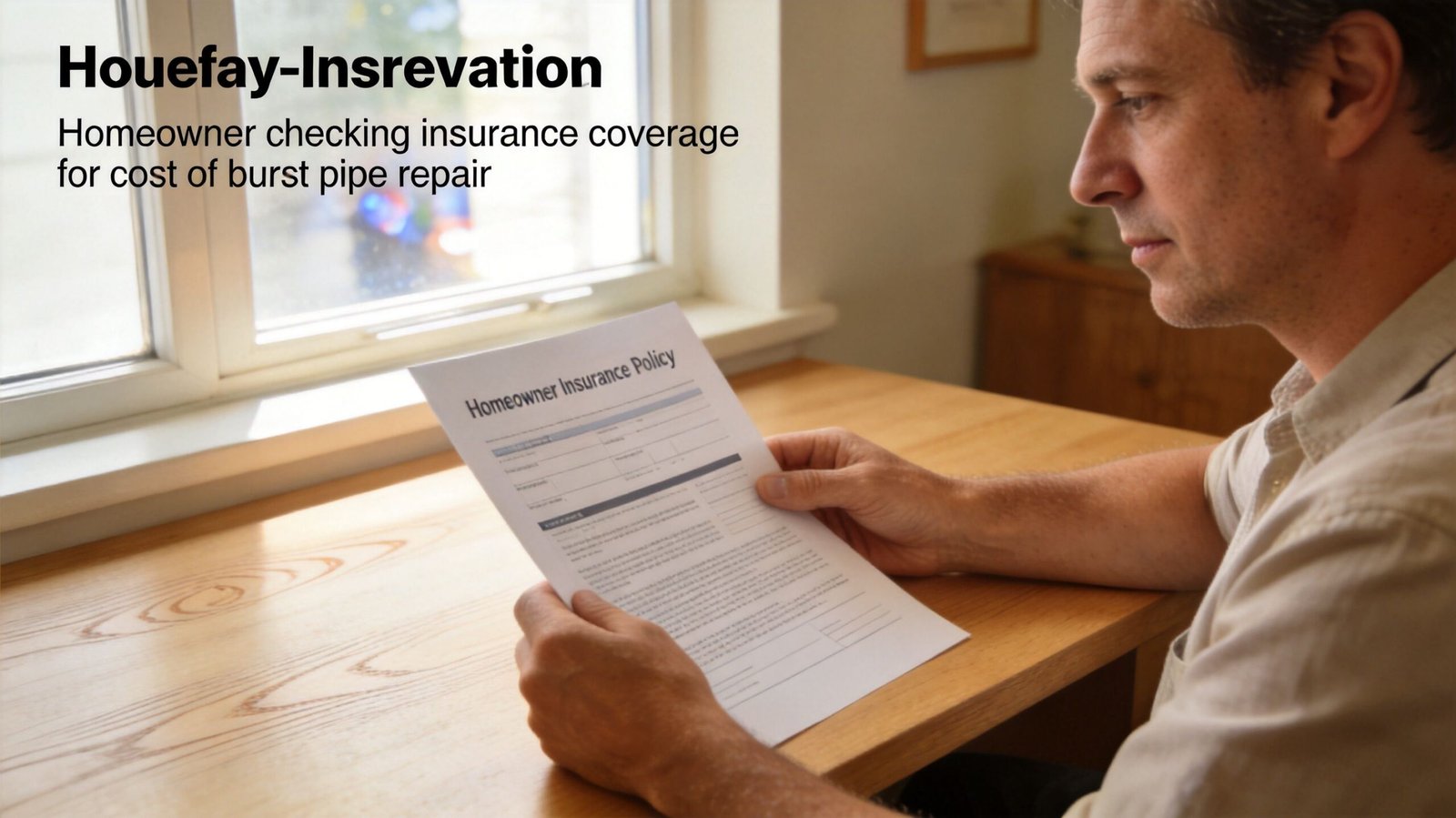
In many cases, insurance may help when the pipe break is sudden and accidental. Where homeowners run into trouble is assuming every water loss is treated the same way. Carriers usually look closely at cause, timeline, and what you did after discovering the issue.
What usually helps a claim
The strongest claims tend to have clear documentation from the first day. Good photos, video, and a written timeline matter. So does proof that you acted to reduce further damage once you found the problem.
A practical checklist:
- Shut off the water fast.
- Photograph the pipe area and all affected rooms.
- Save damaged materials if safe to do so.
- Notify your insurer promptly.
- Get professional moisture documentation and an itemized scope.
Homeowners often benefit from reading a focused guide on whether homeowners insurance covers burst pipes, because policy language and claim handling details matter almost as much as the cleanup itself.
What makes claims harder
Insurers often push back when the damage looks gradual, deferred, or poorly documented. If the carrier sees staining, repeated patching, or signs that the leak had been active for a long time, coverage may become a dispute instead of a routine claim.
Professional documentation helps because it turns a stressful story into a file with evidence. Moisture maps, photos, demolition notes, and drying records give adjusters a cleaner basis for review.
For health-related guidance when wet materials have sat too long, homeowners can also review the EPA's mold cleanup guidance. That doesn't replace a claim review, but it helps explain why delayed drying can become a larger property issue.
How You Can Reduce Costs and Prevent Future Disasters
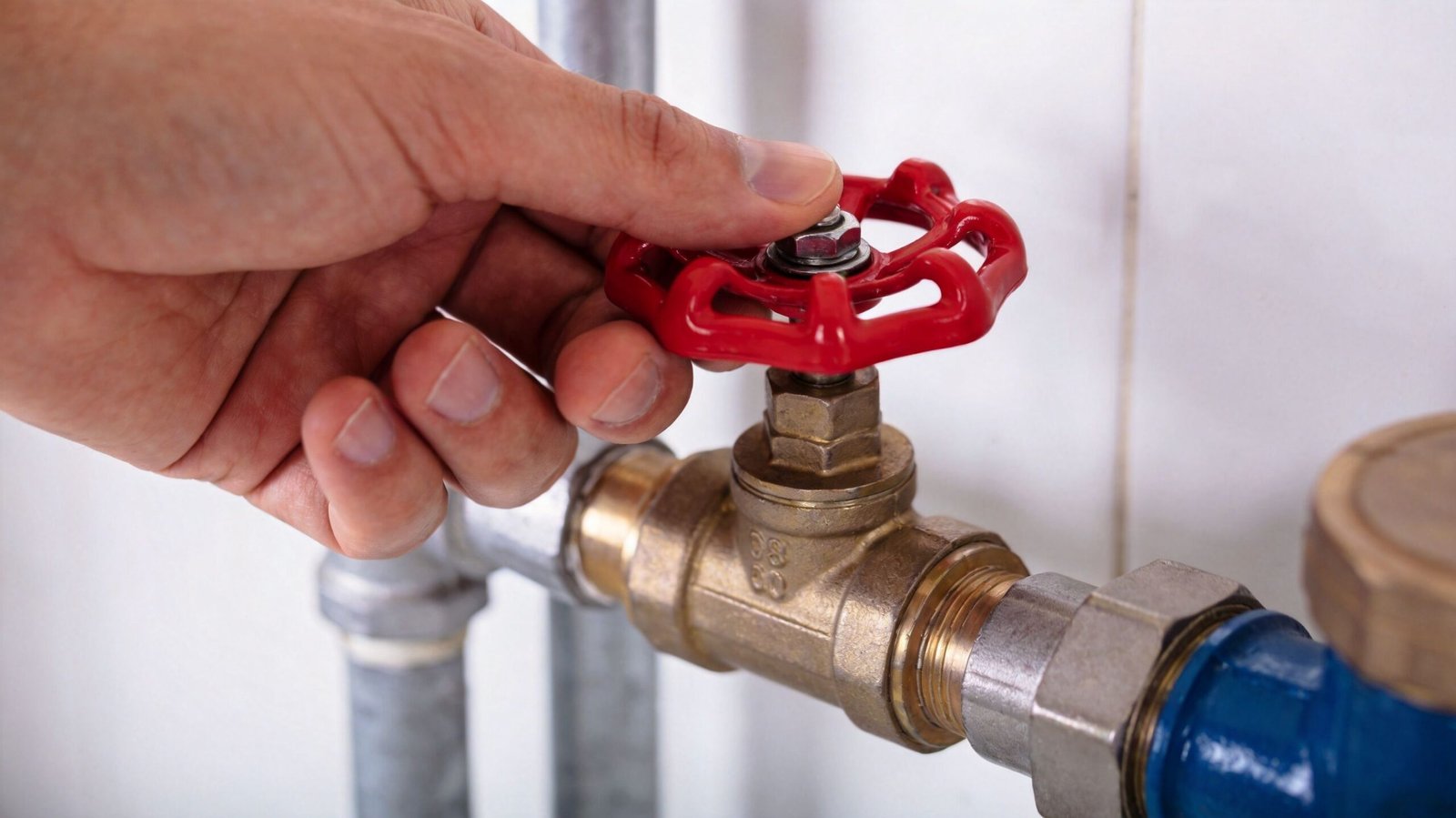
You can't control every pipe failure, but you can control how much damage it causes. The homeowners who keep losses smaller usually do a few simple things immediately and consistently.
What to do right away
First, shut off the main water supply. If you don't know where that valve is, find it before the next emergency. Waiting while water keeps feeding the break is what turns a manageable repair into a multi-room loss.
Then remove what you can safely move. Rugs, boxes, electronics, and loose contents should come out of the affected area fast. Air movement helps, but household fans alone won't replace professional drying when water has reached wall cavities, insulation, or subflooring.
In our experience restoring homes across Los Angeles, the worst damage often starts with a leak that seemed minor for too long. The smartest prevention step is often a small one done early.
Here's a useful visual refresher on shutoff basics and fast first actions:
What prevents the next one
Long-term prevention is less dramatic, but it saves money.
- Install leak detection devices: Alerts near water heaters, sinks, laundry areas, and supply lines give you a chance to act before finishes saturate.
- Watch appliance hoses and valves: Washing machine and dishwasher connections are common trouble spots.
- Address pressure issues: If your home has high water pressure, ask a plumber whether a regulator is appropriate.
- Inspect older plumbing proactively: This matters in older homes in Burbank, Glendale, and similar neighborhoods.
- Learn seasonal weak points: Even in Los Angeles, attics, exterior walls, and neglected lines can still create surprises.
A practical next read is this guide on how to prevent pipes from bursting, especially if your home has older plumbing or you manage a rental property.
Small prevention steps cost less than emergency demolition, drying, and rebuild work.
Your Los Angeles Burst Pipe Emergency Answered
If you're dealing with a burst pipe in Los Angeles, the main thing to know is this: the visible leak is only part of the problem. The full cost of burst pipe repair depends on how quickly the water was stopped, where it traveled, and how much of the structure stayed wet.
For immediate triage, this breakdown of emergency steps for broken water pipes is a useful companion to the guidance above. It helps homeowners think clearly in the first chaotic moments.
A few direct answers:
- If the pipe is accessible, the plumbing side may stay near the lower end of the range.
- If drywall, flooring, or cabinets got wet, the restoration side often becomes the larger bill.
- If the line is underground, expect a wider range and more uncertainty until the issue is properly diagnosed.
- If you wait, drying, repairs, and mold concerns become harder and more expensive.
If you need help now, call Onsite Pro Restoration at 818-336-1800 for 24/7 emergency response in Los Angeles, CA.
Frequently Asked Questions About Burst Pipe Repair
Can I fix a burst pipe myself to save money
You might be able to stop a small leak temporarily, but a true burst pipe usually needs a plumber and a proper moisture inspection. DIY patching can leave hidden water in walls, flooring, or cabinets, which is where much bigger costs begin.
How long does burst pipe drying usually take
Drying time depends on how much water got into the structure and what materials were affected. Minor losses may dry quickly, while larger losses need multiple days of professional drying and monitoring before rebuild work starts.
Is mold always part of a burst pipe job
No. Mold becomes more likely when materials stay wet too long. Fast extraction, demolition where needed, and controlled drying lower that risk.
What should I do before the crew arrives
Shut off the water, turn off electricity to affected areas if it's safe, take photos, move valuables, and avoid using rooms with wet ceilings or sagging materials.
If you need fast help with water extraction, structural drying, or the full cleanup after a burst pipe, contact Onsite Pro Restoration. We serve Los Angeles, including Glendale, Burbank, Sherman Oaks, West Hollywood, and nearby communities. Call 818-336-1800 for a free assessment and immediate emergency response.
SEO title tag: Cost of Burst Pipe Repair in Los Angeles
Meta description: Cost of burst pipe repair in Los Angeles ranges from $400 to $2,000 for plumbing, but total damage often reaches $3,000 to $15,000+.
Suggested schema markup: FAQPage, LocalBusiness
Suggested image placement notes:
- Service invoice image in the pricing breakdown section with alt text already containing burst pipe repair context.
- Insurance policy image in the insurance section to support claim-related search intent.