
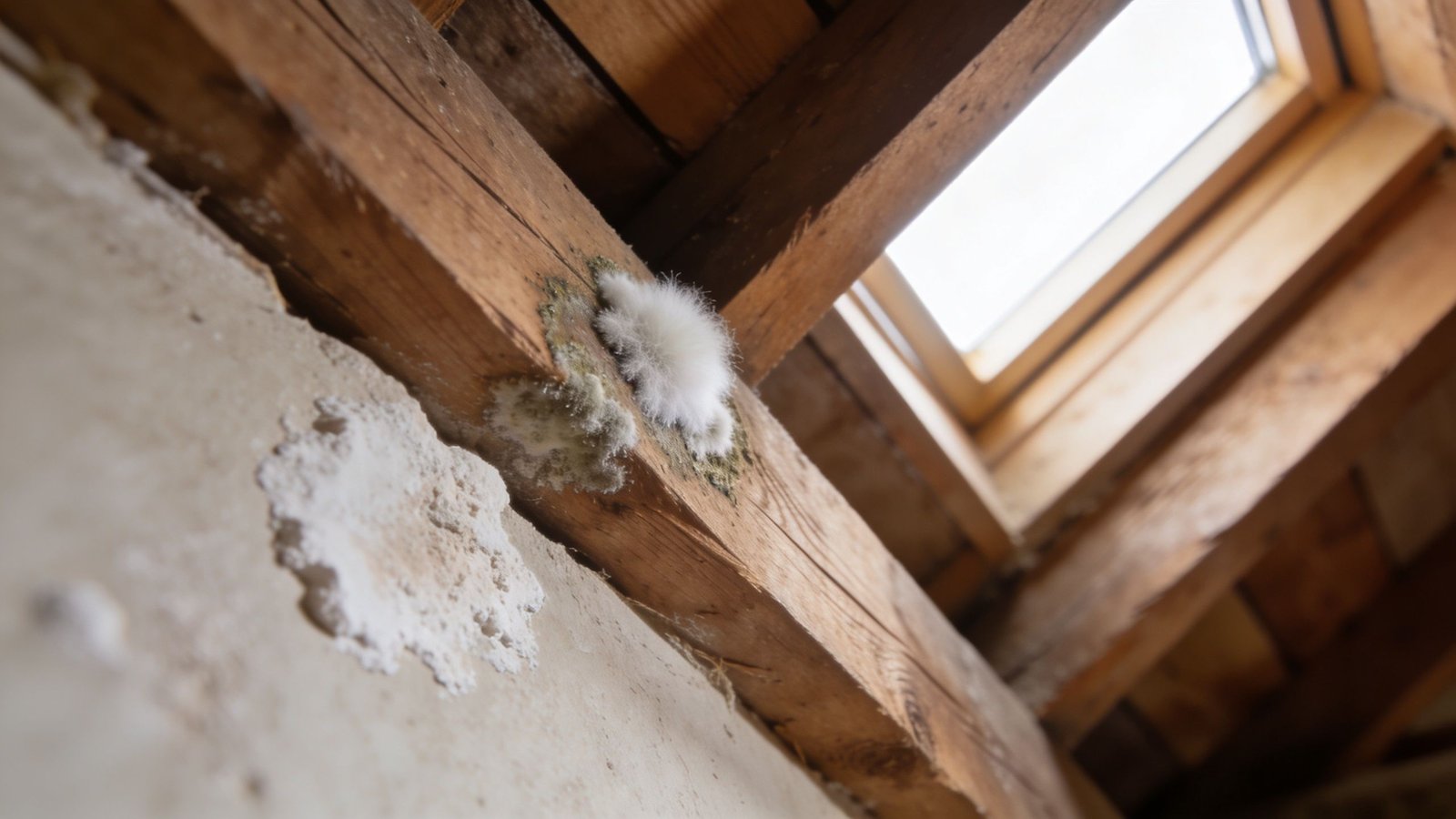
Finding a white, fuzzy substance spreading across the wood in your attic is unsettling. Any unusual growth in your attic is a red flag. It’s almost certainly white mold, a clear sign of a much bigger moisture problem that could be silently damaging your home.
Ignoring this discovery is a mistake. The problem won't fix itself; it will only get more expensive and destructive over time. If you’ve spotted what looks like white mold in your attic, this guide will walk you through what it is, the risks it poses, and how to get rid of it safely.
Don't let a moisture problem turn into a health hazard. If you've found signs of white mold in your attic, immediate action is crucial. Call Onsite Pro Restoration now at (818) 336‑1800 for a professional assessment. Our IICRC-certified experts are ready to help.
What Is White Mold and Should You Be Concerned?
Think of white mold in your attic as the canary in the coal mine. It’s not just an ugly stain; it’s a symptom of a hidden issue, and that issue is always excess moisture. This could be from a slow roof leak, poor ventilation trapping humid air, or even a bathroom fan venting directly into the attic instead of outside.
Many homeowners in Southern California believe white mold is less dangerous than the infamous black mold. This is a common—and risky—misconception. "White mold" isn't one specific species. It’s a catch-all term for many types of fungi that can appear white, including potentially harmful ones like Aspergillus, Penicillium, and Cladosporium.
These are the same mold types known to trigger allergic reactions, asthma attacks, and other serious respiratory issues. If you want to dig deeper into the differences, you can learn more about what black mold looks like in our other guide.
Spotting the Difference: Mold vs. Efflorescence
One of the first questions we get from homeowners in places like Burbank and Santa Monica is how to tell white mold apart from efflorescence. This is a great question. Efflorescence is a harmless, salty mineral deposit left behind when water evaporates from concrete or brick. It looks similar, but it’s a world apart in terms of risk.
A common DIY test is to spray the substance with water. Efflorescence dissolves, while mold doesn’t. However, we strongly advise against this. Spraying water on potential mold can release millions of spores into the air, making the problem much worse.
It's better to rely on a visual check. Here’s a quick guide to help you tell them apart from a safe distance.
White Mold vs Efflorescence: Fungus or Salt?
| Characteristic | White Mold | Efflorescence |
|---|---|---|
| Texture | Fuzzy, cottony, or even slimy when wet | Crystalline, powdery, or granular |
| Location | Grows on organic materials like wood, drywall, or insulation | Appears on masonry like brick, concrete, or mortar |
| Reaction to Water | Does not dissolve; might get slimy | Dissolves when sprayed with water |
| Growth Pattern | Spreads in patchy, circular patterns | Forms a uniform, crusty layer on the surface |
While this table is a helpful starting point, only a professional assessment can give you a definitive answer. Because white mold in an attic signals a water intrusion issue that threatens your home’s structure and your family's health, it’s always best to err on the side of caution and get an expert opinion.
How Attic Mold Impacts Your Health and Home Value
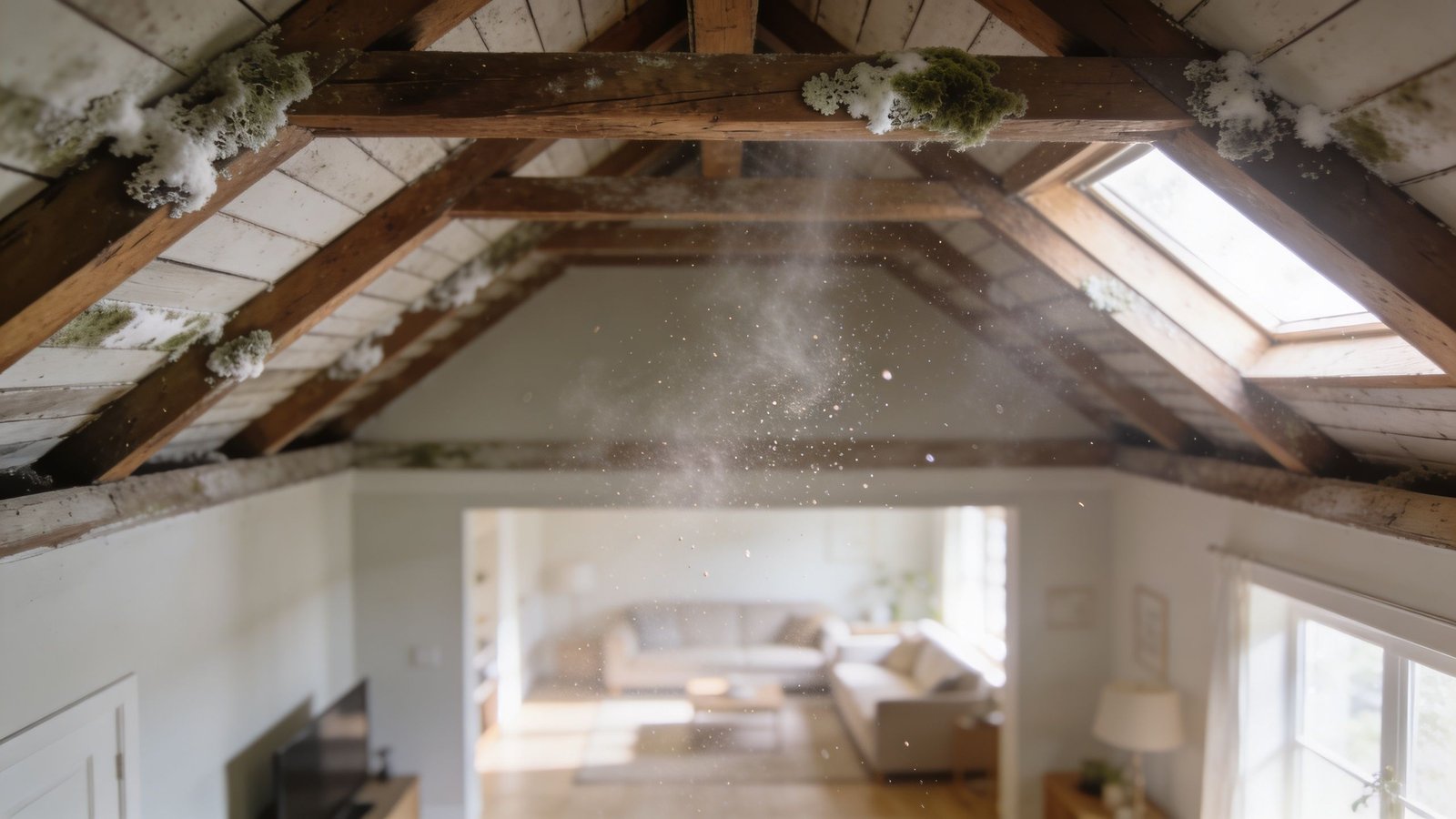
It’s easy to think a problem in your attic will stay in your attic. But white mold rarely stays put. Your home is a system, constantly breathing. A process called the "stack effect" naturally pulls cooler air from downstairs, sending it upward. As it does, it can drag airborne mold spores from the attic right down into your living spaces.
What starts as a hidden issue quickly becomes an indoor air quality crisis. Before you know it, those microscopic spores are contaminating the very air your family breathes every single day.
From Attic Spores to Household Health Concerns
For many people, the first sign of attic mold isn't a spot on the ceiling—it's a physical symptom. You might notice a sudden spike in allergy-like issues that just won't quit, like a nagging cough, constant sneezing, or sinus congestion. For anyone with asthma, mold spore exposure can trigger more frequent and severe attacks.
While some white molds are harmless, others can produce mycotoxins that are particularly hard on people with respiratory issues. Research shows that attic HVAC systems, which are found in about 60% of Los Angeles tract homes, can act like superhighways, spreading these spores throughout the entire house. This can spike indoor allergen levels by as much as 400% and has been linked to a 35% increase in unexplained asthma cases often mistaken for seasonal allergies. You can learn more about the health risks of mold in your home in our detailed guide.
The presence of white mold is not just a surface-level nuisance; it's an indicator of a persistent moisture problem that can have far-reaching consequences for both your family's well-being and your home's financial value.
The Structural Threat Hiding Above Your Head
Beyond the health risks, white mold poses a very real threat to the bones of your house. Mold’s main food source is cellulose, the organic fiber that makes wood strong. Your attic's rafters, joists, and roof sheathing are an all-you-can-eat buffet for a hungry mold colony.
As the mold feeds on this cellulose, the wood starts to soften, rot, and lose its ability to carry weight. Imagine the roof structure in a Glendale home after a season of heavy winter rains caused an unnoticed leak. Mold takes root, and over months, it silently eats away at the wooden beams.
This process can lead to some serious problems:
- Weakened Roof Deck: The sheathing under your shingles can turn soft and spongy, putting your entire roofing system at risk.
- Rotted Joists and Rafters: The main support beams can lose their structural integrity, causing ceilings to sag or, in the worst-case scenario, leading to a roof collapse.
- Devalued Property: During a home inspection, any sign of mold or wood rot is a huge red flag that can kill a sale or force you into expensive repairs and price cuts.
Ultimately, what starts as a small patch of white mold in an attic can grow into a major structural and financial disaster if you don't deal with it.
Uncovering the Causes of White Mold in Attic Spaces
To get rid of white mold in an attic for good, you have to figure out why it showed up in the first place. Mold isn't just bad luck; it’s a direct signal that something in your home’s environment has failed. For homeowners all over Los Angeles, from the San Fernando Valley to the coast, attic mold almost always points back to a single culprit: moisture.
Your attic is meant to be dry. When water gets in, it turns that dry space into a perfect breeding ground, letting mold grow where it has no business being. Let's look at the three most common ways moisture sneaks into our attics.
Roof Leaks: The Primary Culprit
More often than not, attic mold starts with a leaky roof. A tiny, slow drip that you can't even see can cause a massive problem over many months. Here in Southern California, the intense summer sun beats down on roofing materials, making shingles crack and causing the flashing around vents or chimneys to pull away. When the winter rains finally hit, that water has a clear path inside.
This slow-but-steady drip soaks into the wooden beams and insulation, creating the damp, dark, and undisturbed environment mold loves. We often see this in homes with flat-roof sections in Sherman Oaks, where ponding water after a storm can create persistent leaks.
Poor Attic Ventilation
A lot of older homes, especially those built decades ago in neighborhoods across the Valley, simply weren't designed with today’s ventilation standards in mind. Good ventilation is crucial because it lets hot, humid air escape. Without it, that moist air gets trapped. This is especially true for homes near the coast, like in Santa Monica, where the damp "June Gloom" fog can raise attic humidity for months.
This kicks off a simple but destructive cycle:
- Moisture Rises: Everyday things like cooking, showering, and even breathing release warm, moist air that naturally travels upward into your attic.
- Air Gets Trapped: In an attic without proper soffit and ridge vents, this humid air has no way out.
- Condensation Forms: When the temperature drops at night, that trapped moisture condenses on any cool surface it can find—like the underside of your roof deck and the wooden rafters. This constant condensation becomes a reliable water source for mold.
Improperly Vented Appliances
This one is surprisingly common and completely avoidable. Bathroom fans, kitchen range hoods, and clothes dryers are all designed to push humid air outside your home. But sometimes, contractors take a shortcut and terminate the vent duct directly into the attic instead of running it all the way to an exterior wall or the roof.
This is a critical mistake. It's like having a humidifier running in your attic 24/7, pumping gallons of moisture-laden air directly onto the wood and insulation. This practice is a guaranteed recipe for a significant mold problem.
White mold in attics is far more widespread than people realize, especially in Los Angeles with its mix of older homes and fluctuating coastal and valley climates. Industry data confirms that attics are a hotbed for mold, with species like Aspergillus and Penicillium taking over damp wood with shocking speed. Statistics from our restoration projects show roof leaks are behind as many as 80% of these cases, since even a minor leak can saturate materials and kick off a mold growth cycle in just 24-48 hours. You can learn more about the prevalence of white attic mold and how to stop it on Environix.com.
Understanding these root causes is why a true professional doesn’t just clean the mold you see. We find the source of the water to make sure it never comes back.
Performing a Safe Preliminary Attic Mold Inspection
So you think you have white mold in your attic. Your first instinct is probably to pop your head up there for a closer look. A quick visual check can definitely give you answers, but your safety has to come first. Never enter a space where you suspect mold without the right protective gear.
Before you even think about pulling down that attic ladder, you need to protect your lungs. The moment you disturb a mold colony, it can release millions of tiny spores into the air. Breathing that in can lead to anything from respiratory irritation to a severe allergic reaction.
Safety First: Always wear an N95 respirator mask, disposable gloves, and safety glasses before you even open the hatch. Your health isn't worth the risk.
Once you’re geared up, you can proceed with a careful look-around. The goal here isn't to touch or scrape anything. You’re just a detective gathering clues from a safe distance.
Your Attic Inspection Checklist
Grab a powerful flashlight and scan the entire attic space methodically, focusing on the usual trouble spots. You’re hunting for the classic signs of a moisture problem that gave mold a place to grow. For a more detailed look, our guide on how to detect mold in a house can give you even more pointers.
Here’s what to look for:
- Visible Fuzzy Growth: Scan the wooden rafters, the underside of the roof sheathing, and any insulation for white, gray, or even black fuzzy or dusty-looking patches.
- Dark Water Stains: Check the roof deck and support beams for dark streaks or discolored spots. These are telltale signs of leaks, past or present.
- Damp or Compressed Insulation: If you can safely reach it (with gloves on), feel for dampness. Look for areas where insulation looks matted down and compressed—a sure sign it’s been soaked.
- Musty Odors: A persistent, damp, earthy smell is one of the most reliable clues you have a mold problem, even if you can’t see it yet.
Point that flashlight at key areas like the spaces under the eaves, around vent pipes and chimneys, and pay special attention to the north-facing side of the roof. It often stays cooler, making it a prime spot for condensation. While you're at it, learning more about professional attic inspections can give you a better sense of what the pros look for.
If you spot any of these signs, your inspection is over. The right move is to back out, seal off the area if you can, and call a certified professional. Trying to clean or remove it yourself will only spread the contamination and make a bad situation much worse.
Professional Remediation Versus DIY Methods
When you find what looks like white mold in an attic, the first instinct is often to grab a spray bottle and handle it yourself. Many Los Angeles homeowners reach for bleach, thinking it’s a fast, cheap fix. Unfortunately, this is one of the worst things you can do.
Spraying bleach on a porous surface like wood doesn't work the way you think it does. Its chemical makeup prevents it from soaking deep into the wood where the mold's "roots" (mycelia) are anchored. Instead, the bleach and water solution just sits on top, killing a little surface mold before it evaporates.
Here's the real problem: the water in the bleach solution soaks into the wood and actually feeds the roots you couldn't reach, often causing the mold to grow back even stronger. Worse, the chemical shock can make the mold colony release a massive cloud of spores as a defense mechanism, turning your attic into a contaminated zone.
The Dangers of DIY Mold Removal
Trying to scrub or remove attic mold without the right training and gear is a huge gamble. The moment you disturb a mold colony, you can send millions of spores airborne. Those spores will settle everywhere in your attic and can easily get pulled into your HVAC system.
This is how a small, localized problem quickly becomes a whole-house contamination nightmare. Without professional containment, you risk spreading mold into your living areas and exposing your family to much higher concentrations of harmful spores.
Understanding the Professional Remediation Process
An IICRC-certified professional doesn’t just "clean" mold; we follow a strict, scientific process designed for permanent removal and total safety. It's about eliminating the threat at its source and making sure it never comes back. The process involves four key steps.
- Containment: The first thing we do is completely seal off the attic from the rest of your home. We use heavy-duty plastic sheeting and negative air pressure machines to create a fully isolated work area. This ensures that zero spores can escape into your living space while we work.
- Air Filtration: Throughout the entire project, we run commercial-grade HEPA air scrubbers. These powerful machines continuously filter the air, capturing microscopic mold spores, dust, and any other contaminants to purify the air.
- Contaminant Removal: Our technicians use specialized tools and powerful antimicrobial agents to physically remove the mold from all affected wood and surfaces. Unlike bleach, these professional-grade solutions are made to penetrate porous materials and kill mold all the way down to the root. You can learn more in our guide on how to kill mold on wood.
- Post-Remediation Verification: Once the job is done, we often recommend a third-party inspector to perform air quality tests. This final check confirms that the attic's spore count has returned to a normal, safe level, giving you independent proof that the remediation was a success.
This guide gives you a quick look at the first steps for a safe preliminary inspection.
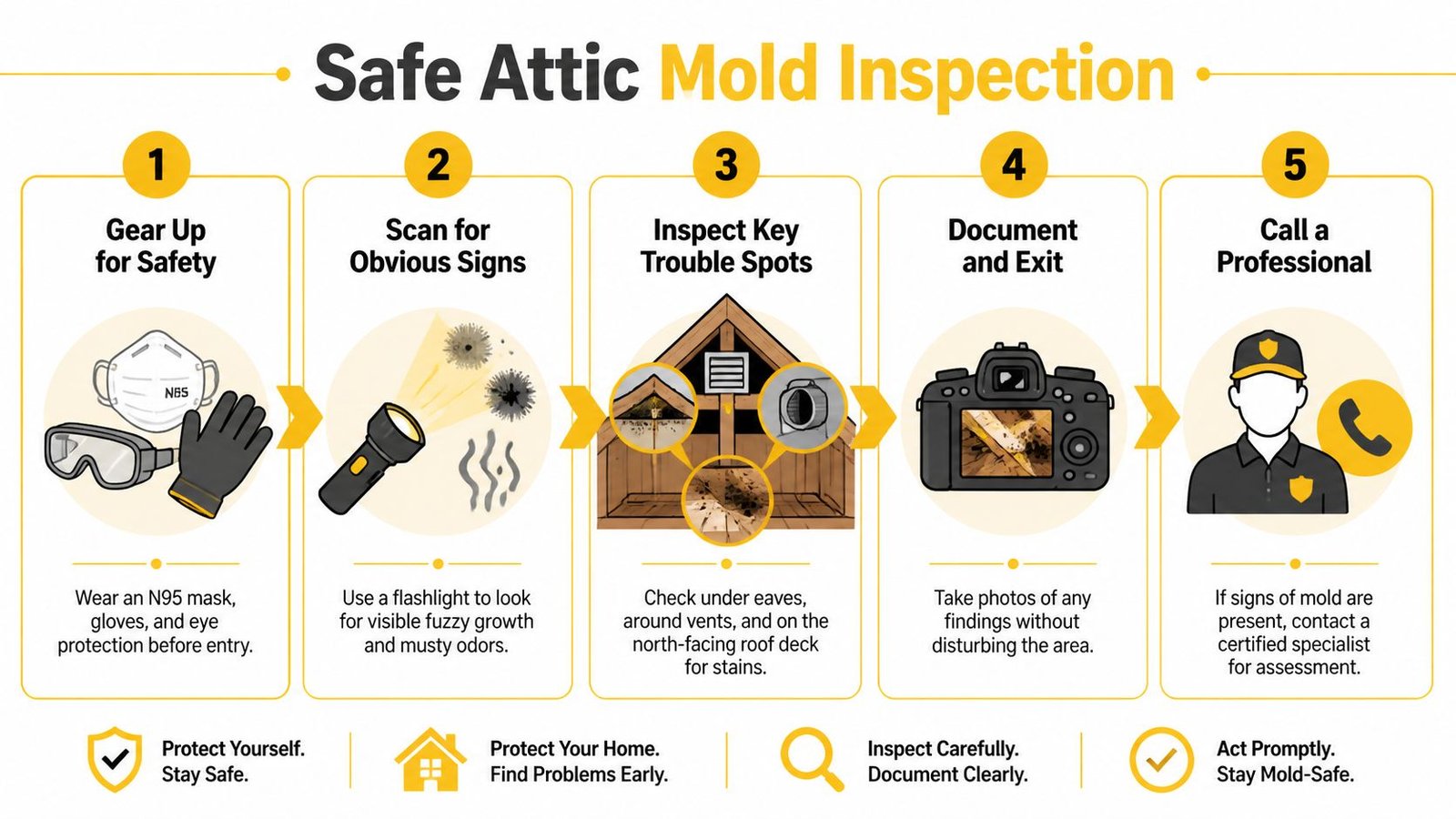
Notice that the final step is always to call a professional. Safety, proper documentation, and expert handling are the only ways to solve a mold problem for good.
Found white mold in your attic? Don't risk your family's health or your home's value. Get a free, no-obligation mold inspection from our certified team today. We'll identify the source and provide a clear plan for safe removal. [Schedule a Free Mold Inspection]
Long-Term Strategies to Prevent Future Attic Mold
After our team has finished remediation, your goal is to make absolutely sure white mold in your attic never returns. Think of it like regular maintenance on your car—a few proactive steps each year are your best defense against another costly headache.
This ongoing prevention plan is the most powerful and cost-effective way to protect your home. It’s especially critical for Los Angeles properties, where the intense sun beats down on roofing materials and seasonal rains are always looking for a way in.
Your Proactive Prevention Plan
The entire game plan comes down to one thing: keeping your attic dry and well-ventilated. Mold can’t start without moisture, so cutting off its life source is the key.
Get ahead of the problem by adding these simple checks to your annual home maintenance list:
- Schedule Annual Roof Inspections: Before the winter rainy season hits, have a roofer check for weak spots. The Southern California sun is brutal on shingles and flashing, creating potential leaks that are easy to miss from the ground.
- Keep Vents Clear and Functional: Walk around your house and visually inspect your attic's soffit and ridge vents. Make sure they aren't clogged with leaves, insulation, or old paint. Proper airflow is non-negotiable for pushing humid air out.
- Verify Appliance Venting: This is a crucial one-time check. Make sure your bathroom fans, kitchen hood, and clothes dryer all vent directly outside—not into your attic. If they don’t, get this fixed immediately. It's a common and costly mistake.
Enhancing Your Attic's Defenses
Beyond basic maintenance, you can actively make your attic a hostile environment for mold. This is where proper insulation and moisture management become your best friends.
The right insulation does more than just control temperature; it is a critical component in moisture management. It helps keep the attic's surfaces warmer, preventing the condensation that forms when warm, moist air hits a cold roof deck.
Upgrading your attic’s defenses might mean ensuring your insulation is installed correctly and isn't compressed or damaged. For a deeper look at creating a mold-proof environment throughout your property, check out our complete guide on how to prevent mold.
These long-term strategies empower you to protect your home’s health and value, giving you peace of mind for years to come.
FAQs: Answering Your Top Questions About Attic Mold
When you find something that looks like white mold in your attic, a dozen questions immediately pop into your head. Here are the straight answers to the most common questions we get from Los Angeles homeowners facing this exact problem.
Q: What should I do immediately if I find white mold in my attic?
A: Your first priority is safety. Do not touch or disturb the mold. Close the attic hatch or door to contain the area and prevent spores from spreading. Then, call a certified mold remediation company like Onsite Pro Restoration immediately to schedule a professional inspection.
Q: How much does attic mold remediation cost in Los Angeles?
A: There’s no single price tag, but for a typical L.A. home, you can expect attic mold remediation to cost anywhere from $1,500 to over $7,000. The final price depends on the size of the affected area, the extent of any structural damage, and the work needed to fix the original moisture source.
Q: Is white mold in an attic dangerous to my family's health?
A: Yes, it can be. "White mold" is a general term for many species, some of which (like Aspergillus and Penicillium) can release mycotoxins and spores that trigger allergic reactions, asthma attacks, and other respiratory issues, especially in children and individuals with compromised immune systems.
Q: Will my homeowner's insurance cover attic mold removal?
A: It depends. Most standard policies will only cover mold if it's the direct result of a sudden and accidental "covered peril," like a burst pipe that was immediately addressed. Mold from long-term issues like a slow roof leak, high humidity, or poor maintenance is typically excluded. Always review your policy and document everything.
Q: Can I clean attic mold myself with bleach?
A: No, you should not. Bleach is ineffective on porous surfaces like wood because it can't penetrate to the mold's "roots." The water in the bleach can actually feed the underlying mold, causing it to grow back stronger. DIY removal also risks spreading millions of spores throughout your home.
Q: What's the difference between white mold and efflorescence?
A: White mold is a living fungus that grows on organic materials like wood and has a fuzzy or cottony texture. Efflorescence is a harmless, powdery salt deposit that forms on masonry like brick or concrete. A key difference is that efflorescence will dissolve in water, while mold will not.
Don't let attic mold put your home and your family's health at risk. The IICRC-certified team at Onsite Pro Restoration has the professional-grade equipment and proven methods to safely identify, contain, and eliminate mold for good.
If you even suspect you have a mold problem, call us now at (818) 336‑1800 for a free assessment or learn more about our process at https://onsitepro.org.