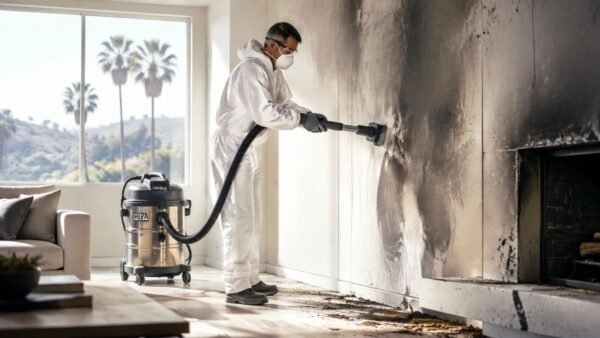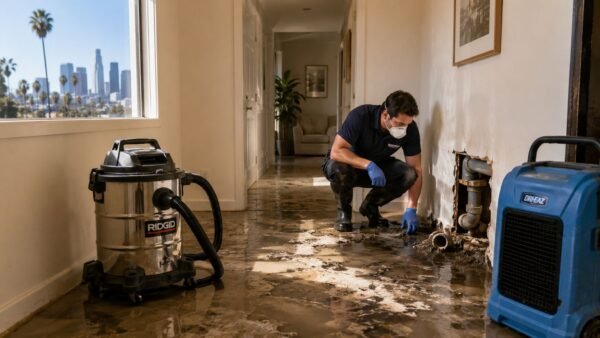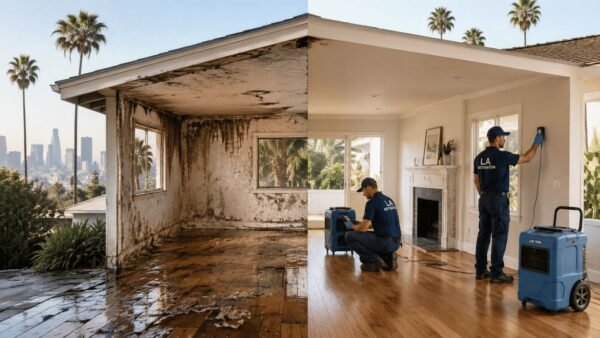

A burst pipe in a Sherman Oaks office at 6:30 a.m. can turn a normal workday into a claim problem before your staff even arrives. If you're dealing with commercial property insurance claims in Los Angeles, the fastest path to a cleaner payout is simple: stop further damage, document everything before permanent repairs, and give the carrier a complete evidence package early.
That sounds straightforward. In practice, most business owners lose time and money in the first few hours because they clean up too aggressively, call the wrong people in the wrong order, or fail to capture the proof an adjuster needs later. In LA, where older buildings in Glendale, Burbank, and North Hollywood often hide plumbing, roof, and drainage issues behind finished walls, that first response matters even more.
SEO title tag: LA Commercial Property Insurance Claims Guide
Meta description: Commercial property insurance claims in Los Angeles. Learn the first steps, documentation, adjuster strategy, and common denial traps.
Your First Steps After Commercial Property Damage
A common call starts like this. A business owner opens a suite in Burbank and finds standing water running from a broken wall pipe, ceiling tile sagging, computers near wet carpet, and a tenant next door asking who's responsible. The claim starts right there, not when the adjuster arrives.
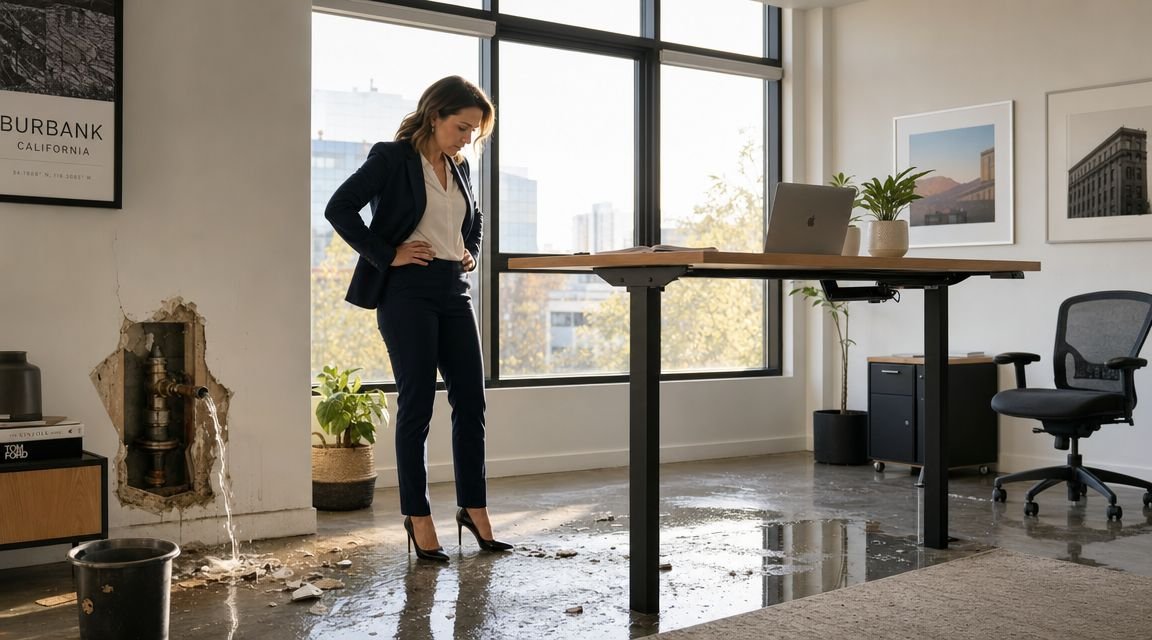
The first hour has one job. Control the loss without destroying evidence. That means protecting people, stopping active damage, and preserving the scene well enough that the carrier can still evaluate cause, scope, and condition.
What to do in the first hour
Shut off the source if it's safe
Close the water supply, isolate the affected area, or cut power to unsafe wet zones through building maintenance or a qualified tradesperson.Protect people first
Keep staff out of wet electrical areas, slipping hazards, and any ceiling with visible sagging.Prevent further damage
Tarp openings, move stock, lift equipment, and secure broken entries. If the building needs immediate protection, arrange an emergency commercial board-up service before weather, theft, or vandalism makes the loss worse.Document before you disturb the scene
Take wide photos, close-ups, video walk-throughs, and short clips that show where water originated and where it traveled.Notify the carrier promptly
Open the claim once the site is stable enough that you can describe the event clearly.
Practical rule: Mitigation is expected. Permanent repair before inspection is where owners create trouble for themselves.
Commercial claims don't move in a straight line. They swing with catastrophe activity and weather patterns. Verisk's ClaimSearch data showed U.S. commercial property claims fell from 0.91 million in 2023 to 0.71 million in 2025, a drop of about 22%, largely tied to a relatively quiet hurricane season, according to industry reporting on Verisk's claims data. For a business owner, the practical lesson is that claim volume in the market may rise or fall sharply, but your file still gets judged on the same basics: cause, condition, scope, and proof.
What works and what doesn't
- What works: Stabilizing the property, keeping a photo trail, and saving damaged materials until the adjuster sees them.
- What doesn't: Tossing wet inventory, repainting before inspection, or letting multiple vendors alter the scene without a log.
If you're calm and methodical in the first few hours, the rest of the claim usually gets easier.
Building Your Evidence A Comprehensive Documentation Checklist
The strongest commercial property insurance claims are built, not argued. By the time an adjuster reviews your file, they want a defensible story supported by timestamps, condition records, and a scope that matches the actual damage.
That matters more now because insurers are moving toward condition-aware underwriting, using building condition data to support pricing and reduce surprises. That shift makes pre-loss photos, maintenance records, and similar evidence much more important at claim time, as described in this overview of condition-aware underwriting.
In Los Angeles, that issue shows up constantly in older commercial buildings in Glendale and nearby neighborhoods. If a roof has deferred maintenance, or a plumbing line has a history of patch repairs, the carrier will look closely at whether the damage came from a covered event or a long-running condition.
Commercial claim documentation checklist
| Evidence Type | What to Collect | Pro Tip |
|---|---|---|
| Scene photos | Wide shots of the full space, entry points, ceilings, floors, walls, affected units | Start outside the affected room and work inward so the layout is obvious |
| Video walk-through | One continuous video showing the route of damage and active conditions | Narrate the date, time, room names, and visible source if known |
| Source documentation | Photos of broken pipes, roof openings, appliance failures, drain backups, or fire origin area | Capture before temporary removal or disposal |
| Moisture records | Moisture meter readings, affected material list, drying logs, thermal images | Pair each reading with location labels |
| Pre-loss condition records | Prior maintenance logs, inspection reports, lease turnover photos, roof records, renovation files | Keep these in cloud storage, not only onsite |
| Inventory and contents | Equipment lists, furniture lists, stock counts, serial numbers, purchase records | Group by room or suite so location is clear |
| Financial records | Sales reports, payroll impact, tenant notices, extra expense records, downtime notes | Separate property damage from business interruption support |
| Temporary mitigation costs | Emergency extraction, tarping, board-up, equipment rental, temporary relocation costs | Keep a running ledger with vendor names and dates |
| Repair and replacement support | Estimates, invoices, contractor scopes, materials list, code-related notes | Use line items, not one lump-sum total |
| Communications log | Emails with the carrier, broker, tenants, contractors, and building staff | Save every message in one claim folder |
The evidence adjusters trust most
Photos matter. Organized photos matter more.
A good file has sequence. Start with undisturbed conditions, then mitigation, then drying or cleanup progress, then final scope support. If you only submit a pile of random images from different dates, the adjuster has to guess. Guessing slows approval.
Annual roof photos and maintenance notes are often the difference between a debate over wear and a cleaner argument for sudden damage.
For owners trying to strengthen pre-loss records, roof documentation deserves special attention because drainage and membrane issues often become part of water-intrusion disputes. A practical resource on protecting your commercial roof investment can help you think through what to record before a storm or leak ever happens.
The role of technical documentation
Basic smartphone photos are necessary, but they aren't always enough in a disputed loss. Moisture maps, room-by-room drying logs, and thermal scans help show spread behind walls, under flooring, and above ceilings that a casual visual inspection can miss. If you're dealing with hidden moisture, thermal imaging for water leaks can add the kind of location-based evidence that makes scope conversations easier.
One practical advantage of working with a restoration contractor that documents thoroughly is that the claim file becomes more usable. Moisture readings tied to room names, equipment logs tied to dates, and demolition notes tied to visible damage give the carrier something concrete to review instead of a vague cleanup summary.
Incomplete records don't just delay things. They weaken valuation, invite depreciation disputes, and make it harder to prove how far the damage really spread.
Filing Your Claim and Working with the Adjuster
Once the property is stable and the first round of evidence is captured, file the claim. Don't wait for every invoice or every detail. Report the loss promptly, then keep building the file as more information comes in.
Claims handling for larger losses is getting more structured. Insurers increasingly use vetted contractor networks, proactive project management, and a framework built around variables such as coverage form, cause of loss form, construction, occupancy, location, amount of insurance, and coinsurance, according to Claims Journal's reporting on large-loss claims handling. If your documentation tracks those same issues, scope alignment usually gets easier.
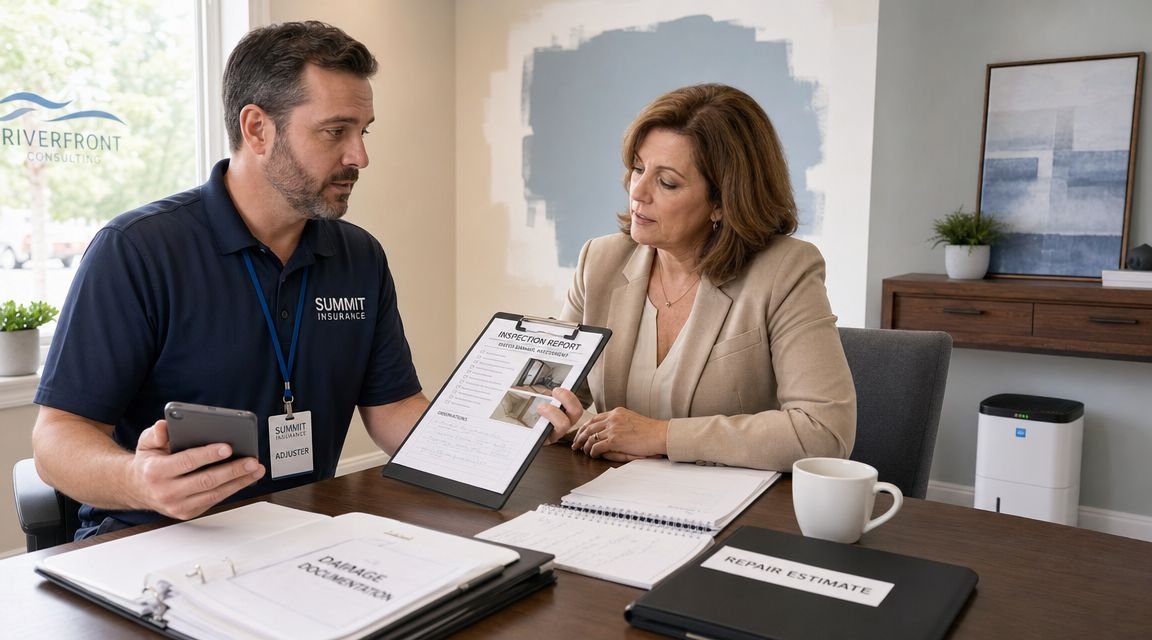
What to say in the first notice of loss
Keep the initial report clean and factual. You don't need legal language. You need clarity.
Use a format like this:
Property at [address] sustained damage on [date] at approximately [time]. Suspected cause is [burst pipe/roof leak/fire/smoke/etc.]. Affected areas currently include [rooms, suites, floors]. We have taken temporary steps to prevent further damage and are preserving evidence. Please confirm claim number, assigned adjuster, and inspection timing.
That gives the carrier the basics without overcommitting to facts you don't yet know.
What the adjuster is looking for
Adjusters usually focus on four questions:
- What happened
- What was damaged
- What was the condition before the loss
- What is necessary now to mitigate and restore
If your file answers those questions in an orderly way, the conversation tends to stay productive. If not, the claim can drift into repeated requests for the same information.
In our experience handling commercial losses in Los Angeles, the first site visit often shapes the tone of the entire file. When a contractor walks the property with the adjuster using moisture maps, room labels, and a written scope, the discussion becomes more precise. Instead of debating whether damage exists, both sides can focus on what needs to be included.
How to prepare for the inspection
Before the adjuster arrives, have these ready:
- A loss summary with date, time, suspected source, and immediate actions taken
- A damage map that identifies affected rooms, tenants, and building systems
- A document folder with photos, maintenance records, emergency invoices, and lease information if relevant
- A question list covering access, business interruption, tenant improvements, code upgrades, and next steps
One useful outside reference for owners dealing specifically with roof-related losses is this guide on Arizona Roofers for claims assistance. It's geographically different, but the walkthrough on documenting storm and roof issues is still useful as a process model.
The contractor's role in claim speed
A restoration contractor doesn't approve coverage. The carrier does. But the contractor can materially improve how fast the adjuster understands the loss by documenting mitigation, preserving evidence, and submitting a scope that matches the observed damage.
The value of a coordinated restoration partner becomes apparent to many business owners. Onsite Pro Restoration documents emergency work, supports scope discussions, and helps property owners present a cleaner record during adjuster review. That's especially useful when multiple suites, common areas, or hidden moisture are involved.
Bring the adjuster to the evidence, not the other way around. A clean room-by-room package saves rounds of follow-up.
If you disagree with the adjuster's estimate, don't default to emotion. Respond with line-item support, updated photos, technical findings, and a revised scope. The file gets stronger when every disagreement ties back to documented conditions.
Avoiding Common Pitfalls and Claim Denials
Most denied or reduced commercial property insurance claims don't fail because the owner forgot to call. They fail because the story of the loss becomes muddy. Water source is unclear. Pre-loss condition isn't documented. Repairs start before inspection. Damaged materials disappear.
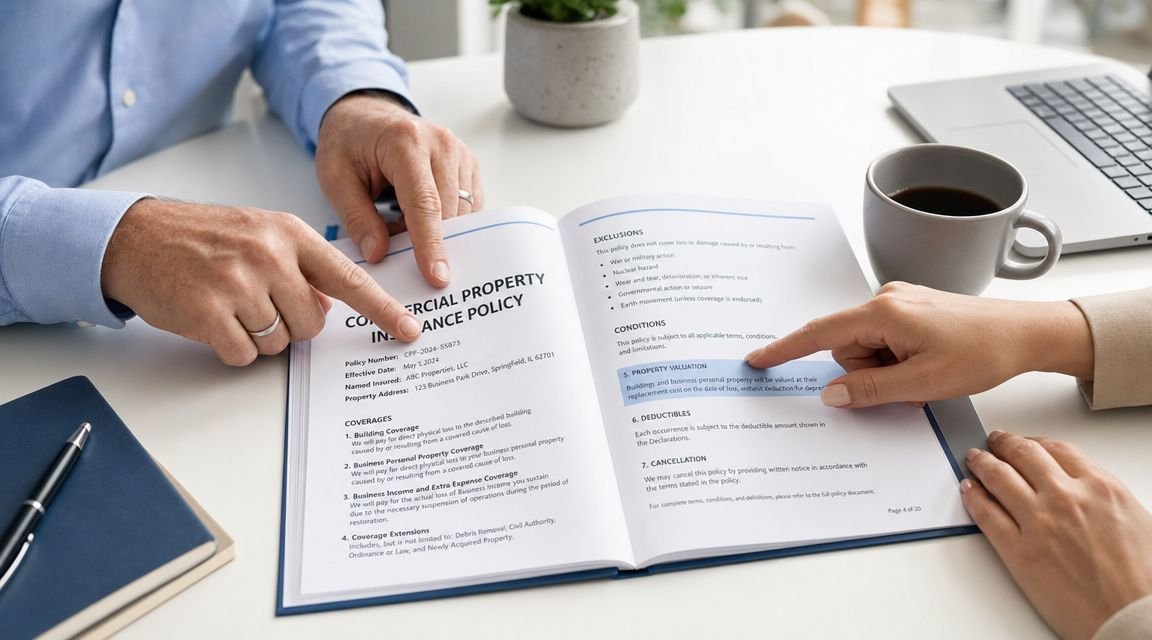
Water damage isn't one category
This is the dispute I see confuse business owners most often. They hear "water damage" and assume coverage. The issue is usually where the water came from.
Many policies may cover sudden interior water damage from something like a burst pipe, but often exclude flood or long-term seepage. Atlas Insurance's explanation of claims commonly not covered under commercial property insurance highlights that the source and timing of the intrusion often decide the outcome.
If a property manager in Glendale mops up a weekend leak, removes baseboards, and throws out saturated materials before documenting the broken supply line, the carrier may question whether the loss was sudden, gradual, or even maintenance-related.
Mistakes that create avoidable disputes
Permanent repairs too early
Temporary protection is fine. Permanent reconstruction before inspection often destroys proof of scope.No itemized cost ledger
A vague invoice for "cleanup and repairs" doesn't help much. Carriers want separation between mitigation, demolition, drying, and rebuild.Poor source documentation
Take photos of the failed component, not just the wet carpet it caused.Ignoring policy language
Owners often focus on damage and miss coinsurance, vacancy concerns, or tenant-improvement issues that affect recovery. For a plain-language overview of coverage basics, review what commercial property insurance can cover.
Cleanup can hurt the claim if it erases the evidence needed to prove cause.
Why denials often start with preventable gaps
A lot of denial reasons look different on paper but share the same root problem. The file doesn't show a clear covered event. If you want another example of how carriers frame these issues, this write-up on avoiding insurance claim denials in Alabama is useful because the logic behind late notice, poor documentation, and excluded causes applies far beyond one state.
For broader consumer guidance, the Insurance Information Institute is also worth reviewing for insurance terminology and policy basics.
The practical takeaway is simple. Don't treat a commercial loss like a cleanup job. Treat it like a proof problem.
Frequently Asked Questions About Commercial Claims
Commercial property insurance claims usually feel slow because owners assume the claim is only about repair cost. It isn't. It's about coverage, condition, cause, valuation, and documentation, all moving at once.

How long does a commercial property insurance claim take
It depends on the size and complexity of the loss, how quickly the site is stabilized, and how complete your documentation is. A single-suite water loss moves differently than a multi-tenant building with hidden moisture, tenant improvements, and business interruption issues.
What speeds things up is early notice, organized records, and a room-by-room scope. What slows things down is missing invoices, unclear cause of loss, and repairs that began before the adjuster could inspect.
What happens if I disagree with the adjuster's estimate
Push back with documentation, not general frustration. Ask for the estimate in writing, compare line items, and identify what was omitted. Then respond with photos, drying logs, contractor scope notes, code-related concerns, and any pre-loss records that support your position.
A disagreement doesn't automatically mean bad faith or a dead end. Many estimate gaps come from incomplete site information during the first inspection.
Will my policy cover water damage in my commercial building
Maybe, but the right question is what kind of water event happened. A sudden interior discharge, such as a burst pipe, may be treated very differently from floodwater, sewer backup, or long-term seepage. That source issue is where many disputes begin.
If the cause isn't obvious, preserve the failed component, photograph the area before demolition, and document timing as tightly as possible.
Should I start repairs before the adjuster arrives
Start mitigation right away if needed to prevent further damage. Don't start full permanent repairs unless the carrier has inspected or you've documented conditions thoroughly enough to protect the claim.
Drying, extraction, tarping, and containment are usually part of protecting the property. Rebuilding walls, replacing finishes, and discarding key evidence too early can create problems.
Why are commercial property insurance rates still rising
The market has stayed tight even when some loss metrics improved. The NAIC's mid-year 2025 analysis reported 31 consecutive quarters of increased commercial rates, and commercial property rate increases slowed to 1.9% in Q2 2025 from 8.9% in Q2 2024. The same NAIC analysis also noted average premium per policy rose 7.4% in 2024, even as commercial property loss ratio and severity decreased versus 2023, as shown in the NAIC mid-year 2025 property and casualty analysis.
For business owners in California, that hard market means carriers are pricing cautiously and reviewing claims closely. It doesn't mean valid claims won't be paid. It does mean weak documentation gets exposed faster.
What should I keep in my claim file
Keep one central file with:
- Photos and videos from the first discovery through completion
- Maintenance records showing pre-loss condition
- Emergency invoices and a running mitigation ledger
- Emails with the carrier and adjuster
- Tenant and lease records if multiple occupants are affected
- Inventory and equipment records for damaged contents
If the loss involves active intrusion or hidden moisture, a contractor focused on commercial water damage restoration can help preserve evidence while the property is stabilized.
Does my contractor need to understand insurance documentation
Yes. Not because the contractor decides coverage, but because bad documentation from the field creates claim friction. The most useful contractors don't just dry the building. They label rooms, track equipment, record moisture data, preserve removed materials when needed, and write scopes that another reviewer can follow.
That's especially important in Los Angeles commercial spaces where shared walls, mixed-use buildings, and tenant improvements blur responsibility.
Is business interruption automatic after property damage
Not always. Owners often assume any disruption equals payment. The carrier usually wants supporting records that tie lost use, extra expense, or reduced operations to a covered property event. Keep clean sales records, payroll notes, tenant communications, and temporary operating expenses if they apply.
What's the biggest misconception about commercial property insurance claims
That speed means haste. It doesn't.
The fastest claims are usually the best documented ones. Owners who rush into permanent repairs, skip scene photos, or throw away damaged materials often create the very delays they're trying to avoid.
If you're dealing with sudden water, fire, smoke, or mold damage in Los Angeles, Burbank, Glendale, Sherman Oaks, or nearby communities, Onsite Pro Restoration can help stabilize the property and produce the documentation your insurer will ask for. Call 818-336-1800 for a free inspection and immediate help with your commercial damage claim.
Suggested image placement 1: Near the opening scenario. Alt text already includes the keyword context for commercial property insurance claims in an office flood.
Suggested image placement 2: In the adjuster section beside the inspection checklist. Alt text already supports the keyword context around commercial property insurance claims and adjuster review.
Schema opportunity: FAQ schema, HowTo schema, LocalBusiness schema.