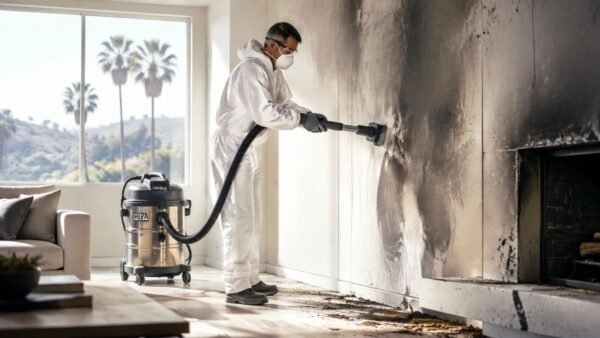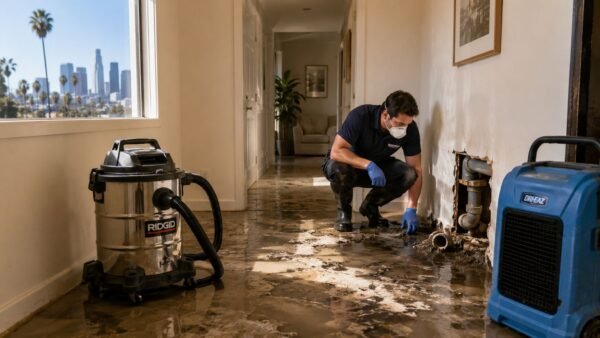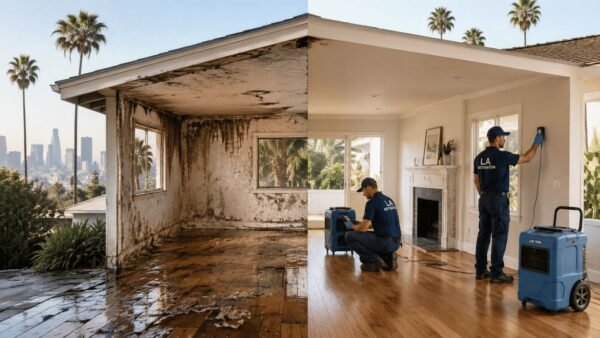

A burst pipe, a wet ceiling, or a kitchen that smells like smoke after the trucks leave can turn a normal Los Angeles morning into a race against the clock. Restoration services Los Angeles homeowners need are not just cleanup crews, they're the people who decide whether damage stays a contained loss or grows into a rebuild, an insurance fight, and weeks of disruption.
In a city like Los Angeles, CA, the right response depends on the kind of loss, the building type, and how fast someone gets on site. A slab leak in Sherman Oaks, smoke in a Burbank condo, or sewer backup in Glendale all demand different tools, different documentation, and different pricing.
What Restoration Services Cover in a Los Angeles Home
A North Hollywood bungalow with a slab leak usually doesn't look dramatic at first. The floor may feel cool in one corner, baseboards may swell, and a cabinet wall may smell damp before anyone sees staining. By the time the stain shows, the water has often traveled farther than the homeowner expects, which is why restoration services Los Angeles crews start by tracing the loss, not by guessing at the finish.
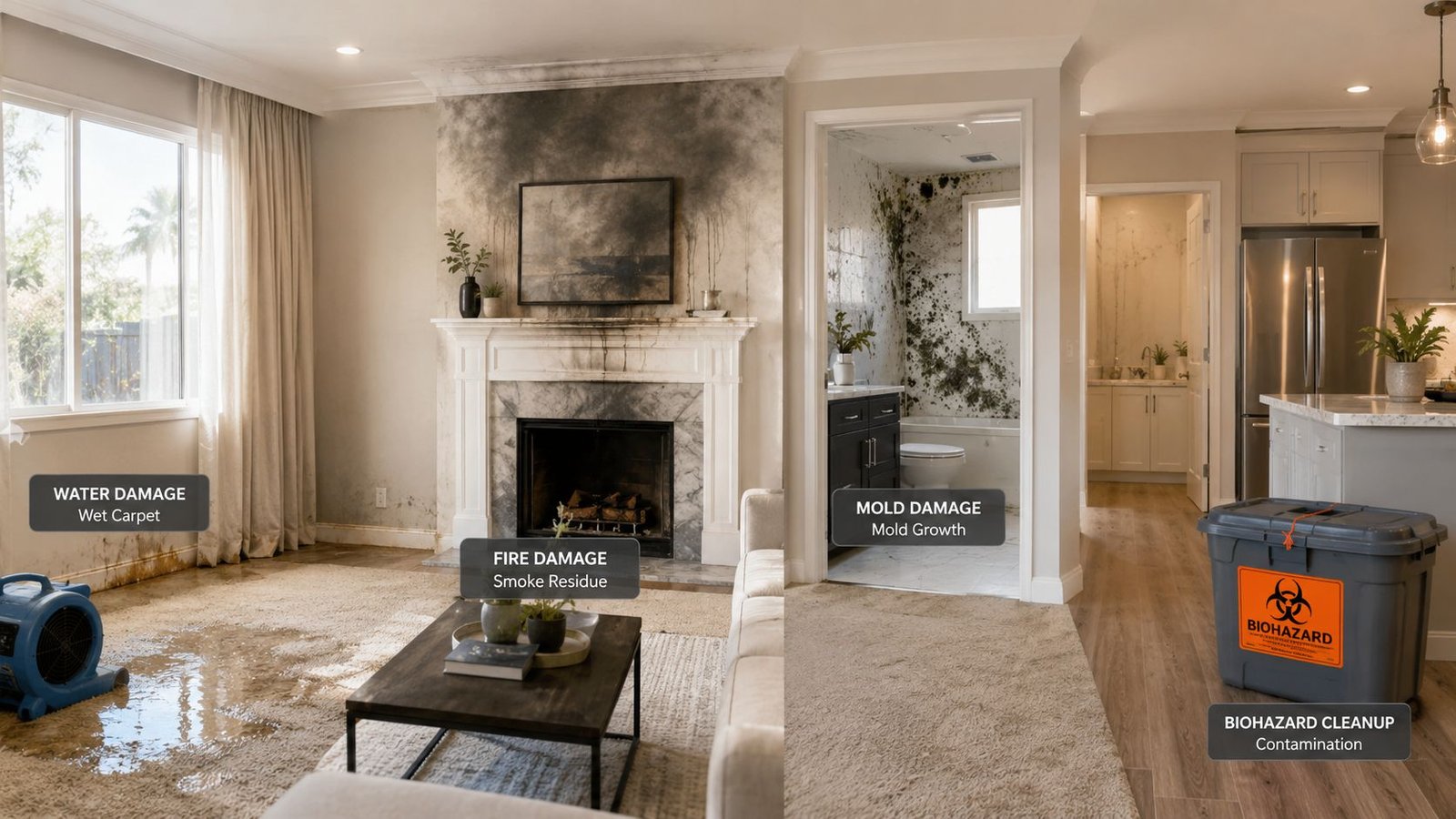
The four categories most Los Angeles properties run into
The first category is water damage restoration, which covers burst supply lines, leaks behind walls, appliance failures, and floodwater after storms. In dense neighborhoods with older plumbing and mixed construction, water is the loss that turns up most often and the one that punishes delay fastest. If you're trying to understand mitigation versus repair, the primer on what water mitigation means is the right starting point.
The second is fire and smoke restoration. In a Los Angeles home, the visible burn damage may be limited to one room, but soot, odor, and residue can spread through HVAC returns, cabinets, textiles, and porous framing. That's why a burned kitchen in West Hollywood can need far more than surface cleaning.
The third is mold remediation. Mold often follows hidden moisture, especially when a leak sat inside a wall or under flooring long enough for materials to stay wet. In a multifamily building in Glendale or an older home in Encino, the work is less about what looks dirty and more about what stayed wet.
The fourth is biohazard or sewage cleanup. A sewer backup is not a standard water job. It's a contamination issue, and the crew has to treat affected materials, air handling, and contents differently. For a clearer breakdown of that scope, the biohazard clean up guidance is worth reviewing before you authorize work.
Practical rule: if the loss involves contamination, odor, hidden moisture, or structural drying, you're already outside simple housekeeping and into restoration.
For a quick way to explain the scene to a contractor or adjuster, a short phone video walkthrough of the damage is often enough for internal notes and claim support.
The First Hour After Water, Fire, or Sewage Damage
The first hour matters because small mistakes make expensive damage bigger. If the source is still running, shut it off. If it's safe, stop the leak, kill the affected breaker, and keep people away from standing water, wet ceilings, or any area with active smoke residue. If sewage is involved, leave the area closed off and don't track contamination through the house.
What to do before the truck arrives
Start with documentation. Take wide photos first, then close-ups of damaged floors, walls, cabinets, contents, and any visible source point. That record helps with the insurance file and gives the crew a cleaner starting point. If you need a step-by-step look at basement flood triage, our flooded basement cleanup guide is a useful companion reference.
Next, protect the parts of the house that aren't wet yet. Move dry contents out of the path of the loss if you can do it safely, and keep a list of what was moved. Don't throw away soaked baseboards, drywall, carpet pad, or insulation before the adjuster or restoration lead has had a chance to document them. That shortcut can weaken a claim and make the scope harder to prove later.
Running HVAC through a wet ceiling or wet duct chase is a common mistake. It spreads moisture, dust, and odor to rooms that were initially unaffected.
Do not start random fans in a way that pushes air from contaminated rooms into clean ones. A wet ceiling, a smoke event, or a sewer backup needs containment and a deliberate drying plan, not a guess. If you've already called a crew, ask them when they expect to arrive, what they want left in place, and whether they want power isolated before entry.
For homeowners looking for a practical next step, the emergency water cleanup page is a good reference for how a professional response is typically organized.
How Water, Mold, Fire, and Biohazard Cleanup Differ
The biggest mistake homeowners make is assuming every loss is just “cleanup.” It isn't. A clean supply-line leak is usually a drying and selective removal job. A Category 3 sewer backup is a hazardous cleanup with different protective measures, disposal rules, and containment needs. Smoke damage is its own process again, because soot removal and odor control are separate tasks.
Side-by-side differences that change the job
| Restoration Service Categories Compared for Los Angeles Properties | Typical LA Price Range | Main Technical Work | Primary Cost Driver |
|---|---|---|---|
| Water damage | About $3,728 on average in Los Angeles, with a typical range of $1,567 to $5,960 | Extraction, drying, monitoring, selective demolition | Area affected, saturation depth, drying time |
| Mold remediation | $1,200 to $3,800 | Containment, removal, cleaning, post-work verification | Spread, hidden moisture, material loss |
| Fire and smoke | Qualitatively higher when odor, soot, or contents are involved | Soot cleanup, odor control, decontamination, contents handling | Surface area, contamination level, rebuild needs |
| Biohazard or sewage | Usually above a simple dry-out job because of contamination controls | Removal, disinfection, disposal, structural protection | Contamination class, affected materials, access limits |
The water number above comes from Los Angeles pricing data, while the broader local range reflects how project size and severity change the bill. Angi reports $3,728 as the Los Angeles average for water damage restoration, with a $1,567 to $5,960 range and $3 to $7.50 per square foot depending on severity, while a local directory places average water jobs in the city at $3,000 to $12,000 depending on area, category, and drying needs. Those are not competing truths, they're different snapshots of the same market.
That gap is normal in Los Angeles because scope changes fast. A small leak under a vanity can stay in the lower end. A broken sewer line or a fire loss with cabinetry, HVAC contamination, and contents handling climbs quickly.
What separates the four scopes in practice
Water work lives or dies on moisture removal. Mold work adds containment and verification. Fire work adds odor and soot management. Biohazard work adds contamination control and disposal discipline.
The first quote is rarely the real quote. If the contractor hasn't opened walls, mapped moisture, and checked for hidden contamination, the estimate is still provisional.
For businesses and commercial landlords, the restoration expertise standard isn't just about speed. It's about knowing which materials can be saved, which need removal, and how the loss will affect tenants, operations, and reoccupancy. That's where documentation matters as much as labor.
Inside a Standards-Based Restoration Process
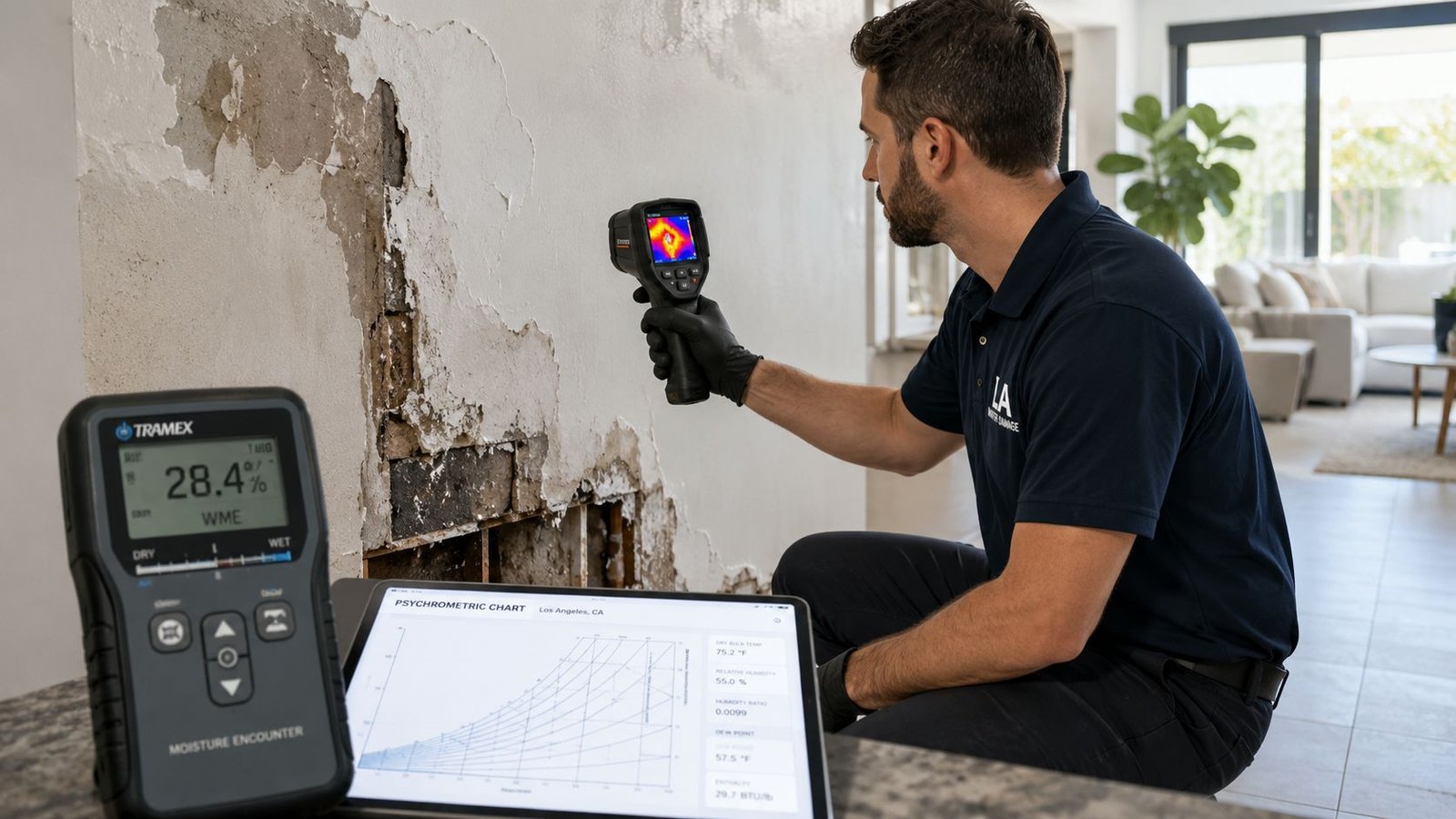
A real dry-out doesn't begin with fans. It begins with measurement. The ANSI/IICRC S500 framework expects moisture mapping, psychrometric documentation, and drying validation, which means the crew has to prove the structure is drying instead of assuming it is. In dense Los Angeles homes, that difference decides whether the repair holds or the wall gets reopened later.
What the crew should document
The S500 approach classifies water by both contamination and Class 1–4 absorption and evaporation load. A small area with limited absorption may dry in place. A larger loss with heavy saturation often needs controlled demolition, targeted removal, and equipment staged to match the load. More on the certification side is covered in the IICRC certification overview.
A professional crew should leave a paper trail that includes readings, photos, and daily progress notes. That record helps the technician decide when materials have reached dry standard and gives the adjuster evidence that the job followed a defensible process. If a contractor only drops in fans and leaves, that's not a restoration plan.
After the first inspection, technicians usually build a work plan around the affected materials, airflow, and humidity profile. They then return with controlled dehumidification, containment where needed, and repeat readings until the structure stabilizes.
The video above is useful because it shows the kind of methodical inspection Los Angeles homeowners should expect before anyone talks about rebuilding. That's especially important in multifamily properties and commercial spaces, where a weak first pass can create tenant complaints and claim disputes later.
Good documentation is not paperwork for its own sake. It's the record that shows what was wet, what was removed, what was dried, and why the scope changed.
What Restoration Costs in the Los Angeles Market
Los Angeles prices don't line up neatly with national averages because labor, permitting, construction complexity, and remediation logistics are different here. A water loss in a dense coastal market can get expensive faster than the same event in a smaller city. In practical terms, a homeowner may think they're paying for drying, but the bill often includes access work, demolition, containment, and coordination around occupied space.
The clearest local benchmark is the water damage average of $3,728 in Los Angeles from Angi, with a typical $1,567 to $5,960 range and a per-square-foot estimate of $3 to $7.50. A local directory pushes the practical upper range to $3,000 to $12,000 depending on the affected area, category, and drying needs. Use those figures as a bracket, not a promise.
The variables that move the estimate
A small bathroom leak doesn't behave like a multi-room loss. If the wet area stops at baseboards and a narrow section of drywall, the job may stay manageable. If the moisture migrated into flooring, cabinetry, or subfloor, demolition and drying time rise together.
Water category matters too. Clean supply-line water is simpler than gray water, and gray water is simpler than black water or sewer-related contamination. That category difference drives labor, containment, disposal, and how much material can stay in place.
Drying days matter as well. The longer the structure stays wet, the more equipment, monitoring, and labor are usually required. Contents manipulation can add cost too, especially when furniture, appliances, or tenant belongings have to be moved, wrapped, or temporarily stored.
You can get a sharper sense of line-item expectations from the water damage repair cost resource, which matches what most adjusters and contractors try to define early in the claim.
What a fair bid usually does
A fair estimate explains the scope in plain language. It identifies the source, the affected areas, the materials at risk, and the likely demolition boundary. It also states what is being monitored and what may change if hidden damage appears.
A bid that looks cheap because it skips containment, moisture mapping, or post-dry verification is usually the most expensive one in the long run. In Los Angeles, especially in Sherman Oaks, Van Nuys, and Glendale, the right estimate is the one that proves the loss has been fully measured before repair starts.
Insurance Coverage, Claims, and Documentation
Insurance pays smoothly only when the loss is reported quickly and documented well. Sudden water, fire, and storm damage are usually handled differently from slow leaks, wear and tear, or maintenance issues. That distinction matters because many denials start with a delay, a missing photo set, or a scope that can't show when the damage occurred.
The cleanest claims are the ones that show cause, timeline, and mitigation. If the source was a burst pipe, a fire event, or a storm intrusion, the contractor should document the source, the affected areas, and the immediate steps taken to reduce further damage. That usually includes photos, moisture readings, scope notes, and equipment logs.
What adjusters want to see
Adjusters look for a clear damage narrative. They want to know what happened, when it happened, what was wet or contaminated, and what was done to stop the damage from spreading. If the home sat unmitigated for days, the carrier may question the added loss.
A contractor who coordinates directly with the insurer can shorten the cycle because the scope gets shared in the same language the claim team uses. That doesn't guarantee payment, but it reduces avoidable friction and helps keep the file moving. If you're dealing with a sewer backup or a mold issue, a policy rider may matter more than the homeowner expects, so the exact language in the policy should be checked early.
Delayed reporting is expensive. The longer moisture stays hidden, the harder it is to separate original damage from secondary growth or deterioration.
For homeowners, the best move is simple. Report the claim quickly, preserve evidence, and don't authorize broad demolition before someone has documented the loss. If you're unsure whether the policy language supports the repair, keep the scope narrow until the adjuster and restoration lead agree on the starting point.
How to Choose a Restoration Contractor in Los Angeles
Los Angeles has a crowded restoration market, and that crowd can hide real differences in competence. The Better Business Bureau lists 201 restoration companies near Los Angeles, which means the buyer has to screen hard. A good website and a fast phone answer aren't enough when walls are wet, smoke is in the ductwork, or sewage is in the crawlspace.
The checks that matter most
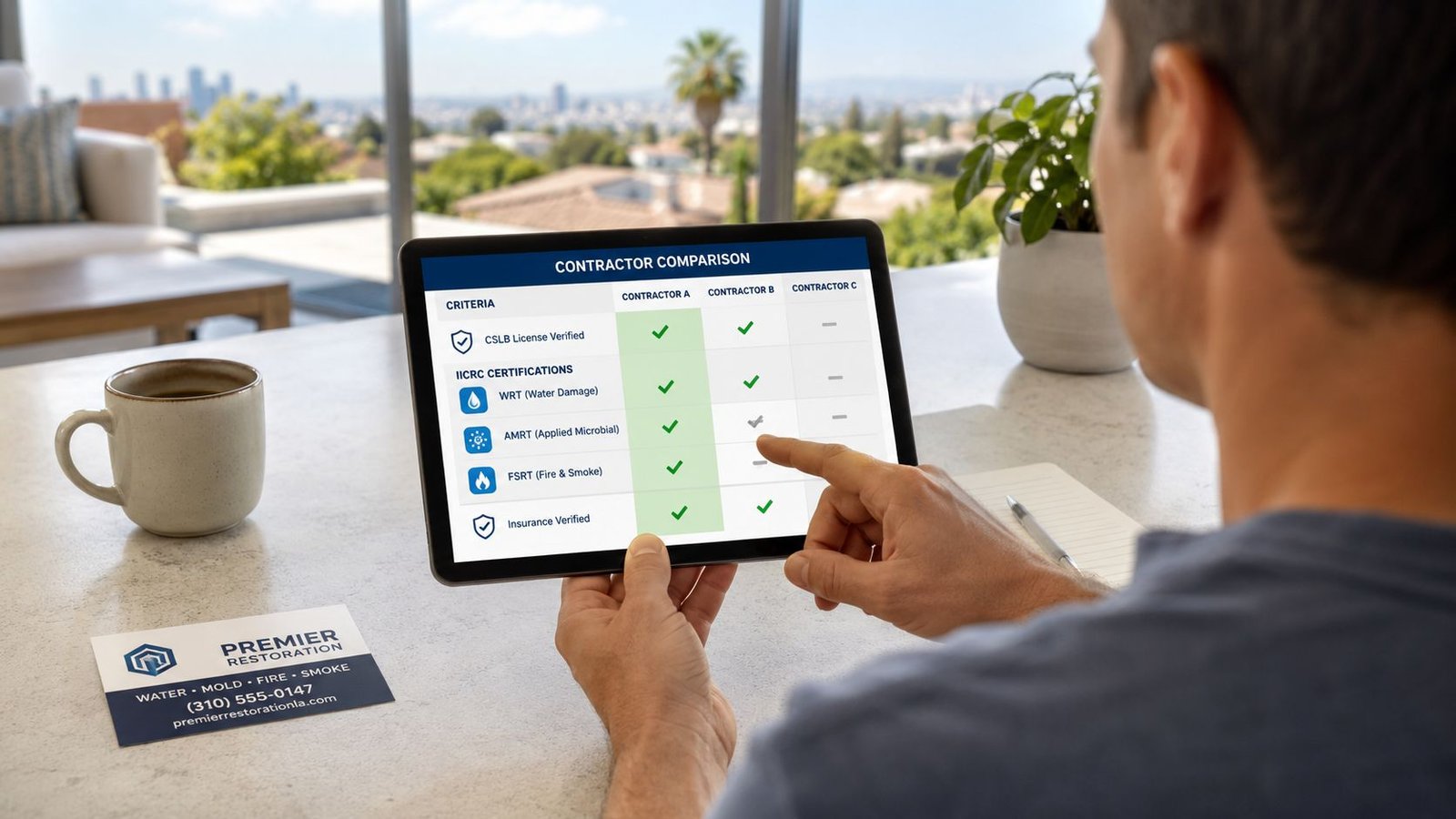
Start with licensing. California contractors should hold a valid CSLB license, and restoration-specific certifications matter too. Look for IICRC WRT for water restoration, IICRC AMRT for mold remediation, and IICRC FSRT for fire restoration.
Response time matters in this market. A Los Angeles-focused directory estimates emergency response is often around 60 minutes, which is reasonable for a local crew that's staged nearby. If a contractor needs half a day just to dispatch, that's not emergency service.
Then inspect the documentation habits. Ask whether they perform moisture mapping, photo logs, daily equipment readings, and written scope notes. Those habits aren't just administrative. They're what make the work defensible if the insurer questions the claim later.
For a broader look at contractor-level judgment on commercial projects, our commercial water damage restoration guide is helpful because it highlights the kind of coordination commercial claims usually demand.
Questions to ask before you sign
- What license and certifications do you hold? Ask for the CSLB number and the specific IICRC certifications.
- How fast can you get on site in my neighborhood? A real local team should answer in a concrete timeframe.
- What will you document for the claim? The answer should include photos, readings, and scope notes.
- Will you coordinate with my adjuster? If they won't, expect more work on your side.
- What changes could increase the price? You want to hear about hidden moisture, contaminated materials, and code-related work before authorization.
In North Hollywood, Studio City, Burbank, and Beverly Hills, the best filter is simple. Choose the contractor who explains the process clearly, documents the loss, and won't start guessing at the finish before the structure has been measured.
Why Onsite Pro Restoration Serves Los Angeles Homes and Businesses

Onsite Pro Restoration serves Los Angeles, CA and the surrounding communities within a 25-mile radius of North Hollywood with 24/7 emergency response. The team handles water extraction, structural drying, mold inspections, smoke and soot cleanup, deodorization, and biohazard cleanup, then documents the loss so the insurance file has a clean starting point.
That matters because the first hour shapes the rest of the claim. A crew that shows up with the right equipment, the right paperwork, and a clear mitigation plan can keep a manageable loss from turning into a long rebuild. In neighborhoods from Glendale to Sherman Oaks, that difference is usually the one homeowners remember most.
If you need help now, call 818-336-1800 and speak with a local team that works restoration the way it should be done, with documentation, containment, and direct insurance coordination. Visit our 24/7 emergency restoration page to request a free assessment and get the right response on site before hidden damage gets worse.