
A basement problem often starts with a smell, not a stain. You walk downstairs to grab storage bins, laundry, or tools, and the air feels heavy. It smells earthy, stale, and wrong. In Los Angeles homes, that smell often shows up after seasonal rain, a small plumbing leak, condensation around cold pipes, or seepage through an older foundation wall.
If you're searching for basement mold removal, you're probably already asking the right question. The bigger issue usually isn't the visible patch on the wall. It's what moisture has been doing behind drywall, under flooring, inside stored materials, and in the air you breathe. A proper response protects your health, limits structural damage, and gives you documentation you can use for insurance or a future sale.
Learn what causes mildew odors in enclosed spaces
That Musty Basement Smell Is A Warning Sign
You open the basement door after a rainy week in Los Angeles and catch that stale, earthy odor before you reach the bottom step. That smell usually means one thing. Moisture has been sitting in the space long enough to soak into dust, paper-faced drywall, wood, carpet backing, or stored contents.
I see this in LA homes more often than homeowners expect. A finished lower level in Encino may trap humidity behind drywall. A hillside property in Sherman Oaks may take on water through a small foundation crack. An older home near the coast can hold damp air for days after a minor leak or condensation event. Different cause, same warning sign.
The smell matters because mold often starts growing quickly after water exposure, and odor can show up before staining becomes obvious. If the smell keeps coming back after mopping, deodorizing, or running a fan, the source is still active or the contaminated material is still in place.
That is the part many homeowners miss.
A musty basement is not just an air freshener problem. It is an investigation problem. The job is to identify where the moisture is coming from, determine what materials are affected, isolate contamination if needed, and verify that the space is clean before anyone calls it finished. For homeowners thinking ahead to insurance questions or a future sale, that last step matters. Good remediation should end with documentation, not guesswork.
If you want a closer look at why enclosed spaces develop that persistent odor, read more about what causes mildew smells indoors.
Property value is part of this too. Lingering odor can point to hidden damage in framing, drywall, flooring, or stored items, and buyers notice it immediately. The right response starts with moisture control and a proper remediation plan, then finishes with post-remediation verification so you have proof the basement was cleaned correctly.
How to Identify Mold In Your Los Angeles Basement
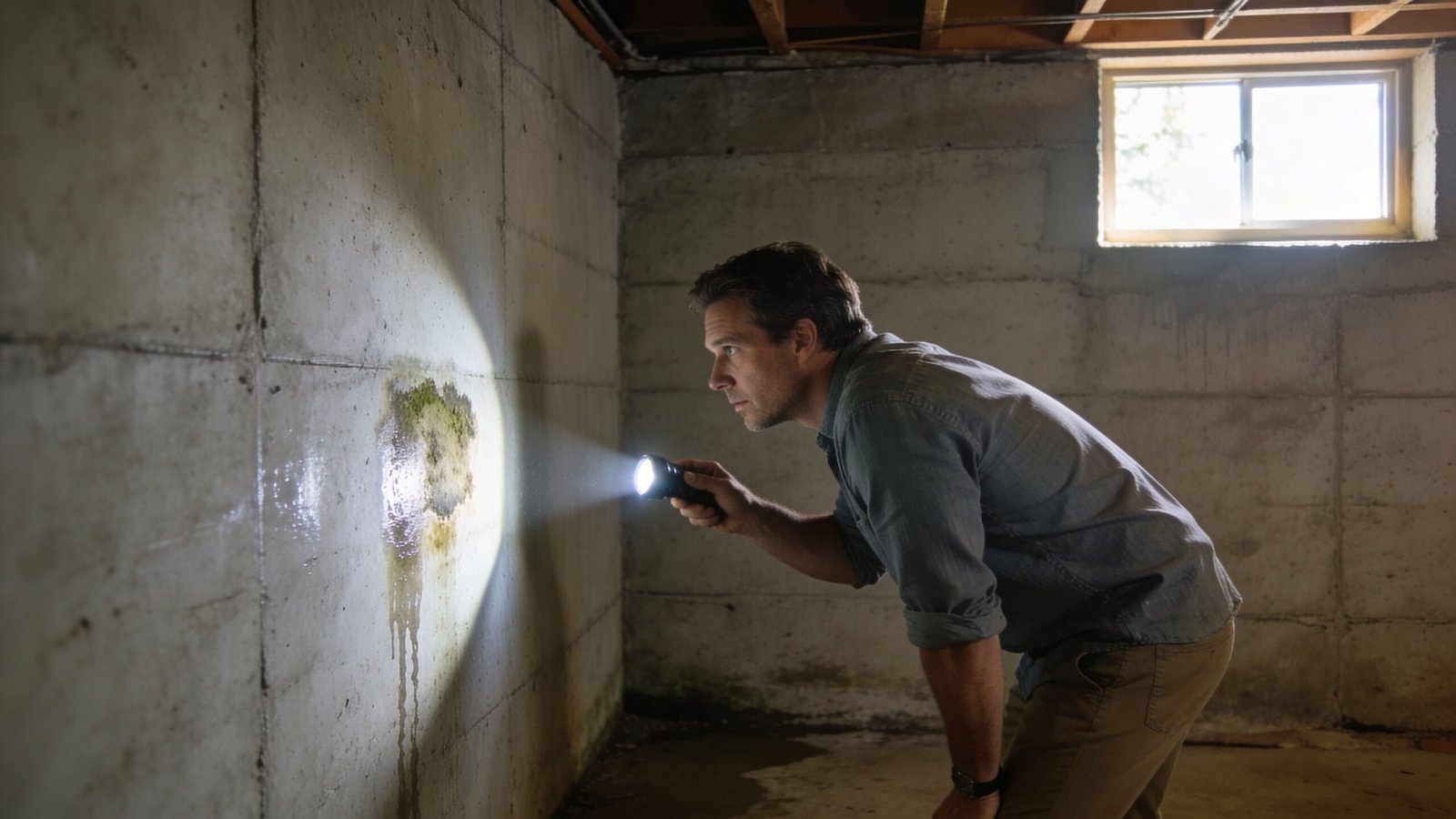
A basement inspection starts with a pattern, not a single spot. In Los Angeles homes, I look for where moisture has been returning, where air stays trapped, and where building materials have had enough time to stay damp.
Start with sight and smell
Visible growth can show up on drywall, baseboards, carpet tack strips, wood framing, stored contents, and around pipe penetrations. Color is not a reliable identifier. Basement mold may appear white, green, gray, brown, or black, and the texture may look powdery, fuzzy, or slick depending on the surface and the amount of moisture present.
Odor often narrows the search faster than appearance. If one section of the basement smells stronger, inspect the adjacent wall cavity, the water heater closet, the underside of stairs, and any finished wall built against concrete or block. Mold frequently grows on the back side of materials before it becomes obvious on the finished face.
Basements and other below-grade spaces stay at risk because they hold moisture longer than upper floors. The practical question is not just "Do I see mold?" It is "What stayed wet here, and for how long?"
Check the moisture patterns
In many Los Angeles basements, moisture evidence shows up before visible growth does. Watch for recurring conditions like these:
- After rain: Darkening along foundation walls, damp wall-floor joints, or one corner that repeatedly feels humid
- After plumbing use: A wall near a bathroom, laundry line, or water heater develops odor or a cool damp surface
- During coastal humidity or marine layer periods: Condensation forms on colder surfaces, especially near uninsulated pipes or foundation walls
- In hillside homes: Seepage appears where soil pressure, drainage failure, or old cracks push water toward below-grade walls
These patterns matter because they help separate a one-time spill from an active moisture source. If the same area keeps showing up on your inspection, assume there is hidden impact until proven otherwise.
If you suspect growth inside a wall assembly, this guide on how to check for mold in walls covers the signs homeowners often miss.
Pay attention to use patterns inside the basement
Finished basements in Los Angeles often serve as offices, gyms, storage rooms, or guest space. That changes how mold shows up. A storage-only area may hide a problem behind boxes for months. A basement office usually gets noticed sooner because people spend enough time there to catch an odor shift, rising humidity, or surface staining around baseboards and corners.
HVAC equipment can complicate the picture. If return air pathways, duct runs, or air leakage connect the basement to the rest of the house, contamination may not stay isolated to one room. Identification should include the surrounding materials and the air path, not only the stained surface.
A short visual explainer can help you compare what you're seeing with common basement conditions.
Areas that deserve extra attention
Certain locations hide damage well and are worth checking carefully:
- Behind finished walls: Drywall or paneling installed directly against foundation surfaces can trap moisture
- Under carpet and pad: Surfaces may feel dry while the pad below still holds odor and contamination
- At rim joists and sill plates: Air leakage and condensation can create isolated growth on wood
- Around cardboard, fabric, and stored paper: Porous contents absorb moisture and can spread contamination
- Near sump areas, water heaters, and laundry equipment: Small leaks often go unnoticed long enough to affect nearby materials
A homeowner inspection helps confirm suspicion. It does not confirm that the space is clean. Once you find recurring moisture, visible growth, or a persistent odor, the right next step is a professional assessment that defines the affected area and, after remediation, includes post-remediation verification or clearance testing so you have documented proof the basement was properly cleaned.
Health Risks and Structural Damage from Basement Mold
Some homeowners treat basement mold like a housekeeping issue. It isn't. It's a contamination issue tied to moisture, air quality, and material damage.
Why exposure matters
Mold affects people unevenly. One person may notice very little. Another may react quickly with allergy symptoms, coughing, sinus irritation, or an asthma flare. The concern is higher for children, older adults, and anyone with allergies or asthma. That’s one reason a persistent basement odor shouldn't be ignored, especially if the basement air connects to the rest of the house.
When lower-level air is contaminated, it doesn't stay politely in the basement. Air pathways, duct leakage, and normal house pressure changes can move that air upward into living spaces.
Basement mold is a whole-house concern when the basement is part of the home's air system.
What mold does to building materials
Mold feeds on organic material. In a basement, that usually means drywall facing, wood framing, stored paper products, carpet backing, insulation facings, and dust that has settled on surfaces. Homeowners often focus on the stained area they can see, but the more expensive problem is what happens after prolonged moisture exposure behind the finish materials.
Here’s where structural trouble starts to show:
- Drywall softens and loses integrity
- Wood framing stays damp long enough to deteriorate
- Insulation holds moisture and stops performing properly
- Baseboards, trim, and flooring edges warp or delaminate
- Odor becomes embedded in porous materials
A basement that has already taken on moisture often needs water-damage evaluation alongside mold work. This is especially common when seepage, pipe leaks, or drainage failures are involved. If that sounds like your situation, review how basement water damage affects structure, not just finishes.
The hidden cost of waiting
The mistake I see most often is delay. Homeowners clean a visible spot, run a fan for a day, and assume they've handled it. Meanwhile, the wall cavity stays wet or the humidity stays high. By the time they call, the scope is larger because more material has to be opened, removed, dried, and documented.
What works: fast moisture control, proper containment, and material-specific remediation.
What fails: cosmetic cleaning over wet materials.
This is why professional remediation isn't an overreaction. It's the controlled process that keeps a localized basement issue from becoming a wider house problem.
Why DIY Basement Mold Removal Is A Mistake
You pull a storage bin away from a basement wall, wipe off a dark patch, and the smell is still there two days later. That is the point where DIY usually stops being cheap and starts creating a larger remediation job.
In Los Angeles homes, basement mold problems are often tied to seepage, condensation, plumbing leaks, or trapped humidity inside finished wall assemblies. A homeowner sees a stain on the surface. The actual scope may extend into drywall, insulation, sill plates, or the wall-floor joint. Surface cleaning does not answer the question that matters most. Is the material dry, cleanable, and safe to keep?
Why household cleaning usually fails
Store-bought cleaners can remove staining from hard, non-porous surfaces. They do not solve mold growth inside porous materials such as drywall, carpet pad, insulation, and unfinished wood. Scrubbing can also aerosolize spores and spread contamination beyond the original area, especially if the basement connects to HVAC returns, stairwells, storage rooms, or finished living space.
I see the same mistake again and again. Homeowners treat mold like dirt. Mold remediation is a controlled demolition and drying problem, followed by verification.
A small related example is black mold on window sills. The visible growth keeps returning when the moisture source is still active. Basements follow the same rule, except hidden cavities and porous materials make the consequences more expensive.
Where DIY jobs usually go wrong
The failure points are predictable:
- No containment: Disturbing mold without isolating the work area allows particles to spread to cleaner parts of the house.
- No moisture diagnosis: Cleaning the spot without addressing seepage, leaks, or humidity means growth returns.
- Wrong salvage decision: Wet drywall, insulation, and some carpet materials are often kept when they should be removed.
- No instrument testing: Hand-feel is not a drying standard. Moisture meters and humidity readings determine whether materials are dry enough to remain.
- No clearance standard: Homeowners often stop at “it looks better,” but that is not the same as documented success.
That last point gets missed. A proper job does not end when the staining is gone. It ends when the moisture issue is corrected, the affected area is remediated under containment, and post-remediation verification shows the space has returned to a normal condition. For Los Angeles homeowners, that documentation can matter if a claim is filed, a buyer asks questions during escrow, or the odor returns and you need proof of what was done.
DIY cleaning has a place for a very small, confirmed surface issue on a hard material with no odor, no ongoing dampness, and no hidden spread. A basement with repeated moisture, musty odor, finished walls, or health concerns needs professional remediation and clearance testing, not a spray bottle and a fan.
The IICRC Professional Mold Remediation Process
A Los Angeles homeowner usually calls after the smell gets stronger, a storage box comes out damp, or paint starts lifting near a below-grade wall. By that point, the question is not whether to wipe the surface. The question is how far the contamination goes, what materials can still be saved, and how to prove the area is clean when the job is over.
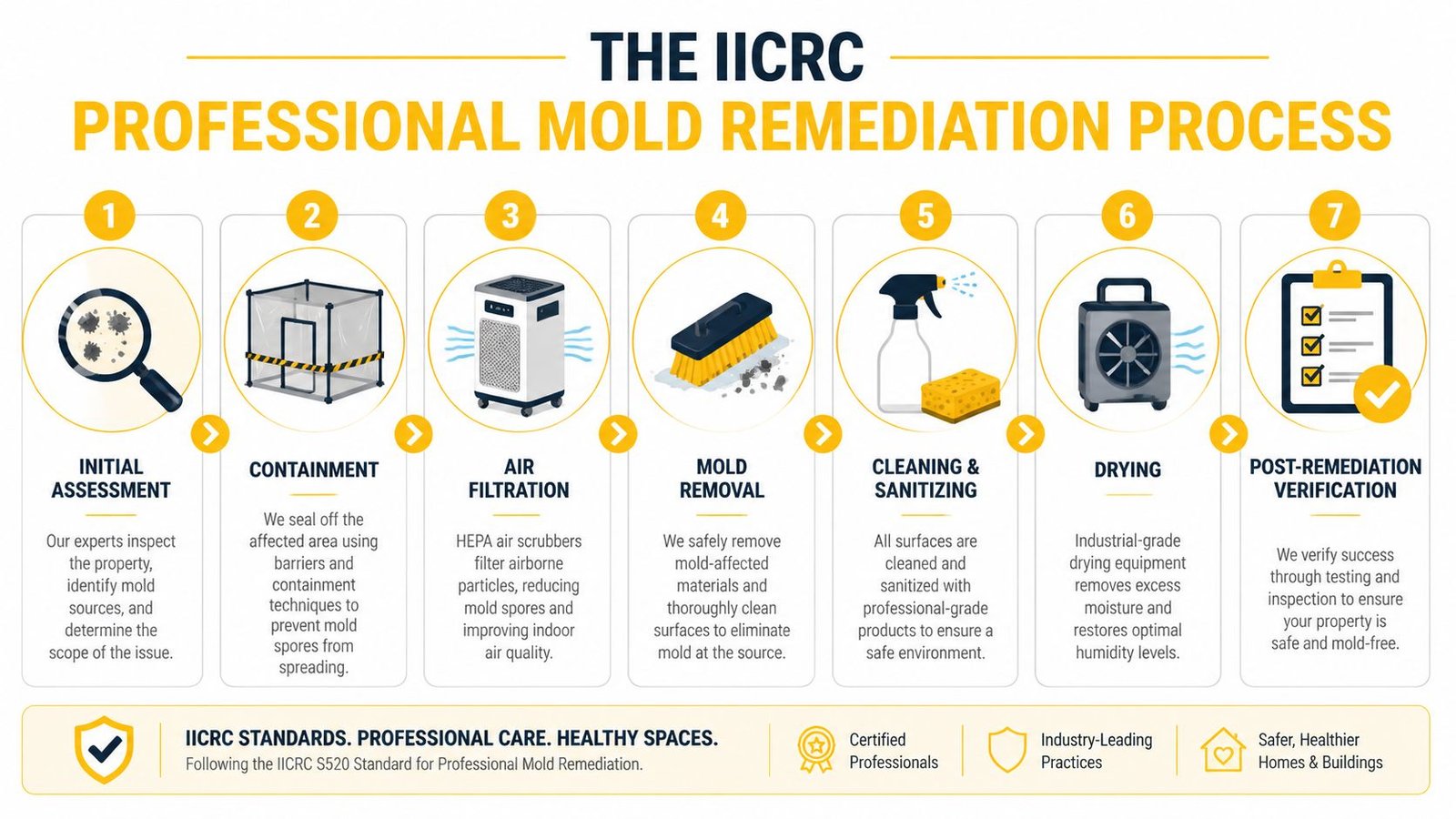
Inspection and assessment
The first step is scope control. An IICRC-based process starts with a close inspection of visible growth, moisture migration paths, adjacent finishes, and any signs that contamination has moved into wall cavities, insulation, or framing.
In Los Angeles basements, I pay close attention to wall-floor joints, exterior-facing walls, plumbing penetrations, stored contents against concrete, and finished materials installed tight to cooler below-grade surfaces. Moisture meters and hygrometers guide those decisions. Staining alone does not tell you whether drywall, wood, or trim can stay.
A good assessment also sets up the paperwork. If the homeowner may need records for insurance, disclosure, or a future sale, the contractor should document affected areas, readings, and the planned containment and removal methods before demolition starts.
Containment
Containment keeps the problem from spreading through the house while crews work. The affected basement area is isolated with plastic sheeting, zipper access, and, when the scope calls for it, negative air pressure.
This is the point where professional work separates from casual cleanup. Disturbing moldy drywall or insulation without containment can spread spores and dust into stairwells, HVAC-adjacent spaces, and storage areas that were clean before the job began.
If a contractor starts tearing out material in an open basement, that is a process failure.
Air filtration
Air scrubbers with HEPA filtration run during demolition, cleaning, and initial drying. They reduce airborne particulate load inside the work area and support safer removal conditions for both occupants and workers.
Air cleaning supports remediation. It does not replace source removal. A wet wall cavity, contaminated insulation, or mold growth on the back side of drywall still has to be addressed directly.
For homeowners who want a second opinion on why sequencing matters, this expert mold removal guide explains the logic behind containment and air filtration before heavy disturbance begins.
Removal based on material type
Material type drives the plan. Porous materials often cannot be cleaned back to a reliable condition once growth has penetrated below the surface. Non-porous and some semi-porous materials may be salvageable if the moisture problem is corrected and the contamination is limited.
The EPA explains that materials such as drywall, carpet, ceiling tile, and insulation often need removal, while hard surfaces may be cleaned if contamination is limited, in its guidance on basic mold cleanup steps.
| Material type | Typical remediation approach | Why it matters |
|---|---|---|
| Drywall and carpet | Often removed if contaminated | Growth can extend below the visible surface |
| Insulation | Usually discarded | It traps moisture and contamination |
| Sealed concrete and metal | Often cleaned if sound | Contamination is more likely to remain on the surface |
| Wood framing | Evaluated case by case | Moisture content and depth of growth affect salvageability |
This is also where honest trade-offs matter. Saving suspect material can look cheaper on day one, but reopening a wall after odor returns is usually the more expensive choice.
Cleaning of remaining surfaces
After unsalvageable materials are removed, the remaining structure is cleaned in a controlled manner. The purpose is to remove settled contamination from framing, concrete, and other retained materials so the area can dry and be reevaluated.
Methods vary by surface and condition. Detergent cleaning, HEPA vacuuming, damp wiping, and detail cleaning of ledges, sills, and exposed framing are common steps. The exact combination should match the material, the amount of dust generated during removal, and whether the area will be rebuilt immediately or left open for follow-up inspection.
Structural drying and moisture control
Drying determines whether the remediation holds. If the basement stays damp, regrowth remains on the table no matter how careful the cleanup was.
Professional crews set and monitor drying equipment, check humidity conditions, and take moisture readings from the materials that remain. In Los Angeles, that often means handling more than one moisture source at once. A small plumbing leak, cool concrete, poor ventilation, and stored contents packed against walls can all contribute to the same mold problem.
Drying also affects closure. Work should not be signed off because the area looks better. It should be closed only after the moisture source has been corrected, the affected materials have been properly handled, and the basement is dry enough for rebuilding or normal use.
For LA homeowners comparing providers, an IICRC-certified mold remediation service should be able to explain the work sequence, provide moisture and containment records, and outline what post-remediation verification will include.
Documentation and readiness for clearance
A professional process does not stop at removal and drying. The contractor should leave a clear record of what was removed, what was cleaned, what readings were taken, and what conditions must be met before the job is considered complete.
That record matters in real life. It gives the homeowner a basis for post-remediation verification and clearance testing, and it creates a paper trail that can help with insurance questions or buyer concerns during resale.
Understanding Basement Mold Removal Costs in Los Angeles
A Los Angeles basement can look like a small cleanup on day one and turn into a larger remediation once containment is up and the walls are opened. That cost spread is normal. Pricing changes fast when mold is hidden in framing cavities, under flooring, or inside built-ins that trapped moisture for months.
The biggest mistake I see from homeowners is comparing a light surface cleaning quote to a true remediation scope. They are not priced the same because they are not the same job. A proper basement mold project may include containment, HEPA air filtration, selective demolition, bag-out and disposal, antimicrobial cleaning where appropriate, drying, moisture mapping, and documentation for clearance testing at the end.
What changes the price in real projects
In Los Angeles basements, final cost usually depends on five practical factors:
- How much material has to come out: Drywall, insulation, carpet tack strip, baseboards, and cabinetry add labor and disposal fees
- Whether the growth is visible or hidden: Open staining on a concrete wall is simpler to address than mold spread behind finished walls
- How hard the basement is to access: Tight stair runs, limited staging space, and occupied storage rooms slow production
- What caused the mold in the first place: Plumbing failures, seepage, condensation, and drainage issues each affect the repair scope differently
- How much documentation is required: Jobs headed for an insurance review or a home sale usually need tighter records and post-remediation verification planning
Concrete and masonry basements also create a pricing wrinkle in LA. The mold may be growing on stored contents, furring strips, drywall, or wood in contact with the slab, while the concrete itself is holding moisture that has to be measured and managed before rebuild. That adds time even when the visible growth area seems limited.
Why estimates can vary so much
Two contractors can inspect the same basement and produce very different numbers. One may price only what is visible. The other may include controlled demolition, drying goals, and the paperwork needed for third-party clearance. The lower number is not automatically the better value if it leaves the homeowner with no record of moisture correction and no path to independent verification.
That matters in Los Angeles, where buyers, insurers, and cautious homeowners often want proof the problem was handled correctly. If you need a more detailed local pricing breakdown, this guide on what mold remediation costs in Los Angeles is a useful starting point before scheduling an inspection.
Insurance questions should come up early
Coverage often depends on the cause of loss, not just the presence of mold. A sudden plumbing break is treated very differently from long-term seepage or deferred maintenance. The earlier the contractor documents moisture findings, affected materials, and the proposed scope, the easier it is to show why the remediation was necessary.
That paper trail also has value after the work is finished. Clearance-related records, photos, moisture logs, and scope notes can help support an insurance file and give future buyers confidence that the basement was remediated, dried, and verified instead of just cleaned and closed up.
Long-Term Prevention After Mold Remediation
A lot of basement mold jobs in Los Angeles fail for one reason. The mold was removed, but the moisture pattern that fed it was left in place.
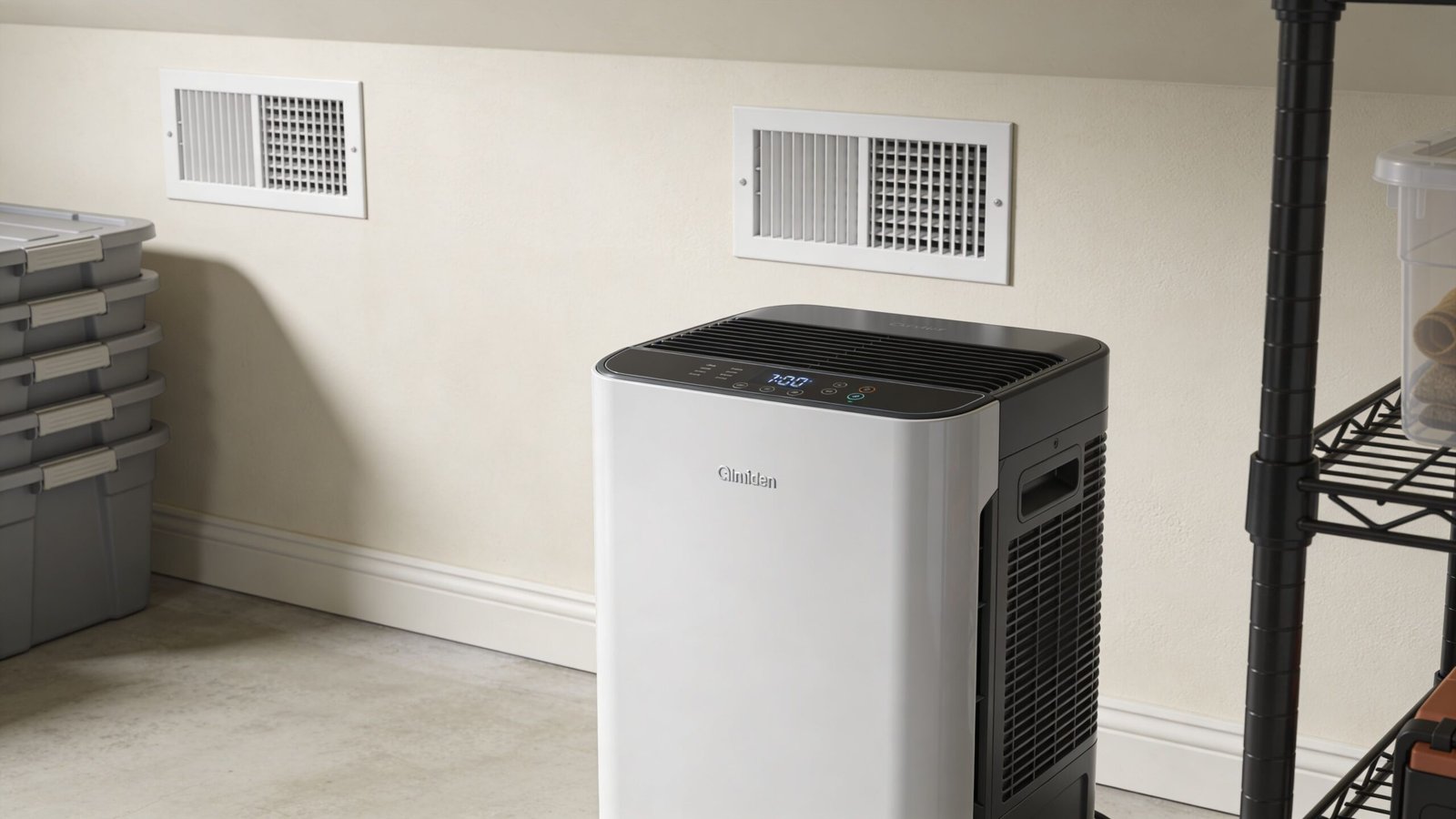
Control indoor moisture every day
After remediation, the basement needs a stable humidity range and routine monitoring. In practice, that means keeping relative humidity under 60% and checking it with a reliable hygrometer, not guessing based on how the room feels. In LA, this matters even in dry weather because basements collect moisture from concrete, small plumbing leaks, condensation on cold lines, and outside drainage problems.
A dehumidifier is often part of the long-term plan, not a temporary add-on.
Set it up so condensate drains properly. Clean the filter. Check the bucket or pump. If the unit shuts off and no one notices, humidity can climb for days before there is any visible warning.
Stop water before it reaches the wall
Many callbacks start outside the house. Water follows slope, hardscape, roof runoff, and soil pressure. If any of those direct moisture toward a below-grade wall, the basement will stay at risk no matter how well the original cleanup was done.
Focus on the conditions that drive intrusion:
- Watch the property during rain: Confirm where runoff goes around stairwells, window wells, foundation edges, and patio transitions
- Carry roof water away from the home: Downspouts and drains should discharge clear of the foundation zone
- Correct grading and hardscape drainage: Soil, concrete, and pavers should move water away, not trap it against the wall
- Seal penetrations after the assembly is dry: Utility entries and visible cracks should be addressed as part of moisture control, not as a substitute for drainage correction
- Check site pressure issues: On hillside or split-level lots, signs of retaining wall failure can point to hydrostatic pressure problems that later show up as basement dampness
- Insulate cold plumbing lines: Condensation can support spot growth even when the room looks dry
Dry weather does not eliminate basement mold risk. It often hides the source until the smell comes back.
Change storage and finish details that trap moisture
Homeowners often put the basement back the same way it was before the problem. That is a mistake.
Cardboard boxes, fabric bins, and furniture pushed tight to exterior walls hold moisture and block inspection. A better setup uses plastic storage bins, leaves space along perimeter walls, and keeps contents off the slab when possible. In finished basements, choose materials that tolerate occasional moisture better than paper-faced products and untreated wood trim in the lowest parts of the room.
If the basement is used as a bedroom, office, or gym, inspect it after storms, plumbing repairs, and any musty odor event. Small changes catch recurrence early and protect the value of the remediation work.
Long-term prevention also supports the part many homeowners miss. Clean removal is only one half of a defensible result. The other half is maintaining dry conditions so later post-remediation verification and clearance records still reflect a basement that is controlled, stable, and ready to document for insurance or resale.
Verifying Success with Post-Remediation Clearance Testing
Homeowners usually know when a job has started. They don't always know how to confirm that it's finished properly.
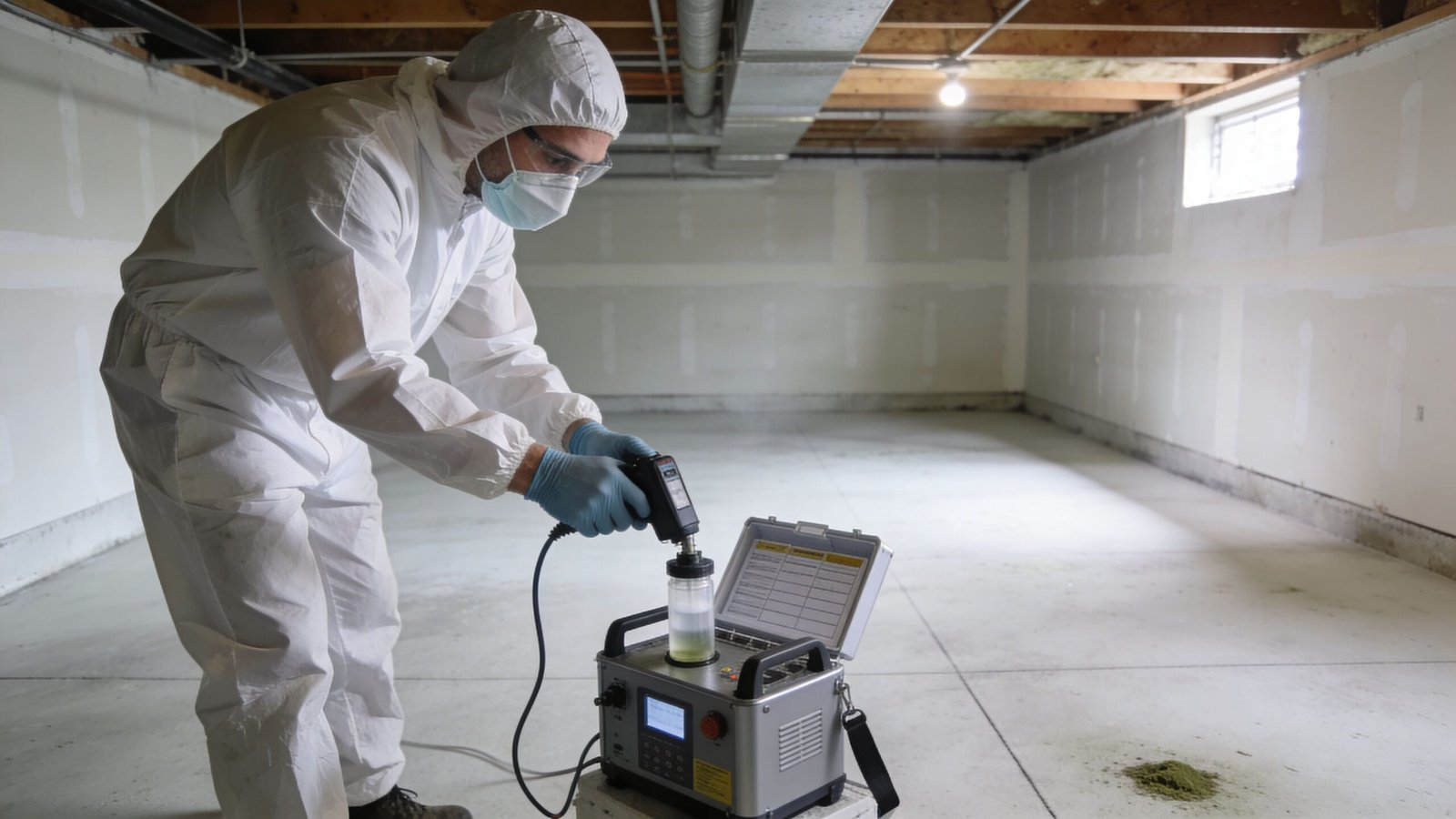
What clearance testing does
Post-remediation verification, often called clearance testing, checks whether the treated area has been returned to a normal condition after removal, cleaning, and drying. This may include air sampling, surface evaluation, moisture confirmation, and review of containment cleanup. The goal is confidence backed by evidence, not just a visual walk-through.
A major gap in homeowner knowledge is exactly this question of proof. Guidance summarized from industry discussion highlights the need for IICRC-certified clearance testing, a new humidity baseline, and documentation that supports both insurance files and future resale decisions, as discussed in this post-remediation verification overview.
Why LA homeowners should care
Los Angeles real estate moves quickly, and lower-level moisture history can become a transaction issue. Property managers also need records that show the work performed, the condition at completion, and the environmental targets established after drying.
Clearance documentation is useful when:
- A buyer asks about prior mold
- An insurance carrier requests proof of completion
- A landlord needs records for file retention
- A homeowner wants a baseline for future monitoring
A basement doesn't pass because it smells better. It passes when the moisture, contamination, and documentation all line up.
A good remediation file should show what was affected, what was removed, how the area was dried, and what confirms successful completion.
Frequently Asked Questions About Basement Mold
Can I stay in the house during basement mold removal
Sometimes yes, sometimes no. It depends on the size of the affected area, whether the basement air connects directly to occupied rooms, and whether anyone in the home has asthma, allergies, or other sensitivity. A contained work area makes a major difference, but that decision should be made after inspection, not assumed.
What if I only see mold on one wall
One wall is enough to justify a professional evaluation if the odor is persistent or the wall is below grade. The visible area may be the edge of a larger moisture pattern behind drywall, trim, or flooring. The wall itself matters less than what made it wet.
Should I paint over the area after cleaning
No. Paint hides evidence and traps problems underneath if the material is still damp or contaminated. Any coating should come after removal, cleaning, and verified drying, not instead of those steps.
Does basement mold always mean I have a plumbing leak
No. In Los Angeles, basements can pick up moisture from seepage, condensation, poor drainage, hardscape runoff, and seasonal rain exposure. Plumbing is common, but it's only one pathway. The moisture source has to be identified before anyone can say the job is complete.
Will the smell go away on its own if I run a dehumidifier
Not if contaminated materials are still present. A dehumidifier helps control the environment, but it doesn't remove mold-damaged drywall, carpet, insulation, or debris. If the odor is embedded in porous materials, those materials usually have to be addressed directly.
What should I ask a mold remediation company before hiring them
Ask how they define the scope, how they contain the area, how they decide what gets removed, how they verify drying, and what documentation you receive at the end. If they can't explain the process in clear terms, keep looking.
If your basement smells musty, feels damp, or shows repeated signs of growth, Onsite Pro Restoration provides IICRC-certified assessment, containment, remediation, drying, and documentation for Los Angeles homeowners, property managers, and real estate professionals who need the job done safely and verified properly.