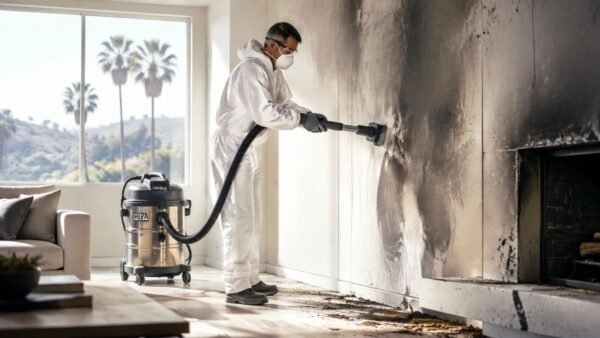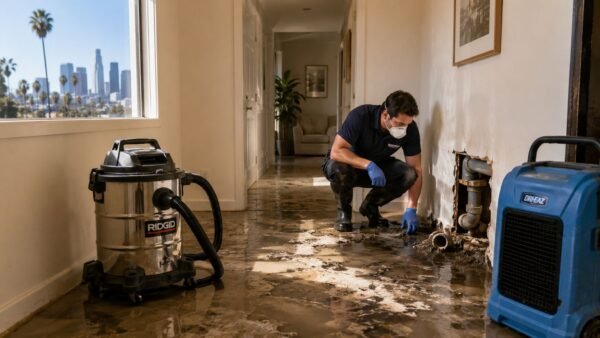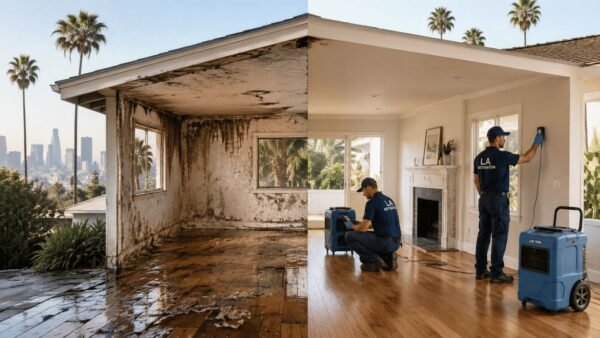

Yes, mold remediation can be dangerous if moldy materials are disturbed without proper containment, and wet materials should be dried within 48 hours or removed to keep the problem from growing. The good news is that professional remediation is designed to control those exact risks through containment, filtration, protective equipment, and moisture correction.
If you've found mold behind a bathroom vanity, around an old window, or after a slab leak in Los Angeles, you're probably asking two things at once. Is this dangerous to my family, and is cleaning it up going to make it worse?
That concern is justified. The hazard usually isn't the idea of remediation itself. It's uncontrolled disturbance. When someone tears into moldy drywall, scrubs contaminated surfaces without isolating the area, or runs fans the wrong way, they can spread spores and dust into rooms that were previously unaffected.
In older homes in Glendale, Burbank, and Sherman Oaks, that mistake shows up often after a hidden leak or long-term humidity problem. In practice, safe mold removal is less about spraying something on a wall and more about managing air, debris, moisture, and occupant exposure.
Answering the Question Is Mold Remediation Dangerous
Is mold remediation dangerous? Yes, it can be. But it's dangerous mainly when the work is done incorrectly.
A common Los Angeles scenario goes like this. A homeowner notices staining under a sink after a slow pipe leak, opens the cabinet, and finds visible growth on drywall and wood. The first instinct is often to wipe it down with bleach, put a fan on it, and move on. That approach can backfire because cleanup can disperse mold spores and contaminated dust into the air if the area isn't properly contained.
OSHA's mold guidance makes the issue clear. Remediators need to protect both workers and occupants, avoid exposing people to mold-laden dusts, and use PPE such as respirators, gloves, and eye protection. The same guidance also warns that mixing chlorine bleach with ammonia-containing cleaners can create highly toxic vapors, which is one more reason casual DIY cleanup can become unsafe fast. You can review that guidance in OSHA's mold remediation safety bulletin.
CDC guidance adds another key point. Wet materials should be dried within 48 hours or removed, and the moisture source has to be fixed or mold will come back. That's why experienced restorers treat mold as a moisture and containment problem, not just a stain-removal problem.
Practical rule: If cleanup spreads dust, leaves wet building materials in place, or ignores the leak that caused the mold, it isn't remediation. It's disturbance.
Health concerns are part of the equation too. Mold exposure can trigger coughing, wheezing, throat irritation, allergic reactions, and more serious respiratory problems in vulnerable people. If you're concerned about severe respiratory complications, this overview on whether black mold can cause pneumonia is a useful next read.
The Unseen Risks of Improper Mold Cleanup
A bad mold job usually creates more exposure, not less. The danger comes from what happens during cleanup when the work area isn't controlled.
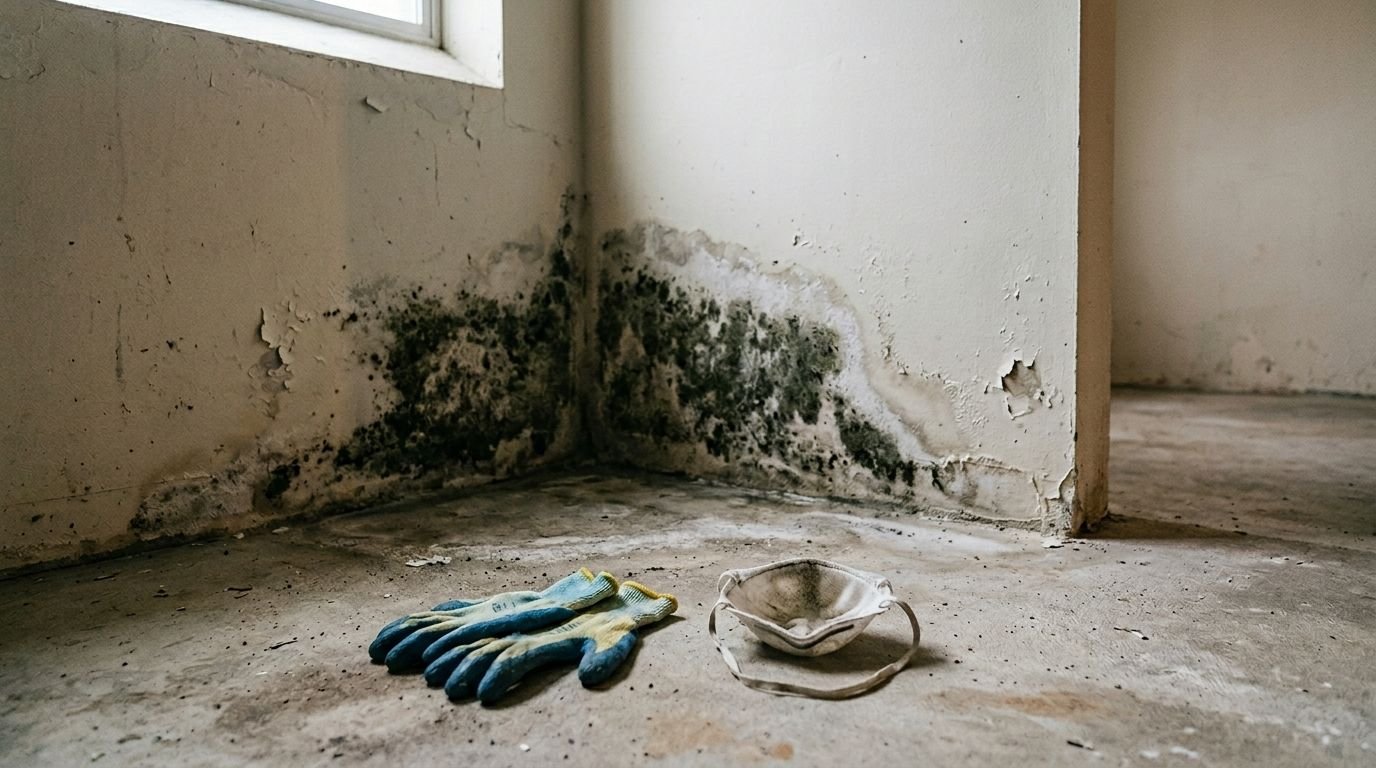
Health Risks From Airborne Spores
Once moldy drywall, insulation, carpet pad, or framing is disturbed, particles can become airborne. That matters most for people with asthma, hypersensitivity pneumonitis, severe allergies, immune suppression, or other chronic inflammatory lung diseases. EPA guidance notes these individuals should be removed from the contaminated area until remediation is complete, and it also states that PPE does not eliminate exposure risk. The same EPA guidance reinforces the need to dry wet materials within 48 hours or remove them. You can review that in EPA's mold remediation guidance for schools and commercial buildings.
That point gets missed often. A dust mask from a hardware store doesn't make a contaminated room safe for a child with asthma, an older adult, or someone recovering from illness.
For homeowners worried about symptom patterns, this page on the health risks of mold in the home helps connect exposure concerns to what you're seeing indoors.
Risk of Cross-Contamination
Cross-contamination is what turns one damaged wall into a house-wide cleanup problem.
In older Burbank and Glendale properties, I often see this after someone starts cutting drywall without sealing the room. Air movement carries particulates into hallways, closets, soft contents, and HVAC pathways. Even when the original growth was localized, poor work practices can extend cleanup into adjacent areas.
A few mistakes cause this repeatedly:
- Open-area demolition: Tearing into affected materials without plastic containment allows dust to travel.
- Improper fan use: Household fans can push contamination beyond the original room.
- Traffic spread: Shoes, tools, and debris bags can move residue from the work zone into clean spaces.
Containment exists for one reason. Keep the problem from becoming bigger than it was when you found it.
Chemical and Structural Hazards
Improper cleanup isn't just an air-quality issue. It also creates chemical and building risks.
OSHA warns against mixing chlorine bleach with ammonia-containing cleaners because the vapors can be highly toxic. And even when the chemistry is safe, surface cleaning alone often misses what matters most: the wet substrate behind the visible growth.
If the pipe leak, roof intrusion, or condensation problem stays in place, mold returns. If damaged porous materials stay wet, they may continue to deteriorate. That's why a wall in an older Los Angeles home can look “clean” for a week and then show growth again after the stain was merely scrubbed.
How Certified Professionals Ensure Safe Remediation
A safe mold job is controlled from the first cut to the final wipe-down. The risk comes from disturbing contaminated material without proper barriers, filtration, and cleanup methods. Certified remediation addresses that risk by containing it.
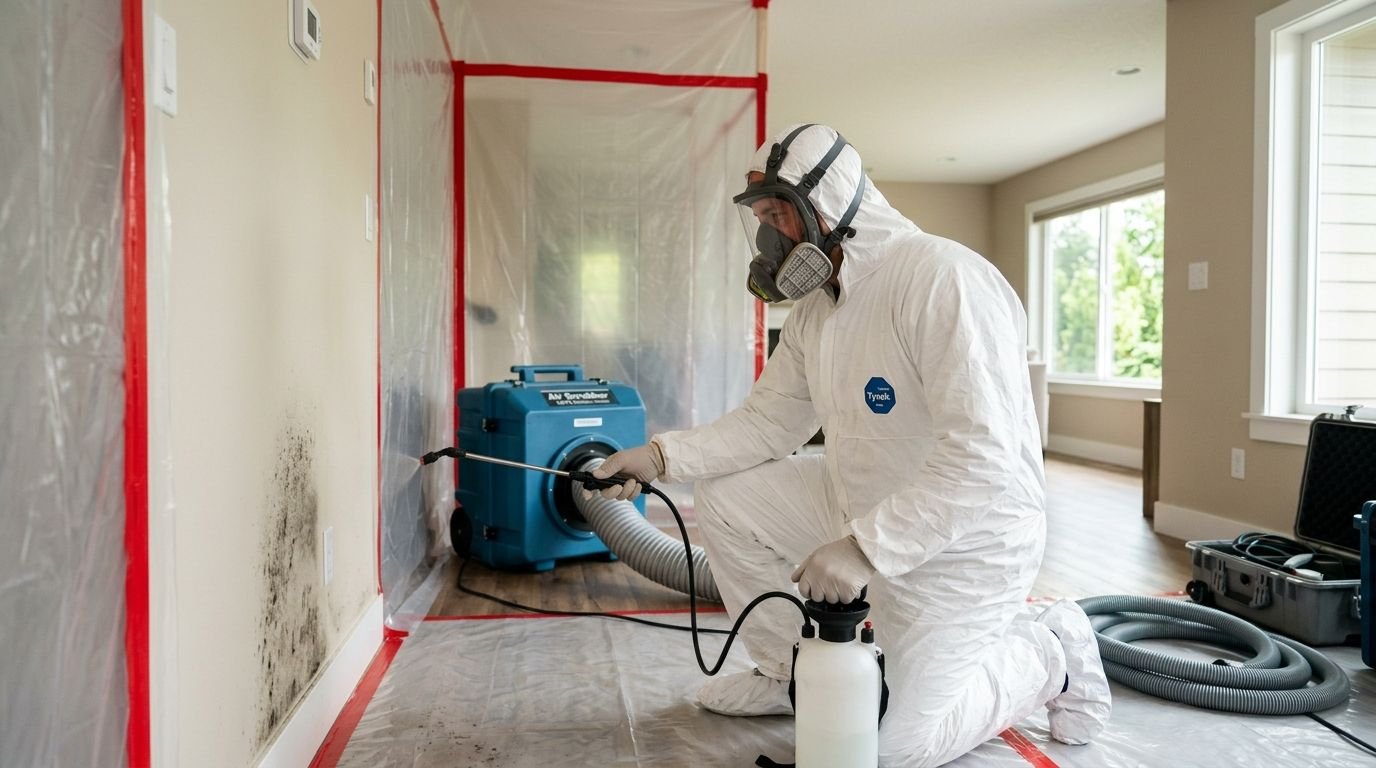
Field practice and published guidance point in the same direction. Containment and controlled removal reduce airborne spread. NCSU explains that larger or higher-risk projects call for stronger containment, and EPA guidance recognizes that porous materials often need to be removed rather than surface-cleaned. That approach is reflected in NCSU's mold remediation guidelines.
Containment Changes the Whole Job
Containment turns a risky cleanup into a managed work zone. Crews isolate the affected area, establish controlled entry, and set equipment so air moves into the containment instead of out into the house.
That matters during demolition, bagging, and cleanup. Every time drywall is opened or insulation is pulled, particles can become airborne. In a contained work area, those particles stay where the crew can capture them.
Here is what homeowners should expect to see on a properly run job:
| Control | Why it matters |
|---|---|
| Plastic isolation barriers | They separate the affected area from occupied parts of the home |
| Negative air setup | It draws airborne particles toward filtration instead of letting them drift outward |
| Restricted access | It limits occupant exposure and reduces cross-contamination from foot traffic |
If you want a simple primer on filtration and indoor air quality, this article on healthier home air with HEPA gives helpful background.
HEPA Filtration and Careful Removal
HEPA air scrubbers and HEPA vacuums are standard because household equipment is not built for this type of debris. A regular vacuum can pick up visible dust and still release fine particles back into the room.
Removal also has to match the material. Drywall, insulation, carpet pad, and other porous materials often cannot be cleaned to a reliable standard once mold growth is established. Non-porous and some semi-porous materials may be cleanable, but that decision should be based on condition, depth of contamination, and moisture history.
The goal is controlled removal with the smallest necessary demolition. Over-demo drives up cost. Under-demo leaves contamination behind.
Professional remediation controls the danger of mold disturbance instead of spreading it through the house.
A short visual helps show what a controlled process looks like in the field:
Training, Documentation, and Moisture Correction
The crews who do this work safely follow a process. They assess the extent of damage, set containment, use appropriate PPE, remove unsalvageable material, clean remaining surfaces, and verify that the moisture source has been addressed. Without that last step, the job may look better for a short time and still fail.
Certification matters because it points to training in accepted restoration procedures, job documentation, and worksite safety. Homeowners who want to vet a contractor can review what IICRC certification means and ask how the company applies those standards on an occupied job.
Onsite Pro Restoration is one local company that provides mold remediation for Los Angeles-area properties, including moisture assessment, engineering controls, HEPA air filtration, and post-remediation cleaning.
Immediate Safety Steps for Los Angeles Homeowners
If you've just found mold, the next few decisions matter. You can reduce risk before anyone starts cleanup.
What to Do Right Away
- Limit access to the area: Keep children, older adults, and anyone with respiratory or immune concerns away from the affected room.
- Stop the moisture source if you can do it safely: Shut off the leaking supply line, contain the drip, or place a bucket under the leak until help arrives.
- Reduce HVAC spread: If the affected area is tied into central air, avoid circulating contaminated air through the house.
The CDC says some people should not take part in cleanup and should not stay in a moldy home while it is being cleaned. It also notes that small jobs under about 10 square feet may be handled by homeowners, while larger jobs require containment and PPE. That occupied-home nuance matters for Los Angeles landlords and homeowners dealing with scheduling, insurance coordination, or tenant displacement, and it's covered in the CDC's mold cleanup guidance.
What Not to Do
- Don't scrub aggressively: You may release more spores and dust.
- Don't use household fans on visible mold: Air movement can spread contamination.
- Don't paint over it: Encapsulation without correction usually hides the problem instead of solving it.
- Don't assume staying home is always safe: For larger jobs or sensitive occupants, room-by-room exclusion or temporary relocation may be the safer choice.
If you're unsure what to check before calling a remediator, this mold inspection checklist can help you document what you're seeing.
Your Next Steps for a Mold-Free LA Home
By this point, the answer is straightforward. Mold remediation can be dangerous when people disturb contaminated materials without proper controls. Professional remediation exists to control that danger, not create it.
For a homeowner, the practical next step is simple. Treat visible mold as a sign of a moisture problem first, and a cleaning problem second. Isolate the area as much as you reasonably can, avoid DIY demolition, and focus on getting the source identified. In Los Angeles homes, that source is often a plumbing leak, bathroom humidity, roof intrusion, or hidden wall moisture after water damage.
A Smart Decision Path
- Document the area with photos and notes.
- Protect occupants by limiting access, especially if anyone has asthma, allergies, or immune suppression.
- Arrange a professional assessment to determine whether the issue is localized or has spread into concealed materials.
- Plan for correction of the moisture source so the work holds.
If you can smell mold but only see a small stain, don't assume the visible spot is the whole job.
That's especially true in older properties across Sherman Oaks, Beverly Hills, West Hollywood, and surrounding neighborhoods where prior repairs may have covered up a long-running leak. Prevention matters just as much as removal, and this guide on how to prevent mold is a good follow-up once the immediate issue is under control.
If you need a professional opinion on whether it's safe to stay in the home, whether containment is required, or whether damaged materials need removal, call a certified remediation team before anyone starts tearing things open.
Frequently Asked Questions About Mold Remediation
Is mold remediation dangerous if I stay in the house
Sometimes yes. It depends on who lives there, where the mold is, and how the work is contained. If the job is very small and isolated, staying elsewhere in the home may be workable. If anyone in the household has asthma, severe allergies, chronic lung disease, or immune suppression, temporary separation from the affected area is the safer call.
Is DIY mold cleanup ever reasonable
For very small areas, some guidance allows homeowner cleanup. But once the contamination is larger, inside walls, tied to a leak, or affecting porous materials, DIY work often creates cross-contamination and missed moisture problems. That's where containment and professional equipment matter.
Why does mold remediation feel like a specialized service now
Because the problem is common enough and serious enough that it has become a substantial global service market. Grand View Research estimated the global mold remediation service market at USD 1,234.6 million in 2023, with projected growth to USD 1,516.8 million by 2030 at a 3.0% CAGR from 2024 to 2030, driven largely by health concerns related to mold exposure. That projection appears in Grand View Research's mold remediation service market report.
Does killing visible mold solve the problem
Not by itself. If the moisture source remains, the conditions that allowed growth are still there. For homeowners trying to understand the bigger building-science side of the issue, this article on understanding property moisture issues is a helpful primer on condensation and mold conditions.
What should I ask before hiring a mold remediation company
Ask how they handle containment, HEPA filtration, removal of porous materials, moisture-source correction, and post-remediation cleaning. Also ask about certifications, documentation, and whether they regularly work in occupied homes.
If you've found mold in your Los Angeles home or rental property, Onsite Pro Restoration can assess the situation, explain whether containment is needed, and help you address both the contamination and the moisture source. Call 818-336-1800 for a free inspection.
SEO title tag: Is Mold Remediation Dangerous in Los Angeles?
Meta description: Is mold remediation dangerous? Learn when mold cleanup becomes risky, when to leave the home, and how Los Angeles pros contain exposure safely.
Schema opportunity: FAQPage, LocalBusiness