
A pipe lets go above your Sherman Oaks storefront before opening. Or a small electrical fire in a Burbank office leaves smoke in the HVAC system overnight. At that point, commercial property restoration isn't an abstract service. It's the work that keeps a building safe, limits downtime, and gives you a path back to operations without making the loss worse.
For Los Angeles property managers, the job is rarely just cleanup. You're balancing tenants, staff, vendors, insurance, access control, air quality, and reopening pressure, often in older buildings where plumbing, electrical systems, and hidden cavities create extra surprises.
What Is Commercial Property Restoration
Commercial property restoration is the process of assessing, stabilizing, cleaning, drying, repairing, and documenting damage to a business property after water intrusion, fire, smoke, mold, sewage, or other hazardous events. The target isn't just a clean-looking space. The ultimate goal is a safe, documented return to service with as little business interruption as possible.
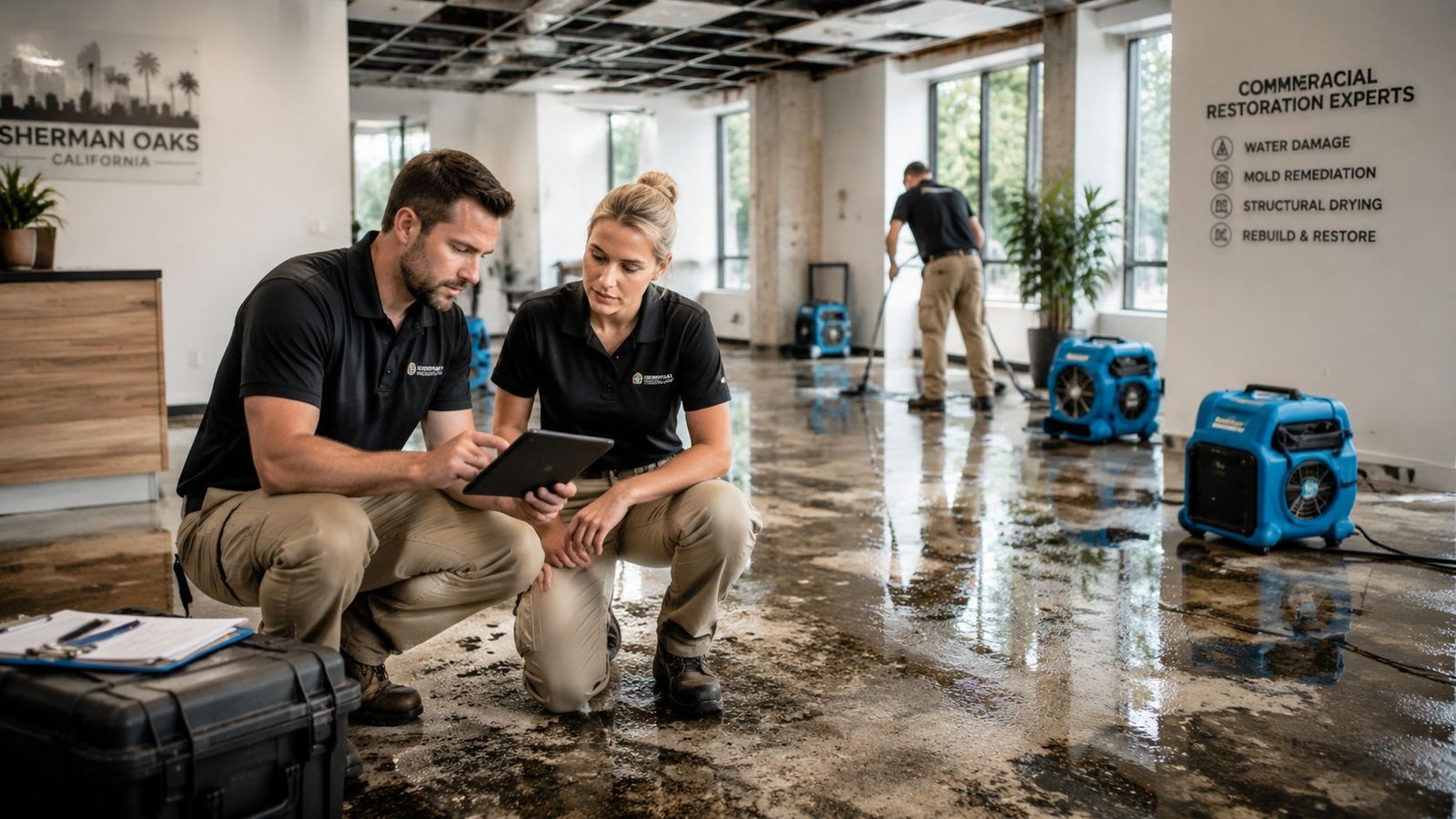
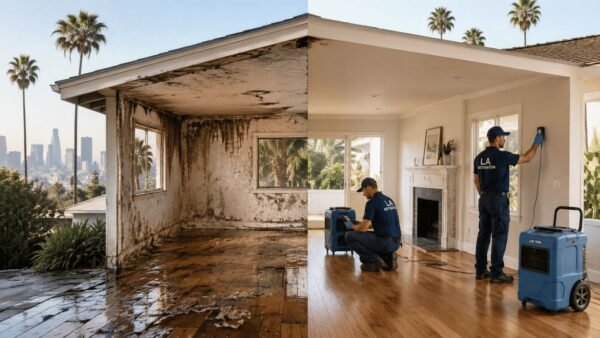
In practical terms, restoration usually starts with emergency mitigation. That can mean extracting standing water, isolating smoke-affected areas, setting containment, or protecting unaffected suites. Then it moves into moisture mapping, cleanup, decontamination where needed, demolition of unsalvageable materials, drying, repairs, and insurer-facing documentation.
This isn't a niche service line. The global property restoration services market is projected at USD 55.81 billion in 2026, rising from USD 52.79 billion in 2025 and projected to reach USD 69.04 billion by 2030 at a 5.5% CAGR, with growth tied to natural disasters, urban density, insurance-covered projects, and mold awareness, according to Research and Markets' property restoration services market report.
Practical rule: Fast response matters, but correct scope matters more. Drying the visible area while missing wet wall cavities or contaminated air pathways is how simple losses turn into expensive reopenings.
In Los Angeles, good restoration work also has to account for local conditions. Wildfire smoke can travel well beyond the burn area. Older commercial buildings in Glendale and West Hollywood often hide plumbing failures behind finished walls. A break-in after a fire or flood may also leave you needing temporary security and commercial door repair services before tenants can safely re-enter.
If you need a general overview of the service stack involved, Onsite restoration services for commercial damage response give a useful reference point for what emergency mitigation and repair typically include.
The Four Main Types of Commercial Damage
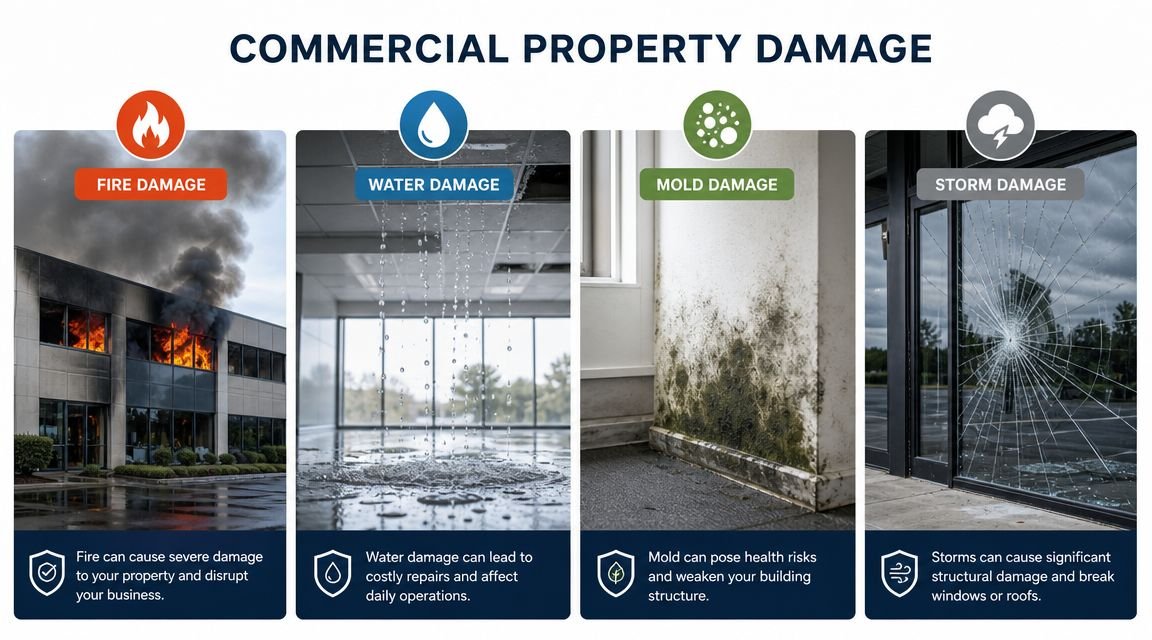
A wet office, a smoke-damaged retail suite, and a mold issue in a medical tenant improvement are all “restoration” jobs, but they don't run the same way. The risk profile changes the protocol.
Water Damage
Commercial water losses usually come from supply line failures, roof leaks, clogged drains, sprinkler discharges, appliance failures, or HVAC issues. In Los Angeles, older copper and galvanized lines in aging buildings can turn a small weakness into a sudden multi-suite event.
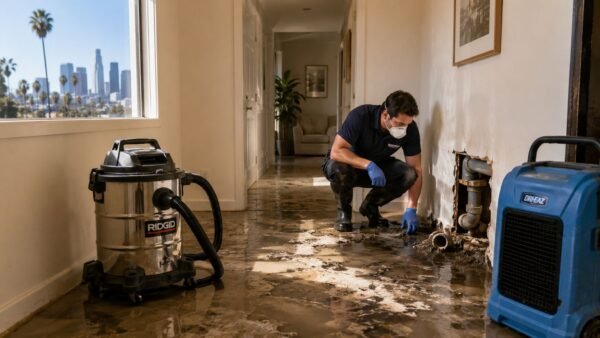
Water damage work starts with source control and category assessment. Then crews move into extraction, moisture detection, containment if needed, and structural drying. What doesn't work is relying on janitorial cleanup or a few carpet fans. Water migrates under flooring, into wall bases, behind cabinetry, and through shared chases.
For occupied buildings, the main challenge is selective disruption. You may need one corridor contained, one tenant relocated, and one server closet protected while the rest of the property stays operational.
Fire and Smoke Damage
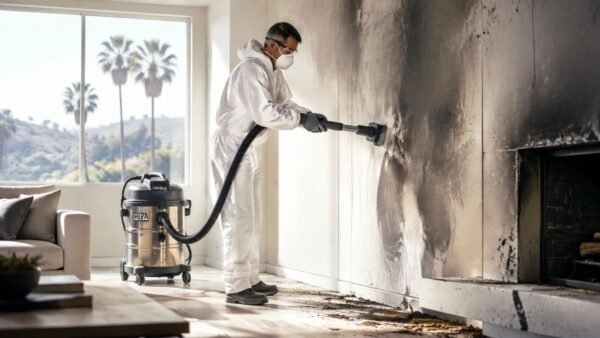
Fire restoration goes beyond burned materials. Smoke travels through returns, above ceilings, into porous finishes, and into electronics. In mixed-use and office environments, odor control and soot removal often become the deciding factors for reopening.
A kitchen fire in a break room may create damage far beyond the burn origin. Fine residues can settle on desks, inventory, and HVAC components. If crews don't separate clean, restorable, and unsalvageable contents early, costs rise and the insurer's review gets harder.
Mold Remediation
Mold jobs are often hidden water jobs that went unresolved. A slow leak behind tenant improvements, a roof leak above a top-floor office, or poor drying after a prior loss can all lead to recurring complaints.
Mold remediation requires more than spraying or wiping surfaces. Proper work usually involves containment, source correction, controlled removal, cleaning, and post-remediation verification where appropriate. If your loss involves visible growth or suspect amplification, a facility manager should understand what a dedicated commercial mold remediation process looks like before approving generic cleanup.
Biohazard Cleanup
Sewage backups, trauma scenes, and contamination events need a different standard from standard demolition and drying. That's where many managers make an expensive mistake. They hire a general “water/fire/mold” vendor for a loss that requires controlled contamination protocols.
Facility managers need to know when to escalate to a provider with contamination-control procedures for spaces such as labs, data rooms, healthcare settings, or food facilities. Verifying isolation, airflow control, and clearance criteria is critical to reduce secondary contamination risk and support safe reopening, as noted by ATI Restoration's commercial services guidance.
If the affected area supports sterile work, food production, sensitive equipment, or vulnerable occupants, treat “fast cleanup” as secondary. Controlled isolation comes first.
Your First 60 Minutes Emergency Response and Mitigation
The first hour decides whether the loss stays contained or spreads into adjacent suites, shared systems, and insurance disputes. In that window, your job is to protect people, stop active damage if it's safe, and preserve evidence.
Use this order.
Protect life safety first. Evacuate if there's active fire, electrical hazard, structural instability, sewage exposure, or unknown air quality. Don't send maintenance staff into standing water around energized equipment.
Stop the source if you can do it safely. Shut off the local water valve, isolate the breaker for the affected circuit, or close access to the impacted area. If you're managing a multi-tenant building in Glendale or Burbank, confirm whether the source may be in an adjacent suite before opening walls blindly.
Call a restoration contractor built for emergency mitigation. Ask whether they can mobilize extraction, drying, containment, and documentation, not just cleanup labor. If they can't explain their first steps clearly, keep calling.
Notify your insurance carrier early. You don't need a full scope in hand to report a loss. Early notice helps preserve the claim timeline and starts the carrier's internal process.
Document before conditions change. Take photos and video of the origin area, damaged materials, affected contents, ceiling stains, floor damage, equipment, tenant spaces, and any visible source. Get wide shots and close shots.
Control access. Keep employees, tenants, and vendors out of the affected area unless they're part of the emergency response.
A written incident procedure helps when everyone's under pressure. If your building team doesn't already have one, this practical emergency response plan template is a useful planning reference, and this emergency response planning resource for property damage events can help adapt that thinking to restoration-specific incidents.
What usually fails in the first hour?
- Waiting for “more visible damage” before calling
- Using shop vacs and box fans on a commercial loss
- Throwing out materials too early, which can damage the claim
- Letting tenants self-remediate with uncoordinated cleanup
- Restarting HVAC before smoke, soot, or microbial concerns are assessed
The Restoration Workflow From Assessment to Reopening
A commercial restoration project is easier to manage when you know what should happen next. The sequence is predictable, even when the scope isn't.
Inspection and Damage Assessment
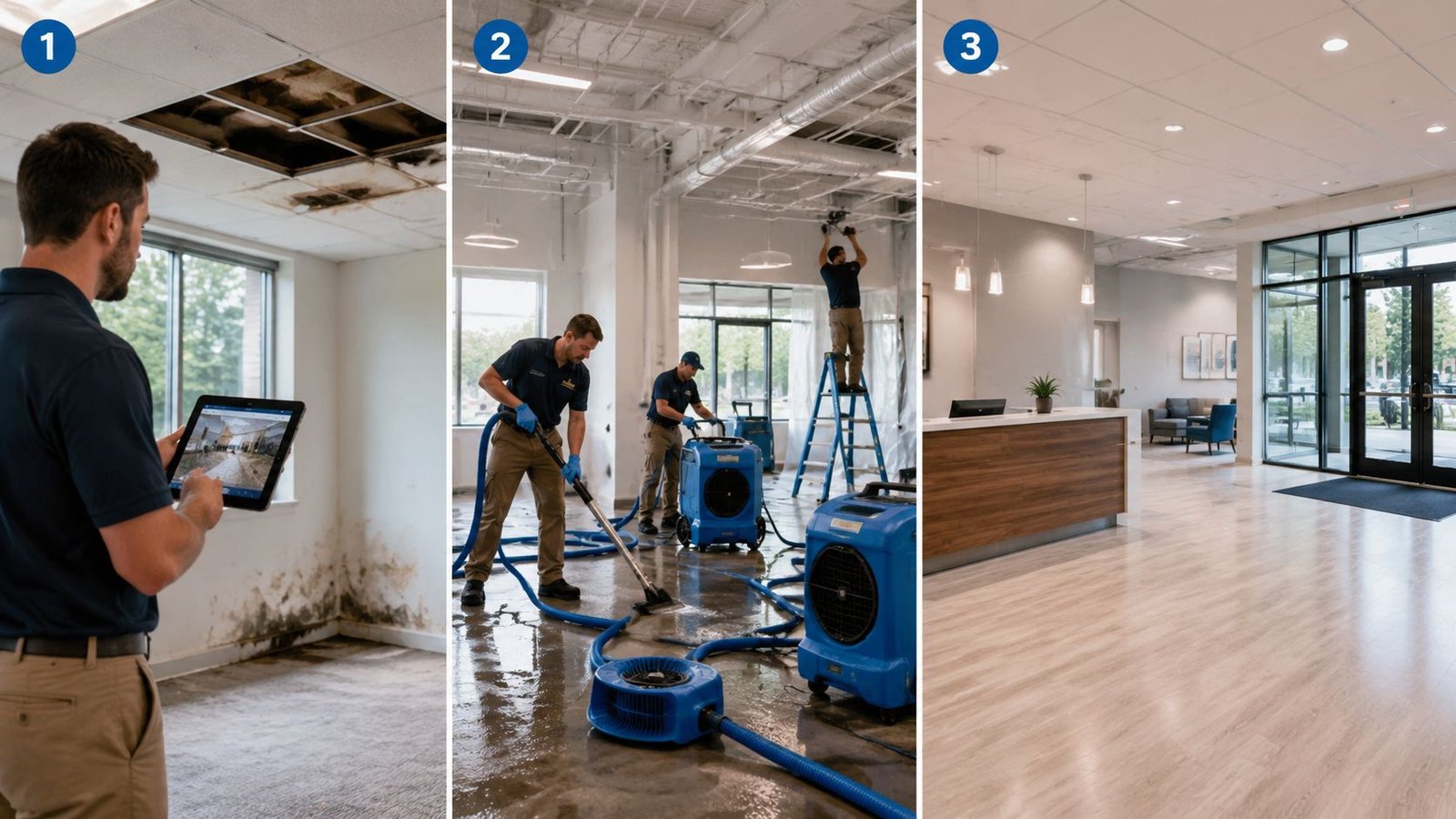
The first site visit should produce more than a verbal opinion. A competent team maps affected areas, identifies the likely source, documents impacted materials, checks adjacent rooms, and starts a written scope. On commercial losses, they should also ask about occupancy, critical operations, after-hours access, and tenant communication.
In our experience with properties in Glendale, thorough moisture mapping is what prevents hidden mold problems later. The visible wet area is rarely the full wet area.
The manager who asks for a room-by-room damage map early usually gets a cleaner project later.
Mitigation and Site Stabilization
This is the urgent phase. Crews extract water, remove unsalvageable materials where needed, set containment, protect unaffected zones, and secure openings after fire or forced entry. On occupied office floors, this may also include negative air, temporary barriers, and phased work after business hours.
For commercial water damage, industry guidance describes 24 to 48 hours for water extraction and drying setup, followed by a 3 to 5 day dry-out phase with dehumidifiers and air movers. Full repairs can continue for weeks if structural components are affected, based on commercial disaster recovery guidance from NCRI.
Cleaning, Drying, and Controlled Demolition
At this stage, restoration becomes technical. Crews monitor moisture, adjust equipment, clean salvageable surfaces, and remove materials that won't dry or can't be safely restored. In smoke losses, this can include detailed soot cleaning and deodorization. In water losses, it often means opening specific wall sections instead of gutting entire suites.
If reconstruction follows mitigation, estimating gets more complex. For managers comparing closeout scopes and turnover requirements, tools that streamline post-construction cleaning bids can help frame the final cleaning side of the job after repairs.
A short walkthrough of field conditions helps illustrate what a drying and repair phase can involve:
Repairs and Reopening
Reopening should follow objective conditions, not pressure from tenants or ownership. That means dry materials, cleaned surfaces, restored systems, and documented completion. In regulated or sensitive spaces, reopening may also require clearance confirmation before occupancy resumes.
Navigating Insurance Claims and Managing Costs
Most commercial managers don't lose control of a claim because the damage was severe. They lose control because the documentation chain was weak from day one.
Recent loss trends show commercial property claims have become more complex, especially for water damage. Insurers now expect detailed moisture and smoke documentation, and claim success often depends on the restoration provider's records and ability to support business interruption recovery, according to Southeast Restoration's commercial claims overview.
What your insurer usually needs to see
A strong file typically includes:
- Cause and origin notes that explain what happened and when it was discovered
- Photos and video from the initial condition before demolition changes the scene
- Moisture readings and drying logs that show why equipment was used and when materials reached target conditions
- Demolition records for removed materials and unsalvageable components
- Contents documentation for affected furniture, stock, electronics, and tenant improvements
- Business interruption support such as downtime records, access restrictions, and tenant impact details
If your contractor can't produce organized field notes, daily updates, and equipment records, the claim gets harder to defend.
Mitigation first, rebuild second
One of the biggest commercial mistakes is treating emergency mitigation and full reconstruction as one undivided decision. They are related, but they aren't the same. You usually need mitigation immediately to prevent the loss from growing. Full rebuild scope often evolves after drying, cleaning, and adjuster review.
That distinction matters for cash flow. It also matters for tenant communication. A manager can often say, truthfully, “We've stabilized the damage and isolated the affected area,” even before the final reconstruction budget is approved.
Keep a separate file for mitigation documents and reconstruction documents. It makes adjuster review faster and helps when approvals arrive in phases.
The contractor's insurance role
A good restoration partner doesn't replace your broker, adjuster, or coverage counsel. They support the process with credible evidence, timely updates, and realistic scopes. That matters because commercial losses often involve multiple interest holders, including ownership groups, tenants, management companies, and carriers.
If you're evaluating what support a contractor should provide during the claim, this guide to commercial property insurance claims after damage lays out the documentation side clearly.
How to Choose the Right Restoration Partner in Los Angeles
Los Angeles gives you plenty of vendors. That doesn't mean it gives you plenty of qualified commercial responders.
The U.S. Damage Restoration Services industry includes 60,020 businesses in 2025, with industry revenue reaching $7.1 billion in 2026 according to IBISWorld's U.S. damage restoration services industry data. The same verified market summary notes that insurance-funded projects account for 58.97% of spending in 2025 in the broader disaster restoration market and that commercial and industrial applications are projected to grow at 6.15% CAGR through 2031. In plain terms, there are a lot of firms competing for this work, and insurance experience isn't optional.
Questions worth asking before you sign
Ask direct questions and expect direct answers.
- Are you IICRC-certified for the type of loss involved? Water, mold, smoke, and biohazard work don't all require the same field competency.
- Can you handle occupied commercial buildings? A retail center in Burbank and an office property in Glendale need staging, tenant communication, and access coordination.
- How do you document for insurance? Ask to see sample moisture logs, photo reports, and daily updates.
- What happens if the job needs contamination control? If you manage medical, lab, food, or data-sensitive spaces, this answer matters.
- Who manages reconstruction after mitigation? Some firms dry the building and disappear. Others carry the project through repairs and turnover.
Local fit matters
Los Angeles losses often involve wildfire smoke exposure, older plumbing infrastructure, dense tenant occupancy, and limited after-hours access. A contractor who mostly handles small residential jobs may struggle with phased commercial scheduling and insurer-grade documentation.
One local option property managers evaluate is Restoration Pro services for emergency damage response in Los Angeles. What matters is not the brand name by itself. What matters is whether the team can mobilize quickly, isolate correctly, document thoroughly, and communicate with both tenants and carriers.
LA Property Manager Emergency Restoration Checklist
Print this. Keep it with your after-hours contact sheet.
Immediate actions
- Check occupant safety and clear the affected area
- Shut down the source if safe to do so
- Protect critical systems such as server rooms, electrical rooms, and inventory
- Call building ownership and key stakeholders
- Call a 24/7 restoration specialist. Onsite Pro Restoration at 818-336-1800
- Report the claim to your insurance carrier
Documentation to gather
- Photos of the source area
- Wide shots of each affected room
- Close photos of ceilings, walls, floors, fixtures, and contents
- Video showing active leaks, standing water, or smoke conditions
- Notes on when the damage was discovered
- Names of anyone who first observed the incident
Information to have ready
- Property address and suite numbers
- Insurance policy details
- Ownership and management contacts
- Tenant contact list
- Utility shutoff locations
- Vendor access instructions and alarm procedures
Before anyone re-enters
- Confirm electrical safety
- Confirm containment boundaries
- Confirm whether HVAC should stay off
- Confirm whether any regulated or sensitive area needs specialty protocols
Frequently Asked Questions About Commercial Restoration
How long will my business have to be closed
It depends on the cause, the affected systems, and whether the loss can be isolated. Some businesses can keep operating in unaffected sections while mitigation happens after hours. Others need partial or full closure until drying, cleaning, repairs, or air-quality concerns are resolved.
What are my responsibilities for notifying tenants during restoration
Give tenants prompt factual updates about access, safety restrictions, utility interruptions, and expected work hours. Don't speculate about coverage or reopening dates before the scope is confirmed. Keep written records of notices and responses.
Does commercial property restoration need to comply with health and safety rules
Yes. The specific requirements depend on the type of damage and the use of the space. For general health information on mold and indoor cleanup, property managers often review EPA mold resources and CDC guidance on cleaning after disasters. In Los Angeles, you also need to consider building access, occupant safety, and any site-specific EHS requirements before reopening.
If you're dealing with water, smoke, mold, sewage, or a complex commercial loss in Los Angeles, Onsite Pro Restoration can help you assess the damage, contain the problem, document the loss, and move toward reopening with less confusion. For immediate help in North Hollywood, Glendale, Burbank, Sherman Oaks, West Hollywood, Beverly Hills, and nearby areas, call 818-336-1800.