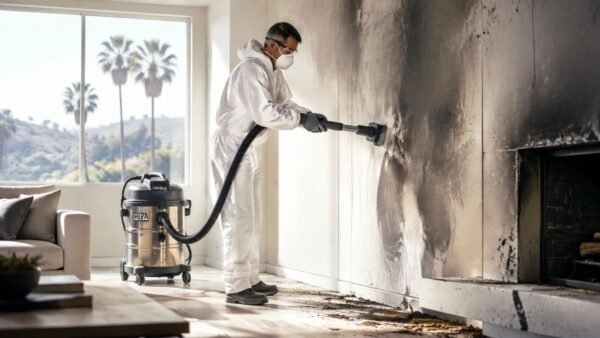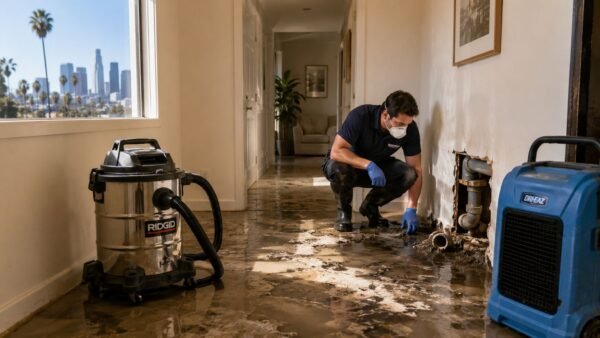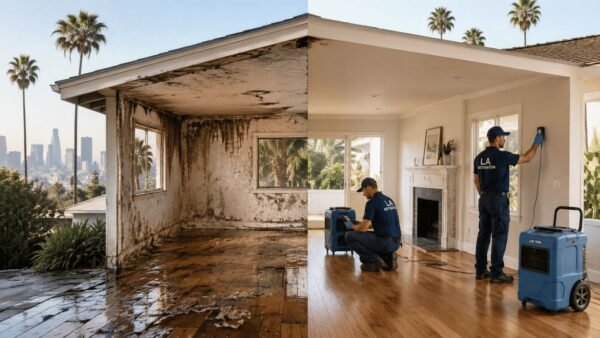

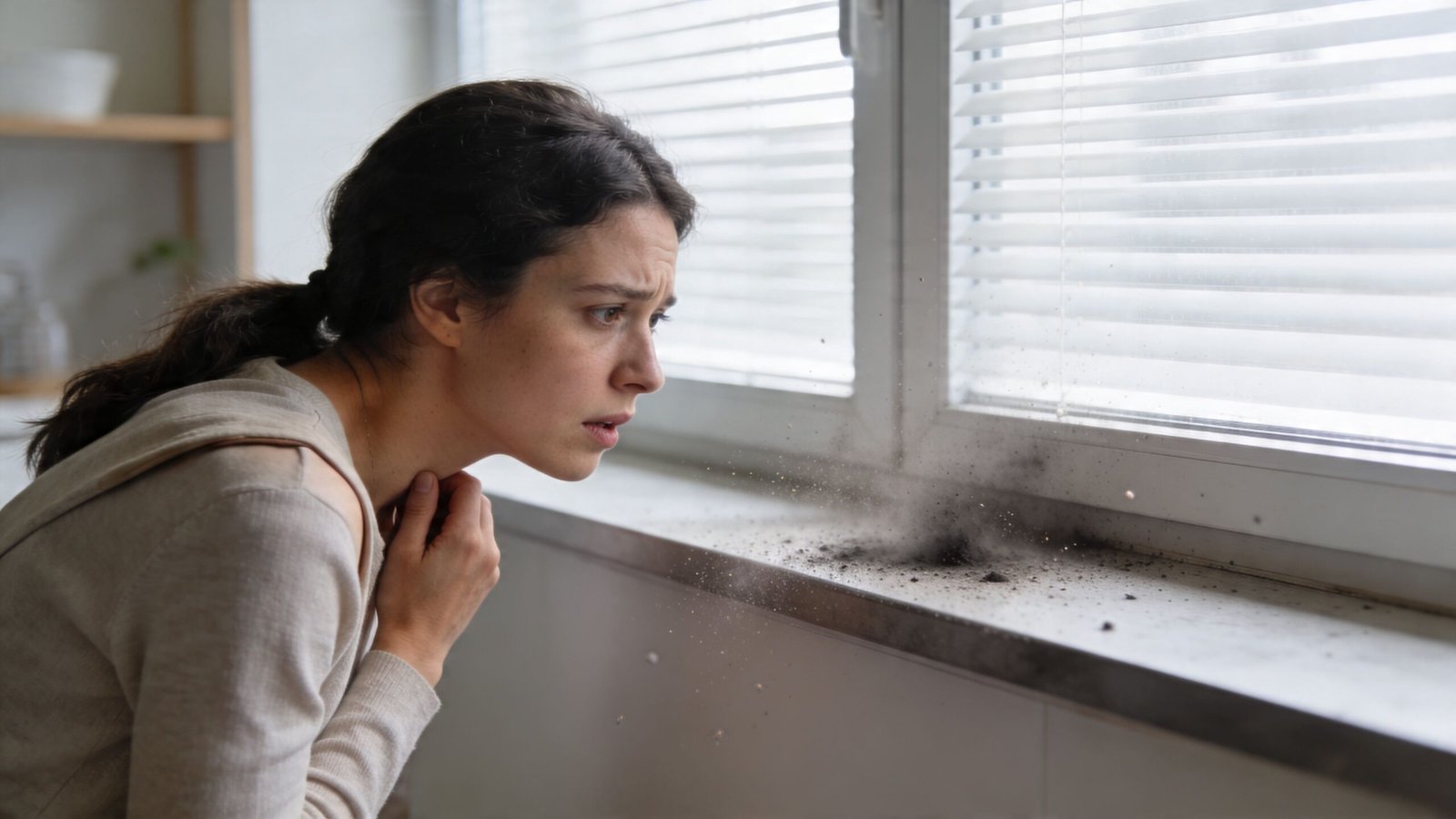
If you're reading this after a wildfire smoke event, a kitchen flare-up, or a furnace puff-back, you may be looking at a gray or black film on your walls, vents, blinds, or windowsills and wondering whether it's just dust. It isn't.
Soot from smoke is one of the most misunderstood forms of fire damage in Los Angeles homes. It can look light and harmless, yet still work its way into ductwork, fabrics, electronics, paint, and insulation. It can also keep releasing odor long after the visible smoke is gone.
For homeowners, the biggest mistake is treating all soot the same. The residue left behind by a pan fire, a structure fire, and a nearby wildfire doesn't behave the same way. That matters because the cleanup method has to match the soot. If it doesn't, cleaning can smear it, spread it, or push it deeper into materials.
The Lingering Problem After the Smoke Clears
A common LA scenario goes like this. The fire is over, the air looks better, and everyone wants life to return to normal. Then the smell sticks around. A black shadow shows up above a doorway. You wipe a windowsill and the cloth comes away gray. A vent cover looks dusty, but darker than normal.
That residue is often the primary cleanup task.
In Los Angeles, soot from smoke can come from several directions. A nearby wildfire may leave a fine layer throughout the house even when flames never touched the property. A kitchen flare-up can leave an oily film in cabinets and on ceilings. A furnace puff-back can send dark particles through the duct system and into multiple rooms before anyone realizes what happened.
Practical rule: If residue appeared after a smoke event and smells burnt, don't assume normal housekeeping will solve it.
Homeowners often focus on what they can see. The more serious issue is what settled into porous surfaces and mechanical systems. Soot doesn't just sit on top of things like ordinary dust. It bonds, stains, and in some cases corrodes.
If your home has already had a fire or smoke event, it helps to review the immediate safety steps in this guide on what to do after a house fire. Early decisions make a big difference in how much contamination spreads.
What Exactly Is Soot and Why Is It So Damaging
Soot is the residue left behind when fuel doesn't burn completely. That fuel might be wood, paper, cooking oil, plastic, rubber, fabric, or household contents. The simplest way to think about it is this. Soot is the leftover carbon-rich skeleton of what burned.
That sounds straightforward, but the material itself is not simple. According to Tru-Vue's fire and soot damage overview, soot consists of 60% or greater elemental carbon content, along with abrasive, acidic particles and carcinogens. The same source notes that particles can be smaller than 0.1 microns, which helps explain why soot gets into HVAC systems, walls, and contents so easily.
Why soot clings instead of falling away
Many homeowners expect soot to behave like fireplace ash. It usually doesn't.
When combustion is incomplete, it produces fine particles of incomplete combustion that can ionize and cling to surfaces. In practical terms, that means soot can stick to painted drywall, plastic blinds, lamp shades, electronics, grout lines, and duct interiors with surprising force. Wiping it casually often makes things worse.
A dry paper towel across the wrong kind of residue can smear it. A wet rag can turn a surface stain into a deeper one.
Why tiny particles create big problems
The very small particle size is one reason soot from smoke spreads so widely inside a home. It doesn't stay in the room where the smoke started. It moves through hallways, cracks, returns, and supply vents. It can settle on visible surfaces, then continue into hidden spaces where people don't think to check.
Areas that often hold hidden contamination include:
- HVAC components like supply registers, return ducts, blower compartments, and filters
- Porous materials such as unfinished wood, insulation, drywall paper, upholstered furniture, and rugs
- Hard-to-see surfaces behind furniture, inside cabinets, above doors, and inside light fixtures
Soot isn't inert house dust. It can keep interacting with the surfaces it landed on.
Why it damages property over time
Soot can be acidic. That matters because acidic residue doesn't just discolor a surface. It can etch, corrode, or permanently alter it if it sits too long. Glass can lose clarity. Metals can corrode. Plastics and finishes can yellow or dull. Odor can persist because the particles remain embedded in the material itself.
Professionals follow structured restoration standards because the sequence matters. In the field, the first steps often involve controlled HEPA vacuuming, containment, and type-specific treatment rather than immediate wiping or washing. That's not overkill. It's how you avoid pushing contamination deeper.
For a homeowner, the takeaway is simple. If soot from smoke reached more than a very limited area, don't think of it as a cleaning chore. Think of it as contamination that needs the right removal method.
Decoding the Types of Soot in Your Home
The most important thing to understand is that not all soot is the same. The source fire changes the residue. A cleanup method that works for one type can damage the surface or lock in staining when used on another.
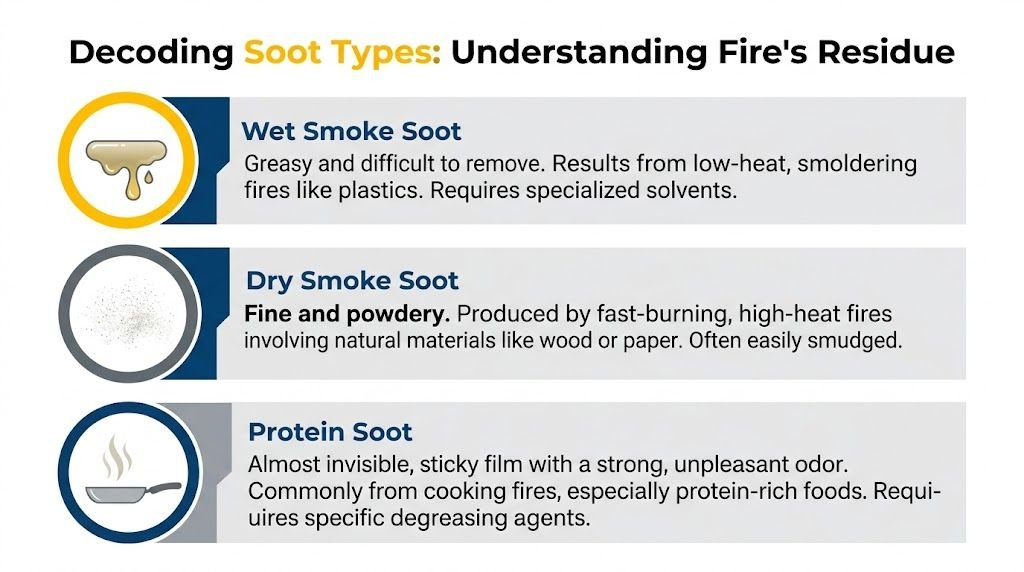
According to Restopros' soot damage article, soot classification into wet, dry, and protein types dictates restoration efficacy, and using the wrong method can embed 2-5x more residue. The same source notes that soot can spread through HVAC in pressurized systems at velocities up to 1000 fpm, contaminating 100% of ducted spaces in events like furnace puff-backs.
Wet soot
Wet soot usually comes from low-heat, smoldering fires involving plastics, rubber, petroleum-based materials, or synthetic contents. This is the messy one homeowners remember because it feels greasy and sticky.
If you touch it, it often smears. If you scrub it, you can push it into paint, wood grain, or upholstery fibers.
Wet soot often shows up after:
- Structure fires involving synthetics like furniture foam, electronics, vinyl, and plastic storage bins
- Smoldering indoor fires that didn't burn hot enough to consume material cleanly
- Some appliance or mechanical events where oily residue mixes with smoke particles
Wet soot generally needs solvent-based or specialty cleaning methods, not ordinary household spray cleaner.
Dry soot
Dry soot is lighter and more powdery. It often comes from fast-burning, higher-temperature fires involving paper, wood, or similar materials. It can also resemble some of the fine residue homeowners notice after outdoor smoke intrusion.
That doesn't mean it's safe to wipe away casually. Dry soot can still smudge, and once it gets driven into texture or porous finishes, the cleanup gets harder.
A typical example is a room affected by a brief but intense flame event where paper goods, wood trim, or natural materials burned quickly. Dry soot often responds better to controlled HEPA removal and dry-cleaning methods than wet wiping.
Protein soot
Protein soot confuses people because it may be hard to see at first. It often comes from kitchen fires or overcooked food, especially when grease and protein-rich food vaporize and spread through the home.
The residue may be nearly invisible on first glance. Homeowners usually notice the smell before the film. Cabinets, painted walls, ceilings, and appliance exteriors can all collect it.
Protein residue tends to require targeted degreasing and odor treatment. Standard dusting rarely touches the actual problem.
Why the source matters for cleanup and insurance
For Los Angeles residents, this isn't only a cleaning issue. It affects claim documentation.
If soot came from a wildfire intrusion, an interior kitchen fire, or a furnace puff-back, the inspection needs to document where the residue traveled, what type it appears to be, and which materials were affected. That record helps explain why one room may need a dry sponge pass while another needs more aggressive treatment or even material replacement.
Here is a simple comparison:
| Soot Type | Source | Appearance | Best Cleanup Method |
|---|---|---|---|
| Wet soot | Smoldering plastics, rubber, synthetics, petroleum-based materials | Sticky, oily, smeary | Solvent-based or specialty extraction by trained technicians |
| Dry soot | Fast-burning wood, paper, natural materials | Fine, powdery, easier to disturb | Controlled HEPA removal and dry-cleaning methods |
| Protein soot | Cooking fires, grease vapor, overheated food | Often faint or nearly invisible, sticky film, strong odor | Targeted degreasing and odor treatment |
If a residue smears when lightly tested, stop wiping. That usually means the surface needs a different method than ordinary household cleaning.
The Hidden Health and Property Risks of Soot Exposure
Soot from smoke creates two kinds of problems at once. It affects the people inside the home, and it affects the building itself.
Health risks inside the home
According to the PuroClean summary citing WHO and EPA information, exposure to fine particulate matter, including soot, contributes to over 4.2 million premature deaths annually worldwide. The same source states that 63 million people in the U.S. experience short-term spikes in soot pollution, which can increase hospital admissions for heart and respiratory illness.
For a homeowner, those global numbers matter because soot particles are small enough to be inhaled into the lungs. Short-term exposure can irritate the eyes, nose, and throat. It can aggravate asthma and other breathing conditions. People who are already more vulnerable, including children, older adults, pregnant people, and outdoor workers, may be affected sooner and more severely.
Soot also has a long history in cancer research. The National Cancer Institute's page on soot notes that the occupational link between soot exposure and cancer dates back to 1775, when British medical professionals associated soot exposure with scrotal cancer in chimney sweeps. That source also explains that soot can contain carcinogenic compounds such as PAHs, benzene, and formaldehyde.
If anyone in the home has respiratory symptoms after a smoke event, it makes sense to treat the environment as potentially contaminated until it has been properly assessed. Situations involving visible residue, strong odor, or widespread spread may also call for hazardous materials cleanup rather than ordinary housekeeping.
What soot does to your house
Property damage from soot is often slower and less obvious than flame damage. That's why homeowners underestimate it.
Acidic and abrasive particles can affect:
- Glass and metal through etching and corrosion
- Electronics and wiring when fine residue settles into sensitive components
- Paint, plastics, and fabrics through discoloration, yellowing, and persistent odor
- HVAC systems by carrying contamination into other rooms and recirculating particles
One more wrinkle matters. Soot doesn't stay chemically identical forever. Brookhaven National Laboratory's wildfire soot research found that soot particles change as they age, with composition and light-absorption behavior shifting over time. For homeowners, the practical lesson is that older deposits may not respond the same way as fresh residue. A slow, smoldering event or poor ventilation can leave behind deposits that are more stubborn than expected.
Older soot deposits can behave differently from fresh ones. If a smell lingers for days, the residue may need a different treatment approach than a simple surface wipe-down.
How Professionals Detect and Test for Hidden Soot
Visible staining tells only part of the story. Some of the worst soot contamination sits where homeowners rarely look, or can't access safely.
The first pass is inspection, not cleaning
A professional soot inspection usually starts with mapping the event. Where did the smoke originate. Which rooms were open. Was the HVAC running. Did residue move upward, into returns, or behind contents.
Those questions matter because soot from smoke follows pathways. It rides airflow, pressure differences, and heat currents. A good inspection doesn't just focus on the room where the problem started.
Technicians commonly inspect:
- Ducted pathways including registers, returns, filters, and accessible interior duct areas
- Hidden structural routes like attics, crawlspaces, wall cavities, and ceiling plenums
- Low-visibility surfaces such as tops of doors, cabinet faces, blinds, and behind large furniture
Chemical sponges and air testing
One useful field method is simple but effective. Guidance summarized from LA County Public Health recommends using chemical sponges to test building materials for non-visible soot. On a wall or ceiling that looks clean, a dry sponge pass can reveal hidden residue that normal viewing misses.
That matters because homeowners often assume no visible staining means no damage. In reality, faint or invisible films can still affect odor, air quality, and insurance scope.
Professionals may also use air-scrubbing and particulate assessment methods to understand whether contamination remains airborne or settled. If you're trying to understand what air cleaning equipment does during this process, this overview of an air scrubber rental explains why filtration and containment are often part of the restoration plan.
Why hidden soot creates repeat problems
When hidden soot isn't found the first time, homeowners often notice the same pattern. The smell comes back. Dust seems darker than normal. Fresh paint doesn't look right. HVAC use seems to stir the odor again.
A room can look clean and still contain smoke residue inside materials, ductwork, or other concealed spaces.
That is why testing and inspection come before cosmetic repair. If the residue remains in the system, repainting or deodorizing alone usually won't solve the problem for long.
DIY Soot Cleanup vs Hiring a Los Angeles Pro
Most homeowners want to know the same thing first. Can I clean this myself, or do I need a restoration company?
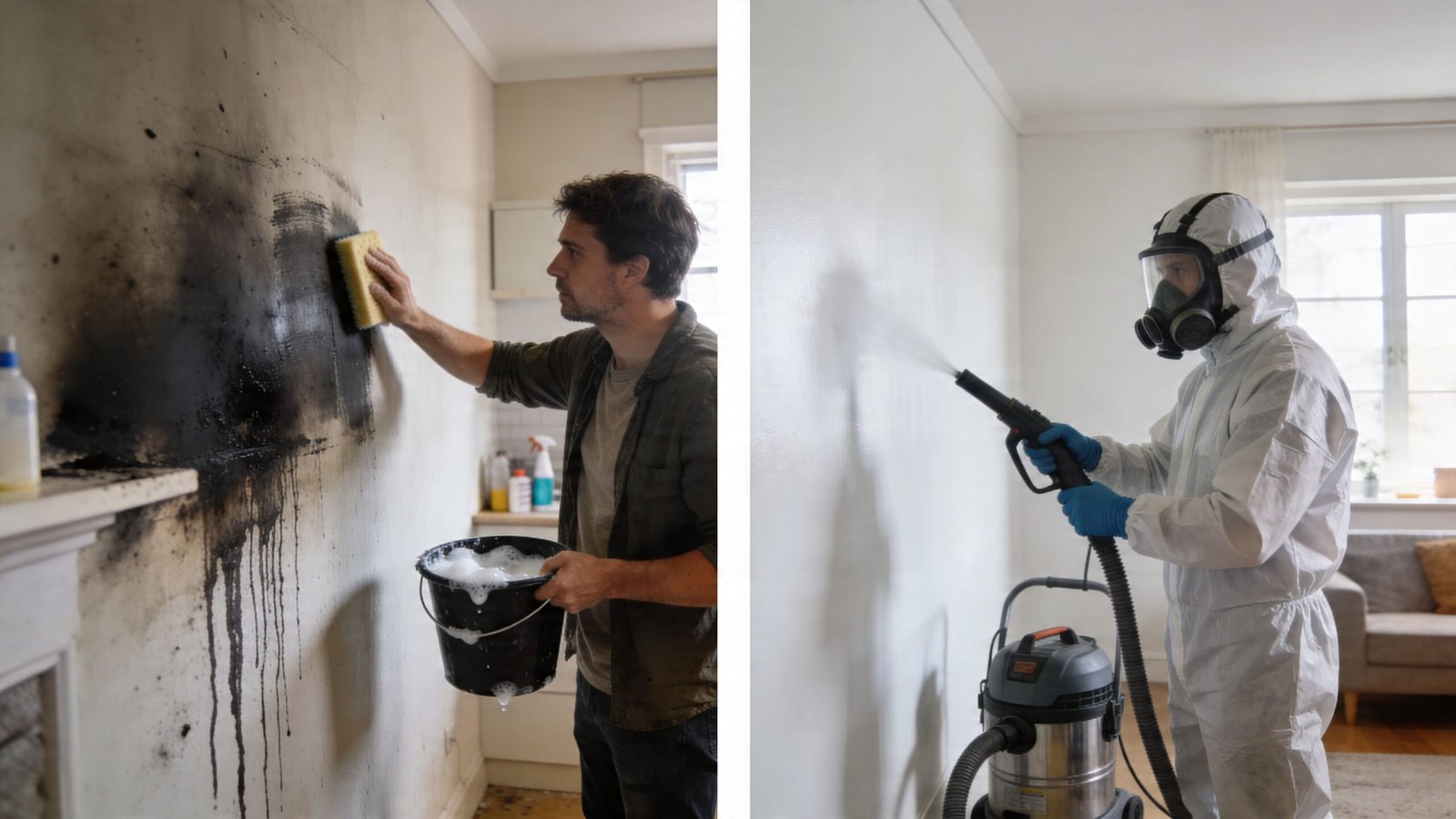
The honest answer is that DIY is only reasonable in a very narrow set of situations.
When a limited DIY attempt may be reasonable
A homeowner may be able to address a very small amount of light, dry residue from a contained event, such as a candle accident or a minor isolated scorch mark, if all of the following are true:
- The affected area is small and clearly limited to one surface
- The residue is dry and powdery rather than oily or sticky
- There is no odor spread into other rooms, cabinets, or vents
- No one in the household is sensitive to smoke exposure
Even then, the method matters. Dry HEPA vacuuming is safer than brushing. A dry cleaning sponge is safer than a wet rag on many surfaces. Testing a small inconspicuous spot first matters.
When to stop immediately
Most fire and smoke cleanup jobs move out of DIY territory fast. Call for professional help if any of these red flags show up:
- Soot near vents or returns because contamination may have traveled through the system
- Sticky or greasy residue which usually indicates wet or protein-based soot
- Persistent smoke odor after surface wiping or ventilation
- Multiple rooms affected even if the visible residue looks light
- Porous materials involved such as upholstery, mattresses, insulation, or unfinished wood
- Sensitive occupants present including children, older adults, or anyone with respiratory concerns
A lot of homeowners make the same mistake. They wipe first, investigate later. That's backward.
If the soot class is wrong for the cleaning method, you can smear it into paint and drywall, or spread particles to new areas with fans, HVAC use, or dry dusting. Similar caution applies after other dusty property events too. This guide to professional post-build cleanup is useful because it shows how fine residue after a major event needs controlled removal, not just general cleaning.
For a closer look at one common affected surface, this page on soot removal from walls explains why walls often need a dry first approach before any wet chemistry is introduced.
Here's a visual example of why professional process matters:
Why pros get different results
A trained crew doesn't just clean. They classify the residue, isolate the affected area, protect unaffected rooms, use HEPA filtration, and match the chemistry to the soot type and surface.
That difference matters most in Los Angeles homes with mixed materials. Modern paint finishes, engineered flooring, stone, textured drywall, custom cabinetry, and ducted HVAC systems all react differently to smoke residue. A one-bottle household cleaner doesn't account for that.
Navigating Insurance Claims for Soot From Smoke Damage
Insurance gets confusing because soot damage often looks smaller than it is. A room may not be burned, yet it still needs significant restoration because the residue traveled into contents, finishes, and mechanical systems.

What documentation matters most
For claims involving soot from smoke, the strongest file usually includes clear evidence of spread and condition, not just a few overview photos.
Helpful documentation often includes:
- Photo logs showing visible residue, affected rooms, and impacted contents
- Testing notes that identify hidden contamination, including non-visible residue findings
- Moisture records when firefighting water or suppression activity also affected the home
- A written scope of work describing what must be cleaned, removed, sealed, or restored
This is one reason early inspection helps. If the residue reaches ducts, attic pathways, cabinetry interiors, or soft contents, the claim needs to reflect that reality from the start.
Why soot type affects the claim
Not all smoke losses require the same labor or materials. A dry residue limited to a single room is different from greasy residue across multiple surfaces after a kitchen or structure fire. If the source involved wildfire intrusion, kitchen oils, synthetics, or a furnace event, that should be documented because the cleaning method and timeline may change.
That is also why broad phrases like "light smoke damage" can be misleading. The visible film may be light while the restoration scope is not.
Homeowners who are unsure about policy language can start with this guide on whether homeowners insurance covers fire damage. It helps frame the right questions before speaking with an adjuster.
The best insurance support is specific. Rooms, surfaces, systems, and testing results should all be documented in plain language.
What to do before the adjuster visit
Try not to overclean the property before documentation is complete. You don't want to remove visible evidence or change the pattern of contamination. Take your own photos, make a room-by-room list, and note where odor is strongest.
If you've already wiped some areas, say so. Accurate reporting matters more than perfect reporting.
Your Local Solution for Soot Restoration in Los Angeles
Soot from smoke isn't just leftover dirt. It's a residue with different forms, different risks, and different cleanup requirements depending on what burned and how the smoke moved through the home.
That matters in Los Angeles, where homeowners may face wildfire smoke intrusion one season, a kitchen fire the next, or a furnace-related event during colder months. A powdery residue on a windowsill, an oily film on kitchen cabinets, and odor coming from vents are not three versions of the same problem. They need different responses.
Onsite Pro Restoration serves homeowners and property managers across the Los Angeles area, including North Hollywood, Sherman Oaks, Burbank, Beverly Hills, Glendale, and West Hollywood. The team is licensed, IICRC-certified, available around the clock, and equipped to assess, contain, clean, deodorize, and document soot damage for insurance purposes.
If you suspect hidden contamination, don't wait for odor, staining, or corrosion to get worse. A proper evaluation can show whether the residue is limited, whether it moved through the HVAC system, and whether affected materials can be restored or need replacement.
Frequently Asked Questions About Soot Cleanup
Q What should I do first if I find soot in more than one room
Stop dry dusting and don't run the HVAC if you think it may be spreading residue. Take photos, limit traffic through the affected areas, and arrange for a professional assessment. Multi-room spread often means the contamination followed airflow, not just open space.
Q Can I paint over soot stains
Not right away. If soot remains on or inside the surface, paint can fail, discolor, or trap odor rather than solve it. The residue has to be removed or properly sealed after cleaning, depending on the material and condition.
Q Why does my house still smell like smoke when I can't see residue
Some soot films are faint or nearly invisible, especially after kitchen-related smoke events. Residue may also be inside porous materials, behind contents, or inside ductwork. Odor often tells you contamination remains somewhere the eye can't easily catch.
Q Is wildfire soot different from soot after an indoor fire
It can be. Outdoor smoke intrusion may leave a finer residue, while indoor fires involving plastics, grease, or synthetic contents often produce stickier deposits. The source affects how the residue behaves and what cleaning process works best.
Q Are electronics at risk after soot exposure
Yes. Fine particles can settle into electronics and sensitive components. Even when devices still power on, residue may remain inside housings or vents. It's smart to have exposed electronics evaluated before normal use continues.
Q How long can soot sit before cleanup becomes harder
Sooner is better. Soot can keep bonding to materials, and acidic residue can continue affecting finishes over time. Older deposits may also become more difficult to remove cleanly, especially in poorly ventilated spaces.
If you need a clear answer about soot from smoke in your home, Onsite Pro Restoration can inspect the damage, identify the likely soot type, document hidden contamination, and help you move toward safe, complete restoration in Los Angeles.