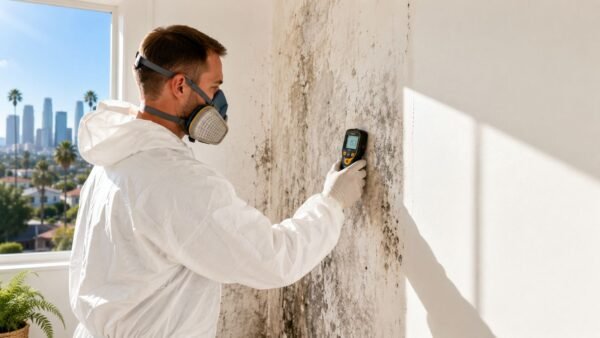

Using a bug bomb in an apartment means following strict safety rules, including no use in closets or cabinets, no more than the labeled room coverage, and leaving the unit for the label period, usually 2 to 4 hours before returning to air it out. For many apartment pest problems, especially roaches and bed bugs hiding in wall voids or protected areas, foggers are often a poor tool and safer, more targeted methods make more sense.
When seeking bug bomb apartment guidance, you're probably staring at a can in the kitchen and wondering whether this is the fastest way to knock out a pest problem before it gets worse. I understand the impulse. In Los Angeles apartments, especially in older buildings around Sherman Oaks, Glendale, and Burbank, pests can show up fast and spread between units.
But this isn't just a pest-control decision. It's a fire, contamination, occupancy, and liability decision. In a shared building, one mistake can affect your belongings, your lease, your air quality, and your neighbors.
SEO title tag: Bug Bomb Apartment Safety and Alternatives
Meta description: Bug bomb apartment safety guide for LA renters. Learn proper prep, legal risks, ventilation steps, and safer alternatives to foggers.
Schema opportunity: FAQ, HowTo, LocalBusiness
Should You Use a Bug Bomb in Your Apartment
A bug bomb apartment treatment can be legal and possible in some situations, but that doesn't mean it's smart for every infestation. In apartment buildings, foggers create aerosol pesticide across the room. That raises obvious concerns about ignition sources, residue, and who might re-enter too soon.
The first question isn't which fogger to buy. It's whether a fogger fits the pest and the building.
Why renters reach for foggers
People choose foggers because they seem simple. Set the can down, leave, come back, and assume the problem is solved. That logic breaks down in multi-unit housing, where pests often live behind baseboards, inside wall voids, under cabinets, or in shared pathways between units.
In Los Angeles, apartments also tend to have tighter parking, shared hallways, older gas appliances, and neighbors close by. If a resident misuses a fogger, the consequences aren't isolated.
Practical rule: If your pest problem involves hidden harborage, shared walls, or recurring activity, a fogger usually isn't the first tool to trust.
What matters more than the can label
The can label matters, but apartment use adds another layer. You need to think about:
- Lease limits: Your landlord or management company may prohibit foggers outright.
- Building safety: Pilot lights, electrical devices, and enclosed spaces can turn misuse into a property-damage event.
- Exposure risk: Residue can settle where you cook, eat, and store daily-use items.
- Air quality after treatment: If odor lingers or anyone develops irritation, follow-up testing can help clarify what remains in the space through professional indoor air quality testing.
A fogger isn't a harmless shortcut. It's a room-wide chemical application inside the place where you sleep and prepare food. Treat it that way.
Your Pre-Fogging Safety and Legal Checklist
Before you buy anything, stop and do three checks. Most avoidable apartment fogger problems start because someone skips one of them.
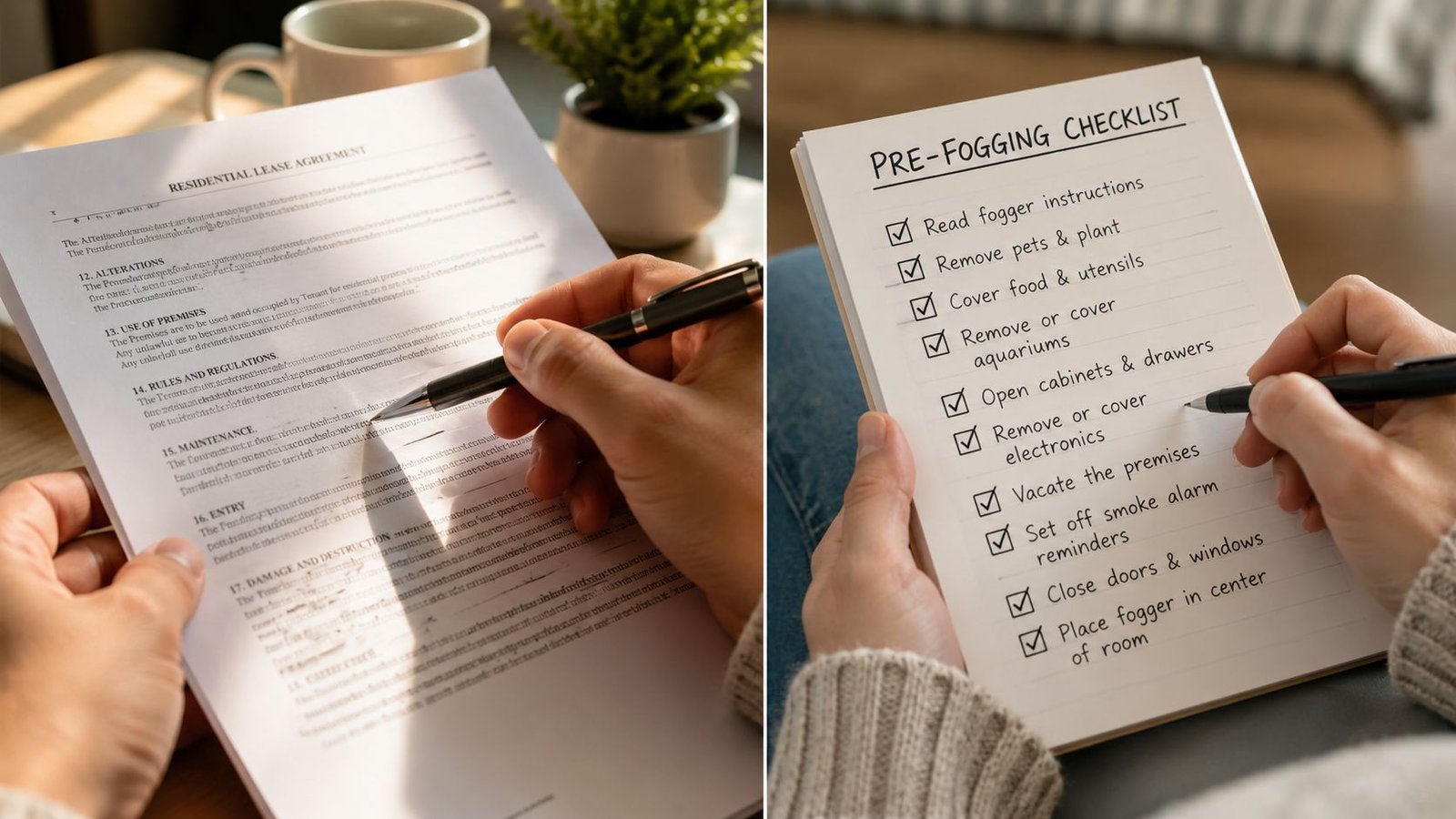
Check your lease and notify management
Many renters focus on the can and forget the contract. Your lease may restrict pesticide use, require notice to management, or require the landlord to coordinate treatment. In a shared building, management may also need to know because neighboring units can be affected by odor complaints, improper ventilation, or a pest issue that extends beyond your apartment.
If you're in a larger building in Sherman Oaks or a smaller multifamily property in Glendale, ask directly before treatment. Get the answer in writing if possible.
A fogger complaint can become a lease issue quickly if a neighbor reports fumes, illness, or damage.
Identify the pest before you treat
Many DIY efforts fail because pest-control guidance notes that foggers may not reach insects hidden in walls, under floors, or other protected areas, and recent expert content continues to discourage bug bombs for bed bugs or roaches in wall voids because fogging can create false confidence while leaving the source untouched, as explained in this guidance on what bug bombs can miss.
That means a visible bug doesn't automatically justify a fogger. A few roaches in the kitchen may point to moisture, food access, or a neighboring source. Bed bugs are even less suited to room-filling aerosol treatment because they hide deep in seams, cracks, and adjacent units.
If you haven't identified the pest and where it's living, you're not treating a problem. You're treating a room.
Assess whether the apartment layout makes fogging riskier
Studio units, dense one-bedrooms, lots of fabric, cluttered closets, and tight kitchens all increase the challenge. Foggers are broad-dispersal tools. Apartments are full of enclosed storage, sensitive surfaces, and ventilation limits.
Use this short screening list before moving forward:
- Shared-wall issue: If pests may be entering from adjacent units, a one-unit fogger won't address the source.
- Hidden infestation: If activity is behind cabinets, around plumbing penetrations, or in bedroom furniture, choose targeted treatment instead.
- Sensitive occupants: If children, pets, older adults, or anyone with breathing sensitivity lives there, treat exposure concerns seriously.
- Post-treatment verification: If you're already concerned about lingering residue or odors, consider reviewing air quality monitoring devices and options before making the space occupied again.
How to Prepare Your Unit for a Bug Bomb
Preparation decides whether the job stays controlled or becomes a contamination problem. The can won't walk you through apartment-specific risks. You need to do that yourself.
Follow EPA room limits and placement rules
The U.S. EPA warns that foggers should not be used in small enclosed places such as closets or cabinets because they can explode, and it states that a typical 6-ounce fogger is meant for up to a 25-by-25-foot unobstructed space; users must then leave the unit for the label period, usually 2 to 4 hours, according to EPA fogger safety precautions.
That gives you a few clear boundaries:
- Never fog enclosed storage spaces: Closets, cabinets, and similar tight areas are off-limits.
- Don't stack coverage: More product doesn't mean better control.
- Use room logic, not panic logic: One fogger per room is the practical upper limit implied by the EPA room-coverage guidance.
- Treat open space as open space: Furniture-packed rooms don't become larger because the label says a square footage number.
Remove what can hold or transfer residue
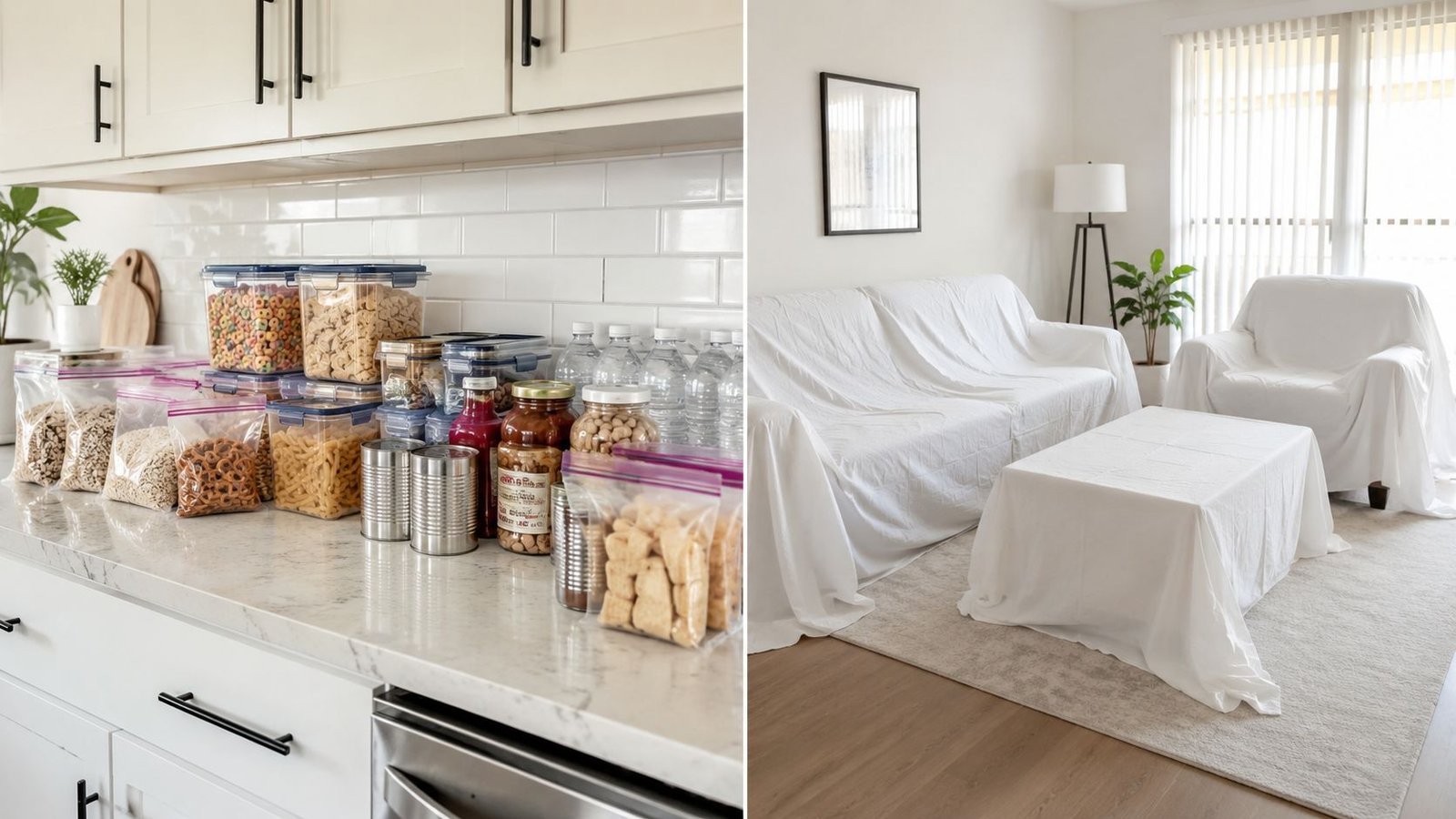
Your apartment isn't an empty box. It has dishes, coffee makers, cutting boards, remote controls, bedding, pet bowls, and exposed toiletries. Anything left out can collect residue.
Before activation:
- Seal food completely: Pantry items, fruit bowls, snacks, pet food, and anything on counters should be removed or sealed in a way that prevents contamination.
- Clear food-contact items: Plates, utensils, cups, cutting boards, and cookware should be put away securely or removed from the unit.
- Cover select surfaces: Countertops, electronics, and similar items are better protected than left exposed.
- Remove living things: People, pets, and plants all need to leave.
A lot of renters forget soft goods. Bedding, towels, and exposed clothes can all hold odor and residue after treatment.
Eliminate ignition sources before you leave
This is the step people underestimate. A fogger releases flammable aerosol. In an apartment, that means every possible spark matters.
Turn off or address all likely ignition sources before activation:
- Pilot lights: Gas stoves, ovens, water heaters, and other gas appliances
- Electrical equipment: Unplug appliances and devices that could cycle on
- Heat sources: Space heaters, candles, and anything with an exposed element
- Open flames or smoking materials: Remove them completely
For apartments with HVAC returns or dusty vents, residue and odor can also circulate after treatment. If that concerns you, learn how duct cleaning can support indoor air quality recovery.
This walkthrough is worth watching before you start:
Safely Ventilating and Cleaning After Fogging
Much of the risk starts after the can empties. People come back too soon, crack one window, wipe one counter, and assume the apartment is fine. That's not enough.
Re-enter the unit the safe way
Stay out for the full label period. For apartment foggers, the EPA says users must vacate and remain out for the period specified on the label, usually several hours. Don't shorten that because you're in a hurry or because the smell seems light from the hallway.
When you return, open windows and exterior-facing doors if available. Create airflow through the unit, not just one open point near the entry. If you have safe fan placement options, use them to move air outward and across the apartment.
Open air beats perfume. If the unit still smells chemical, don't try to cover it with candles or air fresheners.
Clean the surfaces that matter most
Fogger residue isn't only an odor issue. In practical terms, you should treat the apartment like a space that needs post-application decontamination of daily-use surfaces.
Focus first on:
- Food-prep zones: Counters, tabletops, stove-adjacent surfaces, and sink surrounds
- High-touch hard surfaces: Floors, side tables, desks, remotes, and handles
- Items used by children or pets: Bowls, play surfaces, crates, and reachable furniture
- Bathroom surfaces: Vanity tops and any exposed toiletries storage area
Wash exposed fabrics that could have collected residue, including bedding, pillowcases, and clothes left out during treatment. If curtains or throw blankets were exposed, launder those too when possible.
Know when basic cleanup isn't enough
Some units still hold odor after ventilation and surface cleaning. That can happen in small apartments with lots of textiles, limited airflow, or over-application. If the smell lingers, don't keep sleeping in the room and hoping it fades.
A restoration-grade air-cleaning approach may be more appropriate at that point. Temporary air scrubber rental options for indoor contaminant control can be part of a safer recovery plan when normal airing out doesn't fully resolve the problem.
The High Risks and Limited Effectiveness of Foggers
In property restoration work around Los Angeles, the pattern is familiar. Someone sees pests, uses a fogger, and then ends up with a second problem. Sometimes it's odor. Sometimes it's residue. Sometimes it's a much bigger safety issue.
The health risk is real
The U.S. CDC documented 3,688 cases over two decades in which consumers were sickened after accidental exposure to bug bombs, with symptoms including coughing, breathing difficulty, and nausea, and reporting on the same North Carolina State University research also noted that several bug-bomb products killed, at most, 38% of wild cockroaches, according to North Carolina Health News summarizing the CDC and NC State findings.
Those symptoms line up with what you'd expect when aerosol pesticide is misapplied, overapplied, or re-entered too soon. In an apartment, exposure isn't only about the person who pressed the tab. It can affect anyone who enters before the unit is fully ventilated and cleaned.
The reward often doesn't justify the risk
If a treatment creates contamination but barely controls the pest, that's a bad trade. In dense housing, that's often what foggers deliver.
Here are the practical drawbacks:
- Poor reach: Hidden pests stay hidden.
- False confidence: Residents stop looking for the actual source.
- Messy aftermath: Kitchen and living surfaces may need substantial cleaning.
- Neighbor impact: Shared-building complaints can start fast.
A treatment that fills the room but misses the harborage is mostly theater.
Why this matters for apartment living
Apartment residents have less margin for error than single-family homeowners. Smaller rooms, shared walls, and sensitive occupancy schedules make mistakes harder to contain. If anyone in the unit is already sensitive to lingering smells, it helps to think about broader indoor comfort choices too, including air-friendly alternatives to heavy fragrance products.
Foggers aren't harmless because they're sold on a shelf. They're regulated aerosol pesticides with a long history of misuse.
Better Apartment Pest Control and When to Call for Help
The better path for most apartment pests is targeted treatment. That usually means identifying the pest, cutting off food and moisture sources, sealing access points, and using products placed where the insects travel or nest.
What tends to work better in apartments
In a North Carolina State University apartment study, bug bombs showed no decline at two weeks or one month in cockroach populations, while gel baits produced significant reductions; researchers also found fogger use caused pesticide residues on kitchen surfaces to rise 603-fold on average, according to NC State's report on bug bomb performance in apartments.
That's why professionals usually prefer methods like:
- Gel baits: Better for roaches because insects feed on them where they travel.
- Crack-and-crevice treatment: More precise than room-filling aerosol.
- Sanitation correction: Trash handling, grease cleanup, and food storage matter.
- Moisture control: Roaches often track with leaks, humidity, or damp cabinets.
For prevention habits between treatments, Pestless Inc.'s roach prevention tips are a useful consumer-friendly reference.
When the issue becomes a restoration problem
Call a pest-control company when the infestation is active. Call a restoration professional when the fogger itself creates damage or contamination concerns.
That includes:
- Chemical odor that won't clear
- Residue across surfaces or contents
- Smoke or fire damage from misuse
- A moisture source behind the infestation, such as a hidden leak under a sink or behind a wall
If you're in Burbank, Glendale, North Hollywood, or nearby Los Angeles neighborhoods and a fogger has left you with odor, contamination, or fire-related damage, don't guess your way through cleanup.
Frequently Asked Questions About Apartment Foggers
Can I use a bug bomb in a studio apartment
Only if the product label fits the actual open space and you can safely prepare, vacate, ventilate, and clean the unit afterward. Studios are often harder, not easier, because the sleeping area, kitchen, soft goods, and electronics all sit in one open zone. That increases contamination concerns.
Do I need to tell my landlord before using a fogger
In most apartment situations, yes, you should. Your lease or building rules may restrict pesticide use, and management may need to know if the pest problem affects nearby units or if the building has appliance or ventilation conditions that raise safety concerns.
Will a bug bomb kill bed bugs in an apartment
It may kill exposed insects, but that's not the same as controlling a bed bug infestation. Bed bugs hide in protected spaces and often spread beyond one room or one unit. Fogging can leave residue while missing the source.
Can I stay in another room while the fogger goes off
No. If the label requires vacating the unit, that means leaving the unit. Staying in a bedroom, bathroom, or hallway inside the apartment isn't a safe workaround.
Is one bug bomb enough for the whole apartment
Use the label's room coverage, not guesswork. More product is not safer or more effective. Over-application is one of the classic mistakes with foggers and can increase residue and hazard without improving control.
What should I do if the apartment still smells like chemicals the next day
Keep ventilating and clean exposed hard surfaces and fabrics that may have collected residue. If the smell remains strong, or if anyone has irritation symptoms, treat that as an indoor environmental problem, not just a nuisance odor.
Are bug bombs a good idea for roaches in walls or under cabinets
No. Hidden roaches are exactly the kind of apartment pest problem that broad fogging handles poorly. Targeted baiting and source correction are usually better choices.
When should I call a restoration company after using a fogger
Call when the fogger caused fire, smoke, or property damage, or when residue and odor remain beyond normal airing out and cleaning. That's especially important if sensitive occupants need the unit returned to safe, normal use quickly.
If a fogger caused smoke damage, chemical residue issues, or stubborn odor in your apartment, contact Onsite Pro Restoration for help. We serve Los Angeles, CA, including Sherman Oaks, Burbank, and Glendale, and we respond to urgent property damage situations. Call 818-336-1800 for a free inspection.