
If you're wondering whether air quality testing services are worth it, the short answer is yes when you have a musty smell, smoke exposure, recent water damage, or renovation-related odors, because indoor pollution can be up to 70% higher than outdoor levels and a single sample can miss the underlying problem. Air quality testing services are professional assessments that measure common indoor pollutants like mold spores, chemicals, and particulates to identify potential health risks and their sources.
That's the situation many Los Angeles homeowners are in. A rainstorm passes through, and an older Burbank house suddenly smells damp. A wildfire burns miles away, but the smoke still works its way indoors. A remodel finishes in Glendale, and the home smells “new” for weeks in a way that doesn't feel normal.
In those cases, guessing doesn't help much. Air fresheners cover odors. DIY kits often create more confusion than clarity. What matters is identifying the likely source, choosing the right type of test, and using results that support a repair, cleanup, or insurance discussion.
Professional testing has become more common for a reason. One market projection values the indoor air quality testing service market at USD 1.14 billion by 2033 and notes that indoor pollution can be up to 70% higher than outdoor levels in urban settings, which helps explain why more property owners now treat testing as a standard building-health step in homes and commercial spaces alike (indoor air quality testing market projection).
If your main concern is mold after a leak or a persistent odor, start with a qualified evaluation such as Los Angeles mold testing, because the right test depends on what you're seeing, smelling, and experiencing in the property.
Your Guide to Professional Air Quality Testing in Los Angeles
In Los Angeles, indoor air complaints usually show up in practical ways. You notice a stale odor when the AC turns on. One room feels heavier than the rest of the house. A tenant mentions headaches, throat irritation, or worsening allergies. After smoke, water, or construction dust, you want to know whether the air is back to normal.
That's where professional testing helps. It doesn't just ask whether the air seems bad. It asks what is present, where it is concentrated, and whether the likely source is moisture, ventilation, particulates, combustion byproducts, or chemical off-gassing.
Practical rule: The best air testing answers a specific question. “Is there mold from that leak?” is a better starting point than “test everything.”
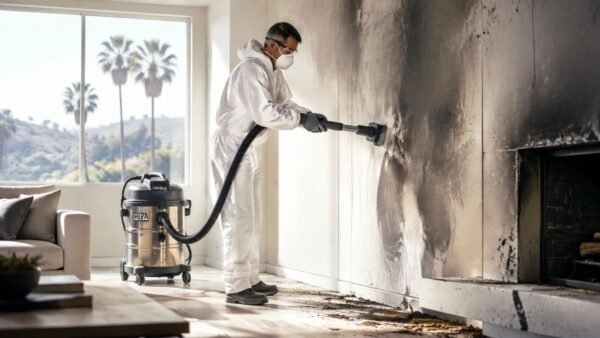
Los Angeles homes bring some unique conditions into the mix. Older properties in Burbank, Glendale, and Sherman Oaks often hide past leaks in wall cavities, crawlspaces, and around aging windows. Newer remodels can introduce strong VOC odors from paints, cabinets, flooring, and adhesives. Post-wildfire conditions add another layer, especially when smoke residues settle in HVAC systems, attics, soft contents, and duct pathways.
A good inspector won't jump straight to one air sample and call it done. They'll look at occupancy patterns, ventilation, visible clues, moisture history, and how the problem behaves. Does the smell get stronger in the morning? Does it show up only when the heater runs? Is one bedroom worse than the rest of the home?
Those details matter because they shape the test plan and keep you from paying for the wrong kind of inspection.
What Do Air Quality Testing Services Actually Measure
The biggest mistake homeowners make is treating all indoor air tests as the same thing. They aren't. Different tests answer different questions, and the right choice depends on whether you're dealing with moisture, smoke, chemicals, dust, or a ventilation issue.
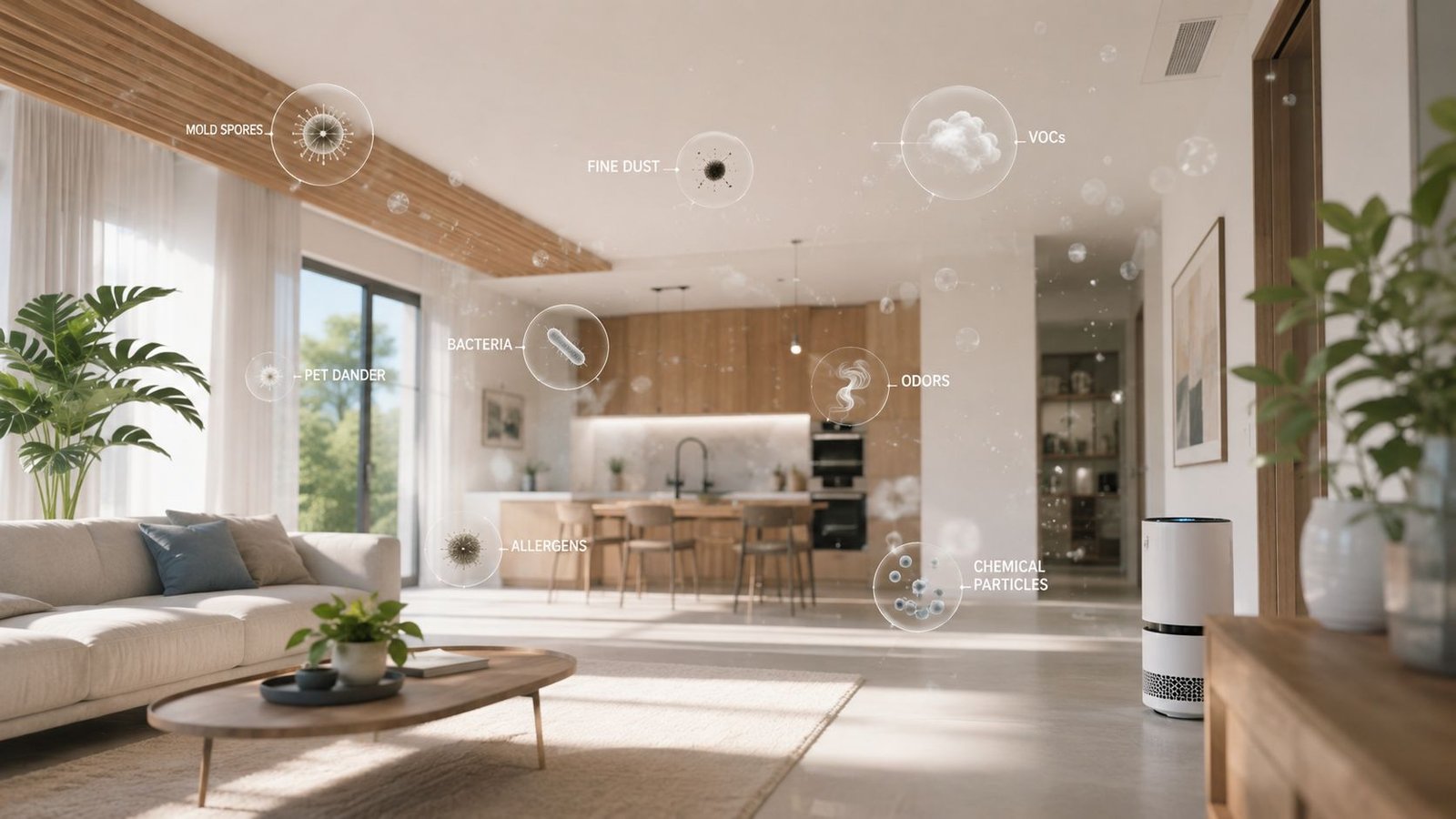
Public guidance often gets blurred on this point. Agencies note that indoor air problems usually come from pollutant sources, inadequate ventilation, or moisture and humidity, and that the right test may be air, surface, or moisture-focused rather than a generic one-size-fits-all screen (indoor air guidance on sources, ventilation, and moisture).
If you want a better sense of what instruments can and can't do before hiring a pro, review these air quality monitoring devices.
Mold and Fungi
Mold-focused testing is usually appropriate when you have a musty odor, visible growth, past water damage, recurring stains, or humidity problems.
Air sampling can help compare indoor conditions to outdoor conditions or compare one room to another. But mold investigations often need more than air alone. Surface sampling, moisture mapping, infrared scanning, and inspection of likely reservoirs are often more useful than a single canister sample taken in the middle of the living room.
What question does mold testing answer? Usually this one: Is there evidence that indoor fungal activity is high, and if so, where is it likely coming from?
That matters after:
- Past leaks: Roof leaks, plumbing failures, shower pan issues, and slab moisture can leave hidden growth.
- Older homes: Plaster walls, original windows, and aging HVAC systems can trap moisture patterns.
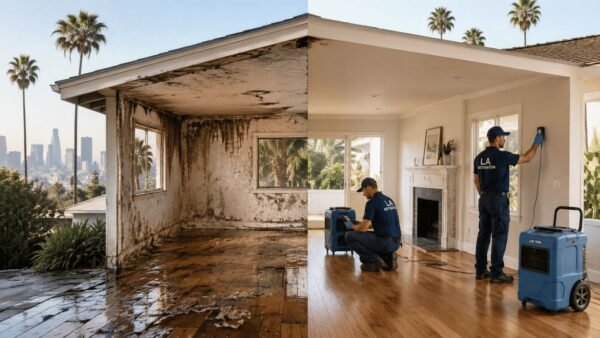
- Post-remediation clearance: Testing can help confirm whether cleanup returned the indoor environment to a normal condition.
If the issue points toward active contamination, the next step may be mold remediation services.
VOC Testing
Volatile organic compounds, or VOCs, are chemical gases that can come from paint, solvents, cabinetry, flooring, adhesives, cleaners, and some furnishings.
This is the right testing lane when the complaint sounds like:
- “The house smells chemical after the remodel.”
- “A bedroom smells like new carpet weeks later.”
- “The odor gets stronger when the home is closed up.”
VOC testing is less about visible contamination and more about off-gassing, trapped air, poor ventilation, or material-related emissions. In Los Angeles homes, this comes up often after kitchen remodels, floor replacements, cabinet installs, and interior painting.
A good VOC assessment also looks at airflow and HVAC operation. If fresh air exchange is poor, the materials may not be the whole problem. The building may be holding onto chemicals instead of flushing them out.
Particulates and Smoke Residue
Particulate testing is useful after wildfire smoke intrusion, nearby fire events, soot contamination, heavy dust, or persistent respiratory irritation.
This type of testing looks at the fine material suspended in the air. In real homes, that can include smoke particles, dust, disturbed insulation debris, and particles released during cleanup or reconstruction.
If you had visible smoke entry, ash near openings, or HVAC operation during a wildfire event, don't assume the problem ended when the outdoor air cleared.
Many homeowners often underreact. They wipe visible surfaces, change a filter, and think the issue is gone. But if residue remains in return pathways, porous materials, or contents, the odor and irritation can continue.
Other Concerns That May Need a Different Test
Some complaints sound like air problems but aren't solved by air sampling alone.
A few examples:
- Allergen complaints: Dust reservoirs, filtration issues, pet dander loading, and housekeeping patterns may matter more than one test result.
- Combustion concerns: Carbon monoxide and fuel-burning appliance issues need immediate safety attention and proper combustion assessment.
- Moisture without odor: Sometimes the priority is moisture mapping and building-envelope inspection, not air testing first.
The right takeaway is simple. Don't order a test by name. Start with the problem you're trying to solve.
When to Schedule Air Quality Testing for Your Property
Air quality testing isn't typically booked because of curiosity. It's booked because something changed.
The reason this matters is simple. Americans spend about 90% of their time indoors, and some indoor pollutant concentrations are often 2 to 5 times higher than outdoor levels (U.S. indoor exposure data cited by IBISWorld). If a home has an air problem, you're not getting much relief by just staying inside more.
Common Los Angeles Scenarios
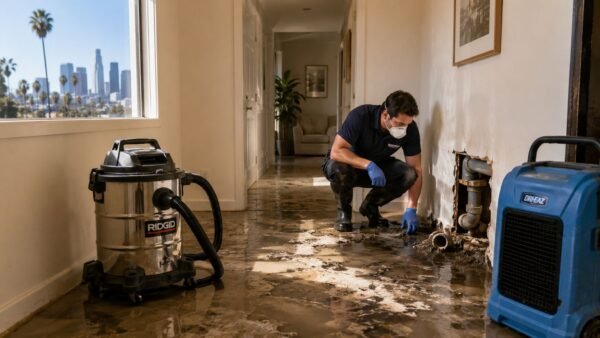
After water damage
A supply line leaks under a sink in Glendale. A ceiling stains after winter rain in Sherman Oaks. A washing machine overflows in a North Hollywood condo. Once materials stay wet, air quality concerns can follow. If the home still smells earthy after drying, testing can help determine whether you're dealing with hidden microbial growth or just residual odor. For active loss situations, emergency water damage restoration usually comes first.After wildfire smoke intrusion
Even when flames never reach the property, smoke can enter through attic vents, door gaps, duct systems, and open windows. If the home smells smoky days later, or symptoms start when the HVAC runs, targeted testing can help distinguish lingering particulate contamination from a simple odor issue.When a musty smell keeps returning
This is common in older Burbank and Glendale homes with crawlspace moisture, past roof leaks, or poorly ventilated bathrooms. If the smell disappears and comes back with weather or HVAC cycles, there's often a source condition worth investigating.After remodeling or repainting
New flooring, cabinets, coatings, and adhesives can create a chemical odor that lingers. Testing can help sort out whether you need ventilation improvements, source removal, or just more time with proper air exchange.
Health Complaints That Deserve a Building Check
Sometimes the clue isn't the building. It's the people in it.
If symptoms improve when someone leaves the property and return when they're back inside, that pattern deserves attention. For readers trying to recognize mold illness symptoms, that guide can help frame what to watch for, but building testing is still what identifies whether the home environment is contributing.
A recurring indoor symptom pattern is a building clue, not proof of a specific contaminant. Testing helps narrow the cause.
If you're unsure whether this is a one-time issue or something to monitor over time, this guide on how often air quality testing should be done is a useful next step.
The Professional Testing Process Step by Step
A proper inspection should feel methodical, not mysterious. When homeowners understand the process, they usually make better decisions about what to test and what can wait.
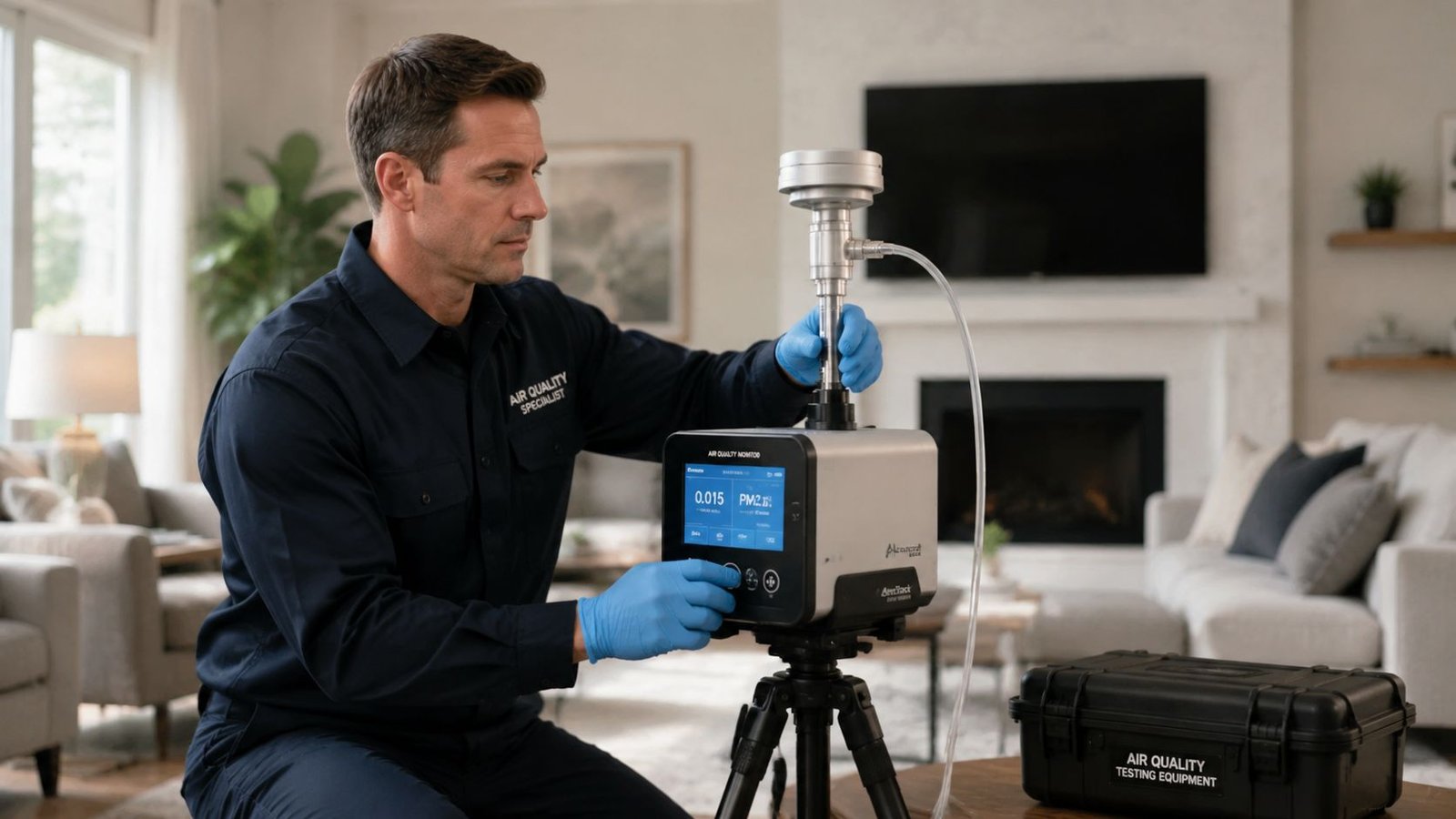
EPA guidance for thorough indoor air testing recommends collecting air samples on three consecutive days and averaging them because short-term readings can miss fluctuations. The same guidance includes benchmark limits such as total VOCs under 200 µg/m³ and carbon monoxide at or below 9 ppm (EPA indoor air testing guidance).
Initial Call and Problem Framing
The first step is narrowing the complaint.
A good provider asks questions such as:
- When did the odor or symptom start?
- Is it limited to one room or HVAC zone?
- Was there a leak, fire, remodel, or tenant turnover?
- Does the issue change with weather, AC use, or time of day?
Those answers shape the job. A post-wildfire call is not sampled the same way as a bathroom leak with visible staining.
Visual Inspection and Sampling Plan
In practice, this is where experienced inspectors earn their keep. In homes we evaluate around Sherman Oaks and Burbank, the visual inspection often tells us whether air sampling will be useful or whether moisture mapping, cavity checks, or HVAC inspection should come first.
That's one reason DIY kits disappoint people. They skip the building-forensics part of the job.
Useful pre-visit prep can come from a mold inspection checklist, but the field plan still needs to match the property.
Air samples don't explain a building by themselves. The building has to be read first.
Sample Collection and Field Measurements
This stage may include air samples, surface samples, moisture readings, temperature and humidity checks, and targeted measurements around suspect zones.
The key trade-off is breadth versus precision. Broad screening can flag that something is off. Targeted sampling can better connect the finding to a source. The strongest approach usually combines both when the situation calls for it.
Examples:
- A musty bedroom may need a room sample, an outdoor comparison, and moisture checks on the adjacent wall.
- A renovation complaint may call for VOC-oriented sampling plus ventilation review.
- A smoke complaint may need particulate screening in occupied areas and near HVAC returns.
Lab Analysis and Reporting
Once samples go to the lab, the report should answer practical questions, not drown you in raw data.
Look for:
- Clear findings tied to sampled locations
- Interpretation of what appears high or unusual
- Likely source discussion
- Next-step recommendations, which may include ventilation changes, source removal, cleanup, or clearance testing after remediation
That final point matters. Results are useful only if they lead to a sensible plan.
LA Air Quality Testing Costs and Choosing a Certified Provider
Homeowners usually ask two questions right away. What will this cost, and how do I avoid hiring the wrong company?
The honest answer on cost is that pricing depends on scope. Property size, number of sample locations, whether the concern is mold or VOC-related, whether lab analysis is required, and whether the problem spans multiple HVAC zones all affect the final number. A basic investigation and a complex post-loss testing plan are not the same service.
That's why flat-price promises can be a red flag. If a company quotes one number before asking about the house, the history, and the suspected issue, they may be selling a template instead of an investigation.
What Should Influence Price
A fair estimate usually reflects some combination of the following:
Property layout
A condo with one clear complaint area is simpler than a multi-level home with several return paths and disconnected symptoms.Type of concern
Mold, smoke, chemical odors, and post-remediation clearance don't require the same approach.Sampling density
More locations can mean a better answer, especially when contamination isn't evenly distributed.Reporting depth
A brief lab handoff is not the same as a report that connects findings to likely causes and repair recommendations.
What Separates a Real Provider From a Basic Tester
One useful benchmark comes from Fitwel. Its guidance requires monitoring locations at every 25,000 sq. ft. or per air-handling-unit zone, whichever is more stringent, and on each project level, which reinforces why one sample per floor can miss a localized problem (Fitwel IAQ testing guidance).
Even in a home, the lesson holds. HVAC zones matter. A smoky upstairs hallway and a clean downstairs den should not automatically be treated as one condition.
When choosing a provider, look for this checklist:
IICRC background
Restoration and contamination work benefit from field knowledge, not just equipment. If you're comparing companies, read about what IICRC certification means.A source-first mindset
Good inspectors don't sell “testing” as the product. They use testing to answer a source question.Clear scope language
You should know what's being sampled, why those areas were chosen, and what the report will include.Comfort with post-loss conditions
Water damage, smoke, and odor cases require different judgment than routine wellness screening.
One More Hiring Check
Ask whether the provider can explain what happens after the results come in.
If the answer is vague, keep looking. A useful air quality consultant should be able to explain the likely pathways from findings to action, whether that means drying, demolition, HVAC cleaning, source removal, or follow-up clearance.
For broader credential guidance, the IICRC standards and certification organization is a solid reference point.
Onsite Pro Restoration is one local option for Los Angeles property owners who need testing tied to water damage, mold, smoke, or odor-related restoration conditions.
Understanding Your Report and Planning Next Steps
A good report should make the next move clearer, not more intimidating.

What Elevated Results Mean in Practice
A high reading does not always mean the whole house is unsafe. It usually means a specific condition needs attention.
That condition might be:
- hidden moisture driving mold activity
- smoke residue trapped in porous materials or HVAC pathways
- poor ventilation after a remodel
- localized contamination in one room or zone
The strongest reports connect findings to places and causes. If the data says a bedroom is abnormal, the report should discuss what around that room might explain it.
Your report is a roadmap. It should tell you what to fix first, what to monitor, and what doesn't need major intervention.
The Next Step Is Usually Source Control
If mold is present, the answer isn't to spray a fragrance or buy a stronger diffuser. It's to correct the moisture source and, when needed, perform professional remediation. If smoke or VOCs are the issue, the plan may involve filtration, ventilation correction, material removal, cleaning, or targeted demolition.
After remediation, clearance testing can confirm whether the corrective work resolved the problem. That matters for peace of mind, tenant communication, real estate transactions, and insurance documentation.
If you need help evaluating results or planning corrective action in Los Angeles, call 818-336-1800 and get the property assessed before a small indoor air issue turns into a larger restoration job.
Frequently Asked Questions About Air Quality Testing
Are DIY air quality test kits reliable
They can be useful for general screening, but they usually don't replace professional interpretation, calibrated instruments, moisture investigation, or lab-backed sampling. If you need results that support remediation or claims documentation, professional testing is the stronger choice.
Does homeowners insurance cover air quality testing
Sometimes, but it depends on the cause of loss and the policy. Testing tied to a covered water, smoke, or fire event may be handled differently than testing for a long-term maintenance issue. Documentation matters.
How often should I have my home's air tested
There isn't one schedule that fits every house. Test when conditions change, such as after water damage, smoke exposure, major renovation, persistent odors, or recurring occupant symptoms. Some buildings also benefit from follow-up clearance testing after remediation.
If you're dealing with musty odors, wildfire smoke, water damage, or post-renovation air concerns in Los Angeles, Onsite Pro Restoration can help you identify the right testing approach and the right next step. Call 818-336-1800 for an assessment.