
A lot of Los Angeles dog owners know this moment. The house smells stale after rain, pet bedding, cooking, or an old spill. You reach for a plug-in or spray, then stop and wonder whether “fresh linen” is going to make your dog miserable.
That pause is smart.
Dogs live close to the floor, breathe the same indoor air all day, and can’t tell you when a fragrance is bothering their lungs or making them nauseated. The problem gets more serious after water damage, mold work, smoke cleanup, or sewer issues, because an odor may be more than an odor. It may be a warning sign that something in the home still needs attention.
If you want your home to smell clean without putting your dog at risk, the answer usually isn’t a stronger scent. It’s choosing dog safe air fresheners carefully, using them correctly, and knowing when to stop masking and start fixing the source. If you’re dealing with a stubborn odor after property damage, schedule a professional odor assessment so you know whether you’re facing a surface smell or a deeper indoor air issue.
Introduction
A safe-smelling home and a dog-safe home should be the same thing, but they often aren’t. Many products sold as everyday air care were designed to make a room smell pleasant fast. They weren’t designed around a dog’s nose, breathing pattern, or habit of lying on rugs and licking paws.
That matters in real homes across Burbank, Sherman Oaks, Glendale, and West Hollywood. A mild fragrance to you can become constant exposure for your dog, especially in apartments or tightly sealed houses where air doesn’t move well. If your dog already has allergies, a flat face, or a history of coughing, the margin for error gets smaller.
Post-restoration homes need even more caution. After a leak, mold issue, smoke event, or sewer backup, homeowners often want the house to “feel normal” again. Scent products can hide the smell temporarily, but they can also cover up clues that the air still isn’t right.
Practical rule: If an odor keeps returning, don’t assume you need a better fragrance. Assume you may need a better diagnosis.
The Hidden Dangers in Common Air Fresheners
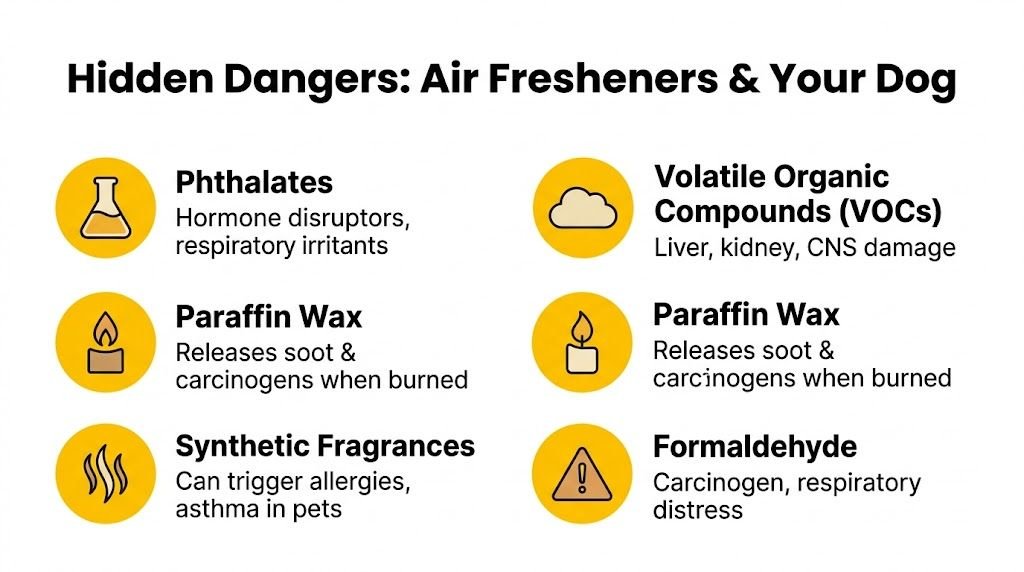
Most dog owners hear that sprays and plug-ins “can be irritating,” but that phrase is too soft for what’s in many products. The bigger issue is the chemical mix released into indoor air.
A study summarized by PetMD’s review of commercial air freshener emissions found that 25 popular air fresheners emitted 133 different VOCs, and 24 were classified as toxic under U.S. federal laws. Even more important, every single product tested, including green-labeled ones, emitted at least one hazardous compound.
Indoor air was never a trivial concern to begin with. The same PetMD summary notes EPA guidance that indoor air can be more polluted than outdoor air. Adding fragrance to that environment can push air quality in the wrong direction.
What these ingredients mean in practice
VOCs are gases released from liquids or solids. In a home, that means the scent doesn’t stay inside the device or bottle. It moves into the air your dog inhales.
Synthetic fragrance blends are another problem because labels often stay vague. A pleasant scent name tells you almost nothing about what’s doing the actual work.
Some products also contain compounds commonly associated with respiratory irritation or long-term air quality concerns, including ingredients people rarely think about when shopping in a grocery aisle. That’s why label-reading matters, and why “fresh” and “clean” aren’t safety terms.
Why dogs get hit first
Dogs don’t experience these products the way humans do. They rest where residues settle. They investigate new smells with their noses close to carpet, upholstery, and vents. If residue lands on paws or fur, grooming adds another route of exposure.
In homes recovering from contamination or heavy odor events, this concern overlaps with broader indoor safety. If a property still has unresolved residue or contamination, fragrance can complicate the picture. That’s one reason serious odor events sometimes belong in the same conversation as hazardous materials cleanup for contaminated indoor environments.
Products that deserve extra skepticism
A quick decision guide helps:
- Plug-ins: Constant release means constant exposure.
- Aerosol sprays: Fast burst, easy to overapply, and easy to mistake for a cleaning solution.
- Scented candles: Fragrance plus combustion byproducts isn’t a great combination for indoor air.
- “Green” or “natural” labels: Marketing language isn’t the same as a pet safety standard.
If you wouldn’t feel comfortable breathing a product in a closed room for hours, your dog probably shouldn’t be doing it either.
Recognizing Symptoms of Toxic Exposure in Dogs
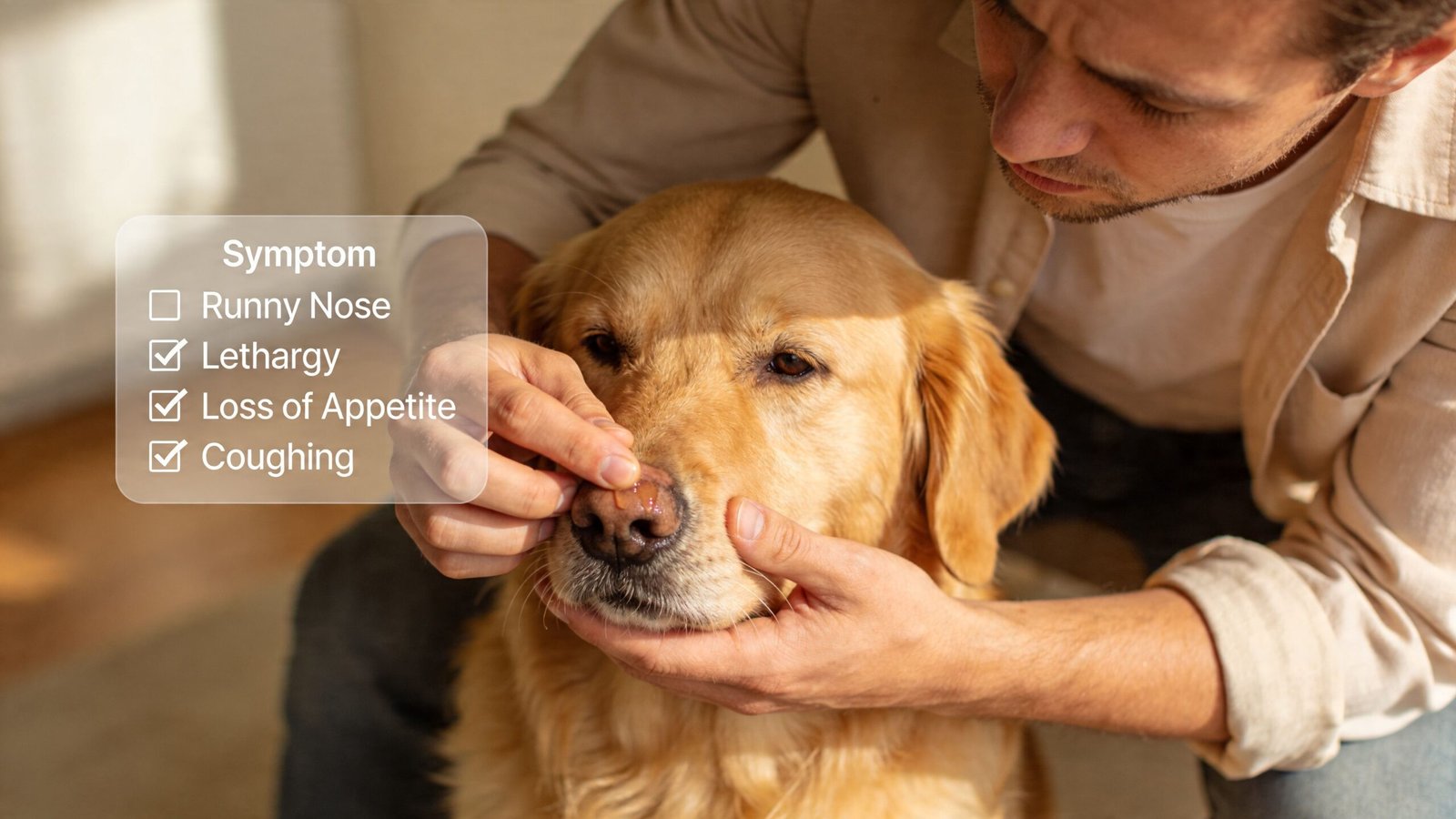
The first sign is often easy to dismiss. A little sneezing after you plug in a freshener. A cough later that evening. A dog that seems restless and doesn’t want to stay in the room where the scent is strongest.
Veterinary guidance is much firmer than many product labels. As summarized by The Animal Keeper’s report on veterinary concerns about air fresheners, experts from the University of Pennsylvania and Tufts University agree that homeowners should avoid most commercial air fresheners around pets, especially animals with preexisting asthma or heart disease. That same summary cites the ACAAI link between VOCs in these products and a 34% increase in health problems.
What mild exposure can look like
A dog doesn’t need to collapse for a product to be a problem. Early signs often include:
- Nose and eye irritation: Sneezing, watery eyes, pawing at the face
- Breathing changes: Soft coughing, throat clearing, light wheezing
- Behavior shifts: Leaving the room, acting uneasy, pacing, reduced appetite
- Skin contact clues: Paw licking after walking across treated floors or rugs
These are easy to write off as “allergies,” especially in LA when dust and dry air already bother pets.
When it looks more urgent
Some dogs react fast. More serious signs can include vomiting, diarrhea, lethargy, and visible breathing difficulty. If your dog starts open-mouth breathing, seems weak, or won’t settle after exposure, treat it as more than a nuisance.
For owners who aren’t sure what dangerous breathing looks like, this guide to signs of respiratory distress in dogs is a useful reference. It helps distinguish mild irritation from a situation that needs a veterinarian right away.
Remove the fragrance source first. Fresh air, a scent-free room, and prompt veterinary advice are safer than waiting to “see if it passes.”
Truly Dog Safe Air Fresheners and Alternatives
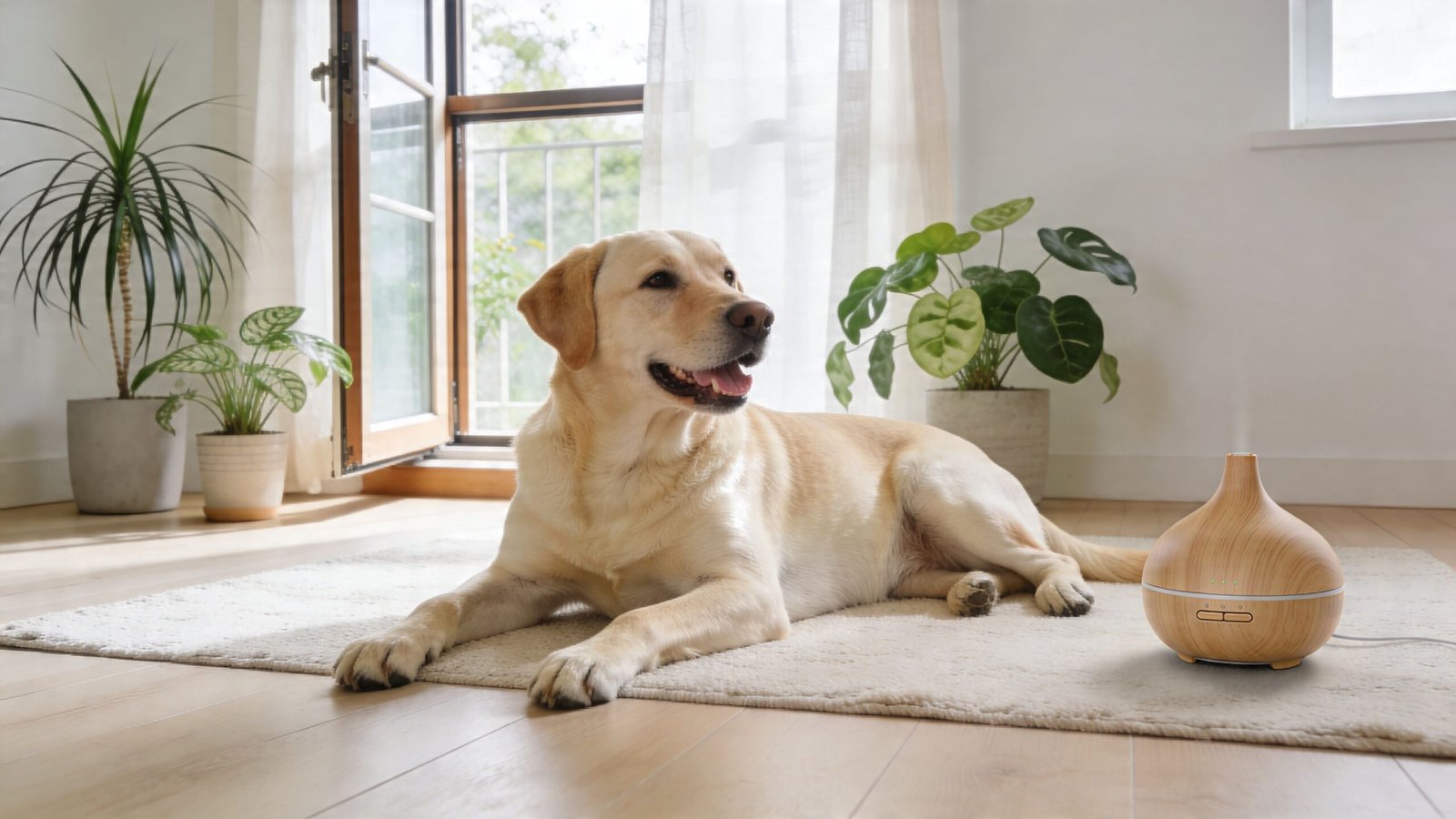
The safest strategy is not to perfume the house. It’s to improve the air, reduce odor sources, and use low-risk products only when they actually help.
Start with air movement and filtration
In my field, the cleanest-smelling homes usually aren’t the most fragranced. They’re the ones with good ventilation, dry materials, and proper filtration.
Open windows when outdoor conditions allow. Run your bathroom fans. Use kitchen exhaust when cooking. Wash dog bedding, blankets, and crate pads before trying to “treat” the air around them.
If odor lingers, a HEPA purifier with activated carbon is one of the most practical upgrades for pet homes. HEPA helps with particulates. Activated carbon helps with odor molecules and smoke-related smells. That doesn’t make the home sterile, but it often does more for comfort than any scented product on the shelf.
What a safer commercial product should have
When homeowners ask me about dog safe air fresheners, I tell them to ignore front-label promises and inspect the details. “Pet-safe” should mean the product is simple, lightly used, and not loaded with common irritants.
Look for products that are:
- Phthalate-free: Fragrance longevity shouldn’t come at the cost of more chemical exposure.
- Low-VOC or VOC-conscious: Less airborne load is better than more.
- Free of heavy perfume blends: If the scent is strong across the room, it’s probably too much.
- Used intermittently, not constantly: Short use beats all-day release.
Even then, test any new product cautiously. Introduce it in one room, not the whole house. Watch your dog for changes in breathing, appetite, or behavior.
The safest options are often not “air fresheners”
A lot of odor control belongs in cleaning, laundering, and moisture control. If your dog’s bed smells, clean the bed. If a rug smells, clean the rug pad and backing. If the room smells musty, check for damp drywall, wet baseboards, or an HVAC issue.
That’s especially true after smoke events. If your house still carries a burnt odor, adding fragrance tends to create a dirty mix rather than a clean result. In those cases, homeowners often get better results by focusing on the best way to get smoke out of a house instead of looking for stronger scent products.
A short visual walkthrough can help if you’re comparing options and trying to avoid the usual mistakes:
DIY options that are lower risk
Simple works. You don’t need a chemistry set.
Here are practical alternatives:
- Baking soda odor absorber: Put plain baking soda in an open container where your dog can’t reach it. Use it in bathrooms, laundry rooms, or near littered entry areas, but keep it physically inaccessible.
- Fresh-air reset: Open windows on opposite sides of the home to move stale air out, then close up before outdoor air quality worsens.
- Laundry rotation: Wash pet bedding, couch covers, and washable rugs more often than you think you need to.
- Source cleaning: Enzymatic cleaning on pet accidents matters more than room fragrance after the fact.
Be careful with diffusers and oils
Many people assume essential oil diffusers are a natural upgrade over commercial air sprays. Sometimes they’re milder. Sometimes they’re just a different risk.
Dogs vary widely in tolerance. A product that seems fine in one home may trigger coughing or agitation in another. If you use any diffuser, keep it in a space the dog can leave, keep the scent light, and stop immediately if you notice changes.
Field note: If a room only smells acceptable when a diffuser is running, there’s a good chance the underlying odor still hasn’t been solved.
Smart Placement and Usage for Maximum Safety
Choosing a better product is only half the job. Placement decides whether a low-risk product stays low-risk.
Dogs investigate with noses and mouths. If a device is on a low outlet, table edge, or reachable shelf, treat it as accessible. That matters because breed and health differences are real, not theoretical.
According to Shop Pawness on breed-specific fragrance sensitivity, brachycephalic breeds such as Bulldogs and Pugs have a 2-3x higher risk of respiratory irritation from fragrances, and the American Kennel Club notes that 20% of dogs in the U.S. have conditions like asthma or heart disease that make them especially vulnerable to airborne irritants.
Placement rules that reduce risk
Use these habits consistently:
- Keep products high and stable: Curious dogs chew cords, paw at devices, and knock over containers.
- Ventilate the room: Don’t introduce any scent into a sealed room and hope for the best.
- Create a scent-free zone: Your dog should always have somewhere to rest away from fragrances.
- Introduce one change at a time: If your dog reacts, you need to know what caused it.
Homes that need more caution
Small apartments, heavily insulated homes, and houses still drying after a leak are less forgiving. Air can feel stagnant, and any fragrance load becomes more noticeable. If you’re managing stale or contaminated air in one area, temporary mechanical filtration may do more than a consumer scent device. In those cases, homeowners sometimes look into air scrubber rental for indoor air cleanup.
Dogs that should get extra protection
Some homes should skip scented products entirely unless a veterinarian says otherwise:
- Flat-faced breeds: They already work harder to breathe.
- Senior dogs: Small irritants can create bigger setbacks.
- Dogs with a cough history: Don’t test their tolerance casually.
- Post-surgery or medically fragile dogs: Recovery periods are a bad time to add airborne variables.
A good rule is simple. If your dog has any breathing vulnerability, the safest fragrance level is often none.
Neutralize Odors Instead of Masking Them
Masking and neutralizing are not the same job. A masking product adds a stronger smell over a weaker one. Neutralization targets the odor source itself.
The easiest analogy is smoke. Spraying perfume in a smoky room doesn’t clean the air. It just gives you smoke plus perfume. Pet odors, mildew smells, and old water damage behave the same way.
Why recurring odor matters
If a smell returns after cleaning, something is still feeding it. It could be pet residue in carpet padding, moisture inside a wall, a dirty HVAC component, or bacterial growth in porous material. Fragrance doesn’t remove any of those.
That’s why persistent urine odors often need source-focused treatment rather than scented coverups. Homeowners dealing with that issue usually get farther by learning how to eliminate urine odor from the material itself instead of shopping for a stronger room spray.
A better way to think about odor
Use this simple distinction:
| Odor problem | Masking response | Neutralizing response |
|---|---|---|
| Dog bed smell | Spray the room | Wash or replace the bed |
| Musty closet | Add sachets | Inspect for moisture and improve airflow |
| Smoke smell | Use candles or plug-ins | Clean residue and filter the air |
| Reappearing pet urine smell | Use fragrance daily | Treat padding, subfloor, or affected materials |
Clean air usually smells like very little. That’s often the best sign you’re solving the right problem.
When to Call for Professional Deodorization Services
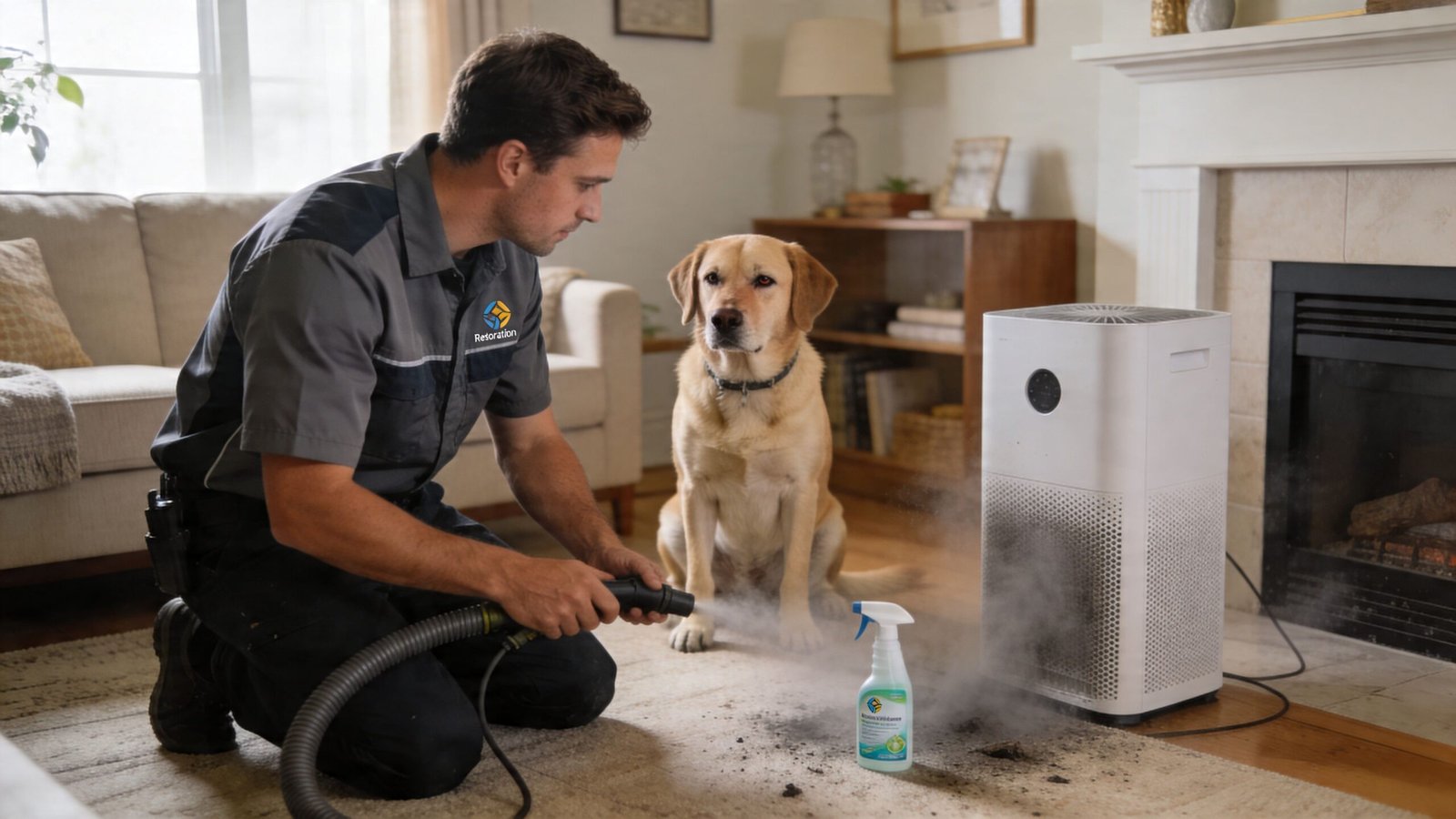
There’s a point where dog safe air fresheners stop being a home-care question and become a restoration question. That point is usually when the odor is tied to damage, contamination, or material saturation.
After mold work or smoke cleanup, scent products can interfere with your ability to tell whether the home is resolved. As noted by Hyscent’s discussion of pet-safe scents in post-restoration environments, a dog’s heightened sense of smell may pick up lingering issues that fragrance masks, and “pet-safe” oils may bind with remaining soot or spore particles, reducing effectiveness and potentially creating new irritants.
Situations where home products usually fall short
A few examples come up often in Los Angeles homes:
- After water damage: A burst pipe in a wall, slab leak, or roof intrusion can leave damp building materials that keep producing a musty odor.
- After smoke exposure: Wildfire smoke, cooking fire residue, and soot contamination settle into textiles and HVAC systems.
- After sewer backup: Biological odors require removal of contamination, not fragrance.
- After repeated pet accidents: If urine reached pad, tack strip, or subfloor, the smell often returns with humidity.
In those cases, deodorizers from a store may buy time, but they rarely solve the root issue.
What professional odor work does differently
Professional deodorization starts with locating the source, not choosing a scent. That may include moisture detection, contamination assessment, removal of damaged materials, detailed cleaning, filtration, and targeted odor counteractants suited to the problem.
If you’re comparing providers, it helps to understand what established professional deodorization services generally focus on: source identification, material-specific treatment, and air cleaning rather than cosmetic fragrance.
For severe or recurring conditions, homeowners often need a dedicated odor removal service for smoke, pet, sewage, and moisture-related smells. That’s especially true when pets live in the home, because covering up the smell can also cover up ongoing irritation risks.
A practical threshold
Call for help when any of these are true:
- The odor returns after cleaning
- The smell worsens with humidity or HVAC use
- Your dog avoids a room
- The odor began after water, mold, smoke, or sewage
- You’re using fragrance daily just to keep the house tolerable
That’s not a product-selection problem. It’s a source-removal problem.
Frequently Asked Questions About Pet Safe Scents
Some questions come up in almost every home with dogs, especially when a product claims to be gentle, natural, or pet-friendly. The answers below stay focused on practical safety.
According to Air Wick’s Pet Expert page discussing plug-in exposure concerns, plug-in air fresheners pose a distinct risk because they continuously release VOCs near floor level where dogs spend most of their time. The same source notes that 15% of pet poisonings from air fresheners involve ingestion, and 40% of those cases require hospitalization. That’s why plug-ins deserve a harder no than many other products.
FAQ on Dog Safe Air Fresheners
| Question | Answer |
|---|---|
| Are plug-in air fresheners safe for dogs? | They’re one of the riskier options because they release fragrance continuously and are often installed low enough for dogs to breathe, lick, or chew near them. |
| Are essential oil diffusers always safer than sprays? | No. “Natural” doesn’t automatically mean low-risk. Some dogs tolerate mild use better than commercial fragrance, but others react quickly. |
| What’s the safest way to freshen a home with dogs? | Clean odor sources, improve ventilation, wash fabrics often, and use HEPA plus activated carbon filtration when needed. |
| Can I use a pet-safe product right after mold or smoke cleanup? | Be cautious. Fragrance can hide signs that the problem isn’t fully resolved, especially in post-restoration spaces. |
| Why does my house still smell after I clean it? | Odor may be coming from padding, subfloor, drywall, HVAC components, or lingering moisture rather than the visible surface. |
| When should I stop trying products and call a professional? | When the odor keeps returning, your dog reacts to the air, or the smell started after water, smoke, mold, sewage, or repeated pet accidents. |
If you want a home that smells clean without gambling with your dog’s health, start with the source. Fragrance should never be your first response to a mystery odor, and it should never be your only plan after property damage. For expert help with stubborn odors, smoke, water damage, mold concerns, or post-cleanup air quality, contact Onsite Pro Restoration for a professional assessment.