
If you've found a bird nest in a dryer vent, attic eave, roofline, or awning, your first instinct is probably to remove it right away. With bird nest removal, that can be a mistake. In Los Angeles homes, especially older properties in Sherman Oaks, Glendale, Burbank, and nearby neighborhoods, a nest can be a legal issue, a sanitation issue, and a property damage issue all at once.
A nest near a vent or inside a wall cavity isn't just debris. It can trap moisture, hold parasites, contaminate airflow, and create repeat access points if the opening isn't sealed correctly. It also may be protected by federal law, which means the timing of removal matters as much as the cleanup itself. For homeowners trying to stop the problem from coming back, these steps for preventing bird nests are worth reviewing alongside professional restoration standards like IICRC certification.
Introduction
In Los Angeles, bird nests show up where homes have heat, shelter, and easy access. Dryer vents, bathroom exhaust vents, carport beams, attic openings, and decorative ledges are common trouble spots. The problem gets more complicated in older homes with worn screens, aging soffits, and roof gaps that birds can reuse season after season.
What homeowners usually want to know is simple. Can you just take the nest down? Often, no. If the nest is active, removal may be illegal. If it's inactive, removal still needs to be handled like contaminated debris, not like yard waste.
From a restoration standpoint, the nest itself is only part of the job. The primary issue is what's left behind. Nesting material can hold organic waste, insect activity, and damp debris against wood, stucco, insulation, or vent surfaces. That's why the right response focuses on verification, safe removal, sanitation, and exclusion, not just pulling material out and hoping the birds don't return.
Legal and Safety First Is It Legal to Remove a Bird Nest
The legal answer depends on whether the nest is active or inactive. That distinction matters more than the fact that the nest is on your property.
What federal law protects
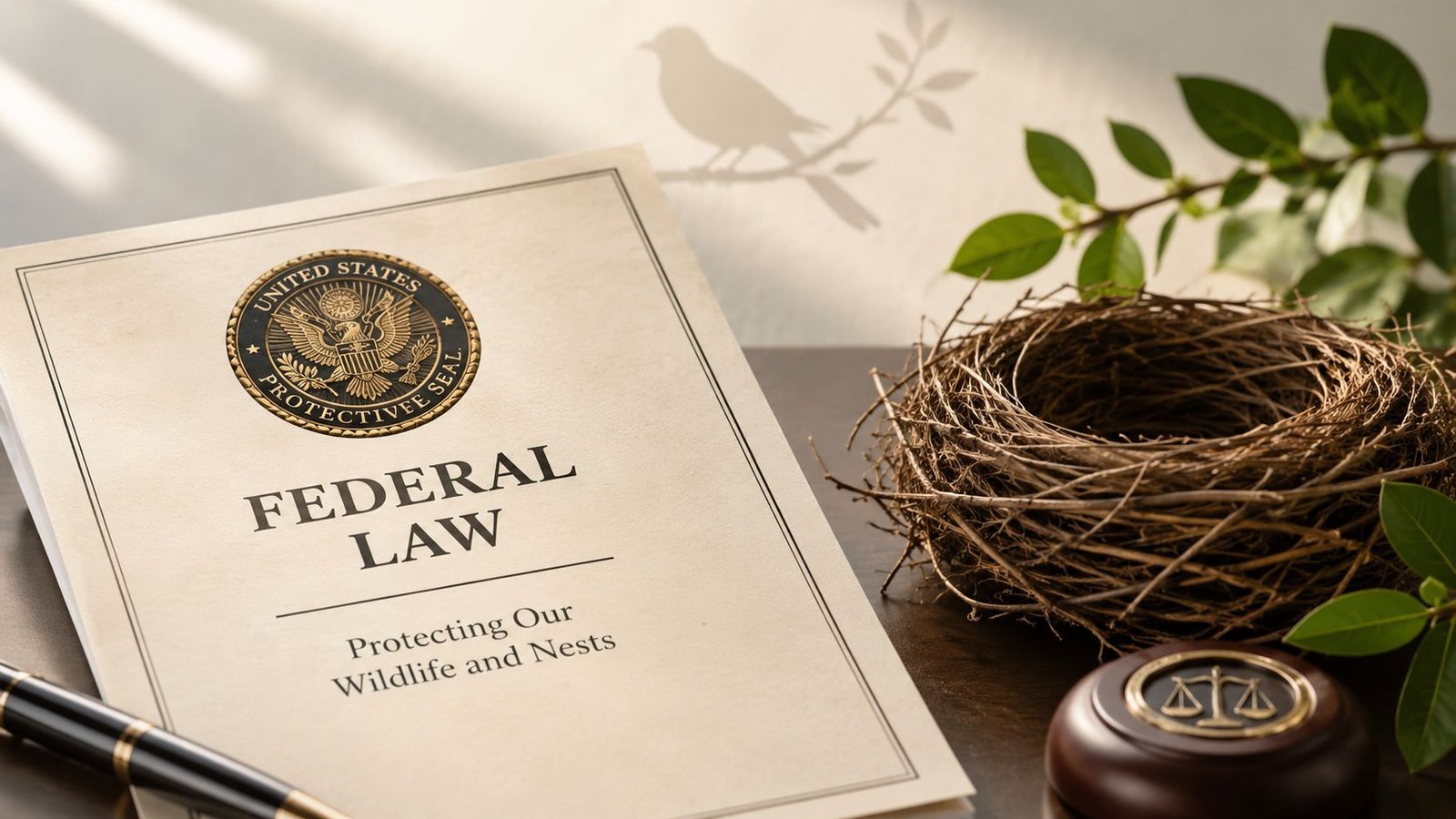
The U.S. Fish & Wildlife Service states that most bird nests are protected under the Migratory Bird Treaty Act, and it is illegal to destroy a nest that has eggs or chicks in it. Permits are usually issued only when a nest creates a human health or safety concern. That guidance is laid out in the agency's page on bird nest protections and federal permitting.
For a homeowner, that means an active nest isn't a normal maintenance item. You can't assume ownership of the building gives you the right to remove it during breeding season.
Practical rule: If you see eggs, chicks, or parent birds actively using the nest, stop. Treat it as a regulated wildlife issue first, not a cleanup task.
Active versus inactive nests
People often encounter difficulties. An active nest has eggs, chicks, or dependent young birds. An inactive nest does not. In real houses, confirming that can be harder than people think, especially in vents, recessed eaves, and high roof corners where visibility is poor.
A quick glance from the ground isn't enough. Homeowners sometimes remove what looks abandoned, only to find young birds were still inside or returning adults were still using the site. That creates legal risk and animal welfare problems at the same time.
For some species, the standard is tighter still. The U.S. Fish & Wildlife Service notes that bald and golden eagle nests are protected at all times under the Bald and Golden Eagle Protection Act, whether occupied or not, and destruction requires a permit.
Why safety matters even before removal
There's also a human safety side. Reaching over a second-story tile roof in Glendale or climbing onto an aging patio cover in Sherman Oaks to pull a nest loose is how people get hurt. Add contaminated nesting material, hidden insects, or vent obstructions, and the risk goes up fast.
If the nest is in a hazardous location, treat it like other specialty contamination work that calls for controlled handling and proper assessment, similar to hazardous materials cleanup.
The Hidden Dangers Health Risks from Bird Nests
Homeowners often focus on the bird and miss the contamination. From a restoration perspective, the bigger problem is usually what the nest has been doing to the structure and indoor environment while it sat there.
Why abandoned nests still matter
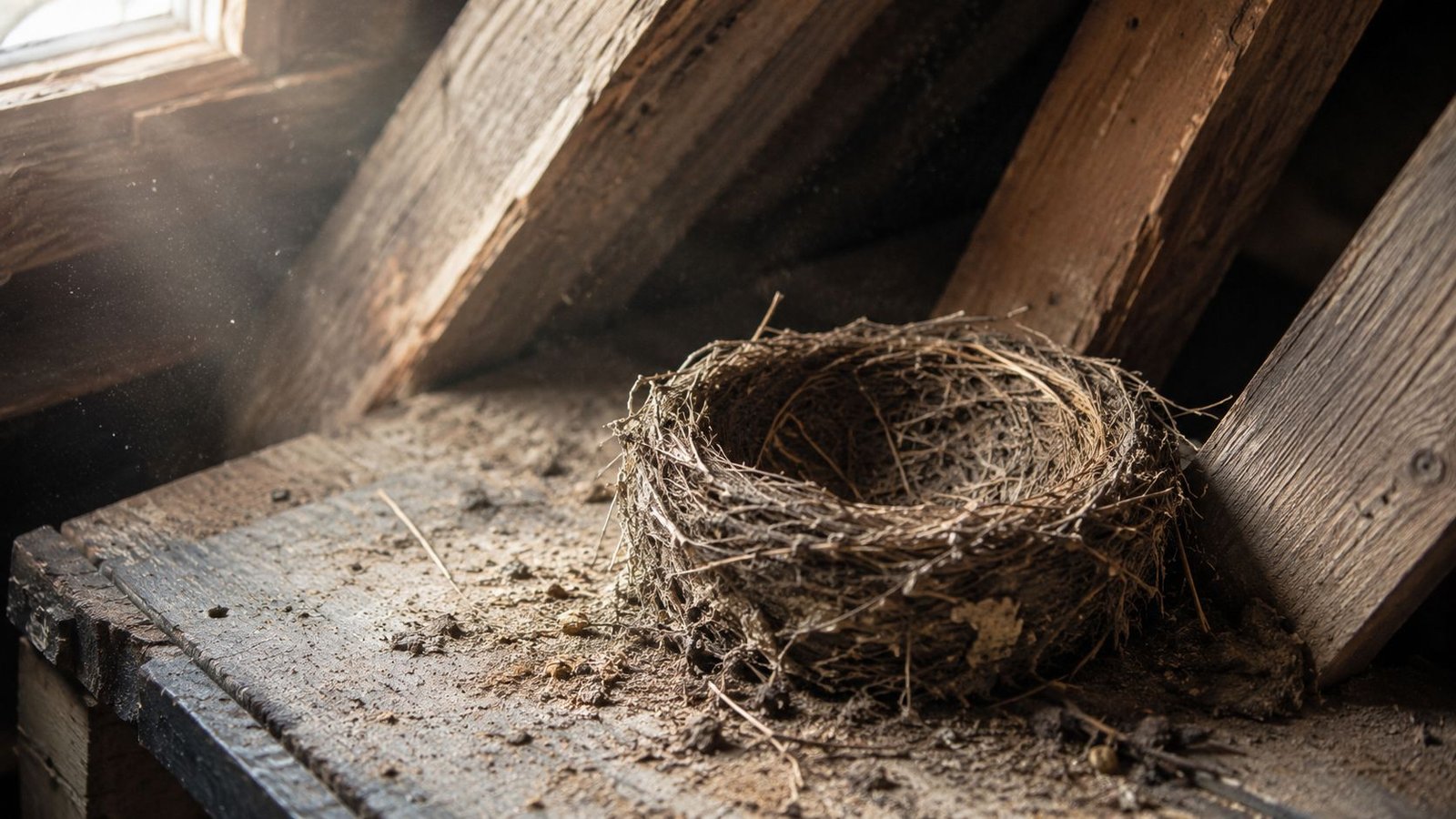
Even after birds are gone, the nest can remain a sanitation issue. One professional guidance source notes that a key concern is the safe removal of nest aftermath, especially for people worried about mold, parasites, and contaminated debris, and that nests can harbor hidden moisture and contaminants within walls and ventilation systems. That concern is discussed in this guidance on the do's and don'ts of bird nest removal.
That matches what restoration crews see in the field. A nest in a vent can trap lint, hold humidity, and leave organic material behind the visible opening. A nest under broken roof tiles or inside an attic louver can sit against wood and insulation long enough to create staining, odor, and insect activity.
Common property and health concerns
Bird nests can contribute to several problems at once:
- Parasites and insects: Homeowners may notice mites, fleas, or ticks after birds leave, especially when a nest is close to living space.
- Contaminated debris: Feathers, droppings, and nesting material don't stay neatly contained. Air movement can spread debris into nearby cavities.
- Moisture retention: Wet organic matter can stay lodged against framing, drywall backing, or vent housings.
- Airflow problems: Nests in bathroom vents, attic fans, or dryer exhaust lines can reduce ventilation and worsen indoor conditions.
In older Burbank and Glendale homes, hidden cavities are a frequent problem. The visible nest is removed, but debris remains deeper in the duct run, behind a vent flap, or inside a wall void. That's when odors linger and pests keep showing up.
A nest that touched your structure should be treated as a cleanup and inspection issue, not just a wildlife issue.
When cleanup needs more than surface wiping
If debris reached an HVAC path, vent line, or enclosed cavity, a surface spray isn't enough. You need to know whether contamination spread beyond the nest footprint and whether moisture or residue affected the surrounding materials. That's why homeowners dealing with odors, dust concerns, or respiratory irritation often need air quality testing services after nest activity inside vents or attics.
In my experience with restoration work in Los Angeles properties, the most overlooked part of bird nest removal is the aftermath. People remove the visible material, but they don't inspect for hidden contamination, damaged screening, or damp organic residue. That's what brings the problem back.
How to Safely Remove an Inactive Bird Nest
If the nest is inactive and easy to reach, you may be able to remove it yourself. The keyword is inactive. If there's any doubt, stop and get the nest assessed before touching it.
Safe workflow for simple situations
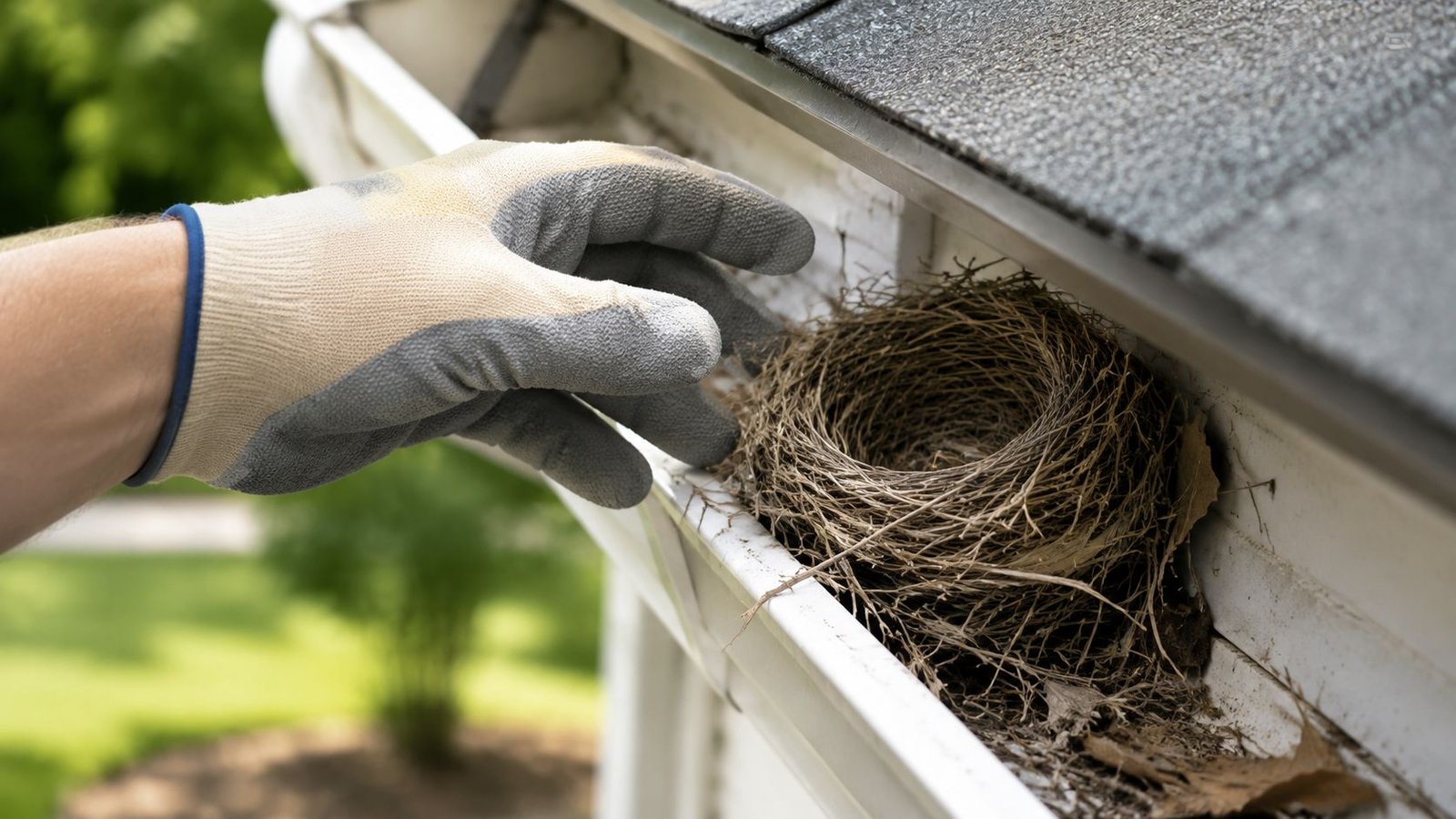
One practical workflow for inactive nests recommends identifying the species and confirming there are no eggs or chicks, then using gloves and an N95 mask, gently dislodging the nest, sealing it in a trash bag, and disinfecting the surface afterward. That step-by-step guidance appears in this article on safe removal of inactive bird nests.
Use this only for a simple, accessible location such as a low exterior ledge or open gutter section.
- Confirm inactivity first. Use a flashlight if needed. Don't rely on a quick look from inside the house.
- Put on gloves and an N95 mask before handling any material.
- Use a putty knife or similar tool to gently loosen the nest.
- Place all debris directly into a trash bag and seal it.
- Disinfect the surface after removal.
What not to DIY
Don't try this approach on a steep roof, inside a dryer vent, inside a chimney chase, near electrical equipment, or deep inside an attic cavity. Those situations need more than hand removal. They may involve contamination spread, hidden access points, or ventilation safety issues.
A useful comparison is stinging insect work. Homeowners often underestimate the risk because the nest is small and visible, but the hazard is tied to the location and what's around it. For a different exterior nesting problem, this guide on The Green Advantage for wasp removal shows the same principle. Access, safety gear, and aftermath matter as much as the nest itself.
Don't skip sanitation
After removal, inspect for droppings, loose feathers, and residue around the opening. If there's visible waste or staining, treat that area as contaminated. For exterior surfaces and surrounding residue, homeowners often need guidance similar to cleaning bird droppings safely, especially when the nest sat in place long enough to leave buildup.
When to Call a Professional for Bird Nest Removal
Some bird nest removal jobs are straightforward. Many aren't. The right time to call a professional is when the legal status is unclear, the location is unsafe, or the nest has turned into a larger contamination or building issue.
Clear signs you shouldn't handle it yourself
Professional help is the smart move when any of these apply:
- The nest may still be active: You're seeing birds return, hearing chicks, or can't confirm what's inside.
- The nest is in a vent or attic system: Hidden debris and restricted airflow are common in these locations.
- Access is dangerous: High roof edges, power-adjacent areas, or unstable overhangs aren't DIY work.
- There's visible contamination: Droppings, odor, insect activity, or stained materials suggest a cleanup issue beyond basic removal.
- The birds keep returning: Repeated nesting usually means the opening was never properly excluded.
Typical cost ranges
Professional pricing varies with access, nest size, and whether exclusion work is included. Angi reports that the average professional bird nest removal cost is about $600, with a range of $100 to $2,000, and that simple reachable nests may cost $100 to $300, vent removal often runs $200 to $500, and complex jobs with exclusion can exceed $1,000 in their bird removal cost guide.
| Service Type | Estimated Cost Range |
|---|---|
| Simple, reachable nest removal | $100 to $300 |
| Vent nest removal | $200 to $500 |
| Average professional bird nest removal | About $600 |
| Complex removal with exclusion | More than $1,000 |
| Broad overall range | $100 to $2,000 |
In Los Angeles, the trade-off isn't just the removal bill. It's whether a cheap cleanup leaves behind blocked ventilation, hidden contamination, or a hole birds will reuse next month.
If the nest is tied to odor, indoor debris, or biological contamination, treat it like a property damage event and consider biohazard clean up rather than a simple handyman task.
Why professional assessment often saves the second repair
A proper assessment looks past the visible nest. It asks whether the vent flap failed, whether the screen is missing, whether the cavity stayed damp, and whether droppings or nesting material spread into adjacent building components. That's the difference between one cleanup and a cycle of repeat nesting, odor complaints, and damaged finishes.
For property managers and homeowners in West Hollywood, Beverly Hills, Glendale, and North Hollywood, the hardest cases usually involve a combination of access problems and contamination. Those are the jobs where restoration and exclusion need to happen together.
Long Term Solutions How to Prevent Birds from Nesting
The best bird nest removal job is the one you don't need again next season. Prevention works when it closes the exact opening birds used and removes the conditions that made the spot attractive.
Use the right exclusion material
Mesh size matters. The Illinois Department of Public Health recommends 3/4-inch mesh for sparrows, 1 1/8-inch mesh for starlings, and 2 1/2-inch mesh for pigeons when screening nesting and roosting sites, and it advises combining removal with sealing entry points in its guidance on bird exclusion and dispersal methods.
That matters in Los Angeles, where pigeons around rooflines, sparrows in vents, and starlings around eaves can all exploit different gaps.
Prevention steps that actually work
- Screen vents correctly: Use proper screening or hardware cloth suited to the target bird, and make sure airflow isn't impaired.
- Seal repeat entry points: Caulk, metal wool, screen wire, or hardware cloth can help close cavities birds reuse.
- Address ledges and sheltered corners: Netting and ledge deterrents can stop repeat nesting on beams, signs, and overhangs.
- Keep gutters and roof edges clean: Debris and standing moisture make exterior edges more attractive.
- Watch older construction details: Aging soffits, damaged louvers, and loose fascia in neighborhoods like West Hollywood and Beverly Hills often create hidden access.
What doesn't work well is partial exclusion. Homeowners block the obvious hole but leave the side gap, broken flap, or alternate cavity untouched. Birds usually find the path you missed.
Frequently Asked Questions about Bird Nests
Can I move a bird nest a few feet away
Usually, no. If the nest is active, moving it can create legal problems and often leads to abandonment. If you're dealing with a protected species or you're unsure about the species, leave it alone until you get qualified guidance.
What should I do if I find a baby bird on the ground
Don't assume it's abandoned. Young birds may be in a normal stage of leaving the nest. Keep pets and people away, watch from a distance, and contact a licensed wildlife rehabilitator if the bird appears injured or in immediate danger.
Are all nuisance birds protected
No. Some birds commonly treated as nuisance species may not have the same federal protection, but identification is critical. Homeowners often misidentify birds, so don't use species assumptions as a reason to remove a nest on your own.
How do I reduce nesting around windows and screens
Focus on maintenance. Loose screens, damaged frames, and open corners make easy entry points. If you're handling basic exterior upkeep, you can also learn DIY screen maintenance to reduce access around windows and adjacent openings.
If a bird nest has turned into a contamination, odor, vent blockage, or property damage problem, contact Onsite Pro Restoration for help. We serve Los Angeles, CA, including Glendale, Burbank, Sherman Oaks, West Hollywood, and nearby communities. Call 818-336-1800 for a free inspection.