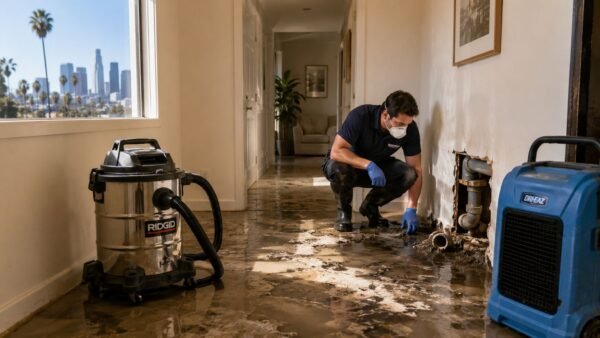

That musty smell you can’t quite place after a minor plumbing leak? It’s easy to write it off. But for us in the restoration business, we know it's often the first warning sign of a hidden and serious problem. The health risks of mold in home environments are no joke, quickly turning a simple cleanup job into a real hazard for your family in Los Angeles.
Don't let a small leak become a major health crisis. If you suspect mold, act now.
The Hidden Dangers of Indoor Mold
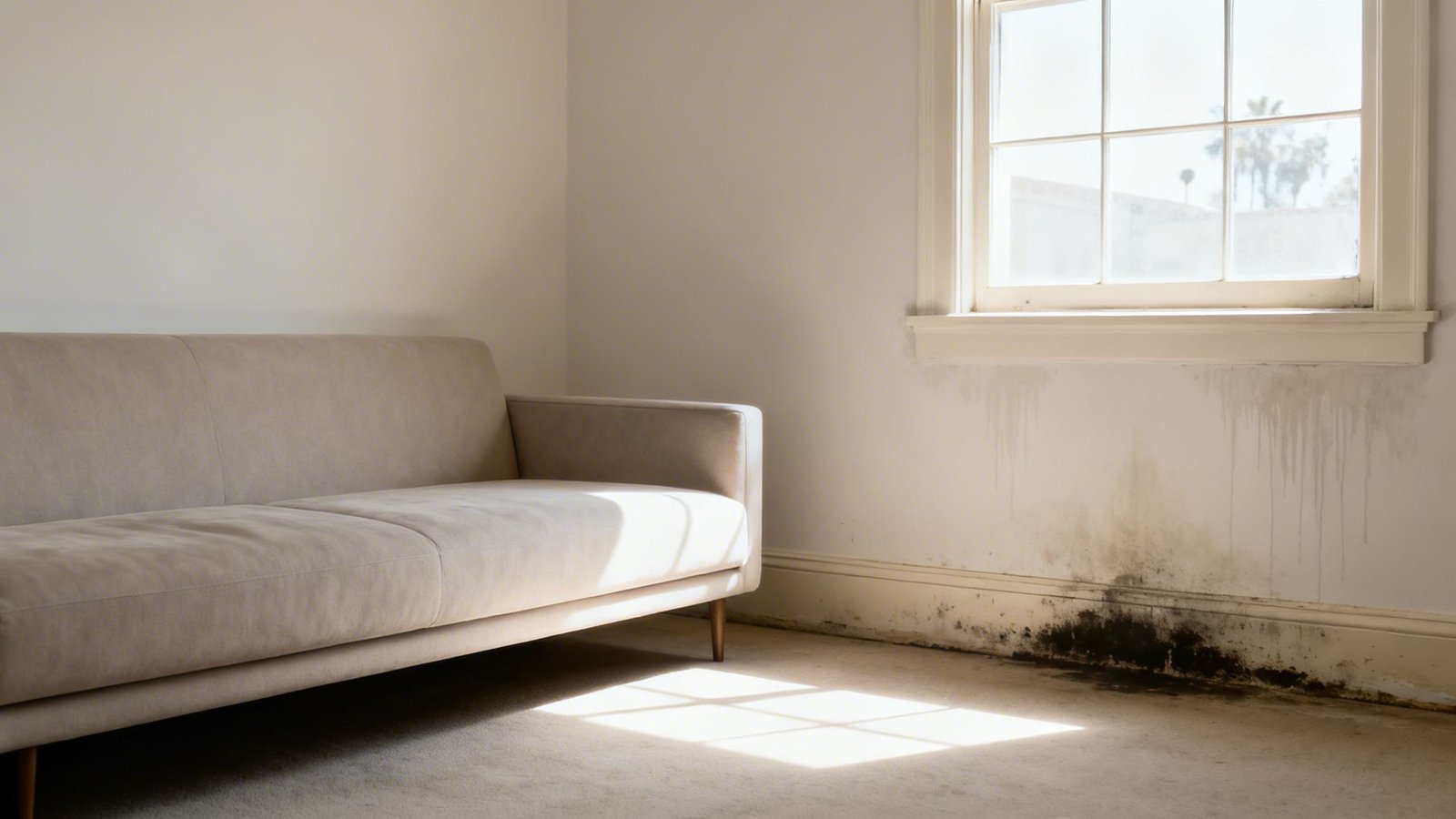
It’s a story we see all the time in Southern California. You fix a small leak under the sink or wipe up condensation from an AC unit working overtime, and you think the problem’s solved. But water is sneaky. It seeps into places you can't see—behind drywall, under flooring, and deep inside insulation—creating the perfect, damp breeding ground for mold.
Even with our sunny LA weather, mold finds a way. Coastal fog in Santa Monica can send humidity levels soaring, while a rare downpour can expose a flat-roof leak in Sherman Oaks. Once it gets a foothold, mold releases millions of microscopic spores into the air you breathe. These are the real invaders, silently compromising your home’s air and your family’s health.
The Scope of the Problem
Indoor mold is far more widespread than people think. It’s not just a cosmetic issue; it’s a silent health threat. In the United States, an estimated over 45 million buildings harbor unhealthy mold levels, placing countless families at risk every single day.
The World Health Organization has even linked poor indoor air quality—with mold as a major contributor—to millions of deaths each year. And for the youngest members of our families, the stakes are even higher. Early mold exposure can nearly triple an infant's risk of developing asthma. This isn’t a problem confined to damp basements in cold climates; the unique building styles and conditions in Los Angeles homes create plenty of hidden pockets where mold can thrive undetected.
From Annoyance to Health Hazard
Thinking of mold as just an ugly stain is the biggest mistake a homeowner can make. The real danger isn't the visible growth, but the invisible spores and mycotoxins—toxic compounds produced by certain molds—that go airborne.
When you inhale these particles, they can trigger a wide range of health issues, turning your home from a safe haven into the source of a chronic illness.
The consequences can be serious and wide-ranging:
- Respiratory Distress: This can look like anything from a nagging cough and wheezing to the new onset or worsening of asthma.
- Allergic Reactions: Are you dealing with constant sinus congestion, sneezing fits, or skin rashes that just won't clear up? It could be mold.
- Cognitive Issues: Many clients describe "brain fog," memory problems, and a frustrating inability to concentrate.
- Systemic Inflammation: This often shows up as a general feeling of fatigue and malaise as your body is stuck in a constant state of fighting off an invader.
To stop mold before it starts, managing your home's humidity is key. Using tools like humidifiers and dehumidifiers can help maintain a balanced environment. If you already suspect a problem, you have to act fast. You can learn more about how to check for mold in walls to uncover hidden growth.
Given the serious health risks, calling a certified professional like Onsite Pro Restoration isn't just about repairs—it's a critical step toward protecting your home and, more importantly, your family.
Health Risks Linked to Mold Exposure
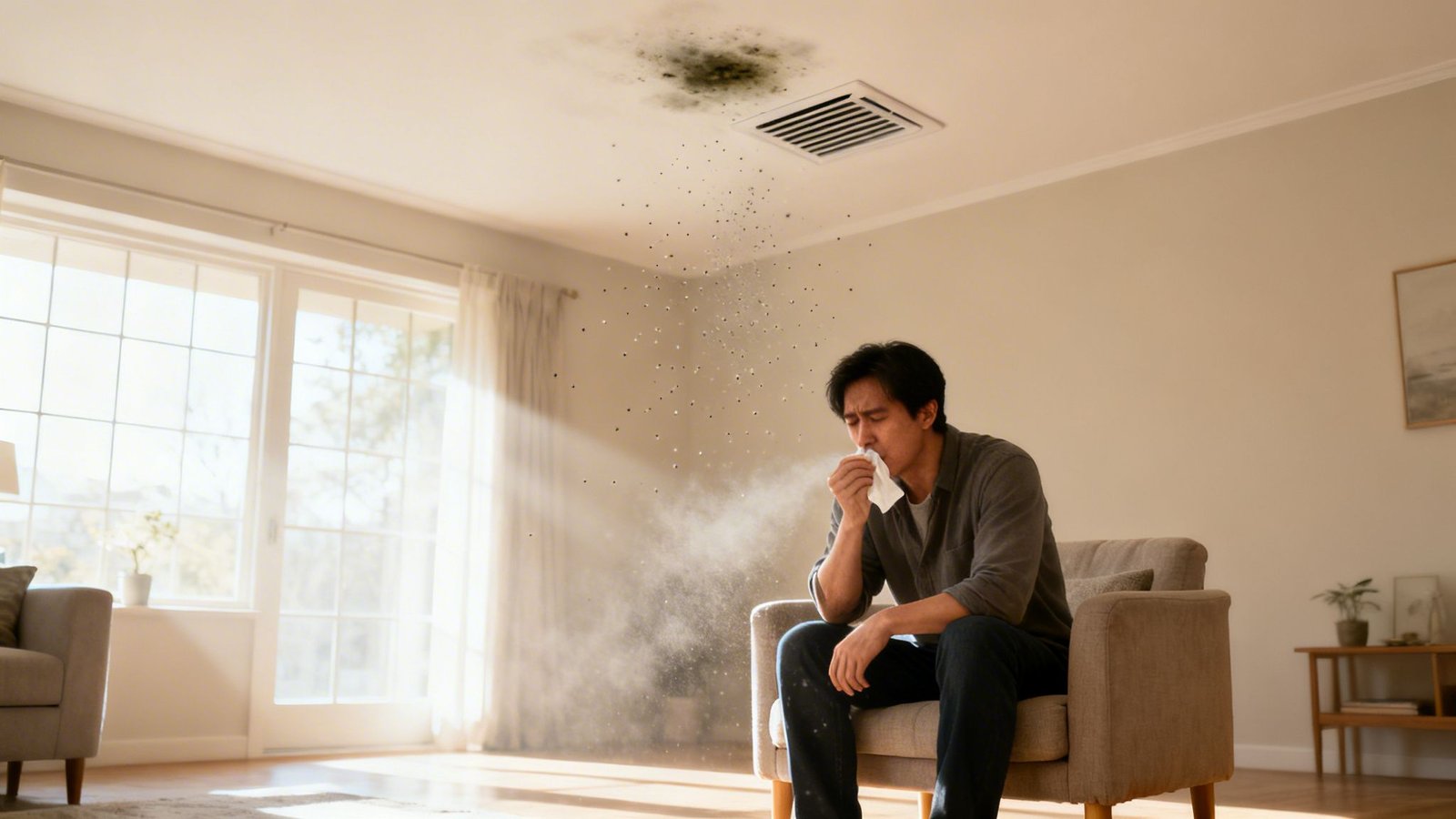
When you have a mold problem, the first thing it attacks is your respiratory system. It all starts when microscopic mold spores—completely invisible to the naked eye—break free from the colony and go airborne. Every time you breathe, you’re pulling these particles into your nose, throat, and lungs.
Think of it like a terrible Southern California allergy season, but one that never ends. Unlike pollen, which eventually clears out, an indoor mold colony is a non-stop spore factory. Your HVAC system just circulates them 24/7, turning your home’s air into a constant source of irritation.
From Nagging Cough to Chronic Conditions
One of the trickiest things about mold exposure is that the early signs often look just like a common cold or allergies. This is why so many homeowners in Los Angeles don't immediately suspect a hidden mold issue behind a wall or under a floor. The symptoms just seem… normal.
But there are clues. These respiratory symptoms tend to get worse when you're at home and may improve when you leave.
- Persistent Coughing and Wheezing: A dry, hacking cough that won’t go away or a whistling sound when you breathe are classic signs your body is fighting off inhaled spores.
- Chronic Sinus Congestion: If you feel like you're in a year-round battle with a stuffy nose, sinus headaches, and post-nasal drip, it might be mold, not allergies.
- Shortness of Breath: Feeling easily winded or like you can't get a full breath can mean mold-induced inflammation is affecting your lung function.
- Sore Throat: A scratchy, irritated throat that isn't paired with other typical cold symptoms is another big red flag.
These problems often show up after a water event, like a plumbing leak or roof failure. Understanding how water is classified, such as learning what is considered Category 3 water damage, makes it clear how quickly a simple leak can turn into a serious health threat.
The Proven Link Between Mold and Asthma
For anyone with asthma, mold is more than an irritant—it’s a direct threat. Spores are a well-known trigger that can cause immediate airway constriction (bronchoconstriction), leading to severe asthma attacks.
But the danger doesn't stop there. Overwhelming evidence shows that living in a damp, moldy environment can actually cause asthma to develop, particularly in children. That small, unchecked leak in a Sherman Oaks home could be the starting point for a child’s lifelong respiratory problems. This is one of the most serious health risks of mold.
A huge number of chronic sinus infections in the U.S. can be traced back to mold exposure. It's the hidden culprit behind years of misery for people who think they just have "bad sinuses." This fact is more relevant than ever as Los Angeles deals with changing climate patterns and indoor humidity issues.
The data is undeniable. The World Health Organization confirms that building dampness and mold increase the risk of respiratory illnesses and asthma-related symptoms by 30-50%.
In the U.S. alone, out of 21.8 million people diagnosed with asthma, an estimated 4.6 million of those cases are directly linked to dampness and mold in their homes. When you see numbers like that, it's clear why getting a professional assessment is not something you should put off.
The Neurological and Immune System Dangers of Mold

Everyone knows mold can cause coughing and sneezing. But the most serious health risks are often invisible, waging a silent war on your nervous and immune systems. Certain molds, especially those thriving in damp, dark corners of a North Hollywood apartment, produce toxic compounds called mycotoxins.
These aren't just simple allergens. Mycotoxins are potent poisons that can be inhaled, ingested, or even absorbed through the skin. Think of them like a computer virus for your body—once they get in, they can disrupt cellular communication, interfere with normal biological functions, and trigger systemic issues that are notoriously difficult to diagnose.
This is the part of health risks of mold in home environments that most people miss. It’s not just about the ugly black patch on the wall; it’s about the invisible chemical assault happening in the air you breathe.
The Neurological Impact of Toxic Mold
Ever feel constantly foggy, forgetful, or just unusually anxious for no good reason? Before you write it off as stress or a bad night's sleep, it's worth considering your environment. We're seeing more and more evidence linking mycotoxin exposure to a troubling set of neurological symptoms.
These toxins are capable of crossing the blood-brain barrier, the protective shield that's supposed to keep harmful substances out of your brain. When that barrier is breached, the consequences can be debilitating.
Common Neurological Symptoms Include:
- Brain Fog: A frustrating mental haze that makes it hard to think clearly or concentrate.
- Memory Lapses: Trouble with short-term memory, like forgetting why you walked into a room or losing your train of thought mid-conversation.
- Dizziness and Vertigo: A persistent feeling of being off-balance or the sensation that the room is spinning.
- Mood Shifts: Unexplained anxiety, depression, or irritability that feels completely out of character.
Beyond sniffles and sneezes, mold's dark side strikes the mind and immune system, turning your North Hollywood living space into a stealthy toxin chamber. Prolonged exposure can fuel mood disorders, with major studies linking it to heightened stress, depression, and anxiety. Learn more by exploring the wealth of statistics on mold's health impact.
How Mold Weakens Your Immune System
Your immune system is your body’s dedicated security team, constantly patrolling for invaders. But when you’re chronically exposed to mold spores and mycotoxins, that team gets stuck on high alert and never stands down.
This perpetual battle leads to chronic inflammation, a state that's at the root of countless long-term health problems. Your body becomes so preoccupied fighting the mold toxins that it gets exhausted and less effective at handling other threats, like a common cold or bacterial infection.
This immune system imbalance can show up in a few key ways:
- Increased Susceptibility to Illness: You might find yourself catching every virus that goes around or notice that simple infections just won't go away.
- Autoimmune-like Symptoms: In some cases, chronic exposure can confuse the immune system into attacking the body's own tissues, leading to symptoms like joint pain and chronic fatigue.
- Persistent Inflammation: This can fuel a huge range of conditions, from gut problems and skin rashes to more serious, long-term diseases.
For property managers in Los Angeles, this isn't just a health issue—it's a major liability, especially in buildings with tenants who are immunocompromised. The CDC has confirmed that invasive mold can lead to rare but fatal infections in people with weakened immune systems, a risk that skyrockets after any water damage event. Understanding these deep-seated health risks makes professional removal of mold an urgent necessity, not just another line item on a maintenance list.
How to Tell If You Need Professional Remediation
Trying to connect the dots between feeling unwell and a potential mold issue in your home can be frustrating. The symptoms are sneaky—they often feel like a stubborn cold, seasonal allergies, or just being run-down.
The biggest clue is the pattern. Do you feel worse when you're at home but start to feel better when you’re out for a while? If your headaches, stuffy nose, or fatigue seem to have a zip code, it’s time to pay closer attention.
Could It Be Mold? A Symptom Checklist
The symptoms of mold exposure can be vague and overlap with many other conditions. This checklist helps you spot the common red flags. If you're nodding along to several items on this list—especially if you've recently had a water leak or noticed a musty smell—it’s a strong sign that your home's environment is the real problem.
Here’s a quick-glance table to help you connect your symptoms to potential mold exposure.
| Mold Exposure Symptom Checklist |
| :— | :— |
| Symptom Category | Common Symptoms To Watch For |
| Respiratory & Allergy | ▸ Persistent coughing or wheezing
▸ Chronic stuffy or runny nose
▸ Itchy, watery eyes
▸ Scratchy, sore throat
▸ Sinus pressure or headaches
▸ Shortness of breath |
| Neurological & Cognitive | ▸ Brain fog or trouble concentrating
▸ Memory problems
▸ Increased headaches or migraines
▸ Unexplained, deep fatigue
▸ Mood swings, anxiety, or depression |
| Skin & Body | ▸ Skin rashes or irritation (dermatitis)
▸ Unexplained aches and pains in muscles or joints
▸ A general feeling of being unwell (malaise) |
If you’re ticking off boxes in multiple categories, your body is sending you a clear signal. Don't ignore it. Call (818) 336-1800 Now for a Professional Assessment.
Respiratory and Allergic Symptoms
Your lungs and sinuses are on the front lines. They are the first to react when you breathe in mold spores, which is why respiratory issues are the most common complaint.
- A cough that won't quit: Think a persistent, dry, hacking cough or a light wheezing sound when you breathe. This is a classic sign of airway irritation.
- Never-ending sinus problems: Are you constantly dealing with a runny nose, stuffiness, post-nasal drip, or sinus headaches that just don't clear up?
- Itchy, watery eyes: Mold spores can trigger the same histamine response as pollen, leaving your eyes red and irritated.
- A scratchy throat: This isn't the sore throat you get with a cold; it's a constant, low-level irritation.
- Feeling winded: If you get short of breath from simple activities like walking up the stairs, it could be a sign of mold-related inflammation in your lungs.
Neurological and Cognitive Symptoms
This is the category of symptoms that can be the most frightening and are often misdiagnosed. These issues can pop up when mycotoxins—toxic compounds produced by certain molds—start interfering with your nervous system.
- Brain fog: You feel like you're walking through a mental haze. Focusing is difficult, and following conversations feels like a chore.
- Headaches and migraines: You notice a sudden increase in how often or how badly your head hurts, with no other obvious trigger.
- Deep, unshakable fatigue: This isn't just being tired. It's a bone-deep exhaustion that a good night's sleep does nothing to fix.
- Mood shifts or anxiety: Do you feel unusually anxious, irritable, or even depressed without a clear reason?
- Memory lapses: Struggling with short-term memory, like forgetting names or what you were just about to do.
Skin and Systemic Symptoms
Your skin is the body's largest organ, so it’s no surprise it can react to airborne toxins. Systemic symptoms are a sign of widespread inflammation as your body wages a war against the intruder.
- Skin rashes: Itchy, red patches of skin, or dermatitis, can appear after contact with mold spores.
- Aches and pains: You feel sore and achy, almost like you have the flu, but there's no fever or other signs of infection.
- Just feeling "off": This is that vague, persistent feeling of being unwell that you can’t quite put your finger on.
If a combination of these issues sounds familiar, your body is waving a major red flag. These symptoms are often the first—and sometimes only—clue you have that points to a hidden problem. It’s not just about a musty smell; it’s about your health. Many times, these health issues are the result of a water problem you can't even see. Learn more about the 8 critical signs of water damage in walls to connect the dots. For a deeper dive, you can explore the full range of symptoms of mold toxicity. Spotting these signs is the first step toward getting your healthy home back.
Choosing the Right Mold Removal Company
When you suspect mold, knowing what to do next feels overwhelming. You're caught between two critical priorities: your family's health and the safety of your property. The key is realizing you don't have to choose one over the other—you have to tackle both at the same time.
This isn't a situation for half-measures. Protecting your family from the health risks of mold requires a two-pronged approach. You need to become a clear advocate for your health with a doctor while simultaneously calling in a certified professional to handle the environmental threat in your home.
When and How to Talk to Your Doctor
Your family doctor is your first call for health concerns, but it's important to remember they aren't environmental specialists. To get the right care, you have to connect the dots for them. Simply saying "I think we have mold" won't be enough to get the ball rolling.
When you make the appointment, come prepared. You need to give them specific, actionable information.
- A Detailed Symptom Log: Don't just list symptoms; track them. Write down every health issue, note when it started, how often it happens, and what makes it better or worse. Use the checklists from the previous section as your guide.
- The Environmental Connection: This is the most critical piece of the puzzle. Clearly state that your symptoms get better when you leave the house for an extended period—like for work, school, or a weekend away—and then return when you're back home.
- Your Home's History: Give your doctor context. Mention any recent water damage, plumbing leaks, roof problems, or even just a persistent musty smell you can't track down. Be direct and say you suspect mold exposure is the cause.
- Family-Wide Symptoms: Are multiple people in the house feeling sick? If everyone is experiencing similar issues, it strongly points to an environmental trigger inside the home.
Armed with this information, your doctor can make a much better assessment. They may then refer you to a specialist, like an allergist or a pulmonologist, who has more direct experience with illnesses triggered by environmental factors.
When to Call a Mold Remediation Professional
While your doctor handles the medical side, you need a certified expert to eliminate the source of the problem. DIY cleanup attempts are rarely effective. Worse, you can accidentally spread mold spores throughout your home, turning a contained issue into a property-wide contamination.
You should stop what you're doing and call a professional like Onsite Pro Restoration immediately if you see any of these signs.
- Visible Mold Growth: If you can see mold covering an area larger than 10 square feet (roughly a 3×3 foot patch), it's not a DIY job according to EPA guidelines. This indicates a significant underlying moisture problem that requires professional equipment and protocols to fix correctly.
- A Persistent Musty Odor: That unmistakable "damp basement" smell is the classic signature of hidden mold. If you can smell it but can't see it, it's almost certainly growing behind walls, under floors, or inside your HVAC system where you can't reach it.
- Symptoms That Improve Away From Home: If your headaches, congestion, or fatigue consistently disappear when you're away from the house, your home environment is the prime suspect. This is one of the strongest indicators that you need professional mold testing and remediation.
- After Any Significant Water Damage: After a flood, a burst pipe, or a serious leak, you must assume mold growth will follow. It only takes 24-48 hours for mold to colonize damp materials. Waiting to see or smell it is a costly mistake.
This decision tree helps visualize the process. The moment symptoms appear, it should trigger a two-part investigation: one for your body and one for your house.
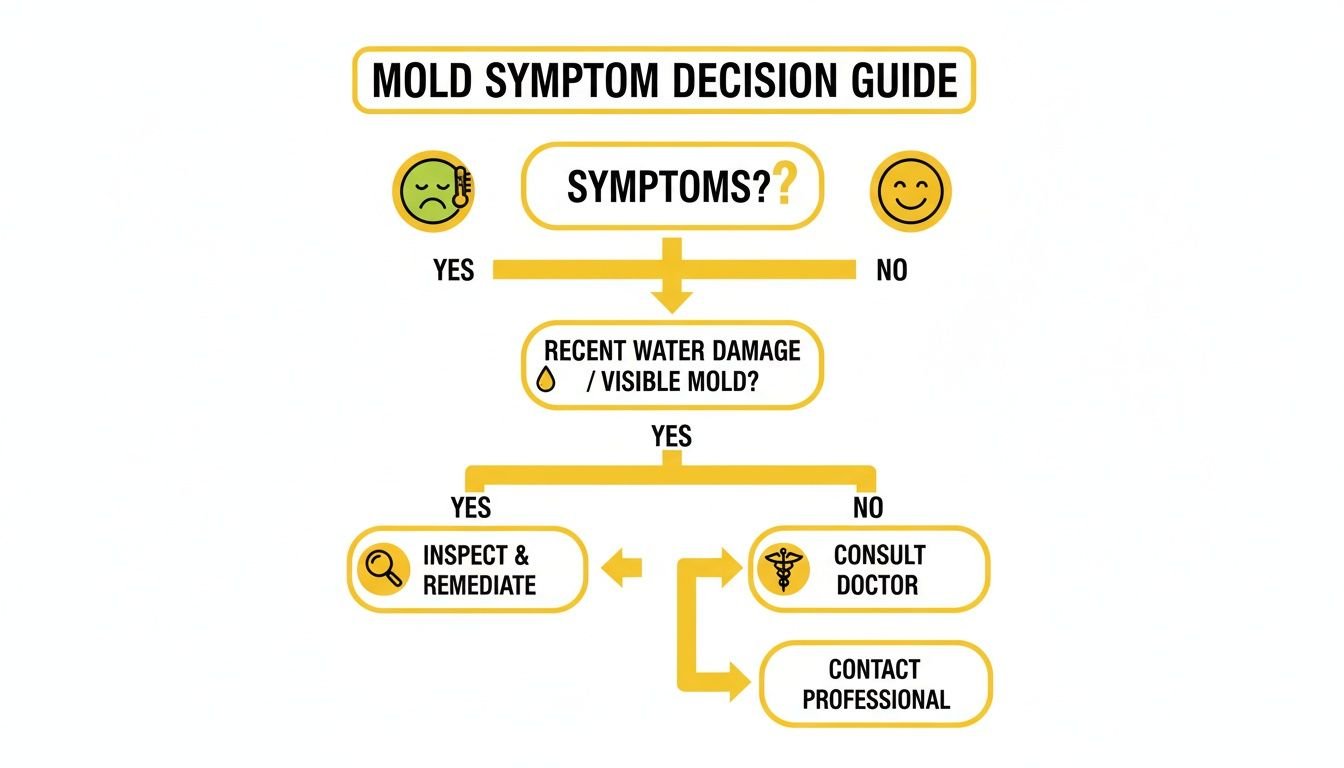
The key takeaway is that your symptoms are the alarm bell. They signal the need for a professional assessment of your home to identify the scope of the problem. You can learn more about what this first step involves by reading about professional LA mold testing.
Ultimately, calling a professional isn’t just about cleaning a stain on the wall. It’s about protecting your property and, more importantly, safeguarding your family’s long-term health.
Schedule a Free Inspection or Book Mold Testing
When you discover mold, the internet can be a confusing mess of conflicting advice. As a restoration pro in Los Angeles, I hear the same urgent questions from homeowners every day. Let’s cut through the noise and get you some straight answers.
What should I do if I find mold behind drywall?
A: Immediately stop using the area and contact a licensed restoration company to assess the risk. Mold often spreads beyond visible spots. Do not attempt to cut into the drywall yourself, as this can release a massive amount of spores into the air, contaminating other areas of your home. A professional will use containment measures before any removal.
Is black mold really the most dangerous kind?
The media loves to talk about "toxic black mold" (the infamous Stachybotrys chartarum), making it sound like it's the only one to fear. While Stachybotrys can produce some nasty mycotoxins, the truth is that any type of indoor mold growth is a potential health hazard.
Mold color is not a reliable sign of danger. Common household molds that are gray, green, or even white—like Aspergillus or Penicillium—can trigger serious allergic reactions and asthma attacks in sensitive people.
The Centers for Disease Control and Prevention (CDC) is very clear on this: all indoor mold should be treated as a risk and removed promptly and safely. Worrying only about "black mold" gives a false sense of security about other, equally problematic molds that could be growing in your home.
Ultimately, the actual health risks of mold in home settings have more to do with the person's individual sensitivity, how long they're exposed, and the concentration of spores in the air—not the mold's color.
Can mold cause permanent health problems?
This is the question that worries homeowners the most, and the answer really depends on the person and the severity of the exposure. For most healthy adults, symptoms like a nagging cough, stuffy nose, or skin rash will clear up once the mold is professionally removed and the indoor air is clean again.
For vulnerable people, however, the story can be much different. Long-term or heavy mold exposure can absolutely lead to lasting health issues, especially for:
- Children and Infants: Their immune and respiratory systems are still developing, making them highly susceptible. We know that early-life mold exposure is a risk factor for developing asthma.
- The Elderly: A weaker immune system can make it much harder for the body to fight off the effects of mold.
- Immunocompromised Individuals: People undergoing chemotherapy, living with HIV/AIDS, or who have had organ transplants are at high risk for dangerous fungal infections.
- Those with Existing Respiratory Conditions: For anyone with asthma or COPD, mold can trigger severe attacks and may lead to a permanent decline in lung function.
In some situations, chronic exposure to mycotoxins has been linked to persistent inflammatory conditions that can stick around even after the environment is clean. This is why getting rid of mold isn't just a cleaning task—it's a critical health measure to protect your family from potentially permanent harm.
Why do I need a professional mold test for my insurance claim?
When you file an insurance claim for mold, your carrier needs objective, scientific proof of the problem. A picture of visible mold just doesn't cut it. They need data that quantifies the contamination, especially the airborne spore levels which are the main health concern.
This is where professional mold testing becomes non-negotiable. A certified company like Onsite Pro Restoration provides the hard data that insurance adjusters need to approve a claim.
Here’s what that looks like and why it’s so important:
- Air Sampling: We take air samples from the problem areas and compare them to an outdoor "control" sample. This tells us scientifically if your indoor spore counts are elevated beyond normal levels.
- Surface Sampling: We may also take swabs or tape lifts from visible growth to identify the specific mold species present.
- Third-Party Lab Analysis: All samples are sent to an independent, accredited laboratory. Their report provides unbiased, scientific evidence of the mold type and concentration.
This formal lab report is the foundation of a strong insurance claim. It validates the contamination, justifies the need for professional remediation, and helps ensure the cleanup plan is thorough enough to get approved. Trying to file a claim without it is a common reason for delays, disputes, and denials.
If you're worried about the health risks of mold in home environments and need clear answers, don't guess. Onsite Pro Restoration delivers professional mold inspection and testing to give you the data needed to protect your family and your property.
Schedule Your Mold Inspection & Testing Now