
White fluffy mold is an active, rapidly spreading fungal growth that often appears during sporulation, when mold releases airborne spores. In humid conditions, some species can show visible fuzzy growth within 24 to 48 hours, so it deserves immediate attention before it spreads and affects air quality or building materials.
If you found a cottony white patch on drywall, wood, a basement wall, or around a window frame in Los Angeles, don't assume it's harmless just because it isn't black. White fluffy mold can be an early-stage growth from several mold types, and in older LA homes, it's also commonly confused with mineral deposits from moisture intrusion. That distinction matters, because the fix for mold is very different from the fix for salts left behind by water moving through concrete or masonry.
As an IICRC-certified restoration professional, the advice I give homeowners is simple. Identify the material, control the moisture, and avoid doing anything that sends more spores into the air. If you're already seeing fuzzy growth, the clock has started.
What Is This White Fluffy Mold in My House
White fluffy mold isn't one specific mold species. It's a visual description of mold growth that looks cottony, woolly, or soft on the surface. That appearance often means the colony is in active sporulation, which is when it starts releasing spores into the air.
That's why I treat white fluffy mold seriously from the first call. A lot of homeowners expect dangerous mold to be dark green or black, but white growth can be just as important to address.
According to this white fuzzy mold reference, species like Mucor can show visible fuzzy growth within 24 to 48 hours in humid conditions, and some white fuzzy molds can trigger allergies in healthy people. For immunocompromised people, some species can cause mucormycosis, a life-threatening infection with mortality rates up to 50% if untreated.
Where homeowners usually find it
In Los Angeles homes, white fluffy mold often shows up in places where moisture lingers and airflow is poor:
- Behind furniture on exterior walls where condensation gets trapped
- Inside closets in older homes with limited ventilation
- Near bathroom ceilings and window frames after repeated humidity buildup
- On basement or garage-adjacent surfaces where concrete and moisture meet
- Around past leak areas that were dried too slowly
Practical rule: If it looks soft, fuzzy, and attached to a damp surface, treat it like mold unless testing proves otherwise.
Color alone won't tell you what species you're looking at. Texture, location, moisture conditions, and whether the material is porous matter more. Drywall paper, wood, carpet backing, and stored cardboard are common feeding grounds because mold needs moisture and an organic surface to keep growing.
If the growth is in an attic or near roof-related moisture, this guide on white mold in attic spaces is a useful next step. For general cleanup guidance and moisture control, the EPA mold guidance is also worth reviewing.
Is It Mold or Something Else Common in LA Homes
A lot of LA homeowners send photos of “white mold” that turns out to be efflorescence. That's a salt deposit left behind when water moves through concrete, block, or masonry and evaporates at the surface. It's not a living organism, but it is a moisture warning sign.
That distinction comes up constantly in neighborhoods with older housing stock, slab foundations, retaining walls, and hillside construction. In places like Glendale, Burbank, and Sherman Oaks, small foundation movement and aging materials can let moisture travel into areas homeowners rarely inspect.
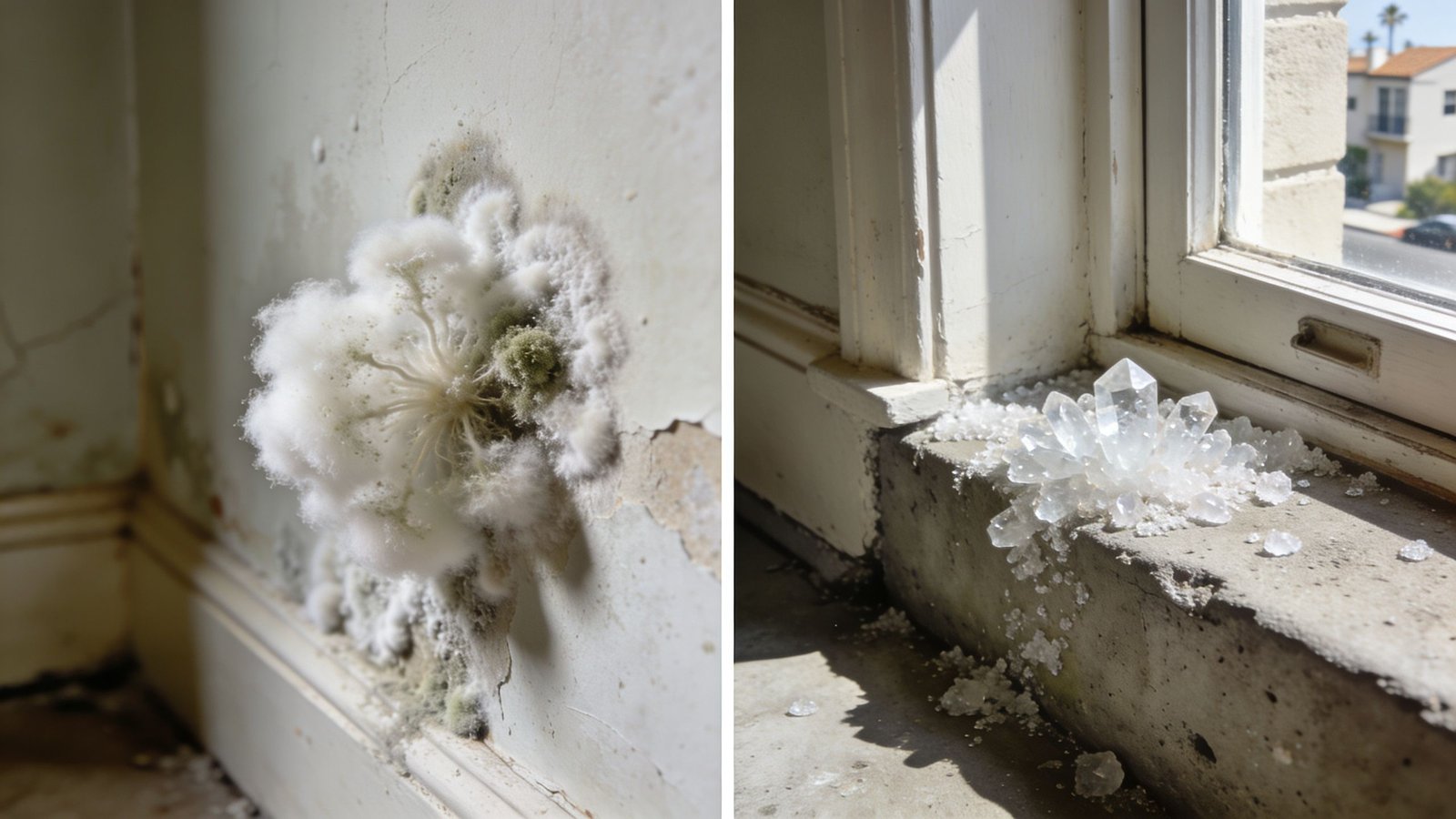
A Los Angeles-specific issue is that hidden leaks can follow minor structural movement. As noted in this LA white mold and efflorescence article, frequent micro-earthquakes can contribute to hidden leaks in aging foundations, which then lead to efflorescence that homeowners mistake for white fluffy mold. The same source notes a useful DIY check: efflorescence dissolves in water or vinegar, while mold smears or turns slimy but does not dissolve.
Quick field checks you can do carefully
You don't need to start scrubbing to get a first impression. In fact, dry brushing is one of the worst things you can do if it is mold.
Try these simple checks gently:
- Water test: Dab a small area with a damp cloth. Efflorescence tends to dissolve. Mold usually softens, smears, or clings.
- Vinegar test: A small dab can help confirm salts. Efflorescence reacts like a mineral residue. Mold won't disappear the same way.
- Texture check: Efflorescence feels gritty or crystalline. Mold feels soft, fibrous, or fuzzy.
- Location check: White fluffy mold often appears on organic materials. Efflorescence is common on concrete, masonry, and brick.
- Moisture clue: Both point to a water problem. Only one is actively growing and releasing spores.
If the material is drywall, wood, or stored paper goods, I lean toward mold until proven otherwise. If it's bare concrete with a crusty residue, efflorescence moves higher on the list.
Mold vs. Lookalikes Identification Guide
| Characteristic | White Fluffy Mold | Efflorescence | Heavy Dust/Cobwebs |
|---|---|---|---|
| Texture | Soft, fuzzy, cottony | Chalky, crusty, gritty | Dry, loose, wispy |
| Reaction to water | Smears or turns slimy | Dissolves | Beads or mats down |
| Surface type | Often on wood, drywall, fabrics, cardboard | Common on concrete, block, masonry | Any neglected surface |
| Biological growth | Yes | No | No |
| Air quality concern | Yes, spores can become airborne | Not a spore source | Irritating, but not mold growth |
| Typical cause | Moisture plus organic material | Water movement through mineral-based materials | Poor cleaning and stagnant air |
If you're still unsure, this guide on how to detect mold in a house helps you look beyond the visible patch and trace the moisture source.
What usually fools homeowners
Cobwebs, lint, insulation fibers, and paint breakdown can all look pale and fuzzy in dim light. So can residue left after a leak. The deciding factor is usually the combination of texture, moisture, and substrate.
What doesn't work is guessing based on color alone. White growth can be mold. White residue can be salts. Both deserve attention, but they don't get solved the same way.
Health Hazards and Structural Damage Explained
White fluffy mold becomes a bigger problem when people treat it like a cosmetic stain instead of an indoor air issue. Once spores are airborne, they don't stay neatly in one corner of the room. They move with foot traffic, HVAC airflow, and normal daily activity.
One of the more important data points comes from this mold statistics reference, which reports that white fuzzy mold is often linked to the Penicillium/Aspergillus group, found in 38% of home air samples. In basements, that group had a 71% presence. The same source states that early exposure for infants can nearly triple their risk of developing asthma, and the WHO links indoor air pollution, including mold, to 7 million deaths annually.
Who should be most careful
Some people react faster and more strongly than others:
- Infants and children with developing airways
- Older adults with existing respiratory issues
- People with asthma or allergies
- Anyone immunocompromised, especially if mold is extensive
- Pets, which often spend time close to floors and damp corners
The CDC guidance on mold and health is a good external resource if someone in the household is already experiencing symptoms.
White fluffy mold doesn't need to cover an entire wall to become a real concern. A small active colony in the wrong location can still affect a bedroom, closet, or adjacent room.
What it does to the house
Mold isn't just sitting on the surface. On porous materials, it grows into what it feeds on. That usually means paper-faced drywall, wood framing, trim, subfloors, carpet backing, and stored contents.
In our field work around Los Angeles, the visible patch is often the least important part. The bigger issue is the moisture source behind it. Slow plumbing leaks, window intrusion, slab moisture, and poorly vented bathrooms keep feeding the colony long after the first spot appears.
If you want a deeper look at symptom patterns and exposure concerns, this page on health risks of mold in home environments is useful.
Safe DIY Containment for Very Small Mold Spots
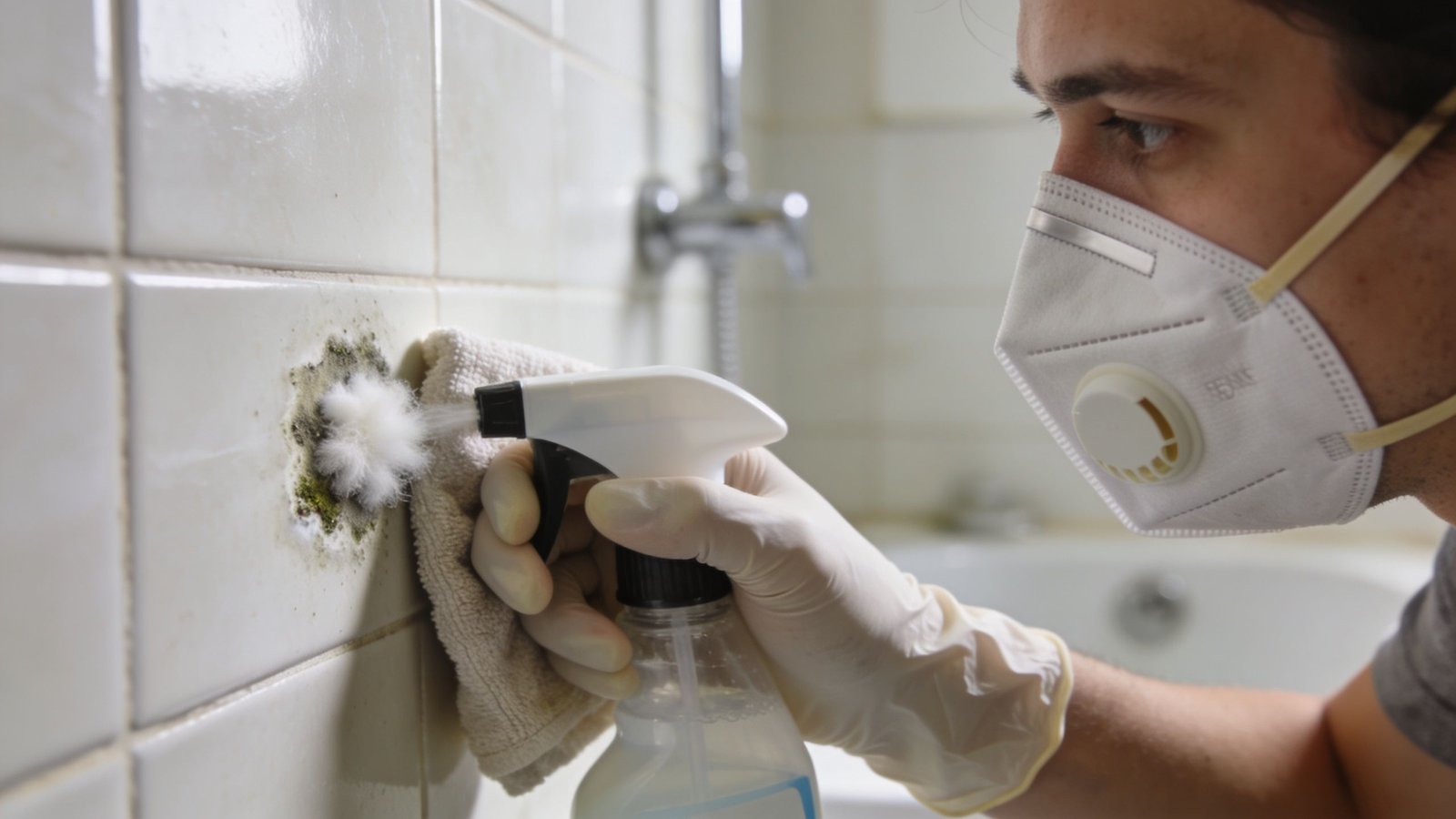
If you're dealing with a very small, isolated patch on a hard, non-porous surface, you may be able to do limited containment and cleaning safely. Keep the goal narrow. You're not “remediating the house.” You're reducing spread while you assess whether the issue is minor.
What to wear and what to prepare
Before touching the area, gather the right gear:
- Respiratory protection: Use an N95 mask at minimum
- Hand protection: Nitrile or similar disposable gloves
- Eye protection: Sealed or close-fitting goggles
- Cleaning supplies: Mild detergent, disposable towels, a spray bottle, and trash bags
- Drying equipment: A fan used carefully after cleaning, or better yet, normal ventilation that won't blow directly across contamination
Close interior doors if possible. Keep kids and pets away. If the HVAC return is nearby, turn the system off while you work so you don't pull particles through the house.
A cautious cleanup sequence
For a small spot on tile, sealed metal, or another non-porous surface, follow this order:
- Mist lightly, don't soak. A light mist helps reduce airborne disturbance. Don't flood the area.
- Wipe with detergent solution. Use a disposable cloth or paper towel. Lift material off the surface instead of grinding it in.
- Bag waste immediately. Towels, gloves, and debris should go straight into a sealed trash bag.
- Dry the area completely. If moisture remains, the mold issue remains.
- Watch the area closely. If it returns, the surface growth wasn't the full problem.
A lot of homeowners ask about bleach. On porous materials, bleach is usually a poor answer because it doesn't reliably address growth within the material. It can also create a false sense of completion while the moisture source stays active.
Do this instead: clean the surface, dry it thoroughly, and focus on fixing the water or humidity condition that allowed growth in the first place.
This walkthrough may help if you want additional practical cleanup guidance: best way to clean mold.
For a visual explanation of safe handling and cleanup principles, this short video is useful:
What not to do
Avoid these mistakes. They're common, and they make contamination worse.
- Don't dry-scrape or dry-brush. That launches spores.
- Don't sand over it. Sanding spreads contamination fast.
- Don't paint over active mold. You'll hide it, not solve it.
- Don't ignore recurring growth. Recurrence means active moisture remains.
- Don't clean porous materials the same way you clean tile. Drywall, carpet, and insulation often need a different response.
If the material feels soft, stained through, or smells musty after cleaning, it's time to stop the DIY approach.
When to Call a Certified Mold Remediation Professional
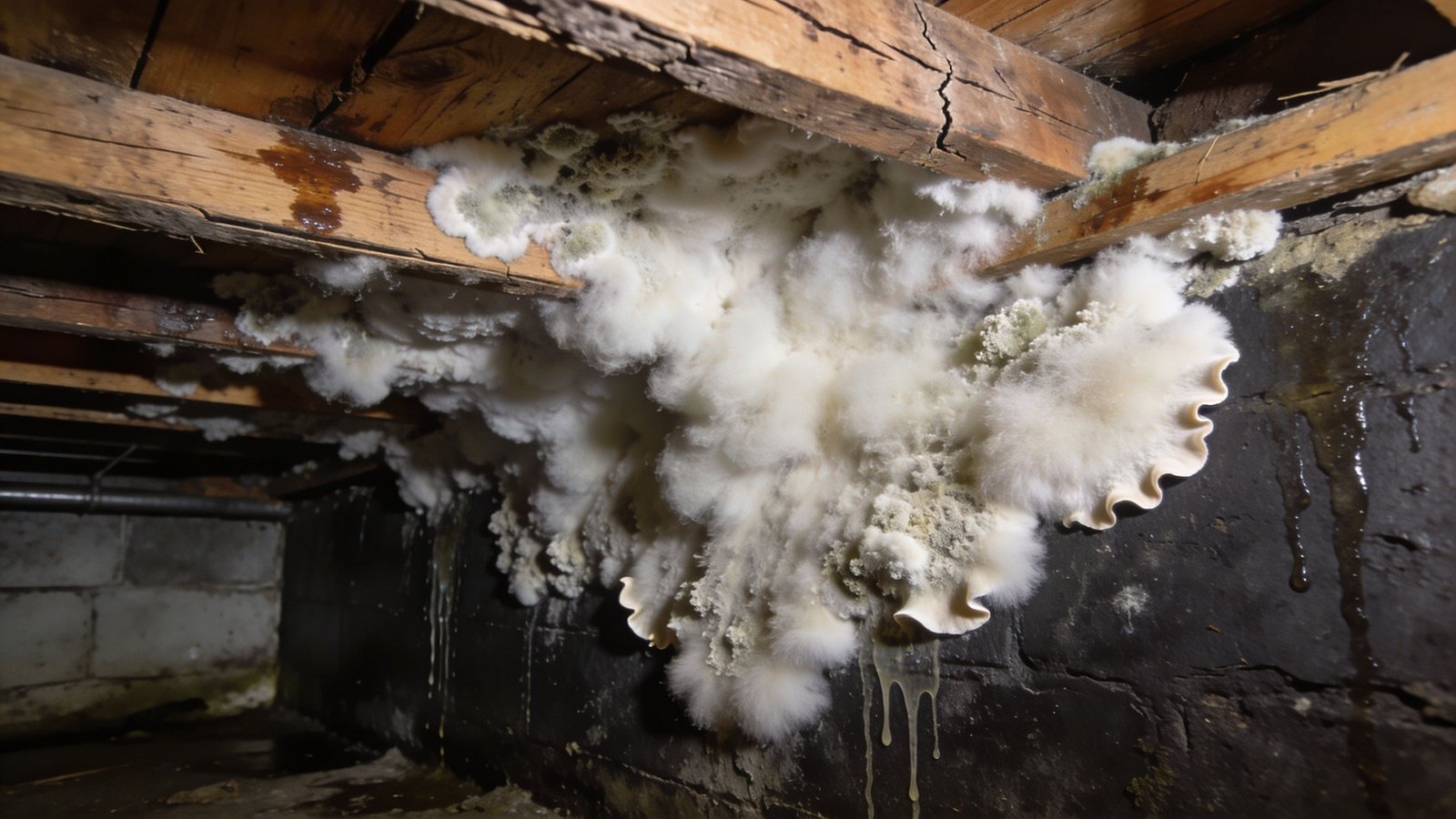
The line between a homeowner cleanup and a professional remediation job is usually clearer than people think. If the mold is spreading, returning, tied to a leak, or located inside wall cavities, under flooring, in an attic, or near HVAC components, bring in a certified remediation team.
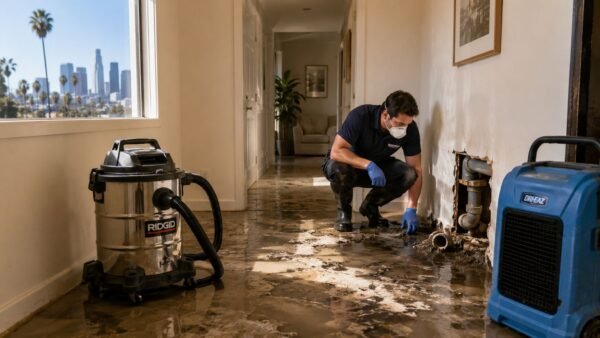
That's even more important after a major water event. Mold growth is often the visible result, but the core issue is uncontrolled moisture trapped in materials that won't dry on their own.
Signs the job is no longer DIY
Call a professional if any of these apply:
- The area is large or keeps expanding
- It came after flooding, a slab leak, or a burst pipe
- The growth is on drywall, framing, insulation, or subflooring
- You smell mold but can't see the full source
- Someone in the home is having strong respiratory symptoms
- The mold keeps returning after cleaning
In Los Angeles, I also recommend professional evaluation when white residue or growth shows up repeatedly in garages, crawl-adjacent spaces, or lower walls after rain. Those are classic spots where hidden moisture can move unnoticed.
What certified remediation changes
A proper remediation is controlled. It isn't just “cleaning mold.” It's isolating contaminated areas, preventing cross-contamination, removing unsalvageable materials when needed, and documenting moisture conditions.
According to this overview of IICRC S500 remediation standards, professional remediation includes 6-mil polyethylene containment, negative air pressure, and HEPA air scrubbers to reduce airborne spore counts to below 100 spores/m³. The same source notes that moisture logs and lab IDs are important for insurance documentation and can help avoid denials tied to misdiagnosis.
A good remediation plan answers two questions, not one. What gets removed safely, and what stopped the moisture source from feeding it?
If the mold followed a plumbing problem, it also helps to understand the cause upstream. This resource on water damage prevention in Los Angeles gives useful context on preventing repeat moisture events after repairs.
For homeowners comparing service options, this page on mold removal contractors can help you evaluate what a qualified response should include.
Mold Prevention and Insurance Tips for LA Homeowners
Los Angeles creates a strange mix of mold conditions. Coastal humidity, marine layer moisture, hot inland swings, old windows, aging plumbing, and occasional rain intrusion all show up in the same service area. That's why prevention here has to be practical, not generic.
In Sherman Oaks and Glendale, I often see recurring issues tied to older bathroom ventilation, hidden window leaks, and deferred maintenance after “minor” water incidents that didn't seem urgent at the time. In Burbank and North Hollywood, HVAC condensation and poorly drained exterior transitions are common contributors.
Prevention habits that actually help
- Check after storms and tremors: Look at baseboards, lower garage walls, and around window corners after any water event or noticeable movement.
- Control indoor humidity: Bathroom exhaust, kitchen ventilation, and dehumidification during damp periods matter.
- Inspect AC components: Drain pans and condensate lines can create slow, hidden moisture.
- Move stored items off concrete: Cardboard boxes on garage or basement-adjacent floors are frequent mold victims.
- Catch window leaks early: If you suspect infiltration around aging windows, this guide on troubleshooting window frame leaks is a useful starting point.
Insurance claim habits that help your case
Insurance usually gets easier when the water event is documented early and the damage is tied clearly to a covered cause. Photos, timelines, invoices, moisture readings, and professional reporting all help.
What hurts claims is delay. If a small leak sits for weeks, insurers may argue the issue was preventable maintenance rather than sudden damage. The best move is to document immediately, stop the moisture source, and get a qualified inspection before cleanup muddies the evidence.
If you're in Los Angeles, CA and you're not sure whether you're looking at white fluffy mold, efflorescence, or leak-related damage, get it checked before it spreads. Call 818-336-1800 for a professional inspection and clear next steps.
Frequently Asked Questions About White Mold
Does white fluffy mold always smell musty
No. Some active growth has a noticeable musty odor, but small or early colonies may have very little smell, especially in ventilated spaces.
Can I just paint over white fluffy mold
No. Paint covers the appearance, not the contamination or moisture source. If the material is still damp or colonized, the problem usually comes back.
Is white fluffy mold on concrete always mold
No. On concrete, block, or masonry, it may be efflorescence instead. Use the texture and water-dissolving checks discussed earlier, and don't assume based on color.
Can white fluffy mold grow after a small leak
Yes. If materials stay damp, visible growth can develop quickly under the right conditions. Even a small leak can create enough moisture for mold to take hold.
Should I clean mold on houseplants the same way as mold on walls
No. Plant issues and building material contamination are different problems. Mold or mildew on potting soil or plant surfaces needs a plant-specific approach. Don't apply building remediation methods to houseplants without confirming what you're dealing with.
Will a dehumidifier fix white fluffy mold
A dehumidifier helps reduce moisture conditions, but it doesn't remove existing contamination from affected materials. It's one part of prevention, not a full solution.
If you've found suspicious white growth in your home, don't guess and don't disturb it more than necessary. Onsite Pro Restoration provides mold inspections, testing, containment, and remediation throughout Los Angeles. For fast help in North Hollywood, Glendale, Burbank, Sherman Oaks, West Hollywood, Beverly Hills, and nearby areas, call 818-336-1800 for a free inspection.