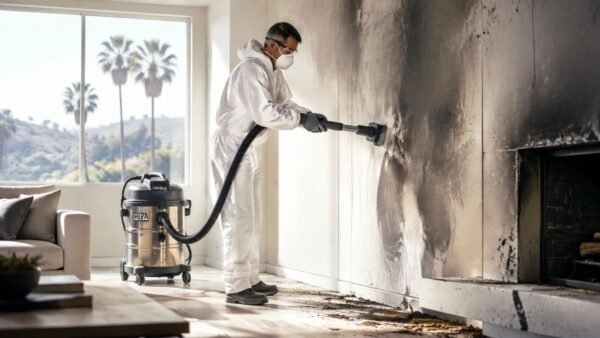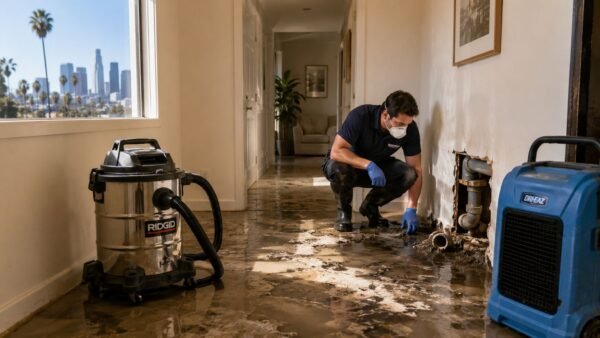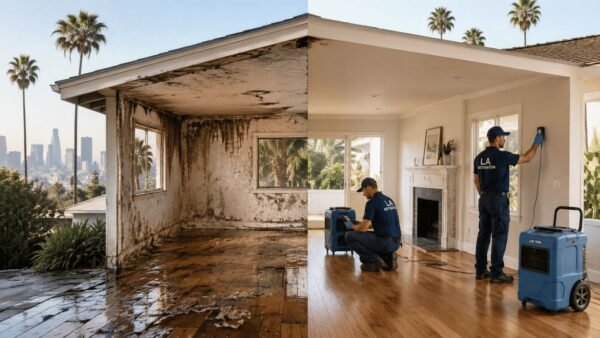

If the fire is small, contained, and no larger than a small trash can, you may be able to put out fires safely with the right method and a clear exit behind you. If it's larger than that, spreading, or filling the room with smoke, your only job is to get out and call 911.
That's the decision many individuals need help with in the first few seconds. You smell something burning, turn toward the stove, and see flames climbing out of a pan. Or you notice a wastebasket smoking near a desk outlet. In that moment, people lose time because they try to diagnose too much.
The first move is simpler than most guides make it sound. Decide whether this is a small, fightable fire or an evacuation fire. Everything else comes after that.
In Los Angeles, that judgment matters even more. Older houses in Sherman Oaks and Glendale can hide outdated wiring behind walls. Apartment kitchens in Burbank can trap heat and smoke fast. Dry conditions across the region also mean people should think about prevention before a fire starts, not just suppression after it does.
Related keywords: fire extinguisher, kitchen fire, smoke damage, soot cleanup, fire damage restoration
SEO title tag: Put Out Fires Safely in Your Home
Meta description: Put out fires safely with clear fight-or-flee rules, PASS extinguisher steps, and post-fire damage control for Los Angeles homes.
The First Five Seconds A Fire Starts In Your Home
A common home fire starts exactly where people feel most comfortable. At the stove. The oil gets too hot, a towel lands too close to a burner, or food is left unattended for a moment too long.
The first five seconds aren't about bravery. They're about recognition. Is this fire still small and contained, or has it already crossed the line where suppression is unsafe?
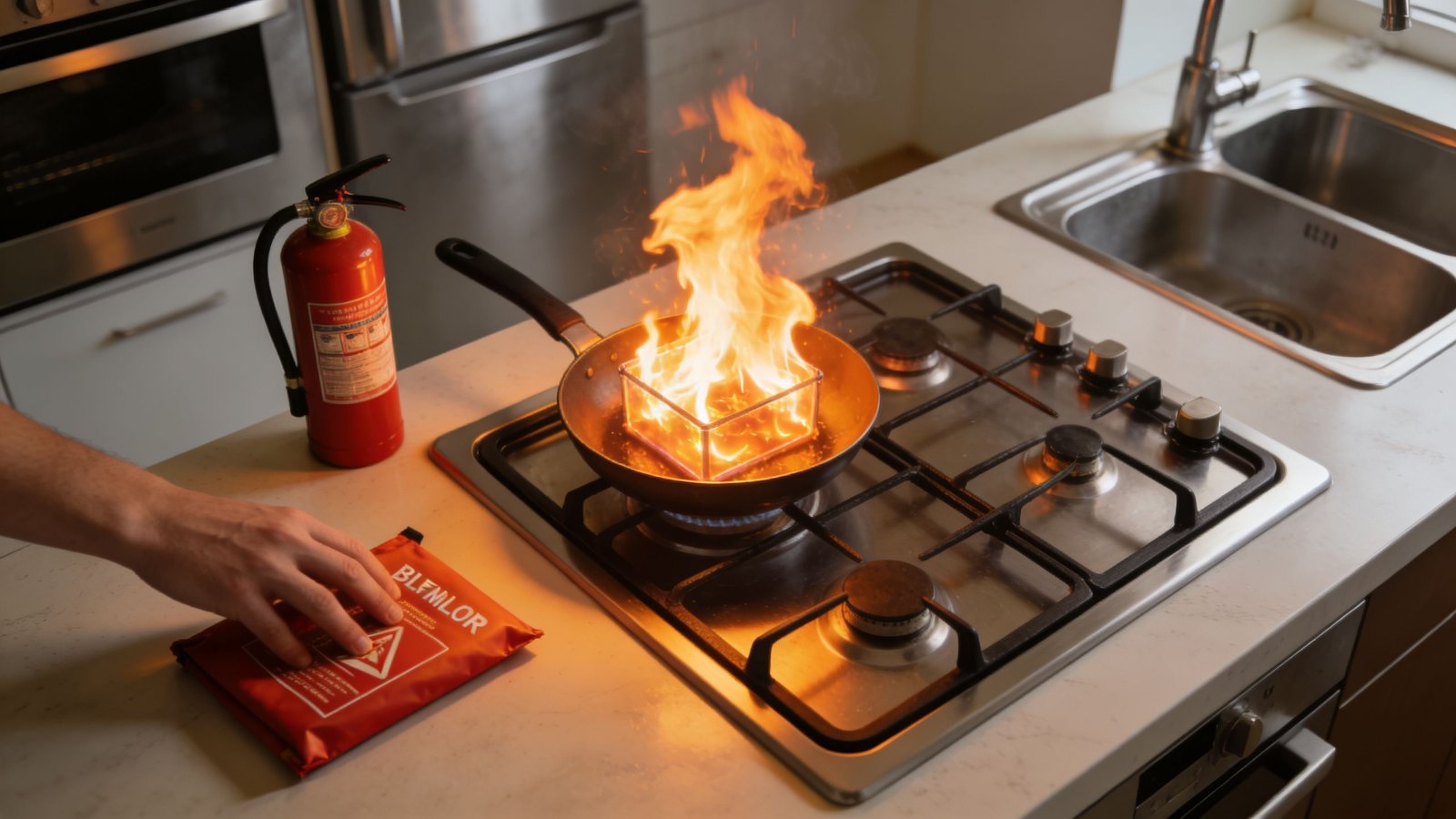
According to the U.S. Fire Administration, cooking was the leading cause of residential building fires from 2017 to 2019, accounting for 51% of all incidents (U.S. Fire Administration fire statistics reports). That's why so many real-world fire decisions happen in the kitchen, not in some dramatic movie scene.
What counts as a fightable fire
A fightable fire is small, limited to the item that first ignited, and hasn't started running up a wall, across cabinets, or into the ceiling. You need a working extinguisher or another correct method for that fuel type, and you need a clear path out behind you.
If any of those conditions are missing, it's no longer a fire you should handle yourself.
Practical rule: If the fire is bigger than a small trash can, or you have to wonder whether you can handle it, leave.
What to do before you touch anything
Start with these checks:
- Look at the smoke: If smoke is thick, dark, or dropping low into the room, don't stay.
- Check your exit: Keep the door or hallway behind you. Never let the fire get between you and the way out.
- Shut off the heat source if safe: For a stovetop flare-up, turning off the burner can stop the fire from growing.
- Alert everyone else: Make sure others are moving out, not standing around watching.
Homes that already have a written emergency response plan template tend to handle these moments better because nobody has to improvise under stress.
Your Critical Decision To Fight Or Flee
Many individuals do not require additional extinguisher trivia. Instead, they need a clear, reliable threshold for when to cease their efforts. This constitutes the most critical fire safety skill in the home.
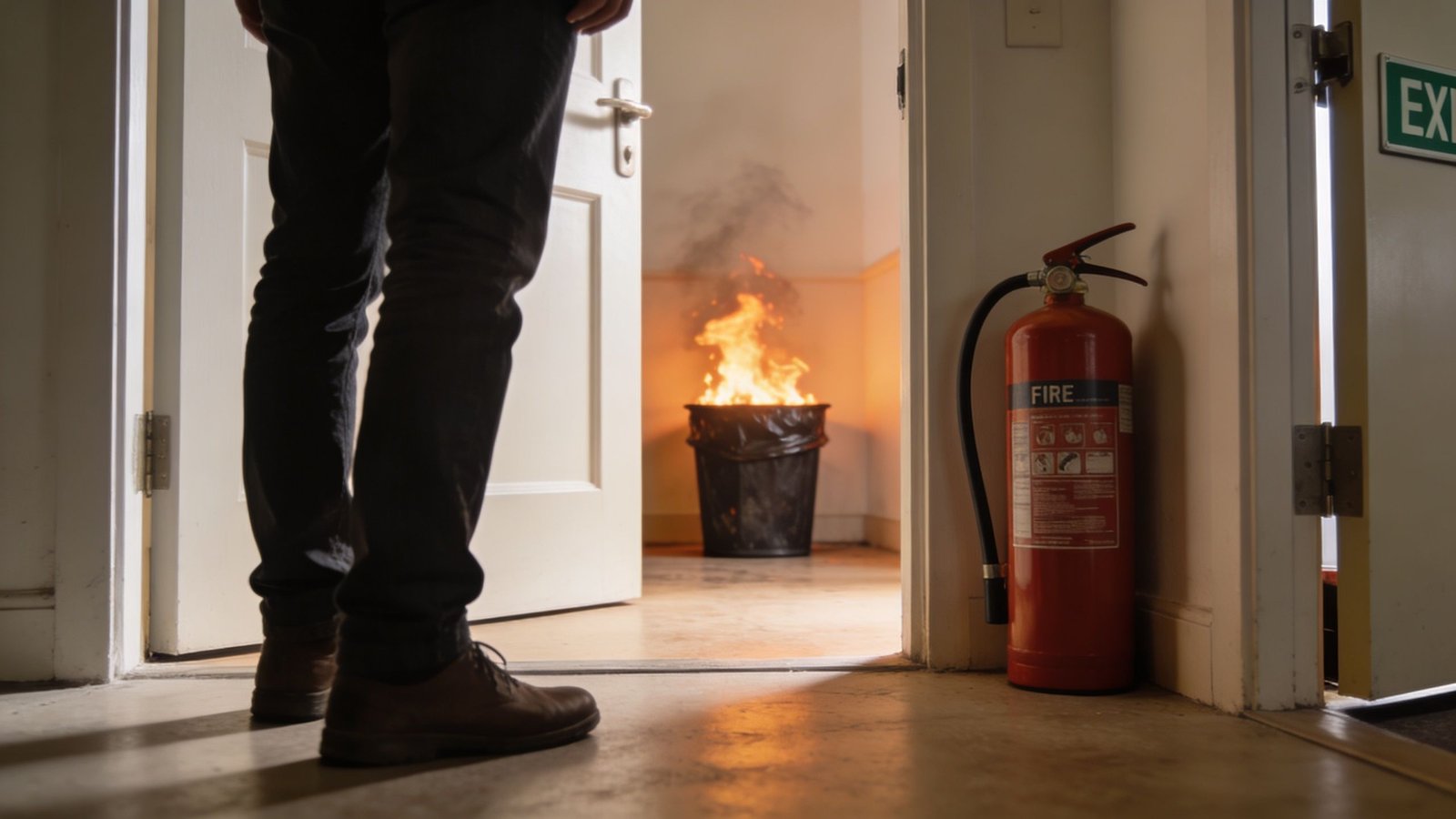
Public fire-safety guidance often leaves this part too vague. The Rural Health Information Hub's fire safety education guidance notes that education often lacks a clear framework for evacuation versus suppression, and it emphasizes that the primary goal is always to get out safely if there is any doubt.
Leave immediately if any of these are true
- The fire is spreading: If flames are moving beyond the original pan, bin, appliance, or cushion, you're done.
- The room is filling with smoke: Smoke disables people fast. You don't need visible flames everywhere for the room to become dangerous.
- You don't have the right extinguisher: Guessing wrong around grease or energized electrical equipment can make the problem worse.
- Your exit could be blocked: If your only way out is through the fire area, don't go in deeper.
- You feel hesitation or panic: That hesitation matters. If your body is telling you you're behind the situation, listen.
If there's any doubt, evacuate. Property can be repaired. A trapped occupant changes everything.
Cases where a quick suppression attempt may be reasonable
You may be able to put out fires yourself when all of the following are true:
- The fire is still small and contained.
- The air is still clear enough to see and breathe without struggling.
- You have the correct tool within reach.
- Another person is already calling 911 or moving people out.
- You can stop and retreat in one step if it fails.
That last point gets overlooked. You should never lean into a fire so far that you have to fight your way back out.
A Los Angeles reality check
In our experience with damaged properties across Los Angeles, older homes carry their own risks. In parts of Sherman Oaks, Glendale, and nearby neighborhoods, houses may have older wiring, patched outlets, overloaded circuits, or additions built in different eras. A fire that looks small on the surface can already be moving inside a wall cavity or attic chase.
That's one reason it helps to understand the basics of what a structure fire is. Once a fire gets into concealed spaces, it stops being a homeowner problem and becomes a firefighter problem.
How To Use a Fire Extinguisher The PASS Method
If the fire meets the threshold for a safe suppression attempt, use the extinguisher correctly. Random spraying wastes the agent and gives the fire time to grow.
Know the fire class before you act
Different fuels need different approaches. The label on the extinguisher matters.
| Household Fire Classes and How to Fight Them | Fuel Source | Best Extinguishing Method |
|---|---|---|
| Class A | Wood, paper, fabric, trash | Water or a suitable extinguisher labeled for Class A |
| Class B | Flammable liquids | A suitable extinguisher labeled for Class B |
| Class C | Energized electrical equipment, appliances, wiring | A suitable extinguisher labeled for Class C after keeping clear of electrical hazard |
| Class K | Cooking oils and grease | Smothering if appropriate, or a kitchen-rated method suited for grease fires |
A pan of burning oil in a Burbank kitchen isn't the same as a smoldering wastebasket or an outlet fire. If you smell insulation or see sparks around a device, treat it with extra caution. A persistent burning electrical smell often points to a hazard that can reignite even after the visible flame is gone.
The PASS method
Stand back far enough to keep the fire in front of you and your exit behind you. Then use PASS.
Pull the pin.
Aim low at the base of the fire.
Squeeze the handle.
Sweep side to side.
What each step really means
Pull the pin. Break the tamper seal and make sure the extinguisher is ready. People lose precious seconds here because they grab the unit and start pressing the handle without removing the pin.
Aim low.
Don't spray at the tops of the flames. The base is where the fuel is feeding the fire. If you hit only the flames, they can flare back up as soon as the extinguishing agent thins out.
Squeeze in a controlled way.
A fire extinguisher isn't a garden hose. Short, controlled discharge lets you keep coverage where it counts instead of emptying it into the air.
Sweep side to side.
Move across the burning area until you cover the full base. If one edge is still burning, the fire can re-establish itself.
Positioning matters more than people think
Use this stance:
- Feet set for retreat: Keep your balance and avoid backing into furniture.
- Door at your back: You should be able to leave immediately.
- Low angle on the nozzle: That gives the agent a better shot at the fuel source.
- Watch for re-flare: Don't turn away the second flames drop.
A fire that appears out can still be hot enough to restart. Stay on it for a moment, then back out and keep watching.
For a straightforward refresher on extinguisher basics and placement, the National Fire Protection Association's fire extinguisher guidance is worth reviewing before an emergency happens.
Two common mistakes that make small fires bigger
The first is using the wrong method on a grease fire. Water can spread burning oil. For a stovetop grease fire, the safer first move is usually to turn off the heat and smother the pan if you can do that without reaching through flames.
The second is advancing too close. Homeowners often step toward the fire while they spray, especially if they don't see instant results. That closes your escape window and puts your face into heat and smoke.
If the extinguisher runs low and the fire is still active, leave. Don't go looking for a second extinguisher in another room while the fire continues to build.
After The Fire Is Out Immediate Damage Control
A fire being out doesn't mean the emergency is over. In many homes, the next damage comes from what people don't see. Hidden heat, smoke residue, and water used during suppression all keep working after the flames stop.
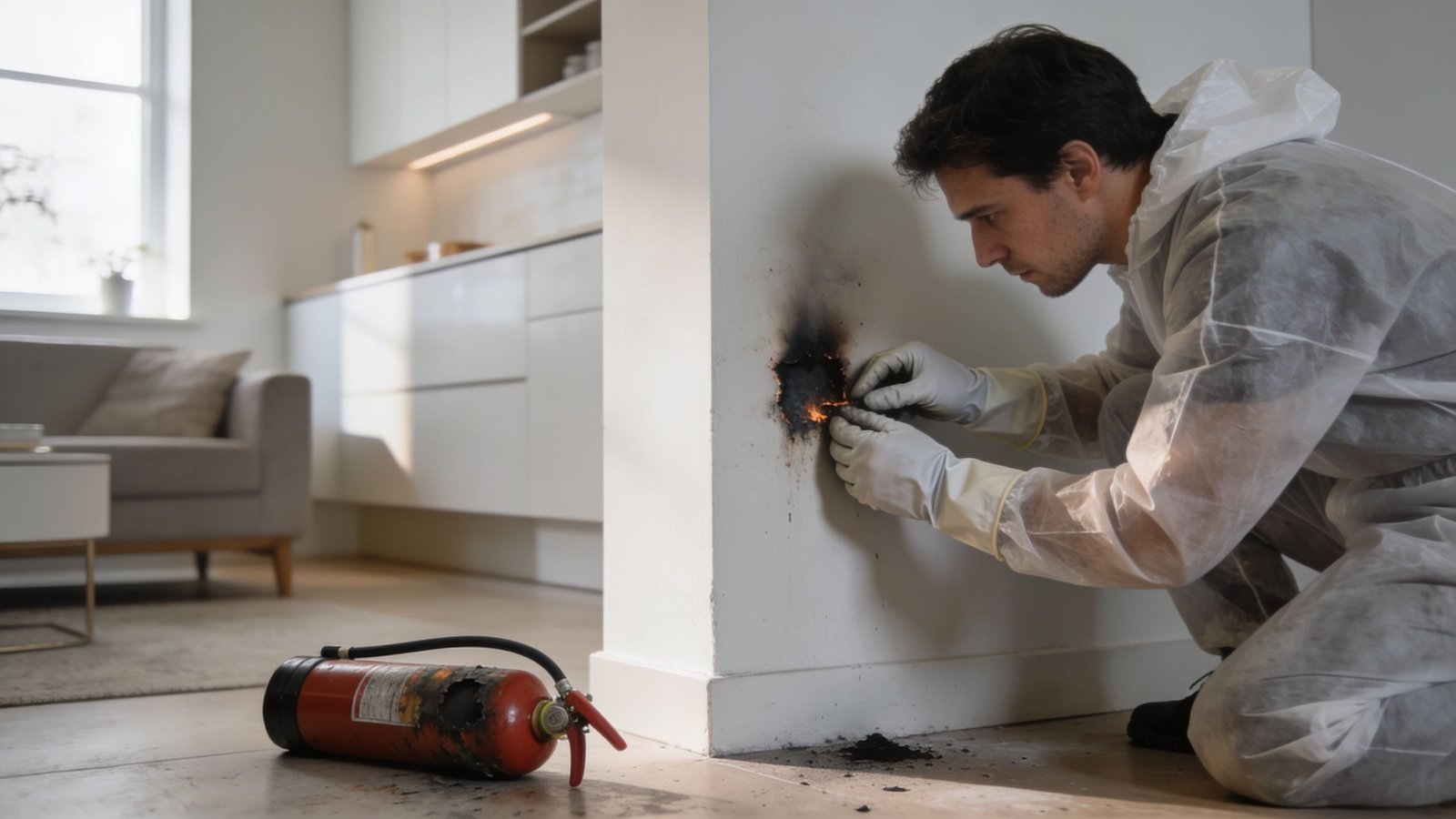
Check for heat and spread, not just visible flame
A burned cabinet side, outlet box, or upholstered chair can hold hidden embers. Fire restoration standards recognize that visible damage rarely tells the full story. According to the ANSI/IICRC S700 standard, professional fire restoration requires locating hidden damage, and water used for firefighting can seep into structures and cause secondary mold damage if it isn't properly dried (ANSI/IICRC S700 fire restoration standard overview).
That's why professionals separate fire damage, smoke damage, and water damage when they assess a loss. Each travels differently.
Smart first actions in the first hour
- Re-enter only if authorities say it's safe: Hidden heat and compromised wiring can still injure you.
- Limit touching soot-covered surfaces: Dry soot smears easily and can push residue deeper into paint, fabric, and porous materials.
- Protect openings: If windows or doors were forced, temporary board-up service after a fire helps keep weather, theft, and animals out.
- Document before cleanup: Photos of every affected room help with scope, insurance, and restoration planning.
Odor alone isn't the problem. Smoke leaves residues on walls, inside cabinets, in HVAC pathways, and on contents you may think were untouched.
Ventilation and cleanup mistakes to avoid
Opening windows can help in some situations, but don't start aggressive wiping or fan placement without a plan. Dry soot should generally be removed before wet cleaning. If you wipe first, you can grind carbon residue into paint, drywall texture, and upholstery.
If anyone in the home suffered burns, smoke exposure, or other injuries, practical support matters as much as property repair. These burn injury legal and recovery resources can help Los Angeles area families find care and next-step guidance.
Fire Prevention Tips For Your Los Angeles Home
The best time to put out fires is before they start. In Los Angeles, prevention isn't abstract. Dry vegetation, hot weather, aging electrical systems, grilling, and dense housing all raise the stakes.
According to the Insurance Information Institute, humans cause approximately 85% of all wildfires in the United States (Insurance Information Institute wildfire facts and statistics). That matters in Southern California because many fire risks are directly tied to daily habits.
Habits that prevent the fires people actually have
- Kitchen discipline: Stay in the kitchen when cooking on the stovetop. Keep towels, paper goods, and packaging away from burners.
- Electrical caution in older homes: If breakers trip, outlets feel warm, or lights flicker, get the system checked. In older Glendale and Sherman Oaks properties, small warning signs often show up before a failure.
- Safer charging practices: Don't leave damaged cords, overloaded power strips, or overheating devices unattended.
- Outdoor awareness: Keep grills away from siding, fences, patio furniture, and dry brush.
- Defensible housekeeping: Clear leaves, debris, and combustible clutter from around the home, especially during windy stretches in the LA area.
One prevention step most people skip
Practice your exit. Not theoretically. Physically walk it.
Know which door you use first, where the backup route is, and where everyone meets outside. In apartments and mixed-use buildings around Burbank and North Hollywood, that simple habit prevents confusion when alarms, smoke, and neighbors all hit at once.
When To Call For Professional Fire Damage Restoration
A fire can be small and still leave a serious cleanup problem. Smoke gets into areas flames never reached. Soot settles on surfaces that look untouched. Water from suppression can move into flooring, cabinets, wall cavities, and insulation.
Professional restoration is the right move when you have visible soot, persistent odor, melted materials, damaged drywall, electrical involvement, or any uncertainty about hidden moisture. Even a brief kitchen fire can leave acidic residue on painted surfaces and metal fixtures, and DIY cleaning often spreads it instead of removing it.
For homeowners trying to understand the sequence after an incident, this guide to urgent fire damage restoration steps is a useful outside reference. The immediate priorities are stabilization, documentation, safe cleanup, odor control, and repair planning.
If your home needs smoke, soot, or odor remediation, it helps to start with a team that handles the full scope of fire and smoke damage restoration. That's especially true in Los Angeles homes where older materials, tight lot lines, and layered remodels can hide damage in places owners don't expect.
The rule is simple. Life safety first. Property second. Professional restoration third, but soon after. The faster the right cleanup starts, the better your chances of limiting permanent staining, odor spread, and secondary damage.
FAQ
Can I put out fires myself at home?
Yes, but only if the fire is small, contained, and you have the right method with a clear way out behind you. If it's larger than a small trash can, spreading, or producing heavy smoke, evacuate and call 911.
What should I do if a pan catches fire?
Turn off the heat if you can do it safely. If it's a grease fire, don't use water. If the fire doesn't stay contained immediately, get out.
When should I use a fire extinguisher?
Use it only on a small, contained fire when you know what is burning, have the correct extinguisher, and can retreat quickly if it doesn't work.
What is the PASS method?
PASS stands for Pull, Aim, Squeeze, Sweep. Pull the pin, aim at the base of the fire, squeeze the handle, and sweep side to side.
Is smoke damage a problem even after a small fire?
Yes. Smoke and soot often spread beyond the visible burn area. Residue can affect walls, cabinets, contents, and HVAC paths even when the fire itself was limited.
Why is water damage a concern after a fire?
Water used to suppress a fire can soak hidden materials. If those materials aren't properly dried, they can support secondary damage later, including mold.
If you've had a fire in Los Angeles, Sherman Oaks, Burbank, Glendale, or nearby areas, call Onsite Pro Restoration at 818-336-1800 for a free inspection. We provide smoke and soot cleanup, deodorization, emergency stabilization, and fire damage restoration when the flames are out but the actual cleanup has just started.
Schema opportunity: FAQPage, HowTo, LocalBusiness