
You walk into the hallway, and something smells off. Not dinner. Not the heater. Not the dusty scent that comes with the first warm day in Los Angeles. It smells sharp, hot, plastic-like, or oddly fishy, and your stomach drops because you know it might be electrical.
That reaction is correct. A burning electrical smell is one of the few household warning signs you should treat as urgent from the first second. In older LA homes, especially houses and small multifamily buildings with aging wiring, that smell can come from a hidden failure inside a wall, outlet box, switch, appliance, or panel. You may not see smoke yet. That doesn't make it minor.
If the odor is strong, persistent, or tied to heat, sparking, or a tripped breaker, stop treating it like a mystery and start treating it like a safety event.
Why You Must Never Ignore a Burning Electrical Smell
A burning electrical smell isn't a nuisance. It's a fire warning.
In the United States, electrical fires account for an estimated 51,000 residential fires, nearly 500 deaths, and $1.3 billion in property damage annually, and electrical distribution systems are the third leading cause of home structure fires, according to the Electrical Safety Foundation International. That tells you two things. First, electrical fire risk is common enough to take seriously. Second, the danger often starts in the systems homeowners rarely see.
In Los Angeles, I worry most when this smell shows up in homes with older outlets, older panels, renovation history of unknown quality, or years of added appliance demand. A house that handled lights and a few small appliances decades ago may now be carrying window AC units, space heaters, air fryers, chargers, entertainment systems, and home office loads on the same aging circuits.
Immediate rule: If you smell burning electrical odor and can't quickly identify a harmless source, act as if something inside the electrical system is overheating right now.
That doesn't mean panic. It means move fast and make clean decisions.
If you're already dealing with smoke, visible damage, or an active fire event, it helps to understand what qualifies as a structure fire so you know when this has moved beyond an electrical issue and into a full restoration emergency.
If the smell is getting stronger, the outlet or panel feels hot, or anyone in the home feels unsafe, leave and call emergency services.
Decoding the Odor What the Smell Is Telling You
Smell gives you clues before your eyes do. With electrical problems, that matters because the failure often starts behind a cover plate, inside a device, or inside the wall cavity.
A fishy smell often points to overheating components releasing chemical fumes. A more acrid plastic smell usually means wire insulation is actively burning, based on professional guidance from Dr. Electric on burning electrical odors. Homeowners often dismiss the first odor because it doesn't smell like what they imagine a fire should smell like. That's a mistake.
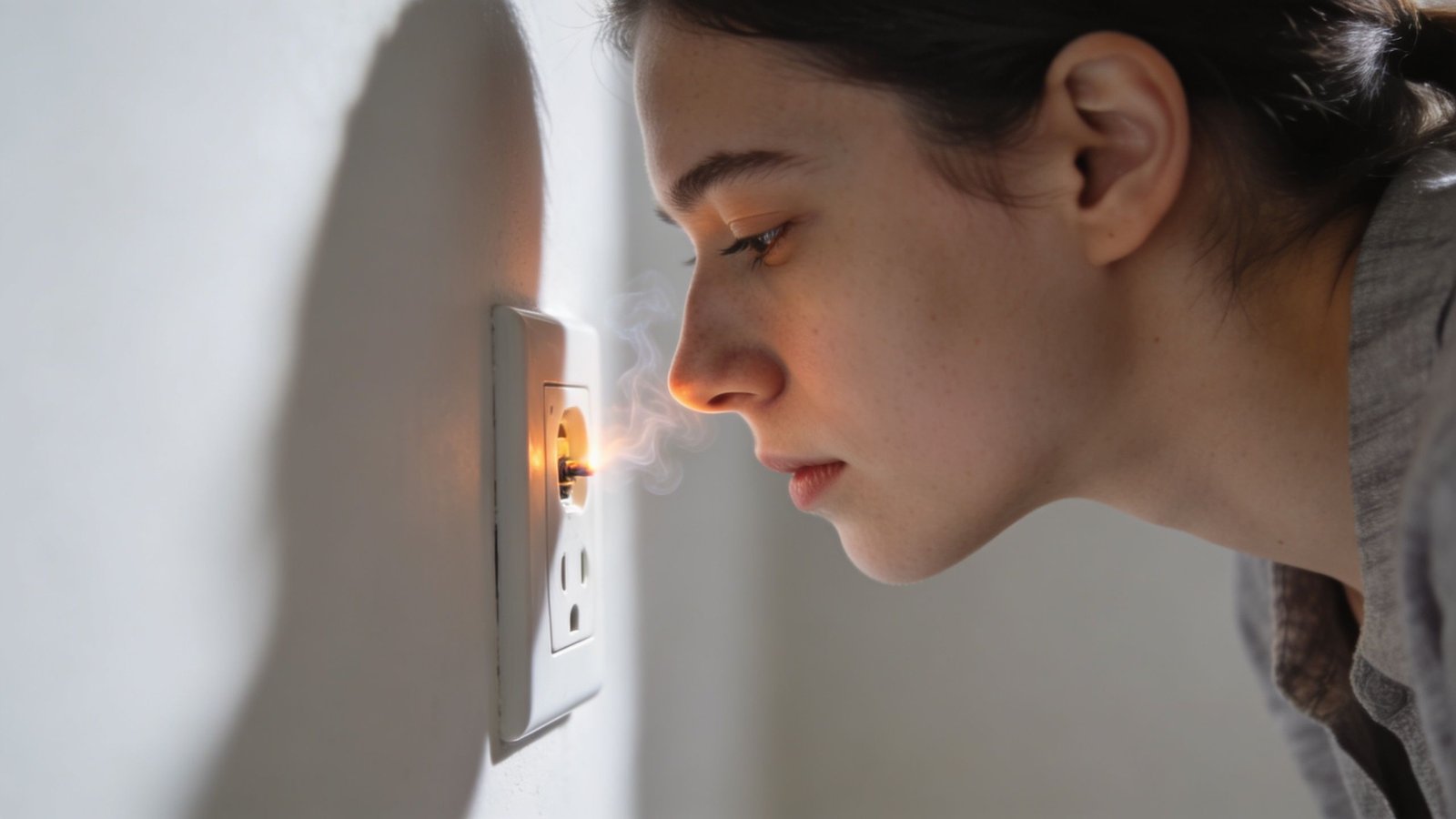
What different odors often suggest
| Smell type | What it may indicate | What to do |
|---|---|---|
| Fishy or chemical | Overheating electrical components | Shut down power if safe and investigate professionally |
| Burning plastic or rubber | Insulation breakdown or active overheating | Treat as urgent fire risk |
| Acrid, harsher burning odor | Insulation actively burning | Leave if needed and call 911 |
| Faint odor near vents | Could be electrical, could be HVAC-related | Rule out heater and air handler issues fast |
A practical problem in LA homes is odor confusion. People smell something hot and assume it's the HVAC system, especially when the heater or blower just kicked on. Sometimes that's true. If you're trying to separate an electrical issue from an air system issue, this guide on HVAC burning smell troubleshooting is a useful comparison point.
What not to assume
Don't assume no smoke means no danger.
Don't assume the smell is harmless because it fades after a breaker trips.
And don't assume the residue will be simple to clean if a small electrical burn happens. Even a localized event can create stubborn particulate contamination. If smoke or residue is present, understanding soot from smoke helps explain why these incidents can spread damage farther than the burn mark itself suggests.
If the odor doesn't make sense, trust the odor. Electrical failures often announce themselves by smell before they show visible flame.
The Hidden Culprits Common Causes of Electrical Fires
Most homeowners want a simple answer. Outlet, panel, or appliance. In real homes, the cause is often a chain of events.
A loose connection creates resistance. Resistance creates heat. Heat degrades insulation and nearby materials. Then arcing starts, and the event escalates.
Electrical arcing from loose connections can generate localized temperatures exceeding 1,000°F, and that heat can ignite surrounding materials while the first burning plastic smell signals PVC insulation breakdown, as described by B&M Electric's explanation of electrical burning smell mechanics.
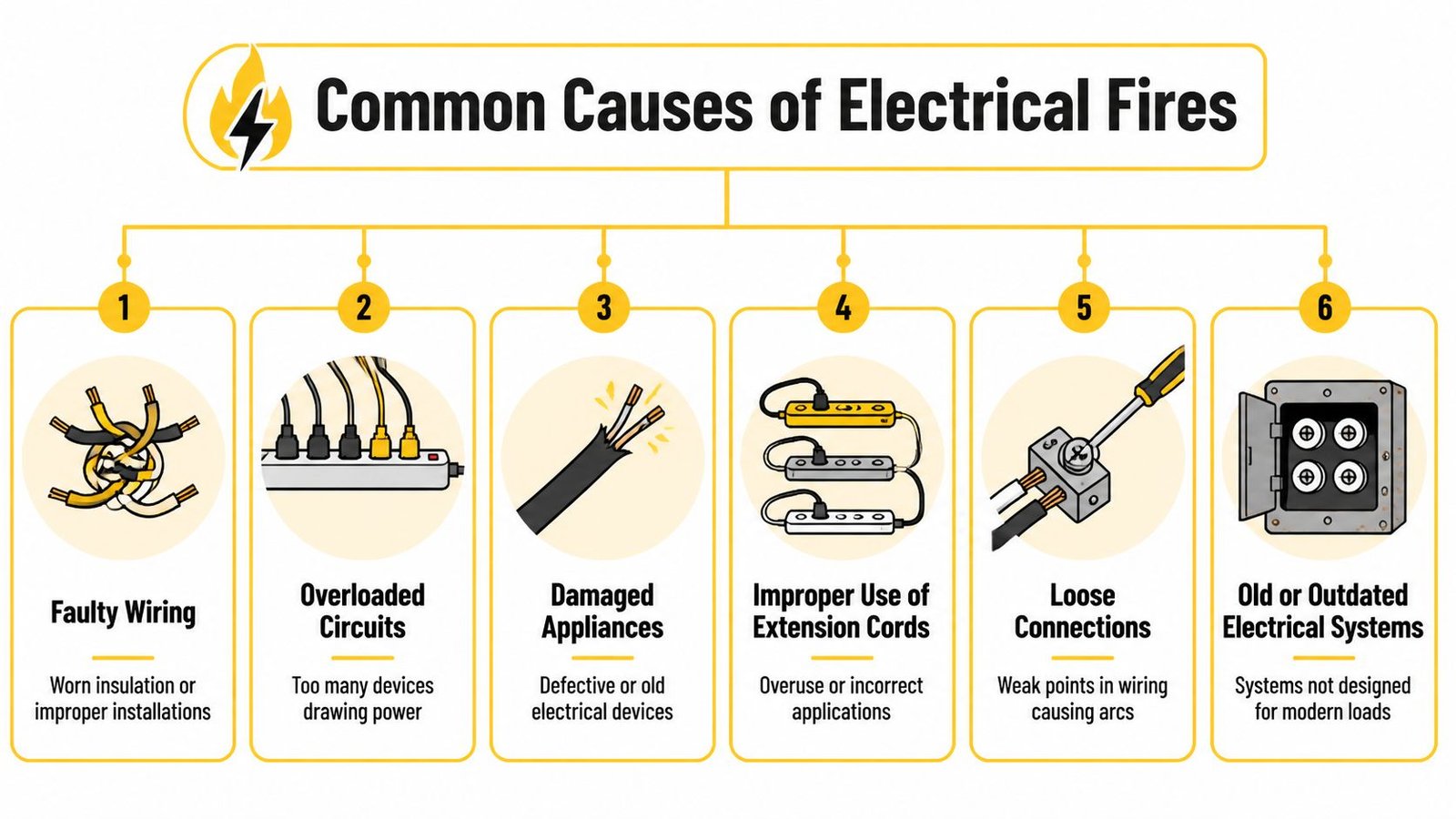
Faulty wiring behind walls
This is the one homeowners fear most, for good reason. You don't see it, and you usually don't get much warning beyond odor, intermittent flicker, or a breaker issue.
Older LA housing stock is especially vulnerable when original wiring now carries modern demand. Add one renovation done well and another done poorly over the years, and the weak point may be hidden at a splice, junction box, or device connection.
Failing outlets and switches
Outlets wear out. Switches loosen internally. Backstabbed connections can fail. Receptacles that hold plugs loosely, show discoloration, or smell hot after normal use deserve immediate attention.
A burning smell at a single outlet often means the problem is local. That doesn't make it small. A local failure can ignite surrounding drywall paper, dust, insulation, or framing.
Breakers and panel trouble
Breakers are safety devices, but they can also become points of failure. If a panel smells hot, shows scorching, or feels warm at one breaker position, stop there. That isn't homeowner troubleshooting territory.
I take panel odor seriously because heat at the panel can indicate a failing breaker, deteriorated connection, or bus-related issue. Any of those can move from smell to fire quickly.
Field observation: The hottest component isn't always the one you can see. Heat often travels to the first weak connection in the chain.
Appliances and cords
Sometimes the house wiring isn't the first problem. A damaged appliance, frayed cord, or overloaded power strip starts the event.
Common trouble spots include:
- Portable heaters plugged into older room circuits
- Window AC units running on circuits that already serve other loads
- Kitchen appliances stacked on the same branch circuit
- Extension cords used as permanent wiring
- Daisy-chained power strips behind desks or entertainment centers
The key trade-off is this. Homeowners often focus on the device they can unplug. Electricians and restoration professionals look for whether the device damaged the receptacle, branch circuit, or panel path behind it.
Emergency Protocol Your Step-by-Step Safety Actions
When you smell burning electrical odor, your job is not to diagnose the whole system. Your job is to keep people safe and prevent escalation.
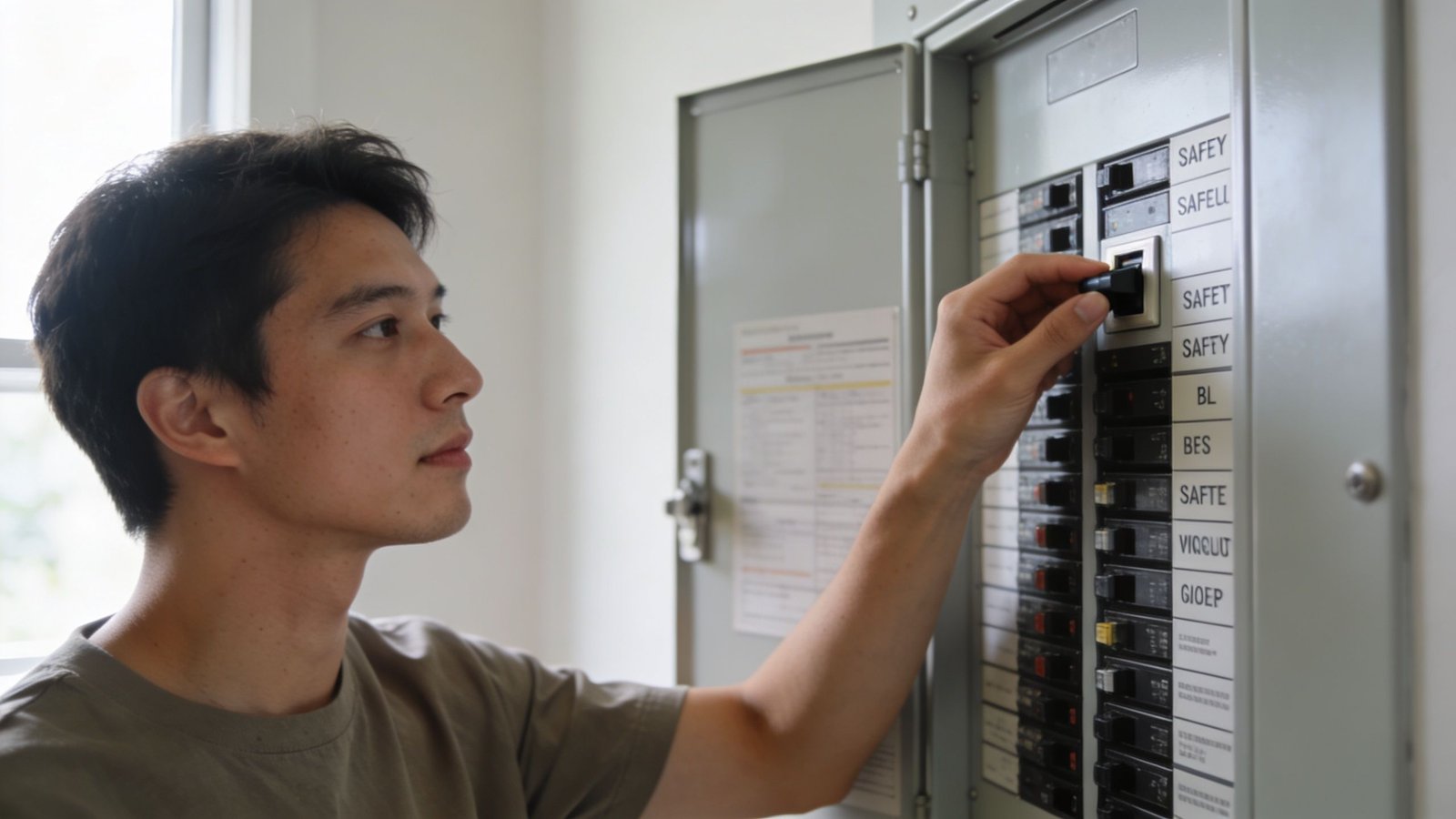
First actions inside the home
Stop using the suspected area.
Don't keep testing the outlet. Don't switch the light on and off to confirm the smell. Don't keep the appliance running to see if the odor comes back.Look from a safe distance.
Check for smoke, discoloration, sparking, or a device that appears warped or hot. If anything is visibly damaged, back away.Shut off the breaker if you can do it safely.
If you know which circuit serves the area, turn that breaker off. If the source is unclear and the odor is strong, shut off main power if you can do so without crossing a hazardous area.Do not use water.
Water and energized electrical equipment don't mix. If you see active flame, leave and call 911.Ventilate only if it doesn't delay evacuation.
Opening a door or window can help with fumes, but don't spend extra time inside a risky environment trying to air it out.
When to call 911 and when to call an electrician
Call 911 if:
- You see smoke or flames
- You hear sustained arcing or loud crackling
- The smell is intense and spreading
- The panel is hot or visibly scorched
- Anyone feels unwell from fumes
Call a licensed electrician after the immediate hazard is stabilized and there is no visible fire. If you're outside Los Angeles and trying to find a comparable emergency provider elsewhere, directories like this page for electricians in Barnet show the kind of local rapid-response resource homeowners should look for in any city.
A lot of homeowners also need guidance after the hazard is controlled. If fire crews responded, or if smoke entered the home, review this practical guide on what to do after a house fire before reoccupying affected areas.
This short walkthrough can also help you think clearly under stress:
What doesn't work
People lose time on the wrong moves. These are the common ones.
- Sniff-testing rooms repeatedly to find the source more precisely
- Resetting the breaker right away to see if the problem repeats
- Using the outlet “just one more time”
- Spraying air freshener and assuming the issue is gone when the smell is masked
- Waiting overnight because the smell faded
Leave first, troubleshoot second. Hidden electrical fire is one of the worst situations for DIY confidence.
Beyond the Firefight Professional Electrical Fire Restoration
The emergency doesn't always end when the breaker is off or the fire is out. This is the part many homeowners aren't prepared for.
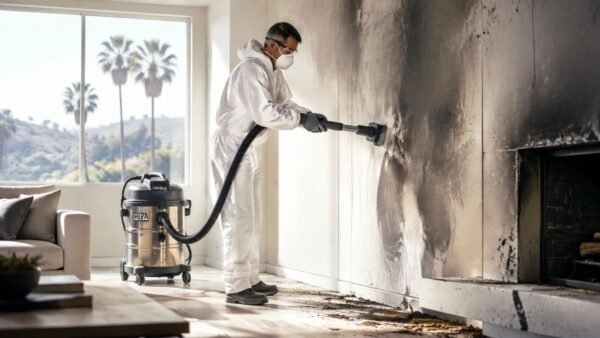
Electrical fire residue is different from ordinary smoke residue from a cooking mishap or a visible open-flame room fire. Burning electrical components can release toxic fumes that spread faster than the fire itself, and professional restoration must address lingering chemical odors and off-gassing from damaged PVC insulation, which may require specialized aldehyde gas remediation beyond standard smoke cleanup, according to this guidance on electrical burning smell and post-fire contamination.
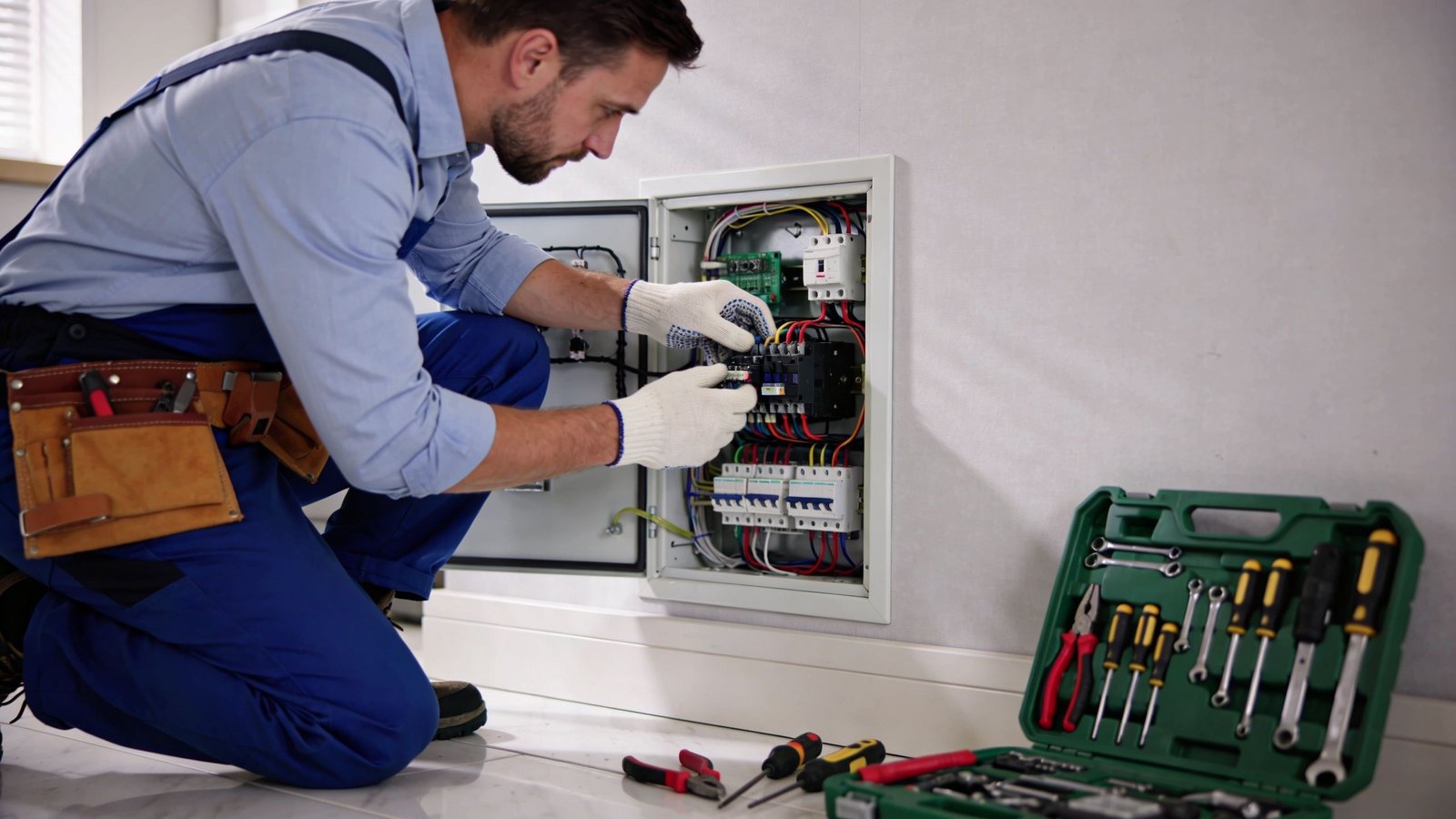
Why electrical fire cleanup is different
A small outlet fire can leave more than a char mark. It can contaminate:
- Drywall cavities where odor settles into porous material
- HVAC pathways if smoke or fumes were pulled into the system
- Cabinet interiors and textiles that absorb chemical odor
- Adjacent rooms where you never saw direct flame
Standard wipe-down work often fails here. So does generic odor masking. If technicians don't remove the source residue and address off-gassing correctly, the smell returns, especially when the house heats up during the day.
What a proper restoration process includes
A strong post-loss response usually includes a mix of electrical evaluation and restoration work. The exact scope depends on the loss, but these are the steps that matter most:
| Restoration step | Why it matters |
|---|---|
| Safety inspection | Confirms the area can be entered and cleaned safely |
| Source removal | Damaged outlets, wiring, insulation, or contents must be removed if compromised |
| Soot and residue cleaning | Electrical fire residue can cling tightly to hard and porous surfaces |
| Air scrubbing and HEPA filtration | Helps capture particulates left suspended or redistributed |
| Targeted deodorization | Necessary when chemical odor remains after cleaning |
| Documentation | Supports insurance review and scope approval |
A good restoration team also documents conditions before demolition, during cleanup, and after treatment. That matters because adjusters often need a clear record of what burned, what absorbed contamination, what was removed, and why odor work went beyond ordinary smoke cleanup.
Insurance and liability realities
Homeowners are often surprised by where claim friction starts. It usually isn't the obvious fire damage. It's the less visible work tied to odor, off-gassing, HVAC cleaning, and material removal in areas that don't look dramatically burned.
That's why the fire damage restoration process should include detailed photos, notes on odor migration, material inventory, and a clear distinction between direct burn damage and secondary contamination.
The burn mark is rarely the full loss. The odor path, residue spread, and safety documentation often decide whether the home is truly restored.
Preventing Future Hazards in Your Los Angeles Home
Prevention in Los Angeles starts with being honest about your home's age and load. Many homes across North Hollywood, Sherman Oaks, Glendale, West Hollywood, and nearby neighborhoods were built for a different electrical life than the one owners expect today.
High-wattage appliances such as space heaters drawing 12 to 15 amps and window AC units at 10 to 15 amps can easily push older 15 to 20 amp circuits too hard, causing heat buildup that gradually degrades insulation over time, as outlined in this electrical load and burning smell emergency guide.
Where LA homes run into trouble
The pattern is familiar:
- One old bedroom circuit now supports chargers, a TV, lighting, and a space heater
- A garage or addition gets heavy use but still shares older branch wiring
- Kitchen convenience means several countertop appliances run close together
- Summer cooling or winter portable heating adds long-duration load to circuits that were never upgraded
That doesn't guarantee a fire. It does raise the odds of chronic overheating and hidden damage.
Smart prevention steps
The most effective prevention is boring. That's usually a good sign.
- Book a licensed electrical inspection if the home is older, recently purchased, or showing minor warning signs like warm outlets, dimming, or repeated breaker trips.
- Stop using extension cords as permanent wiring. They're for temporary reach, not daily load management.
- Give high-draw appliances dedicated attention. If a heater or AC unit changes how lights behave, that circuit needs review.
- Read your insurance policy before a loss. Know how it handles electrical fire damage, smoke contamination, and odor-related cleanup.
For property managers and landlords, preventive inspections are also a liability decision. If a tenant reports a recurring hot smell, breaker issue, or outlet discoloration, treat that as a maintenance priority, not a nuisance call.
What works and what doesn't
What works is early inspection, load awareness, and upgrades where the system is undersized.
What doesn't work is waiting for a stronger smell, a hotter outlet, or the first visible smoke.
Frequently Asked Questions About Electrical Odors
Q: Can a new appliance cause a burning smell without meaning fire?
Yes, sometimes a new appliance gives off a temporary manufacturing burn-off smell during early use. But if the odor is strong, persists, or seems to come from the outlet, cord, or wall rather than the appliance body, stop using it and have it checked. Don't guess when the smell is electrical in character.
Q: What if my breaker keeps tripping but I don't smell anything?
That's still a warning sign. A breaker that trips repeatedly is telling you the circuit is overloaded, faulted, or both. The absence of odor doesn't mean the circuit is healthy. It means the failure may not have progressed to heat you can smell yet.
Q: If the smell came from one outlet, can I just avoid that outlet and use the rest of the room?
No. One failed outlet can point to a problem in the branch circuit, the device itself, or a connection upstream or downstream. Isolating yourself to the "good" outlet in the same room isn't a safe workaround.
Q: Are the odors from a small electrical burn harmful?
They can be. Burning electrical components and insulation can release irritating and potentially toxic fumes. If the smell is strong, ventilate if safe, get people out of the area, and don't reoccupy casually until the source is repaired and contamination is addressed.
Q: Who is responsible in a rental property in Los Angeles?
In most situations, landlords are responsible for maintaining safe electrical systems, while tenants should report burning smells, hot outlets, and breaker problems immediately and stop using affected fixtures or appliances. The practical rule is simple. Report in writing, document what you noticed, and don't continue using the suspected source.
Q: How do I remove the smell after a small electrical fire?
Air fresheners and opening windows usually aren't enough. Electrical odor can settle into porous materials and circulate through the home. If smoke or fumes spread beyond the immediate source, review proven methods for how to remove fire smoke smell from house and have the property assessed before assuming normal cleaning solved it.
If you're dealing with a burning electrical smell, smoke residue, or post-fire odor that won't clear, Onsite Pro Restoration serves Los Angeles with IICRC-certified emergency response, fire and smoke cleanup, deodorization, and insurance-ready documentation. If the situation feels urgent, call now and get the property assessed before hidden damage gets worse.