
Of all the plumbing components in your home, the main shut off valve is the one you absolutely need to know. Think of it as the master switch for your entire water supply. Knowing where it is and how to use it is your first—and best—defense against a water damage disaster. It can literally save you thousands of dollars.
When a pipe bursts or a supply line fails, the ability to stop water flow in seconds is the difference between a minor cleanup and a catastrophic flood requiring extensive repairs. This is why locating and understanding your main shut off valve is a critical skill for any Los Angeles homeowner.
Facing a water emergency right now? Don't wait. Call Onsite Pro at (818) 336-1800 immediately for 24/7 emergency response.
Your First Defense Against Water Damage Disasters
Picture this: a pipe bursts in your Sherman Oaks home. Water is pouring into your living room, and panic is setting in. One single action can stop that flood in its tracks: turning off the main shut off valve.
This one device is the difference between a small cleanup and a full-blown catastrophe involving structural repairs, mold remediation, and a nightmare of insurance claims.
Here in Los Angeles, our aging infrastructure and the ever-present risk of seismic shifts put constant stress on plumbing. For homeowners from Glendale to Beverly Hills, knowing your shut-off valve isn't just a good idea—it's essential emergency prep.
Key Takeaway: A major leak can dump gallons of water into your home every minute. Shutting off the main supply in under 60 seconds is the single most effective way to minimize the damage while you wait for professional help to arrive.
Of course, stopping the water is only the first step. You also need to understand the financial side of a water loss. Knowing things like whether your insurance covers the cost of repairing damage like sheetrock after a leaking roof helps you prepare for the recovery process.
This guide will give you the practical knowledge to find, operate, and maintain your home’s most important valve. We'll cover everything from locating it in different types of LA properties to what to do if it’s stuck when you need it most. For more proactive tips, check out our guide on how to prevent pipes from bursting.
How to Find Your Main Shut Off Valve in an LA Property
When you hear the sound of gushing water inside your house, panic is the first reaction. The second should be a beeline for your main shut off valve. Knowing where it is can be the difference between a small mess and a full-blown catastrophe.
In Los Angeles, our homes are a mix of ages and styles, so there’s no single answer for where this valve lives. But with a little know-how, you can track it down before you ever need it. First, it helps to have a basic picture of understanding your water supply lines and how water gets from the street to your faucets.
Generally, the main line enters your home near the front of the property, facing the street where the city’s water main is located.
Start Your Search Outside
For most single-family homes in Southern California, your search begins outdoors. Our mild climate means pipes aren't always buried deep or hidden away, making exterior valves pretty common.
- Check the Exterior Wall: Scan the front wall of your house. You're looking for a pipe, usually copper, coming up from the ground and entering the siding. The valve is almost always attached right there.
- Find the Hose Bib: Locate the outdoor faucet (hose bib) at the front of your property. Plumbers often install the main shut-off valve right next to it for convenience.
- Look in the Meter Box: At the edge of your property, usually near the curb, you’ll find a concrete box set into the ground with a lid stamped "Water Meter." Pop that lid off. Sometimes the homeowner's shut-off is right next to the city's meter. Just be careful—those lids are heavy, and you might find a few spiders or critters sharing the space.
Sometimes, the clues are more subtle. For example, knowing how to detect water leaks in walls can actually point you toward the water line’s entry point, which is exactly where the shut-off valve should be.
Check Common Indoor Locations
If you've scoured the outside with no luck, it's time to head inside. Where the valve is located indoors often depends on your home’s foundation and when it was built.
For Homes with Basements or Crawl Spaces:
Got an older home, like a classic Burbank bungalow? Head down to the basement or pop open the crawl space. The valve is almost always on the interior side of the front foundation wall. Just trace the largest water pipe back from where it enters the house.
For Homes on a Slab Foundation:
For the many mid-century and modern LA homes built on a concrete slab, the garage is your best bet. Look for a pipe coming out of the wall, often near the water heater. The valve will have a handle—usually red, blue, or yellow.
Pro Tip for Condo Owners: If you live in a multi-unit building, like a modern West Hollywood condo complex, things can be different. You might not have a dedicated main valve inside your unit. Often, there’s one shut-off for the entire building, and only maintenance has access. But always check your utility closets and laundry rooms first; some newer buildings are designed with individual unit shut-offs.
Visual Cues to Look For
No matter where you find it, the valve itself will have a distinct look. You’re typically searching for one of two main types:
- A Round "Wheel" Handle (Gate Valve): This looks like a small, round spigot handle. You'll need to turn it multiple times clockwise to shut the water off completely.
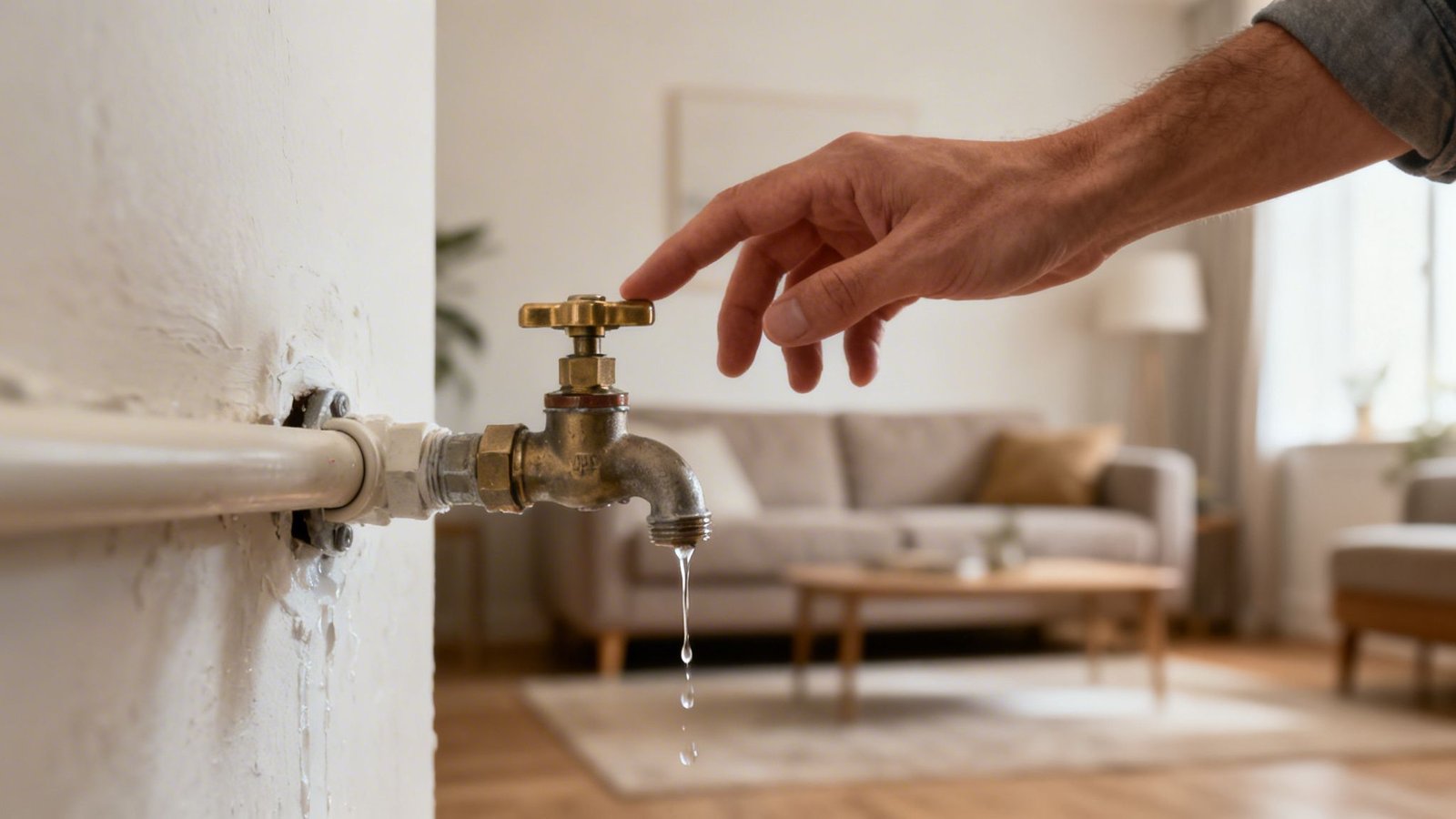
- A Lever Handle (Ball Valve): This is a straight, single lever. It’s the modern standard because it's quick and easy—a simple quarter-turn is all it takes to go from on to off.
Once you’ve located your main shut off valve, don’t keep it a secret. Make sure everyone in your household knows where it is and how to operate it. We recommend putting a bright, waterproof tag on it. That little tag could save you precious minutes—and thousands of dollars in water damage—down the road.
Operating Your Main Shut Off Valve Correctly
Fantastic, you've found your main water shut-off valve. That’s a huge win. But in a real crisis, knowing how to operate it safely is what will actually save your property from serious damage.
Using the wrong technique can snap an old, corroded handle right off or fail to stop the water completely. The right way to do it depends entirely on the type of valve your home has.
This chart shows the top three places to look for the valve in a typical Los Angeles home.
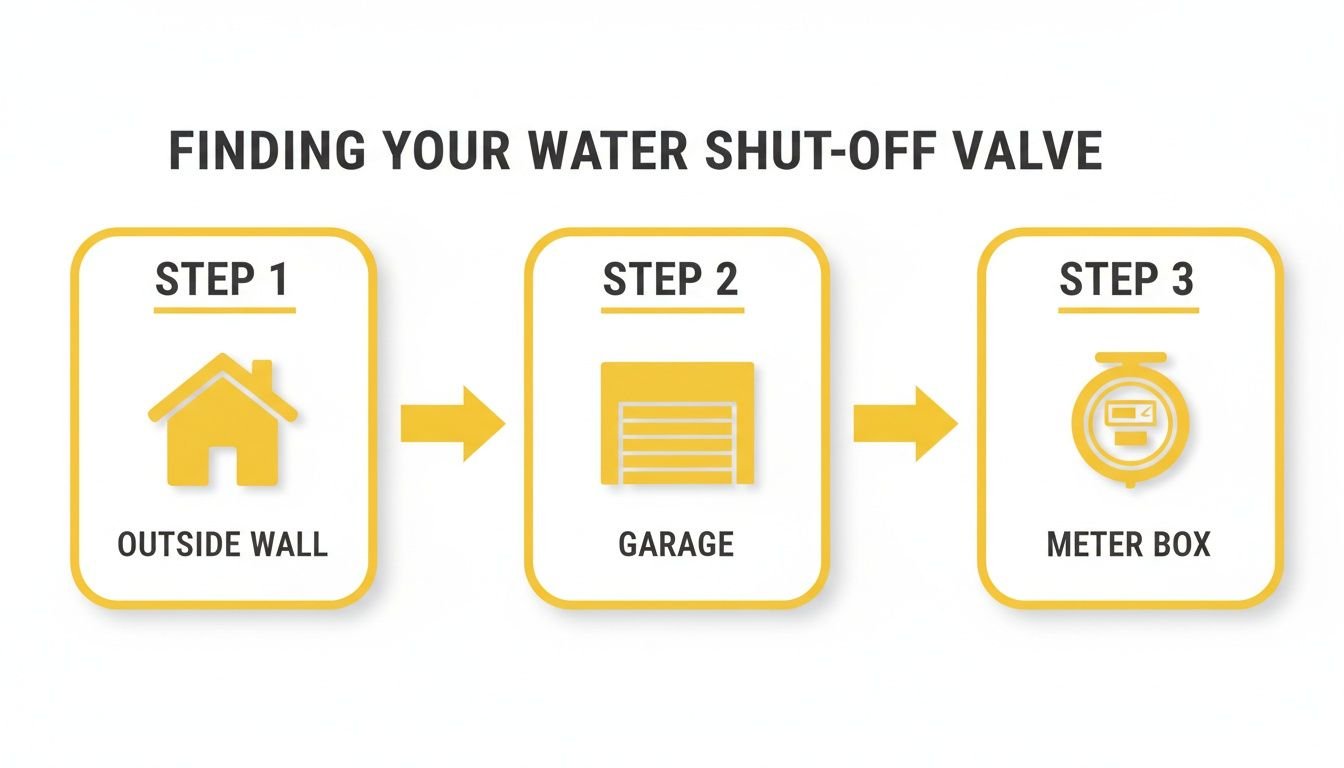
Start your search at an exterior wall, then check the garage, and finally, look inside the water meter box at the curb. This covers the most likely spots.
Gate Valves: The Round Wheel Handle
If your valve has a round, wheel-like handle—just like an outdoor spigot—you’ve got a gate valve. We see these all the time in older homes across the San Fernando Valley.
Operating it is simple: “righty-tighty, lefty-loosey.”
- To Shut It Off: Turn the handle clockwise (to the right). You’ll need to turn it several full rotations until it comes to a gentle stop. Don't ever force it past this point; you can easily break the internal gate mechanism.
- To Turn It On: Turn the handle counter-clockwise (to the left) all the way until it stops.
The big problem with gate valves is their tendency to seize up or break from lack of use and mineral buildup, a frequent issue with LA’s notoriously hard water.
Ball Valves: The Lever Handle
Newer properties or homes with updated plumbing usually have a ball valve. It’s easily identified by its single, straight lever handle and is far more reliable in an emergency.
- To Shut It Off: The lever will be parallel to the pipe when the water is on. To stop the flow, give the handle a firm quarter-turn (90 degrees) so it becomes perpendicular to the pipe.
- To Turn It On: Simply turn the lever back until it’s parallel with the pipe again.
The ball valve’s design is a game-changer for home safety. When that lever is perpendicular to the pipe, you have instant visual confirmation that the water is off—no guesswork during a stressful leak.
The main shut-off valve became standard in homes around the mid-1900s. Early systems used those brass gate valves, but by the 1950s, the much more dependable quarter-turn ball valves started taking over. This simple innovation empowers homeowners to stop water flow instantly—a critical function in LA County, where water damage is a constant threat.
If your valve handle won’t budge, don’t force it. A valve that's been sitting untouched for years can get stiff or seize completely. Trying to crank it can cause a bigger problem. That's a job for a professional. If you’re dealing with a seized valve during a plumbing failure, you’ll also need to find a pro for emergency burst pipe repair to fix the source of the leak itself.
Essential Maintenance for Your Main Shut Off Valve
A main shut-off valve that hasn't been touched in a decade is a ticking time bomb. Shifting from reactive panic to proactive prevention is one of the smartest things any Los Angeles homeowner can do. A simple, quarterly check-up is all it takes to make sure your valve works when you need it most.
Think of it this way: you wouldn't let your car sit for years without starting it and expect the engine to turn over. Your valve is no different. Over time, corrosion and mineral buildup—especially with the hard water common in Los Angeles—can cause the internal parts to seize up completely.
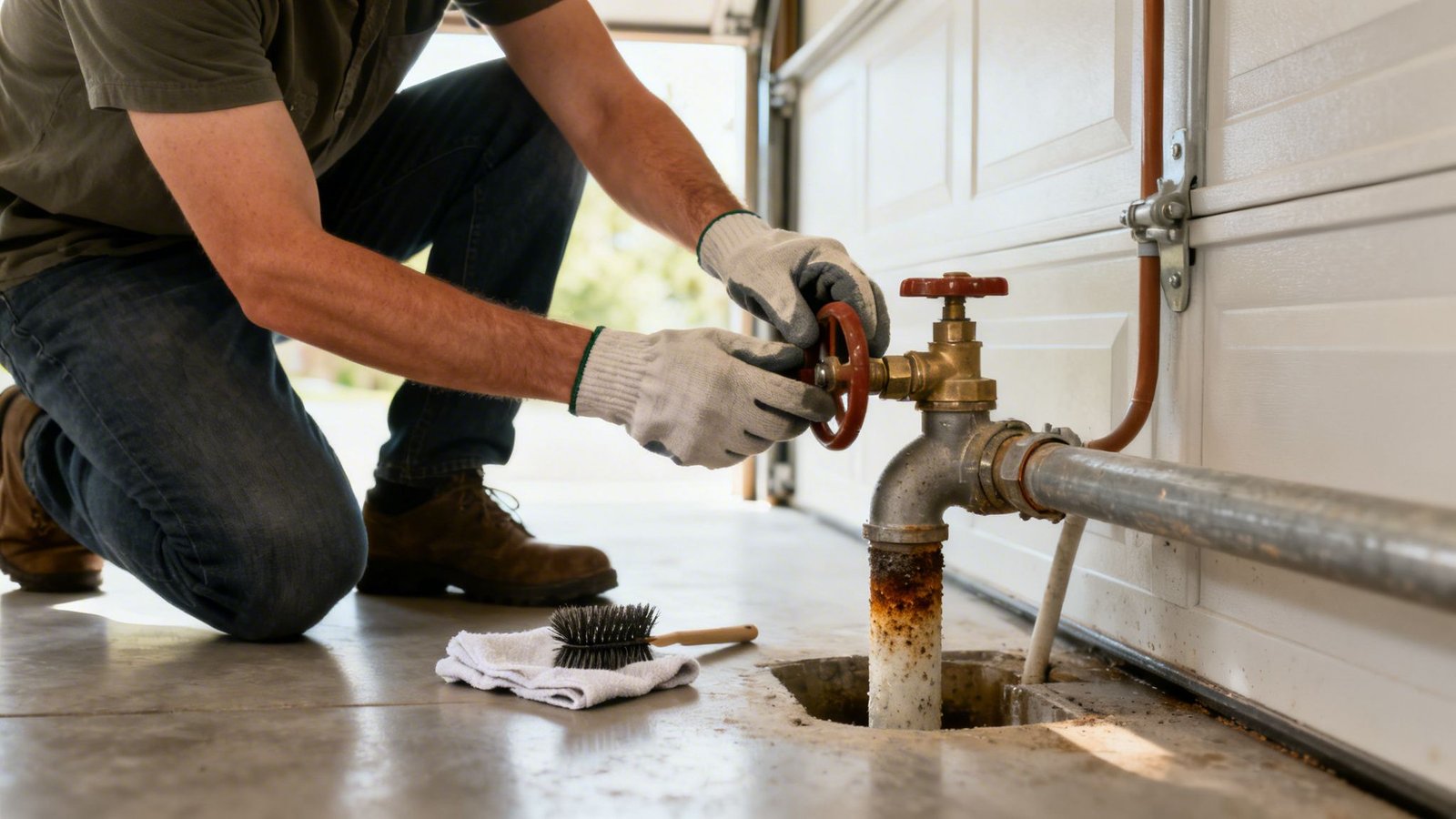
This simple test can be the difference between a five-second fix and a full-scale water damage disaster. When water is shut down fast, you prevent thousands in damages and avoid a complex, messy repair.
Your Quarterly Valve Health Check
Go ahead and set a reminder on your calendar every three months. This check takes less than five minutes and buys you invaluable peace of mind.
- Confirm the Location: First, make sure you know exactly where your main shut off valve is. If it’s been a while, just refer back to the location guide in this article.
- Clear the Area: Is there stuff piled up in front of it? Move it. In an emergency, you don’t want to be wrestling with storage boxes to get to the valve.
- Give It a Visual Inspection: Look for obvious signs of trouble. Check for active drips, chalky white mineral buildup (efflorescence), or any green or blueish corrosion on the valve body and pipe fittings.
If you spot any of those visual red flags, your next move is to call a licensed plumber. Don’t even try to turn a valve that already looks compromised.
The Gentle Turn Test
This is the most important part: you need to "exercise" the valve. This simple motion keeps the internal mechanism free and stops it from seizing.
Crucial Tip: Always be gentle. The goal here is just to confirm it moves, not to test its strength. If you feel any serious resistance, stop immediately and call a professional. Forcing a stuck valve is a classic recipe for a broken pipe.
For Gate Valves (Round Handle): Slowly turn the handle clockwise (to the right) for two or three full rotations. Then, turn it back counter-clockwise (to the left) until it's back in its original open position.
For Ball Valves (Lever Handle): Turn the lever a single quarter-turn (90 degrees) so it’s in the "off" position (perpendicular to the pipe). Then, just turn it back to the "on" position (parallel to the pipe).
Performing this quick test every few months breaks up tiny amounts of mineral scale before they can fuse the valve shut. It’s a small action that ensures your main shut off valve is ready for action, potentially saving you from needing extensive and costly water damage services. You can learn more about what that process involves in our article explaining what water mitigation is.
What to Do When Your Shut Off Valve Fails
You finally locate the main shut-off valve during a water emergency, but then comes the real crisis: you turn the handle and it won’t budge. Or worse, it snaps right off in your hand. This happens more often than you'd think, especially in older Los Angeles homes where valves can sit untouched for decades.
When your first line of defense fails, what you do next is absolutely critical.
Whatever you do, don't try to force a seized main shut off valve with a wrench. Applying that much torque is a fast way to break the valve stem or even rupture the pipe itself. That’s how a manageable leak becomes an uncontrollable gusher flooding your home.
The Immediate Two-Call Strategy
If you can't stop the water yourself, you need to make two calls right away, in this exact order:
- A Licensed Plumber: Their first priority is to shut the water off at the street level, which almost always requires a special curb key. Once the water is off, they can properly diagnose why the valve failed and handle the repair or replacement needed to get your water supply back under your control.
- An Emergency Restoration Company: While the plumber is fixing the source of the problem, a restoration crew attacks the symptoms—the spreading water damage. We can begin water extraction and start setting up structural drying equipment at the same time the plumber is working.
This parallel approach is essential. If you wait for the plumber to finish before calling for cleanup, that extra time allows water to soak deeper into your drywall, subfloors, and framing, which dramatically increases the damage and the cost of repairs.
Pro Tip: A failed valve instantly changes the game. Your goal shifts from stopping the water yourself to getting professionals on-site who can stop it for you while immediately starting the mitigation process.
Why Speed Matters When the Valve Fails
Every minute of delay massively amplifies the damage. A stuck or broken main shut off valve creates a critical delay for you as a homeowner. Immediate professional help is your only move. Getting a team on-site quickly can reduce the amount of water that needs to be extracted and minimize the overall destruction.
Waiting to call for professional help means more water to remove, a much higher risk of secondary damage like mold growth, and a longer, more invasive restoration project. If you're in this spot, don't wait. Call immediately for emergency water cleanup to protect your property. The faster a team arrives, the more of your home we can save.
FAQ: Your Los Angeles Main Water Shut Off Valve
We get these questions all the time from informed homeowners across LA. Here are clear answers to the most common queries about the main shut off valve.
Q: Does shutting off the main valve affect my water heater?
A: Yes, and this is a critical safety point. After shutting off the main water supply, you must also turn off the power source to a tank-style water heater. For an electric heater, flip the corresponding breaker in your electrical panel. For a gas heater, turn the gas valve to "OFF" and set the thermostat to "PILOT." Without incoming cold water, the heating elements can burn out or the tank can dangerously overheat.
Q: Do I have my own main shut off valve in a condo?
A: It depends. Many older multi-unit buildings have a single main valve for the entire building, accessible only by maintenance. However, newer condos in areas like Downtown LA or Santa Monica often have individual shut-off valves for each unit, usually located in a utility closet or near the water heater. Check with your HOA or property manager before an emergency to confirm your setup.
Q: My main shut off valve is leaking slightly. Is this an emergency?
A: A small drip is not a full-blown emergency, but it is a serious warning sign that the valve is failing and requires immediate attention. It's often caused by a worn-out packing nut. While a gentle tightening might stop a minor drip, it's best to call a licensed plumber to assess and repair it professionally. Ignoring it is risking a complete failure down the line.
Q: Can I replace my own main shut off valve?
A: No, this is a job that should always be left to a licensed professional. Replacing the main valve requires shutting off water at the street (which needs a special "curb key"), cutting and soldering main supply lines, and complying with local building codes. A DIY mistake here could cause a massive flood and serious code violations.
If your main shut off valve has failed or you're already dealing with a water emergency, don't wait. The Onsite Pro Restoration team is on standby 24/7 to provide a free assessment and get the mitigation process started right away. Call us now at (818) 336-1800 or schedule your free inspection online.