Emergency Restoration Los Angeles: A Local Homeowner Guide
You've got water under the cabinets, soot in the vents, a sewage smell in the hallway, or smoke that won't leave the drywall. In emergency restoration Los Angeles, the right

You've got water under the cabinets, soot in the vents, a sewage smell in the hallway, or smoke that won't leave the drywall. In emergency restoration Los Angeles, the right

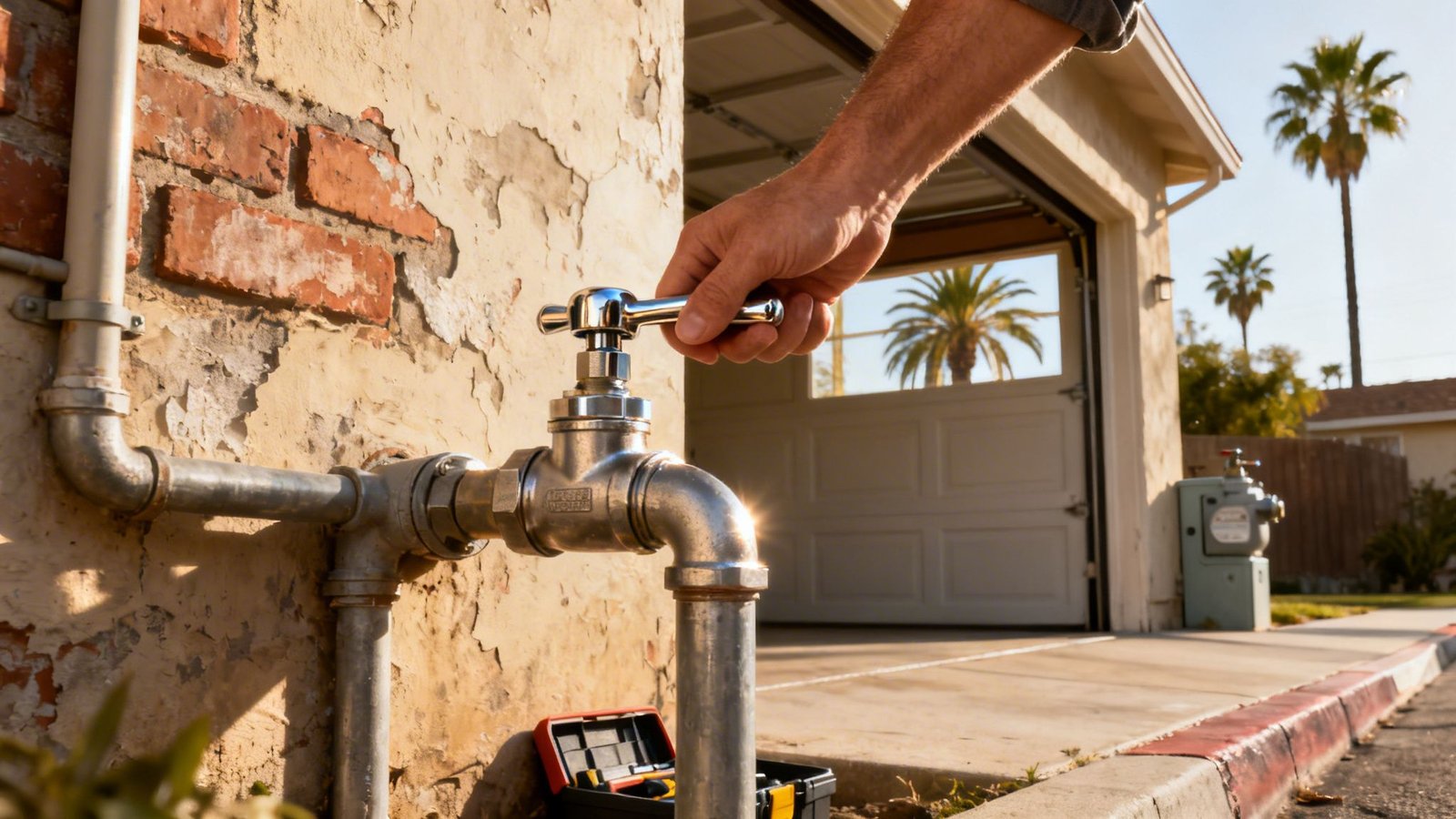
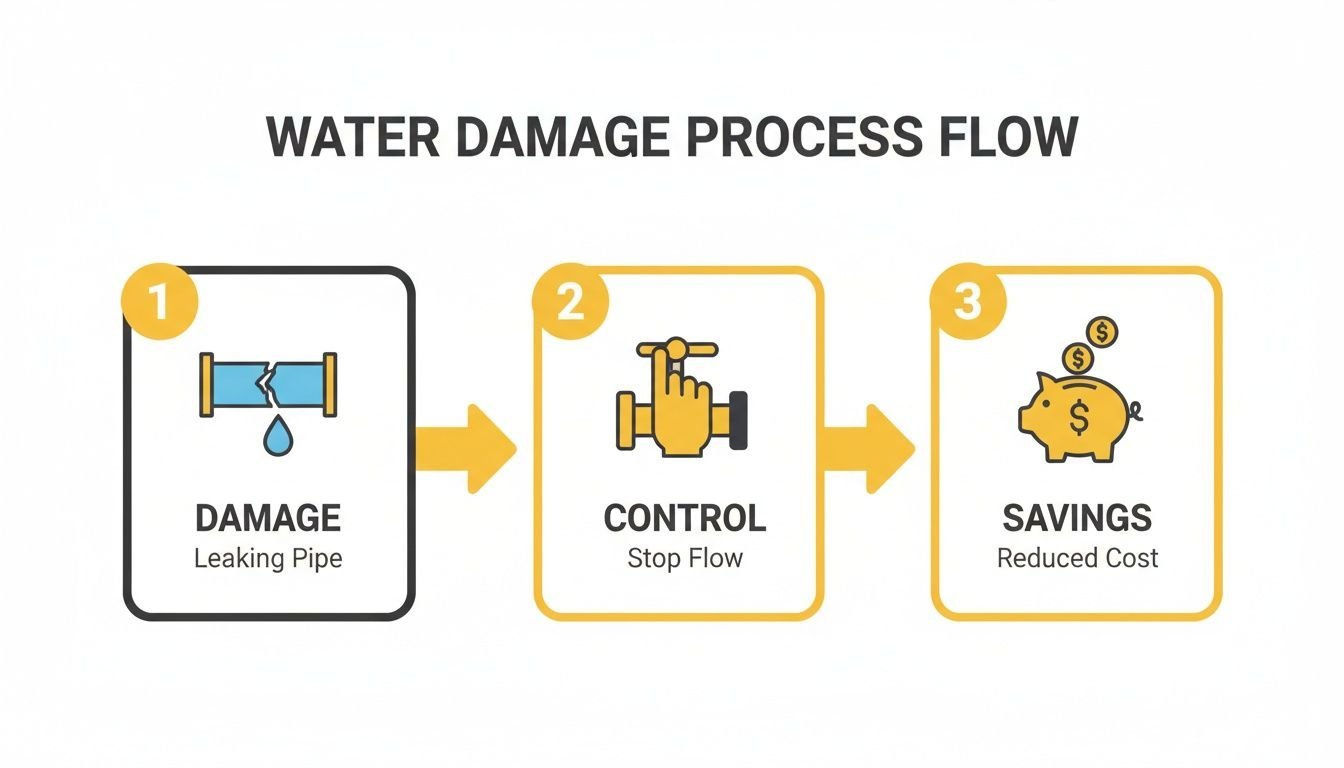
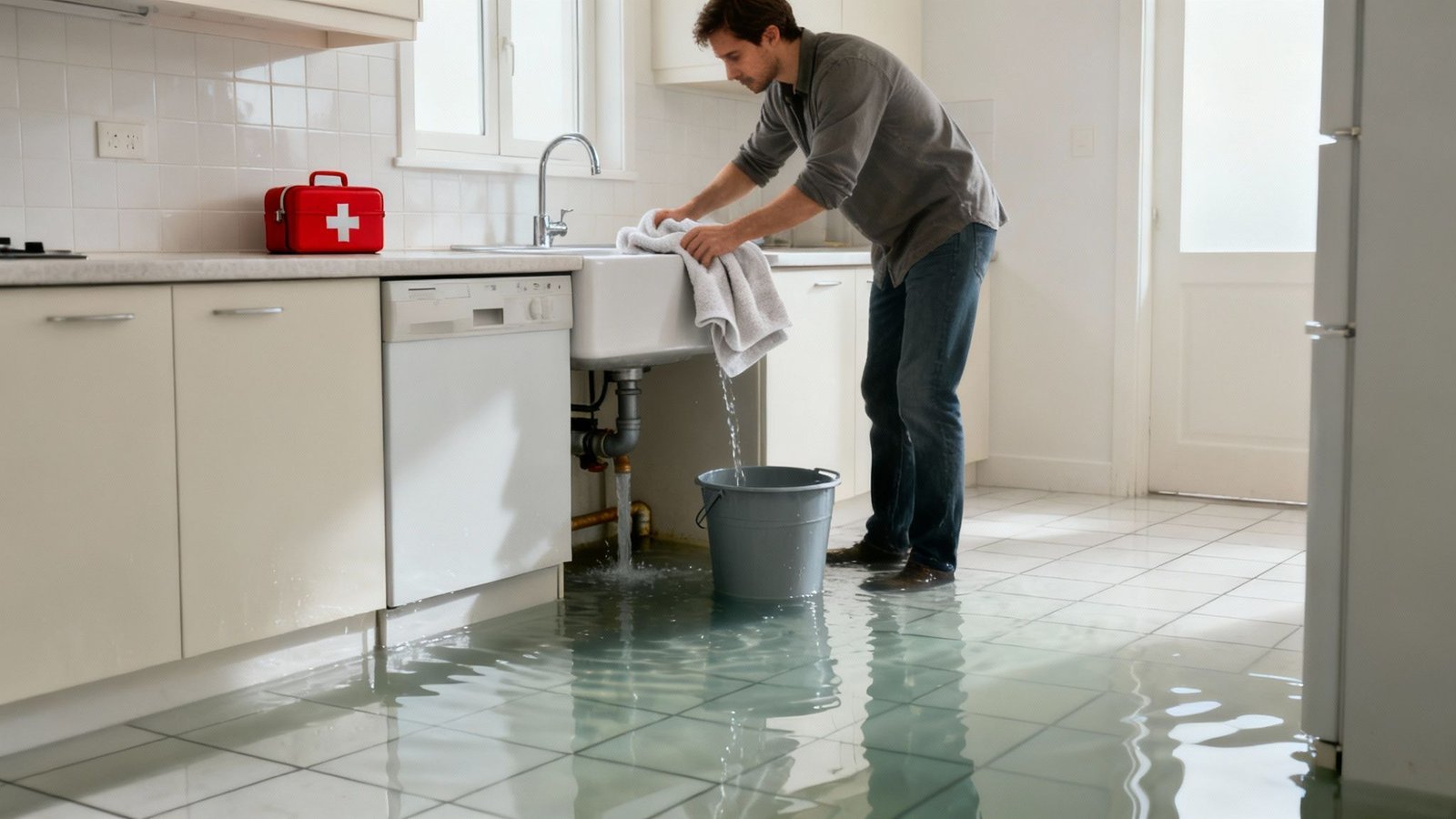
Knowing where your main water shut-off valve is — and that it actually works — is the single most important thing you can do to limit water damage in a plumbing emergency. In LA homes, the valve is often behind a panel, near the curb meter, or under a utility sink. This guide covers where to look, how to test it before an emergency, and the critical steps after you shut off the water. 24/7 emergency response: (818) 336-1800.

A spreading ceiling stain in your LA home shows where the water stopped — not where the leak is. Water travels horizontally through framing before dropping, so the entry point is almost always elsewhere. This guide covers how to locate a roof leak source, temporary tarping methods, the difference between a roofing repair and a water damage restoration job, and how to document ceiling damage for your insurance claim. Call (818) 336-1800.

Knowing where your main water shutoff valve is before a pipe bursts can save tens of thousands in water damage. In most Los Angeles homes it’s near the street at the property line, but the exact location varies by home age and build type. This guide covers every common shutoff location in LA homes, how to operate each valve type, what to do immediately after shutting off water, and when to call a 24/7 restoration team. Emergency response: (818) 336-1800.

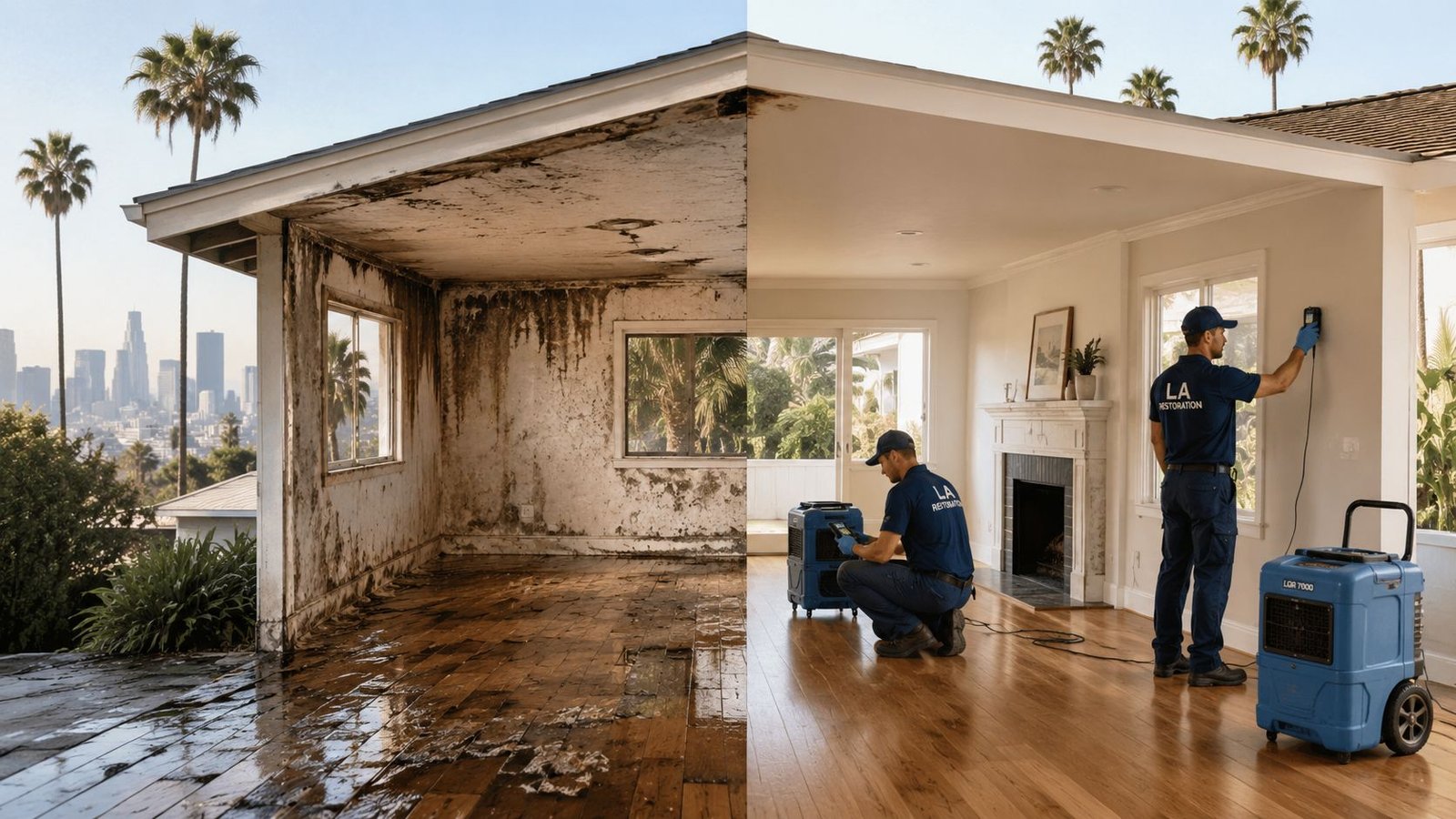
Water mitigation is the emergency phase of water damage response — stopping the damage from spreading by extracting water, removing saturated materials, and beginning structural drying before mold sets in. It happens before restoration and determines how much of your home can be saved. This LA guide covers what water mitigation involves, the 24-48 hour critical window, how it differs from restoration, and why IICRC-certified mitigation teams are required by most insurers. 24/7 response: (818) 336-1800.

A restoration professional is the first call after property damage — not a general contractor. Restoration pros are IICRC-certified specialists trained in water extraction, structural drying, mold containment, smoke damage, and biohazard cleanup. General contractors rebuild after the structure is dry; restoration pros stop the damage, document it for insurance, and restore to pre-loss condition. This LA guide covers what a restoration professional does, how to vet credentials, and why response time is critical. Call (818) 336-1800.