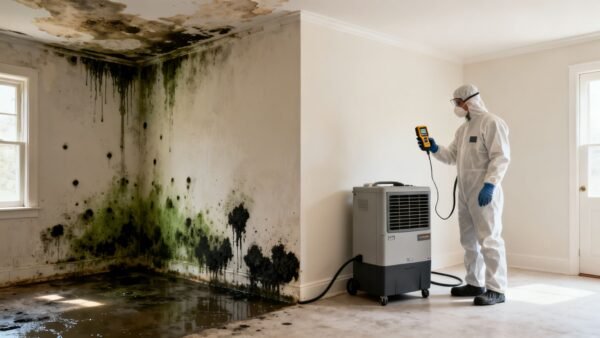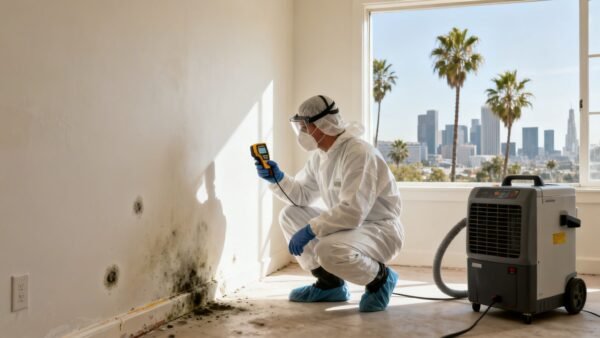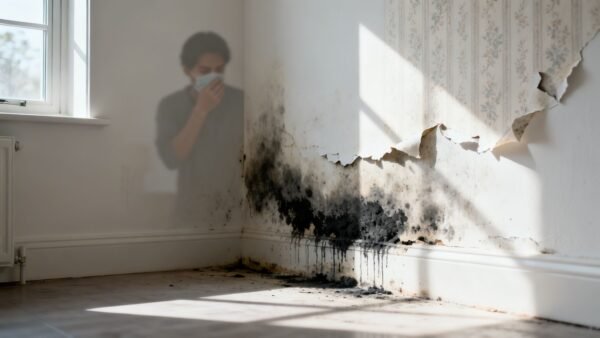

In Los Angeles, proper LA mold testing pulls back the curtain on spores you can’t see—and shields your loved ones from potential health risks. Catching mold early in our famously damp climate often saves homeowners thousands on repair bills.
Get a Free Mold Inspection or call (818) 336-1800 Now to book your testing.
Why LA Mold Testing Matters

Between coastal fog rolling in and unexpected leaks behind the sink, moisture is an unwelcome roommate in many LA houses. That dampness doesn’t just sit on the surface—it seeps under floors and hides inside wall cavities, fueling unseen mold growth. According to the EPA, mold thrives in damp, humid conditions and can pose respiratory and structural risks.
- Reveals Hidden Spore Levels before colonies can spread
- Boosts Indoor Air Quality for allergy and asthma relief
- Protects Property Value by preventing costly structural damage
Technicians combine air sampling and surface swabs to track down trouble spots. Think of it like a detective chasing clues in the air and on your walls.
In Sherman Oaks, a flat-roof leak sent mold spores deep into drywall—air samples caught it before the damage spread. In Santa Monica, coastal moisture carried spores indoors until a swab test brought them to light.
Case Studies Highlight Success
Thanks to timely testing, both homes skipped a full-scale rebuild. A quick remediation kept costs low and restored safety fast.
The global market for mold testing hit USD 5.2 billion in 2024, driven by tighter regulations and growing awareness. Learn more on Verified Market Reports.
Here in California, routine checks align with evolving indoor air quality standards. Professional labs can pinpoint species you’d never spot with a flashlight.
- Aspergillus: Common in dust and soil
- Cladosporium: Thrives on wood and fabrics
- Stachybotrys: The notorious black mold that loves high-moisture zones
Knowing the species helps mold specialists design a targeted remediation plan.
What This Guide Covers
Here’s a quick roadmap of what’s ahead:
- Timing Your Test: Spotting the warning signs
- Testing Process: From sampling to lab analysis
- Cost Breakdown: Basic, mid-tier, and comprehensive service options
- Choosing a Pro: Finding a certified provider and decoding your results
You might be interested in our guide on mold inspection services near me for more detailed preparation tips.
Ready to protect your home? We’ll walk through the key triggers that signal it’s time to book a test.
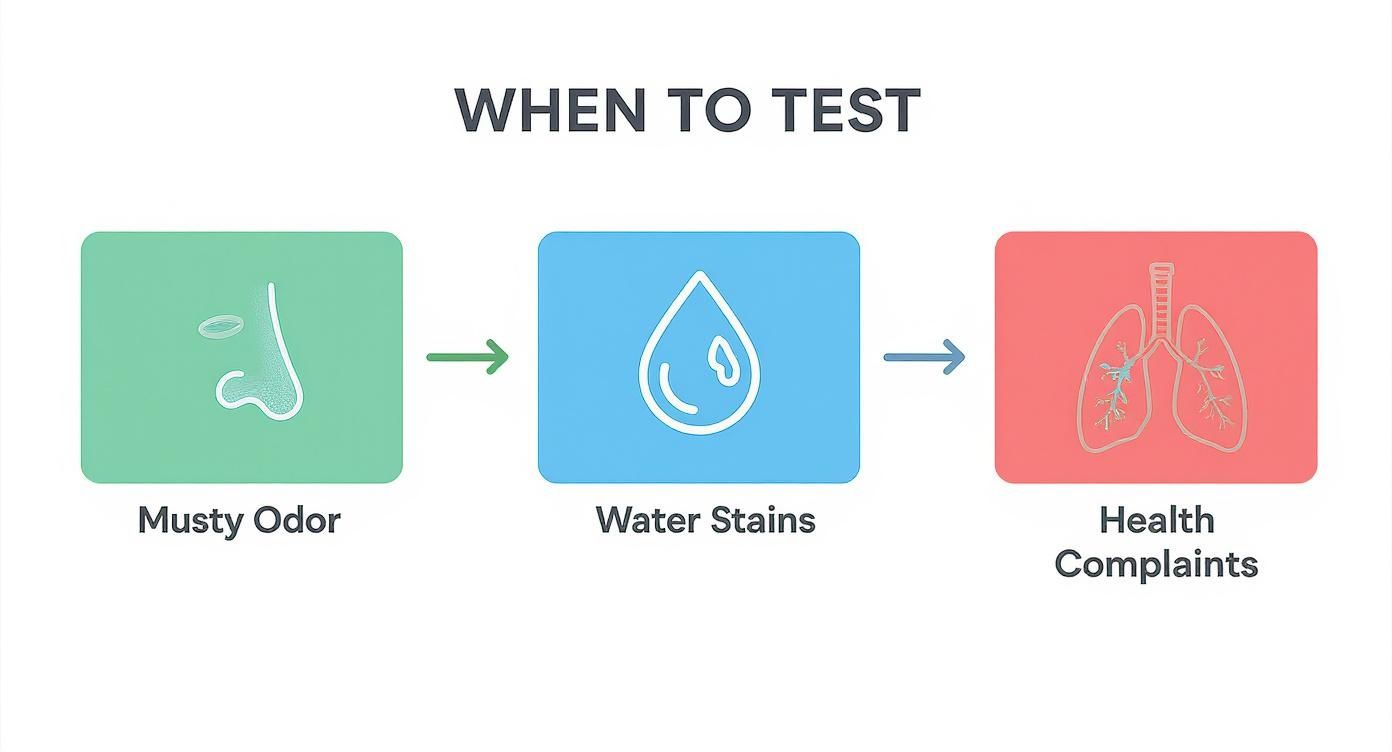
- Musty odors in closets or crawl spaces
- Discolored water stains behind walls
- Unexplained allergy or respiratory symptoms
Spotting these clues early means faster intervention, lower remediation costs, and fewer ugly surprises.
Keep an eye on your home daily—a quick sniff or scan might be all it takes to catch hidden mold before it becomes a real headache.
Understanding When To Test For Mold In LA
Mold in Los Angeles doesn’t always announce itself. Sometimes it lurks behind drywall or thrives in a damp crawl space, only revealing its presence through subtle hints.
Think of it like underground weeds—roots spread where you can’t see them. A quick home check can save you from a bigger headache later.
- Musty Odors in closets, basements, or cupboards
- Discolored Water Stains that look like fading yellow or brown shadows
- Unexplained Allergy or Respiratory Symptoms such as sneezing or congestion
Spotting Common Warning Signs
That first whiff of something “off” usually rings alarm bells. A faint, earthy smell often precedes visible damage.
Water stains creeping along a wall or ceiling take the form of pale yellow halos—and they rarely happen without a reason.
Key Insight: Musty odors and stains point toward hidden mold growth
Recognizing LA’s Climate Factors
Los Angeles is famous for its coastal fog. When that damp air drifts inland, indoor humidity spikes and mold spores go on high alert.
Add in seasonal rains and aging plumbing, and you’ve got moisture trapped behind walls or under floors.
The global market for mold and moisture assessment services was valued at USD 2.1 billion in 2023 and could reach USD 3.8 billion by 2032.
Learn more about mold and moisture assessment market growth
Sometimes California building codes mandate testing after major water events. Municipal regulations may require a certified assessment when stains exceed one square foot.
- Recent flooding events that leave residual moisture
- Health complaints like persistent coughing or sneezing
- Visible mold patches in high-humidity zones
Check out our guide on how to know if it’s mold for tips on preliminary signs before testing.
Understanding Local Regulations
Many cities insist on mold testing after roof leaks or plumbing failures. Insurance companies often want moisture documentation to approve your claim and issue permits.
Expert Recommendation: Always test areas affected by leaks or floods within 48 hours
Acting quickly stops mold from burrowing deeper into wood and drywall. That translates into lower repair costs and a faster restoration timeline.
When To Call A Professional
If your DIY check flags concerns, it’s time to bring in certified experts. Professional sampling and lab analysis reveal exact spore counts and species—information you can’t get from a home kit.
- Clear clutter around the suspect area
- Shut off HVAC systems and seal vents
- Keep doors closed to avoid cross-contamination
These steps help ensure accurate sampling. Technicians will maintain a strict chain of custody for every swab and air sample.
Reminder: Hidden mold grows fast; reagents reveal it sooner than stains
Connect with a local IICRC-certified provider to schedule your test. Acting now protects your health and your wallet down the road.
For example, a minor leak behind a bathroom tile can go unnoticed for weeks. Meanwhile, mold colonizes framing studs—leading to wood rot and structural weakening.
Illustrative Case Study
A homeowner in Santa Monica noticed a musty breeze whenever coastal fog rolled in. An air-sample test revealed indoor spore levels three times higher than outside.
- Immediate testing in the crawl space
- Surface swabs in living areas
- Follow-up clearance assessment after remediation
Numbers like these show why LA mold testing is a sound investment. A clear lab report guides targeted cleanup and can even lower overall remediation quotes. Plus, it arms you with facts when negotiating with contractors.
Practical Tips
- Mark testing areas with colored tape
- Keep windows closed at least 30 minutes before air sampling
- Log any unusual smells, sounds, or sights
Simple steps like these reduce false positives. That way, you pay only for tests that matter.
Mold growth often hits hidden corners first—much like checking soil moisture before planting seeds. A flooded crawl space is like a soaked sponge releasing spores. Testing pinpoints trouble spots so you can dry and clean before mold takes firm hold.
Final Thoughts
Knowing when to test is the first line of defense against mold. If you spot any of these triggers, schedule professional LA mold testing right away. Early action saves money, safeguards health, and preserves property value.
Onsite Pro Restoration stands ready to support your testing needs across Los Angeles. Connect with our experts and breathe easy knowing your home is in good hands. Begin testing today.
Step By Step LA Mold Testing Process
Mold testing in Los Angeles isn’t a guessing game—it’s a sequence of careful moves from the moment a technician arrives until you hold the lab report in your hands. You’ll often hear from homeowners that the first walkthrough uncovers moisture hidden behind walls or discolored patches you never noticed.
Take a Hollywood Hills residence hit by stormwater. After flooding seeped into the drywall, the owner booked a professional inspection—and discovered mold hotspots lurking in the studs. That’s exactly why a precise, multi-phase workflow matters.
Site Preparation And Inspection
Before a single sample is taken, technicians set the stage. They secure vents, switch off the HVAC, and seal off work zones to prevent cross-contamination.
Next comes a methodical walkthrough:
- Document visible mold, peeling paint, and damp spots
- Map out high-risk sampling points—bathrooms, attics, crawl spaces
- Use moisture meters, cameras, and tape measures for pinpoint accuracy
Below infographic visualizes key triggers for when bookings are most urgent in LA mold testing.
“Early detection cuts remediation costs by up to 60 percent,” notes an LA environmental expert.
Sampling Techniques And Best Practices
Once the scene is secure, sampling begins. Each technique serves a purpose:
- Air Sampling pulls a known volume of air through a calibrated pump over 10-minute intervals, trapping spores on a petri dish.
- Surface Swabs use sterile sticks to collect mold particles from walls, HVAC vents, or furniture.
- Bulk Sampling removes pieces of drywall or insulation for deeper lab analysis.
Homeowner prep is simple but crucial:
- Seal windows, vents, and doors
- Turn off HVAC at least 30 minutes before air sampling
- Clear clutter around designated sampling spots
Every sample travels in a sealed bag, complete with chain-of-custody labels, straight to the lab.
Lab Analysis And Reporting
Accredited labs culture and count colony-forming units (CFUs), then identify the species under a microscope. Reports come as clear PDFs, combining tables of spore counts (per cubic meter for air, per square centimeter for surfaces), moisture-mapping overlays, and easy-to-read charts.
Reading your report starts by comparing indoor spore levels against outdoor baselines. That contrast tells you if spores are drifting in from outside or multiplying inside your walls.
Comparison of Common Mold Test Methods
Below is a quick overview of the most popular test methods in LA, helping you weigh cost, duration, and sample type.
| Test Method | Sample Type | Duration | Typical Cost Range |
|---|---|---|---|
| Air Sampling | Air | 10–15 minutes | $150–$300 |
| Surface Sampling | Surface | 5–10 minutes | $100–$200 |
| Bulk Sampling | Material | 30–60 minutes | $200–$400 |
This table highlights how each method differs in approach, timing, and budget. Use it to match your needs with the right test.
For a deeper preparation strategy, check out our Ultimate Guide to Mold Inspections.
Data Interpretation And Next Actions
When your lab report arrives, focus on these benchmarks:
- Indoor air counts higher than outdoor baselines signal active indoor growth.
- Surface readings above 100 CFU/cm² indicate moderate to severe colonization.
- Moisture mapping pinpoints leaks or damp framing behind drywall.
In some cases, you’ll schedule a clearance test after remediation—using the same air and swab methods—to confirm spore levels have dropped. Keeping a log of every test date and report is the best way to guard against mold’s return.
Real Case Example
A Sherman Oaks renter spotted dark streaks around a skylight after heavy rains. An air test revealed indoor spore levels 250% higher than outdoor counts. Surface swabs then located Cladosporium concentrated along ceiling joints.
Following a targeted remediation plan and follow-up clearance sampling, spore counts fell below recommended thresholds. The renter now enjoys a mold-free attic—and peace of mind.
Contact your local expert for a free inspection quote.
Estimating LA Mold Testing Costs
Budgeting for mold testing in Los Angeles really boils down to understanding what factors drive your final bill.
Things like property size, the number of sample points, and lab turnaround times come into play. Some providers even charge extra for moisture meter rentals.
Where you’re located matters too—a single-room screening in Hollywood Hills often falls between $150 and $250, while a full multi-unit inspection Downtown can exceed $800.
It’s a mix of on-site labor and the lab’s spore count analysis that shapes most quotes.
Pricing Tiers Explained
To break it down:
- Basic Single-Room Test: $150–$250
- Includes 1–2 air samples
- Basic visual report
- Mid-Tier Package: $300–$600
- Covers 3 air samples + surface swabs
- More detailed findings
- Comprehensive Inspection: $800+
- Bulk samples, moisture mapping, moisture meter usage
- In-depth analysis and custom report
Watch for hidden fees:
- Travel surcharges for areas outside central LA
- $50–$100 rush lab processing
- Equipment rentals like moisture meters at $75
- Additional fees for detailed moisture mapping
LA Mold Testing Cost Estimates
Below is an overview of typical service packages in Los Angeles, complete with price ranges, what’s included, and average turnaround times.
| Service Type | Price Range | Included Services | Average Turnaround |
|---|---|---|---|
| Single-Room Air Sampling | $150–$250 | 1 Air Sample, Basic Report | 3–5 Days |
| Multi-Room Screening | $300–$600 | 3 Air Samples, 2 Surface Swabs | 4–6 Days |
| Full-Home Inspection | $800–$1,200 | Air & Surface Samples, Moisture Mapping, Bulk Samples | 5–7 Days |
These figures serve as a guideline to compare quotes and set realistic expectations.
Negotiating Transparent Estimates
Get providers to put everything in writing. An itemized quote helps you see exactly what you’re paying for—and spot any vague line items.
“Transparent quotes save homeowners from surprise add-ons,” advises an LA restoration expert.
When comparing estimates, ask:
- How many air samples are included before extra charges apply?
- Are moisture mapping notes digital or hand-written?
- What’s the surcharge for faster lab results?
Insurance And Warranty Coverage
If you’ve had sudden water damage, your homeowner’s policy might cover testing. Home warranties sometimes include mold checks, but watch their coverage caps.
Tips to maximize your benefits:
- File within 30 days of the water incident
- Share moisture logs and testing proposals with your insurer
- Look for add-on mold riders costing $100–$200 per year
Tips To Avoid Low Ball Quotes
Bids under $100 are red flags—they may skip lab accreditation or use too few samples.
To protect accuracy:
- Ask for a full breakdown of sample counts and lab fees.
- Verify lab accreditation (IICRC or ISO certified).
- Compare at least three quotes to spot anomalies.
Check out our guide on pricing with the mold removal cost calculator to model scenarios for your specific property.
Key Takeaways For Cost Planning
- Identify your cost drivers and anticipate hidden fees
- Review insurance and warranty coverage options
- Demand itemized proposals for clear comparisons
A transparent budget not only shields your wallet but also ensures a thorough, health-focused mold testing process.
Choosing a Certified LA Mold Testing Provider
Mold testing isn’t just another checkbox—it’s detective work inside your walls. In Los Angeles, some companies cut corners, leaving families vulnerable.
When you hire a certified expert, you’re investing in your home’s health. Credentials like IICRC certification, state licenses, and ISO-accredited labs aren’t nice-to-haves—they’re proof of real competence.
Too many homeowners share tales of unlicensed testers who deliver inconsistent results or push unnecessary fixes. In one Sherman Oaks case, a DIY kit missed hidden spores, and mold returned after remediation.
By vetting credentials up front, you sidestep surprise lab fees and flawed reports. After all, a solid action plan starts with accurate sampling and reliable analysis.
Below is a practical checklist to ensure your LA mold testing provider checks every box.
Vetting Checklist
- Verify IICRC Certification to confirm technicians follow industry best practices.
- Check State License and any local permits required for mold assessment.
- Confirm ISO Lab Access for accredited analysis and prompt results.
- Read Warranties and Guarantees so you know exactly what’s covered.
- Gather References from past clients and scan online reviews for candid feedback.
Once you’ve nailed down credentials, turn your attention to insurance and liability.
Make sure the provider carries at least $1 million in general liability. Unlicensed testers often skip full inspections—leading to costly retests later.
Always request a written scope of work that details each sample location and testing method.
Questions To Ask Onsite
- Do you hold IICRC certification specific to mold testing?
- Which accredited lab processes your samples, and what’s the typical turnaround time?
- Can you share recent test reports or case studies from LA homes?
- What steps do you take to prevent cross-contamination during sampling?
- Is clearance testing after remediation included in your service package?
Real-world stories drive the point home. A West Hollywood homeowner spent $400 on a DIY kit and got inconclusive results. A certified tester later uncovered leaks behind drywall—saving thousands in avoidable repairs.
Contrast that with a Glendale family who hired an IICRC-certified team from the start. They ended up with a precise remediation plan—and genuine peace of mind.
Comparing Tester Credentials
| Provider Type | Credentials | Expected Accuracy | Warranty |
|---|---|---|---|
| Unlicensed Tester | None | Low (50–60%) | None |
| Certified Provider | IICRC, ISO Lab | High (90–95%) | 1-Year Minimum |
This snapshot makes it clear: LA mold testing demands certified pros. Credentials translate into precise sampling locations, trusted lab methods, and reliable next-step guidance.
Certified testing cuts false negatives and accelerates safe remediation.
Before you sign on the dotted line, ask to see proof of insurance and certification documents.
- Bring your checklist along during the initial walkthrough.
- Photograph suspect areas before sampling begins.
- Request a chain of custody form for every sample.
- Confirm that online credentials match the physical documents.
Keep this quick reference checklist within reach:
- Verify Credentials
- Compare Quotes
- Schedule Onsite Walkthrough
- Review Sampling Methods
- Secure Written Report
Follow these steps, and you’ll lock in a transparent, reliable provider for LA mold testing.
Onsite Pro Restoration meets every criterion—from IICRC certification to partnerships with ISO-accredited labs. We carry up to $2 million in liability coverage and back our clearance testing with a one-year warranty.
Contact us for a free consultation and on-site evaluation in the greater Los Angeles area. Experience white-glove service, transparent reporting, and unwavering industry standards.
Book your LA mold testing appointment online or call (818) 336-1800 now.
Interpreting LA Mold Testing Results And Next Steps
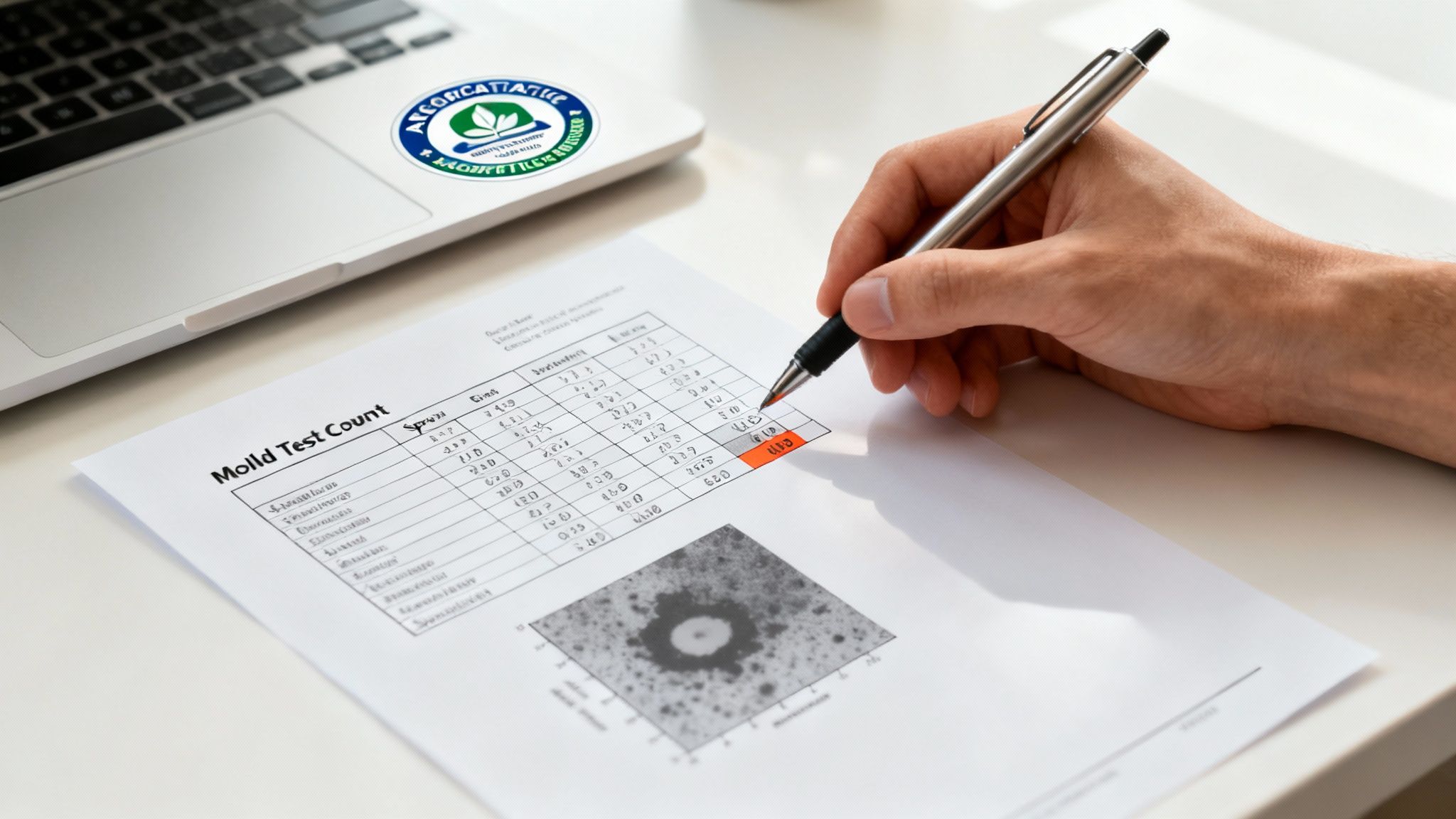
When your lab report shows up, it can look like a jumble of numbers and codes. Those figures, however, are your roadmap to tackling mold. By lining up indoor spore counts against outdoor baselines, you’ll spot the hotspots hiding behind your walls.
Take a scenario where a living room sample reads 500 spores/m³ but your backyard air only hits 200 spores/m³. That gap signals where remediation teams need to dig in. Layer on a moisture map and you might find attic beams at 18% moisture—already above wood’s safe threshold. With these insights, cleanup crews know exactly where to focus.
Reading Spore Count Tables
Spore count tables break down each sample into:
- Sample ID
- Location
- Colony Forming Units (CFU/m³ for air, CFU/cm² for surfaces)
Key takeaways in these tables are total CFU and identified species. Industry guidelines often classify results as low, moderate, or high:
Indoor counts exceeding outdoor baselines by 50% often trigger remediation.
Generally, readings under 200 CFU/m³ are considered benign. Anything above 500 CFU/m³ usually calls for professional cleanup.
Distinguishing Harmless Levels From Infestations
Mold spores drift everywhere—indoors and out. What matters is when indoor numbers climb above outdoor levels. To separate normal background from active colonies:
- Compare indoor and outdoor spore counts
- Note how many mold species appear in each sample
- Flag any surface readings over 100 CFU/cm²
These steps help you decide if you’re dealing with everyday dust or a growing problem.
Identifying Critical Species
Some molds demand faster action than others. On your report, watch for:
- Stachybotrys (toxic black mold)
- Aspergillus (allergen and potential pathogen)
- Cladosporium (common indoor allergen)
- Penicillium (linked to respiratory irritation)
Labs often highlight these names in bold. If they exceed safe thresholds, call in the remediation experts right away.
Planning Your Next Steps
Once you’ve decoded results, the natural follow-up is a clearance test. This repeat sampling confirms whether remediation has driven spore counts down. Use the same locations and methods so you have an apples-to-apples comparison.
For a full breakdown of cleanup strategies, check out our guide on mold remediation service.
Here’s a simple action timeline to keep you on track:
| Step | Timing |
|---|---|
| Schedule Clearance Test | 2 Weeks Post-Remed. |
| Plan Preventive Maintenance | Within 1 Month |
| Routine Inspection | Every 6 Months |
Archive every lab report in one folder—this dossier will serve you well with insurers or future buyers. Ready to lock in a healthier home? Call (818) 336-1800 or book your free clearance inspection today.
Monitoring Seasonal Changes
LA’s humidity ebbs and flows, especially after winter storms. A basic hygrometer can alert you to rising moisture indoors. Ideally, keep readings between 30% and 50%.
If you want real-time alerts, consider smart sensors that ping your phone when levels creep up. Catching spikes early stops mold before it gains a foothold.
Best Practices For Long Term Prevention
- Install dehumidifiers in basements and attics to hold humidity in check
- Seal roof leaks and repair plumbing drips immediately
- Keep gutters clear to direct rain away from your foundation
- Replace water-damaged drywall or insulation without delay
- Log every test, repair, and inspection in a home maintenance journal
Consistent monitoring and documentation can reduce mold recurrence by 40%.
Follow these steps, and you’ll turn your house into a resilient shield against mold’s return.
Record Keeping And Documentation
Think of your mold reports as medical records for your home. Jot down test dates, summarize key findings, and attach moisture maps and photos of each sampling site. Over time, this file becomes a powerful reference—especially when dealing with insurance or selling your property.
FAQ
You’ve got questions about LA mold testing—we’ve got answers. This FAQ clears up common myths and guides you through each step.
Keep it handy to spot hidden mold and plan your next move with confidence.
Which Areas Should I Test First
Moisture is mold’s best friend. Start in bathrooms, basements, crawl spaces, or wherever you spot water stains or catch a musty scent.
Testing these moisture-prone zones first often uncovers elevated spore levels before they spread elsewhere.
How Long Does It Take To Get Results
Once an accredited lab receives your samples, expect a detailed report in 3–5 business days.
In a hurry? Many labs offer a rush option that can deliver results in as little as 24 hours for an additional fee.
Key Insight: Timely analysis of samples can make all the difference in nipping air-quality issues in the bud.
Can Homeowners Insurance Cover Mold Testing
It depends on your policy. Sudden incidents—burst pipes or flash floods—often qualify for coverage. Routine or preventive tests usually come out of pocket.
- Review your policy for mold riders or water-damage endorsements
- File damage reports within 30 days to bolster your claim
- Include lab proposals and moisture logs when submitting paperwork
What Do Spore Counts Mean
Think of spore counts as an indoor versus outdoor comparison. Labs use outdoor baselines to spot abnormal indoor growth.
When indoor readings exceed the outdoor benchmark, it’s a clear signal that remediation is needed. Tracking these numbers over time also strengthens any insurance claim.
Additional Tips For Effective Testing
- Use a hygrometer to log humidity near test areas for at least 24 hours
- Label each sample with the date, time, and location to prevent mix-ups
- Share a floor plan with your tester so they cover both high- and low-risk spots
- Keep pets and children away during sampling to protect sample integrity
- Store samples in a cool, dry place and ship them promptly
- Photograph each test area thoroughly before collecting samples to document conditions
Just like proper soil testing in gardening, careful prep ensures your results reflect real conditions—and cuts down on repeat visits.
Treat this FAQ as your mold-testing roadmap. Slip a printed copy into your home maintenance binder and review it before every inspection.
For reliable, certified mold testing in Los Angeles, reach out to Onsite Pro Restoration.