
Commercial property manager responsibilities cover four core areas: daily operations, financial oversight, legal compliance, and tenant relations. In practice, that means keeping the building running, protecting income, reducing liability, and preserving the owner's investment.
If you manage a commercial property in Los Angeles, you already know how fast a normal day can go sideways. A tenant in Sherman Oaks wants an update on a leak. An owner wants the monthly numbers. A vendor missed a service window. Then a plumbing failure in an older Glendale building turns a maintenance call into an insurance issue before lunch.
That's why commercial property manager responsibilities go far beyond collecting rent or calling a plumber. The job sits at the center of the property's operational, financial, and legal health. In LA, where aging building systems, heat, storms, smoke exposure, and strict local compliance issues all collide, the manager is the person who has to make the right call early.
This guide takes the practical view. It focuses on what the role requires, especially during fire, water, mold, and odor events when delays create bigger losses.
SEO title tag: Commercial Property Manager Responsibilities LA Guide
Meta description: Commercial property manager responsibilities in Los Angeles include operations, compliance, finance, tenants, and emergency response.
Schema opportunity: FAQPage, LocalBusiness
What Are a Commercial Property Manager's Key Responsibilities
A commercial property manager is the operational lead, financial steward, compliance checkpoint, and tenant contact for an income-producing building. The owner may set investment goals, but the manager carries those goals into the building every day.
In a Downtown LA office property, that can mean reviewing a budget in the morning, answering a tenant issue from Burbank before noon, approving a vendor repair in Glendale in the afternoon, and documenting a safety concern before the day ends. The role is constant triage mixed with long-range planning.
According to the U.S. Bureau of Labor Statistics overview of property managers, the median annual wage was $66,700 in May 2024, which reflects the financial responsibility and professional expertise tied to the position.
The role is bigger than most owners expect
A weak manager reacts. A strong manager builds systems.
That distinction matters because the manager isn't just watching the property. They're controlling how problems move through the property. If they catch issues early, the building stays safer, tenants stay calmer, and ownership gets cleaner financial performance. If they miss details, the same building starts leaking money through downtime, disputes, and avoidable repairs.
Practical rule: The manager's job is to solve small problems while they're still cheap.
Core duties that define the position
Most commercial property manager responsibilities fall into these buckets:
- Operational oversight: Scheduling maintenance, tracking building systems, managing vendors, and handling service requests.
- Financial control: Collecting rent, reviewing expenses, building annual budgets, and reporting performance to ownership.
- Risk management: Tracking inspections, documenting incidents, and keeping the property aligned with applicable rules.
- Tenant management: Enforcing lease terms, resolving complaints, coordinating renewals, and protecting occupancy.
Security also sits inside that operational picture, especially for office, retail, and mixed-use assets. Owners evaluating access control, patrol coverage, and incident response can also review resources on securing property portfolios to strengthen the building side of the manager's plan.
Managing Daily Operations and Property Maintenance
Daily operations are where commercial property performance is won or lost. Tenants judge the property by what works, what doesn't, and how long it takes to fix.
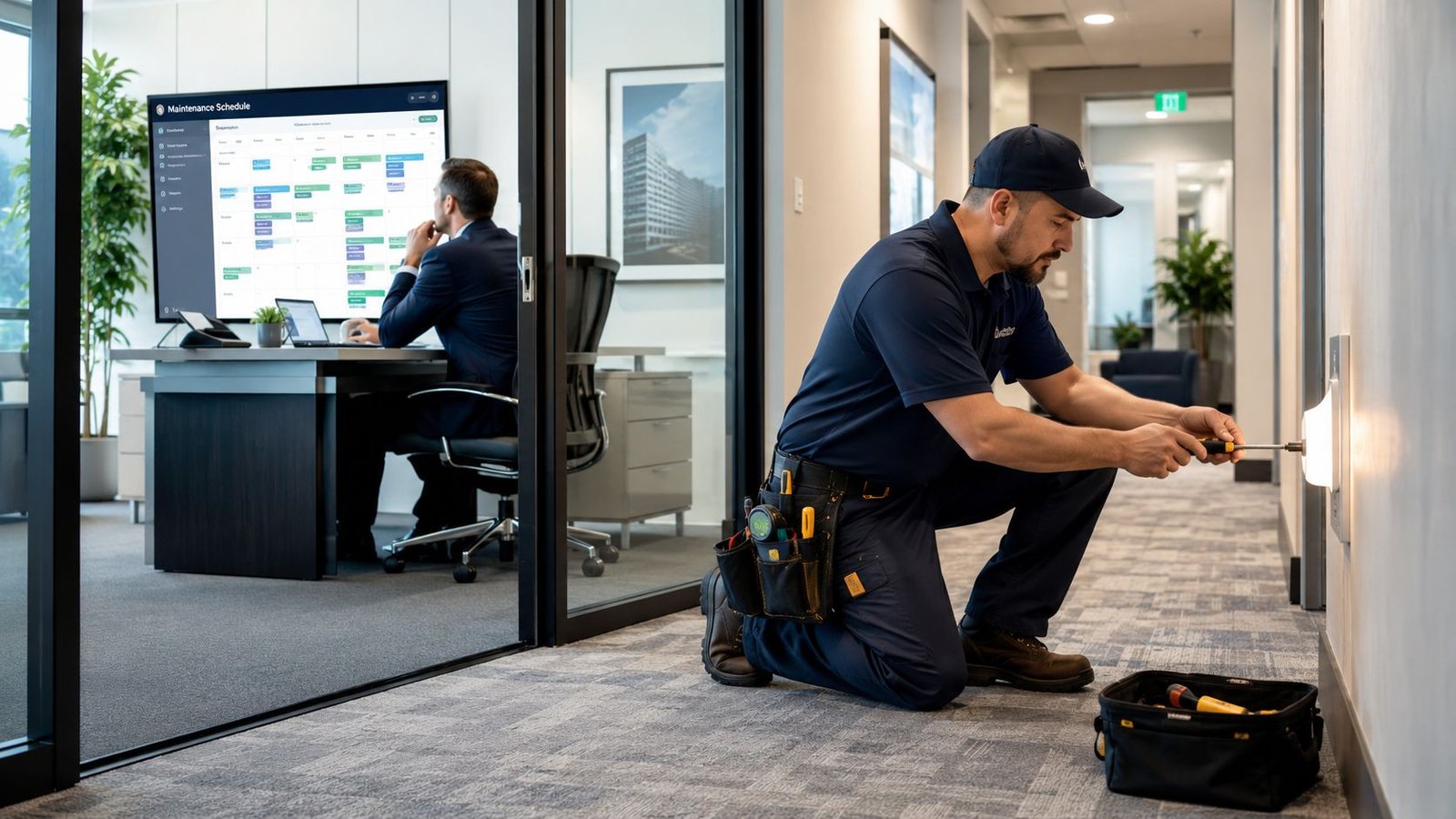
In Los Angeles, maintenance planning has to account for heavy HVAC use, older plumbing in established neighborhoods, roof stress, and the fact that deferred upkeep turns into after-hours emergencies. Glendale and nearby submarkets have plenty of older commercial buildings where a small roof intrusion or line leak can stay hidden until drywall, flooring, or tenant improvements are already affected.
According to the Department of Labor's Occupational Outlook Handbook reference for property managers, a key responsibility involves conducting regular property inspections to identify maintenance issues, arrange repairs, and ensure compliance with safety codes and regulations, which is essential for preventing legal liabilities and maintaining asset value.
Preventive maintenance beats heroic repair work
The managers who stay ahead of building problems usually do three things well:
- They inspect with intent: Not just a casual walk-through. They look at HVAC performance, roof conditions, drains, lighting, common-area wear, restroom issues, and any signs of moisture intrusion.
- They track vendor accountability: Work orders need dates, scopes, insurance documents, and proof of completion.
- They separate routine vendors from emergency vendors: The company that handles regular janitorial work may not be the right call when water is moving through a suite.
A lot of operational headaches also come from neglected basics. Cleanliness, tenant presentation, and common-area standards all affect how the property feels and how quickly complaints escalate. Managers comparing janitorial benchmarks can look at examples like San Antonio office cleaning services to see how detailed commercial cleaning scopes are structured.
Vendor management only works with documentation
Good vendor relationships matter. Loose vendor management does damage.
A commercial property manager should know who handles plumbing, electrical, landscaping, elevator service, HVAC, and after-hours calls. They also need current certificates of insurance, service history, and a clear paper trail. That's especially important when a water event starts as maintenance and then becomes restoration.
For property managers dealing with leaks, intrusion prevention, and early mitigation strategy, this guide on emergency water damage prevention and restoration for property managers is directly relevant.
Routine maintenance vendors preserve building function. Emergency restoration vendors preserve the claim, the schedule, and the tenant relationship.
Driving Profitability Through Financial Stewardship
Owners look at the property as an asset. The manager has to run it like one.
That means the money side of the job isn't limited to collecting rent. The manager is responsible for translating lease income, operating costs, repair timing, and reserve planning into a property that performs predictably. In Los Angeles, that's harder than it sounds because expenses move quickly and downtime hits revenue fast.
According to IREM, commercial property managers directly influence Net Operating Income by optimizing the ratio of collected rent to operating expenses, and in major markets like Los Angeles, proactive maintenance scheduling can reduce capital expenditure by 15 percent to 20 percent annually.
What strong financial stewardship looks like
A disciplined manager doesn't wait for the month to end to discover a problem. They monitor what's drifting now.
That usually includes:
| Financial area | What the manager should control |
|---|---|
| Rent flow | Billing accuracy, collections, delinquencies, and lease compliance |
| Expense control | Vendor invoices, service frequency, and whether recurring work is actually necessary |
| Budgeting | Annual operating budget, reserve planning, and expected capital needs |
| Reporting | Owner-ready monthly reports with clean explanations, not just raw numbers |
The practical goal is simple. Protect NOI without starving the building.
Cheap decisions often become expensive ones
Many properties face difficulties when an owner wants to save money, so maintenance gets delayed. The manager accepts the delay instead of documenting the risk clearly. Then a known issue expands into tenant disruption, emergency work, and insurance friction.
That's why restoration and claims planning belong in the financial conversation, not outside it. A manager who understands the claims side can reduce disruption and preserve records when a loss happens. This is especially important for commercial property insurance claims, where the documentation path often shapes the payout timeline.
Owner view: A budget is only useful if it reflects how the building actually fails, not how everyone hopes it will behave.
Managers also handle monthly reporting, capital planning, cash reserve tracking, and owner communication. If those reports are vague, ownership can't make timely decisions. If they're precise, the property has room to absorb problems without panic.
Ensuring Legal Compliance and Mitigating Risk
Compliance work rarely feels urgent until it becomes a crisis. Then it becomes the only thing anyone cares about.
A commercial property manager has to keep lease administration, safety standards, accessibility issues, vendor records, inspection schedules, and complaint handling aligned with the legal realities of the property. In Los Angeles, that means paying attention to city rules, state requirements, and federal obligations at the same time.
According to ADA.gov, a manager's failure to enforce regulations like the ADA or local safety codes can result in fines exceeding $100,000 per violation, along with potential litigation.
Where managers usually create or reduce liability
Some risk points are obvious. Others look small until a lawyer sees them.
The most common pressure points include:
- Lease enforcement: Terms need to be applied consistently, documented clearly, and tied to the actual facts on site.
- Safety and accessibility: Entry routes, common areas, exits, signage, and building systems can't be treated as informal maintenance items.
- Vendor oversight: Insurance certificates, scopes of work, and responsibility lines need to be current before anything goes wrong.
- Complaint records: If a tenant reports a hazard and the manager doesn't document response steps, the file is already weak.
LA managers need a paper trail, not just a memory
A lot of managers know what should happen. Fewer keep records that prove it happened.
That's the dividing line in risk management. In water, mold, smoke, and biohazard situations, the issue isn't just whether someone called a vendor. It's whether the manager can show when the complaint came in, what was observed, what action was authorized, and how the condition was cleared.
For a comparative insurance perspective, landlords reviewing broader property risk frameworks may find this guide for Florida landlords useful as a reference point for how insurance concerns shape operational decisions in another regulated market.
Mold issues deserve especially careful documentation because complaints often start small and turn into disputes over habitability, cleanup standards, and return-to-service timing. Property teams handling those situations should understand the remediation side of mold in commercial buildings.
A manager reduces legal exposure by documenting decisions before there's a dispute, not after one starts.
Leading Emergency Response and Restoration Efforts
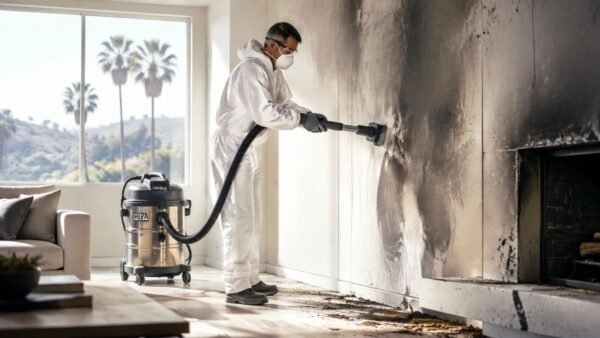
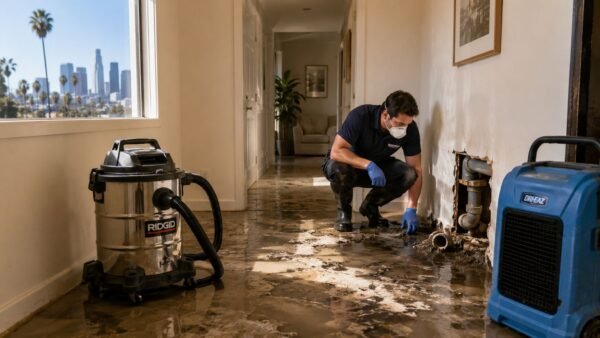
A pipe lets go at 2:10 a.m. Water is running from a third-floor suite into a lobby tenant's ceiling, security is calling for direction, and ownership wants to know how bad it is before sunrise. In that moment, the commercial property manager is not just coordinating repairs. The manager is controlling exposure, documenting a claim, protecting tenant operations, and deciding whether this turns into a contained loss or a long disruption.
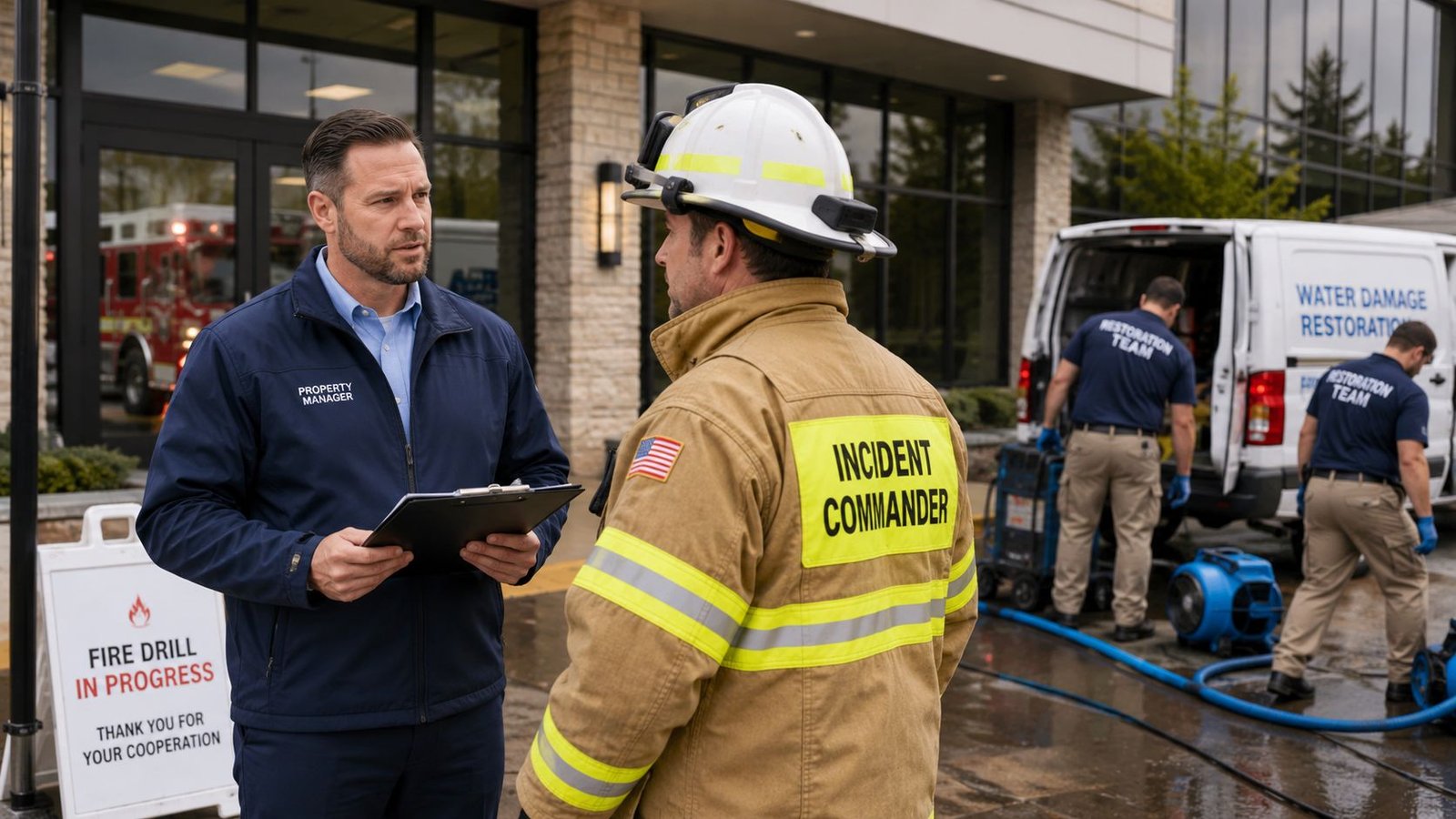
Generic property management advice usually stops at "call a vendor." That is not enough in Los Angeles. Fire, water, mold, smoke, and sewage losses create immediate safety issues, tenant communication issues, access issues, and insurance issues at the same time. The manager has to make decisions with incomplete information and still keep the file clean.
What the manager has to do in the first window
The first few hours matter more than the next few days. Delay usually increases demolition, downtime, and conflict over what could have been prevented.
A practical response sequence looks like this:
- Protect occupants and restrict access. Life safety comes first. Isolate wet areas, contaminated spaces, smoke-affected units, or any location with slip, electrical, or air-quality concerns.
- Stabilize the source. Shut off water, coordinate emergency board-up, secure power where appropriate, or limit HVAC spread if contamination is suspected.
- Record the scene. Capture photos, discovery time, affected suites, tenant reports, visible migration, and any emergency measures already taken.
- Dispatch the right restoration vendor. The right team can assess moisture, set containment, begin extraction or deodorization, and document conditions in a way ownership and insurers can follow.
- Update the right people early. Ownership, impacted tenants, building staff, and the carrier need concise facts, not guesses.
I have seen managers save a bad loss by acting early and documenting well. I have also seen manageable water events turn into mold disputes because nobody controlled access, nobody mapped the spread, and the wrong vendor started tearing out materials before the claim path was clear.
Restoration decisions shape the claim and the reopening timeline
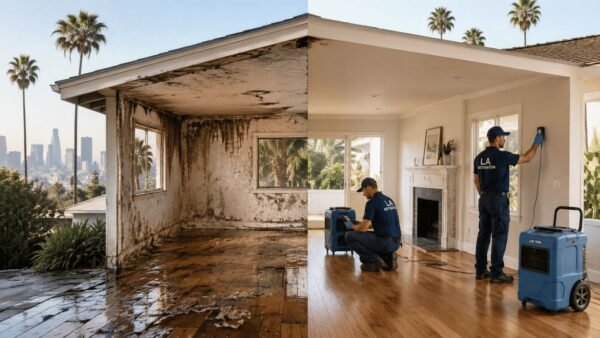
Weak emergency plans quickly become apparent. A general contractor may be the right party later, but early-stage losses often need a restoration team that can handle extraction, drying, containment, smoke cleaning, odor control, and reporting from day one.
That choice affects more than cleanup quality. It affects whether the manager can show what was wet, what was removed, what was saved, when equipment was installed, and when the space was ready for reoccupancy. Those details matter when tenants question downtime and when adjusters question scope.
Managers in Los Angeles are better protected when they pre-vet certified emergency restoration companies before a loss occurs. That means checking response times, insurance, documentation standards, after-hours dispatch, and experience with occupied commercial properties. Onsite Pro Restoration is one example of the type of certified firm managers may keep on an emergency vendor list for moisture mapping, containment, telemetry, and job reporting.
For teams tightening procedures before the next incident, this guide to business continuity planning for commercial properties is a useful reference.
A short field example helps:
Emergency duties that often get missed
The biggest mistakes usually happen before or just after the first call.
- Pre-vetting restoration credentials: If a vendor may touch water, mold, smoke, sewage, or biohazard conditions, the manager should confirm certifications, insurance, and commercial loss experience before an emergency.
- Reviewing work authorization terms: Approval limits, change authorization, testing responsibility, and documentation requirements should be clear before anyone starts work.
- Controlling tenant communication: Tenants need direct updates on access, odor, noise, parking, elevator use, and expected interruption to operations.
- Preserving the claim file: Photos, moisture logs, daily reports, invoices, and communication records should be organized from the start.
- Confirming return-to-service: Drying completion is not the same as tenant-ready occupancy. Clearance, cleaning, odor resolution, and final documentation often decide whether the space can reopen without more complaints.
An emergency loss is not just a maintenance problem. It is an operations problem, a claims problem, and a tenant retention problem at the same time.
Cultivating Tenant Relations and Ensuring Retention
Tenant relations are often treated like soft skills. In reality, they're income protection.
A commercial tenant doesn't renew because the manager is friendly. They renew because the property is predictable, communication is clear, and building problems don't interfere with their business more than necessary. That's especially true in Los Angeles neighborhoods where tenants have choices and downtime costs money.
Good communication lowers friction before conflicts start
Most tenant frustration builds in silence. They don't know whether the issue was received, who's responsible, or when someone will show up.
Managers reduce that friction when they:
- Acknowledge quickly: Even if the repair isn't complete, the tenant needs confirmation that someone owns the issue.
- Set realistic timelines: Overpromising creates more damage than giving a firm, narrower answer.
- Explain building impact: If repairs affect access, odor, noise, HVAC, or parking, say it plainly.
That approach matters even more during restoration work. A tenant can tolerate disruption when the manager is organized. They won't tolerate confusion.
Lease enforcement and service quality have to work together
A lot of managers lean too far in one direction. Some become overly rigid and damage the relationship. Others avoid hard conversations and let lease violations drift.
The better approach is balanced. Enforce lease terms consistently, but communicate with enough context that tenants understand why decisions are being made. Commercial tenants don't expect perfection. They expect competence.
Clear updates often matter as much as the repair itself, especially when the tenant's staff, customers, or inventory are affected.
Managers who maintain that standard usually preserve occupancy better, avoid unnecessary escalation, and give ownership a more stable revenue picture. In markets like Sherman Oaks, Glendale, and Burbank, that consistency is part of the property's competitive value.
Your LA Commercial Property Manager Checklist and CTA
Owners and asset managers shouldn't evaluate a commercial property manager on instinct alone. Use a checklist that reflects what protects the asset.
Performance checklist for Los Angeles properties

Review whether the manager can show evidence of the following:
- Financial discipline: Clean monthly reporting, clear explanation of variances, and active tracking of rent and expenses.
- Maintenance control: Inspection records, vendor accountability, and a visible preventive maintenance schedule.
- Compliance habits: Organized files for leases, safety issues, accessibility concerns, and service documentation.
- Emergency readiness: A real call tree, pre-vetted restoration contacts, and an incident process that doesn't depend on improvisation.
- Tenant communication: Response standards, issue tracking, and consistent follow-up after disruptive events.
If any of those pieces are missing, the property isn't being managed as tightly as it should be.
Sample job description language
For a Los Angeles commercial asset, a practical responsibility statement might read like this:
Manage daily building operations, vendor performance, tenant communications, annual budgeting, rent collection, compliance tracking, and emergency incident coordination for a commercial property portfolio. Maintain inspection records, support insurance claims with complete documentation, and oversee restoration or remediation vendors during water, fire, mold, smoke, sewer, or odor events.
That last part matters more than many owners realize. Emergency execution is where operational discipline becomes visible.
Property teams that want a stronger framework can start with this emergency response plan template. It helps standardize decisions before a fire, leak, mold complaint, or sewer backup turns into a larger disruption.
If your commercial property in Los Angeles, Sherman Oaks, Glendale, Burbank, or nearby neighborhoods is dealing with active water damage, smoke contamination, mold growth, sewer backup, or persistent odor, call 818-336-1800 for a rapid-response assessment.
Frequently Asked Questions
What qualifications should I look for in a Los Angeles commercial property manager
Look for someone who can manage operations, read financials, document compliance issues, and handle tenant communication under pressure. In Los Angeles, experience with older buildings, emergency coordination, insurance-facing documentation, and local vendor oversight matters as much as general management experience.
How are commercial property managers typically paid
Commercial property managers typically earn a base fee tied to rent performance. According to FNRP's overview of commercial property manager fees, industry standards range from 2 percent to 10 percent of a property's gross annual rent.
What is the difference between a property manager and a facility manager
A property manager is usually responsible for the broader asset. That includes tenant relations, financial reporting, lease administration, vendor oversight, and owner communication. A facility manager is typically more focused on the physical plant, systems performance, and maintenance execution inside the building.
Why does emergency response belong in commercial property manager responsibilities
Because the manager controls the first decisions after a loss. Those decisions affect safety, downtime, documentation, tenant disruption, and the insurance process. If the manager waits too long or activates the wrong vendor, the property can suffer deeper physical damage and a harder claim path.
What should a manager have ready before an emergency happens
A current vendor list, after-hours contacts, building shutoff information, access procedures, tenant notification templates, and a pre-vetted restoration partner for water, fire, mold, smoke, sewer, and odor events. Waiting to sort that out during a live loss usually creates delays.
If you manage or own a commercial property in Los Angeles and need help with water, fire, smoke, mold, sewer, or odor damage, contact Onsite Pro Restoration. For immediate response, call 818-336-1800.