
A beeping smoke detector is most often caused by a low battery, dust in the sensor, or the unit reaching its 10-year end-of-life. To stop it, first try replacing the battery with a brand new one.
That late-night chirp is annoying, but it usually isn't random. In Los Angeles homes, especially older properties in Sherman Oaks, Burbank, and Glendale, I see the same pattern over and over: battery issues, dust buildup, expired units, or one bad device in an interconnected system.
Treat a beeping smoke detector as a maintenance warning that needs attention now, not next weekend. The safety reason is simple. If every home had working smoke alarms, U.S. residential fire deaths could drop by 36%, about 1,100 lives saved each year, according to NIST smoke alarm research. The same NIST data shows that 65% of deaths in home fires during 2000 to 2004 were tied to missing or non-functioning alarms. That's why a chirp matters.
SEO title tag: Beeping Smoke Detector Fixes for LA Homes
Meta description: Beeping smoke detector? Learn the safest fixes, how to decode alarm sounds, and when Los Angeles homeowners should replace the unit.
Why Your Smoke Detector Is Beeping and What to Do First
At 2 a.m., a single chirp from the hallway usually means one thing. The alarm needs attention, and the first job is to figure out whether it is giving a maintenance warning or signaling a real fire event.
First, identify whether you're hearing a single chirp every so often or a loud, repeating alarm pattern. A single chirp usually points to a service issue inside the device or the circuit feeding it. A full alarm pattern means smoke, steam, wiring trouble, or a system fault, and that calls for a different response right away.
In Los Angeles homes, I see this most often in older houses with mixed updates. One detector may be newer, another may be near end-of-life, and the wiring behind a hardwired unit may have been patched years ago during a remodel. That is why the right first step is identification, not guessing.
Start with the basics
- Locate the exact detector: Sound reflects off ceilings and down long hallways, especially in two-story homes and older plaster interiors, so the loudest spot is not always the source.
- Read the light and label: Many units show a trouble light, battery icon, or end-of-life code on the back or side.
- Check for obvious physical issues: A loose battery door, paint on the vents, insect debris, or a detector not seated correctly on the mounting plate can all trigger chirping.
- Check the room conditions: Recent shower steam, attic heat, or dust from nearby work can affect some alarms.
- Stop if you notice electrical warning signs: If you also smell hot plastic or insulation, read these signs of a burning electrical smell in the house and get the electrical side checked. Do not treat it as a simple alarm problem.
A chirping detector is a warning that the safety device may not work the way it should when you need it.
That matters in real homes, not just on paper. A detector that chirps for days often gets ignored, disconnected, or stripped of its battery. In restoration work, we run into that after minor electrical faults, smoke events, and post-remodel dust exposure. The original complaint sounds small. The risk is not.
For homeowners thinking about overall protection, it also helps to understand how professional monitoring prevents incidents when early detection and a fast response are part of the plan.
What not to do
Do not remove the battery and leave the unit disabled.
Do not assume every chirp is just a bad battery either. In a hardwired or interconnected setup, one failing detector, a loose wire connection, or an aging backup battery can keep the system chirping until the underlying fault is found.
The Two-Minute Fix for Most Chirping Alarms
Most chirping alarms respond to the same first-pass workflow. Replace the battery correctly, let the unit reset, clean the sensing chamber, then test it.
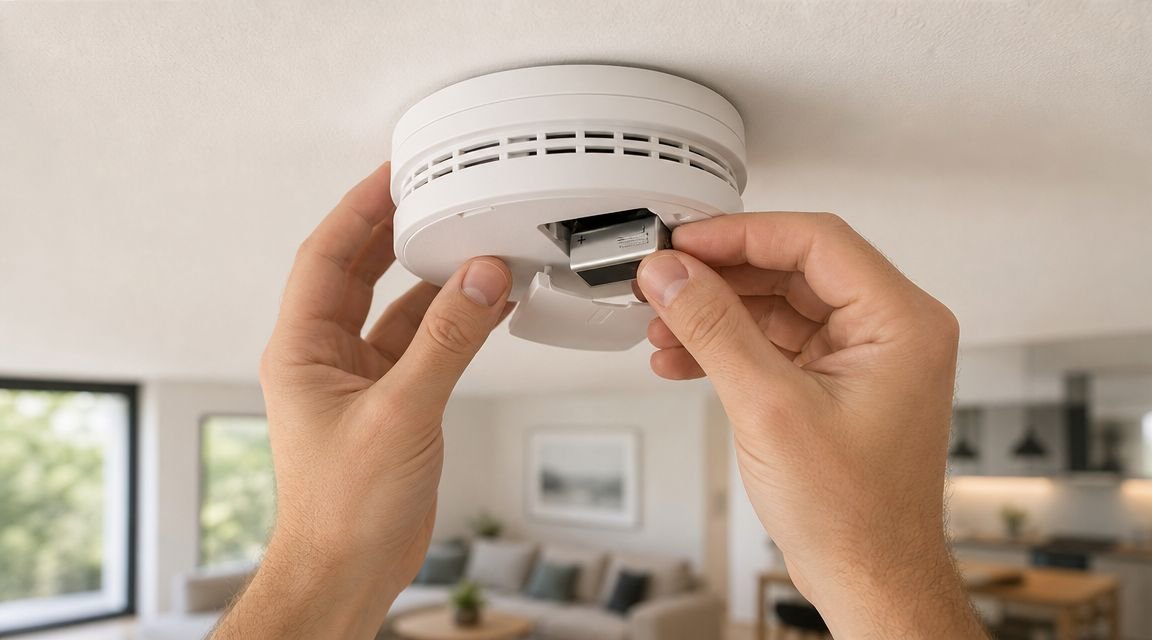
Battery-related failures account for a large share of alarm problems in the field, and the most reliable first step is to replace the battery with a fresh, correctly oriented one, wait for a reset, and clean the sensing chamber with a soft brush or compressed air, as outlined in this smoke alarm troubleshooting guidance.
The exact sequence I'd use on site
Take down the right unit
Twist the alarm off its mounting plate if it's battery-powered or has a battery compartment accessible from the side or front.Install a fresh battery
Use a brand new battery, not one pulled from a drawer or another device. Match the polarity exactly. A reversed battery is a common miss.Wait a few minutes
Some alarms need a short reset period after the new battery goes in. Don't decide it failed after ten seconds.Clean the sensing chamber
Use a soft brush attachment or short bursts of compressed air around the vents. In older Los Angeles homes, attic dust, drywall dust, and fine debris from HVAC systems often work their way inside.Press the test button
You want to confirm the alarm still functions after the chirp stops.
If you want a related walkthrough for odd alarm behavior, this guide on fire alarm going off with no smoke helps sort out nuisance triggers from actual faults.
What works and what usually doesn't
| Method | Worth trying | Why |
|---|---|---|
| Fresh battery | Yes | It's the most common fix for a chirping unit |
| Soft brush or compressed air | Yes | Dust in the chamber can trigger fault chirps |
| Pressing test repeatedly without cleaning | Usually no | It confirms power, but it doesn't remove the cause |
| Slapping the alarm or jiggling it | No | It can hide the issue for a moment, not solve it |
A quick visual can help if you're replacing a battery for the first time:
If the chirping continues after a proper battery change and cleaning, stop assuming it's a simple battery issue. At that point, the unit may be expired or faulty.
A few Los Angeles-specific observations
In the Valley and older parts of LA, smoke detectors often sit near return vents, hallways with warm ceiling pockets, or older wiring paths. That combination can make a unit seem inconsistent. It chirps one night, goes quiet the next day, then starts again.
That pattern doesn't mean the problem went away. It usually means the detector is right on the edge of failure.
Decoding the Beeps Is It a Chirp or an Alarm
Not every sound from the ceiling means the same thing. In these situations, homeowners make dangerous mistakes.
A single chirp every 30 to 60 seconds usually indicates low battery or malfunction. A pattern of three loud beeps means smoke or fire. A pattern of four loud beeps signals a carbon monoxide emergency, based on West Sound Fire Rescue smoke alarm troubleshooting guidance.
Use this response guide
- Single chirp: Troubleshoot the unit. Replace the battery, clean it, and check age.
- Three loud beeps: Treat it as a fire alarm. Investigate immediately and be ready to evacuate.
- Four loud beeps: Treat it as a carbon monoxide emergency. Get people outside and follow emergency guidance.
Confusing a maintenance chirp with an emergency alarm wastes time. Confusing an emergency alarm with a maintenance chirp is worse.
If you need a practical refresher on immediate action during a real fire event, review these steps on how to put out fires safely.
Combo units can fool people
Many homes now have combo smoke and carbon monoxide devices. Those units still use different beep patterns, but people often describe every sound as "my smoke detector is beeping."
That's why the pattern matters more than the label on the cover. Before you reach for a battery, stop and listen to the cadence.
Fixing Hardwired and Interconnected Smoke Detectors
Hardwired alarms are generally more dependable than battery-only models, but they create a different kind of headache. One bad unit can make the whole system seem unstable.
According to the NFPA-derived smoke alarm study summary from Chelmsford, hardwired alarms operated 94% of the time in fires compared to 81% for battery-only units. The same guidance notes that one faulty unit or loose connection can cause persistent nuisance beeping across an interconnected system.
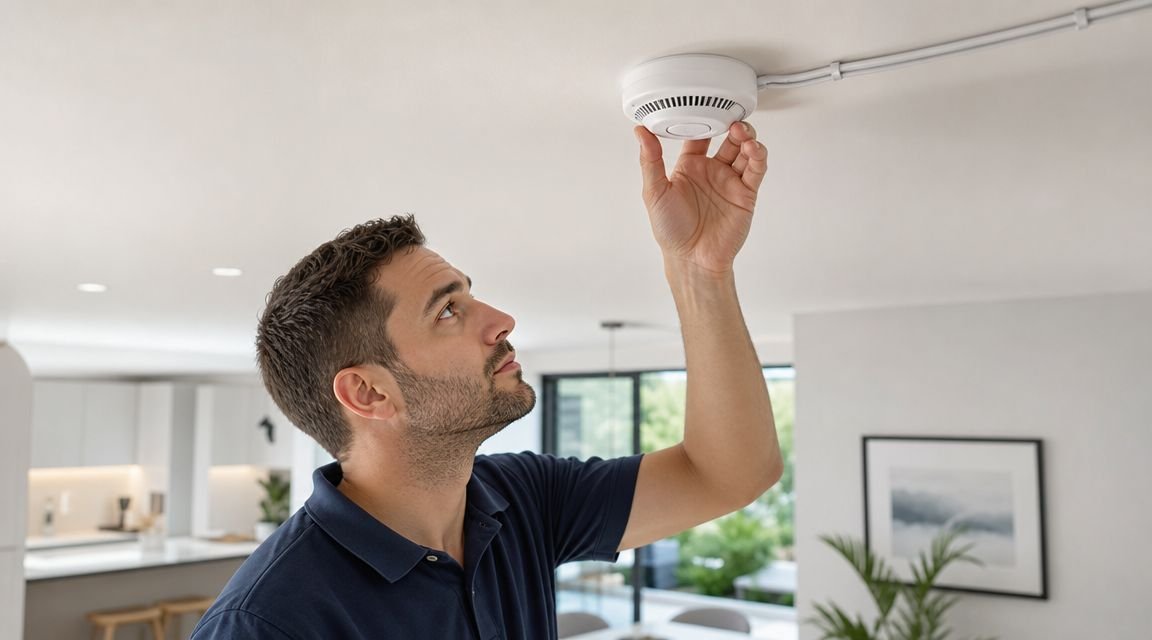
How to troubleshoot an interconnected system
Start by remembering that hardwired alarms still have backup batteries. People forget that part all the time.
- Check for the troublemaker: Look for the unit with a blinking fault light, a different chirp pattern, or the most obvious sound.
- Replace the backup battery first: Even hardwired units can chirp because the backup battery is weak.
- Reset the system: After battery replacement, restore the unit, press test, and give the network time to settle.
- Inspect for loose seating: A detector that's not fully locked into the mounting plate can keep beeping.
When the issue isn't the detector itself
In Los Angeles, especially in renovated homes in Glendale and older properties in Sherman Oaks, wiring history matters. I've seen additions tied into older circuits, loose wirenuts above the ceiling line, and aging connectors that create intermittent trouble signals.
If one alarm chirps, then another starts later, that often points to a system problem rather than one bad battery.
Hardwired systems fail differently. They may be more reliable in fire conditions, but they can be harder to diagnose when one unit, one connection, or one backup battery is off.
For larger apartment buildings and condo properties, it can also help property managers to understand broader security solutions for multi-unit dwellings where interconnected life-safety devices and building systems need coordinated oversight.
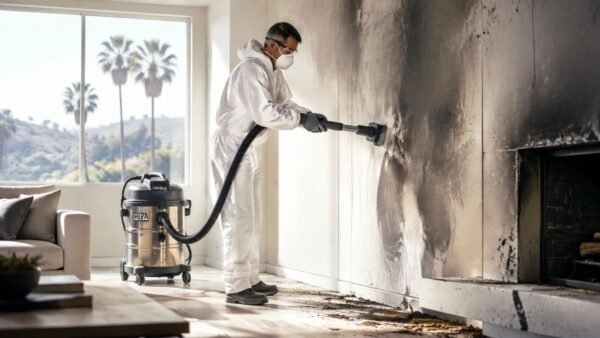
If the chirping started after a small fire, heavy smoke event, or electrical incident, don't focus only on the detector. Smoke residue can contaminate devices, and hidden damage may need fire and smoke damage restoration, not just a reset.
DIY versus pro help
Try the battery, reset, and reseating steps yourself.
Call an electrician or fire restoration professional if:
- The beeping moves between units
- The breaker trips or the alarm loses power
- You smell heat or electrical burning
- The system keeps chirping after multiple battery changes
When to Replace Your Smoke Detector Entirely
Sometimes repair is the wrong goal. If the alarm is old enough, replacement is the safer move.
Smoke alarms have an estimated 3% annual failure rate, which compounds to roughly a 30% probability of failure by year 10, supporting the recommendation to replace all smoke alarms every 10 years, according to the Alarm Age Fact Sheet summary.
Check the age before you keep troubleshooting
Take the detector down and look at the back or side label. You're looking for the manufacture date or replacement date.
If the unit is at or beyond the 10-year mark, stop trying to nurse it along. Replace it.
In our experience inspecting properties in Sherman Oaks and across the San Fernando Valley, it's common to find alarms that are far older than the owner thinks. People remember the last battery change. They don't remember when the entire unit went up.
Signs replacement makes more sense than another repair attempt
- It keeps chirping after battery and cleaning
- The label shows it's at the 10-year mark
- The test button works inconsistently
- The unit looks yellowed, brittle, or paint-clogged
- It was exposed to smoke from a recent fire event
A smoke alarm doesn't need to look broken to be unreliable.
If smoke residue or a prior fire has affected the device or nearby surfaces, replacing the alarm should happen alongside proper smoke damage repair for the affected area.
Frequently Asked Questions About Smoke Alarms
Why does my smoke detector beep at night
Nighttime chirping often gets noticed more because the house is quiet. In some homes, cooler overnight conditions can also expose a weak battery that seemed fine during the day. If the chirp is intermittent and happens late at night, start with a fresh battery and cleaning rather than assuming the unit is haunted or random.
Is it safe to remove the battery to stop the chirping
No. That stops the noise, but it leaves you without a working alarm. If you have to take the unit down for service, put it back into working order right away or replace it the same day.
Why did I replace the battery and it still chirps
That usually means one of four things: the battery was installed backward, the battery drawer isn't fully closed, dust is still in the sensing chamber, or the detector is at end-of-life. In hardwired units, the backup battery may not be the only issue.
Can a beeping smoke detector mean I need an electrician
Yes. If the detector is hardwired, if multiple alarms are chirping, or if you notice power issues, loose fixtures, or a burnt smell, bring in an electrician. That's especially true in older Los Angeles homes with modified wiring.
Should landlords and property managers handle this differently
They should handle it faster and document everything. In multifamily properties, one failing device can affect tenant confidence and system reliability. Some owners also add supplementary monitoring tools, and in broader home oversight setups an HD movement detection camera may help with remote property awareness, though it doesn't replace life-safety devices or proper alarm maintenance.
For thorough fire and smoke damage restoration in Los Angeles, call the experts if troubleshooting fails, if a detector issue follows a small fire, or if you suspect hidden electrical damage.
If your beeping smoke detector won't stop after a fresh battery, cleaning, and a full reset, get experienced help before a minor warning turns into a bigger safety problem. Onsite Pro Restoration serves Los Angeles, including Burbank, Glendale, Sherman Oaks, and nearby communities. Call 818-336-1800 for a professional assessment.