
A hard rain hits Los Angeles, and the next morning you notice a damp smell below the house, peeling paint on a wall, or water collecting where the floor meets the foundation. That's usually when homeowners start searching for basement waterproofing solutions. The right answer is rarely a single coating or quick patch. It's a system that controls where water goes before it turns into structural damage, mold growth, and a much more expensive repair.
For LA homeowners in places like Sherman Oaks, Glendale, and Burbank, the challenge is that water intrusion often stays hidden until the damage becomes obvious. Older homes, grading problems, and neglected drainage all make that worse. If you're trying to figure out whether you need a simple correction or a full waterproofing plan, start with the symptoms, then match the symptom to the right fix. If you also want to reduce the chance of future flooding, this guide on how to prevent basement flooding is a useful companion.
Protecting Your Foundation An Introduction
Basement waterproofing isn't one product. It's a group of basement waterproofing solutions used to stop water from entering through foundation walls, slab edges, cracks, and below-grade joints.
That distinction matters. Many homeowners assume waterproofing means painting something on the wall. In practice, the durable fixes usually involve drainage, pressure relief, controlled discharge, and moisture management. If water is building up around the foundation, a cosmetic sealer may hide the symptom for a while without solving the reason the basement is wet.
Why water shows up where it does
Below-grade walls sit against soil that holds moisture. When too much water stays near the home, it pushes against the foundation and looks for weak points. That's why water often appears at the wall-floor joint, through a crack, or under finished flooring instead of streaming down the middle of a wall.
Practical rule: If you can see the water, the real problem may be outside the visible wet spot.
In Los Angeles, people sometimes underestimate this risk because the region doesn't get constant rain. The problem is that when storms do hit, runoff can concentrate fast. Homes with poor slope, short downspout discharge, or older foundation details can take on water all at once.
What a good waterproofing plan actually does
A sound plan usually addresses several jobs at the same time:
- Move surface water away: Correct grading, gutters, and discharge paths so water doesn't collect at the foundation.
- Relieve pressure: Use drainage methods when groundwater is forcing moisture through the structure.
- Seal vulnerable areas: Repair cracks and transitions where water has a clear entry path.
- Manage indoor moisture: Keep the basement dry enough to limit odor, condensation, and mold risk.
When homeowners understand that waterproofing is about water management, not just wall treatment, their decisions get much clearer.
Seven Telltale Signs Your Basement Needs Waterproofing
A Los Angeles homeowner usually calls after spotting a puddle. The better time to act is earlier, when the basement is telling you moisture is getting in but the damage is still limited.
These signs matter because they point to different causes. A musty odor suggests long-term dampness. A wet wall-floor joint often points to water pressure at the footing or under the slab. That distinction helps you choose the right fix and avoid paying for the wrong one.
Odor and air changes
A persistent musty smell is often the first warning. It means moisture has been present long enough to soak porous materials such as framing, drywall, cardboard, and dust inside wall cavities.
Pay attention to timing. If the odor gets stronger after rain, the pattern usually points to recurring intrusion, not a one-time spill or a humidity spike from normal storage use.
Air that feels clammy is another clue. In a basement, that can come from water entry, condensation, or both. The answer is not always the same, which is why inspection matters.
Surface clues on walls and floors
Visible changes on basement surfaces often show up before active dripping.
- White, chalky residue: Efflorescence on concrete or masonry means water has moved through the material and left mineral salts behind.
- Peeling paint or bubbling coatings: Moisture behind the finish is breaking the bond. Paint failure is a symptom, not the repair.
- Stained lower wall sections or flooring edges: Repeated dampness usually appears low first because water collects at the base of the wall.
- Rust on metal columns, shelving, or appliance feet: Hidden moisture and high humidity often show up on metal early.
If you see these signs on a finished wall, the concealed side may be worse. That is one reason I tell homeowners not to judge the problem by the amount of visible staining alone.
Mold, cracks, and seepage lines
Visible mold near corners, behind stored boxes, or along lower wall areas means the space has stayed damp long enough for growth to take hold. That becomes a waterproofing issue and an indoor air issue.
Cracks need context. A hairline shrinkage crack may stay dry for years. A crack that darkens during storms, leaves staining, or feels damp to the touch deserves a closer look because it gives water a direct entry path.
Seepage at the cove joint, where the wall meets the floor, is one of the clearest field signs. It often indicates pressure below or beside the slab rather than a simple surface leak. Homes that need drainage and homes that only need crack repair can look similar at first glance, so this is where diagnosis saves money.
In some cases, adding or replacing a professional moisture barrier installation system is part of the repair plan, especially when the basement has chronic dampness affecting finishes and stored contents.
Seven signs worth taking seriously
- Musty odor that returns after rain
- Efflorescence on concrete, block, or mortar
- Peeling paint or blistering wall finishes
- Water stains at the bottom of walls
- Mold growth in corners or behind storage
- Cracks that become wet, stained, or darker during storms
- Seepage where the wall meets the floor
For LA homeowners, the next practical question is whether the water is tied to runoff, grading, irrigation, or subsurface pressure. If rain seems to trigger the problem, these expert solutions for basement water in Utah explain runoff and entry-point patterns that apply well beyond one region.
One final point on insurance. Coverage usually depends on the cause of loss, not the fact that water showed up. Sudden and accidental discharge from plumbing may be treated very differently from long-term seepage, groundwater intrusion, or deferred maintenance. Good photos, weather timing, and a clear inspection record help the claim process if you decide to file.
Interior vs Exterior Waterproofing Systems Compared
A wet basement in Los Angeles usually leads to one practical question. Do you control the water after it reaches the foundation, or do you open the outside and stop that exposure at the wall?
The right answer depends on how the water is getting in, how much access the crew has around the house, and what level of disruption makes sense for the property. In older LA neighborhoods, that access question matters more than many homeowners expect. Tight side yards, patios, hardscape, and nearby structures often rule out full exterior excavation even when it would be ideal on paper.
Interior systems in practical terms
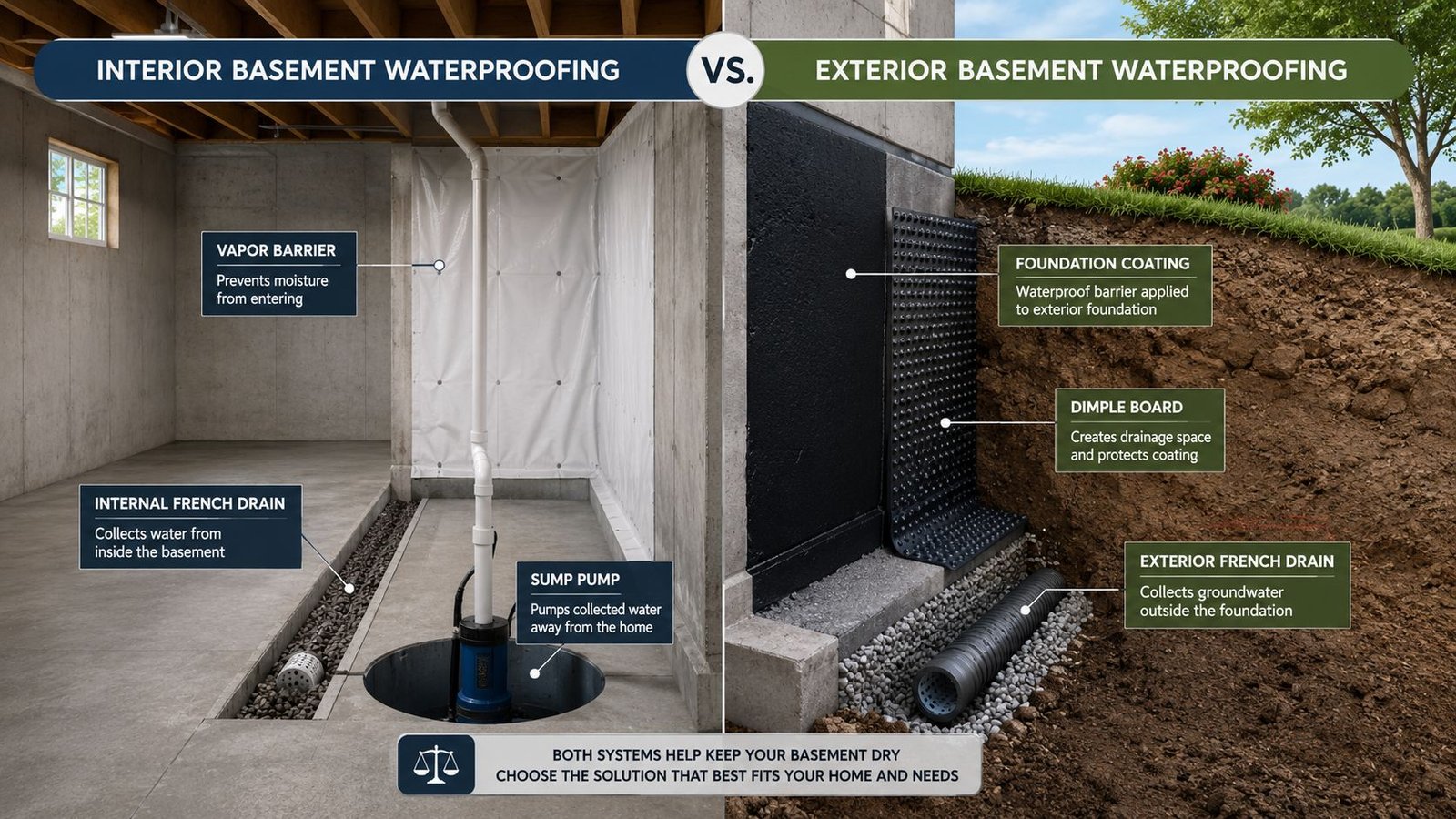
Interior waterproofing is usually the better fit when seepage shows up at the cove joint, along the slab edge, or through isolated wall cracks during rain. The goal is controlled collection. Water is intercepted inside, directed to drainage, and discharged before it spreads across the floor or into finishes.
That approach does not remove water from the soil outside the home. It manages it reliably when exterior access is limited or the budget does not support excavation. For many homeowners, that trade-off is reasonable.
If runoff seems to trigger the problem, these expert solutions for basement water in Utah are still useful because the pattern recognition applies well to LA homes too. The source of the water often matters more than the ZIP code.
Exterior systems in practical terms
Exterior waterproofing addresses the foundation from the outside face of the wall. The work typically includes excavation to the footing, surface repair, a waterproof membrane, drainage board or protection course, and backfill that sheds water instead of trapping it.
This is often the stronger choice when the wall itself is taking on moisture, when hydrostatic pressure is persistent, or when foundation repairs already require excavation. It reduces direct water contact with the wall and lowers the moisture load on the structure. The downside is cost, access, and disruption. Removing walkways, working around utilities, and restoring landscaping can become a large part of the job.
Interior vs Exterior Waterproofing at a Glance
| Attribute | Interior Waterproofing | Exterior Waterproofing |
|---|---|---|
| Main goal | Capture and redirect water that reaches the basement perimeter | Reduce wall exposure and drain water outside the foundation |
| Typical work area | Inside perimeter of basement | Outside foundation perimeter |
| Disruption | Interior slab-edge work and equipment setup | Excavation, access constraints, landscaping and hardscape repair |
| Best fit | Cove seepage, retrofit projects, limited exterior access | Exposed foundations, major wall moisture problems, planned excavation |
| Limits | Does not shield the exterior wall from soil moisture | Higher cost and may be impractical on tight lots |
For insurance and repair planning, this distinction matters. Interior systems are often installed to control a recurring water condition. Exterior systems are more often tied to larger corrective work when a failed wall assembly, drainage defect, or foundation exposure has to be addressed directly. If a claim is involved, photos of entry points, contractor findings, and a clear timeline help show whether you are dealing with sudden damage, long-term seepage, or a maintenance issue.
Some homes also need broader humidity and vapor control after the drainage work is chosen. A professional moisture barrier installation system can make sense when damp air, minor wall transmission, or protected storage is part of the problem.
In the field, I usually tell homeowners to choose the method that solves the actual water path with the least unnecessary demolition. That is how you avoid paying twice for a basement that still smells damp after the work is done.
A Detailed Look at Common Waterproofing Methods
The best waterproofing jobs combine methods. A sump pump without drainage won't help much. A wall coating without water control behind it won't last.
Interior perimeter drain systems
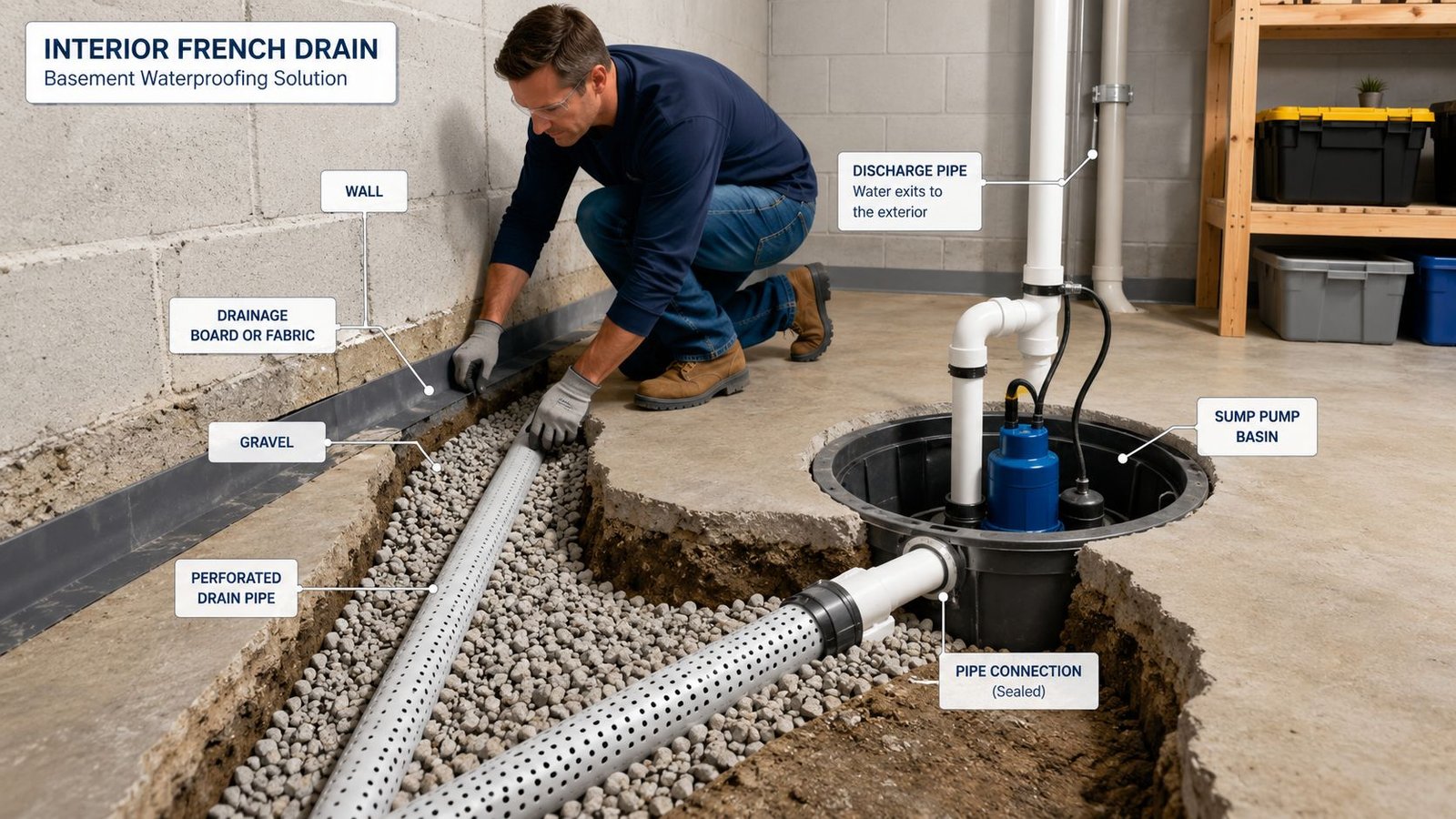
An interior perimeter drain is one of the most common professional solutions for chronic seepage. The contractor opens a trench around the slab edge, places perforated pipe and gravel, and directs the collected water to a sump basin.
This method works because it intercepts groundwater and relieves pressure at the point where water is trying to emerge, rather than pretending the pressure doesn't exist. Polyguard's overview of interior basement waterproofing explains why an effective system often combines an interior perimeter drain with a sump pump for exactly that reason.
Sump pumps and discharge planning
A sump pump is the engine of many interior systems. It removes the water that the drain network collects and sends it to a discharge point away from the home.
The pump itself isn't the whole system. It needs the right basin, routing, and discharge strategy. It also needs a plan for outages and maintenance.
- Primary pump: Handles routine water removal.
- Discharge line: Carries water far enough away that it doesn't cycle back toward the foundation.
- Backup planning: Protects the basement when utility power fails during a storm.
Crack injection and targeted repairs
When water enters through a defined crack, injection can be appropriate. This is a targeted repair, not a whole-house waterproofing strategy.
Used correctly, injection seals a specific path. Used as a substitute for drainage in a pressure-driven leak, it often disappoints. If several symptoms point to broader groundwater load, a crack repair should be part of the solution, not the entire plan.
A wet crack is sometimes the messenger. The drainage pattern around the home is often the real culprit.
Exterior membranes and drainage boards
Exterior below-grade waterproofing is more than rolling on a coating. The benchmark approach is a continuous membrane plus a drainage layer from the footing upward. The membrane blocks liquid water, and the drainage layer helps relieve pressure against the wall.
Installation details matter. Green Building Advisor's discussion of RESISTO exterior basement wall waterproofing details notes that membrane laps should overlap by at least 3 in (7.6 cm), inside corners should receive 6 in (15 cm) overlap, and footing-to-wall transitions should be sealed with an elastomeric bead up to 1.2 cm (0.5 in) in diameter. It also notes the membrane should cover roughly two-thirds of the footing and receive additional fastening every 30 cm (12 in) in colder-installation conditions.
Those aren't cosmetic details. Those are failure points if the installer gets sloppy.
Wall-floor joint drainage and the cove gap
Many homeowners focus on the visible gap where the wall meets the floor. That's understandable because it's where water often appears.
The important question is whether that joint should be sealed, drained, or both as part of a larger design. In pressure-driven seepage, drainage usually matters more than trying to force the joint shut from the interior side.
For homeowners who want a broad homeowner-level overview before talking with a contractor, these home basement waterproofing tips can help frame the options.
Here's a visual walkthrough of system concepts and installation logic:
Dehumidification and indoor moisture control
Waterproofing and humidity control aren't the same thing, but they belong together. Once the water entry issue is corrected, the air still has to be managed so materials can dry and stay dry.
That's why many basements also need basement dehumidification, especially after a leak or in spaces that have shown mold, condensation, or long-standing odor issues.
Your Step-by-Step Homeowner Decision Workflow
A Los Angeles homeowner usually calls at the same point. Rain hits, water shows up at the wall-floor joint or in one corner, and the big question is whether this is a minor drainage issue, a foundation problem, or something insurance might cover.
The right next step is to sort the problem in order. Find the entry path. Protect the house from further damage. Then choose a repair that matches how water is getting in.
Step one, identify the water path
Start with observations you can make during the storm or as soon as conditions are safe afterward. Timing matters. Location matters more.
- Check exterior conditions first: Look for negative grading, clogged area drains, planter beds holding water against the wall, and downspouts that discharge too close to the foundation.
- Map where water shows up inside: Water at the cove joint points to a different problem than water coming through a wall crack or around a penetration.
- Track the pattern: Water only during hard rain usually points to runoff or hydrostatic pressure. Ongoing dampness can also involve condensation, plumbing leaks, or poor ventilation.
Take clear photos before you move everything around. If you end up filing a claim, adjusters and contractors both need to see the original conditions.
Step two, limit damage and document it correctly
If water is already inside, protect contents and wet materials right away. Move boxes, rugs, and furniture out of the wet area. Porous materials that sit wet for days are harder to save and more likely to develop odor or microbial growth.
I tell homeowners not to confuse cleanup with correction. Drying the space without controlling the source often leads to another loss the next time it rains.
For active water intrusion, professional flooded basement cleanup can handle extraction, moisture mapping, demolition decisions, and structural drying while you sort out the waterproofing plan. Onsite Pro Restoration provides that type of emergency response in the Los Angeles area.
Insurance is where many homeowners lose time. Sudden interior water damage may be treated differently from long-term seepage or deferred maintenance. Keep photos, a timeline of when the water appeared, and notes on what was damaged. That record helps you separate the cleanup claim from the longer-term waterproofing work, which is often paid out of pocket.
Step three, match the symptom to the right fix
Bad decisions can become expensive. The repair has to fit the failure pattern.
Water starts outside and loads the foundation during rain
Correct grading, extend discharge lines, clear or rebuild site drainage, or add subsurface collection where runoff is concentrating near the house.Water repeatedly appears at the slab edge or wall-floor joint
An interior perimeter drainage system with proper discharge may make more sense than trying to seal the joint from the inside.The exterior foundation is accessible and the wall has broad moisture exposure
Exterior excavation, waterproofing membrane, and drainage board may be the better long-term fix, especially when you need to stop water before it reaches the wall.One visible crack leaks, but the rest of the basement stays dry
A targeted crack repair can work if the crack is the true entry point and there is no larger drainage problem feeding it.
The goal is a repair plan based on evidence, not guesswork. That is how homeowners avoid paying for the wrong system, and it is how you make sense of what should go through insurance versus what belongs in the permanent waterproofing scope.
DIY Waterproofing vs Hiring a Professional in Los Angeles
Some basement tasks are reasonable for a homeowner. Full waterproofing systems usually aren't.
What you can handle yourself
A homeowner can often take care of maintenance and low-risk prevention:
- Clean gutters and drains: Keep roof runoff from dumping near the foundation.
- Extend discharge points: Make sure water is moving away from the home.
- Monitor small changes: Track stains, odor, and visible crack movement.
- Use a basic sealer carefully: Only for minor, non-structural touch-up situations where no pressure-driven water is involved.
What needs a pro
Professional help matters when the repair affects structure, drainage design, or hidden moisture:
- Interior drain installation: This requires slab cutting, trenching, and proper discharge design.
- Exterior excavation and membranes: Access, detailing, and backfill conditions all affect success.
- Crack injection on active leaks: Material choice and crack behavior matter.
- Post-loss drying and contamination control: Wet materials can turn into a mold problem fast.
Los Angeles adds another layer. Excavation, discharge planning, and some drainage modifications can involve local code and permit questions. Homes in tight neighborhoods like West Hollywood or hillside areas near Glendale also create access issues that change the design.
Battery backup is another area where DIY thinking often falls short. This article discussing wall-floor gap seepage and basement drainage planning notes that modern waterproofing should account for heavier rainfall and power outages, and that battery-backup sump systems are an important add-on when the pump can't run on utility power.
That's a strong argument for hiring someone who can design the full system, not just install one component.
FAQs About Waterproofing Costs and Insurance
How much do basement waterproofing solutions cost?
A Los Angeles homeowner usually wants one number. In practice, pricing follows the water path.
A single non-structural crack repair costs far less than a full perimeter drain, sump setup, or exterior excavation. Access matters too. A finished basement, tight side yard, hillside lot, or buried footing can change labor, disposal, and repair scope fast. If you want a practical pricing breakdown by repair type, this guide to the average cost of basement waterproofing explains what typically drives the bill.
The right question is not just "What does waterproofing cost?" It is "What system matches the way water is entering this house?"
Does homeowners insurance cover basement waterproofing?
Usually, no. Insurance commonly separates preventive work from sudden and accidental damage.
That means a new drainage system, membrane, or sump installation is often treated as maintenance or risk reduction, not a covered loss. If a covered event causes water intrusion, the policy may cover part of the resulting damage, such as wet drywall, damaged flooring, or cleanup. The answer depends on the cause of loss, the wording of the policy, and how well the damage is documented.
I tell homeowners to photograph the source area, damaged materials, standing water, and any visible crack or seepage path before cleanup changes the scene. Save invoices, moisture readings, and contractor findings. That paperwork often matters as much as the repair itself.
Should I seal the gap between the basement wall and floor?
That joint needs diagnosis before sealant.
Water at the wall-floor seam often points to pressure under or beside the slab. In that situation, surface sealing rarely solves the problem for long. It can redirect water, trap moisture, or fail as pressure builds. If the joint is damp after rain, the more reliable fix is usually drainage control, not cosmetic sealing.
Is professional waterproofing worth it compared with DIY?
For minor touch-up work, DIY can make sense. For active seepage, recurring moisture, or anything tied to drainage, structural cracks, or hidden wet materials, professional repair is usually the cheaper decision over time.
The difference is system design. A pro is not just applying coating to a wall. The job is to identify the entry point, relieve pressure, choose materials that fit the crack or joint, and dry the affected area correctly so a water problem does not turn into a mold claim. As noted earlier, long-term waterproofing success comes from matching the method to the failure, not from covering symptoms.
If you've noticed musty odors, seepage, peeling finishes, or a wet wall-floor joint in your Los Angeles home, get the problem diagnosed before it turns into structural damage or mold. Onsite Pro Restoration provides basement water intrusion assessment, cleanup, drying, and documentation support for insurance claims across Los Angeles County. Call 818-336-1800 for a free inspection.