
Water damage to electrical wiring is extremely dangerous and can cause electrical shorts, shocks, and devastating fires, even long after the area appears dry. Your immediate actions should be to shut off the power at the main circuit breaker, avoid touching any electrical devices, and call a certified professional for an emergency assessment.
If you're standing in a Los Angeles home with water dripping near a recessed light, a garage wall still damp after a burst pipe, or an outlet near a slab leak that suddenly stopped working, treat it as an electrical emergency. In older homes across Sherman Oaks, Glendale, Burbank, and West Hollywood, wiring often runs through wall cavities and ceiling spaces where water can travel farther than homeowners expect.
Water damage to electrical wiring isn't a cosmetic issue. It's a safety issue first, then a restoration issue, then an insurance issue. In our experience handling water losses in LA homes, the biggest mistake homeowners make is assuming that once the wall feels dry, the danger is over. It often isn't.
A safe recovery usually means three things happen in the right order. The water source gets stopped, the affected area gets professionally dried and documented, and a licensed electrician determines what can stay and what must be replaced. That sequence protects your family, your property, and your claim.
Introduction What To Do About Water Damaged Wiring
Water can reach wiring in ways that don't look dramatic at first. An upstairs bathroom overflow can send moisture into a ceiling box. A washing machine hose can soak a wall shared with a kitchen outlet. A roof leak during heavy LA rain can drip into attic wiring and then show up as a tripped breaker much later.
When homeowners ask me what to do first, the answer is simple. Cut power if you can do it safely, keep away from the affected area, and get professionals involved immediately. If you're unsure which circuit is affected, shutting off the main breaker is the safer choice.
What makes this urgent
Electricity depends on intact insulation, clean connections, and dry components. Water interferes with all three. If the water is dirty, the risk gets worse because residue can stay behind inside boxes, on terminals, and around protective devices.
Practical rule: If water reached wiring, outlets, switches, or the panel area, don't guess. Assume it's unsafe until a qualified professional says otherwise.
Los Angeles homes add a few local complications. Older properties may have aging wiring pathways and patched remodeling work hidden behind finished walls. Newer properties can still have trouble from appliance leaks, pinhole plumbing failures, roof intrusions, or sewer backups. In hillside and valley neighborhoods alike, the source changes, but the hazard doesn't.
What a homeowner should focus on first
You don't need to diagnose the electrical system yourself. You need to keep people safe and preserve the scene for proper evaluation.
- Protect people first: Keep family members and pets away from wet rooms, damp garages, and any area with flickering lights or dead outlets.
- Avoid contact with devices: Don't touch chargers, lamps, extension cords, power strips, or appliances in the wet zone.
- Document what you can safely see: Take photos from a dry area if it's safe to do so. Those images help the restoration and insurance process later.
- Call for emergency help: A restoration team and a licensed electrician often need to coordinate, not work in isolation.
Critical Signs and Hidden Dangers of Wet Electrical Wiring
A Los Angeles homeowner usually notices the water first. The electrical damage often shows up later, after the ceiling stain spreads, the slab leak has been running for days, or the garage took in storm runoff during a rare hard rain.
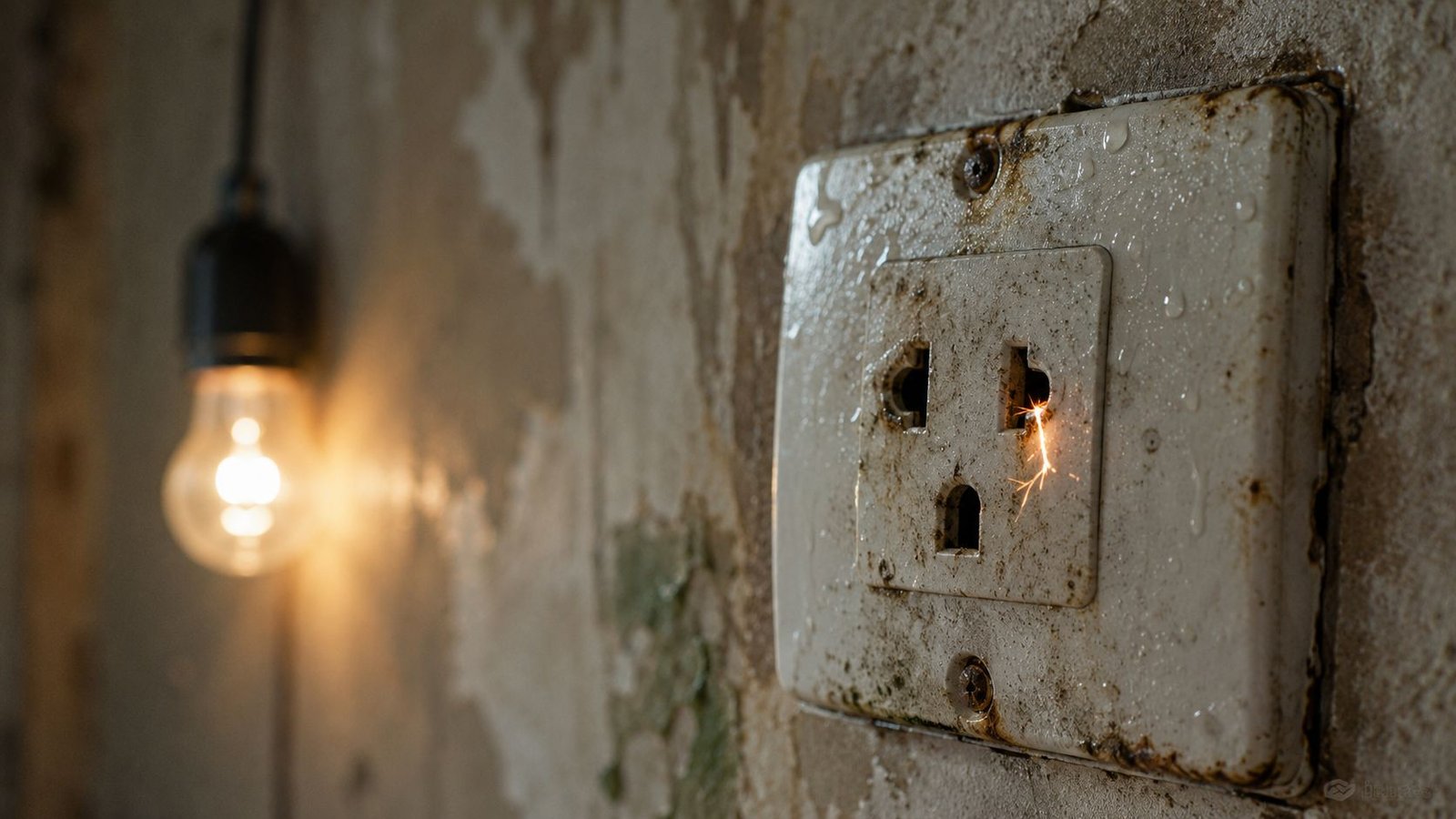
In our experience, that delay is what makes wet wiring so dangerous. A device can look normal from the outside while terminals, splices, and protective components are already corroding inside the wall or panel.
The signs homeowners notice first
Some warning signs announce themselves fast. Others are easy to dismiss as a minor glitch.
- Flickering or unstable lights: Common after roof leaks, upstairs plumbing leaks, or water intrusion around recessed lights and attic runs.
- Repeated breaker trips: Breakers are reacting to a fault. After water exposure, moisture, residue, or damaged insulation may be the cause.
- Buzzing, sizzling, or crackling: Those sounds can indicate arcing, overheated connections, or moisture inside a device box.
- Discolored outlets or switch plates: Staining, rust marks, bubbling paint, or warped covers often mean moisture reached farther than the visible water line.
- A GFCI that won't reset: That often points to a wet device or a downstream problem on the same circuit.
- A burning or ozone-like smell: Treat that as urgent. We've written more about what a burning electrical smell can mean.
Older LA homes raise the stakes. In neighborhoods with aging branch wiring, layered remodels, and hidden junctions behind finished walls, the visible leak location is not always the only affected area.
The damage you don't see
Hidden damage is the part that worries us most on site.
Water travels. It wicks into insulation, settles inside outlet boxes, reaches low points in conduit runs, and leaves behind minerals or contamination after the surface looks dry. In a slab-leak job in Mid-City or a ceiling leak in Los Feliz, the room may appear stable within a day or two while corrosion is still advancing inside electrical components.
Flood-related exposure is especially serious. Earlier guidance in this article already covered that floodwater can leave wiring and equipment permanently unsafe because of contamination and corrosive residue. For a homeowner, the practical takeaway is simple. A dry-looking wall does not clear the electrical system for use.
Why the type of water matters
Clean supply water, roof intrusion, storm runoff, and sewer backup do not create the same electrical risk.
The Electrical Safety Foundation International explains that water-damaged electrical equipment can be affected by chemicals, sewage, oil, and debris, and that saltwater residue is particularly corrosive and conductive, as explained in ESFI guidance on water-damaged electrical equipment.
That distinction matters in Los Angeles. A supply line leak under a slab in Pasadena usually creates a different repair path than runoff entering a garage in Sherman Oaks, or a backup affecting a lower level in a hillside home. The water line on the wall is only part of the story. What was in that water often determines whether components can be evaluated, cleaned, or replaced outright.
If the source is still unclear, it helps to learn to control your main water supply before the next leak turns into a larger electrical and insurance problem.
Devices that are commonly treated as replacement items
Some components are poor candidates for reuse after water exposure because they depend on clean internal contacts and reliable trip mechanisms.
Independent electrical guidance from DSPS states that water-damaged electrical equipment can be extremely hazardous if reenergized without proper evaluation. It also identifies several components commonly treated as replacement items after water exposure, including arc-fault and ground-fault circuit interrupters, molded-case circuit breakers, receptacles, switches, dimmers, surge protective devices, transformers, and wire or cable for dry areas, based on DSPS guidance for evaluating water-damaged electrical equipment.
For homeowners, the trade-off is straightforward. Trying to save a wet receptacle, breaker, or GFCI may reduce the invoice today, but it can leave you with a device that fails when you need it to trip. That is not a gamble worth taking in an occupied home.
Your Immediate Safety Action Plan
When there's active water intrusion or even a strong suspicion of water damage to electrical wiring, speed matters. The goal is to prevent shock, fire, and accidental re-energizing of damaged components.
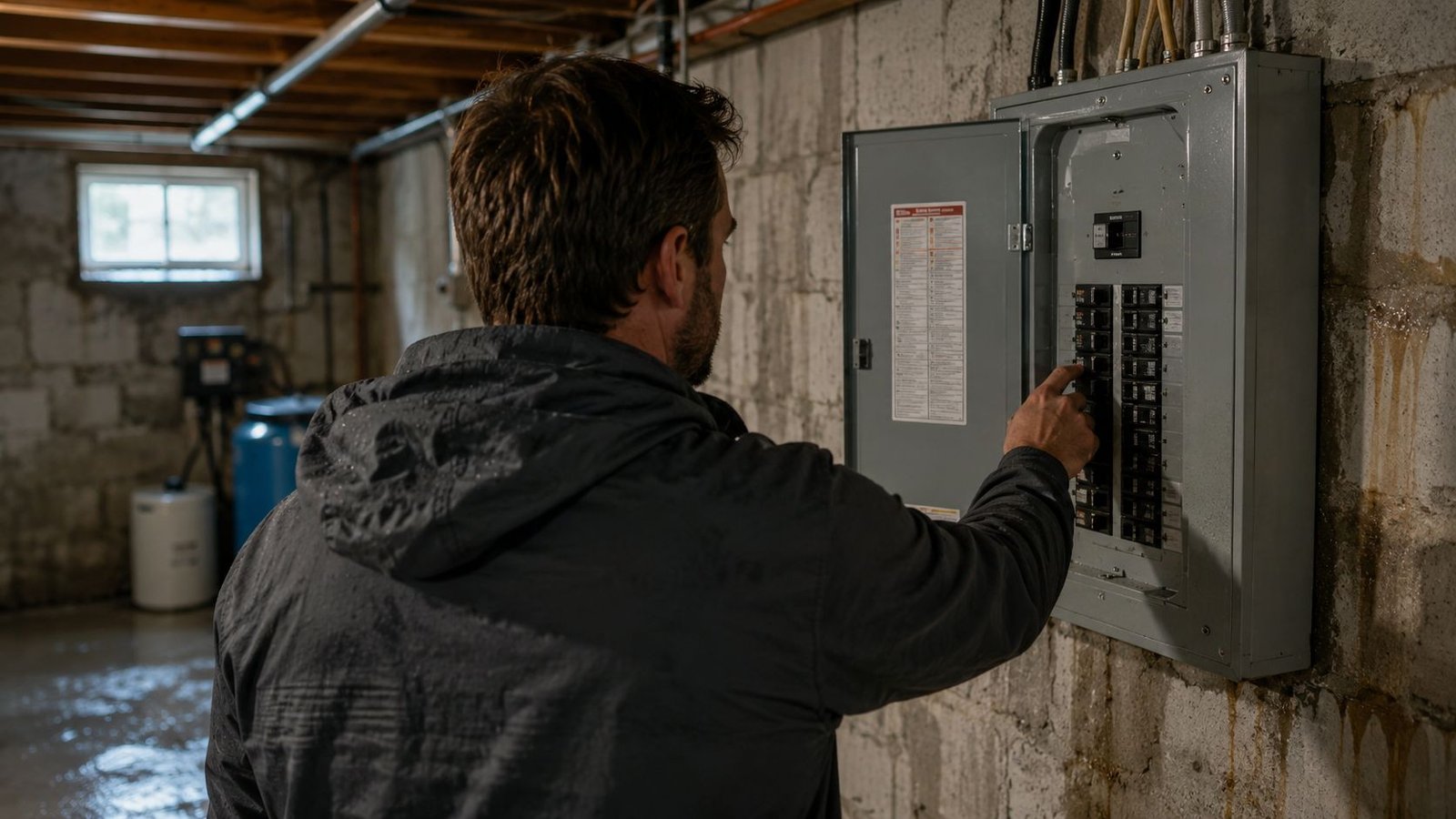
Do these steps in order
- Shut off power if you can reach the panel safely. If the leak is localized and you know the affected circuit, turn off that breaker. If you don't, shut off the main.
- Stay out of standing water. Never walk into water to reach an outlet, appliance, or breaker panel.
- Leave devices alone. Don't unplug electronics, don't test switches, and don't try to “see what still works.”
- Stop the water source if it's safe. If the problem is a plumbing line, it helps to learn to control your main water supply before a crisis happens.
- Call for emergency mitigation. Fast extraction and drying reduce spread and create safer conditions for the electrical inspection.
If water is actively spreading through floors or walls, professional emergency water extraction services can help stabilize the property while the electrical side is being evaluated.
What not to do
A lot of damage gets worse because homeowners try to be helpful.
- Don't use towels or a shop vacuum near energized areas.
- Don't reset tripped breakers repeatedly.
- Don't run extension cords into wet rooms.
- Don't assume a dry surface means the cavity behind it is dry.
Here's a useful visual on why the main panel matters and why safety has to come first.
Why immediate caution matters in Los Angeles homes
After heavy LA rains, intrusion water often carries contamination. Safety guidance warns that floodwaters are often contaminated with chemicals, sewage, oil, and debris, and that residue can remain corrosive and conductive even after wiring appears dry. That's one reason delayed failures happen after people think the danger has passed.
If a breaker has tripped after a leak, that's not an inconvenience. It's the system telling you something may be wrong.
The Professional Response How Restoration and Electrical Teams Work Together
After a slab leak in a Mid-City or Valley home, homeowners often assume one crew will handle the whole problem. In practice, safe recovery usually takes two licensed tracks working in sequence: the restoration team addresses the water intrusion and documents its path, and the electrician determines what can stay de-energized, what must be opened for access, and what electrical components are no longer safe to use.
What the restoration team does first
The restoration crew handles the building side of the loss. That includes mapping moisture, extracting standing water, opening wet materials where needed, setting drying equipment, and recording conditions for the owner and insurance carrier. In Los Angeles homes, especially older properties with previous remodels, plaster repairs, or hidden additions, that documentation matters because water rarely stays where it started.
The work also has to create safe access for the electrical inspection. Wet insulation, swollen drywall, soaked sill plates, and moisture inside wall cavities can hide boxes, cable runs, and terminations. A documented water damage restoration process gives the electrician a clear record of where the water traveled and which assemblies were affected before anyone starts making repair decisions.
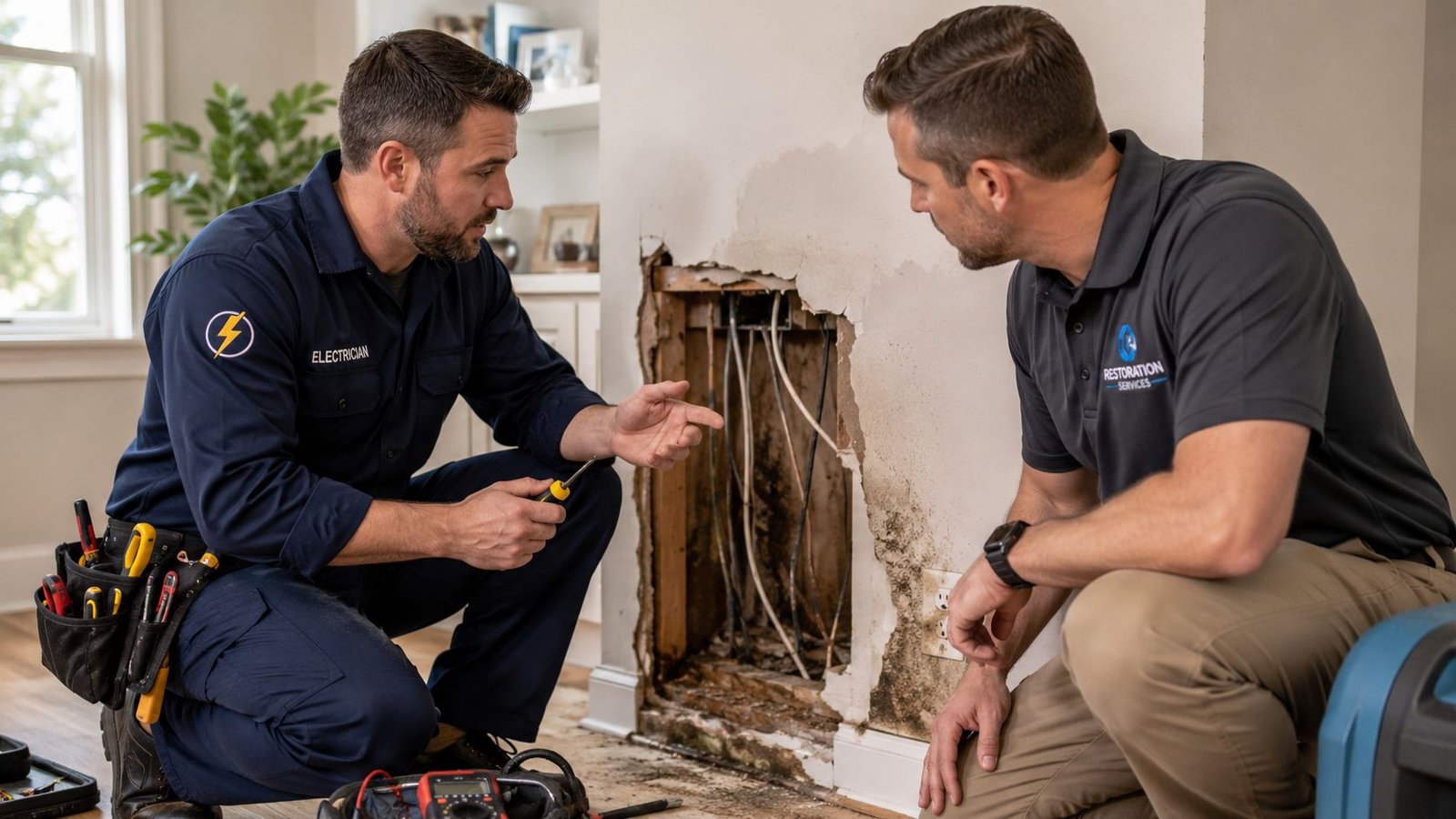
What the electrician handles
A licensed electrician evaluates the electrical system itself. That means identifying affected circuits, checking whether power should remain off, and determining which devices or wiring methods require replacement. The scope may include receptacles, switches, breakers, GFCIs, AFCIs, dimmers, panel components, branch wiring, and terminations.
Industry guidance on water-damaged electrical equipment has long shaped these decisions after floods and major leak events. The point is simple. Some materials and components can be inspected and addressed under controlled conditions, but many cannot be trusted after water exposure, especially when contamination, corrosion, or submerged terminations are involved.
That level of documentation also helps on the insurance side. Carriers are far more likely to accept repair and replacement decisions when the file shows where the water went, what was exposed, who inspected it, and why reuse would create a safety risk.
Why coordination matters in practice
In our experience across Los Angeles, from older Fairfax homes to hillside properties in Glendale and pipe-leak claims in Sherman Oaks, the handoff between restoration and electrical trades is where jobs either stay organized or start to unravel.
A restoration technician may document moisture behind a bathroom wall that shares space with an electrical chase. That tells the electrician exactly where to open, inspect, and test. The electrician may then call for additional access because damaged boxes or cable runs cannot be evaluated through a small cutout. That change affects demolition, drying, rebuild scope, and the claim file.
One company that provides emergency mitigation in this space is Onsite Pro Restoration, which handles water extraction, structural drying, and loss documentation while the electrical repair work is performed by the appropriate licensed trade.
The best outcomes usually come from one timeline, one documented scope trail, and clear separation between drying work and electrical repair decisions.
Assessing and Repairing Water Damaged Wiring
A common Los Angeles claim starts the same way. A slab leak wets the flooring in one room, then moisture spreads under baseboards, into lower wall cavities, and toward outlets before anyone sees a stain. By the time the wall is opened, the question is no longer whether the area feels dry. The question is whether the wiring and devices are still safe to keep in service.
In our experience, that decision has to be made conservatively. Water exposure can damage insulation, leave behind corrosion, and contaminate terminations inside boxes and devices. In older LA homes, that risk is even higher because we often find aging conductors, past handyman repairs, crowded junction boxes, or mixed wiring types in the same affected area.
What professionals look at
A proper assessment starts with the path of the water and the construction of the house. In Los Angeles, that may mean tracing moisture from a second-floor bathroom in a 1920s duplex, a failed angle stop in a condo, or a slab leak in a ranch home where wiring runs low through multiple connected walls.
Electricians and restoration teams typically evaluate several factors together:
- Type of water exposure: Clean supply-line water is treated differently from contaminated floodwater or a sewer backup.
- How far the water reached: Exposure at the base of one wall is very different from submerged outlets, switches, or panel components.
- Cable and insulation type: Some wiring materials tolerate wet conditions better than others, but that does not make every wet wire reusable.
- Condition of boxes and terminations: Corrosion at splices, grounding points, and device screws creates long-term failure risk.
- Age and condition of the system: Many Los Angeles properties have older electrical work that was already near the point of replacement before the leak occurred.
Hidden spread changes the repair scope. Surface staining only shows where water became visible. Moisture often moves farther through framing bays, insulation, and horizontal chases. Tools such as moisture mapping and thermal imaging in water damage inspections help document those concealed wet areas so the electrician is not making decisions through guesswork.
Why replacement is often the safer repair
For wiring and components exposed to floodwater or significant contamination, replacement is often the prudent course. The concern is delayed failure. A receptacle may test normally today and still fail after corrosion advances inside the metal parts. A cable jacket may look intact while contaminants continue affecting the insulation.
That is why homeowners should be careful with the phrase "it dried out." Dry to the touch is not the same as safe to energize.
There are limited cases where an electrician may determine that certain parts of a wiring run can remain, based on the cable type, how far water traveled, and whether the terminations stayed dry and uncontaminated. That call belongs to the licensed trade, not to the restoration crew and not to the homeowner. In our experience, cautious replacement usually costs less than dealing with a hidden short, nuisance tripping, or a fire claim months later.
What repair commonly includes
Once the damaged area is defined, repair usually involves opening finishes for access, removing affected cable or devices, replacing boxes and receptacles where needed, making new terminations, and testing the system before power is restored to that circuit. In older homes around neighborhoods like Fairfax, Mid-City, and Highland Park, the electrician may also find unrelated code or safety defects once the wall is open. That can expand the scope, but it also prevents the rebuild from covering up a known hazard.
Good documentation matters here. The photos, moisture logs, electrician findings, and itemized repair notes help support both the safety decision and the claim file. Homeowners who need help with the claim side often seek expert assistance for water damage when the carrier questions access, rewiring, or the extent of demolition required to inspect affected circuits.
The hard truth is simple. If water reached electrical pathways, the cheapest-looking option is not always the least expensive one. Safe repair comes first.
Navigating Costs Insurance and Timelines in Los Angeles
Most homeowners worry about two things after safety. How much will this cost, and will insurance cover it?
The answer depends on the cause of loss, the extent of the water spread, and the electrical scope. A small localized leak inside one wall is different from a flooded garage, a slab leak affecting multiple rooms, or a sewer backup that hit low outlets and wiring pathways.
What drives the scope
Cost usually rises with complexity, not with one single line item.
A claim involving wet drywall, insulation removal, cabinet toe-kick damage, detached flooring, and electrical device replacement will need more documentation than a simple appliance leak. If water traveled through several connected cavities, the electrician may need access in multiple locations, which changes demolition and rebuild needs too.
A key factor in repair decisions isn't just visible wetness but the type of wiring. Guidance notes that standard dry-location cables must be replaced if submerged, while some cables rated for wet locations may be exempt if their terminations were not submerged. That's why a professional assessment is vital for code compliance, as explained in Minnesota recommendations for electrical equipment damaged by floodwaters.
Why documentation matters for the claim
Insurance carriers usually want a clean chain of evidence. That includes cause of loss, moisture spread, affected materials, mitigation steps, and the reason certain electrical components require replacement rather than cleaning.
In practice, the strongest files include:
- Photos tied to affected rooms: Not random snapshots, but clear progression from source to damage.
- Moisture readings and drying records: These support why walls were opened and how far water migrated.
- Electrical findings: The electrician's notes help justify replacement items and reinspection needs.
- Timeline records: If you're wondering how long each phase can take, this guide on how long water damage restoration can take gives a useful framework.
Getting outside claim help when needed
Some homeowners prefer extra guidance when the electrical scope becomes disputed or the water category complicates coverage. In that situation, resources on expert assistance for water damage can help you understand when an outside claims advocate may be useful.
LA-specific timeline realities
Los Angeles projects can slow down for reasons homeowners don't expect. Access in older homes is harder. Parking and building access can delay work in dense neighborhoods. Specialty materials and electrical scheduling can affect reconstruction timing.
Still, one thing is predictable. Fast mitigation and clean documentation usually make the whole process easier. Delays tend to create larger tear-out areas, more disputed damage, and more homeowner stress.
Prevention Tips for Los Angeles Properties
Prevention starts with one basic goal. Keep water away from electrical pathways in the first place.
That sounds obvious, but in LA homes the trouble often comes from routine building issues, not dramatic disasters. Aging supply lines in Burbank, slow roof leaks in Glendale, poorly sealed windows in West Hollywood, and slab leak conditions in the Valley can all send moisture into walls where wiring runs.
Priorities for older homes
If your house has older plumbing or older remodeling work, inspection matters.
- Check under sinks and behind appliances: Washing machines, dishwashers, refrigerator ice makers, and water heaters cause many avoidable losses.
- Watch for recurring wall stains: Especially near bathrooms, laundry rooms, and exterior walls.
- Have suspect plumbing evaluated early: A slow hidden leak can soak a wire path for days before a breaker trips.
- Review past repairs: Cosmetic patching may hide recurring moisture routes.
Seasonal preparation before rain
Los Angeles doesn't get constant rain, which is part of the problem. Homes sit dry for long stretches, and then one storm finds every weak point.
Before rainy weather, inspect:
- Roof penetrations and flashing
- Window seals and door thresholds
- Garage door edges
- Yard drainage near the foundation
- Outdoor grading that pushes runoff toward the house
Small upgrades that reduce risk
You don't need a major remodel to improve electrical safety around water.
A few practical moves help:
- Replace worn appliance hoses before they fail
- Keep storage off garage floors where runoff may enter
- Label the main breaker and water shutoff clearly
- Ask an electrician about vulnerable low-mounted devices in risk-prone areas
- Address sewer or drain backups immediately, because contamination raises the hazard level
The best prevention plan is boring maintenance done on time. Most emergency electrical water losses start as a neglected minor issue.
For property managers, routine walkthroughs matter even more. Tenants often report stains, drips, or tripping breakers late. A quick response to the first sign of moisture can prevent a much bigger electrical problem.
Frequently Asked Questions About Damaged Electrical Wiring
FAQ on Water Damaged Wiring
| Question | Short answer | What it means for you |
|---|---|---|
| Can I turn the power back on after the area dries? | Not until a qualified professional says it's safe. | Surface dryness doesn't confirm safe wiring or devices. |
| Does every wet outlet need to be replaced? | Often, yes, especially after contamination or submersion. | Receptacles and protective devices are common replacement items. |
| Who should I call first? | A restoration professional and a licensed electrician usually both need to be involved. | One addresses the water event, the other confirms electrical safety. |
Can a single ceiling leak damage wiring if the lights still work?
Yes. Working lights don't prove the circuit is safe. Water may have reached a junction box, fixture connection, or cable path without causing an immediate failure. Problems can show up later as nuisance trips, odor, or overheating.
Is a breaker panel automatically ruined if the room flooded?
Not automatically in every scenario, but it should never be assumed safe. The panel, breakers, and connected circuits need professional evaluation before re-energizing. If floodwater or contaminated water was involved, replacement decisions become much more conservative.
Will homeowners insurance usually pay for electrical repairs after a covered water loss?
If the water loss itself is covered, electrical repairs tied directly to that damage are often part of the conversation. Coverage depends on the cause, the policy language, and the documentation showing why the wiring or devices were affected. Clean records from the start make that process easier.
If you're dealing with water damage to electrical wiring in Los Angeles, don't wait for a spark, a smell, or a second failure to confirm the danger. Onsite Pro Restoration can help document the loss, stabilize the affected areas, and coordinate the next steps so your home moves safely toward repair. Call 818-336-1800 for a free inspection.