
A musty smell kicks on with your AC, and now every vent in the house feels suspicious. When considering how to clean ductwork of mold, the short answer is this: a small, localized patch on accessible hard-surface ductwork can sometimes be cleaned safely, but only if you control contamination, address the moisture source, and stop the moment the problem looks larger than a surface spot.
That distinction matters in Los Angeles homes. In Sherman Oaks and Glendale, I often see duct issues tied to roof leaks, condensate problems, older attic installations, and long periods of HVAC use after water intrusion. In Burbank and North Hollywood, older homes and additions can hide disconnected ducts, soaked insulation, or staining that homeowners mistake for a simple vent-cleaning job.
Is Cleaning Mold from Ductwork a DIY Project?
A Los Angeles homeowner can clean a small patch of mold from a vent cover or a short, reachable section of bare metal duct. That is the limit for safe DIY work in most homes.
The deciding factor is not confidence. It is scope, material type, and moisture history. If growth is light, confined to an accessible hard surface, and connected to a moisture problem you have already stopped, a careful cleanup may be reasonable. If you see recurring staining, musty air from several vents, damp insulation, or contamination farther inside the system, stop there and treat it as a remediation issue.
In practice, I draw the line early. A removable register with surface growth is one thing. Interior duct runs, fiberglass-lined sections, flex duct, and the air handler cabinet are different. Wet or moldy insulated duct materials are typically replaced, not cleaned, as noted in EPA guidance referenced elsewhere in this article.
That distinction matters in LA. In Westchester and Santa Monica, coastal humidity and condensation can keep ducts damp longer than homeowners expect. In the San Fernando Valley, I see more cases where attic heat, roof leaks, or a clogged condensate line turned a small visible spot near a grille into a larger hidden problem.
If you want context on what visible growth at a register can mean deeper in the system, this guide on mold in air conditioning ducts gives a useful overview. It also helps to understand the causes of air duct mold, because cleaning without fixing the moisture source usually leads to the same call a few weeks or months later.
One more practical point. Insurance may care less about the mold itself than about the event that caused it. If the duct contamination followed a covered water loss, such as a burst line or storm-related intrusion, document what you found before touching anything substantial.
Field rule: DIY is limited to small, visible, reachable growth on hard, non-porous duct surfaces after the moisture source has been corrected. If the material is porous, the area is not fully accessible, or the growth keeps coming back, call a qualified mold or HVAC professional.
First Steps Identifying and Inspecting for Mold
A homeowner in Los Feliz may see a little dark spotting at a ceiling register and assume the fix is a quick wipe-down. Sometimes it is. Sometimes that spot is the first visible sign of a leak, chronic condensation, or contamination deeper in the run. The first question is not what cleaner to use, but whether you're looking at a small surface issue or the visible edge of a much larger moisture problem.
What to check first
Start with what you can reach and clearly see. Use a bright flashlight. Remove the grille if you can do it safely, then inspect the metal around the opening and the first visible section inside the duct.
Look for visible growth, but also look for the conditions that let it happen.
- Vent covers and nearby metal surfaces: Check for dark, green, white, or blotchy residue on the grille, boot, and exposed hard-surface duct.
- Odor pattern: A musty smell that gets stronger when the system starts often points to contamination somewhere in the air path, not just at the register.
- Water clues: Check for rust, staining, damp dust, peeling paint, ceiling discoloration, or signs of past leaks around the vent and nearby drywall.
- Insulation condition: Wet, compressed, or stained insulation usually means the problem is bigger than a light surface cleaning.
- Condensation points: In Santa Monica, Venice, and other coastal areas, cool conditioned air moving through poorly sealed duct sections can leave persistent moisture behind.
As noted earlier, homeowners should focus on visible mold growth in accessible hard-surface duct areas and on correcting the moisture source first. If the underlying moisture stays in place, the growth usually returns.
What homeowners often miss in Los Angeles
In LA houses, duct mold often starts outside the duct. I see it after roof leaks in Glendale attics, after condensate line issues in Valley homes, and around poorly sealed boots in older properties with retrofitted HVAC systems. In Westchester and Marina del Rey, coastal moisture can keep the area around supply boots damp longer than people expect.
That history matters during inspection. If the staining showed up after a storm, an AC drain backup, or a plumbing leak, document it before cleaning. Insurance carriers may pay more attention to the covered water event than to the mold itself, so photos of the vent, surrounding drywall, attic conditions, and the air handler can help support a claim.
If you want a homeowner-friendly breakdown of common causes of air duct mold, that resource is a useful primer before you assume the vents are the only issue.
When an inspection should go beyond DIY
Stop and reassess if the visible growth is more than a small patch near the opening, if the duct material is lined or insulated, or if the smell is strong but you cannot find a clear source. Those are the jobs where homeowners often disturb contamination without fixing the underlying problem.
I also tell people to step back if they see repeated growth in the same spot after cleaning, signs of active water intrusion, or contamination near the air handler and evaporator section. At that point, the job shifts from surface cleaning to moisture investigation and controlled remediation.
For a more methodical review before you decide what to do, use this mold inspection checklist for homeowners and compare your findings against what is accessible.
Essential Safety Gear and Work Area Containment
This is the point where many DIY jobs go wrong. People remove a vent cover, start scrubbing, and end up spreading spores through the house when the system cycles on or air movement stirs debris.
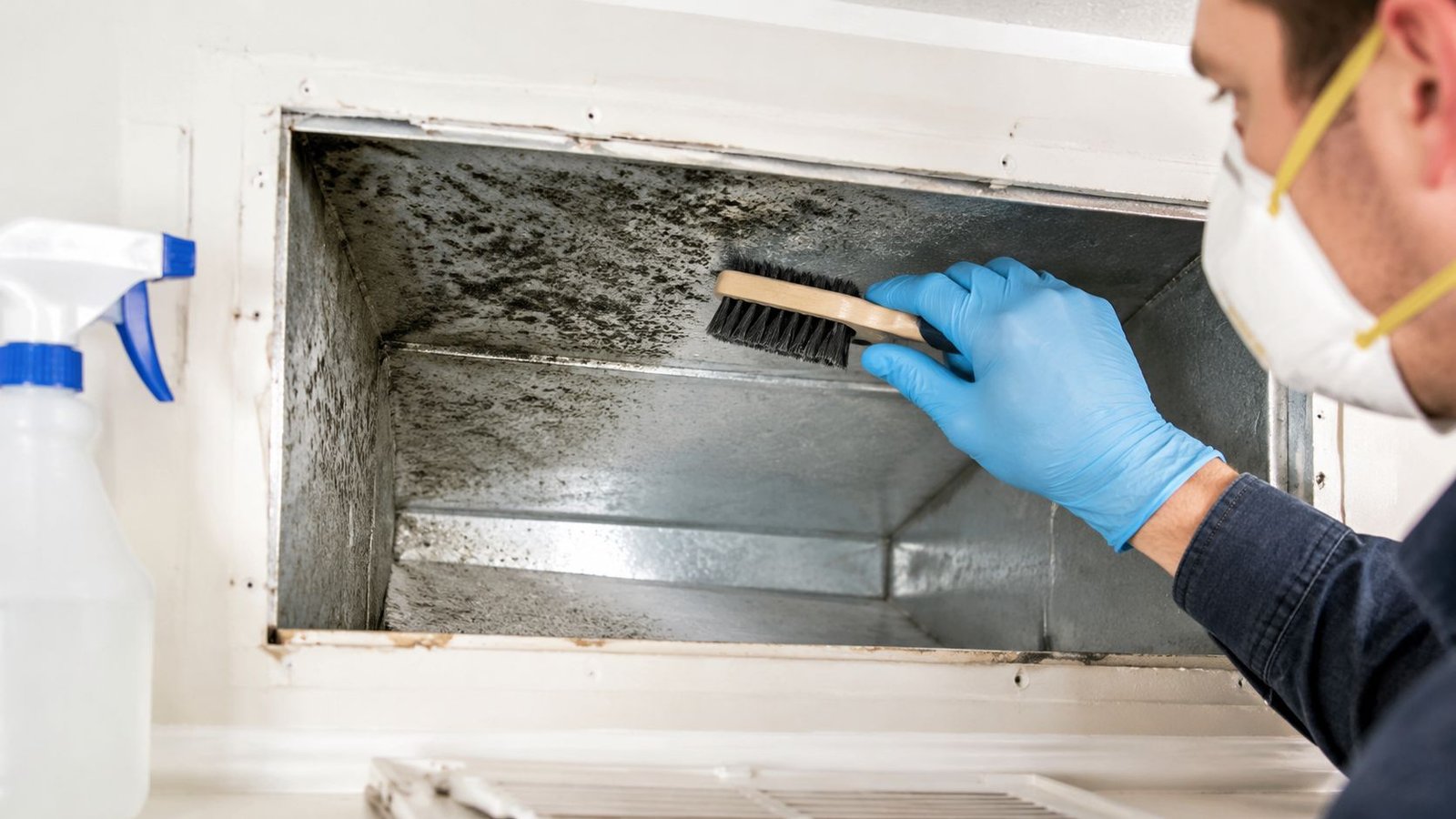
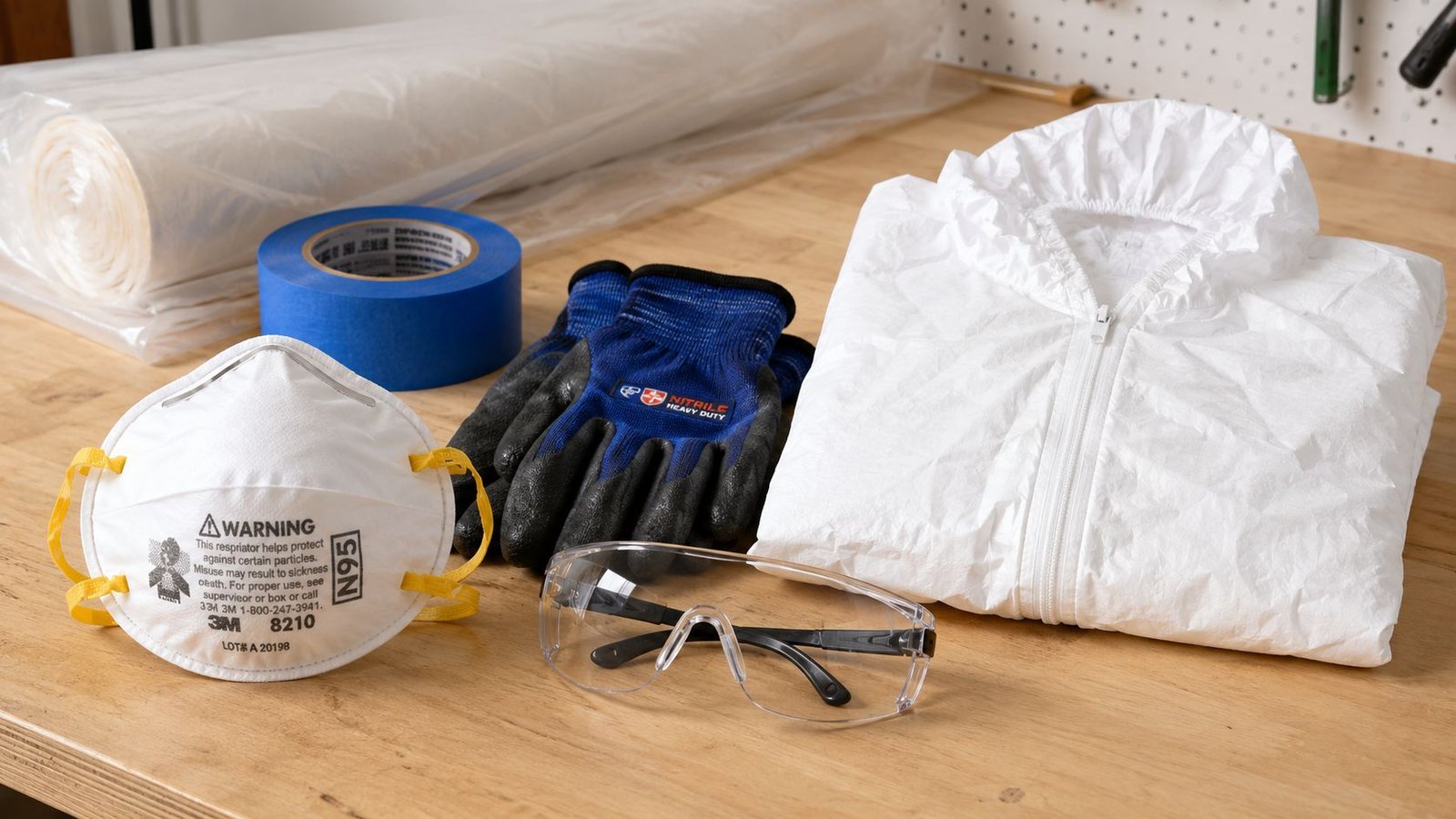
Wear real protective gear
A basic dust mask isn't enough for mold work. Use gear that effectively limits exposure.
| Item | Why it matters |
|---|---|
| N95 or P100 respirator | Reduces inhalation of disturbed particles during cleaning |
| Non-vented goggles | Protects eyes from debris and splashes |
| Disposable nitrile gloves | Keeps contamination off your skin and out of other rooms |
| Disposable coveralls or dedicated work clothes | Helps prevent tracking dust and spores through the home |
If anyone in the household has asthma, respiratory sensitivity, or a weakened immune system, the bar for DIY should be much higher.
Contain the work area before touching the duct
For mold-contaminated HVAC ductwork, the EPA recommends shutting the system off, sealing all intakes and supply vents with plastic and tape, and maintaining negative air pressure in the work area to keep spores from spreading during cleaning, as described in the EPA's mold course guidance for HVAC containment.
That means:
- Turn off the HVAC system completely: Don't rely on the thermostat alone if you're not sure the blower won't kick on.
- Seal nearby vents: Use plastic sheeting and tape on supply and return openings outside the immediate work area.
- Isolate the room if possible: Close doors and limit foot traffic.
- Create directional airflow out of the work zone: If you can do it safely, exhaust air outward so loosened particles don't drift back into occupied spaces.
Cleaning without containment often creates a bigger indoor air quality problem than the one you started with.
A licensed remediation contractor such as Onsite Pro Restoration's mold removal service typically builds containment first, then cleans. Homeowners should follow that same order even for a small localized issue.
A short visual on careful HVAC cleaning can help you picture the setup before you begin:
The DIY Ductwork Cleaning Process
If the growth is limited, accessible, and on a hard non-porous surface, the cleaning goal is simple: physically remove loose contamination, clean the exposed surface, and dry it fully before restarting the system.
What a safe localized cleaning looks like
A technically sound workflow for localized mold is to remove and wash vent covers, HEPA-vacuum loose debris at the openings, clean exposed surfaces with a commercial HVAC-approved mold cleaner or a moist detergent method, then dry everything completely before restarting the HVAC. If the mold is extensive, professional remediation is necessary, based on guidance from Belfor's article on cleaning mold in air vents and ducts.
Use this order:
- Remove the vent cover carefully. Bag or carry it straight to a cleaning area. Don't bang it against the wall or floor.
- Wash the cover separately. Use detergent and water, then dry it thoroughly.
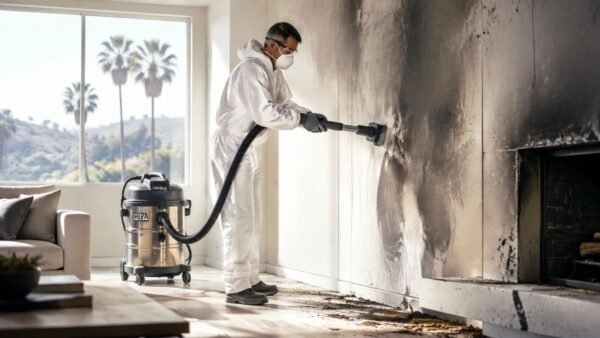
- HEPA-vacuum the accessible opening. Focus on loose debris near the surface.
- Wipe the exposed metal duct surface. Use a moist cloth with detergent solution or a commercial HVAC-approved cleaner.
- Change cloths as they get dirty. Smearing residue around isn't cleaning.
- Dry the area completely. Moisture left behind sets you up for a quick return.
- Install a clean filter before restart. Then monitor odor and visible surfaces over the next several system cycles.
What doesn't work well
Palm Beach County's independent duct-cleaning guidance reports that air-sweep and mechanical-brush methods were only modestly effective in the short term, though they reduced bioaerosol contaminants by approximately 85% two days after cleaning in the FIU study it summarized. The same guidance warns that contamination can return to prior levels unless humidity is reduced, states that biocides are not recommended in ductwork because of occupant exposure risks, and notes that ozone methods require 5 to 7 parts per million to kill microbial contaminants in ducts, which raises obvious safety concerns, according to Palm Beach County's duct cleaning guidance.
That lines up with what we see in the field. Homeowners often want a spray-only solution. They want to fog the system, use bleach, or run an ozone device and call it done. Those approaches miss the main issue, which is removal plus moisture correction.
Practical rule: If your plan depends on fragrance, fogging, or “killing” mold without removing residue and fixing water intrusion, it isn't a real fix.
If you're comparing cleanup products and broader building-use concerns, this outside piece with expert advice on commercial mold gives context on why chemical claims should be treated carefully.
For homeowners also dealing with heavy dust, restricted airflow, or long-neglected registers, this page on the benefits of duct cleaning helps separate general duct maintenance from actual mold remediation.
After the Clean Up Drying Verification and Prevention
Scrubbing is only half the job. If the area isn't fully dry, or if the moisture source remains active, you're just resetting the clock.
Drying comes first
Don't restart the HVAC until the cleaned area is dry. That matters in Los Angeles attics and crawlspaces where trapped moisture can linger longer than homeowners expect, especially after roof leaks, condensate overflow, or hidden plumbing drips.
If the mold followed a leak event, track the moisture, don't guess at it. A register can look dry while the framing, insulation, or boot above it is still wet. This guide on how to read moisture meter readings helps homeowners understand why surface appearance alone isn't reliable.
Odor improvement is not proof
One of the most common mistakes I see is assuming the problem is solved because the smell fades. Odor can improve long before the system is clean.
Post-remediation air testing and a clearance certificate, performed by a qualified hygienist, are used to confirm that a home and HVAC system are completely clean. That same professional perspective also stresses that cleaning a visible spot without addressing the root water problem means the mold will likely return, as discussed in this video on post-remediation verification and clearance testing.
Prevention is a building issue, not a spray issue
Think through the reason mold showed up in the first place:
- Roof leaks above ceiling registers
- Condensate drain or pan issues near the air handler
- Poorly insulated ducts sweating in hot attics
- Past water intrusion that was never fully dried
- High indoor humidity from ventilation or envelope problems
If the mold followed an active leak or recent water event, homeowners in Los Angeles often need emergency water damage restoration before any duct cleaning effort will hold.
Red Flags When to Immediately Call a Professional
Some conditions move this out of DIY territory right away. When I inspect homes in Sherman Oaks, Glendale, and West Hollywood, these are the moments where I tell people to stop touching the system and shift to professional remediation.

Stop and call for help if you notice any of these
- Growth extends beyond a small accessible area: If multiple vents show contamination or the visible patch suggests deeper spread, the issue is no longer localized.
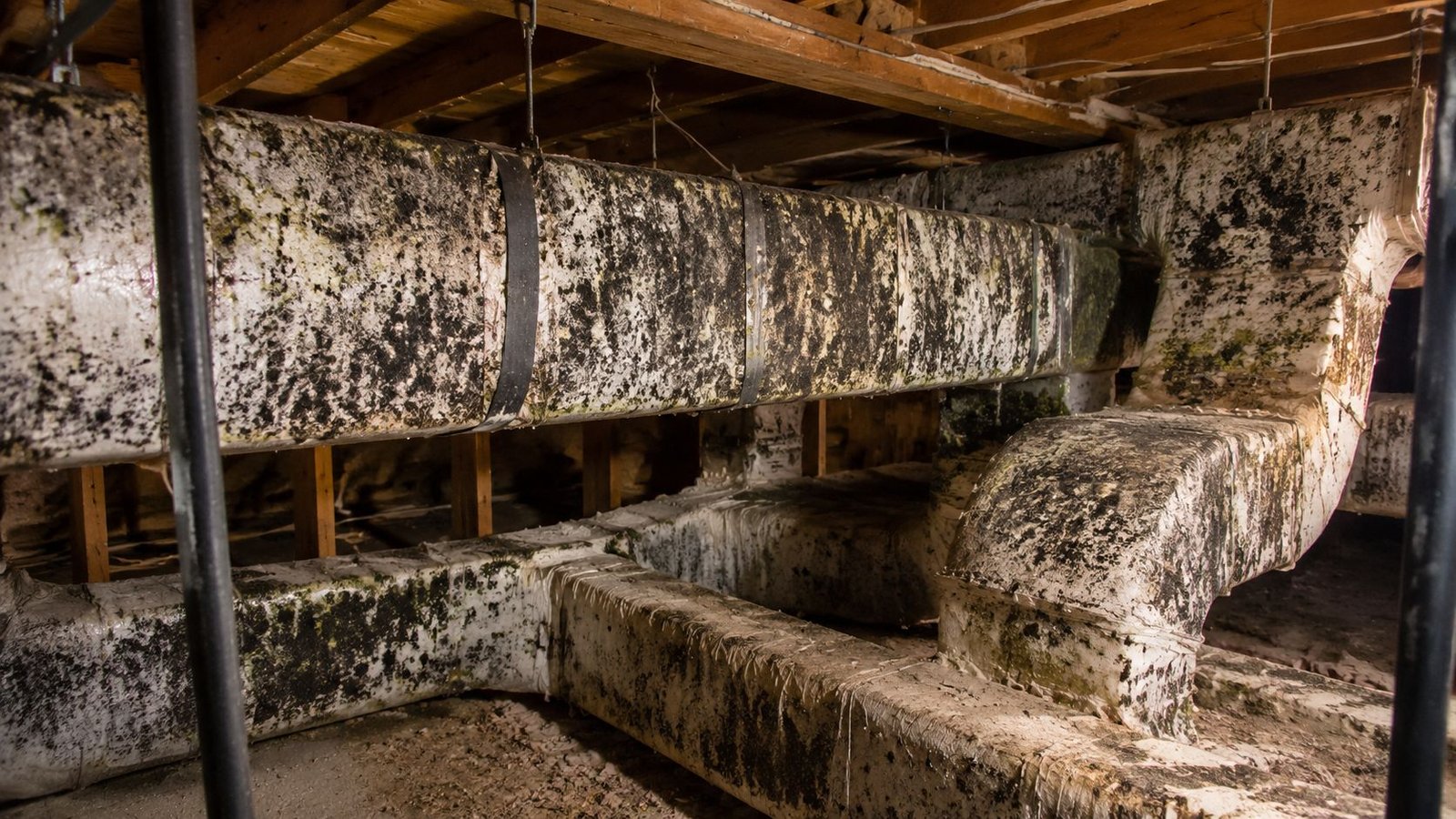
- Insulated or porous materials are involved: Wet or moldy insulated ducts generally need removal and replacement, not wiping.
- The odor persists after localized cleaning: That usually points to hidden contamination, unresolved moisture, or contamination elsewhere in the HVAC system.
- The home has medically sensitive occupants: If someone reacts strongly to dust, mold, or cleaning disturbance, DIY isn't worth the exposure risk.
- The moisture source isn't fully identified: If you can't say exactly what got wet and what has now dried, you don't yet have control of the problem.
- The contamination may involve sewage or heavily contaminated water: That's a specialized remediation issue.
A lot of homeowners start by searching broad resources on home duct cleaning, but mold inside a system is a different threshold. Once contamination reaches multiple HVAC components, a simple cleaning mindset can cost more in rework, health complaints, and insurance complications.
If you're facing any of those issues in the Los Angeles area, don't gamble on a partial fix. Call the IICRC-certified team at 818-336-1800 for a professional assessment. If the mold is tied to a covered water loss, it also helps to understand insurance coverage water damage questions before work begins.
Frequently Asked Questions About Ductwork Mold
Can I use bleach inside air ducts?
It's not my recommendation. For small localized mold on accessible hard surfaces, physical removal with a HEPA vacuum, a moist cloth, and detergent or an HVAC-approved cleaner is the safer approach described in established guidance. Bleach doesn't solve the moisture source, and harsh chemical use inside duct systems can create its own problems.
Is a musty smell always mold in the ductwork?
No. A musty odor can come from nearby insulation, a wet air handler area, a condensate issue, or contamination elsewhere in the HVAC system. Smell alone isn't a diagnosis, and smell disappearing isn't proof the problem is gone.
Can I clean mold from a vent cover myself?
Usually, yes, if it's a removable metal vent cover with light visible growth and you've already addressed the moisture issue. Wash it separately, dry it completely, and inspect the duct opening before reinstalling it.
What if the mold is on duct insulation?
That's a stop sign. Wet or moldy insulated duct materials are not a simple wipe-down item. They often need to be removed and replaced.
Do I need post-remediation testing?
If the issue was more than a tiny surface spot, or if the house has sensitive occupants, verification is the smart move. Post-remediation air testing and clearance review by a qualified hygienist can confirm whether the cleanup and moisture correction were successful.
Will changing my HVAC filter solve the problem?
No. A clean filter helps system hygiene, but it doesn't remove existing mold growth or fix the water source that allowed it to develop.
Should I file an insurance claim for mold in ductwork?
That depends on what caused it. Insurance is usually about the covered cause of loss, not just the mold itself. If the duct contamination follows a sudden water event, documentation matters. Photos, moisture readings, leak source information, and a professional scope of work all help support the claim process.
If you need help with mold in vents, ductwork, or the larger moisture problem behind it, contact Onsite Pro Restoration. We serve Los Angeles, North Hollywood, Burbank, Glendale, Sherman Oaks, and nearby communities with mold inspection, containment, remediation, and documentation that can help support the insurance process. Call 818-336-1800 for a free inspection.