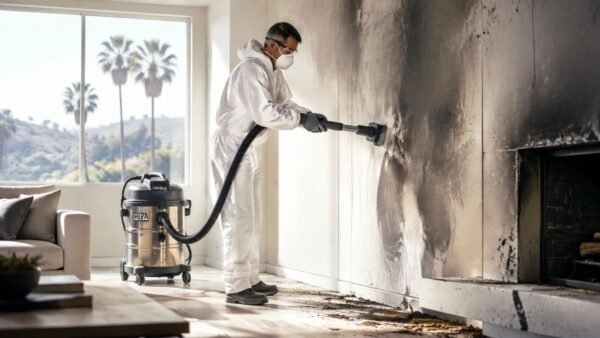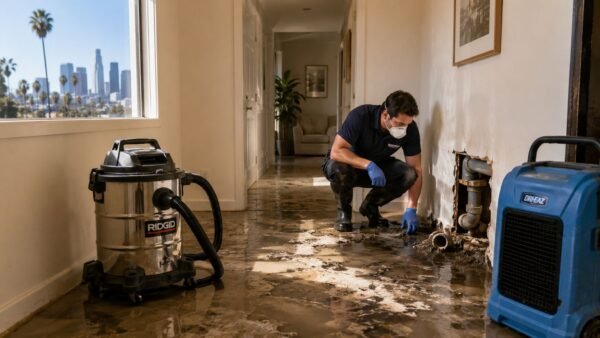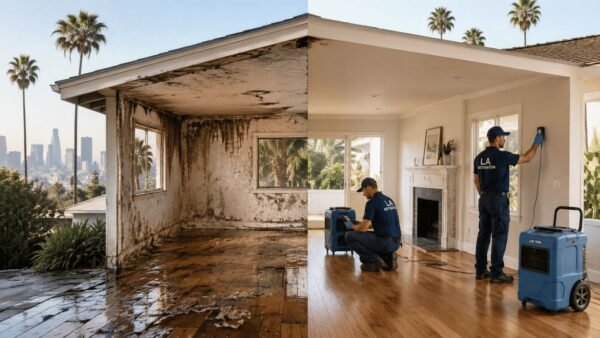

A room odor eliminator is meant to neutralize or remove smells, not just cover them with fragrance. The products that work best use active chemistry or odor-trapping materials like activated charcoal, which is why some smells fade quickly while others keep coming back no matter how much you spray.
If you're in a Los Angeles home and a smell keeps hanging around after cleaning, that usually means the odor isn't sitting in the air alone. It's often in carpet padding, drywall, subflooring, ductwork, or a damp area you haven't found yet. That's where homeowners start wasting money on candles, plug-ins, and aerosol sprays that make the room smell different for an hour but don't solve the problem.
A true room odor eliminator has a place. So does a box of baking soda, a charcoal bag, or a moisture absorber. But none of those should be confused with source removal. In restoration work, that distinction matters because musty, smoke, pet, and sewage odors often point to a material problem, not just an air problem.
What Is a Room Odor Eliminator Really
A real room odor eliminator does one of three things. It binds odor molecules, absorbs them, or chemically changes them so your nose no longer detects the same airborne compounds.
That is different from a basic air freshener. A typical air freshener adds a stronger scent over an existing odor. In some situations, that's fine. If you cooked fish, burned toast, or need a quick reset before guests arrive, a masking product can help. But if the smell returns after the fragrance fades, the product didn't remove the cause.
What separates an eliminator from a masker
The room deodorizer category has grown large enough that household use is tracked in the U.S., which tells you these products are part of regular consumer behavior rather than a niche purchase. Product science sources also describe how modern formulations use activated charcoal, silica gel, and odor-neutralizing compounds to alter odor molecules instead of only hiding them with perfume, as noted in Homecourt's explanation of room deodorizer science.
That shift matters in homes where the odor source is stronger than normal daily living. Smoke residue, mildew, pet accidents, and stale cooking grease don't respond the same way as a room that feels stuffy.
Practical rule: If the smell disappears only while the product is active, you probably have a masking result, not a removal result.
Where homeowners get tripped up
A lot of packaging uses words like “eliminate,” “fresh,” or “neutralize” loosely. In practice, the useful question is simpler: did the smell stop returning?
If yes, the room odor eliminator may have been enough.
If no, the source is still there, and the next step usually isn't another fragrance product. It's inspection, cleaning, drying, or material removal. That's the same logic behind a professional odor removal service in a restoration setting. The treatment only sticks when the source is identified correctly.
Uncovering the Source of Persistent Odors in Your Home
A smell that won't leave usually points to a source hidden in building materials, contents, or moisture. In Los Angeles neighborhoods like Burbank, Glendale, and older parts of Sherman Oaks, I often see odors tied to aging plumbing, previous leaks, poor ventilation, or smoke that settled into porous surfaces long before the current owner noticed it.
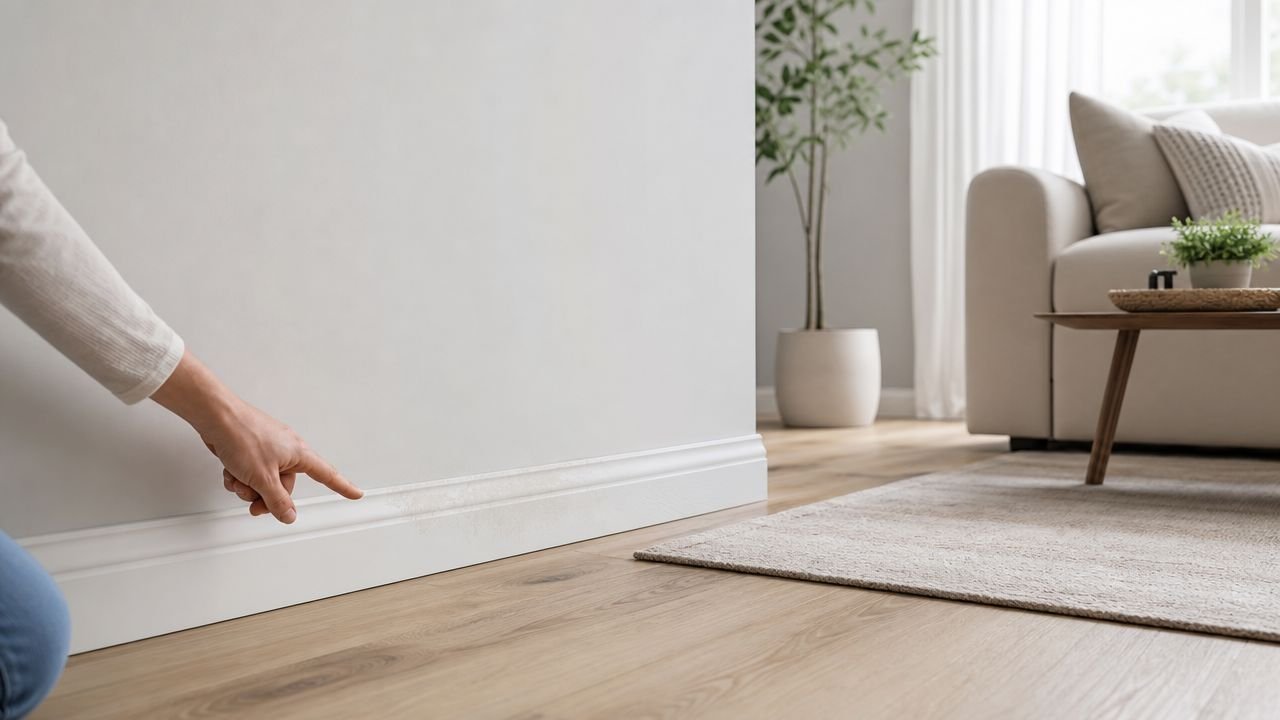
The five causes that keep producing odor
Hidden mold and mildew
If you're asking what causes musty smell in a room, moisture is usually near the top of the list. A closet wall, baseboard cavity, under-sink cabinet, or crawlspace can stay damp long enough for microbial growth to develop an odor before staining becomes obvious.Past or active water damage
Wet drywall, carpet pad, subfloor, and insulation can hold organic residue and moisture together. That combination creates a stale, sour, or earthy smell that often gets stronger when doors and windows stay shut.Smoke and soot residue
This isn't limited to fire damage. Cooking smoke, tobacco residue, and wildfire exposure in Los Angeles can settle into textiles, painted surfaces, attic insulation, and HVAC systems. The smell may seem gone during the day and stronger at night when the house closes up.Sewer gas or drain issues
A sewage-like odor can come from a dry trap, failed wax ring, broken venting, or backup condition. That smell should never be treated as a room-fragrance problem.Pet contamination in porous materials
Surface cleaning can help, but urine that reached the pad, subfloor, baseboards, or lower drywall often keeps producing odor even after repeated shampooing.
Why moisture changes everything
Humidity changes odor behavior and product performance. In damp rooms or after a leak, odor products often underperform unless the area is dried and ventilated first, which is a key restoration point discussed in this guidance on humidity and odor-eliminator performance.
That's why a dehumidifier sometimes helps more than another spray. Water keeps feeding the odor source.
For general health guidance around indoor air concerns, the EPA's indoor air quality resources are worth reviewing. If the smell is musty and you suspect hidden growth, start with this guide on how to detect mold in a house.
A persistent odor is a symptom. The building assembly is often where the actual problem sits.
If you want an outside example of how hidden moisture and mold can affect a property, Vanish Canada's mold remediation case study is useful because it shows how the visible smell issue can trace back to a concealed structural area.
Consumer vs Professional Odor Eliminator Types
Not all odor control tools belong in the same category. Some are good for minor living odors. Others are built for contamination inside materials, after a leak, smoke event, or long-standing pet issue.
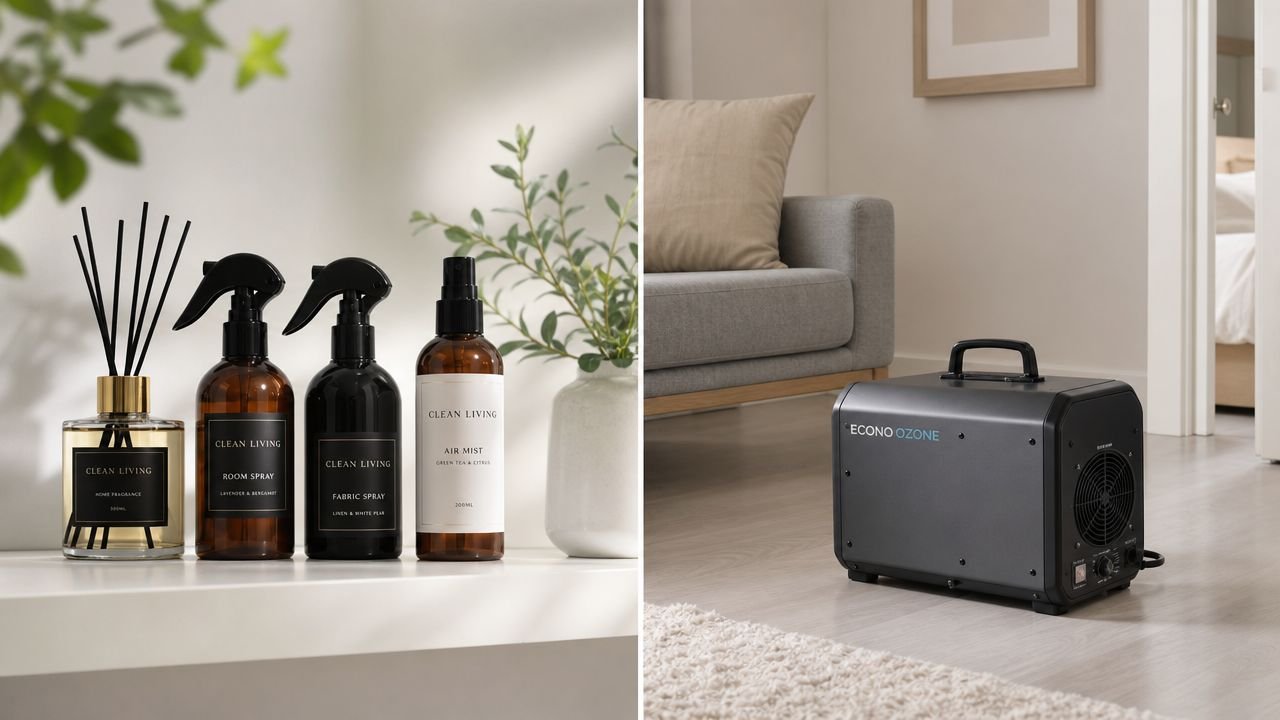
Consumer-grade options
| Type | What it does | Where it helps | Main limitation |
|---|---|---|---|
| Masking sprays | Add fragrance over odor | Quick kitchen or bathroom reset | Doesn't remove source |
| Activated charcoal bags | Adsorb some odor compounds | Closets, cars, small enclosed rooms | Slow and limited if materials are contaminated |
| Baking soda or vinegar | Helps with surface odor and some mild absorption | Refrigerators, bins, some fabrics | Weak against deep structural odor |
| Plug-in diffusers | Add continuous scent | Light lifestyle fragrance | Often just layers perfume over the problem |
| Cyclodextrin sprays | Trap airborne odor compounds | Smoke, pet, food odor in fabrics and air | Still won't fix a hidden source |
Cyclodextrin is worth calling out because it's one of the better consumer technologies. It works by molecular inclusion, meaning the molecule forms a cage-like structure that traps volatile odor compounds. That reduces airborne odorants rather than covering them, as described in Airdog's explanation of odor eliminator mechanisms.
Professional-grade technologies
Professional deodorization uses stronger tools and, more importantly, uses them in the right order.
- Thermal fogging can help distribute deodorizing agents into spaces where odor residue settled.
- Hydroxyl-based treatment is used in some restoration settings to address odor compounds in the air and on surfaces.
- Ozone treatment can be effective in some cases, but it requires careful handling and isn't a casual occupied-space solution.
- Commercial HEPA air scrubbers filter airborne particles and help control cross-contamination during cleanup.
A lot of homeowners focus on the machine. The machine matters, but the sequence matters more. If the carpet pad is contaminated or the wall cavity is wet, no machine fixes that by itself. Still, for airborne particulate and cleanup support, commercial air scrubber rental options can play a useful role in broader odor-control work.
Store-bought products can be enough for temporary odor. They usually aren't enough for contamination.
Why Your Room Odor Eliminator Isn't Working
When a room odor eliminator fails, the reason is usually straightforward. The product is treating the air, while the odor is still being produced by a material.
That's the part many retail labels skip.
Porous materials keep re-releasing odor
Drywall, wood framing, carpet padding, upholstery, and insulation all hold odor differently from tile or glass. Smoke residue can settle into them. Pet urine can wick downward and sideways. Moisture can activate microbial odor inside them. If you spray the room but leave the material unchanged, the smell often comes back as soon as airflow changes or humidity rises.
A neutral source on DIY odor control points out an important gap in consumer advice: persistent room odors often indicate a hidden source in porous materials, and the real answer may be drying, cleaning, or remediation rather than another deodorizer. That distinction is especially relevant for Los Angeles properties where odors often overlap with water intrusion, mold, or smoke, as explained in this discussion of when odor elimination products aren't enough.
Older LA homes add another layer
In Los Angeles, many homes have older venting, aging drain lines, settled subfloors, and wall cavities that have seen more than one leak over time. A room may smell “musty” even though the visible surfaces look clean. Sometimes the problem is behind a vanity, under laminate flooring, or in ductwork that has been moving odor from one part of the home to another.
That's one reason duct cleaning benefits matter in selected cases. If odor particles have circulated through the HVAC system, room-level products won't address the path of redistribution.
The simple test
Use this rule at home:
- If cleaning removed the smell and it stays gone, your issue may have been surface-level.
- If the smell improves briefly, then returns, the source is probably still active.
- If odor gets stronger with humidity, HVAC use, or closed windows, inspect for moisture, contamination, or trapped residue.
If the smell comes back, the building is still feeding it.
How Professionals Permanently Remove Odors
Professional odor work isn't guesswork. In restoration, the process is closer to diagnosis and controlled removal than to “freshening” a room.
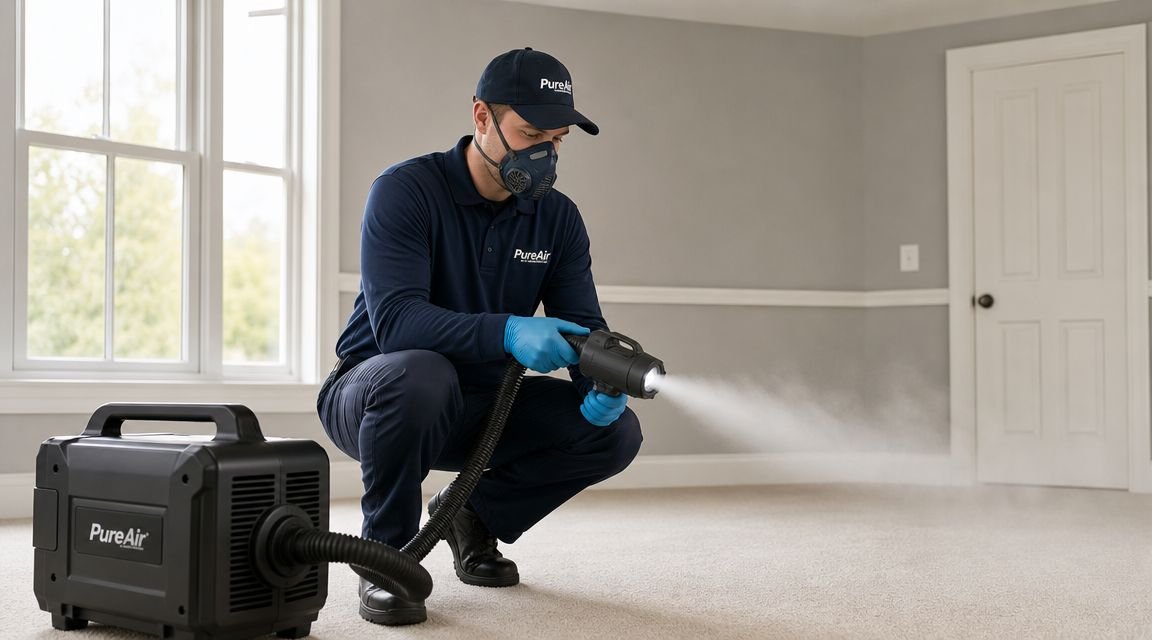
In our experience handling odor complaints in places like Sherman Oaks and Glendale, the first step is always to figure out whether the smell is active source odor, leftover residue, or both. Homeowners often assume they need a stronger room odor eliminator. Sometimes they do. Just as often, they need a wet wall opened, contaminated pad removed, or smoke residue cleaned off framing and hard surfaces.
Step one is source detection
A proper inspection starts with building clues, not fragrance. We look at the timeline, recent leaks, previous repairs, visible staining, humidity conditions, and where the odor is strongest at different times of day.
Common tools and methods include:
- Moisture meters to locate wet materials that still support odor production
- Thermal imaging to help identify suspicious temperature patterns tied to moisture pathways
- Targeted inspection openings when evidence points behind a wall, vanity, or ceiling cavity
- HVAC evaluation if odor is stronger when the system runs
Step two is source removal
For permanent results, effective odor eliminators rely on active chemistry, not just fragrance, and compounds such as cyclodextrin can trap odor molecules while other formulations neutralize odor by adjusting pH. But in restoration, those tools work best after the source and moisture problem are addressed, as explained in The Chic Chemist's breakdown of odor eliminator chemistry.
That means the work may include cleaning structural surfaces, removing wet or contaminated materials, drying the area, and treating only what should remain.
For smoke-related conditions, this can overlap with the steps outlined in how to remove fire smoke smell from a house, especially when odor has entered porous finishes and insulation.
Here's a useful overview of the kind of restoration process homeowners often want to see before authorizing work:
Step three is controlled air treatment
After source control, professionals may use fogging, air scrubbing, or other deodorization methods to deal with residual airborne and surface-bound compounds. That's the point where equipment earns its keep.
If you're hiring a contractor, ask whether they follow recognized restoration standards and training from the IICRC. Certification doesn't replace judgment, but it does tell you the company works from an established restoration framework rather than trying random products until the room smells better for a day.
One local option for these situations is Onsite Pro Restoration, which handles odor removal as part of water, mold, fire, smoke, and sewage-related restoration in Los Angeles.
When to Call a Professional for Odor Removal in Los Angeles
Some smells are manageable with cleaning, ventilation, and a consumer room odor eliminator. Others need professional help right away because the odor is tied to damage, contamination, or a health and safety issue.
Call if the odor fits any of these situations
It came after water damage
If the smell started after a leak, overflow, slab issue, or roof intrusion, drying and inspection come before deodorizing.It smells musty or moldy
That often points to hidden dampness, especially in bathrooms, laundry areas, garages, and rooms with limited airflow.It smells like sewage or rotten organic waste
That can indicate a plumbing, drain, or backup issue. This isn't a candle problem.It followed smoke exposure
Nearby wildfire smoke, a kitchen fire, or tobacco residue can settle deep into porous surfaces.You're preparing the property for sale or lease
Odor problems can affect buyer and tenant perception fast. They also tend to trigger deeper inspection questions.
Insurance and documentation matter
When odor follows a covered event such as sudden water damage or fire damage, deodorization is often part of the larger restoration scope. The key is documentation. Contractors need to connect the smell to the loss condition, identify affected materials, and show what was required to return the property to pre-loss condition.
That matters for homeowners, landlords, and agents across Los Angeles, CA, including Burbank, Glendale, Sherman Oaks, and nearby neighborhoods where older housing stock can hide previous repairs and unresolved moisture.
A persistent odor can reduce property confidence long before anyone sees visible damage.
Don't let a persistent odor compromise your property's value or your family's comfort. For a thorough assessment in the Los Angeles area, call 818-336-1800.
Frequently Asked Questions About Odor Removal
Can a room odor eliminator remove musty smells for good
Sometimes, but only if the musty smell is minor and the moisture source is already gone. If damp materials, hidden mold growth, or trapped organic debris remain, the smell usually returns.
What's the best odor eliminator for pet smell
For light pet odor in fabric and air, a cyclodextrin-based product can help because it traps volatile odor compounds. For repeated accidents that reached carpet pad, subfloor, or baseboards, the better answer is inspection and material-specific cleaning or removal.
Why does my house smell worse when the AC turns on
That often suggests the HVAC system is redistributing odor from dust, microbial growth, smoke residue, or contaminated duct surfaces. It can also mean humidity changes are activating odor in nearby materials.
Is ozone safe for home odor removal
Ozone is a professional tool, not a casual household treatment. It requires careful use and isn't something homeowners should treat like a plug-in deodorizer.
Will opening windows fix a room odor problem
Ventilation can help reduce airborne odor, especially after cooking or light stuffiness. It won't solve odor coming from wet drywall, contaminated padding, sewer gas, or smoke residue embedded in materials.
How do I know if I need odor removal or mold remediation
If the smell is musty, keeps returning, or started after a leak or moisture event, treat mold inspection as a serious possibility. Odor removal alone may not solve it if microbial growth is active behind surfaces.
How fast should I act on a sewage-like smell
Immediately. A sewage odor can point to a drain, venting, trap, or backup issue that needs prompt inspection. Delay can make cleanup larger and expose occupants to a more serious sanitation problem.
Schema opportunity: FAQPage and LocalBusiness schema both fit this article.
If a room odor eliminator hasn't solved the smell, the issue may be in the structure, not the air. Onsite Pro Restoration helps Los Angeles homeowners identify hidden moisture, smoke residue, sewer-related contamination, and other odor sources so the problem can be removed correctly. Call 818-336-1800 for a free inspection.