smoke odor removal

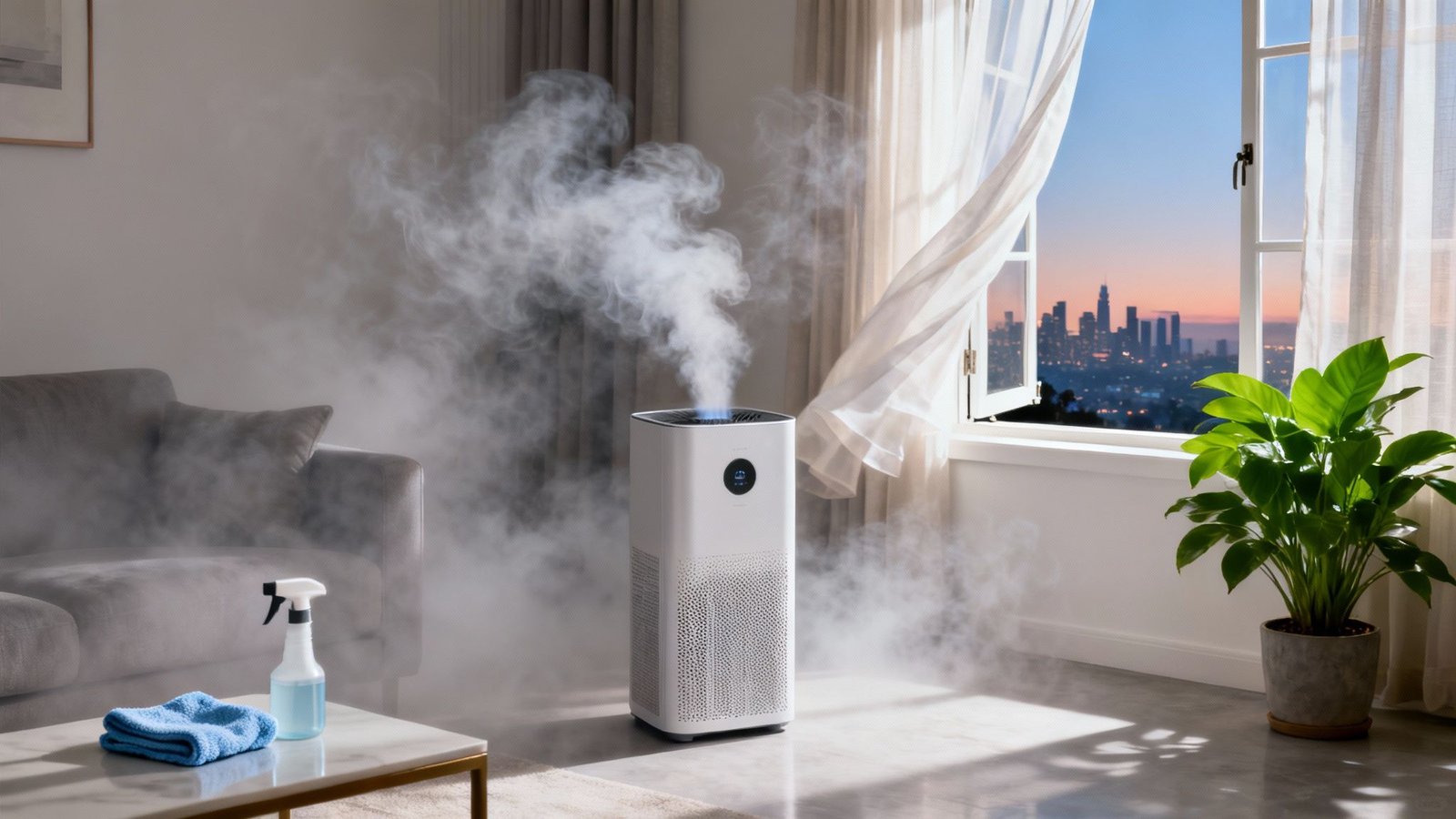
Room Odor Eliminator Air Purifier
Restoration & Remediation Posts
Pete M.

Room Odor Eliminator: A Pro Guide for LA Homes

The best room odor eliminators use activated charcoal or enzyme chemistry to neutralize odors at the molecular level — not just mask them. But when odors keep returning, the source is usually embedded in carpet backing, subfloor, drywall, or HVAC. This LA guide covers what works, what doesn’t, and when a persistent smell signals water damage or mold growth that needs professional treatment. Call (818) 336-1800.

Read More »
How To Eliminate Cigarette Smoke Odor In House Smoke Cleaning
Restoration & Remediation Posts
Pete M.

How to Eliminate Cigarette Smoke Odor in a House: Proven 2026 Methods for Los Angeles Homes

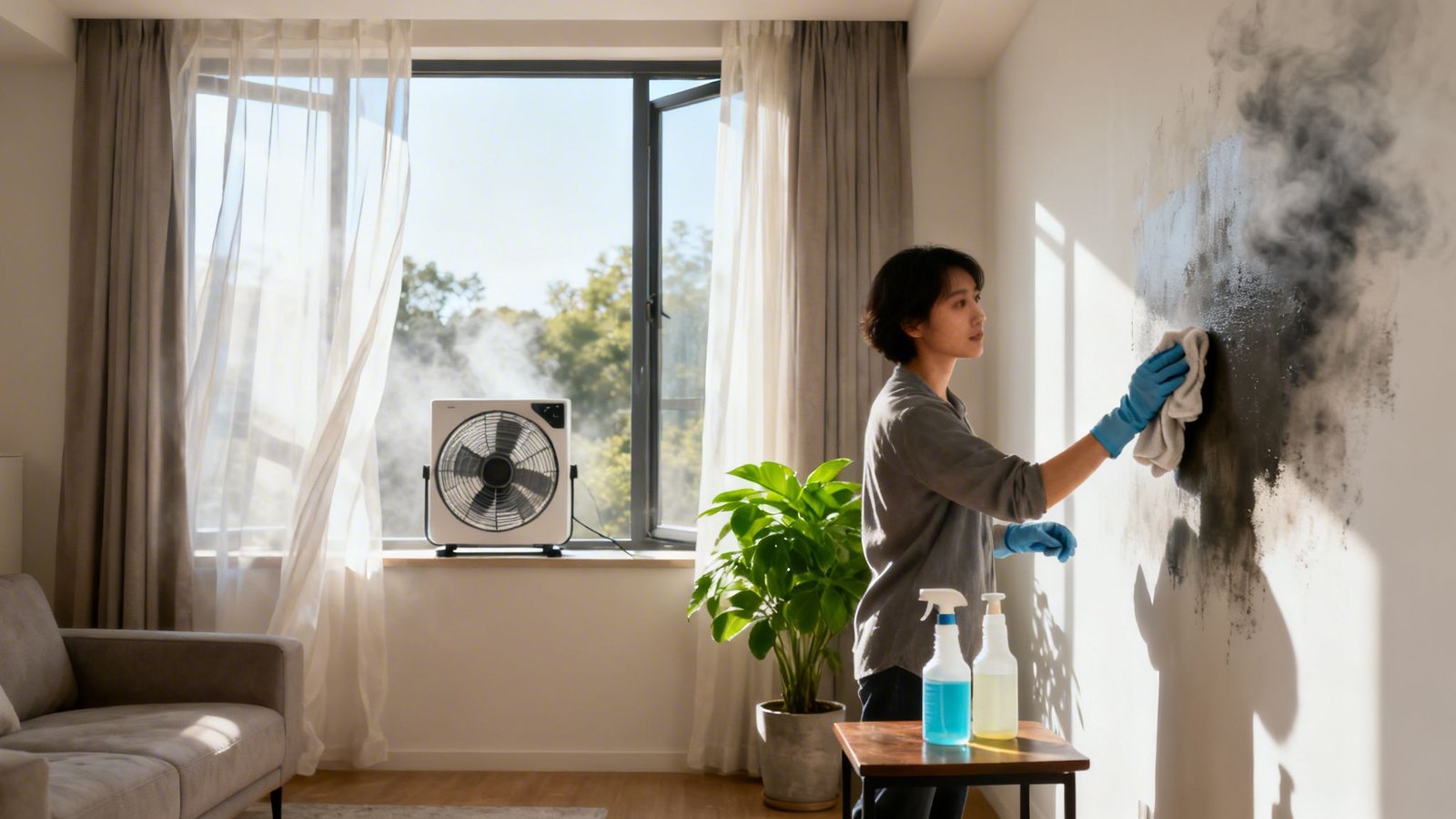
Cigarette smoke odor can’t be eliminated with air fresheners — nicotine and tar have physically bonded to every porous surface: walls, ceiling, carpet, insulation, and HVAC. True elimination requires ozone treatment, hydroxyl generators, or thermal fogging combined with deep cleaning and paint encapsulation. This Los Angeles guide covers what actually works, the sequence professional odor removal teams use, and typical costs. Call (818) 336-1800.
Read More »
How To Eliminate Odor In House Air Freshener
Restoration & Remediation Posts
Pete M.

How to Eliminate Odor in Your House: A Los Angeles Guide

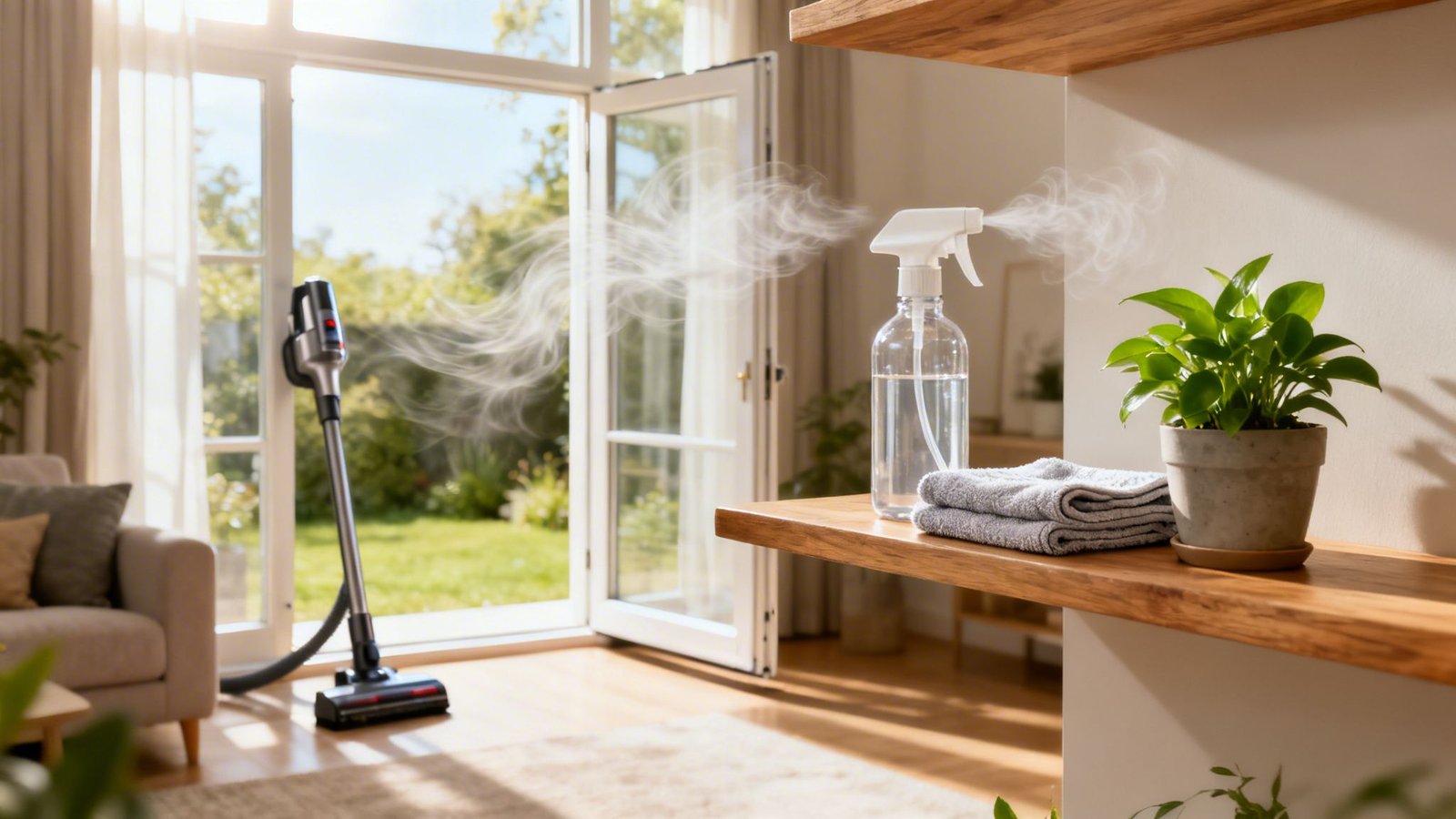
Eliminating a persistent house odor means finding and removing the source — not masking it with fragrance. This LA guide covers the most common sources of chronic household odors (mold, pet urine, smoke, sewer gas, HVAC contamination), how to locate each one, and the professional treatments — enzyme cleaners, ozone, hydroxyl generators, thermal fogging — that permanently neutralize odors at the molecular level. Call (818) 336-1800.

Read More »
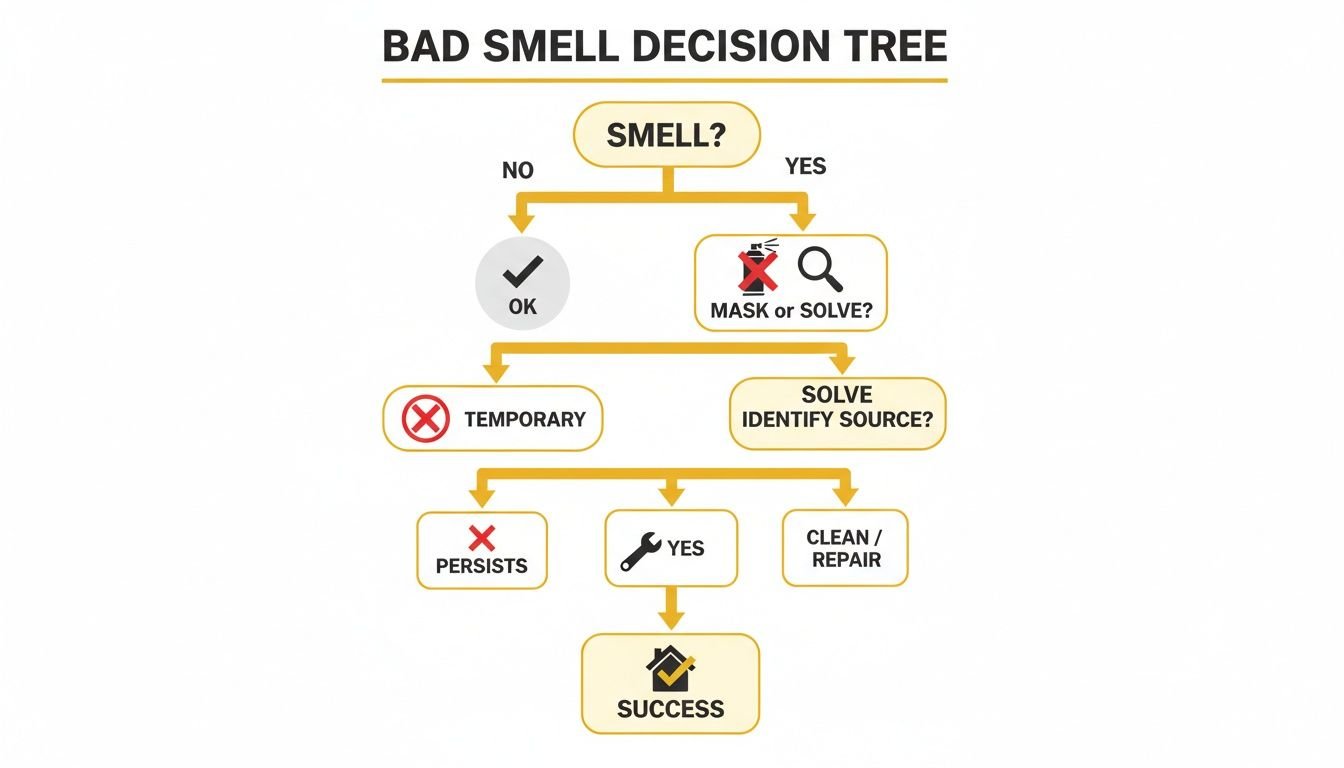
A bad smell decision tree flowchart illustrating steps to identify and solve household odor issues.
Restoration & Remediation Posts
Pete M.

How to Get Rid of Odor: A Guide for Los Angeles Homes

Getting rid of a persistent odor means finding the source — sprays and plug-ins override your nose temporarily while the underlying problem continues. Minor mildew may respond to a targeted cleaning. Pet urine, smoke, sewer gas, and mold-related odors need professional treatment to eliminate permanently. This LA guide covers diagnosis by odor type, DIY methods that work, and the professional treatments used for complete odor removal. Call (818) 336-1800.

Read More »
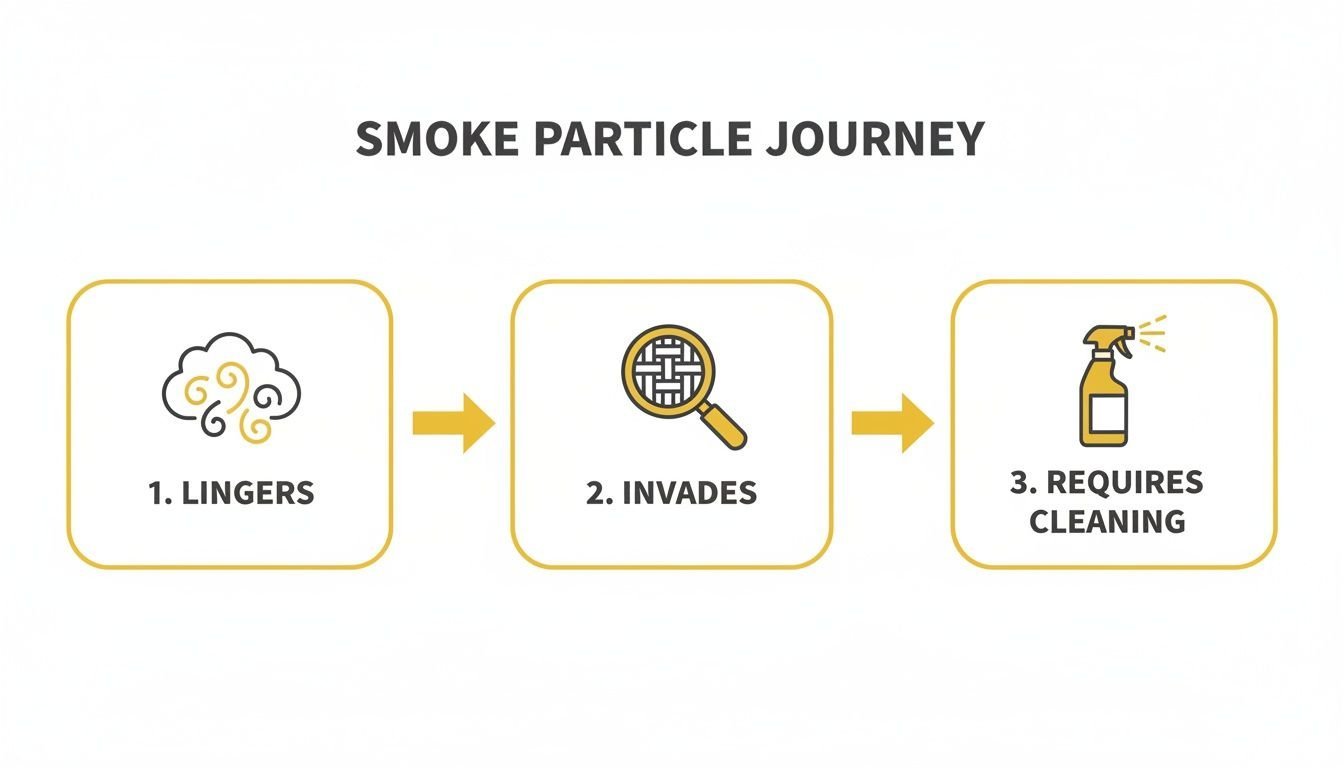
Infographic showing the three-step journey of smoke particles: lingers, invades, and requires cleaning.
Restoration & Remediation Posts
Pete M.

The Best Way to Remove Smoke Smell from House: A Comprehensive Guide

Removing smoke smell from a house permanently requires more than ventilation and candles — smoke particles bond to surfaces and embed in HVAC systems, where they keep releasing odor for months. This LA guide covers the complete elimination strategy: immediate ventilation, surface-by-surface deep cleaning, HVAC duct treatment, and professional deodorization methods (ozone, thermal fogging) when DIY approaches fall short. IICRC-certified fire restoration: (818) 336-1800.

Read More »
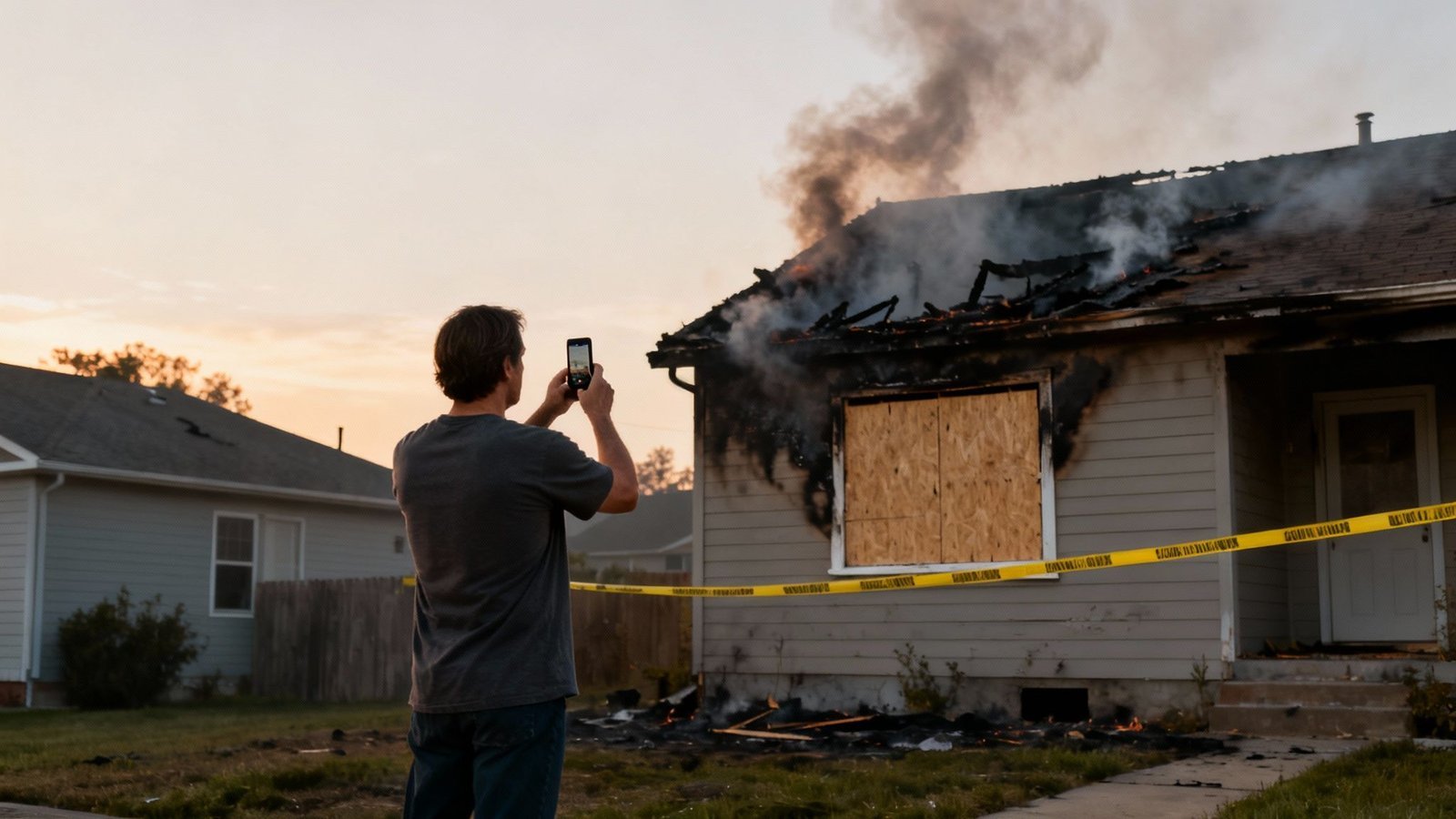
A man photographs a burning house with his phone, smoke rising from its damaged roof and boarded window.
Fire Damage Restoration Posts
Pete M.

Your Complete Guide to Fire and Smoke Damage Restoration in Los Angeles

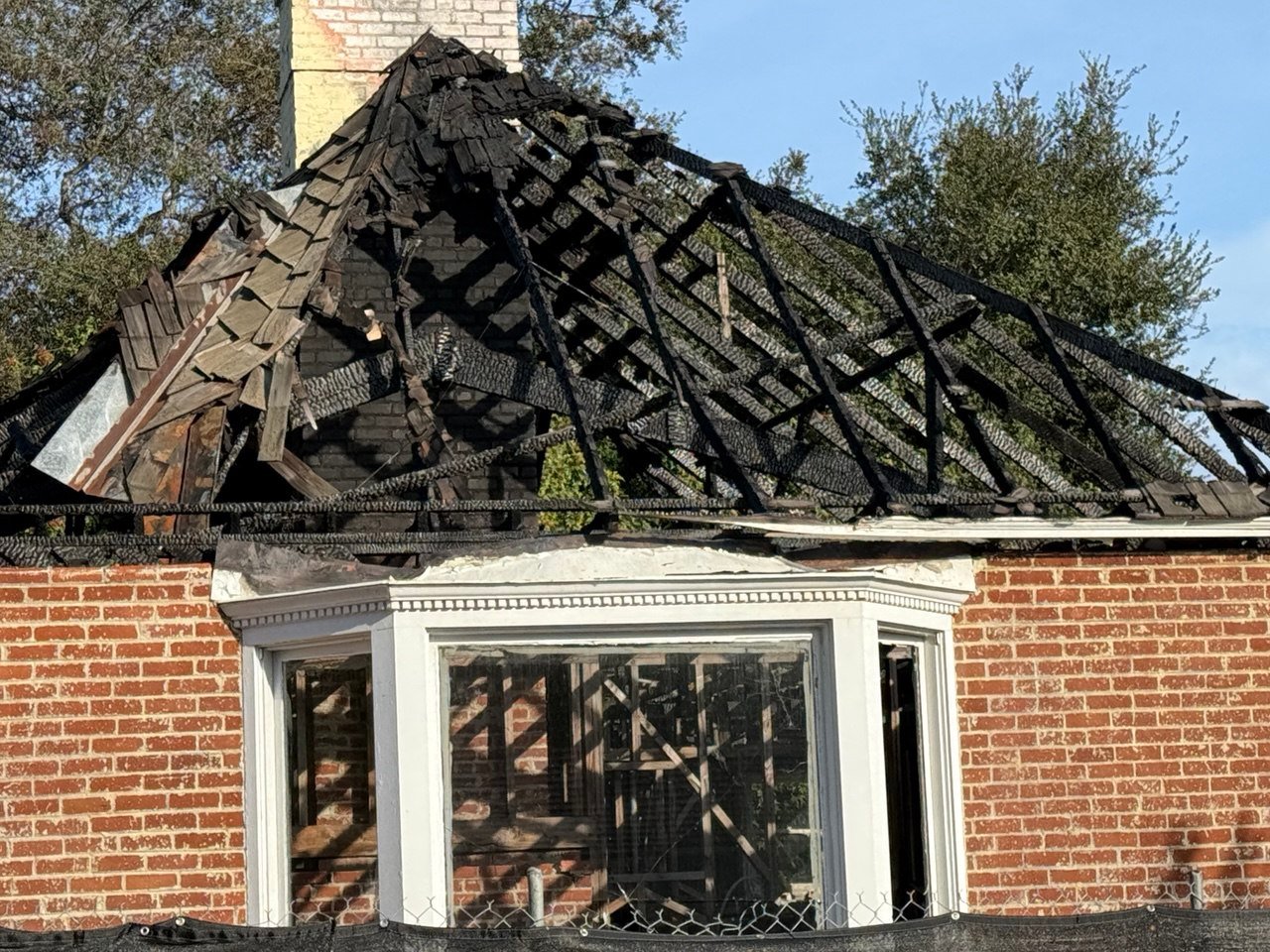
Fire and smoke damage require two separate but parallel restoration tracks — structural fire damage and pervasive smoke contamination — and the first 24 hours after a fire determine how successfully both are resolved. Soot keeps corroding surfaces while firefighting water sits in walls. This Los Angeles guide covers the complete fire and smoke damage restoration process, from emergency board-up through final rebuild and insurance claim documentation. 24/7 response: (818) 336-1800.

Read More »
Flowchart detailing three steps for initial fire response: ventilate, safety gear, contain fire.
Fire Damage Restoration Posts
Pete M.

How to Remove Fire Smoke Smell From House: A Los Angeles Guide

Removing fire smoke smell from a house permanently means eliminating the odor at the source — not masking it. Smoke particles bond chemically to surfaces and infiltrate HVAC systems, releasing odor for months if not fully treated. This LA guide covers the complete elimination process: ventilation, surface cleaning by material type, HVAC duct treatment, and professional deodorization methods including ozone treatment and thermal fogging for embedded smoke odor. IICRC-certified: (818) 336-1800.

Read More »
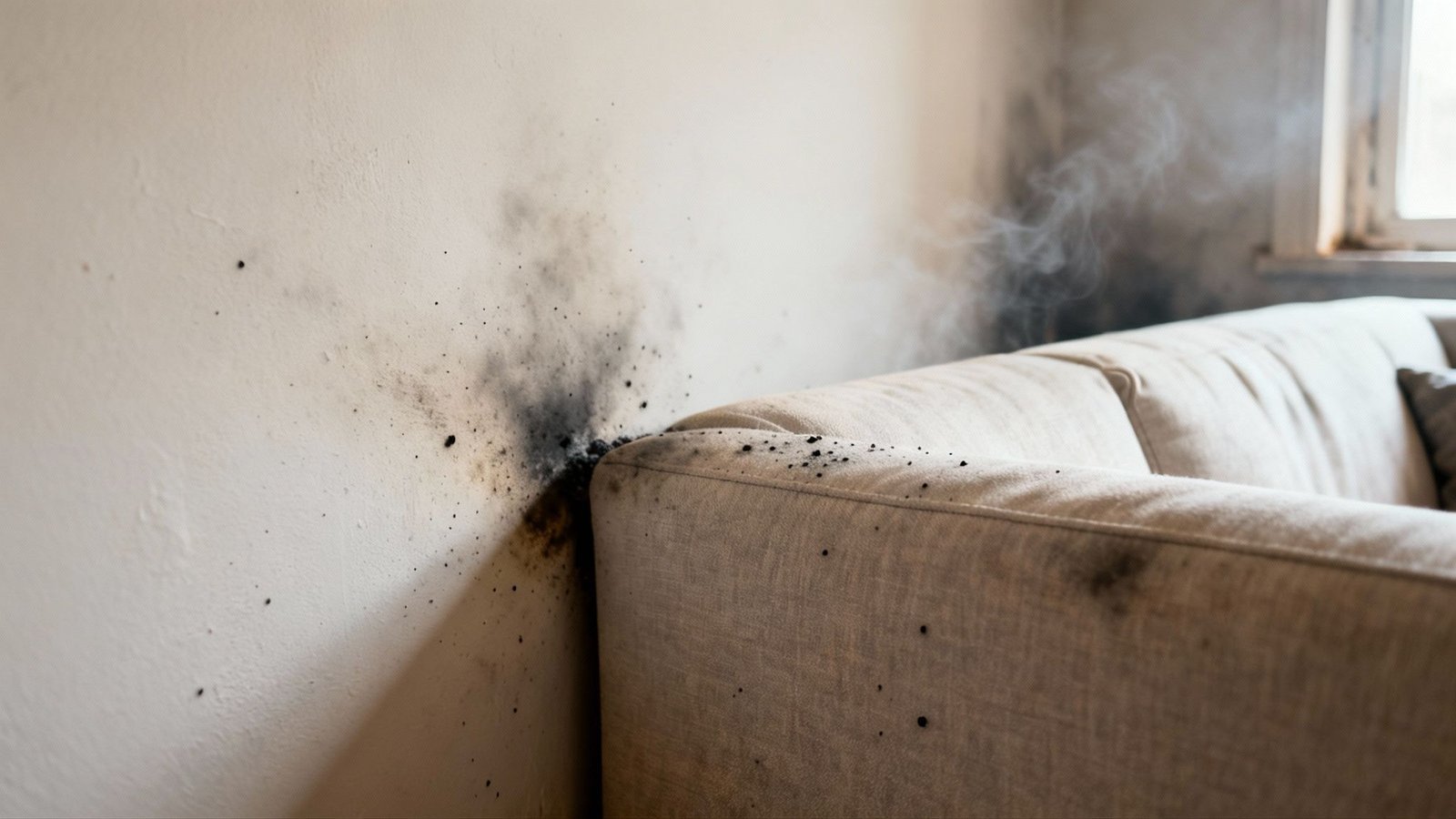
Close-up of a wall and sofa with burn marks, soot, and smoke indicating recent fire damage.
Fire Damage Restoration Posts
Pete M.

How to Eliminate Fire Smoke Odor in Your House: A Complete Guide

Eliminating fire smoke odor from a house requires physically removing smoke particles from every surface — they bond chemically to materials and embed in HVAC systems, releasing odor for months if not fully treated. This LA guide covers the complete elimination process: surface cleaning by material, air filtration with HEPA scrubbers, HVAC duct treatment, and professional deodorization methods (ozone treatment and thermal fogging) when surface cleaning alone falls short. IICRC-certified: (818) 336-1800.

Read More »
A man kneels on a carpet, using a flashlight to inspect a house baseboard for damage.
Restoration & Remediation Posts
Pete M.

How to Remove Smoke Smell in House for Good

Smoke smell in a house is a sign of ongoing contamination — smoke particles bond to surfaces and release volatile organic compounds continuously until physically removed. Masking the odor with air fresheners or candles doesn’t work. This Los Angeles guide covers the three most common smoke sources in LA homes (cooking fires, wildfire smoke infiltration, tobacco residue), the correct elimination process for each, and when professional odor treatment is needed for permanent results. Call (818) 336-1800.

Read More »
An infographic illustrating the immediate smoke removal process in three steps: ventilate, clean, and document.
Fire Damage Restoration Posts
Pete M.

How to Get Smoke Smell Out of Your House After a Fire

Getting smoke smell out of a house after a fire requires physically removing smoke particles — they bond to every surface and infiltrate the HVAC system, where they continue releasing odor until eliminated. Ventilation and air fresheners don’t work because the source remains. This LA guide covers the complete elimination process: surface cleaning by material type, HVAC duct treatment, air scrubbing with HEPA filtration, and professional thermal fogging or ozone treatment for embedded smoke odor. Call (818) 336-1800.

Read More »
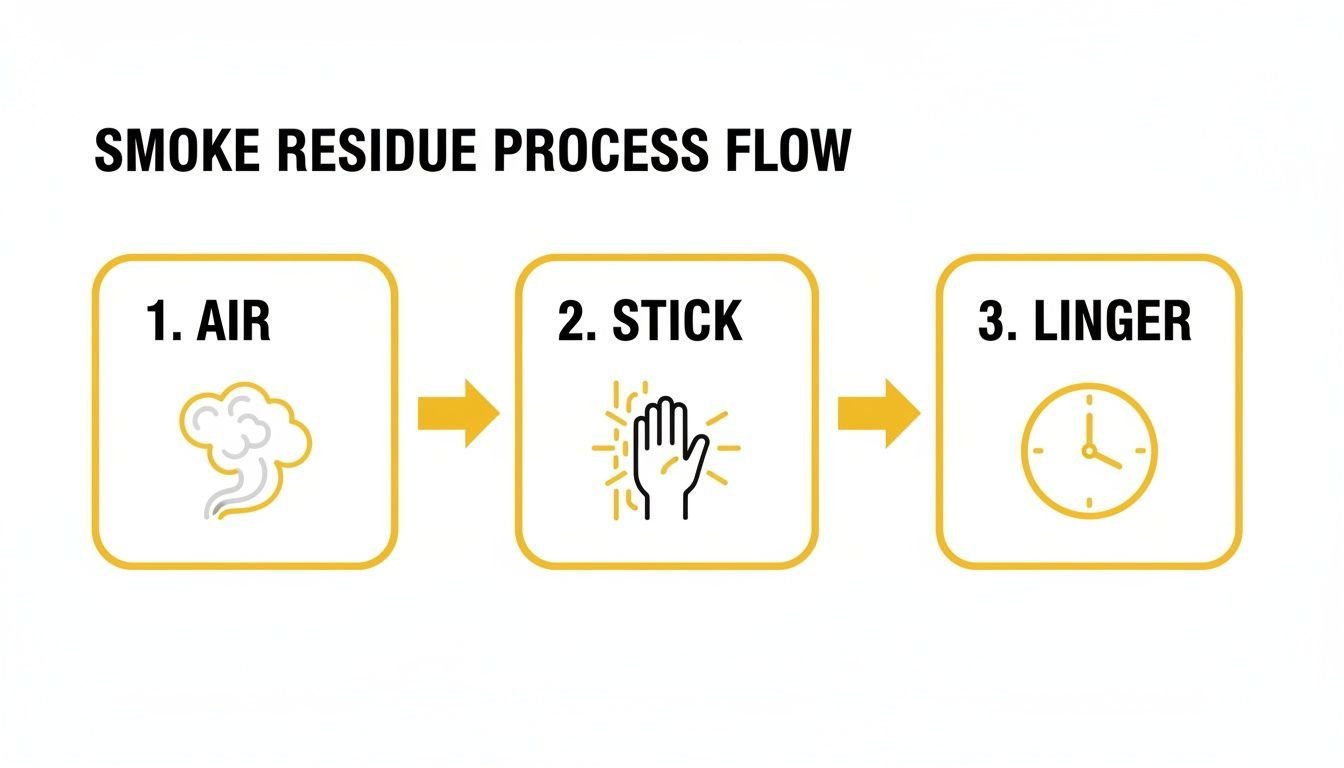
A process flow diagram illustrates the three steps of smoke residue: air, stick, and linger with icons.
Fire Damage Restoration Posts
Pete M.

How to Eliminate Smoke Odor in Apartment: A Complete Guide

Eliminating smoke odor from an apartment requires deep-cleaning every surface where smoke particles have bonded — walls, ceilings, carpets, soft furnishings, and the HVAC system — not just airing it out. Tobacco and fire smoke embed in building materials and release odor continuously until physically removed. This guide covers the complete elimination process for apartment smoke odor by source type, landlord notification considerations, and when professional fire restoration is the only permanent solution. Call (818) 336-1800.

Read More »
Image
Fire Damage Restoration Posts
Pete M.

How to Remove Smoke Smell from House in Los Angeles with Proven Techniques

Removing smoke smell from a house in Los Angeles requires a multi-step approach — ventilation alone doesn’t work because smoke particles bond chemically to surfaces and release odor continuously. This guide covers the complete process: ventilation and airflow strategy, surface cleaning by material type, washing fabrics and soft furnishings, treating the HVAC system, and when professional thermal fogging or ozone treatment is needed for smoke odor that won’t respond to DIY methods. Call (818) 336-1800.

Read More »
Smoke Damage In House
Restoration & Remediation Posts
Pete M.

8 Best Ways to Get Smoke Out of Your House: A Los Angeles Guide

Getting smoke out of your house requires more than opening windows — smoke particles bond to surfaces and embed in your HVAC system, releasing odor continuously until removed. These 8 proven methods work for LA homes dealing with cooking fire smoke, wildfire infiltration, and tobacco residue: from HEPA air scrubbers and activated charcoal to professional thermal fogging for odors that won’t respond to DIY. This guide covers each method, when to use it, and when professional fire restoration is the faster path. Call (818) 336-1800.

Read More »
Photo 3 2025 04 12 00 00 03
Fire Damage Restoration Posts
Pete M.

Smoke & Odor Removal After Fire: Complete Guide for Homeowners

Smoke and odor removal after a fire requires more than cleaning visible soot — smoke molecules penetrate porous materials including drywall, wood framing, insulation, and ductwork, and resurface as odor for months if not properly treated. This LA guide covers the full smoke remediation process: thermal fogging, ozone treatment, hydroxyl generators, HVAC decontamination, and the content cleaning methods that save vs. replace belongings. 24/7 fire damage response: (818) 336-1800.

Read More »