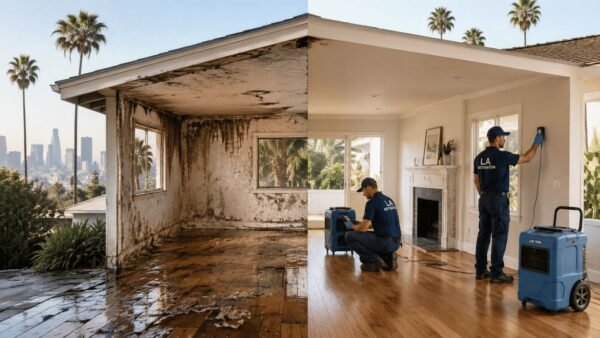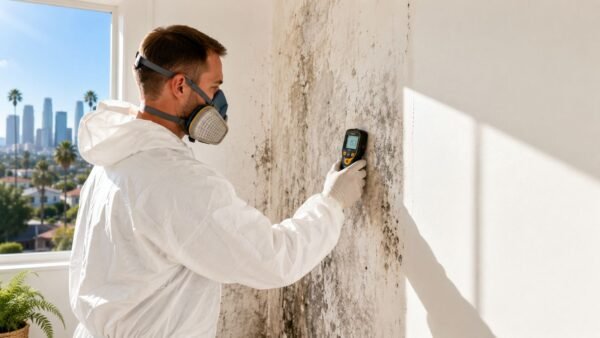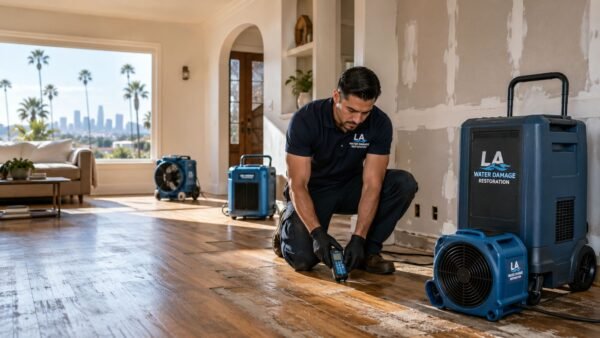

Vinegar can kill some types of surface mold on non-porous materials like tile and glass, but it's not a reliable solution for porous surfaces or large infestations. A 2015 study using vinegar at 4.0% to 4.2% acetic acid found it inhibited Penicillium chrysogenum with a mean inhibition-zone diameter of 15 mm (± 1.15), but it had no inhibitory effect on Aspergillus fumigatus, which matters because Aspergillus is a major mold genus in buildings.
If you're staring at a black patch near a shower line, under a window, or along a baseboard in a Los Angeles home, the question isn't just “does vinegar work?” The primary question is what surface is mold growing on, how deep has it gone, and what caused the moisture in the first place.
That's where most DIY advice falls apart. In older homes around Sherman Oaks, Glendale, and Burbank, mold often shows up after a roof leak, plumbing drip, bathroom exhaust issue, or hidden water intrusion inside walls. Vinegar may help with a very small surface issue. It won't solve a material failure, trapped moisture, or hidden growth behind drywall.
The Short Answer Can Vinegar Get Rid of Mold
Yes, can vinegar get rid of mold is a fair question, and the honest answer is sometimes, but only in narrow conditions.
A commonly cited research summary says vinegar may kill about 82% of mold species commonly found in homes, but that figure isn't a blanket guarantee because performance changes by species and surface type, and independent reviews note that vinegar works better on non-porous materials than on wood, drywall, and carpet (JJ&S Environmental on vinegar and mold). That's why the same bottle of white vinegar may seem useful on bathroom tile but disappoint completely on a stained drywall corner.
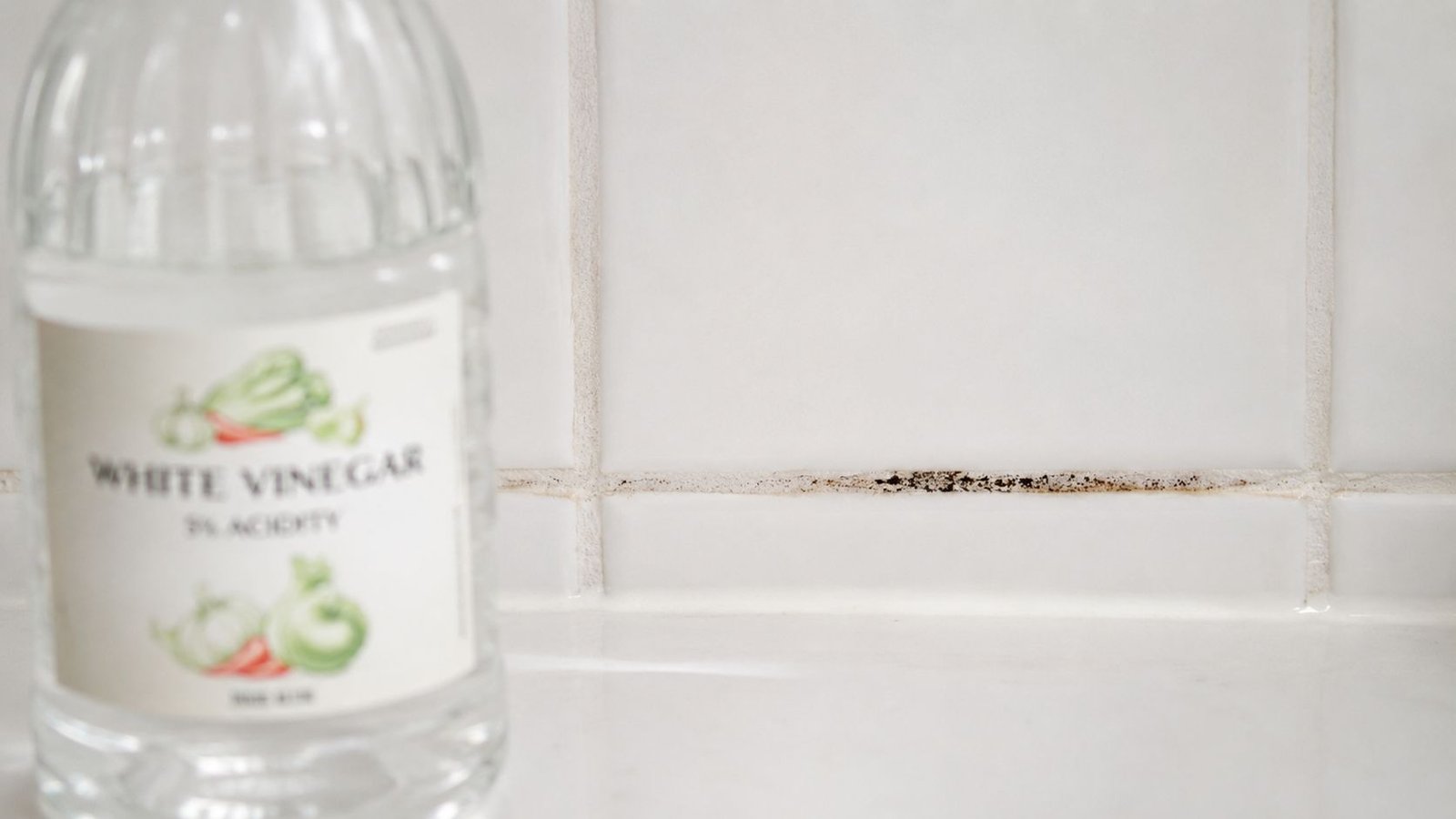
In practical terms, vinegar is a small-job cleaner, not a remediation plan. If you've got a minor patch on glazed tile, glass, or another hard surface, it may be worth trying. If the mold is on drywall paper, wood trim, carpet backing, or anything that absorbed water, vinegar usually treats the appearance more than the problem.
Practical rule: If mold is growing on a material that can soak up water, assume there may be growth below the surface too.
That distinction matters in LA homes. I see plenty of situations where homeowners clean the visible mark, only to watch it return after the next humid week, shower cycle, or minor leak. If you want a broader breakdown of safe cleaning methods, this guide on the best way to clean mold is a useful starting point.
How Acetic Acid Actually Affects Mold
Vinegar works because it contains acetic acid. Household white vinegar is typically acidic enough to disrupt fungal growth on some surfaces, but it isn't a universal biocide and it doesn't behave the same way on every mold species.
Why it works sometimes
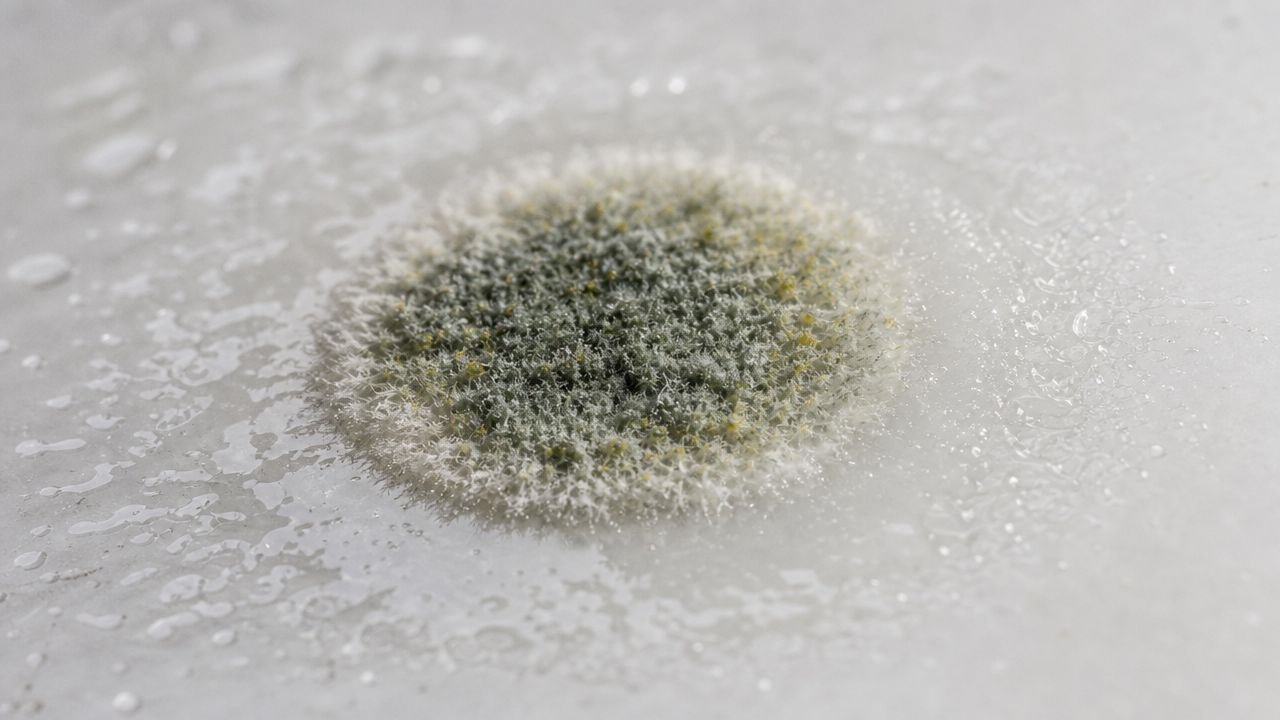
Think of acetic acid like a key that only fits certain locks. On some molds, the acid can interfere with the outer structure and growth process enough to weaken or kill what's on the surface. On other molds, the same treatment doesn't do much.
That's why a cleaner can appear effective in one bathroom and fail in another. Color doesn't tell you enough. Surface conditions, moisture, residue, and species all change the outcome.
Why contact time matters
A quick spray-and-wipe usually doesn't give vinegar much chance to work. The acid needs time to sit on the growth. That's one reason surface cleaning often fails when people rush the job or dilute the vinegar too much.
For readers who want a broader chemistry-oriented discussion of acetic acid in sanitation contexts, this article on infection prevention for facilities gives helpful background. For home mold issues, though, the bigger question is still where the mold is growing. If you're dealing with dark spotting and aren't sure what you're seeing, this page on what causes black mold in homes can help you sort out the usual moisture sources.
Vinegar affects mold at the surface. Mold problems in homes are usually moisture problems first.
A Safe DIY Guide for Using Vinegar on Mold
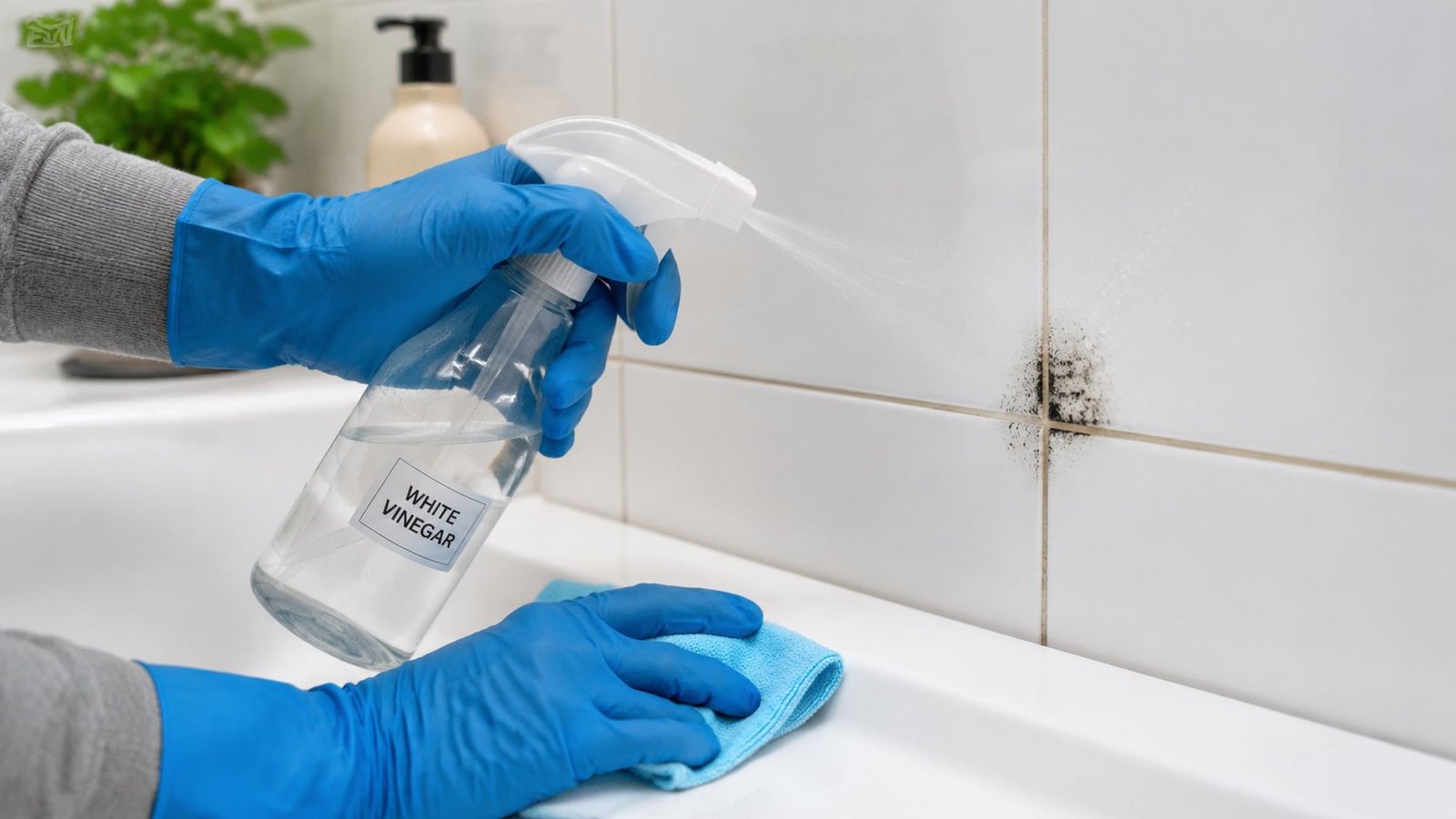
If you're going to use vinegar, keep the use case narrow. This is for a small, visible mold spot on a hard, non-porous surface such as glazed tile, glass, or a sink surround. It isn't the right move for drywall, carpet, insulation, or widespread contamination.
What to use
Expert guidance says undiluted household vinegar is typically about 5% acetic acid, and it should be sprayed directly onto a small mold area, left in place for at least an hour, and then scrubbed because the contact time is what helps the acid disrupt fungal growth rather than just rinse residue away (Healthgrades guidance on using vinegar for mold).
Step by step on a hard surface
Ventilate the room
Open windows if you can and run the exhaust fan. In older LA apartments, especially in places like West Hollywood, bathrooms often hold moisture longer than people realize.Put on basic protection
Gloves are a minimum. Eye protection is sensible if you'll be scrubbing overhead or near grout lines.Use undiluted white vinegar
Pour it into a clean spray bottle and wet the affected area thoroughly.Wait the full hour
Most DIY failures happen here. People spray and wipe immediately.Scrub the surface
Use a brush or non-abrasive scrub pad suited to tile, glass, or the fixture you're cleaning.Dry the area completely
If the surface stays damp, the mold issue often comes right back.
Don't treat vinegar like paint thinner. More scrubbing doesn't compensate for poor contact time.
A shower-specific walkthrough on how to get rid of black mold in a shower can help if that's the exact problem you're dealing with.
For a quick visual explanation, this video is useful:
What this method does not cover
This isn't for musty smells coming from inside a wall. It isn't for repeated regrowth around a window sill. It isn't for carpet tack strips, cabinet interiors after a leak, or swollen baseboards after water damage. Those are inspection problems, not spray-bottle problems.
Why Vinegar Fails on Drywall Wood and Carpet
This is the part most DIY articles miss. Porous materials change everything.
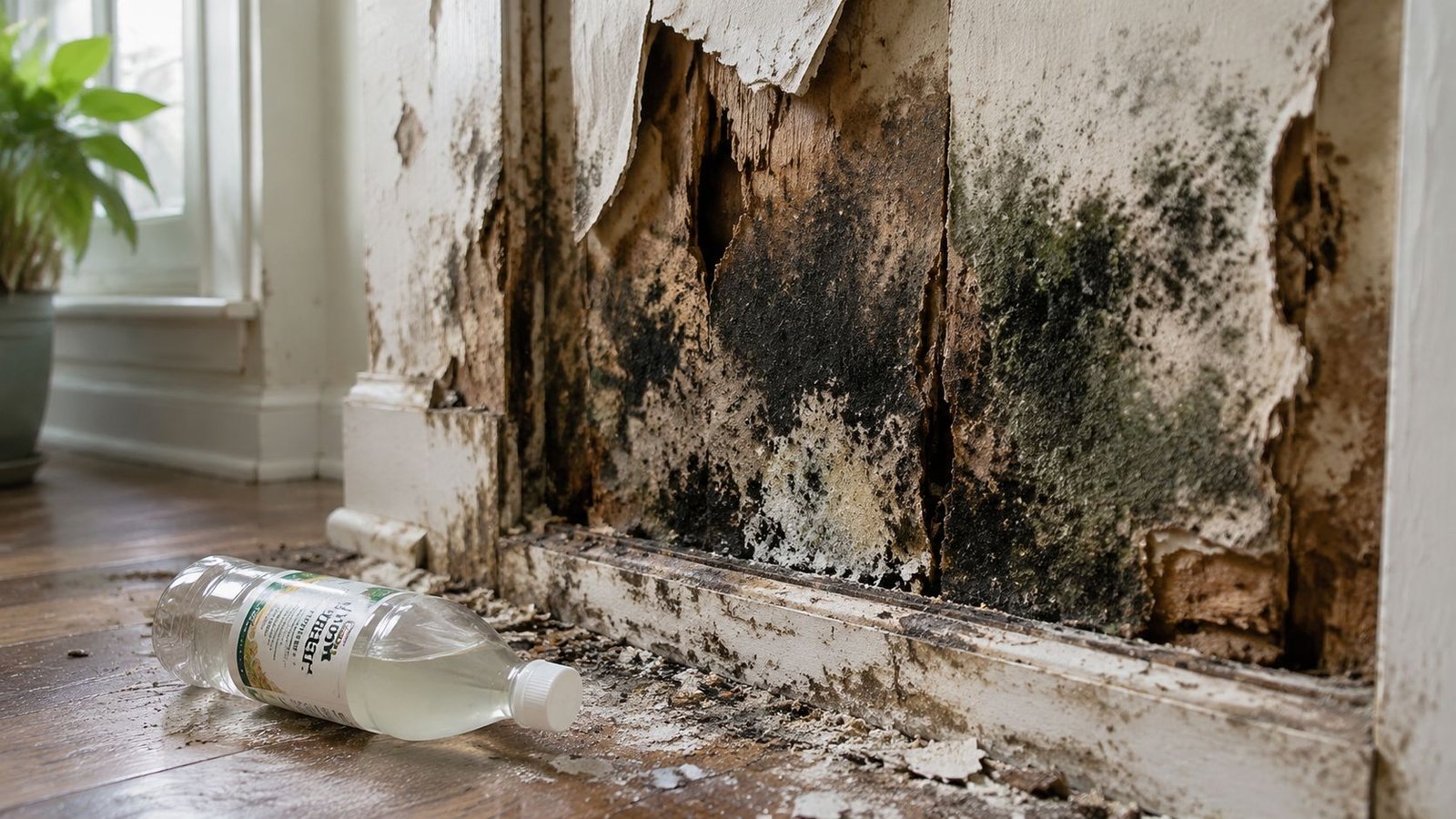
Drywall, wood, carpet, insulation, and many ceiling materials don't keep mold neatly on the surface. They let moisture travel inward, and mold follows that path. By the time you see staining on the face of the material, growth may already extend below what you can clean.
The surface can look clean while the material is still contaminated
The best analogy is an iceberg. The stain you see is the tip. The rest may be inside drywall paper, within carpet backing, or along wood fibers.
One neutral source notes that vinegar may clean visible mold but doesn't remove spores or root structures reliably in porous materials, and these materials often need different handling or removal instead of simple surface cleaning (BELFOR on vinegar and porous materials).
That's a common pattern in Los Angeles after small plumbing leaks. A vanity cabinet swells, the drywall behind it discolors, and the homeowner keeps wiping the face of the wall. The visible patch changes. The hidden moisture pathway doesn't.
Species matter too
A 2015 study found that vinegar at 4.0% to 4.2% acetic acid inhibited Penicillium chrysogenum but had no effect on Aspergillus fumigatus, a major mold genus in buildings (peer-reviewed study in the Annals of Agricultural and Environmental Medicine). That's one reason vinegar isn't a universal answer even before you get to the surface issue.
If mold is in drywall or unfinished wood, “it looks better” is not the same as “it's gone.”
Why homeowners accidentally make it worse
Here are the trade-offs:
- Drywall absorbs moisture. Spraying it can add more dampness to an already compromised area.
- Wood has grain and pores. Surface cleaning may miss growth deeper in the material.
- Carpet traps contamination. The face fibers aren't the whole story. The backing and pad matter.
- Insulation can't be surface-cleaned effectively. Once it's contaminated, cleaning the visible face nearby doesn't solve the issue.
If you're dealing with wood specifically, surface-safe cleaning and replacement decisions are different from tile or glass. This guide on how to kill mold on wood helps explain those choices.
And if your concern started with cleaning a wood floor, be cautious. General floor-care articles like this Rubber Ducky Birmingham cleaning advice can be useful for finish compatibility, but mold in wood flooring is a different problem from routine maintenance. Once moisture gets under the finish or into subfloor layers, cleaning chemistry alone usually won't resolve it.
When to Stop DIY and Call a Mold Professional
Some mold problems are small enough for careful cleaning. Others need containment, moisture tracing, and material assessment. The trouble is that homeowners often wait too long because the first wipe-down makes the area look better.
Signs your problem is past the DIY stage
Use these as stop points:
The mold keeps coming back
Recurrence usually means the moisture source is still active or the growth extends deeper than you can reach.It's on drywall, wood, carpet, or insulation
Porous materials allow mold below the surface, so cleaning the top layer often doesn't stop regrowth.You smell mold but can't see much of it
Musty odor often points to hidden growth in wall cavities, under flooring, or around HVAC-adjacent areas.The area followed water damage
Burst pipes, roof leaks, appliance leaks, and overflow events often leave moisture where surface cleaners can't reach.The contamination is extensive
The EPA's common benchmark is to call for professional help when mold covers more than 10 square feet. For anything that size, a proper inspection matters more than another round of spray cleaner.
In our experience with LA properties, hidden mold is what defeats DIY cleanup most often. You can wipe a closet wall in Pasadena or a bathroom ceiling in Burbank three times and still miss the leak path feeding it.
What professional assessment changes
A proper inspection identifies the moisture source, checks adjacent materials, and separates a cosmetic cleaning job from a remediation job. That's the difference between temporary improvement and actual control.
If you want another outside perspective on the process, this comprehensive guide to mold removal gives a broad overview. If you need an evaluation in Los Angeles, a certified mold inspector can determine whether the issue is surface-level or structural.
Your Next Steps for a Mold-Free Home in Los Angeles
You wipe a dark spot off a bathroom tile wall in an older LA home, and it looks fine for a week. Then the stain comes back near the same grout line, or shows up on the painted drywall beside it. That pattern usually points to a surface-level cleanup on one material and active moisture in another.
Your next step depends on what the mold is growing on.
If it is limited to a small area on a hard, non-porous surface, vinegar may be enough to clean the visible growth. If the spot involves drywall, wood trim, subflooring, carpet, or anything that stayed wet after a leak, the job changes. Those materials can hold moisture and contamination below the surface, which is why so many DIY fixes fail in Los Angeles houses, older apartments, and post-water-damage interiors.
That distinction matters in LA. Older construction in places like Pasadena, Glendale, and Sherman Oaks often has layered repairs, hidden plumbing issues, and wall assemblies that do not dry evenly. After a roof leak, slab leak, AC line backup, or bathroom overflow, mold can spread behind the area you can see while the visible stain stays relatively small.
A smart next move is to stop judging the problem by the stain alone. Check whether the surface is porous, whether the area has a musty odor, and whether there was a recent or recurring moisture event. If any of those are true, surface cleaning is rarely the full answer.
Onsite Pro Restoration handles mold inspection, testing, and remediation across Los Angeles County. For a professional inspection, call 818-336-1800.
Frequently Asked Questions About Mold and Cleaners
Is vinegar better than bleach for mold?
Neither is a cure-all. For homeowners, the bigger issue isn't vinegar versus bleach. It's surface type. On hard, non-porous surfaces, cleaners may remove small visible growth. On porous materials, surface cleaning often misses what's inside the material. Bleach also creates practical safety concerns because of fumes and surface compatibility.
Can I mix vinegar with baking soda to make it stronger?
No. Mixing them cancels out much of what makes vinegar useful in the first place. If you're using vinegar for a small mold spot, the acetic acid is the active part you want. Neutralizing it doesn't improve the result.
Keep the process simple. Use one product for one purpose, and don't improvise chemistry in a small bathroom.
Is mold in my Los Angeles apartment my landlord's responsibility?
That depends on the lease, the source of the moisture, and how quickly the issue was reported. In many cases, landlords are responsible for maintaining habitable conditions and addressing building-related leaks, plumbing failures, or ventilation issues. Tenants should document the problem, report it in writing, and keep records of visible changes or recurring moisture.
If I cleaned the mold and the stain is gone, am I done?
Not always. If the mold was on tile or glass and doesn't return, you may have handled a small surface issue. If it was on drywall, wood, or another porous material, the stain disappearing doesn't prove the growth is gone.
When should I get an inspection instead of trying vinegar?
Get an inspection when the mold returns, when there's a musty smell, when porous materials are involved, or when the growth followed a leak or other water damage. Those are the situations where visual cleaning often misses the underlying problem.
If you're dealing with mold in Los Angeles and you're not sure whether it's a small cleaning job or a deeper moisture problem, contact Onsite Pro Restoration. We handle mold inspections, remediation, and water-damage-related mold issues throughout LA County. Call 818-336-1800 for a free inspection.