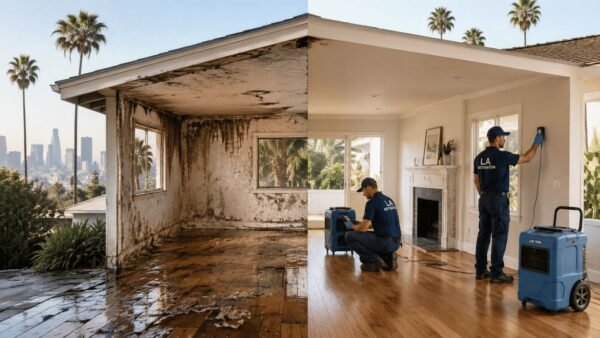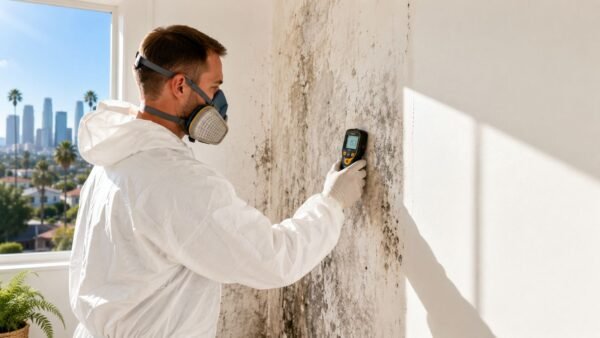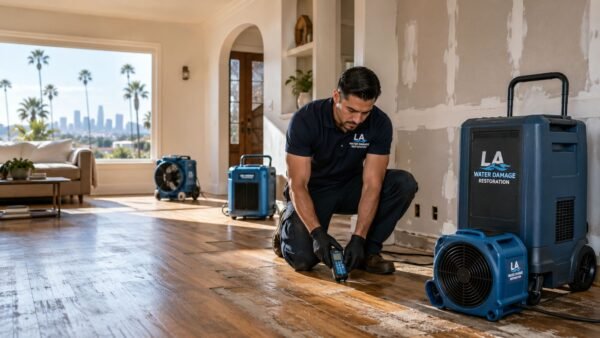

Suspecting mold in your Los Angeles home can be stressful, but the first step toward a solution is clear: you need a certified mold inspector. A certified mold inspector is a trained and impartial specialist who uses advanced tools and scientific methods to identify the type, location, and source of mold growth. Their unbiased assessment is crucial for creating an effective plan to make your home safe again.
Think of them as a detective for your property. They go beyond what you can see, uncovering hidden water sources and defining the full scope of the problem so you can fix it right the first time.
Table of Contents
- Why a Certified Mold Inspector Is Your First Call
- Decoding Mold Inspector Certifications and Credentials
- The Mold Inspection Process From Start to Finish
- How to Read Your Mold Inspection Report
- What to Expect: Mold Inspection Costs in Los Angeles
- Key Questions to Ask Before Hiring a Los Angeles Mold Inspector
- Frequently Asked Questions About Certified Mold Inspections
- Conclusion: Your Next Steps After the Inspection
Why a Certified Mold Inspector Is Your First Call
You notice a musty smell in the basement or see dark spots on a bathroom ceiling. What's the next move? While many homeowners call a remediation company directly, skipping a professional inspection can be a costly mistake, especially in Los Angeles.
With high property values and a mix of older homes in neighborhoods like Sherman Oaks and Burbank, you can't afford to guess about mold.
A certified mold inspector provides an independent, third-party evaluation. Unlike a company that profits from the cleanup, an inspector's only job is to give you the facts. Their goal isn't to sell you a big remediation project; it's to accurately define the problem. This separation is crucial for ensuring you only pay for the work that’s absolutely necessary.
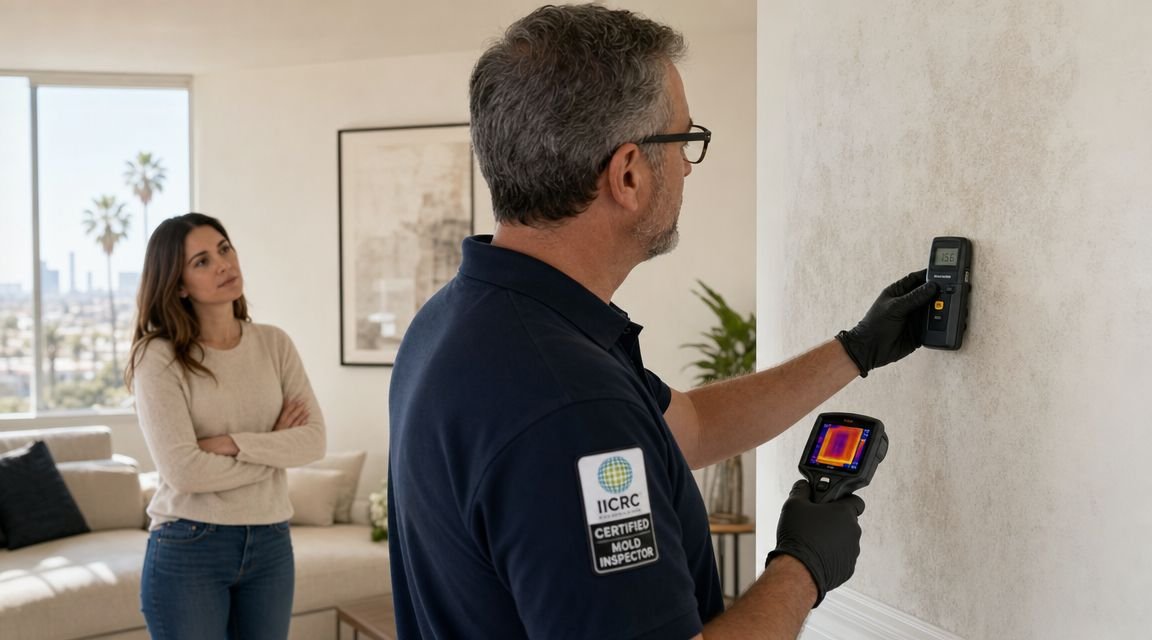
Alt text: A certified mold inspector from Onsite Pro Restoration uses a moisture meter on a wall in a Los Angeles home.
Beyond a Visual Checkup
A general contractor might point out mold you can already see, but a certified inspector is trained to find its origin. Mold is almost always a symptom of a bigger water problem. If you don't fix the underlying cause—a slow leak, condensation, or poor ventilation—the mold will return, no matter how well you clean it.
A certified mold inspector comes armed with specialized tools to get the real story:
- Moisture Meters: These devices detect elevated moisture levels inside walls, floors, and ceilings that are completely invisible.
- Thermal Imaging Cameras: They reveal temperature differences on surfaces, a dead giveaway for hidden water intrusion or gaps in insulation.
- Hygrometers: These measure the relative humidity in the air, a key factor that determines whether mold can thrive.
In our experience treating water damage in LA homes, we often find that what appears to be a small surface spot is actually the tip of a much larger, hidden colony fueled by a persistent leak. A certified inspection is the only way to know for sure.
This thorough, data-driven process, which we break down in our guide to Los Angeles mold testing services, ensures that any remediation plan is built on solid evidence. For homeowners in Glendale or Beverly Hills, a report from a certified mold inspector provides the credible, third-party documentation you need to protect your investment, your health, and your peace of mind.
Decoding Mold Inspector Certifications and Credentials
When you suspect mold, the qualifications of the inspector you hire matter—a lot. You need to know their expertise is backed by more than just a fancy title on a business card. Understanding the alphabet soup of certifications helps you weed out the handymen with flashlights and bring in a true professional.
Think of it this way: a certification is your inspector's professional report card. It proves they’ve gone through rigorous training, passed tough exams, and are committed to staying current. This isn't just about spotting visible mold; it's about understanding the complex science behind microbial growth, moisture problems, and building safety.
The Gold Standard: IICRC and Beyond
The most recognized credential in our industry comes from the Institute of Inspection, Cleaning and Restoration Certification (IICRC). An IICRC-certified inspector has proven they know the industry’s highest standards for assessment and safety. They’re trained to handle the job methodically, from the initial inspection to the final report. You can learn more in our detailed guide on what IICRC certification truly represents.
But the IICRC isn't the only credential that matters. Here's a quick look at some key certifications you might encounter.
Key Mold Certifications at a Glance
| Certification Body | What It Signifies | Key Training Areas |
|---|---|---|
| IICRC | The industry benchmark for restoration and remediation standards. | Water damage, microbial remediation, structural drying, health & safety. |
| ACAC | Focuses on the science of indoor environmental quality. | Mold inspection, moisture dynamics, sample collection, data interpretation. |
| NORMI | Provides training for mold assessment and remediation professionals. | Mold assessment, sanitation protocols, post-remediation verification. |
| IAQA | A multidisciplinary organization focused on indoor air quality. | HVAC systems, building science, mold and microbial contaminants. |
These credentials are so important because a certified mold inspector isn't just someone who looks for mold. Their role is defined by formal training, documented fieldwork, and in some areas, state licensing.
For example, top-tier credentials like the Council-certified Residential Mold Inspector (CRMI) demand recertification every two years, which includes an average of 20 hours of professional development annually. This ensures your inspector is up-to-date on the latest science and technology.
A certification is your assurance that the inspector brings a documented, repeatable process to your property. It’s the difference between a guess and a diagnosis, ensuring the advice you receive is based on proven science, not speculation.
This matters because the EPA has made it clear there is no federal certification program for mold inspectors. That leaves it up to respected professional organizations to set the bar for excellence. A certified inspector is trained to find hidden leaks, know when and how to properly take air and surface samples, and accurately interpret complex lab results. This combination of training and a commitment to proven standards separates a credible mold assessment from a casual glance—and for a homeowner in a market like Los Angeles, that separation is everything.
The Mold Inspection Process From Start to Finish
So, you’ve scheduled a mold inspection. What actually happens when a professional shows up at your door? It's not just a quick walkthrough; it's a methodical investigation that moves from big-picture observations to a precise, data-driven analysis of your home's health.
The process starts with a simple conversation. Your inspector will want to know the full story—any recent water damage, musty smells you've noticed, or specific health concerns. This history is crucial, giving them a treasure map of where to focus their attention in your Los Angeles property.
The Visual and Instrumental Investigation
With the background information in hand, the inspector begins a detailed visual assessment. They’re not just looking for obvious mold spots. They are trained to spot the subtle clues of a hidden problem: faint water stains, peeling paint, warped baseboards, or slight discoloration on drywall near plumbing fixtures. Attics, basements, crawl spaces, and bathrooms get special attention.
But the real detective work happens with tools that can see what the naked eye can't. This is where a true professional separates themselves from a handyman.
- Moisture Meters: These handheld devices are indispensable. An inspector will press the meter against drywall, wood, and other materials to get an instant reading of its moisture content. A high number is a dead giveaway for a hidden water source.
- Thermal Imaging Cameras: These cameras reveal temperature variations on surfaces. A strange cold spot on a warm wall could mean moisture is wicking up from a hidden leak, creating the perfect environment for mold to thrive.
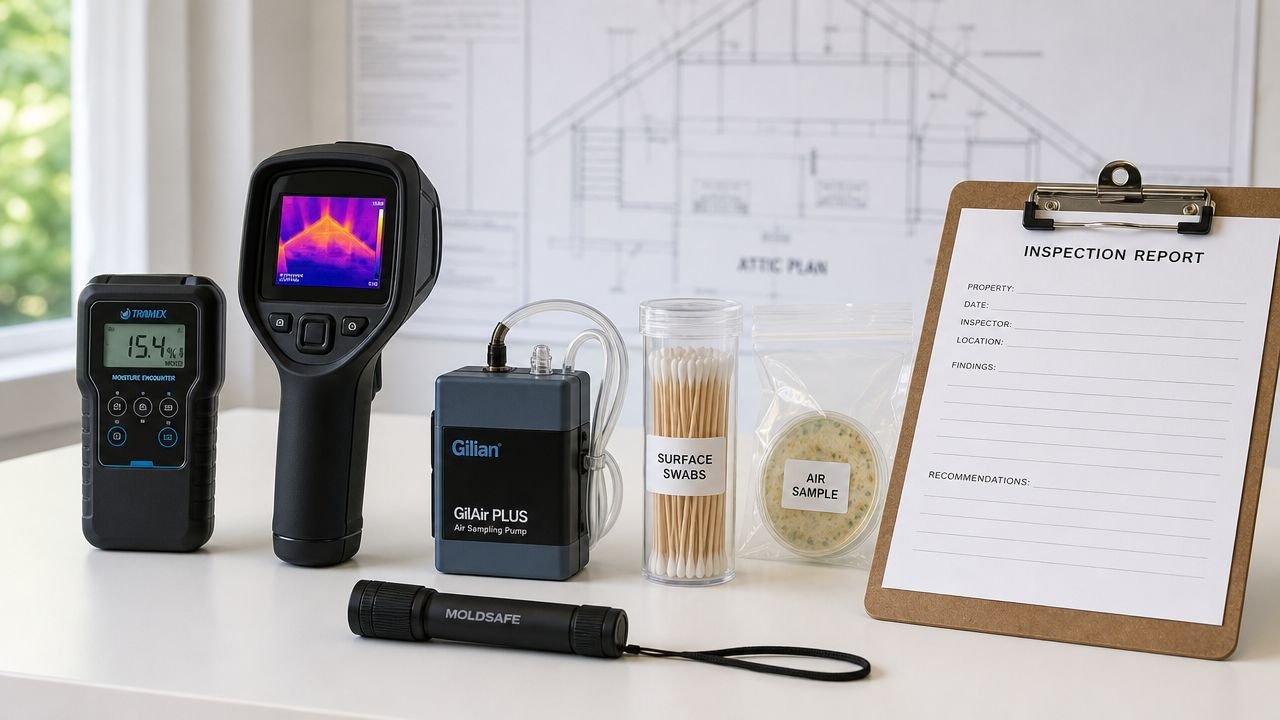
Alt text: A complete certified mold inspector kit with moisture meter, thermal camera, and other tools.
Sampling and Lab Analysis
If the inspector finds red flags, they might recommend taking samples. This step isn't always necessary, but it’s the only way to get definitive answers about the type and concentration of mold present. Air and surface samples are carefully collected and sent to an accredited third-party lab for a full workup. You can get a better idea of what to expect by looking over our helpful mold inspection checklist.
The job of a certified mold inspector today is about more than just finding mold—it's about building a solid case for remediation. The EPA has long advised that wet materials should be dried within 24 to 48 hours to prevent mold growth. Because there are no federal regulations defining "safe" mold levels, the inspector’s expertise is essential. They use their judgment and industry-standard procedures to document hidden damage and create a clear, defensible plan that holds up for insurers, property managers, or potential buyers. For a deeper dive into the government's stance, you can explore the EPA's recommendations on mold.
The entire process—from that first phone call to the final lab report—is designed to build a complete picture of your home’s indoor environment. Each step adds another layer of evidence, creating a clear and actionable roadmap to get your property healthy again.
How to Read Your Mold Inspection Report
After your certified mold inspector finishes their assessment, you’ll receive a comprehensive report. This document can feel a bit overwhelming, packed with technical terms and lab data, but it’s your single most important tool for taking action. Think of it as the blueprint for restoring your home’s health.
The first thing you’ll want to look at is the summary of findings. This is the high-level overview, your 30,000-foot view of the situation. It will state exactly where mold was found, what moisture sources are feeding it, and the inspector's main conclusions about your Los Angeles property.
Key Sections to Understand
Once you've read the summary, the report will get into the nitty-gritty details. You'll find sections dedicated to visual observations, usually supported by clear photographs. These images are crucial evidence, documenting the precise location and extent of any water damage or visible growth.
Next, you'll see the hard data collected by the inspector's tools. This is where science backs up what the eye can see.
- Moisture Readings: These numbers reveal the moisture content inside walls, floors, and other building materials. Any reading that’s above the normal, dry standard for that material is a major red flag. For a deeper dive, check out our guide on how to properly interpret moisture meter readings.
- Thermal Imaging Photos: These aren't just colorful pictures. The color-coded images show temperature differences on surfaces, which is an incredibly effective way to pinpoint hidden moisture behind walls or under floors that otherwise look perfectly fine.
The most technical part of the report will be the laboratory results from any air or surface samples collected during the inspection.
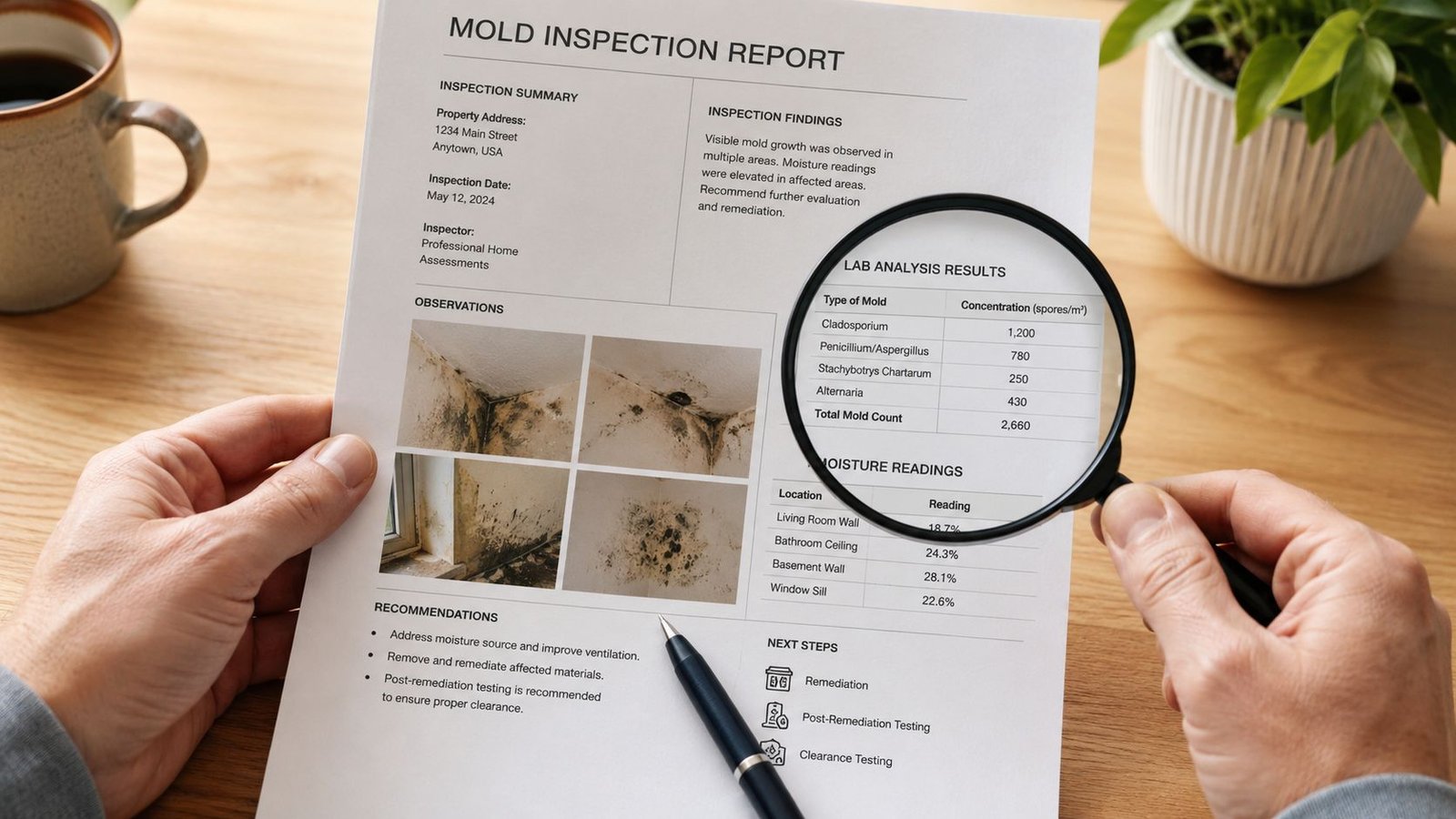
This section identifies the specific types of mold present (like Aspergillus or Stachybotrys) and their spore counts. Most importantly, it will compare the indoor spore levels to the outdoor control sample, telling you if your indoor air quality is abnormal.
By far, the most critical part of your report is the remediation protocol. This is the step-by-step action plan written by the inspector. It details the exact scope of work needed for safe and effective mold removal, including containment procedures, demolition requirements, and post-remediation testing. This protocol is the playbook your remediation contractor must follow to get the job done right.
What to Expect: Mold Inspection Costs in Los Angeles
When you suspect mold in your Los Angeles home, one of the first questions that comes to mind is, "How much is this going to cost?" A professional mold inspection is a critical investment in protecting your property and the health of everyone inside.
For a typical single-family home in the LA area, a certified mold inspection generally costs between $350 and $700. This price can shift, however, based on a few key variables specific to your property and situation.
Key Factors That Influence Your Inspection Cost
That price range isn't arbitrary. It reflects the professional's time, the advanced equipment needed, and the level of investigation required to give you accurate answers. Here’s what shapes the final quote:
- Property Size and Layout: It simply takes more time to thoroughly inspect a large, multi-story home in Beverly Hills with a crawlspace and attic than it does a small condo in Glendale. More ground to cover means a more intensive inspection.
- Complexity of the Problem: Investigating a small, visible patch of mold on a bathroom wall is more straightforward—and less expensive—than hunting down the source of a mysterious musty odor that permeates the whole house. The more detective work involved, the more it will cost.
- Type and Number of Samples: A visual-only inspection is the baseline. If your inspector needs to take air or surface samples for third-party lab analysis, each sample adds to the total cost. This step is often essential to identify the specific mold species and how concentrated the spores are in your air.
The real cost isn't the inspection fee; it's the price of ignoring the problem. Unchecked mold can lead to thousands in structural damage, a hit to your property value, and ongoing health concerns. An inspection is a small price for certainty.
To help you budget, here is a general breakdown of what to expect for different types of properties and testing levels in Los Angeles.
Estimated Mold Inspection Costs in Los Angeles
This table provides estimated cost ranges for a professional mold inspection based on property type and scope of testing.
| Service Type | Estimated Cost Range (Los Angeles) | What's Typically Included |
|---|---|---|
| Visual Inspection (Apartment/Condo) | $300 – $450 | A thorough visual check of all accessible areas, moisture meter readings, and a detailed report of findings. |
| Inspection with Air Sampling (Apartment/Condo) | $450 – $650 | Includes the visual inspection plus 2-3 air samples (one outdoor control, 1-2 indoor) sent to a lab for analysis. |
| Visual Inspection (Single-Family Home) | $350 – $550 | A comprehensive visual check of the interior, exterior, attic, and crawlspace (if accessible), plus moisture mapping. |
| Inspection with Air/Surface Sampling (Home) | $500 – $800+ | Includes the full visual inspection plus a combination of air and direct surface samples to identify mold types and concentrations. |
These figures are estimates, but they give you a clear idea of the investment. For a deeper dive into the next phase, see our guide on what comprehensive mold remediation costs. Paying for a professional inspection gives you an unbiased, science-backed roadmap to fix the issue correctly the first time.
Key Questions to Ask Before Hiring a Los Angeles Mold Inspector
Choosing the right certified mold inspector in Los Angeles can feel overwhelming, but asking the right questions will quickly separate the true professionals from the rest. A qualified expert should have no problem giving you clear, honest answers.
From our experience inspecting older homes in Sherman Oaks to stucco properties in Glendale, we know exactly what to look for. Poorly sealed windows, for example, are a notorious source of hidden moisture in LA construction. A thorough inspector understands these local patterns.
Vetting Your Inspector’s Expertise
Before you hire anyone, run through these essential questions. Their answers will tell you everything you need to know about their expertise and professionalism.
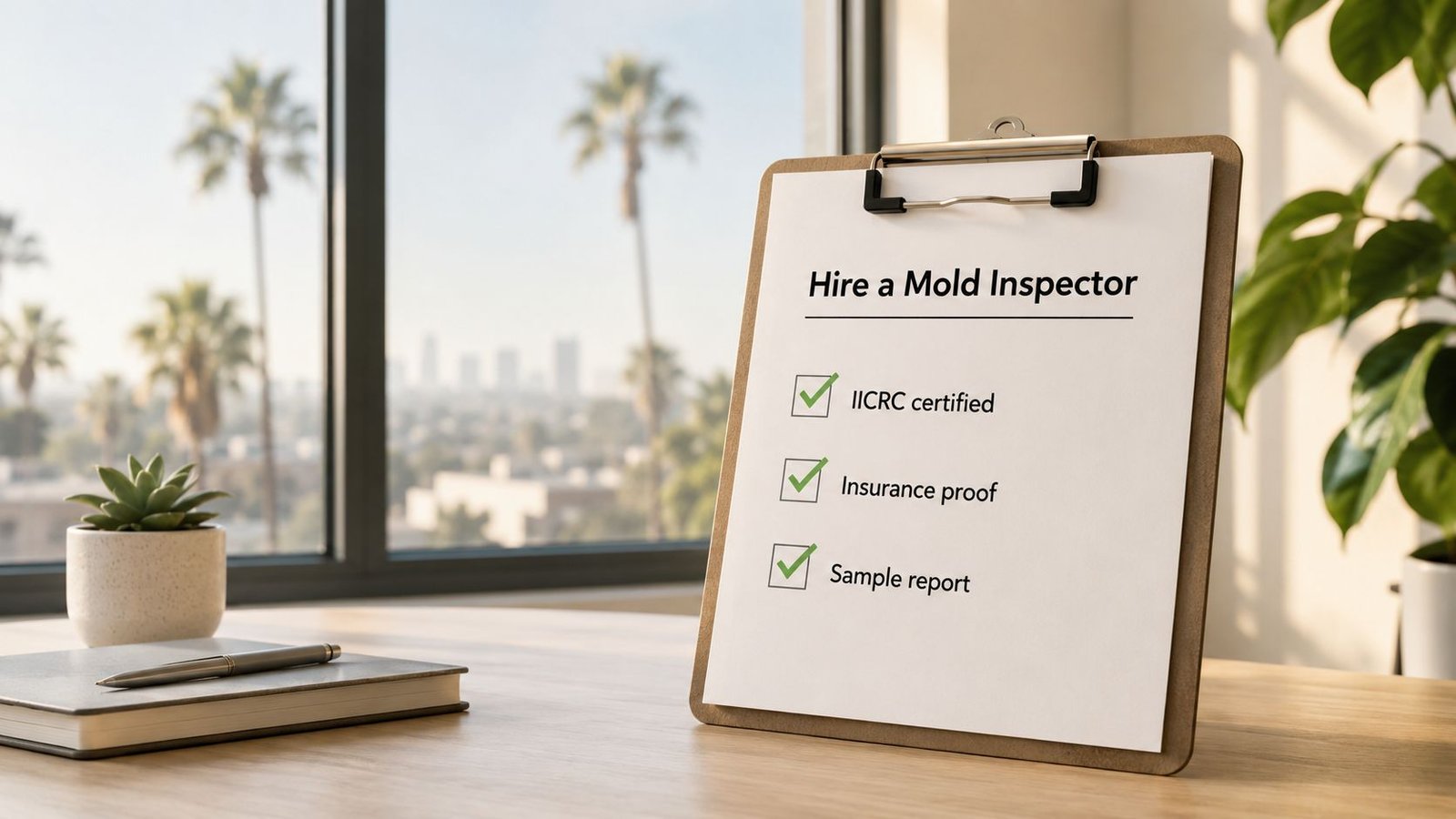
Are you IICRC certified and can you show proof? This is the most important question. An IICRC certification is the gold standard, proving they’ve met rigorous industry requirements. Ask for their certification number and don't hesitate to verify it.
Do you also perform mold remediation? Be very careful if the answer is yes. A company that both inspects for mold and gets paid to remove it has a built-in conflict of interest. For an unbiased assessment, you need an inspector who only performs inspections, or a company like Onsite Pro Restoration that keeps its inspection and remediation teams completely separate.
Can I see a sample of your inspection report? This is your sneak peek into their work. A professional report should be detailed, easy to follow, and packed with specifics: photos, moisture readings, lab results (if needed), and a clear, actionable protocol for remediation. If you get a one-page checklist, find someone else.
Verifying Their Business and Reputation
Beyond technical skills, you must ensure they are a legitimate, insured business. This is non-negotiable and protects you from any liability.
What does your company's insurance cover? Any reputable inspector will carry both general liability and Errors & Omissions (E&O) insurance. This protects both of you in the rare event of accidental property damage or a mistake in the assessment.
Where can I read your customer reviews? Check their online reputation on sites like Google and Yelp. A long history of positive, detailed reviews is a powerful sign of reliable service. Understanding how companies get feedback can also help; you can learn more about how businesses streamline review requests for your shop to get a better sense of modern review practices.
Frequently Asked Questions About Certified Mold Inspections
Here are answers to some of the most common questions we get from Los Angeles homeowners about mold inspections.
What is a certified mold inspector?
A certified mold inspector is a professional who has completed specialized training and passed examinations from a recognized organization like the IICRC. They are qualified to identify moisture problems, locate mold, and develop a remediation plan based on industry standards.
How long does a professional mold inspection take?
For a typical single-family home here in the Los Angeles area, you can expect a detailed mold inspection to take anywhere from 2 to 4 hours. This can vary depending on the size of your property and the complexity of the situation.
Can I just do a mold inspection myself?
DIY mold kits from hardware stores have serious limitations. They may confirm the presence of mold spores (which are everywhere), but they cannot identify the type, concentration, or—most importantly—the hidden moisture source. A certified mold inspector delivers a complete diagnostic assessment that a simple store-bought kit cannot match.
What’s the difference between a mold inspection and mold testing?
Think of it this way: mold testing is just one tool an inspector might use, but the mold inspection is the entire investigation. An inspection is the full process of visually searching, using professional tools to map dampness, and figuring out the root cause. Testing—taking air or surface samples—is a specific step taken during that inspection, but only when necessary.
Conclusion: Your Next Steps After the Inspection
Once your certified mold inspector hands you their report, you finally have a clear, data-driven path forward. If the assessment confirms elevated mold levels, the immediate next step is professional mold remediation.
Don't grab some bleach and start scrubbing. This approach often spreads spores, making the problem worse, and does nothing to address the underlying moisture issue.
Safe and permanent removal is a job for certified technicians. They follow strict IICRC protocols, setting up containment to prevent cross-contamination and using specialized equipment like HEPA vacuums and air scrubbers to clean the air. Their goal isn't just to wipe away visible spots—it’s to remove the entire colony and fix the water source.
If your inspection reveals tricky issues like mold behind baseboards, getting an expert take is non-negotiable. You can find some great insights from WipesBlog.com on how to handle such discoveries.
Think of the inspection report as your playbook. It should be handed directly to your chosen remediation team, ensuring they have the exact protocol needed to do the job right and restore your property to a safe, healthy condition.
If you're facing a mold issue in your Los Angeles home, don't wait for it to get worse. Call the certified experts at Onsite Pro Restoration at 818-336-1800 for a prompt, professional assessment and a clear remediation plan. Learn more at https://onsitepro.org.