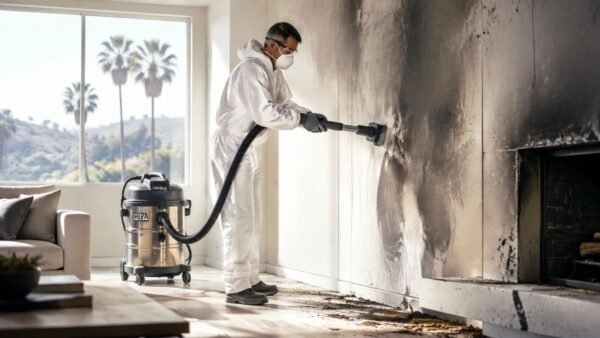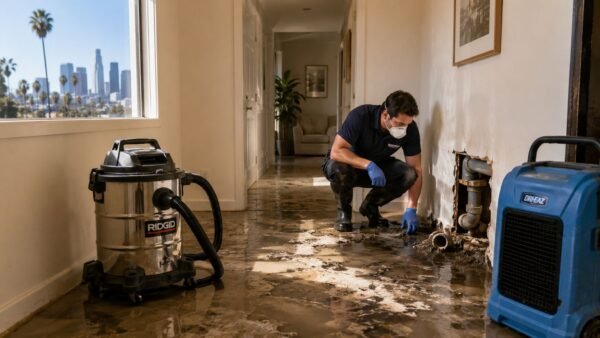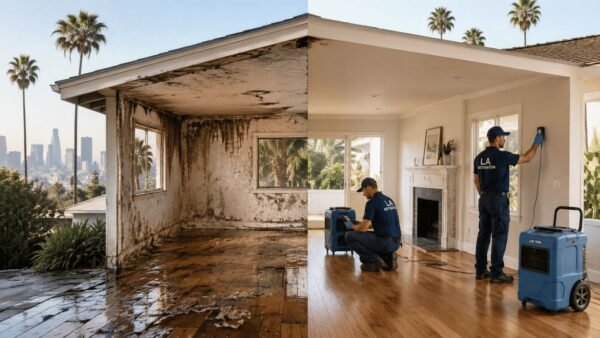

A pipe lets go in a Burbank bungalow before sunrise. By the time the water is discovered, it has already moved under the flooring, into the base of the drywall, and toward the next lowest point in the house. In Los Angeles, that first hour matters because the right extraction setup can limit demolition, shorten drying, and keep an insurance claim from growing.
Water extraction equipment is the group of tools used to remove liquid water quickly and control where the moisture goes next. That choice matters more than many property owners realize. Weak extraction leaves water in carpet pad, subfloors, wall cavities, and contents, which leads to longer drying times, more material loss, and higher overall restoration costs.
Los Angeles properties add their own complications. Older plumbing in Glendale and Burbank can release water into concealed spaces before anyone sees staining. Mid-century homes often have mixed materials that dry at different rates. After storms or post-wildfire runoff near hillside areas, crews may also be dealing with mud, debris, and contaminated water that require a different tool selection and stricter safety controls.
The goal is not just to remove what you can see.
The goal is to match the equipment to the loss. A weighted extractor can save carpet in one home. A trash pump is the safer choice for a garage with muddy standing water. In the wrong situation, the wrong machine wastes time, spreads contamination, and extends the drying job by days. If you need help now, start with a 24/7 emergency water extraction response before moisture travels farther through the structure.
Your Guide to Water Extraction Equipment After a Flood
When water hits the floor, people usually picture a big vacuum. In real restoration work, that's only one part of the job. Water extraction equipment is really a coordinated system of pumps, extractors, airflow equipment, dehumidifiers, and moisture tracking tools used to remove water, control evaporation, and verify that hidden moisture is gone.
That matters because the visible puddle is often the easy part. The harder part is the water pushed under baseboards, trapped in carpet cushion, or pulled by gravity into lower rooms. In a North Hollywood condo, that might mean moisture moving into shared walls. In an older home in Sherman Oaks, it can mean water slipping through flooring transitions and settling where you can't see it.
Practical rule: The right equipment doesn't just remove water. It shortens drying time, protects materials, and gives the technician proof that the structure is actually drying.
Property owners often ask why crews arrive with a truck full of gear instead of one machine. The reason is that each tool solves a different problem:
- Extractors remove bulk water from floors, carpet, and hard surfaces.
- Pumps handle deeper standing water.
- Air movers help wet materials release moisture.
- Dehumidifiers pull that moisture out of the air.
- Moisture meters confirm where water remains and when drying is complete.
The “why” behind the equipment choice is what separates a fast, controlled mitigation job from a drawn-out mess. If runoff carries silt after a wildfire-adjacent mudflow, the tool choice changes. If a bathroom supply line leaks clean water onto tile, the approach is different. Good restoration isn't about using more machines. It's about using the correct machines in the correct order.
The Professional Toolkit A Breakdown of Key Equipment
Walk into a Burbank home after a supply line has been dripping behind a wall for two days, or a foothill property after storm runoff pushes muddy water into the garage, and the equipment choice starts to matter fast. The right setup shortens drying time, limits demolition, and gives your insurer a cleaner file. The wrong setup leaves water in the pad, humidity in the air, and hidden moisture that shows up later as swollen baseboards, warped flooring, or a larger claim.
Professional crews bring several machines because each one solves a different part of the problem.
Truck-mounted and portable extractors
Extractors handle bulk water removal from floors, carpet, and hard surfaces. A truck-mounted unit is built for larger losses where speed matters, such as a first-floor apartment flood, a commercial suite, or a house with multiple affected rooms. It can run longer and pull water faster than smaller equipment.
A portable extractor earns its keep in Los Angeles every day. Older apartment buildings in Koreatown, upper-floor condos in West Hollywood, and ADUs tucked behind homes in Glendale often have tight access, stairs, or parking limitations that make a truck mount less practical. Good technicians choose based on access, surface type, and how far the water has traveled, not on which machine looks more impressive in the driveway.
For carpet losses, deep extraction tools matter. Vacuum-sealed and weighted extraction attachments help pull moisture out of the carpet and cushion instead of skimming the surface. That is one reason a rental unit or shop vacuum often leaves a floor feeling better while the pad underneath stays wet. Longer drying time usually means more labor, more equipment days, and a higher chance the carrier asks harder questions about why the loss expanded.
Submersible pumps
Pumps come out when standing water is too deep for extraction wands to work efficiently. That usually means garages, crawl spaces, basement-like lower areas, elevator pits, or low commercial spaces that took on heavy water.
After intense rain or post-wildfire mudflow runoff, getting the water level down quickly protects more than the floor. It can reduce soak time at drywall bottoms, cabinet bases, and door trim. In homes near burn scars or hillside runoff paths, the first phase is often simple. Remove volume fast so the detailed extraction and cleaning can start.
Pumps are only the first step.
Air movers
Air movers create directional airflow across wet materials so evaporation keeps moving. Used correctly, they help dry carpet, drywall edges, framing cavities, and the toe-kick areas under cabinets where water likes to hide.
Placement matters as much as quantity. Too few units slows the job. Too many, or the wrong angle, can create dead spots or push humid air into adjacent rooms. In occupied homes, crews also have to balance drying speed with safety, noise, and trip hazards. That is part of professional setup, not an afterthought.
Dehumidifiers
As wet materials release moisture, dehumidifiers remove that moisture from the air. Without them, the indoor humidity climbs and drying slows down. In coastal neighborhoods, shaded units, or homes kept closed for security during mitigation, that moisture can hang in the structure longer than owners expect.
The choice of dehumidifier affects cost and results. Undersized equipment can add days to a job. Oversized equipment in the wrong space can be inefficient or unnecessary. A licensed restoration company should be adjusting the drying chamber based on the size of the affected area, the materials involved, and current moisture readings.
Moisture meters
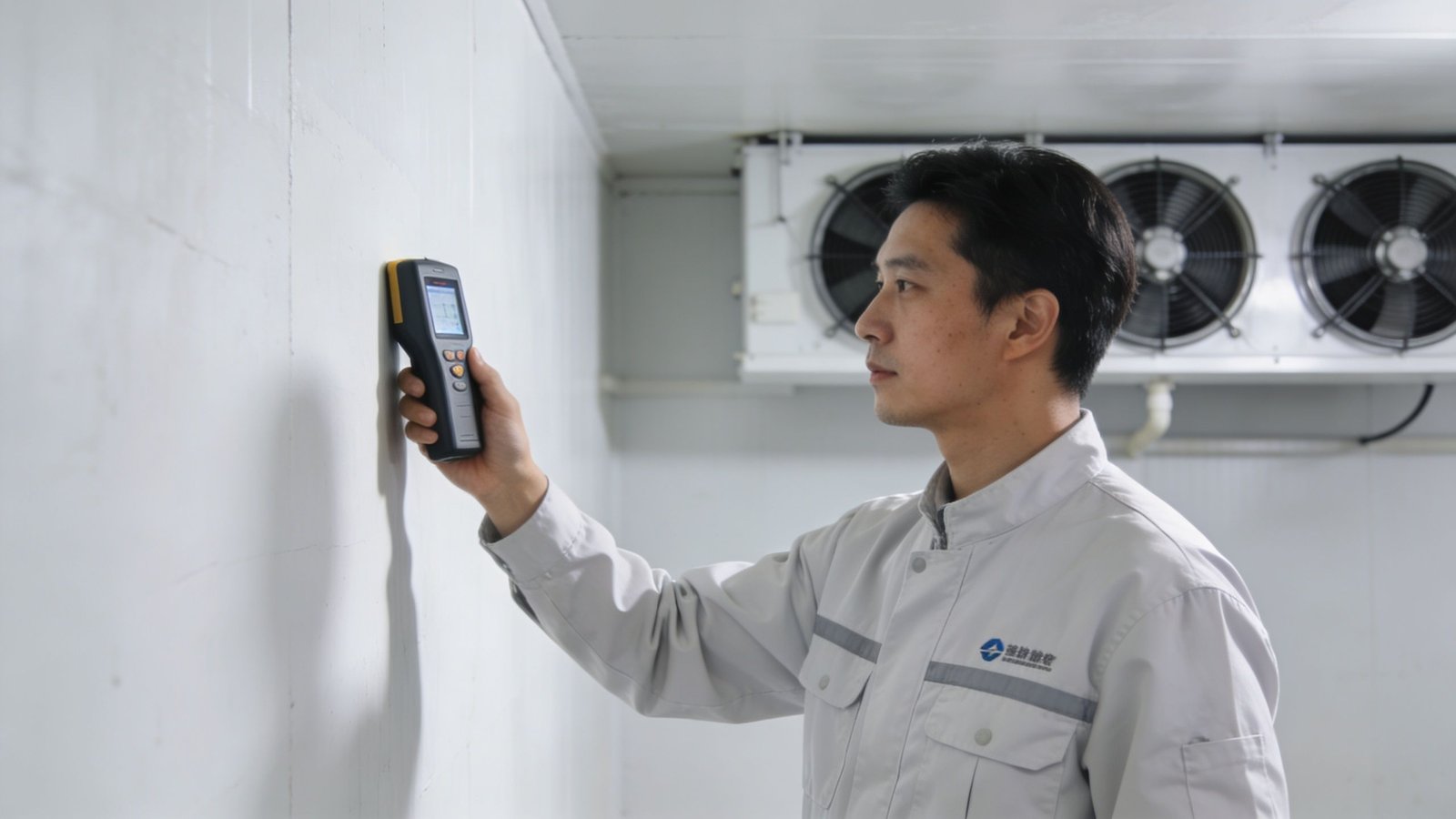
Moisture meters keep the process grounded in evidence. They show where water has migrated, which materials are still wet, and whether the drying plan is working. Without readings, decisions about removing drywall, saving cabinetry, or stopping equipment are closer to guesswork than professional mitigation.
Pin meters and pinless meters both have a place on a real job. One is better for precise checks in specific materials. The other is better for scanning larger areas quickly with minimal surface impact. If you want to make sense of the numbers a technician is documenting, this guide on how to read moisture meter readings gives a useful overview.
Water extraction equipment at-a-glance
| Equipment Type | Primary Function | Best For |
|---|---|---|
| Truck-mounted extractor | High-volume water removal | Large residential and commercial floods |
| Portable extractor | Targeted extraction in tight or upper-floor spaces | Condos, apartments, smaller rooms, stairs |
| Vacuum-sealed extractor | Pulling trapped water through a sealed contact point | Saturated carpet and cushion |
| Weighted extractor | Compressing carpet while applying suction | Deep carpet extraction on larger floor areas |
| Submersible pump | Removing deeper standing water | Garages, crawl spaces, low spots, flood events |
| Air mover | Accelerating evaporation from wet materials | Floors, walls, cabinetry edges, structural drying |
| Dehumidifier | Removing moisture from the air | Whole-room drying environments |
| Moisture meter | Verifying wet areas and drying progress | Assessment, monitoring, completion checks |
DIY Rental vs Hiring a Licensed Restoration Company
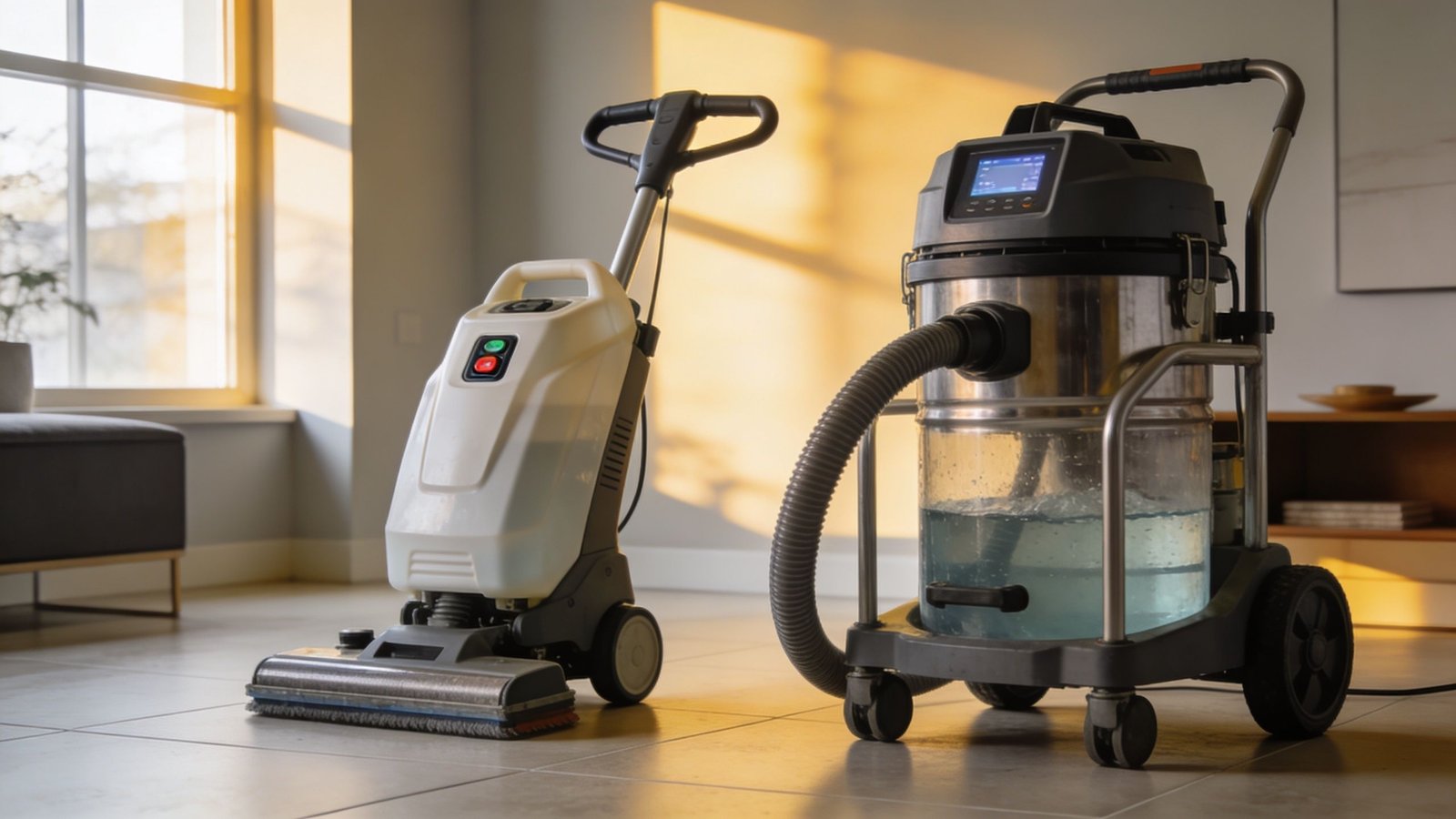
Some water losses are small enough for a cautious DIY response. A minor clean-water spill on a sealed hard surface, caught quickly, may only need prompt cleanup and close monitoring. That's not the situation typically encountered when searching for water extraction equipment.
Most emergency losses involve one or more of these complications: hidden moisture, contaminated water, carpet and pad saturation, cabinet toe-kick intrusion, or water moving into adjacent rooms. That's where rental equipment and consumer tools usually fall short.
When a rental might be enough
A rental can make sense if all of the following are true:
- The water is clean: It came from a known fresh supply source, not a drain, appliance waste line, or outdoor flooding.
- The affected area is limited: You can see the full extent of the damage and it hasn't moved into walls, under flooring, or into lower levels.
- The surface is non-porous: Tile or another hard surface is more forgiving than carpet, pad, laminate, or hardwood.
- You can act immediately: Delay is what turns a manageable event into a larger drying problem.
If any of those conditions aren't true, the risk changes fast.
Where DIY usually goes wrong
The biggest mistake isn't failing to remove visible water. It's assuming visible water is the only water that matters.
According to 877-Quic-Dry's water extraction explanation, poor extraction can double the drying process duration, while professional secondary equipment can remove an additional 10-20% of residual water beyond simple wand extraction. The same source notes that for a 2,000 sq ft area, proper secondary extraction can reduce drying time from 7-10 days to 3-5 days, and that mold growth can begin after 48 hours.
That's the financial side of using the wrong tool. More trapped water means more equipment days, more labor, more demolition risk, and a harder insurance conversation later.
In our experience with older Burbank homes, the worst mold conditions often show up where a property owner did a sincere DIY cleanup, got the floors looking dry, and never realized the carpet pad or wall base stayed wet. By the time odor appears, the easy window has already closed.
Consumer equipment can improve appearance. Professional extraction changes the drying outcome.
Why licensed restoration companies bring different value
A licensed restoration company doesn't just bring stronger machines. It brings judgment.
That includes:
- Choosing equipment by material: Carpet and pad need a different strategy than engineered wood or plaster walls.
- Separating clean water from potentially contaminated losses: A wrong assumption here affects safety.
- Building a drying chamber: Extraction alone doesn't finish the job.
- Documenting the process: Moisture readings, photos, and equipment logs matter if the claim is reviewed later.
If you are comparing your options, this overview of what a restoration professional does helps explain the gap between “water removal” and complete mitigation.
Understanding Water Contamination and Safety Protocols
The source of the water decides the level of risk. Property owners often focus on depth. Restoration professionals focus on source, exposure, and what the water touched on the way in.
Clean water, gray water, and black water
In plain terms, clean water starts from a sanitary source, such as a broken supply line. Gray water carries more uncertainty, often from appliances or used water sources. Black water is the highest-risk category and includes sewage or heavily contaminated floodwater.
If a Glendale property has a toilet overflow that spreads beyond the bathroom, the response isn't the same as a dishwasher line leak onto kitchen tile. If storm runoff pushes debris and soil into a garage after wildfire burn-scar damage, technicians must treat the job with far more caution than they would a clean supply line event.
For homeowners, the practical takeaway is simple. The dirtier the water source, the less appropriate DIY becomes.
You can read more about severe contamination conditions in this guide on what is category 3 water damage.
Why safety protocol changes with contamination
Contaminated water affects more than cleanup. It changes personal protective equipment, containment, disposal practices, and which materials can realistically be saved.
A careful team will evaluate:
- Exposure risk: Was the water from a clean line, an appliance discharge, outside flooding, or sewage?
- Affected materials: Porous materials absorb contamination differently than hard surfaces.
- Cross-contamination risk: Foot traffic and airflow can spread contaminants to cleaner areas.
- Occupant safety: Children, older adults, and people with respiratory issues may need extra caution.
For broader home health guidance after flooding, the EPA flood cleanup resources are a solid reference.
If the water came from outside the building envelope or from a drain or sewer source, treat the situation as a health issue first and a drying issue second.
What works and what doesn't
What works is a response that matches the contamination level. That may include extraction, controlled removal of unsalvageable porous materials, cleaning, antimicrobial treatment where appropriate, and verified drying.
What doesn't work is spraying deodorizer, running household fans, and assuming the smell will pass. Odor usually means something remains wet, dirty, or both.
The Professional Process and Insurance Documentation
Most property owners feel better once they know what happens after the crew arrives. Good mitigation follows a clear sequence, and every step supports both drying and insurance documentation.
Assessment comes first
A proper response starts with inspection, not machine placement. The technician identifies the source, checks affected materials, maps moisture migration, and determines whether the water appears clean or contaminated.
That first assessment shapes everything that follows. In a commercial property, it also helps managers decide how much of the operation can stay open and what areas need isolation.
Extraction and drying are documented, not guessed
Once the plan is set, the crew removes standing water, performs deep extraction where needed, and establishes drying conditions with airflow and humidity control. Then the job enters a monitoring phase.
That's where documentation becomes valuable. Teams log moisture readings, photograph affected areas, track equipment placement, and note daily progress. For homeowners, this paperwork often matters almost as much as the drying itself because it supports the file submitted to the carrier. If you're dealing with that side of the process now, this overview of a water damage insurance claim can help you understand what adjusters typically look for.
For commercial owners reviewing risk before a loss happens, it's also smart to compare commercial flood insurance rates and policy structures ahead of time. The policy language often affects what documentation will matter later.
The best drying report does one thing very well. It shows what was wet, what was done, and how the team verified progress.
A short visual helps if you want to see how moisture inspection fits into the field process:
Why this matters in Los Angeles claims
Los Angeles claims often get more complicated because buildings vary so much. A single response team may move from a newer apartment in West Hollywood to a postwar home in Burbank to a mixed-use property in Glendale on the same day. The materials, floor assemblies, and water pathways are completely different.
That's why clean documentation matters. It helps explain why one property needed targeted floor extraction while another needed selective demolition and containment. It also reduces the chance of disputes over whether a material was wet, whether drying progressed, or whether the response was timely.
Your Next Steps for Water Damage in Los Angeles
If you've just discovered water damage, your first job is to stop the source if you can do it safely. Shut off the fixture valve or the home's main water supply if a plumbing failure is active. If electricity may be involved near wet areas, leave that to a qualified professional.
After that, focus on the decisions that limit loss:
- Remove immediate hazards: Move people, pets, and valuables out of the affected area.
- Document visible conditions: Take photos before cleanup changes the scene.
- Avoid assumptions: Water that looks minor often extends farther than expected.
- Choose the tool or team based on risk: Hard-surface clean water is one thing. Saturated carpet, runoff, sewage, or hidden moisture is another.
For landlords and property managers, there's also a liability component. Tenant communication, vendor credentials, and scope verification all matter. This practical guide to avoiding liability through insurance verification is worth reviewing when you're hiring any restoration contractor in Los Angeles County.
The main takeaway is straightforward. Water extraction equipment isn't just about getting rid of puddles. It's about choosing the right extraction, drying, and verification tools fast enough to protect the building, reduce secondary damage, and keep the insurance process on solid ground. If you need immediate help in Los Angeles, Sherman Oaks, Burbank, Glendale, or nearby communities, call 818-336-1800 for a rapid emergency response.
Frequently Asked Questions About Water Extraction
What is water extraction equipment?
Water extraction equipment is the set of professional tools used to remove water and support structural drying after a leak, overflow, or flood. It usually includes extractors, pumps, air movers, dehumidifiers, and moisture meters. Each tool handles a different part of the job.
Is a shop vac enough for water damage?
Usually, no. A shop vac may help with a very small, clean-water spill on a hard surface, but it won't match professional extraction on saturated carpet, pad, or hidden moisture conditions. Once water has moved into porous materials or under flooring, stronger equipment and moisture verification become much more important.
How do professionals know when a room is actually dry?
They don't rely on touch alone. Technicians use moisture meters to compare affected materials to expected dry standards and monitor progress over time. That documentation helps confirm the area is drying properly and helps support insurance records.
Does the type of water change the equipment choice?
Yes. Clean water, appliance discharge, outside floodwater, and sewage all change the safety plan. More contaminated water may require different protective equipment, containment, cleaning methods, and material removal decisions.
Why does fast extraction matter so much?
Fast extraction limits how far water spreads and reduces the amount left behind in materials. That affects drying time, the chance of secondary damage, and how much of the structure can be saved.
Should I call a plumber or a restoration company first?
If the leak is still active, you may need a plumber to stop the source. If water has already spread into floors, walls, cabinets, or contents, you'll usually need a restoration company as well. One stops the cause. The other addresses the damage.
If you need immediate help with flooding, leaks, or hidden moisture, Onsite Pro Restoration provides 24/7 emergency service across Los Angeles. Call 818-336-1800 for a fast response, professional water extraction, structural drying, and documentation that supports your insurance claim.