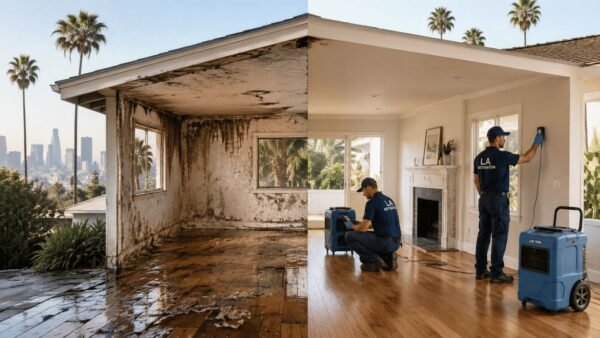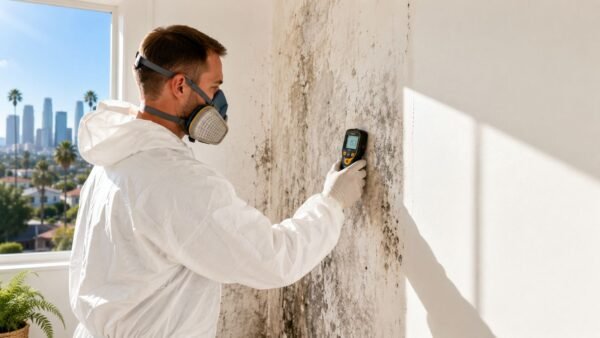

A lot of Los Angeles homeowners first notice mold the same way. A room smells off after a stretch of winter rain. A wall near a window feels cool and slightly damp in the morning. Paint starts lifting in a bathroom that never seems to dry out.
At that stage, people usually hope it’s minor. Sometimes it is. Sometimes it’s mildew on a surface that can be cleaned and monitored. But in residential work, the bigger problem is often what you can’t see yet. Moisture gets behind drywall, under flooring, inside cabinets, or into an HVAC path. By the time the stain shows up, the source may have been active for a while.
For Los Angeles homes, that pattern is common. A flat-roof leak in Sherman Oaks, coastal moisture in Santa Monica, a slow supply-line drip in a Valley kitchen, or condensation around older windows can all create the same end result. If you’re researching mold removal residential services, you’re probably trying to answer two questions at once: how serious is this, and will insurance approve the claim if you move forward?
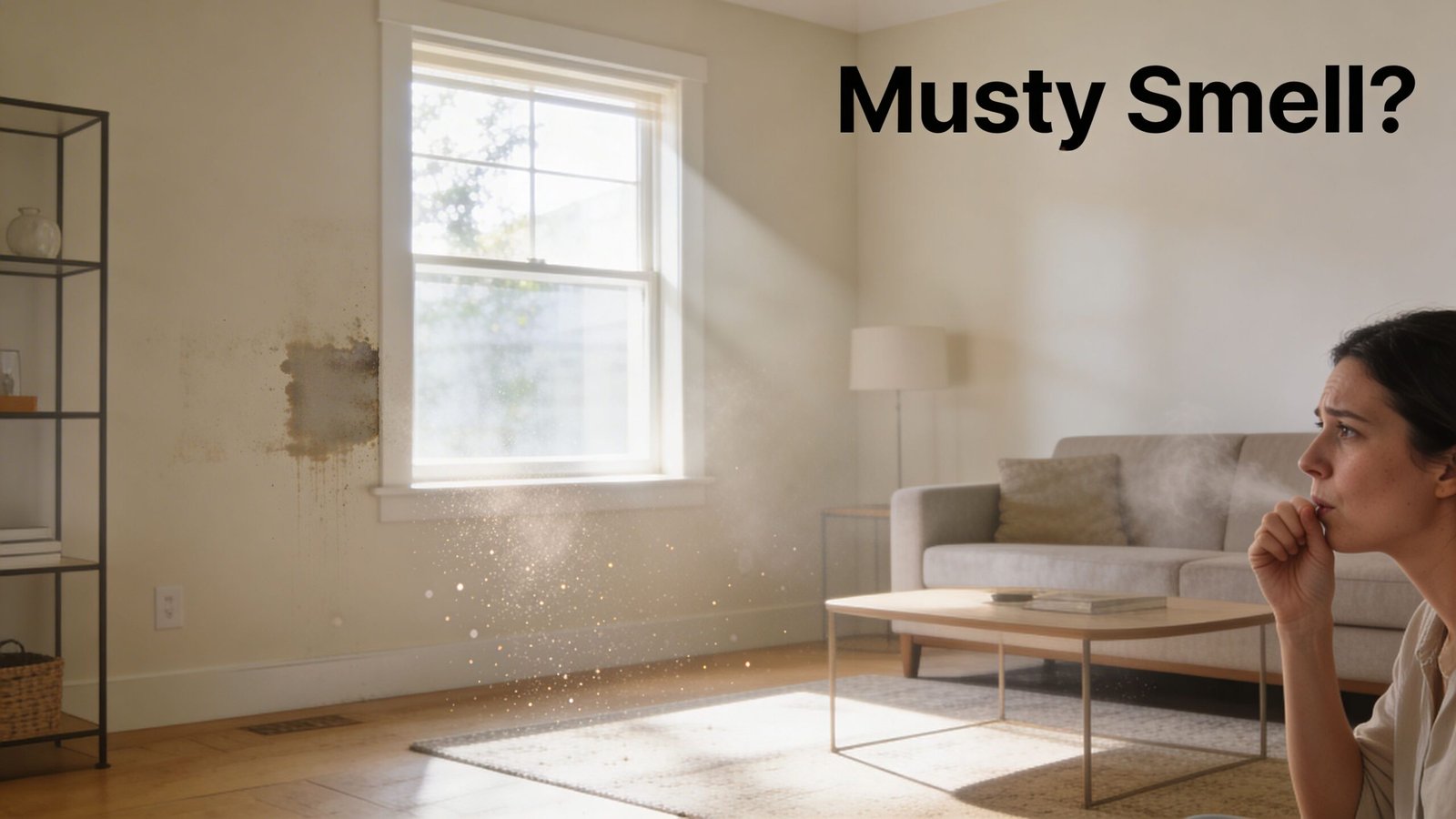
That Musty Smell Is a Warning Sign for Your LA Home
A musty odor is rarely just “old house smell.” In practice, it often means moisture has stayed trapped long enough for microbial growth to start. In Los Angeles, I see this after roof leaks, slab-related moisture migration, shower pan failures, and repeated condensation around poorly ventilated rooms.
A homeowner in Sherman Oaks might notice it after the rainy season in a bedroom near an exterior wall. A condo owner in Santa Monica might see faint staining around a window track where coastal fog and indoor humidity keep surfaces damp. The visible mark may be small. The affected assembly behind it may not be.
Why early signs matter
Mold isn’t just a cosmetic defect. It affects livability, cleanup scope, and resale conversations later. Indoor mold affects approximately 47% of U.S. residential buildings, and homes with past mold issues can see property value decreases of 20% to 37%, with up to 50% of buyers withdrawing after learning about a mold history, according to these compiled mold facts.
That’s why waiting usually costs more than acting early. A small odor issue can turn into drywall removal, insulation disposal, cabinet detachment, flooring loss, and a documentation problem for your insurer.
What homeowners often miss
Not every moisture issue looks like a leak. Some start with temperature differences and trapped humidity. If you’ve noticed recurring dampness overhead, this guide on condensation on your ceiling is useful because it helps distinguish a ventilation problem from an active intrusion.
A persistent smell also deserves a closer look than surface cleaning. If the odor comes back after wiping, repainting, or running a diffuser, the issue usually hasn’t been solved. It has only been covered. For related signs, this page on getting rid of mildew smell is a practical starting point.
Practical rule: If the smell gets stronger when the room is closed up overnight, assume there’s an active moisture source or hidden growth until proven otherwise.
If you’re seeing a stain, smelling something earthy, or dealing with repeated dampness, getting an inspection early gives you the best chance to limit demolition and preserve a clean insurance record.
Health Risks and Hidden Signs of a Mold Problem
A lot of Los Angeles homeowners first frame mold as a cosmetic issue. Insurance carriers usually do not. Once mold is tied to a covered water loss, the questions become more serious. How long was the area wet, what materials were affected, and is there documentation showing the problem extended beyond housekeeping?
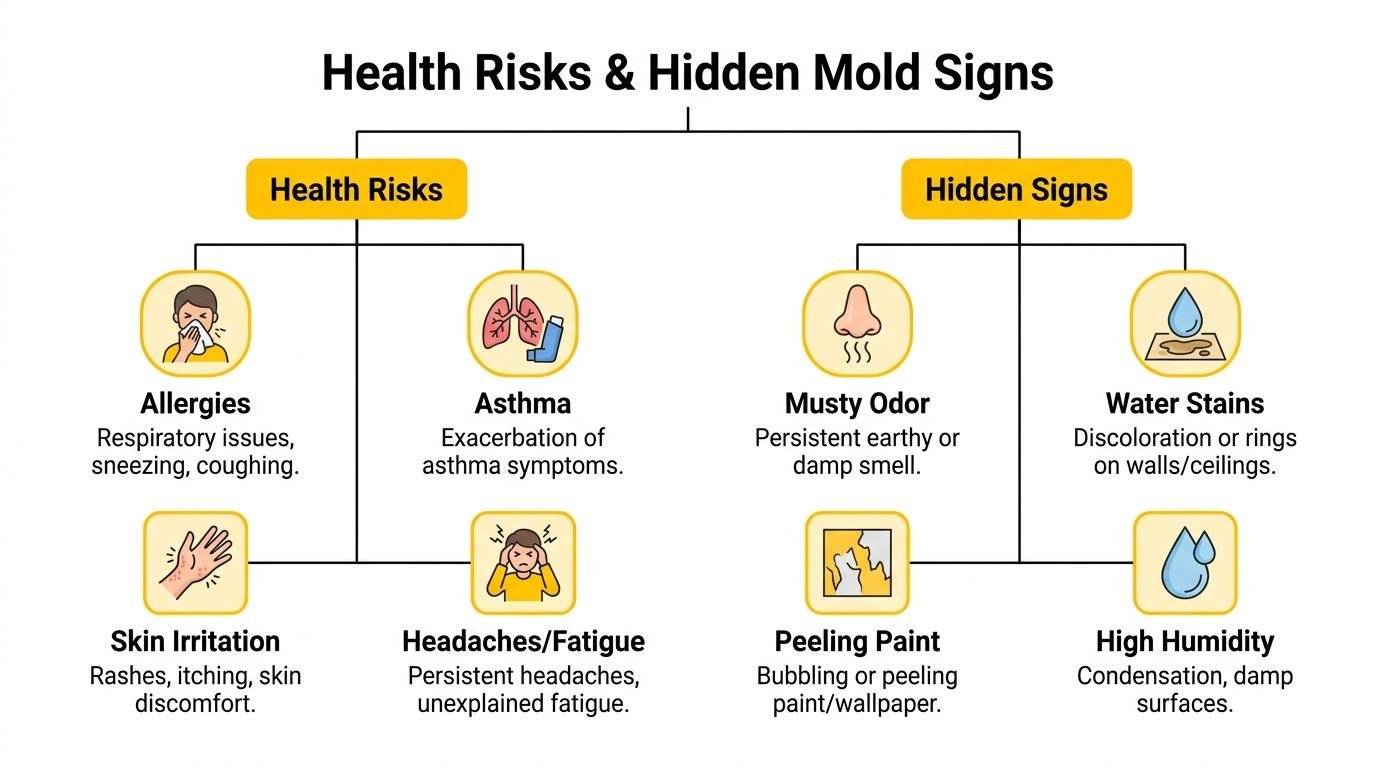
The health side matters too. The CDC notes that mold exposure can irritate the eyes, skin, nose, throat, and lungs, especially for people with allergies, asthma, or other respiratory conditions. In real homes, that often shows up as congestion that improves when you leave the house, a child coughing more at night, or a room that consistently feels harder to breathe in.
Symptoms that deserve attention
Symptoms alone do not confirm mold. They do tell you the problem may be affecting more than the wall surface.
I advise homeowners to pay attention when physical symptoms line up with building evidence. That combination gets insurers, industrial hygienists, and remediation contractors on the same page much faster than a vague complaint about a bad smell.
Common patterns include:
- Respiratory irritation: coughing, wheezing, throat irritation, or chest tightness that seems worse in one room
- Sinus issues: ongoing congestion or pressure that improves after time away from home
- Eye and skin irritation: itchy eyes, burning eyes, or rashes that flare up indoors
- Asthma flare-ups: more frequent use of an inhaler in damp bedrooms, closets, or near HVAC vents
Hidden signs that point to a larger problem
Mold growth in LA homes is often concealed inside assemblies, especially after slow plumbing leaks, window intrusion, roof leaks, slab-edge moisture, or condensation in poorly ventilated rooms. By the time growth becomes visible, the claim file may already be harder to support because the damage looks old, repeated, or poorly documented.
Look for signs that suggest hidden contamination:
- Water staining: ceiling rings, baseboard discoloration, darkened window returns, or staining around supply vents and recessed lights
- Finish failure: bubbling paint, swollen trim, lifting drywall tape, or wallpaper that suddenly loosens
- Material distortion: cupped flooring, soft cabinet toe-kicks, bowed baseboards, or drywall that feels fragile when pressed
- Odor that returns: a musty smell that comes back after cleaning, painting, or running air fresheners
- Moisture behavior: closets on exterior walls that stay damp, persistent window condensation, or bathrooms that never seem to dry out
One hidden leak can create all of that.
If you are still trying to trace where moisture may be coming from, this homeowner guide on how to find a water leak in your home is a useful starting point before an inspection.
Drywall can look only lightly stained from the room side while the back of the board, insulation, and framing show heavier contamination.
Homeowners who want to understand likely concealment points can review this guide on how to check for mold in walls. It gives a practical overview of where hidden growth commonly develops and why surface cleaning often misses it.
Surface mildew versus a remediation-level mold issue
This distinction affects scope, cost, and insurance handling.
Surface mildew is usually limited to non-porous or lightly affected areas such as shower tile, window tracks, or a bathroom ceiling with poor exhaust. If the material is still sound and the moisture source is corrected, cleaning may be enough.
A remediation-level mold problem involves porous materials or concealed spaces. That includes drywall, insulation, cabinetry, framing, underlayment, and contents. Once growth reaches that stage, the job typically requires containment, removal of affected materials, drying, and documentation that supports the cause and extent of loss.
That documentation matters in Los Angeles claims. If a contractor just wipes visible growth and leaves wet materials in place, the house may still smell, the mold may return, and the carrier may question later invoices because the original scope was never properly established.
What Professional Mold Remediation Involves
A proper residential remediation job is controlled, methodical work. It’s not spraying bleach on a wall and hoping the odor disappears. The process is built around one principle: remove contamination, control the air, and solve the moisture cause so the problem doesn’t come back.
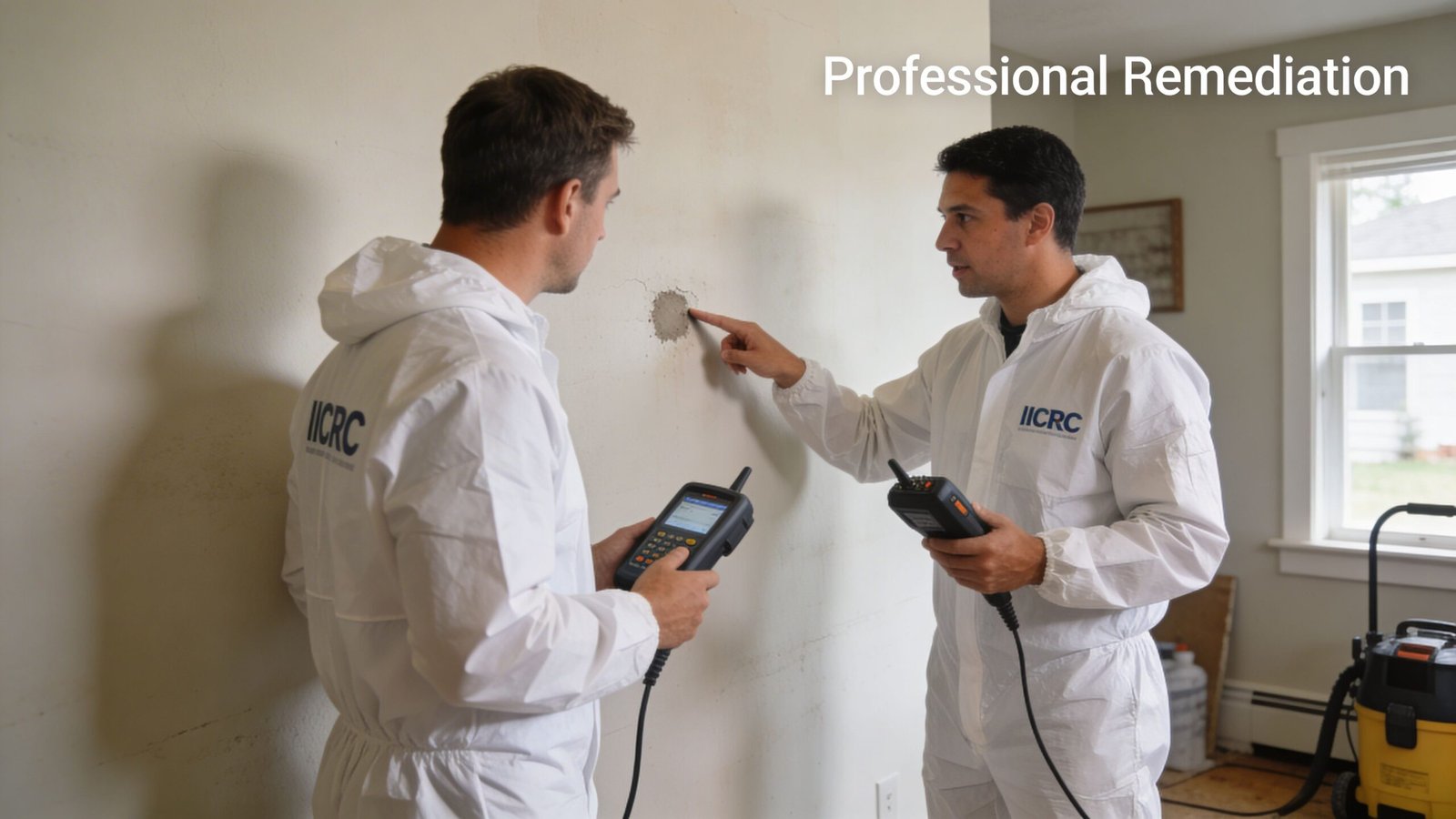
Inspection and moisture mapping
The first step is determining what’s affected. That includes the visible growth, but also the wet path that fed it. In homes, mold usually follows water. The source may be a failed angle stop, a roof penetration, shower splash-out, a cracked drain line, or window intrusion.
Technicians use tools such as moisture meters and thermal imaging during assessment. The point isn’t to impress a homeowner with gadgets. The point is to avoid tearing out the wrong area while missing the wet one.
If you’re still trying to pin down the origin, a basic homeowner guide on how to find a water leak in your home can help you think through common leak locations before the inspection starts.
Containment comes before removal
Containment is where professional work separates itself from casual cleanup. Before demolition starts, the affected area is isolated with plastic sheeting and sealed transitions. Then negative air is established.
Professional remediation relies on negative air pressure systems with HEPA-filtered machines that capture 99.97% of particles 0.3 micrometers or larger, which prevents aerosolized spores from moving from the work area into clean areas of the home, as described in this mold remediation guide at HAZWOPER OSHA.
Think of negative pressure like a controlled vacuum. Air is pulled inward toward the contaminated area instead of allowing disturbed particles to drift into bedrooms, hallways, closets, or return vents.
If a crew starts cutting mold-damaged drywall without containment, they haven’t started remediation. They’ve started spreading contamination.
Air filtration during active work
Air filtration during active work. Demolition releases particulates into the air, especially when drywall paper, insulation, or soft materials are disturbed.
In an open floor plan common in many LA remodels, that control step is even more important. Without it, spores can migrate into soft furniture, drapes, adjacent rooms, and HVAC pathways.
Here’s the embedded walkthrough for homeowners who want a visual sense of what this looks like in the field:
Removal of unsalvageable materials
Not every material can be cleaned back to a safe condition. That’s one of the biggest misunderstandings in mold removal residential projects.
Non-porous or less porous surfaces may be cleaned and treated when appropriate. But porous materials such as carpet, insulation, ceiling tile, and heavily affected drywall often need removal and replacement because contamination can penetrate into the material matrix.
The work usually follows this sequence:
- Set the cut lines based on moisture readings and visible damage.
- Remove affected porous materials carefully within containment.
- Bag debris inside the controlled area to limit release during transport out.
- HEPA vacuum and detail-clean remaining structural surfaces before treatment.
A qualified contractor will also document what was removed, where it came from, and what moisture conditions were recorded. That paperwork matters later for the insurance file.
Antimicrobial treatment and detailed cleaning
After gross removal, structural surfaces are cleaned. Professional mold removal specialists use EPA-approved biocide cleaning agents intended to address fungal contamination more effectively than standard household cleaners. The treatment approach differs by material type. Non-porous surfaces may be treated and cleaned, while porous materials that can’t be fully decontaminated are removed.
What doesn’t work well in real homes:
- Household bleach on porous drywall
- Painting over staining without source correction
- Fogging as a standalone fix
- Deodorizers used instead of cleaning
What does work is a combination of source control, removal of unsalvageable material, HEPA cleaning, antimicrobial application where appropriate, and drying.
One option homeowners in Los Angeles often review when comparing providers is professional mold remediation service, especially when they need both field containment and insurance-ready documentation.
Drying and verification
A remediation job isn’t done when the visible mold is gone. The structure still has to dry to acceptable moisture conditions so recolonization doesn’t start again. The process may include dehumidification, airflow management, and repeated meter checks.
The biocide and treatment guidance in the background material also notes that building materials should be reduced to below 16% to 20% moisture to help prevent regrowth, with verification through moisture testing and post-remediation air quality review in that process discussion at Go BluSky.
That final verification step matters for two reasons:
- It confirms the work area is ready for rebuild.
- It supports claim approval by showing the property reached clearance expectations rather than stopping at demolition.
When to Call a Pro vs DIY Mold Cleanup
Homeowners don’t need a crew for every small mark they see. But they do need a clear line between a minor cleanup issue and a contamination problem.
The most useful threshold is size. A key homeowner knowledge gap is the 10 square foot threshold. Contamination larger than that requires professional remediation because DIY methods don’t provide the containment and air filtration needed to prevent cross-contamination, as noted in this industry discussion at PushLeads.
When DIY may be reasonable
DIY cleanup can be appropriate when all of these are true:
- Small area only: clearly under the professional threshold
- Surface level growth: limited to a non-porous or easy-to-clean area
- No active leak: the moisture cause has already been fixed
- No hidden spread: there’s no staining, odor, softness, or wall cavity concern
- No health sensitivity: nobody in the home has respiratory vulnerability tied to the area
If one of those conditions isn’t met, the risk changes.
When professional remediation is the safer choice
Call a pro when you have hidden moisture, repeated regrowth, material damage, HVAC involvement, or any area beyond the threshold. In residential jobs, the biggest DIY mistake isn’t under-cleaning. It’s spreading contamination while trying to clean.
A homeowner can turn one affected closet into three affected rooms by opening walls without containment.
Here’s a practical comparison.
DIY vs. Professional Mold Removal Decision Matrix
| Factor | DIY Approach | Professional Remediation |
|---|---|---|
| Scope size | Best reserved for a very small, clearly limited area | Appropriate when the affected area is larger, unclear, or spreading |
| Moisture diagnosis | Often based on what’s visible | Uses moisture mapping and inspection to identify hidden wet materials |
| Containment | Usually none or improvised | Uses sealed containment and negative air control |
| Air filtration | Household fans can worsen spread | HEPA-filtered equipment controls airborne particulates |
| Material removal | Homeowners may remove too little or too much | Cuts are based on contamination and moisture boundaries |
| Cross-contamination risk | Higher if walls or porous materials are disturbed | Lower when containment and cleaning protocols are followed |
| Insurance support | Limited documentation | Better suited for claim files, scope notes, and clearance records |
| Outcome reliability | Uncertain if the source is hidden | Stronger when source correction, drying, and verification are included |
If you’re standing in front of a wall wondering whether to wipe it, cut it, or leave it alone, stop before opening anything up. A professional assessment is cheaper than spreading a localized issue into adjacent rooms. If you want help weighing likely project scope, request an inspection before starting demolition.
Mold Removal Costs and Insurance Coverage in California
A Los Angeles homeowner usually asks two questions right away. How bad is this going to get, and will insurance pay for it?
Both matter. But in real projects, the price of remediation and the strength of the claim are tied together. I have seen modest mold losses turn into expensive out-of-pocket jobs because the work was done without the records an adjuster expects. I have also seen larger losses move more cleanly because the contractor documented the water source, the affected materials, the containment setup, and the final clearance steps from day one.
Mold remediation is priced by scope, not by a flat menu. A small, contained area from a one-time plumbing leak is a different job than mold that spread behind kitchen cabinets, under flooring, or into multiple wall cavities after a slow leak. Cost usually changes based on how many rooms are affected, what materials have to be removed, whether contents need HEPA cleaning, and how much drying and reconstruction support is required.
California insurance claims often turn on one question. What caused the mold?
Carriers are generally more willing to cover mold tied to a sudden and accidental water event, such as a supply-line break, an overflowing washer, or a recent roof leak from a storm. Claims are harder to support when the condition points to long-term seepage, poor maintenance, chronic humidity, or a leak that was allowed to continue. The California Department of Insurance explains that coverage depends on the policy language and the cause of loss, especially whether the damage came from a covered water event or an excluded maintenance issue, as outlined on the California Department of Insurance homeowner coverage guidance.
That is why documentation decides so many claims.
A proper residential mold file should show the full story, not just the invoice at the end. If the adjuster cannot see where the moisture came from, what was wet, what was removed, and how the home was brought back to a clean condition, approval gets harder. In Los Angeles, that problem shows up often after emergency plumbing losses in older homes, slab-adjacent leaks, and window or roof intrusions where hidden damage expands after demolition.
The strongest claim files usually include:
- Cause documentation: photos, technician notes, and leak-source findings
- Initial condition records: room-by-room photos, moisture readings, and a list of affected materials
- Containment and remediation records: what was isolated, what was removed, and how cross-contamination was controlled
- Drying and cleaning logs: equipment usage, moisture progress, and cleaning steps for salvageable surfaces or contents
- Post-remediation verification: clearance testing or other final verification when the project requires it
- Adjuster communication: approvals, change orders, and updated scope notes if hidden damage is found after opening walls
Homeowners often focus on the first estimate. Insurers focus on whether the scope was necessary and supported.
That is where cheap mold cleanup bids can create real trouble. A low number may leave out containment, moisture mapping, detailed photos, or final verification. If the carrier questions the file later, the savings disappear fast. The homeowner can end up paying for disputed work, repeat cleaning, or additional demolition that should have been identified the first time.
If you want a practical pricing breakdown before you speak with a contractor or adjuster, this guide on what mold remediation costs gives useful scope-based context.
For Los Angeles homeowners, the better question is not only what mold removal costs. Ask whether the remediation plan is built to support an insurance claim, a defensible invoice, and a clean rebuild. That is the difference between just removing visible mold and getting the loss properly documented, approved, and paid.
Your Proactive Mold Prevention and Maintenance Plan
The best mold job is the one you never need. Prevention isn’t glamorous, but it protects finishes, indoor air quality, and resale value better than any cleanup can.
In Los Angeles homes, prevention usually comes down to controlling moisture before it stays trapped.
A workable maintenance routine
Use this as a practical checklist around the house:
- Check wet rooms often: look under sinks, around toilet bases, behind washing machines, and at water heater connections for staining, corrosion, or damp cabinet bottoms
- Vent moisture out: run bathroom exhaust fans during and after showers, and make sure kitchens exhaust cooking moisture instead of recirculating it
- Watch windows and exterior walls: condensation, cool drywall, or recurring dampness near older windows often points to an airflow or insulation issue
- Inspect after storms: check ceilings, skylights, roof penetrations, and parapet-adjacent walls after rain
- Keep drainage moving away: make sure water doesn’t sit against the home at planters, hardscape joints, or low spots near the foundation
Control the cause, not just the symptom
If a room smells musty, don’t start with fragrance. Start with moisture. If paint bubbles, don’t repaint first. Find out why the substrate got wet.
For long-term prevention, focus on these habits:
- Dry wet materials quickly
- Repair plumbing leaks promptly
- Maintain roof and window seals
- Reduce indoor humidity where rooms stay damp
- Inspect concealed areas before selling or remodeling
The homes that stay mold-free aren’t the homes that never get wet. They’re the homes where owners find and dry moisture fast.
A prevention plan also works best when it’s written down. Property managers are especially good at this. They use repeatable checklists, inspection dates, and photo records. Homeowners should do the same, even if it’s just notes on a phone.
If you want a home-focused checklist, this guide on how to prevent mold is a solid companion resource.
FAQs About Residential Mold Removal
Can I stay in my house during mold remediation
Sometimes yes, sometimes no. It depends on where the work is happening, how much of the house is affected, whether HVAC pathways are involved, and whether anyone in the home has respiratory sensitivity. A contained single-room project is different from a multi-room loss with demolition and drying equipment.
Does painting over mold solve anything
No. Paint may hide staining for a short time, but it doesn’t remove contamination or correct the moisture source. If the underlying materials are still damp or colonized, the problem usually returns.
What does clearance mean after remediation
Clearance means the remediated area has been checked to confirm the work is complete and moisture conditions are acceptable for rebuild or re-occupancy. For insurance purposes, that final confirmation matters because it shows the job didn’t stop at tear-out.
Will mold always require drywall removal
Not always. It depends on the material type, how much it is affected, and whether the contamination is limited to a cleanable surface or has moved into porous components. Some assemblies can be cleaned and verified. Others need selective demolition.
Why does mold come back after cleaning
It comes back when the moisture source is still present, when porous materials were not removed, or when contamination spread during an incomplete cleanup. Surface cleaning alone rarely solves a hidden wall or flooring issue.
What should I do first if I discover mold in a bedroom or closet
Don’t disturb it. Don’t start cutting drywall, brushing the area, or running fans directly on it. Limit use of the space, note any recent leak or odor history, and arrange for an inspection so the source, scope, and containment needs can be determined before cleanup starts.
If you’re dealing with a musty smell, visible staining, or an insurance claim tied to mold damage, Onsite Pro Restoration can inspect the affected area, document moisture conditions, contain contamination, and provide the records homeowners and adjusters typically need to move a residential mold claim forward in Los Angeles.