
Let's get straight to the point: Yes, the water inside a PEX pipe can freeze. But the real question is, will it burst and flood your Los Angeles home?
Unlike rigid pipes like copper or PVC that crack under pressure, PEX is incredibly flexible. Think of it like a heavy-duty rubber hose—it can stretch when water expands into ice, then snap back to its original shape once everything thaws. This unique quality makes it a far safer choice for homes in climates that experience surprise cold snaps.
However, PEX isn't invincible. This guide will walk you through exactly how it handles freezing temperatures, where its limits are, and what you need to do to protect your plumbing from a costly disaster. If you're already facing a leak, don't wait.
Will PEX Pipes Freeze and Burst in Cold Weather?
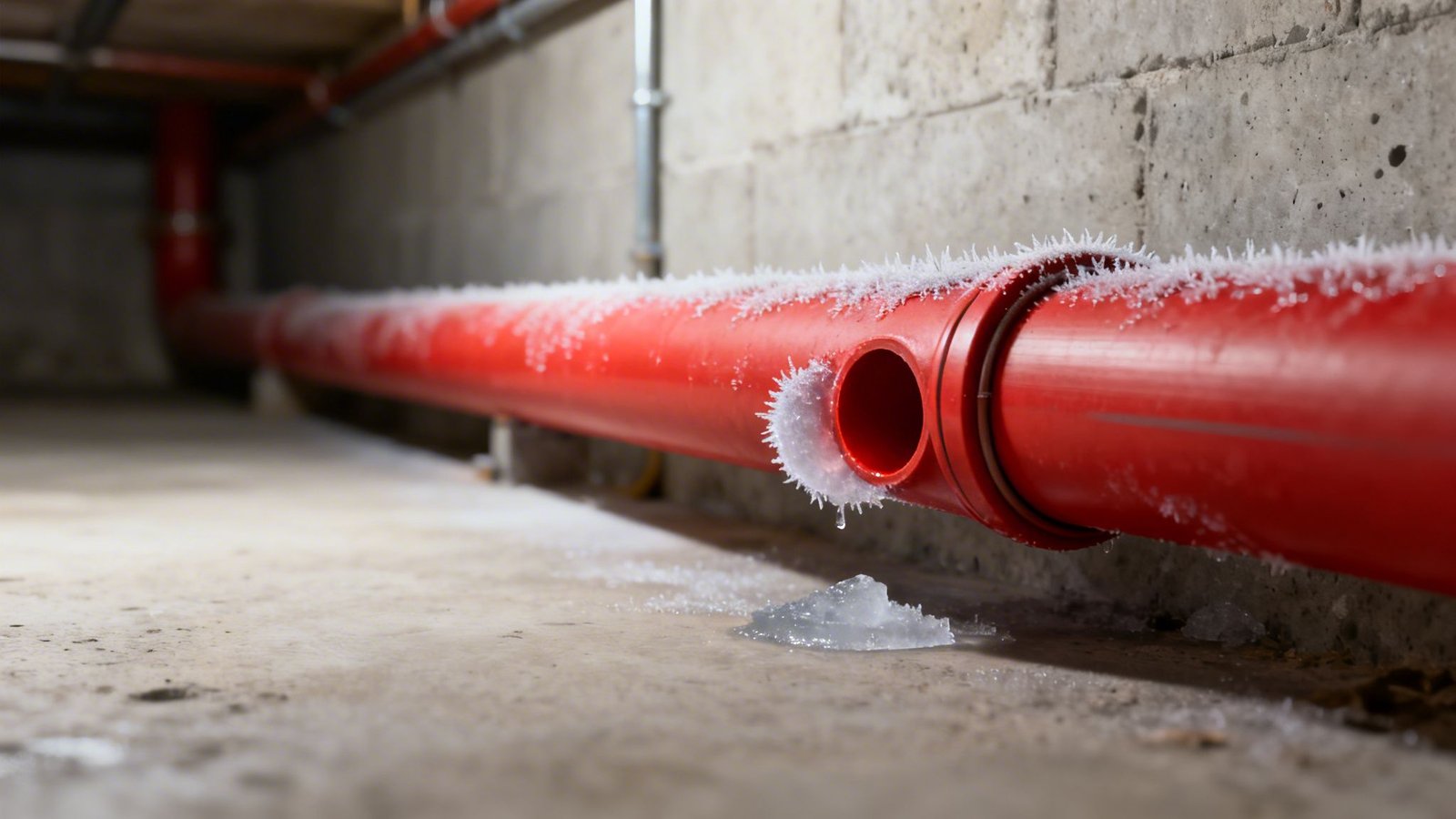
Informed homeowners often ask, "can PEX freeze?" The answer is absolutely yes. Any pipe carrying water will freeze if exposed to temperatures at or below 32°F (0°C) for long enough.
The more important question is whether it will burst. This is where PEX (cross-linked polyethylene) truly shines compared to its rigid counterparts.
When water freezes, it expands by about 9%. That expansion exerts immense force on whatever is containing it. For rigid materials like copper, CPVC, or galvanized steel, that pressure is often too much, causing them to split, crack, or shatter.
PEX, on the other hand, is made from a flexible polymer that allows it to expand right along with the ice. Once temperatures rise and the ice thaws, the pipe simply contracts back to its original diameter, usually without any damage.
The Science Behind PEX's Freeze Resistance
The remarkable durability of PEX isn't an accident; it's a result of its unique molecular structure. The manufacturing process creates strong "cross-links" between the polyethylene molecules, giving the material a kind of "shape memory." This is what allows it to stretch significantly and return to its original form.
To understand how different materials react, it helps to see them side-by-side.
Pipe Material Freeze Resistance Comparison
| Material | Flexibility When Frozen | Burst Risk Under Freeze Conditions | Key Characteristic |
|---|---|---|---|
| PEX | High | Very Low | Expands with ice and returns to its shape. |
| Copper | None | High | Becomes brittle and will split or burst. |
| PVC/CPVC | None | Very High | Becomes brittle and can shatter under pressure. |
| Galvanized Steel | None | High | Rigid and will split at seams or weak points. |
This table makes it clear why PEX has become a go-to for modern plumbing, especially in areas with occasional harsh winters. Its ability to absorb the stress of freezing water sets it apart from traditional materials that offer zero forgiveness.
In fact, extensive lab testing shows that PEX pipe can survive more than 400 repeated freeze-thaw cycles while maintaining its structural integrity. You can find more details about this research on the Plastic Pipe Institute's website.
However, it’s critical to remember that while the pipe is tough, the water inside can begin to freeze once the pipe's temperature drops to around 20°F (-6.7°C). Once frozen, you have a blockage—and a potential problem.
Key Takeaway: The flexibility of PEX is its greatest defense against bursting. While water inside it can and will freeze solid, the pipe itself is designed to expand and absorb the pressure, making it a far safer option in cold climates than any traditional rigid pipe.
Why PEX Is More Freeze-Resistant Than Metal Pipes
When plumbers and restoration pros look at pipe materials, we’re thinking beyond just cost. We have to consider how they’ll hold up under stress—especially in regions that get unexpected cold snaps. When it comes to freezing temperatures, PEX has a massive advantage over old-school metal pipes like copper. It all comes down to two simple properties: flexibility and insulation.
Think of a copper pipe like a glass bottle. If you fill it with water and freeze it, there’s nowhere for the expanding ice to go. The rigid wall has no choice but to crack or burst. PEX, on the other hand, acts more like a tough silicone balloon.
The Power of Flexibility
The secret is in the molecular structure of cross-linked polyethylene (PEX). It has a remarkable ability to stretch. As water turns to ice, its volume expands by about 9%. Instead of fighting that pressure, a PEX pipe wall simply expands to accommodate it.
Once the ice thaws, the pipe’s “shape memory” allows it to snap right back to its original form, usually without any damage at all. This is the main reason why PEX can freeze without always leading to a catastrophic burst. It has a forgiveness that rigid materials just don’t offer. A PEX line in an uninsulated Pasadena garage might survive a surprise cold front, while a copper pipe in the same spot would likely fail and trigger an emergency call for water damage restoration.
The Advantage of Insulation
Beyond its flexibility, PEX is also a natural insulator. It transfers heat—and cold—way more slowly than metal does. This property, known as thermal conductivity, plays a huge role in preventing freezes in the first place.
Metals like copper are fantastic conductors. That’s great for a frying pan, but terrible for a water pipe, as it quickly sucks the cold from the surrounding air and transfers it directly to the water inside. PEX, as a polymer, acts as a barrier, slowing that whole process down.
This isn't a small difference. PEX is roughly 68 times less thermally conductive than copper. That massive gap slows down how fast the water inside can even begin to freeze. During a sudden temperature drop, the water in a PEX pipe has a much longer buffer period before it turns solid. This can give a homeowner several crucial extra hours to notice a problem and act before a freeze turns into a disaster. You can dig into the research from the American Society of Plumbing Engineers to understand the full impact of PEX's thermal resistance on their website.
Ultimately, this one-two punch of flexibility and low thermal conductivity makes PEX an incredibly resilient material. While no pipe is truly freeze-proof, PEX’s built-in properties provide a powerful defense against the most destructive outcome: a burst pipe and the massive water damage that follows.
Understanding PEX Pipe Failure Points
While PEX tubing itself is incredibly resilient against freezing, that doesn’t make the whole system bulletproof. Knowing where the weak points are is the first step in preventing a messy, expensive failure. And even with all its strengths, a PEX system can freeze and burst—but the problem rarely starts with the pipe itself.
The biggest risk, by far, comes from the fittings. These are the metal or plastic connectors that join sections of PEX tubing together or link them to fixtures like sinks and toilets. Unlike the flexible pipe, fittings are completely rigid. They have zero give when water inside them freezes and expands into ice.
This is where things go wrong. The incredible pressure from the expanding ice has nowhere to go and hammers directly on the inflexible fitting. That pressure can easily crack the fitting or compromise the crimp ring that seals it. Even if it doesn’t burst right away, the seal might be damaged, leading to a slow, hidden leak long after the thaw.
The Role of Material Fatigue
Another factor we see is material fatigue. PEX can absolutely handle a few freeze-thaw cycles, but that repeated stress eventually takes its toll. It’s just like bending a paperclip back and forth; eventually, the metal weakens and snaps.
Each time the water inside freezes, the pipe is forced to expand. When it thaws, it contracts. Over many years, especially in poorly insulated areas like attics or crawl spaces, this constant cycle can make the pipe material more brittle and prone to cracking. A pipe that survived its first winter might not survive its tenth.
Key Insight: The manufacturing process itself can introduce weak points. The specific temperature used for crosslinking the polyethylene directly impacts its structure and resilience. If the material is over-crosslinked at too high a temperature, its internal structure becomes less able to handle thermal stress, making it weaker against freeze pressure. You can dive into the technical research on PEX manufacturing standards to see just how critical that precision is.
Installation Quality Is Non-Negotiable
Finally, and this is a big one, improper installation can doom a PEX system from day one. A poorly crimped or clamped fitting creates a weak point that is almost guaranteed to fail under pressure. It’s a scenario we encounter all the time.
For example, a PEX line running through an uninsulated crawl space of a Glendale hillside home is a classic candidate for failure. If a fitting wasn't perfectly secured during installation, a sudden cold snap is all it takes to cause a burst. This often creates a hidden leak that goes unnoticed until you’re facing serious water damage. If you’re in that situation, it’s critical to understand the process for expert burst pipe repair.
How to Winterize Your PEX Plumbing System
PEX’s flexibility is a game-changer, but the best strategy is always prevention. It's far cheaper—and a lot less stressful—to stop your pipes from freezing in the first place than to deal with an emergency repair during a cold snap.
The good news? Protecting your PEX plumbing system is simple and straightforward. A few proactive steps will give you a solid defense against freeze-related damage and keep your water flowing all winter long.
Insulate Vulnerable Pipes
The single most effective thing you can do is insulate. Your focus should be on any PEX lines running through unheated or poorly-heated areas of your home.
Take a walk through your house and pay close attention to these common trouble spots:
- Attics and lofts, especially near the eaves or vents.
- Crawl spaces, which are notoriously exposed to outdoor air.
- Basements, particularly along the rim joists or near cold foundation walls.
- Garages, where lines for utility sinks or laundry often run along exterior walls.
- Under cabinets on exterior-facing walls, a prime spot for cold air to sneak in.
Grab some simple foam pipe sleeves or fiberglass pipe wrap from the hardware store. They're cheap and easy to install. Just make sure the insulation covers the entire length of the exposed pipe—and don't forget the fittings. Those are the most common failure points.
Seal Air Leaks and Drafts
A tiny crack can be a big problem. All it takes is a small gap to let a steady stream of frigid air blow directly onto a pipe, dropping its temperature fast.
Comb through your home and look for any openings that let cold air in, especially near your plumbing. Use caulk or spray foam to seal up gaps around:
- Windows and door frames.
- Sill plates (where the foundation meets the wood framing).
- Dryer vents and any entry points for utility cables or pipes.
Sealing these leaks doesn't just protect your pipes; it makes your entire home more energy-efficient. And while you’re at it, it’s a good idea to look into a complete guide on preventing frozen pipes in winter for a whole-home approach.
Use Heat Tape for Critical Lines
What about those pipes that are just impossible to insulate properly or move? For the most vulnerable PEX lines, electric heat tape (or heat cable) is your best friend.
This product wraps directly around the pipe and uses a tiny bit of electricity to keep the pipe wall just above freezing temperatures. Always follow the manufacturer’s instructions to the letter. Modern versions are often self-regulating, meaning they adjust their heat output automatically, making them both safe and efficient.
This diagram shows where PEX systems typically fail—which are the exact spots you need to protect the most.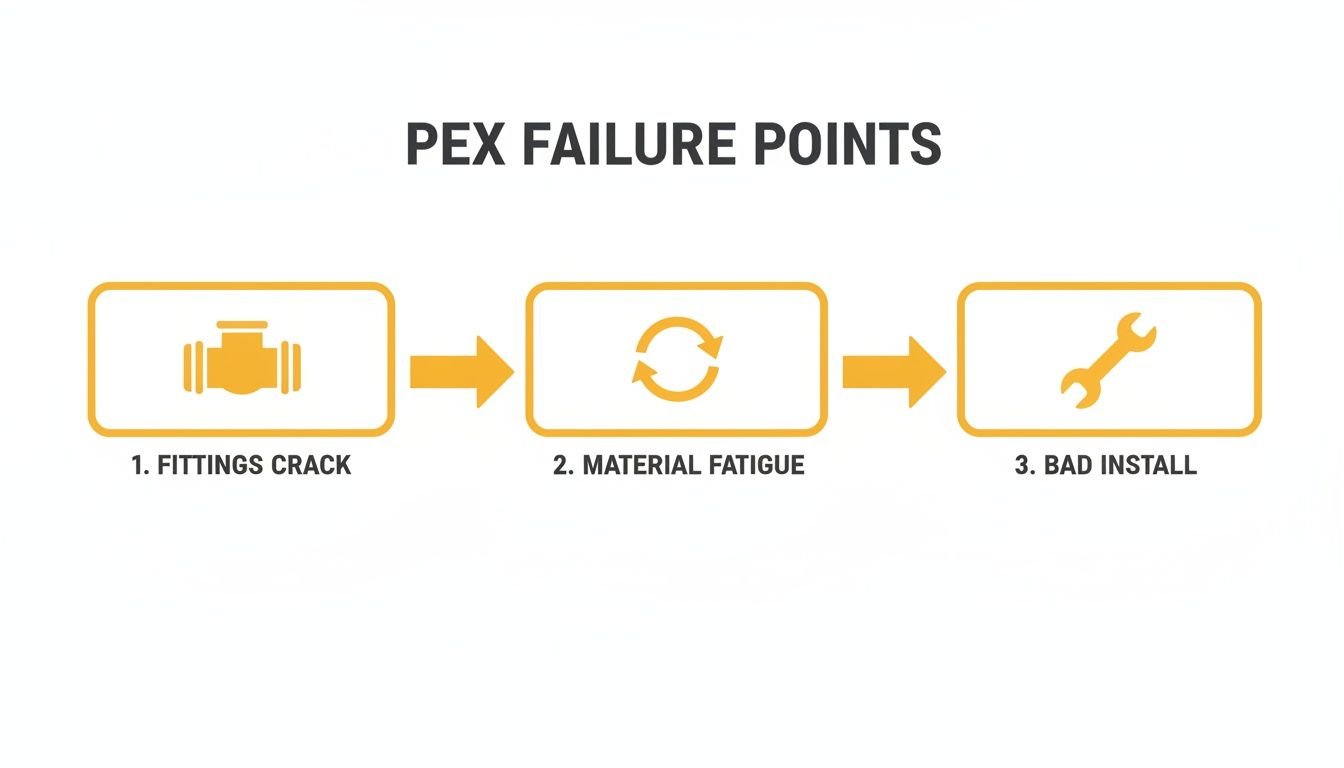
As you can see, the problem usually isn't the pipe itself, but the fittings, material fatigue, or a bad installation job. That’s why protecting these specific areas is so crucial. For more in-depth strategies, check out our guide on how to prevent pipes from bursting.
Disconnect and Drain Outdoor Hoses
This last step is one of the easiest and most critical things you can do. Before the first freeze is even in the forecast, head outside.
Disconnect all your garden hoses, drain them completely, and store them away for the winter. If your home has separate shut-off valves for your outdoor faucets, close them. Then, open the spigots to let any trapped water drain out. This simple 5-minute task can save you from a major headache.
What to Do When You Think You Have a Frozen PEX Pipe
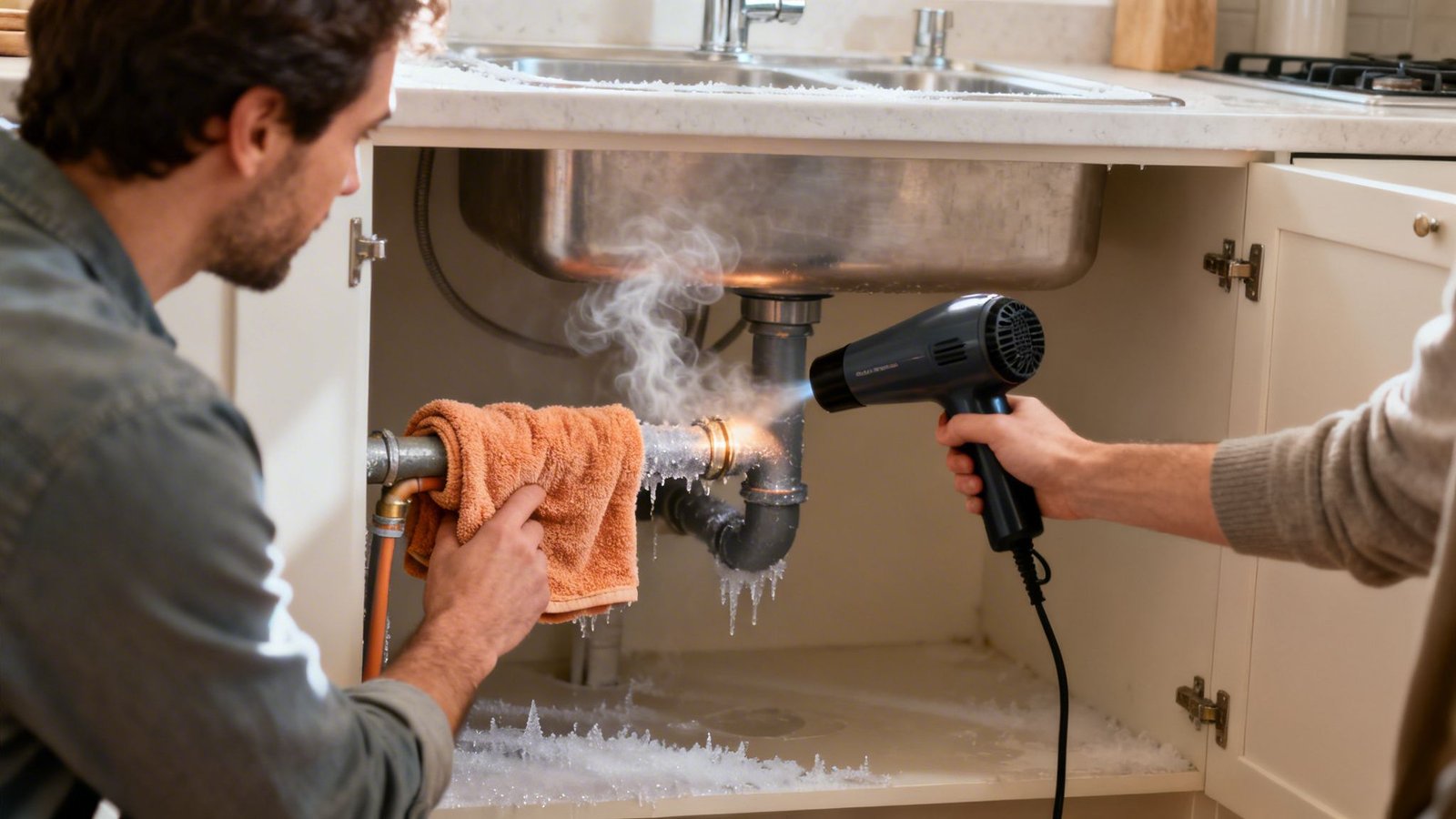
It’s a classic winter morning problem: you turn on a faucet and get nothing but a sputter or a frustrating trickle. This is the #1 sign that water inside your pipes has frozen solid.
Even though PEX can freeze without bursting, that ice blockage is still a serious issue. You need to act quickly—but safely—to prevent the situation from turning into a real water damage emergency.
First things first, you have to find the frozen section. Start at the faucet that isn't working and trace the plumbing back toward the wall. Run your hand along the pipe (if it's safe to do so) and feel for an intensely cold spot. You might even see a layer of frost or condensation on the pipe itself. The freeze is almost always in an unheated or poorly insulated area, like a crawl space, attic, or along an exterior wall.
How to Safely Thaw Your PEX Pipe
Once you’ve pinpointed the frozen section, the goal is to apply gentle, gradual heat. Do not rush this. Blasting the pipe with high heat can damage the PEX or, far worse, create a fire hazard.
Here are the safest ways to thaw a frozen PEX pipe:
- Bring Out the Hairdryer: Set a hairdryer to its lowest heat setting. Keep it moving back and forth along the frozen area, holding it several inches away from the pipe. Don't just point it at one spot.
- Use Warm Towels: Soak a few towels in warm—not boiling—water. Wring them out and wrap them around the frozen pipe, replacing them as they get cold.
- Raise the Room Temperature: If the pipe is in an accessible space like a basement or garage, use a portable space heater to warm up the entire room. Never aim the heater directly at the pipe.
- Keep the Faucet Open: This is a crucial step. Leave the faucet connected to the frozen line open just a crack. This relieves pressure building up in the system and gives the melting ice somewhere to go. As soon as water starts flowing, it will help speed up the rest of the thawing process.
CRITICAL WARNING: Never use an open flame to thaw any kind of pipe. A blowtorch, propane heater, or any other direct flame will absolutely melt or weaken the PEX. This will guarantee a burst and create a serious fire risk.
Once you get water flowing again, you're not done. The real danger often lies with the fittings, which can be damaged or loosened by the pressure from the ice. Carefully inspect all the nearby connectors and joints for any signs of a slow drip or leak. This is where innovations in smart plumbing, like leak-detecting pipes, can be a lifesaver for catching problems early.
If you can't find the frozen spot, can't reach it safely, or you spot even a tiny leak, it’s time to stop what you're doing. Immediately shut off the main water supply to your home. If you're not sure how, check out our guide on where to find the main water shut-off. This will prevent further damage while you call in a professional for help.
When to Call a Water Damage Professional in Los Angeles
Knowing how to thaw a frozen pipe is a great skill for any homeowner. But knowing when to stop and call for backup is even more critical. There’s a fine line between a simple DIY fix and a full-blown emergency that can flood your home in minutes.
Hesitating can turn a minor plumbing problem into catastrophic water damage. If you see any of the red flags below, it's time to shut off the water and call in a professional restoration team immediately.
When to Make the Call Immediately
There is a clear difference between a simple freeze you can handle and a true emergency. If you spot any of the following, your first move should be to shut off the main water supply to your house. Your second should be to call a certified restoration company.
- The Pipe Has Already Burst: This one is obvious. If you see water actively spraying, gushing, or pooling, the situation is past DIY. You need immediate professional help to stop the flow and start the cleanup.
- A Leak Appears After Thawing: Even after you get the water running again, you're not out of the woods. Carefully inspect all the fittings, joints, and connections near the area you thawed. If you find even a slow drip, that fitting was likely cracked by ice pressure and needs to be replaced by a pro.
- You See Water Stains: Brownish or discolored spots suddenly appearing on your drywall, ceilings, or floors are a classic sign of a hidden leak. This means water from a compromised pipe is already soaking into your home’s structure. You need experts to find the source and dry it out before mold takes hold.
- You Can’t Locate the Frozen Area: If your taps are dry but you can't find any visible frost or cold spots on your exposed pipes, the ice blockage is probably somewhere you can't reach—inside a wall, in a tight crawlspace, or under the foundation. Guessing and randomly applying heat is a recipe for disaster.
A professional restoration company doesn't just fix the pipe; they save your property from secondary damage. They use specialized tools like thermal imaging cameras to pinpoint hidden moisture and deploy commercial-grade air movers and dehumidifiers to prevent mold, which can start growing in just 24-48 hours.
For homeowners across Los Angeles, from a home in West Hollywood to a condo in Burbank, our 24/7 emergency team is equipped to respond fast. We mitigate the damage, start the structural drying process, and provide the detailed documentation your insurance company requires. For more on how we handle these emergencies, check out our guide to professional burst pipe cleanup.
Your Top Questions About PEX and Freezing, Answered
Once you get the basics of how PEX handles cold weather, the specific, real-world questions always follow. We get these from homeowners all the time, so let's tackle the most common ones we hear in the field.
Q: Is PEX-A better for freeze protection than PEX-B?
A: While all types of PEX are miles ahead of copper or PVC, PEX-A is generally seen as the most resilient against freezing. It has the best "shape memory," which is just a technical way of saying it can expand when frozen and shrink back to its original shape more reliably than other types. That said, for the vast majority of homes, any professionally installed PEX—whether it's type A, B, or C—is a huge improvement for preventing freeze-related bursts.
Q: Can the metal fittings on PEX pipes crack from freezing?
A: Yes, and this is the number one failure point we see. The PEX tubing itself might be flexible, but the brass or copper fittings that connect the pipes are completely rigid. They have zero give. When water inside the pipe freezes and expands, all that incredible pressure hits the unyielding fitting. The result is often a cracked fitting or a damaged seal, which immediately turns into a major leak the second things thaw out. This is why insulating fittings in attics, crawlspaces, and exterior walls is so critical.
Q: Will homeowners insurance cover a burst PEX pipe?
A: Most of the time, yes—but with a big catch. A standard policy will typically cover the water damage that results from a sudden burst pipe. That means the cost of drying out your walls, replacing ruined flooring, and repairing damaged drywall is usually covered. However, the policy often does not cover the cost of repairing the pipe itself. It's crucial to understand that you'll likely pay a plumber out-of-pocket for the repair, while insurance handles the much larger expense of restoration. For a deeper dive, check out our guide on whether homeowners insurance covers burst pipes.
Q: How cold must it be for PEX pipes to freeze?
A: Water is water, so it will start to freeze at 32°F (0°C) no matter what kind of pipe it's in. The real advantage of PEX is that it's a poor conductor of heat (and cold). This means the air temperature has to drop much lower, for a longer period, for the water inside the pipe to actually freeze solid. In most situations, the ambient temperature needs to dip to around 20°F (-6.7°C) before PEX lines become a serious risk. This gives you a valuable buffer of time that you simply don't get with super-conductive copper pipes.
If you're dealing with the aftermath of a burst pipe or suspect a hidden leak, don't wait. Contact Onsite Pro Restoration 24/7 for immediate help with water damage cleanup and restoration. Visit us at https://onsitepro.org to schedule a free assessment.