
When you discover water seeping into your basement, your first thought is almost always: how much is this going to cost me? The truth is, the average cost of basement waterproofing can vary significantly. For a typical 1,000-square-foot basement in the Los Angeles area, you can expect to invest anywhere from $5,000 to $15,000, with a national average hovering around $5,500. However, that's just a starting point. The final price tag is entirely dependent on your home's unique situation, the severity of the water intrusion, and the chosen method of repair.
A damp basement isn’t just an inconvenience; it's a direct threat to your home’s structural integrity and your family’s health. Water intrusion can lead to foundation damage, toxic mold growth, and destroyed personal belongings. This is why professional waterproofing isn't just a repair—it's a critical investment in protecting your property.
Dealing with a wet basement can be overwhelming, but understanding the costs is the first step toward reclaiming a dry, secure, and valuable space. At Onsite Pro Restoration, we believe in transparency, providing Los Angeles homeowners with the clear information they need to make confident decisions.
What Factors Determine Basement Waterproofing Costs?
Think of waterproofing like a medical diagnosis. A doctor wouldn’t prescribe treatment without first understanding the root cause of your symptoms. Similarly, a waterproofing expert must perform a thorough assessment to identify why and how water is entering your basement. Two homes in the same neighborhood—one in a low-lying part of Van Nuys and another on a hill in Sherman Oaks—could face entirely different water issues and, therefore, require different solutions at different price points.
The final cost isn’t based on a generic price-per-foot but on a combination of specific factors unique to your property.
Basement Size and Layout
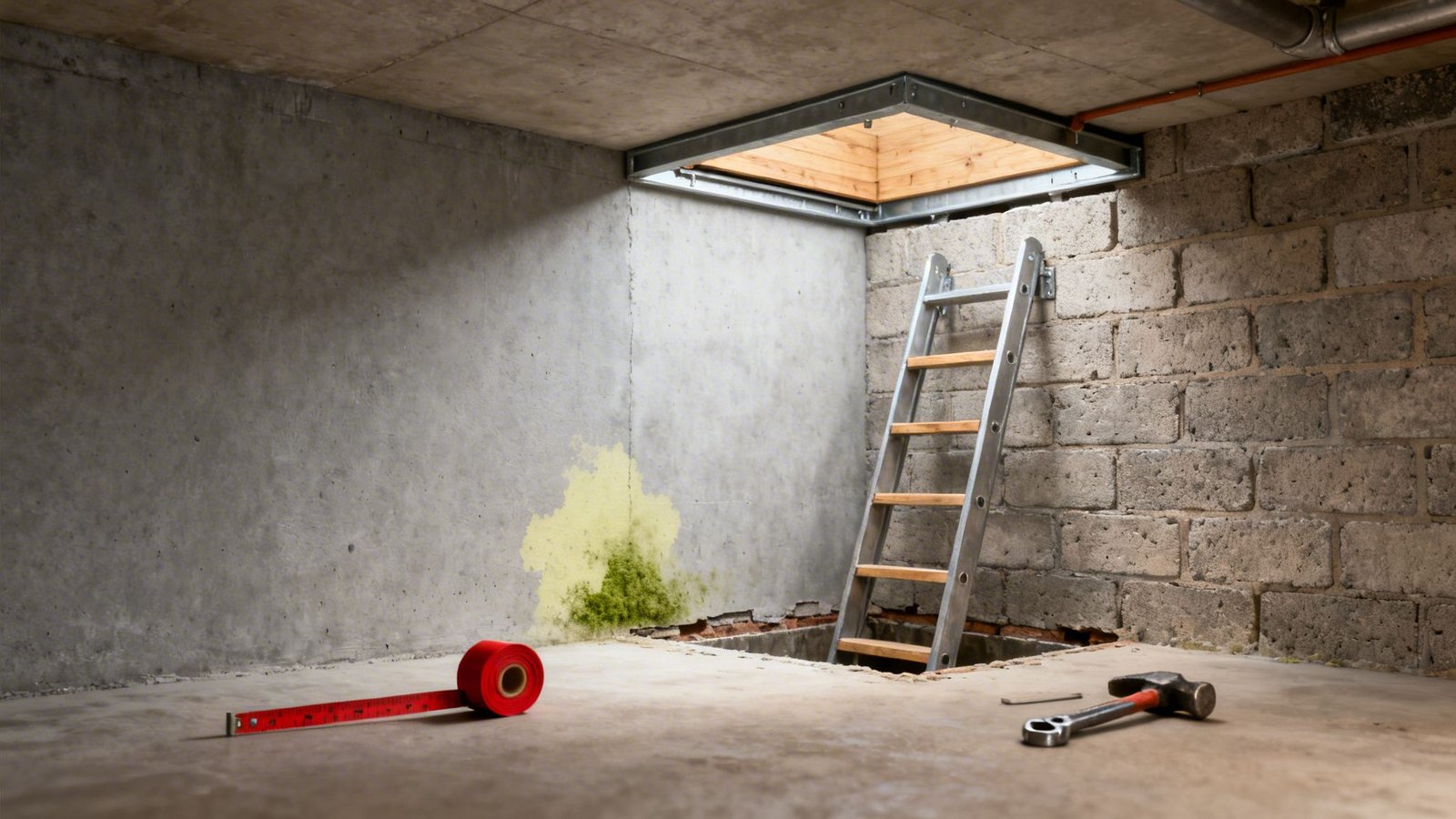
This is the most straightforward factor. A larger basement perimeter requires more materials and labor, whether we are applying an interior sealant or digging a trench for an exterior membrane. A simple, rectangular basement in a newer construction is easier and less costly to waterproof than a complex layout in an older home with numerous nooks, crannies, and support columns that our technicians must navigate.
Foundation Condition and Type
The health of your foundation is a massive variable. Are we dealing with a few minor hairline cracks, or are there major fissures compromising the home's structural stability?
- Poured Concrete: Generally stronger with fewer weak points, often requiring less prep work.
- Cinder or Concrete Block: These foundations, common in older Los Angeles homes, have hundreds of mortar joints that act as potential entry points for water as they degrade over time. Waterproofing these walls is more labor-intensive.
Homes in areas like Pasadena or Hancock Park often have foundations that have settled over decades, creating cracks and imperfections that make the repair more complex and expensive. If we find existing structural damage, it must be repaired first, which can add thousands to the project cost but is essential for a lasting solution.
Severity of Water Intrusion
How is water getting in? A basement with minor dampness from condensation requires a much lighter touch than one that floods during every major rainstorm due to intense hydrostatic pressure—the force of groundwater pushing against your foundation. This pressure, common in low-lying areas or properties with poor grading, demands a robust drainage system to relieve it, a far more involved and costly job than simply applying a sealant.
Accessibility and Site Conditions
How easily can our crew and equipment access the problem area? An open, walk-out basement is simple. However, a foundation hemmed in by retaining walls, dense landscaping, or a neighboring property in the Hollywood Hills presents significant challenges that increase labor costs. Exterior excavation is particularly sensitive to obstacles like concrete patios or large tree roots, which may require specialized equipment and add expense to the job.
Need for Additional Repairs
Waterproofing rarely happens in a vacuum. Water intrusion often leads to secondary issues that must be addressed.
- Mold Remediation: If moisture has led to mold growth, it must be professionally removed before waterproofing can begin.
- Structural Repairs: Cracks may require epoxy or polyurethane injections to restore the foundation's integrity.
- Finished Basement Restoration: If your basement is finished, the project scope expands. Costs will include removing and replacing drywall, flooring, and baseboards. This can be a major expense, as detailed in our guide on the complete cost of water damage cleanup.
Key Takeaway: Dealing with the aftermath of water getting in can be complicated and messy. To learn more about what happens after the water is stopped, check out our detailed guide on basement water damage restoration.
Breaking Down Waterproofing Methods and Prices
The total price for basement waterproofing is directly tied to the method used. A little dampness on the wall requires a very different approach than a basement that floods repeatedly. Some solutions are surface-level fixes, while others are comprehensive overhauls of your home's drainage system. The right one depends on how and why water is getting in.
Before choosing a method, it's critical to identify the source. Sometimes, the issue extends beyond the basement itself. For instance, persistent crawl space moisture problems can contribute to water issues in lower levels, leading to poor air quality and structural decay.
Interior Sealants: The Basic Barrier
The most straightforward and budget-friendly option is applying a waterproof sealant or paint directly to your interior basement walls. This method acts like a raincoat on the inside of your foundation, creating a barrier that stops minor moisture from seeping through the concrete.
This is a surface-level fix best suited for light dampness or minor, non-structural cracks.
- Average Cost: $3 to $9 per square foot.
- Best For: Low-level humidity, minor damp spots, and homes without significant hydrostatic pressure.
- Pros & Cons: It's affordable and non-invasive. However, it doesn’t fix the root cause. If groundwater pressure is high, water will eventually push through the sealant.
Interior Drainage Systems: The Internal Gutter
A far more reliable solution is an interior drainage system, also known as an internal French drain. This system acts like a gutter network installed inside your basement. We cut a trench around the interior perimeter of the floor, lay a perforated pipe, and connect it to a sump pump.
Any water that seeps through the walls or floor is collected by the pipe and channeled to the sump pump, which actively pumps the water out and away from your house. It doesn't stop water from entering the foundation but effectively manages it before it can flood your floor, relieving the hydrostatic pressure.
- Average Cost: $50 to $100 per linear foot.
- Best For: Moderate to heavy water seepage and issues related to hydrostatic pressure.
- Pros & Cons: Highly effective at keeping the basement dry and comes with a long-term warranty. It requires a sump pump system to function.
Exterior Waterproofing: The Ultimate Fortress
The most comprehensive—and most expensive—method is exterior waterproofing. This involves excavating a deep trench around your home's entire perimeter to expose the foundation walls.
Once exposed, the walls are cleaned, cracks are repaired, and a high-grade waterproof membrane is applied. A new exterior drainage pipe is installed at the base to carry water away. This is the only method that stops water before it even touches your foundation.
- Average Cost: $100 to $250 per linear foot.
- Best For: Severe, recurring water intrusion, homes with a high water table, or foundations with significant cracking.
- Pros & Cons: It’s the most effective, permanent solution. The downside is the high cost and major disruption to your landscaping, patios, or driveway.
The infographic below illustrates how costs can vary based on basement size and the required solution.
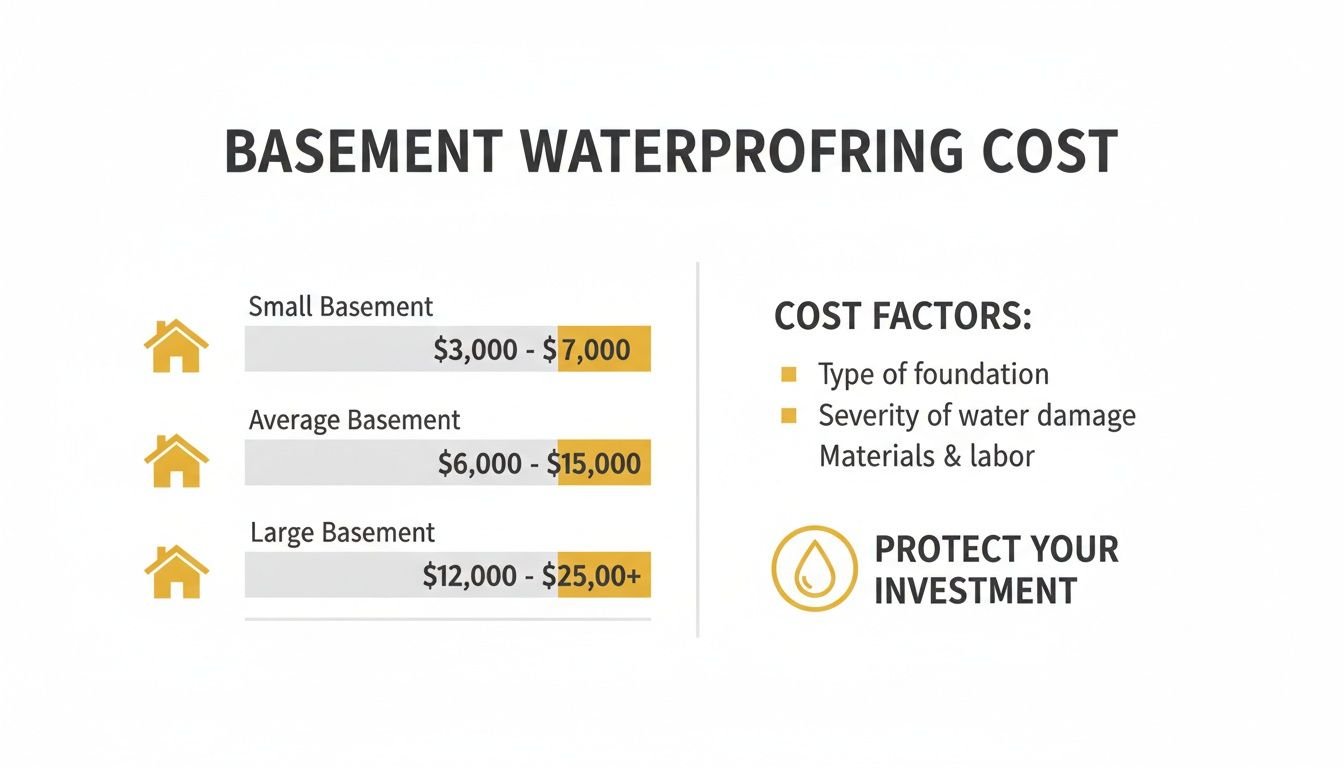
While the national average cost hovers around $5,500, data from Angi.com confirms the real-world range is huge—from $2,500 to over $8,000 for most homeowners. You can review the full cost analysis on Angi.com to dig deeper. If foundation repairs are needed, costs can increase by an additional $2,000 to $8,000. And don't forget the air; you may need to learn about basement dehumidification to control airborne moisture post-project.
DIY vs. Professional Waterproofing Services
When faced with a damp basement, the temptation to handle it yourself to save money is strong. For a very minor issue—like sealing a tiny, non-structural hairline crack—a DIY approach using hydraulic cement might seem like a viable, temporary fix for under $500.
However, the single biggest risk with DIY waterproofing is misdiagnosis. You might see a damp spot and paint over it, but you haven't addressed the underlying hydrostatic pressure that's forcing water through the concrete. A botched repair can fail, trapping moisture within your foundation walls and causing them to deteriorate, or even redirecting water to a new, weaker spot. This turns a small problem into a much larger, more expensive one. Some projects are simply too critical to leave to chance, a point often made in resources like DIY vs Professional Foundation Installation.
The Value of Hiring a Professional
Hiring a certified professional from Onsite Pro Restoration transforms a risky gamble into a sound investment. The real value isn't just the labor—it's the expert diagnosis. We find the source of the water, not just the symptom, ensuring the solution we implement will last.
A professional team brings:
- Accurate Diagnosis: We use experience and specialized tools to pinpoint the exact cause of water intrusion.
- Industrial-Grade Materials: Our products are far more durable than anything available at a retail store.
- Warranties and Guarantees: We stand by our work with long-term, often transferable warranties, providing you with guaranteed peace of mind.
- Comprehensive Solutions: If we discover other issues like mold or structural cracks, we have the certifications to handle it all correctly.
Choosing a professional is about buying certainty. You aren't just paying for a dry basement today; you're investing in the assurance that it will stay dry for years to come. A true restoration pro brings a level of expertise that makes all the difference.
How Waterproofing Increases Your Home’s Value
It’s easy to view the average cost of basement waterproofing as just another repair bill. In reality, it's one of the smartest investments you can make. It protects your home’s structural integrity and turns a liability into a major asset, especially in the competitive Los Angeles real estate market.
Protecting Your Investment and Preventing Damage
Waterproofing stops moisture from slowly dissolving your concrete, rusting rebar, and widening cracks—a process that silently weakens your home's foundation. It also prevents a cascade of secondary damage:
- Widespread mold growth that contaminates your home's air.
- Wood rot in critical floor joists and support beams.
- Pest infestations from termites and other critters drawn to dampness.
By keeping your basement dry, you preserve your home's structural backbone.
Boosting Resale Value and Adding Usable Space
A professionally waterproofed basement can yield a return on investment of up to 30%. A dry basement becomes a blank canvas, ready to be transformed into a home office, an in-law suite, or a family media room. This added finished square footage is a powerful selling point. For potential buyers, a waterproofed basement with a transferable warranty signals that the home has been well-maintained, giving them confidence they won't inherit an expensive water problem.
Navigating Insurance Claims
While standard homeowners insurance typically doesn't cover preventative waterproofing, it may cover restoration for damage from a sudden event like a burst pipe. Navigating this can be complex. An experienced team like Onsite Pro Restoration knows how to document damage to support your claim for what is covered, helping you navigate the process. Learn more about what homeowners insurance covers after water damage.
Frequently Asked Questions About Basement Waterproofing Costs
Here are answers to some of the most common questions Los Angeles homeowners ask about waterproofing.
Q: Does homeowners insurance pay for basement waterproofing?
A: Generally, no. Standard homeowners insurance policies are designed for sudden, accidental events (like a burst pipe), not for preventative maintenance or issues that develop over time. However, your policy might cover the restoration of water damage caused by a covered event. The waterproofing repair itself is typically an out-of-pocket expense.
Q: How long does professional basement waterproofing last?
A: The lifespan depends entirely on the method. Interior sealants may only last a few years. In contrast, a professionally installed interior drainage system or a full exterior waterproofing membrane is designed to last for the life of your home. Reputable companies like Onsite Pro Restoration back these systems with long-term or lifetime transferable warranties.
Q: Are permits required for waterproofing in Los Angeles?
A: It depends on the scope of work. Simple interior sealant application does not require a permit. However, you will likely need a permit from the Los Angeles Department of Building and Safety (LADBS) for major projects involving exterior excavation, significant electrical work (like for a sump pump), or any alterations to the foundation. A licensed, professional contractor will handle the entire permitting process for you.
Q: Is financing available for a large waterproofing project?
A: Yes. Many homeowners choose to finance significant waterproofing projects. Options include home equity lines of credit (HELOCs), personal loans, or financing programs offered directly by the waterproofing contractor. Be sure to ask about payment plans and financing options during your initial consultation.
Don't let a wet basement threaten your property's value and your family's health. The experts at Onsite Pro Restoration are here to provide a permanent solution for your Los Angeles home.
Contact us today for a free, no-obligation assessment and get a clear, transparent quote.