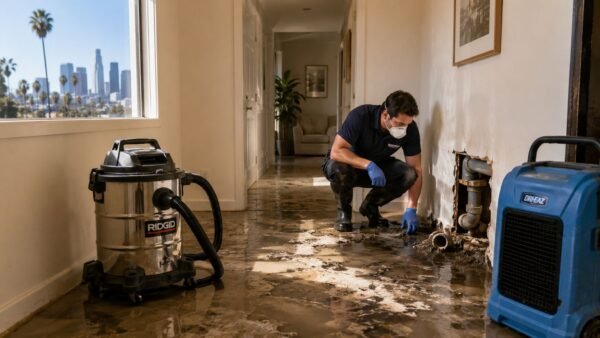

When a drain slows down or stops completely, your first thought is probably how to get it flowing again—fast. For many Los Angeles homeowners, a simple fix like pulling hair from a shower drain is all it takes. But other times, that single slow drain is a symptom of a much bigger problem lurking deeper in your pipes, like a main sewer line backup. Understanding the right clogged drain solutions for your situation is critical.
This guide is designed for informed property owners and managers who need to diagnose a drain problem, know when to handle it themselves, and recognize the critical signs that it’s time to call in a professional restoration team.
Call for 24/7 Emergency Service
The Hidden Dangers of a Clogged Drain
Before you reach for a plunger or a bottle of chemicals, you need to play detective. The clues your plumbing gives you are critical for figuring out where the clog is and how severe it really is. A proper diagnosis is the difference between a five-minute DIY fix and a major water damage emergency that requires professional cleanup.
A single slow sink in your Venice Beach bungalow, for example, usually points to a localized clog in that sink’s P-trap. But if flushing a toilet makes water bubble up in your shower drain? That’s a whole different ballgame—and a much more serious one indicating a main sewer line issue.
Pinpointing the Clog’s Location
Your first step is to determine how widespread the problem is. Go around your home and test the sinks, tubs, and toilets.
- One Fixture Clogged: If only one drain is acting up, you’re in luck. The problem is isolated to that fixture’s drain line. This is the most common scenario, usually caused by hair and soap scum in a shower or grease and food scraps in a kitchen sink.
- Multiple Fixtures in One Area: Are all the drains in your master bathroom slow? The clog is probably deeper, in the drain branch that serves that entire room.
- Multiple Fixtures Across the House: This is the big one. If drains in different parts of your Los Angeles home are backing up—especially on the ground floor—you’re almost certainly dealing with a main sewer line clog.
This flowchart breaks down the diagnostic process, helping you trace the symptoms back to the most likely culprit.
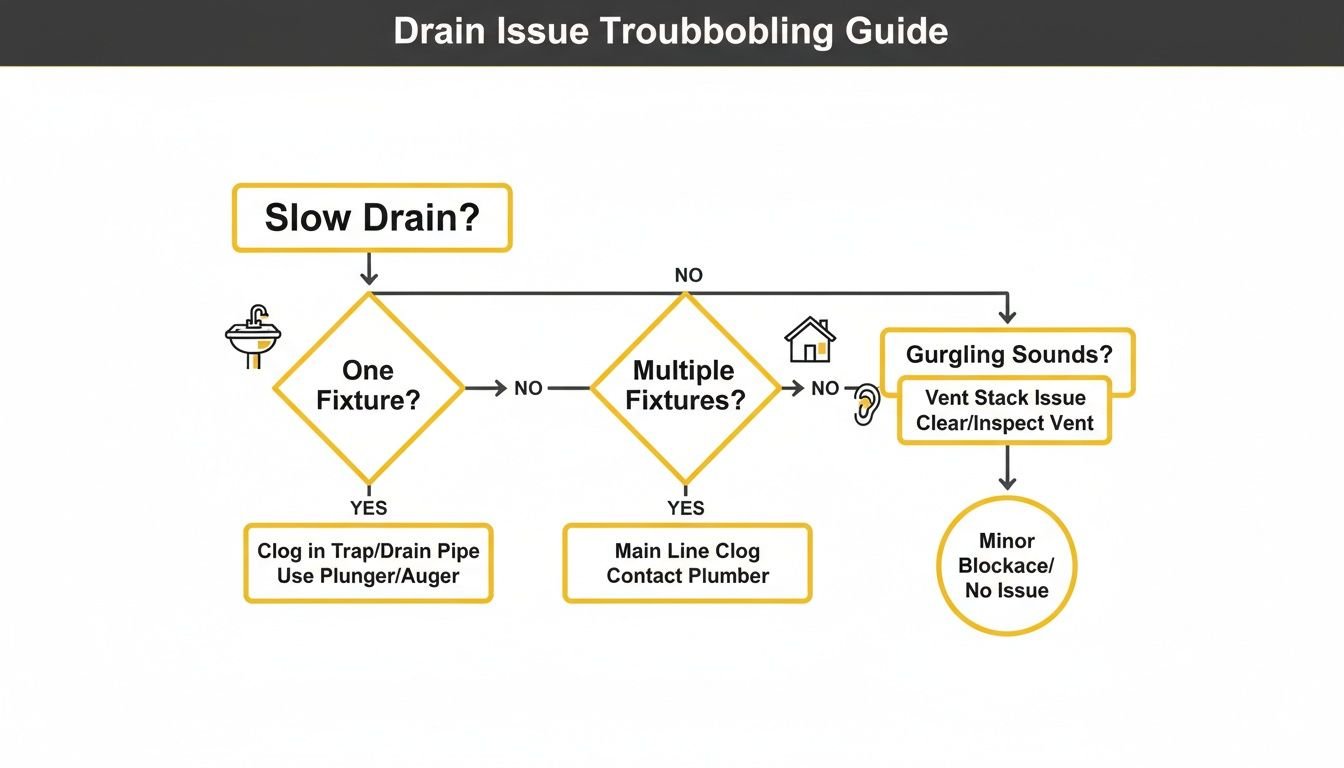
As you can see, figuring out if the problem is with one drain or several is the key fork in the road for diagnosing any clog.
Health Risks Linked to Serious Clogs
Slow drainage is one thing, but your pipes might be sending out more urgent distress signals. Ignoring them can lead to a seriously messy and expensive disaster. Keep an eye (and ear) out for these red flags:
Key Takeaway: That gurgling sound coming from your drain is a classic sign of trapped air. As water tries to force its way past a blockage, it pushes air bubbles back up the pipe, creating that distinct noise. It's an early warning that pressure is building up where it shouldn't be.
Other major indicators are foul, sewage-like smells coming from your drains or water backing up in unexpected places. For example, if you run the washing machine and notice water seeping into a nearby shower, that’s a textbook sign of a main line blockage. If you see this, you need to shut off your water immediately to prevent flooding. If you aren't sure how, check out our guide on how to find your home’s main water shut-off. These are signs of a biohazard situation requiring professional handling.
How to Choose the Right Clogged Drain Solutions
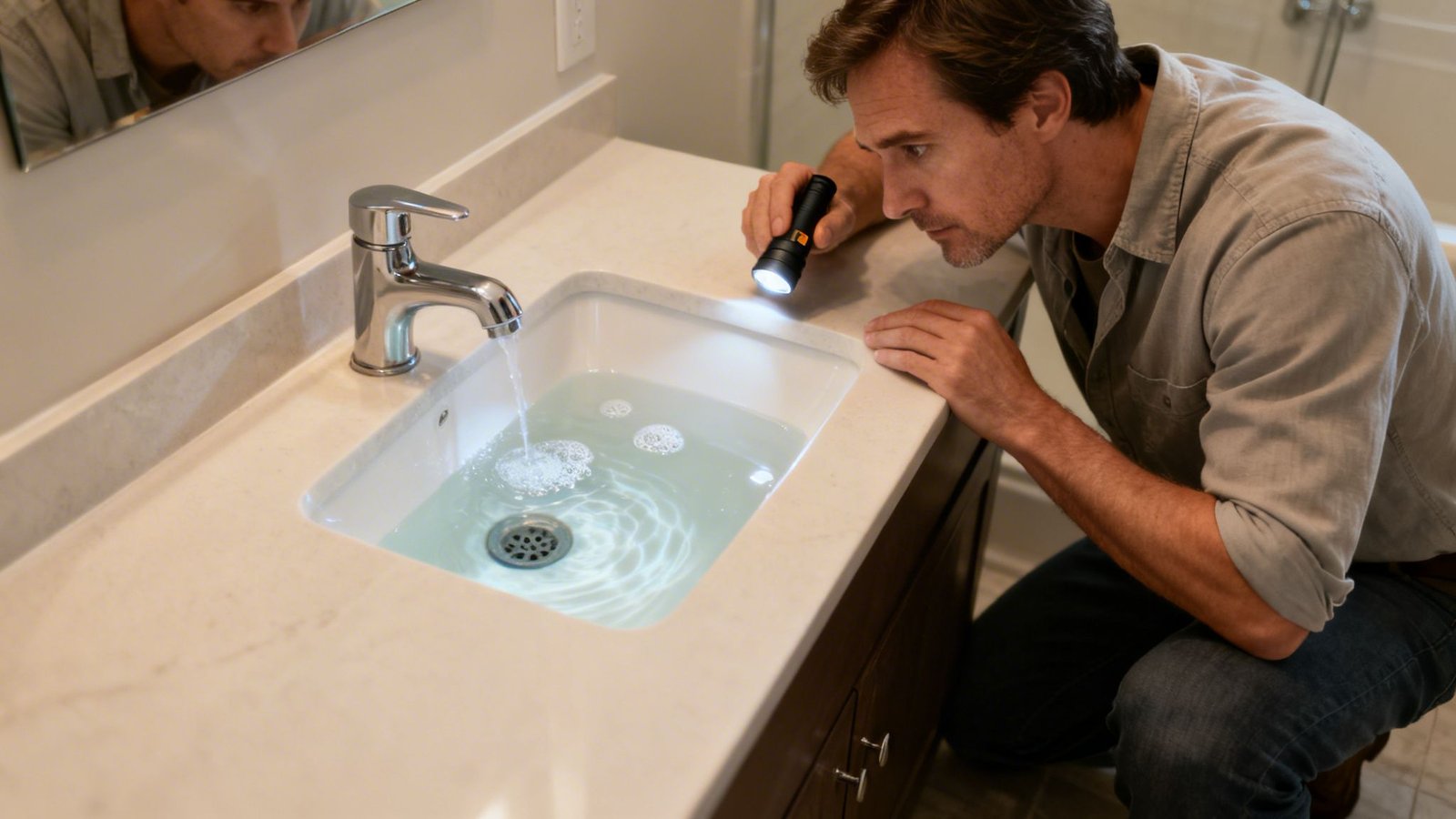
So, you’ve determined it’s just a simple clog in one fixture and not a whole-house sewer problem. Good. Now you can roll up your sleeves and tackle it yourself, often saving you the cost of a service call. These are the go-to methods for minor blockages. Before you start, grab gloves and lay down some old towels—even a small clog can make a mess.
Mastering The Plunger
The humble plunger is your first line of defense, but only if used correctly.
- Sink/Flat Plungers: These have a simple, flat cup, made for the flat surface of a sink or tub drain.
- Toilet/Flange Plungers: These have an extra rubber flap that folds out to seal the curved opening of a toilet bowl.
To clear a sink, create hydraulic pressure. Fill the basin with just enough water to cover the plunger's cup. Place the plunger over the drain to get a tight seal, then give it a series of sharp, vertical pumps for 20-30 seconds. The water pressure pushes the clog out.
If you’re plunging a double kitchen sink, stuff a wet rag into the other drain. This seals it off and focuses all the pressure directly on the clog. For more guidance, check out these excellent DIY fixes and prevention for a backing up sink.
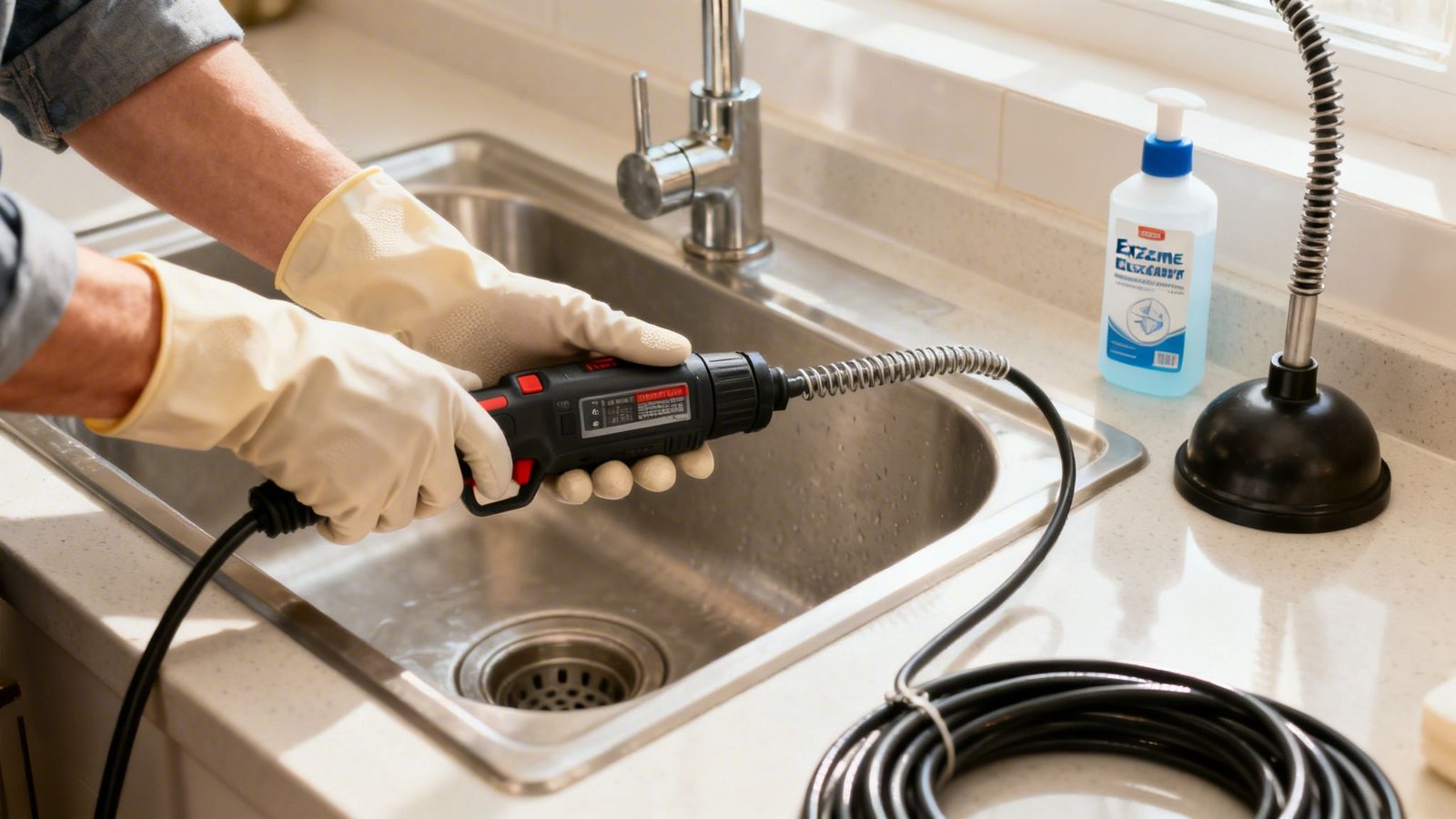
Using A Drain Snake Or Auger
If the plunger didn’t work, it’s time for a drain snake (auger). This tool is perfect for reaching deeper to break up or pull out stubborn clogs caused by hair and soap scum.
Let's say you're clearing a shower drain in a Sherman Oaks home, a classic spot for hair clogs. Remove the drain cover and gently feed the snake’s cable down the drain until you feel resistance—that's your blockage. Lock the cable, then slowly turn the handle while applying gentle pressure. The corkscrew tip will either break up the clog or snag it for removal. Don't force the snake, or you could damage older pipes.
Choosing Safer Drain Cleaners
The drain cleaner aisle is overwhelming, part of a massive market that hit $2.18 billion globally in 2023. The problem is, many popular liquid cleaners use harsh chemicals that can eat away at the older pipes common in many Los Angeles homes, turning a small clog into a major leak.
A much safer bet is an enzymatic drain cleaner. These products use natural bacteria and enzymes to slowly digest organic materials like grease and hair. They won’t harm your plumbing, making them great for maintenance. While these DIY methods are effective for minor clogs, they have their limits. For a more serious blockage, you might need to access the main line, which we cover in our guide on how to clean out a sewer line.
Why Southern California Is So Prone to Main Line Clogs
While a simple plunger can handle everyday blockages, some clogs are red flags for a serious problem in your property’s main sewer line. Ignoring these signals can turn a plumbing issue into a messy, hazardous nightmare. A stubborn clog in a single sink is one thing. But when you flush a toilet and water gurgles up into the shower drain on the first floor? That’s a classic sign of a sewer line backup.
Common Culprits in Los Angeles Neighborhoods
In many established Los Angeles communities, from Beverly Hills to Burbank, aging infrastructure is a huge factor. We run into two main culprits all the time:
- Tree Root Intrusion: Those beautiful, mature trees that give LA neighborhoods so much character have massive root systems. The roots are naturally drawn to the moisture and nutrients in your sewer pipes, and they will find a way in, creating a dense, web-like blockage that a simple snake can’t clear. Coastal fog in Santa Monica provides enough moisture for roots to thrive and aggressively seek out pipe joints.
- Collapsed or Damaged Pipes: Over decades, old clay or cast iron pipes can crack, shift, or collapse entirely from ground movement or just plain wear and tear. A flat-roof leak in a Sherman Oaks home might seem unrelated, but soil saturation from poor drainage can accelerate ground shifting and damage underlying pipes.
The strain on urban infrastructure is a major driver of these issues, which is why the drain cleaning equipment market was valued at $301.90 million in 2024. In a dense area like Los Angeles, a major sewer backup can cause extensive water damage requiring specialized technology like hydro-jetting and advanced structural drying to fix both the cause and the aftermath.
Why DIY Is Dangerous Here
Trying to use a small drain snake or harsh chemicals on a main line clog isn't just ineffective—it’s a huge risk. You could easily make the blockage worse, cause an old pipe to rupture, or expose your home and family to raw sewage. This is no longer a simple clog; it's a biohazard situation that requires specialized equipment and certified training. If you're seeing these symptoms, the safest step is to contact a professional team for sewage damage cleanup right away.
How to Tell If You Need Professional Remediation
When DIY fixes don’t cut it and you're facing a serious backup, knowing what a real professional restoration team does can provide peace of mind. A certified crew doesn’t just unclog a drain; they manage the entire crisis, from assessment to getting your property back to normal.
The moment you make that call, a 24/7 emergency company will have a team on the road immediately, usually arriving within an hour for a free assessment.
The Diagnostic and Authorization Phase
This initial inspection isn't just a quick glance. For a major blockage, technicians use heavy-duty diagnostic tools like a sewer camera to see what's really happening—whether it’s invasive tree roots, a crushed pipe, or a nasty grease buildup—without any guesswork. The project manager will then map out a clear plan of action.
Before any work begins, you'll be handed a transparent work authorization form. This document spells out the exact scope of work, methods, and estimated costs, ensuring there are no surprises.
The Restoration and Cleanup Process
Once you give the green light, the team gets to work. The process is methodical, designed to get your property back to its safe, pre-damage state as fast as possible.
- Emergency Water Extraction: High-powered pumps and vacuums remove standing water or raw sewage fast.
- Biohazard Cleanup and Sanitization: For a sewer backup, every affected surface is deep-cleaned, sanitized, and deodorized with EPA-approved agents.
- Structural Drying: Industrial-grade air movers and dehumidifiers are strategically placed to pull moisture out of the structure itself—walls, subfloors, and hidden cavities—to stop mold before it can start.
- Documentation for Insurance: A good team documents everything with photos, moisture readings, and detailed reports, which is gold when filing an insurance claim.
Understanding the professional approach to emergency restoration for water damage highlights the difference between a simple plumbing job and a full-blown property recovery.
How to Prevent Future Clogs and Water Damage
The best way to deal with a clogged drain is to prevent it. Being proactive is far less stressful—and less expensive—than cleaning up an emergency. A few simple habits can keep your drains flowing freely.
Build a Practical Maintenance Routine
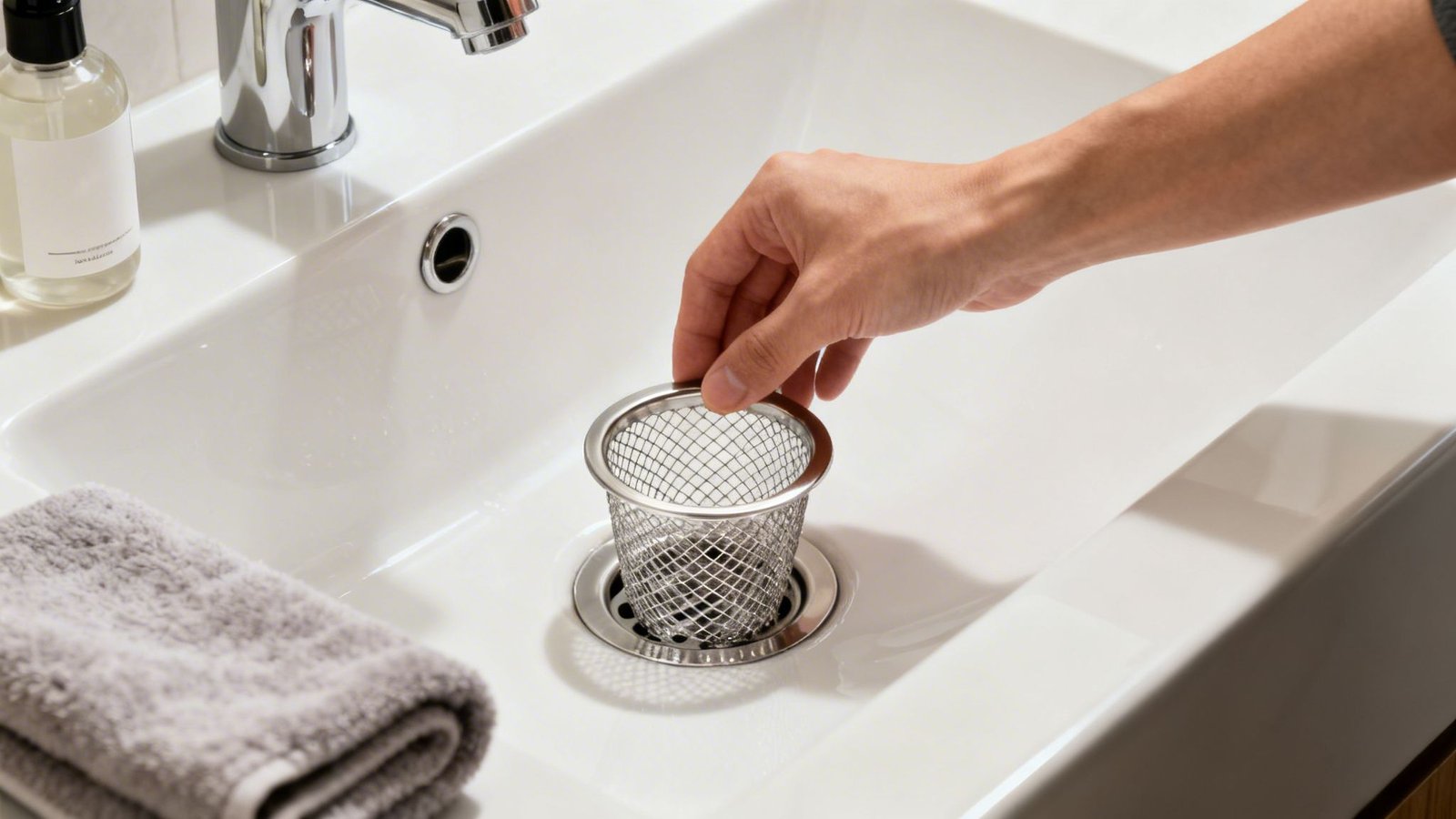
- Install Drain Screens: Place mesh screens over all your drains, especially in showers and tubs. They are excellent at catching hair and soap scum.
- Be Smart About the Kitchen Sink: Never pour grease or oil down the drain; it solidifies into a hard blockage. Also, avoid putting in fibrous foods (celery), starchy items (pasta, rice), and coffee grounds. For more great tips, check out this guide on how to prevent clogged drains.
- Use Enzymatic Cleaners Monthly: Use a quality enzymatic cleaner once a month. These products use natural bacteria to safely digest organic gunk, stopping blockages before they start.
Know When to Schedule a Professional Inspection
While good habits are your first line of defense, some problems can only be spotted by a professional. This is especially true for older homes in places like West Hollywood, where aging plumbing is more vulnerable to root intrusion or collapse.
We recommend a professional camera inspection every 1-2 years for any home over 30 years old. This lets a technician see deep inside your pipes and spot potential issues like cracks, corrosion, or early tree root growth long before they cause a catastrophic backup.
The global drain cleaning equipment market is projected to jump from $3.5 billion in 2024 to $5.7 billion by 2030, a clear indicator of the strain on our aging infrastructure. You can learn more by reading the full research on drain cleaning equipment.
Schedule a Free Inspection or Book Drain Service
When you're staring at a backed-up sink, you need answers fast. Here are some of the most common questions we get, with straight-to-the-point answers from our experience.
Q: Will my homeowners insurance cover damage from a clogged drain?
A: It depends on the cause. If a clog causes a pipe to suddenly burst, your policy will likely cover the damage as a "sudden and accidental" event. However, if you’ve ignored a slow leak for months, your insurer could argue it’s a maintenance issue and deny the claim. That’s why calling a professional restoration company immediately is so important for documentation. We go into more detail on when homeowners insurance covers a sewer backup.
Q: What is the difference between a plumber and a restoration company?
A: A plumber fixes the source—the burst pipe or main line clog. A restoration company handles the aftermath—water extraction, structural drying, sanitizing contaminated areas, and stopping mold. For any flood or sewer backup, you need both. Think of it this way: the plumber stops the bleeding, and our restoration team heals the wound.
Q: How can I tell if a foul drain smell is a serious problem?
A: A persistent, foul sewage smell coming from multiple drains is a major red flag for a problem deep in your main sewer line. If the odor is at one sink, it's probably just gunk in the P-trap. But if the smell is all over the house and you’re hearing gurgling, call for a professional inspection right away to prevent a sewer backup.
Q: Are chemical drain cleaners safe for pipes in an older LA home?
A: We strongly advise against using harsh liquid drain cleaners, especially in older Los Angeles homes with original cast iron or galvanized steel pipes. The aggressive acids can eat away at old pipe walls, turning a simple clog into a catastrophic leak. Safer clogged drain solutions like enzymatic cleaners, a plunger, or professional snaking are much better for your plumbing's long-term health.
If you're facing water damage from a clog, don't wait. The experts at Onsite Pro Restoration offer 24/7 emergency service to handle everything from water extraction to full structural drying and sanitization.