
When you find mold in your Los Angeles home, the first question that pops into your head is always the same: what does mold remediation cost?
There's no single, easy answer. A small, contained patch from a minor leak in Sherman Oaks might only run you $500, but an extensive problem that has spread throughout your home can easily climb to over $10,000. Understanding the factors that determine this cost is the first step to making an informed decision.
This guide breaks down exactly what goes into professional mold remediation costs, from initial testing to final repairs, so you know what to expect.
Suspect you have a mold problem? Don't wait. A small issue can become a major expense quickly.
A Breakdown of Typical Remediation Costs
Think of mold remediation like a car repair. A tiny, visible scratch is a quick, inexpensive fix. But if you've got hidden frame damage, you're calling in a specialist and bracing for a significant investment. The cost to remove mold works the same way—it all comes down to the size, location, and complexity of the problem.
This chart gives you a quick snapshot of the typical cost ranges you can expect.
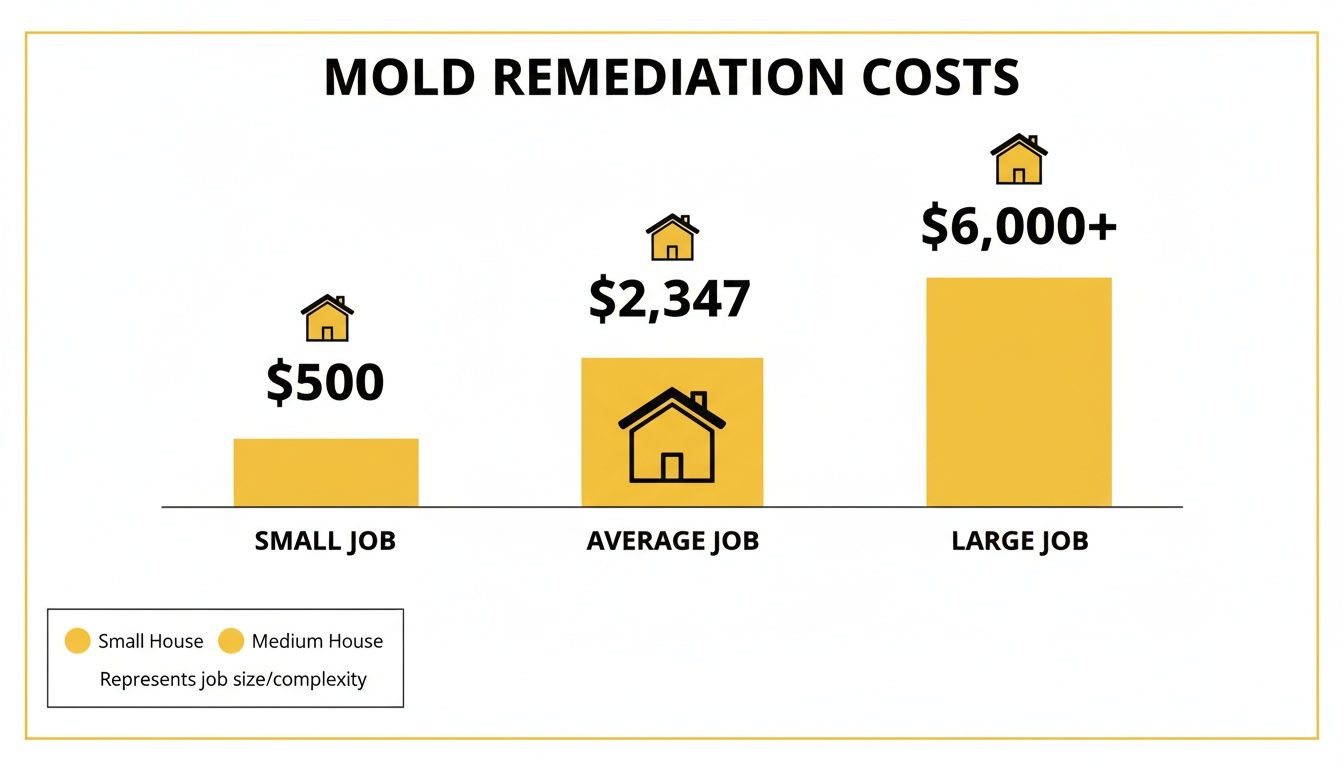
As you can see, the jump from a minor issue to a major one is steep. This is exactly why catching it early is so important. A small patch in a bathroom is manageable, but a widespread issue hidden in an attic or basement is a whole different ballgame.
National Averages vs. Los Angeles Pricing
Across the country, homeowners are looking at an average professional mold removal bill of around $2,347. This figure comes from thousands of real-world projects, and it shows just how quickly costs can escalate with the size of the affected area.
For example, a job under 10 square feet might be in the $500 range. But let that spread to a 300-square-foot basement, and you could be looking at $3,000 to $9,000. Most professionals charge between $10 to $30 per square foot, with the price climbing for tricky spots like HVAC systems or crawl spaces. Those jobs can easily push the total well over $6,000.
In a competitive market like Los Angeles, you can expect these figures to be at the higher end of the national average. This is mainly due to higher labor costs and strict local regulations. A free, professional assessment is the only way to get a precise roadmap for your property.
Why Square Footage Is a Key Cost Factor
Pricing by the square foot is the industry standard for a simple reason: it directly reflects the amount of labor, materials, and equipment needed for the job. A larger contaminated area means:
- More Containment: Technicians have to build bigger sealed-off zones with negative air pressure machines to keep spores from spreading everywhere.
- More Labor Hours: The physical work of tearing out contaminated drywall, insulation, and other materials is time-consuming.
- Increased Material Costs: You’ll need more antimicrobial agents, sealants, and special disposal bags.
- Greater Risk: Larger jobs involve more complex safety protocols to protect both the technicians and your family.
To give you a clearer idea, here’s a quick breakdown of what you might expect based on the size of the problem.
Estimated Mold Remediation Costs by Project Size
This table provides a quick overview of typical cost ranges based on the square footage of the affected area, helping homeowners gauge potential expenses.
| Affected Area (Square Feet) | Typical Low-End Cost Estimate | Typical High-End Cost Estimate |
|---|---|---|
| 10 – 20 sq ft (Small, localized) | $500 | $1,500 |
| 20 – 100 sq ft (Medium, one room) | $1,500 | $3,000 |
| 100+ sq ft (Large, multiple rooms) | $3,000 | $6,000+ |
| HVAC System | $3,000 | $10,000+ |
| Crawl Space / Attic | $1,500 | $4,000+ |
These numbers are just estimates, of course. The severity and scope, like dealing with bathroom mold and mildew, are critical factors that will determine your final cost.
Want a preliminary idea of what your project might cost? You can get a ballpark estimate with our mold removal cost calculator.
Ultimately, getting an initial inspection from an IICRC-certified expert like us at Onsite Pro Restoration is the best way to prevent a small, manageable issue from turning into a full-blown, costly crisis.
Key Factors That Influence Mold Remediation Costs
That initial quote you get for mold remediation? Think of it as a starting point. Several critical variables can dramatically shift the final number on your invoice, turning what looks like a simple job into a more complex—and costly—project. Understanding these factors helps you see exactly what does mold remediation cost and, more importantly, why.
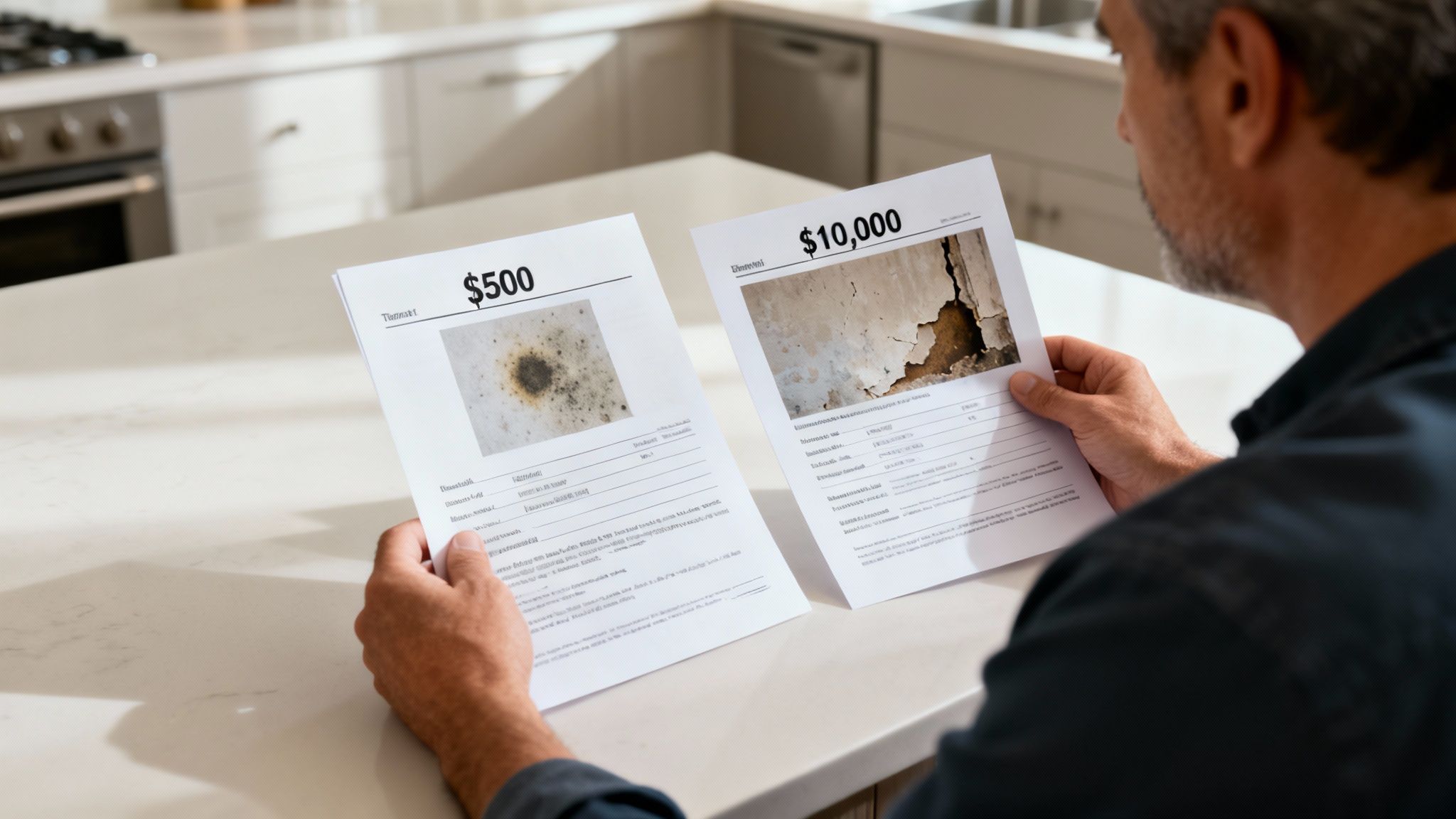
It’s like this: a visible patch of mold on a bathroom wall is one thing. But hidden growth snaking its way through an HVAC system? That's a whole different ballgame. At Onsite Pro Restoration, we believe in total transparency. We'll walk you through every line item so you feel completely confident about the work getting done.
Location and Accessibility of the Mold
Where the mold is hiding is one of the biggest cost drivers. Some spots are easy to get to and treat, while others demand a lot more labor, demolition, and specialized equipment.
- Easy Access: Mold on exposed drywall or basement concrete is fairly straightforward. Our technicians can get right to it, which keeps labor time down.
- Difficult Access: Growth inside walls, attics, tight crawl spaces, or HVAC systems is far more complex. These jobs mean tearing out drywall, setting up careful containment zones, and often working in cramped, tough conditions.
For example, cleaning up a 50-square-foot patch in a well-ventilated garage will cost much less than tackling the same size infestation behind kitchen cabinets or deep inside a ventilation system. The more work it takes just to reach the mold, the higher your labor costs will be.
Type and Severity of Mold Contamination
Not all mold is created equal. The specific type we find and how dense the growth is directly affects the safety gear, removal methods, and disposal protocols we have to use—all of which influence the cost.
Common household mildew might just need standard cleaning. But if we find toxigenic molds like Stachybotrys chartarum (often called black mold), it triggers a much more rigorous and expensive response.
This means setting up advanced containment measures, technicians gearing up in full personal protective equipment (PPE), and following specialized disposal protocols. It's all about making sure toxic spores don't get airborne and contaminate other areas of your Los Angeles home.
The severity—how deep the mold has dug into materials—also plays a huge role. Surface mold on a non-porous tile is easy. But mold that has infested porous materials like wood studs, insulation, or subflooring? Those materials have to be completely removed and replaced, adding significant costs for both labor and materials.
The Source of the Moisture Problem
This is probably the most critical—and most overlooked—factor: the cost to fix whatever caused the mold in the first place. Just removing the mold without fixing the leak is like bailing water from a boat that still has a hole in it. The problem is guaranteed to come back.
A successful remediation project must include finding and fixing the water intrusion. This could be anything from:
- A leaky pipe hidden inside a wall.
- A failing roof, like a flat-roof leak in Sherman Oaks that lets water pool up.
- High humidity from poor ventilation, a common issue in coastal areas like Santa Monica.
- Cracks in the foundation that are letting in groundwater.
These repairs are separate from the mold removal itself, but they are absolutely non-negotiable for a long-term fix. Our technicians are trained to pinpoint these sources, and our detailed assessment will always include our recommendations for fixing the root cause. Onsite Pro Restoration ensures you get a complete fix, not just a temporary patch.
The Professional Remediation Process: What You Pay For
To really get a handle on what mold remediation costs, it helps to see the whole process from a certified pro’s perspective. This isn’t just a simple cleanup; every step is a deliberate move to safely and completely get rid of the mold while making sure it doesn't come back.
It’s a systematic approach, not a quick spray-and-wipe job. Let's walk through the journey from that first discovery to getting your home clean and safe again.
Step 1: Initial Assessment and Scope Definition
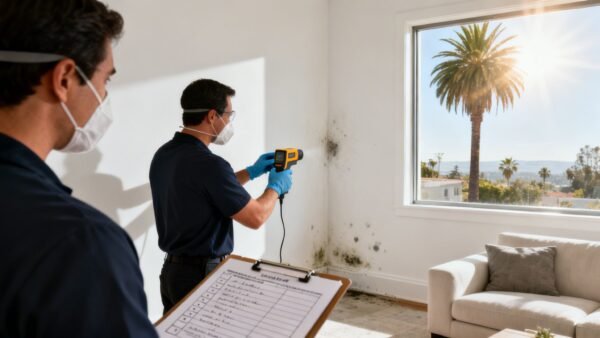
The first thing any certified technician does is a full-blown inspection. We're not talking about a quick glance. This is more like a forensic investigation to figure out just how bad the problem is. Technicians will pull out moisture meters, thermal imaging cameras, and sometimes even tiny borescopes to see what’s happening behind your walls and under the floors.
This assessment is non-negotiable for three key reasons:
- Finds the Source: It pinpoints the moisture that’s feeding the mold. Without fixing that, the mold will just come right back.
- Defines the Scope: It maps out every single affected area, especially the hidden spots, so nothing gets missed during the cleanup.
- Identifies the Mold Type: In some cases, we’ll take air or surface samples and send them to a lab. This tells us the specific mold species we're dealing with, which helps determine the right safety protocols for the job.
The cost of this first phase, which can include professional mold testing and removal services, lays the groundwork for a solid and effective game plan.
Step 2: Containment and Air Filtration
Once we know the extent of the problem, the immediate next priority is to stop it from spreading. Think of it like a quarantine zone in a hospital—the contaminated area has to be completely sealed off from the rest of your house.
Our technicians do this by:
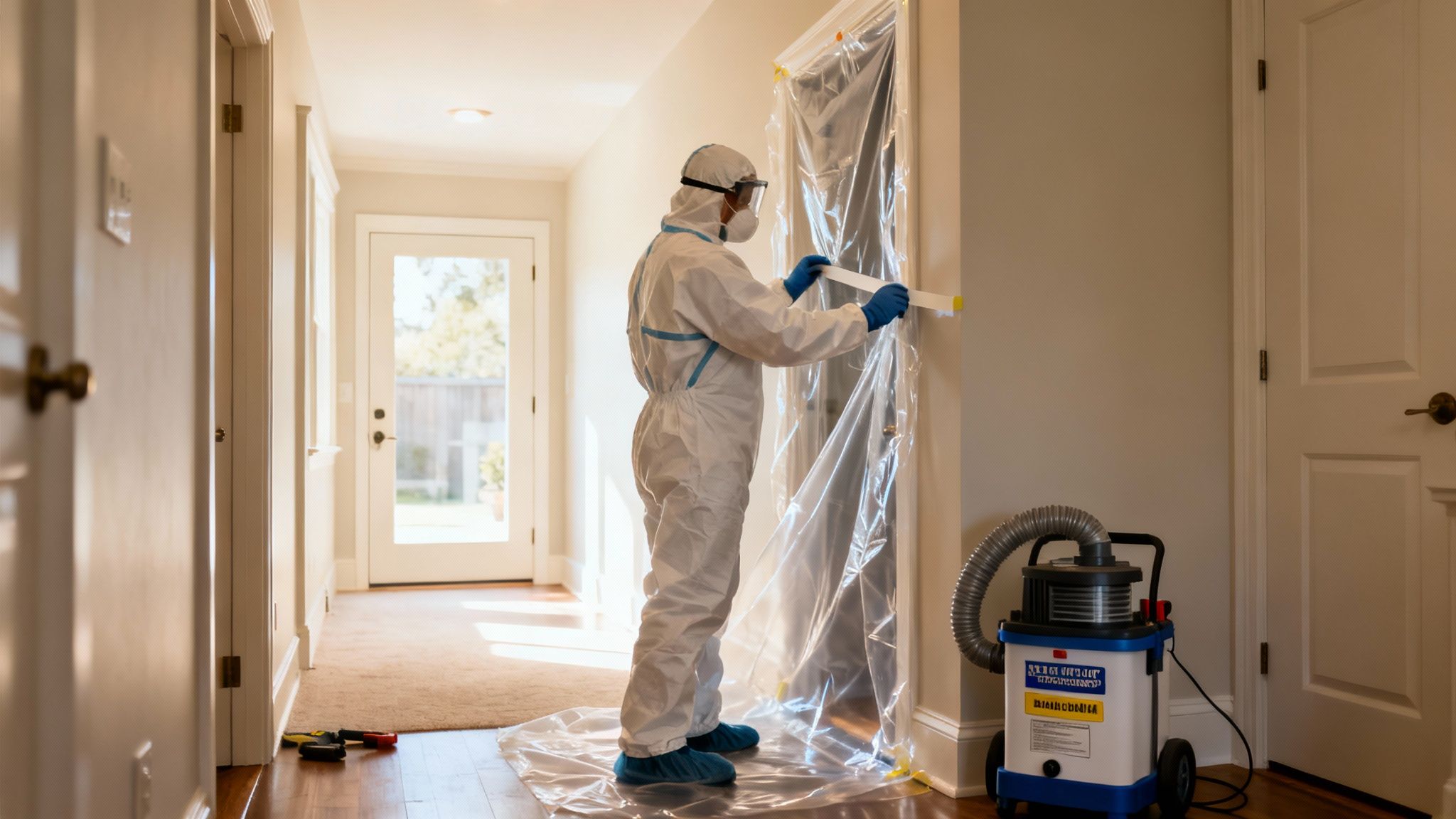
- Setting up physical barriers with heavy-duty plastic sheeting and taping off all vents and doorways.
- Creating negative air pressure using industrial-grade HEPA air scrubbers. This ensures any mold spores we stir up get sucked out of the house instead of floating into clean rooms.
This containment step is an absolute must for safe remediation. It adds to the overall cost because of the labor and specialized equipment involved, but it’s crucial for protecting your family’s health and preventing a small problem from turning into a nightmare.
Step 3: Removal of Contaminated Materials
Here’s a hard truth: mold isn’t just a surface stain. When it grows on porous stuff like drywall, insulation, or carpet, its root-like structures dig deep inside. You can't just wipe it off.
The only way to guarantee mold is gone for good from these materials is to physically cut them out and dispose of them. This is usually the most labor-intensive part of the job.
Our crews carefully cut out all the contaminated materials, seal them in heavy-duty bags, and dispose of them according to strict IICRC and local guidelines. Harder, non-porous surfaces like concrete or some wood framing might be salvageable with some intensive sanding and cleaning.
Step 4: Cleaning and Disinfection
With all the compromised materials gone, the remaining surfaces get a deep clean. This isn’t a job for household bleach, which is surprisingly ineffective on most surfaces and can release some nasty fumes.
Instead, professionals use EPA-registered antimicrobial agents designed specifically to kill mold spores. After that, we use special HEPA vacuums to capture any microscopic particles left behind. Every single surface inside the contained area, from the wood studs to the concrete floor, is meticulously cleaned until no trace of the mold remains.
Step 5: Post-Remediation Verification
This is the final exam. How do you know the job was done right? An independent, third-party industrial hygienist often comes in to perform a post-remediation clearance test. They take brand new air and surface samples and send them to a lab for analysis.
This unbiased verification is your proof that the mold has been successfully removed and the air quality in your home is back to normal. Passing this test is the ultimate seal of approval, giving you the peace of mind that your home is truly healthy again.
Navigating Homeowners Insurance for Mold Damage
The question of insurance coverage is usually the biggest headache for homeowners dealing with mold. Unfortunately, the answer isn't a simple yes or no. Instead, whether you're covered almost always boils down to one critical detail: what caused the moisture in the first place?
Insurance policies are written to cover things that are "sudden and accidental." Think of a pipe that bursts behind a wall without warning, a washing machine hose that gives out and floods the laundry room, or water damage from putting out a fire. These are the kinds of unexpected events policies are designed for.
If mold grows as a direct consequence of one of these covered events, your policy will likely pay for the remediation, up to your specific coverage limits.
When Mold Damage Is Typically Covered
For an insurance claim to get the green light, the water intrusion has to be something you couldn't have seen coming. Insurers view these as genuine accidents that regular home maintenance couldn't have stopped.
A few clear examples of covered situations include:
- A sudden plumbing failure, like a burst pipe that soaks the drywall in your Glendale home overnight.
- An overflowing appliance, such as a dishwasher or washing machine that malfunctions out of the blue.
- Water damage from a roof leak caused by a specific event, like a heavy storm that rips off shingles.
In these cases, the focus is all on the sudden nature of the problem. The mold is seen as a secondary issue that stemmed from the primary covered event.
Common Exclusions in Homeowners Policies
This is where many homeowners get stuck. Insurance companies almost universally deny mold claims that result from gradual problems or a lack of maintenance. From their perspective, these issues are preventable, making them the homeowner's financial responsibility.
The most common reason for denial is long-term moisture exposure. Insurers will not cover mold caused by a slow, dripping pipe you ignored for months, high humidity from coastal fog in Santa Monica without proper ventilation, or cracks in the foundation that let groundwater seep in over time.
This distinction is everything. If the root cause is gradual, the what does mold remediation cost question lands squarely on your shoulders. To get a better handle on the fine print, our guide on insurance coverage for mold dives much deeper into policy specifics.
How to Maximize Your Insurance Claim
If you're confident your mold problem came from a covered event, the steps you take right away can make or break your claim. Your main goal is to provide undeniable proof that the damage was sudden, accidental, and recent.
Here’s how to build a strong case:
- Document Everything: Before anyone touches anything, take clear photos and videos of the damage and the source of the water.
- Mitigate Further Damage: If you can safely stop the water source, do it. But don't start tearing things out or making permanent repairs.
- Contact Your Insurer Promptly: Report the claim immediately. This shows you're acting responsibly and that the issue is urgent.
- Work with a Certified Pro: This is where Onsite Pro Restoration becomes your best ally. We provide the detailed, IICRC-compliant documentation and moisture readings that adjusters demand. Our reports clearly connect the mold growth to the covered water event, strengthening your claim whether you're in West Hollywood or Burbank.
If your claim is denied at first, don't give up. Understanding how to appeal an insurance denial is the next step, and our professional documentation can be a powerful tool in that process.
Why Professional Remediation Is a Smart Investment
When you find mold, the temptation to grab a bottle of bleach and go to war yourself is understandable. It seems cheaper and faster. But trust me, it’s a risky shortcut that almost never pays off in the long run.
Thinking of professional remediation as just another expense is the wrong way to look at it. It’s a critical investment in your property's future value and, more importantly, in your family's health.

Here's an analogy I use with clients: DIY mold removal is like trying to clear a yard full of dandelions by just plucking the yellow flowers. It looks better for a day or two, but the roots are still there, ready to sprout again—often stronger and more widespread than before.
The Hidden Costs of Failed DIY Attempts
Trying to clean up mold without the right training and gear almost always makes the problem worse, leading to much bigger bills down the road. Homeowners who go the DIY route often run into the same expensive mistakes.
The biggest risk is cross-contamination. When you scrub moldy drywall without proper containment, you're launching millions of microscopic spores into the air. They'll hitch a ride through your HVAC system and start new colonies in completely different parts of your house. What was a small bathroom issue can quickly become a whole-house nightmare.
Plus, DIY efforts almost never fix the root cause: the moisture. Bleach doesn't repair a leaky pipe, seal a foundation crack, or improve attic ventilation. If you don't stop the water source, the mold is guaranteed to return.
A professional assessment doesn't just map out the visible mold; it diagnoses the moisture problem that's feeding it. This two-pronged approach is the only way to get a permanent solution and save you from paying for the same cleanup over and over again.
The Financial Value of Professional Certification
In a competitive real estate market like Los Angeles, documented proof of a job done right has real financial value. When you hire a certified company like Onsite Pro Restoration, you're not just paying for a service—you're getting proof.
Once our work is complete, we provide a certificate of remediation. This is your official document verifying the property was professionally remediated according to strict IICRC industry standards. It’s a powerful asset that can:
- Preserve Property Value: It reassures potential buyers that a past mold issue was handled correctly, taking it off the table as a negotiating tactic that could drive down your sale price.
- Satisfy Lenders and Insurers: Banks and insurance companies frequently require this type of documentation for mortgages, refinancing, or after a significant claim.
- Provide Legal Protection: The certificate shows you took responsible, professional steps to ensure a safe living environment, which offers a layer of liability protection.
As public awareness of mold-related health issues continues to grow, so does the demand for professional help. The global mold remediation market, valued at $1.23 billion, is projected to hit $1.52 billion by 2030. This isn't surprising—homeowners are realizing that professional intervention is the only way to solve the problem for good.
More Than Just Removal: A Comprehensive Solution
When you hire a certified team, you’re getting far more than just cleaning. You're paying for a deep understanding of building science, moisture dynamics, and microbial growth.
A true restoration professional uses advanced tools like thermal imaging cameras and moisture meters to find hidden water sources that a simple visual inspection would miss. We establish proper containment to protect your family, use EPA-approved antimicrobial agents to sanitize surfaces, and perform clearance testing to verify the air is clean again. This methodical, science-backed process is what separates a smart investment from a risky gamble.
Frequently Asked Questions About Mold Remediation Costs
When you’re facing a potential mold problem, the questions start piling up fast—especially about the cost. To cut through the confusion, we've put together some straightforward answers to the questions we hear most often from homeowners here in Los Angeles. Our goal is to give you the clarity you need to make the right call for your home and family.
Q: How much does it cost to test for mold in Los Angeles?
A: In the Los Angeles area, a professional mold test usually runs between $300 and $700. It's important to understand this isn't just a quick swab—it's a full diagnostic process. The cost typically covers a detailed visual inspection by a certified professional, collection of air and surface samples from key areas, and professional lab analysis. The report you get back is the critical part: it identifies the specific mold species and tells you the concentration of spores in your air, which informs the entire remediation strategy.
Q: Does homeowners insurance typically cover black mold removal?
A: This is the big question, and the answer almost always comes down to one thing: what caused the mold? Coverage for black mold (Stachybotrys chartarum) hinges on whether the moisture source was a "covered peril." If the mold grew because of a sudden, accidental event—like a burst pipe—your policy will likely cover the remediation. However, insurance almost never covers mold that stems from gradual problems or lack of maintenance, like slow leaks, high humidity, or water seeping through the foundation.
Q: What is the average cost to remove mold from an attic?
A: Tackling mold in an attic is often a more involved job, and the costs reflect that. You can typically expect an attic mold remediation project to range from $1,500 to $4,000+. What drives the price up? Attics are notorious for poor ventilation, which traps heat and moisture—the perfect recipe for mold. They’re also often cramped, making the physical work more challenging. The biggest variable is often the insulation; if it's contaminated, it must be removed and replaced, which significantly adds to the cost.
Q: Can I get a free estimate for mold remediation?
A: Yes, absolutely. Any reputable restoration company, including Onsite Pro Restoration, should offer a free, no-pressure visual assessment to start the process. We believe in earning your trust through transparency. When you call us, we'll send an IICRC-certified technician to your property for an initial walkthrough. If remediation is needed, we'll follow up with a detailed, itemized estimate that lays out every step, so you see exactly where every dollar goes. No hidden fees, no surprises.
If you even suspect you have a mold problem, don’t wait for it to get worse. A professional assessment is the first step toward protecting your property and your peace of mind. The team at Onsite Pro Restoration is ready to help with a fast, free, and thorough inspection.