
Sewer backup cleanup needs to start right away. Initial cleanup commonly takes 1 to 3 days, full drying can take up to a week or more, and costs often range from about $2,000 to over $15,000 depending on severity. Stop using all water, get everyone out of the affected area, and call a professional now.
If you're reading this because a toilet just overflowed with foul water, a floor drain started bubbling, or sewage is spreading through a bathroom or lower level in your Los Angeles home, treat it as a biohazard. This is Category 3 black water, and the biggest mistakes happen in the first few minutes. People keep flushing, try to mop it up barehanded, or start tearing out materials before they've documented the loss.
The right response is simple. Stop all water use in the house. Keep children and pets out. Avoid contact with contaminated water and anything it touched. Then bring in a qualified restoration team that can handle extraction, disinfection, controlled drying, and documentation for your insurance file.
Your Guide to Sewer Backup Cleanup in Los Angeles
Sewer backup cleanup in Los Angeles usually starts with a homeowner hearing gurgling drains, smelling sewage, or seeing dirty water push up through a shower, toilet, laundry drain, or slab-level fixture. In neighborhoods with older plumbing and mixed-age housing stock, including Sherman Oaks, Glendale, and West Hollywood, that can turn into a serious indoor contamination event fast.
This isn't a wait-and-see problem. Delaware public health guidance notes that porous materials that contact sewage should be discarded, wet conditions lasting more than 24 to 48 hours carry increased mold risk, disinfected hard surfaces need a bleach solution with at least one minute of contact time, and reconstruction should wait until wood is below 15% moisture content (Delaware sewage backup guidance). That's why proper cleanup is more than wiping down surfaces and running a fan.
Practical rule: If sewage touched it and it absorbs liquid, assume it may need to be removed until a restoration professional says otherwise.
In our experience with Los Angeles-area losses, homeowners usually need four things at once. Safe containment, a real cleanup sequence, solid insurance documentation, and a plan to prevent the backup from happening again. Generic tips often miss that last part.
If you want to understand the prevention side after the emergency is under control, this guide on sewer backup prevention covers the root-cause issues that matter more than surface-level drain advice.
Immediate Safety Steps Before Cleanup Begins
The first half hour matters most. Focus on safety and containment, not on making the area look better.
Stop use and isolate the hazard
If sewage is backing up, every faucet, flush, shower, dishwasher cycle, or laundry load can add more contaminated water to the problem.
- Stop all water use: Don't flush toilets, run sinks, start laundry, or use appliances connected to drains.
- Block access: Keep kids, pets, and anyone with health vulnerabilities away from the affected rooms.
- Close interior doors if possible: Limit foot traffic so contamination doesn't spread through the house.
If you're also trying to understand whether the issue is a plumbing-line failure and want a homeowner-friendly overview, Bear Valley Plumbing & Heating has a useful explainer on when to get fast help for sewer backups.
Watch for electrical and air-quality risks
Don't step into standing sewage water if it's near outlets, extension cords, baseboard heaters, or powered equipment. If you can safely reach the main breaker without entering the contaminated area, shut off power to that zone. If you can't, leave it alone and wait for qualified help.
Open windows if doing so doesn't require walking through contaminated water. Basic ventilation helps, but it doesn't make the area safe.
Sewage contamination is a cleanup problem, but it's also an exposure problem. The goal at this stage is to keep people out and keep the loss from spreading.
What you can do before the crew arrives
A homeowner can help without taking on the cleanup itself.
- Take a few overview photos from a safe distance.
- Move unaffected valuables only if you can do it without stepping through sewage.
- Write down what first backed up. Toilet, shower, floor drain, laundry standpipe, or multiple fixtures.
- Call a restoration company equipped for contaminated-water work.
If the spill affects more than a very small surface area, involves solids, or has soaked flooring, drywall, cabinets, or contents, treat it as professional-only work. If you need that kind of specialized response, this overview of biohazard cleanup services explains why regular cleaning methods aren't enough.
The Professional Cleanup and Disinfection Process
Professional sewer backup cleanup follows a strict order. If the sequence is wrong, contamination spreads and materials stay wet longer than they should.
Source control comes first
Before anyone starts extraction, the team identifies whether the backup is still active. That may involve coordinating with a plumber, shutting down fixture use, isolating the affected branch, or confirming the municipal or lateral issue has stopped feeding the loss.
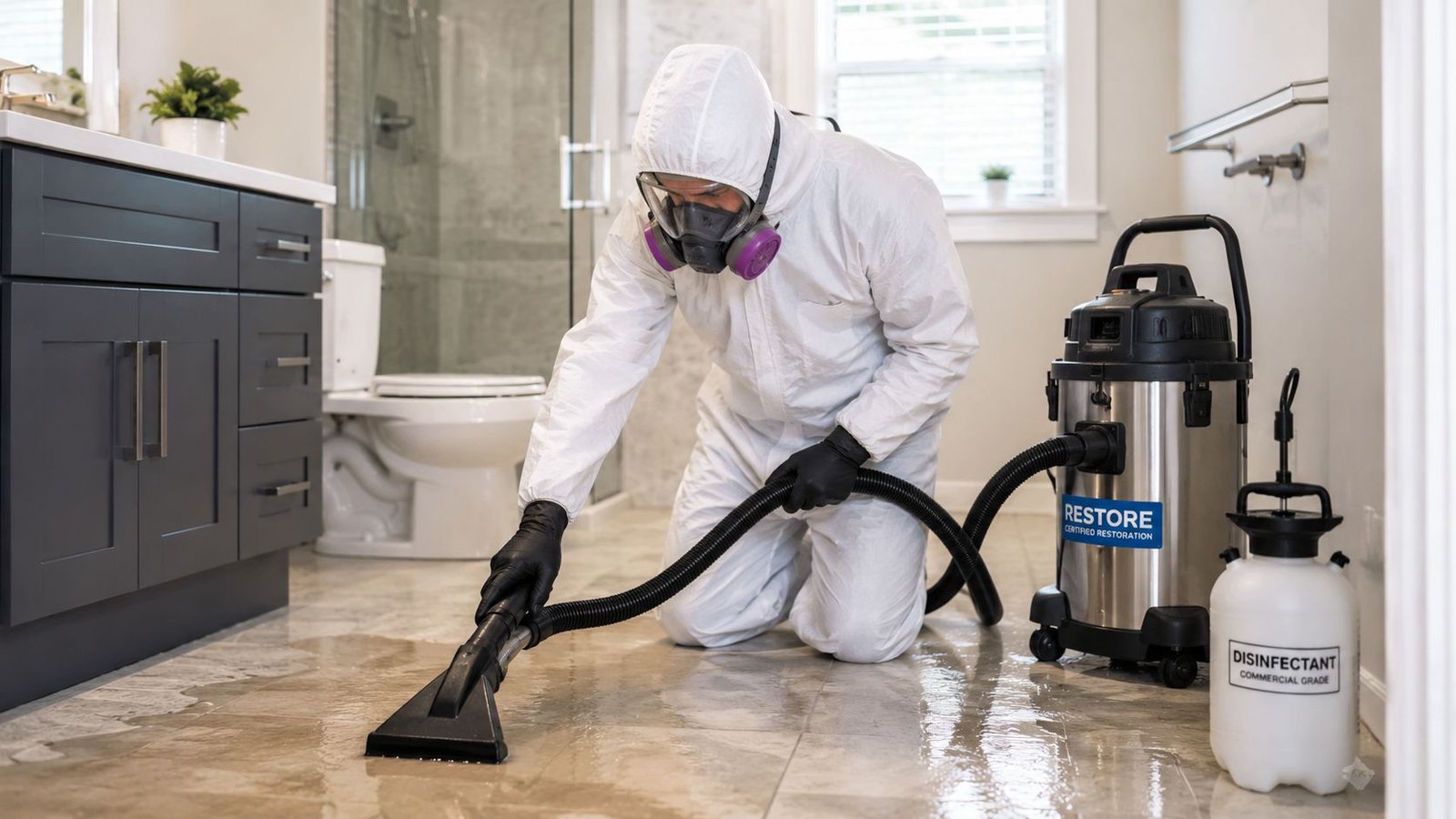
Then the crew suits up. Full PPE matters here because this isn't ordinary water damage.
Removal, washdown, and disinfection
NDSU's cleanup guidance lays out the sequence clearly: source isolation and PPE, bulk liquid removal, detergent washing, EPA-registered disinfection, and rapid structural drying. The same guidance says porous materials exposed to sewage should be discarded, recommends a two-bucket method during washdown to reduce recontamination, requires label-following contact time for disinfectants, and notes one bleach-based option should remain wet for at least 5 minutes. It also says reconstruction shouldn't begin until wood is below 15% moisture content or the flooring manufacturer's threshold (NDSU sewage cleanup guidance).
That sequence matters because each phase does a different job:
- Extraction removes bulk contamination: Pumps, extractors, and controlled removal reduce how much sewage remains in contact with the structure.
- Detergent washing removes soil load: Dirt and organic residue can block disinfectants from doing their job.
- EPA-registered disinfection targets contamination: The product has to stay wet for the label-required dwell time.
- Drying prevents secondary damage: Moisture meters and commercial dehumidification confirm the structure is drying, not just looking dry on the surface.
Here's a short visual on what a professional cleanup response looks like in the field:
What professionals do that DIY cleanup misses
Most failed DIY sewer cleanups break down in two places. The first is cross-contamination. People walk contaminated water into hallways, bedrooms, and clean areas. The second is hidden moisture. Baseboards, wall cavities, cabinet toe-kicks, subfloors, and framing can stay damp long after the floor looks clean.
A restoration contractor handling this type of loss should document moisture readings, remove unsalvageable porous materials selectively, and set up drying based on the materials in place. One local option for this kind of work is sewer remediation service, which covers contaminated-water extraction, disposal, disinfection, and dry-back.
What to Discard vs What Can Be Salvaged
Homeowners often find this part most difficult. The emotional instinct is to save everything. The safe approach is to judge materials by porosity, cleanability, and the extent of sewage penetration.
Public health guidance is consistent here. Porous materials contaminated by sewage often require disposal. That includes items such as carpets, upholstered furniture, bedding, and drywall when they can't be thoroughly cleaned and disinfected because they can retain pathogens and support mold growth (public guidance on sewer backup cleanup).
Use porosity as your decision filter
If a material absorbs water fast, sewage usually travels beyond the surface. Once contamination moves into padding, fibers, paper facings, insulation, or composite wood, reliable cleaning becomes much harder.
In Los Angeles homes, I see this often in older bathroom vanities, laminate flooring over underlayment, cabinet toe-kicks, and drywall behind baseboards. Those assemblies trap contamination even when the visible floor area seems limited.
When homeowners regret a cleanup decision, it's usually because they kept an absorbent material that never fully dried or never fully decontaminated.
Sewer Backup Salvageability Guide
| Material | Typically Discard | Potentially Salvageable (with professional cleaning) |
|---|---|---|
| Carpet and pad | Yes | Rarely |
| Drywall that absorbed sewage | Yes | No, unless unaffected and verified clean |
| Insulation | Yes | No |
| Upholstered furniture | Yes | Rarely |
| Bedding and pillows | Yes | Rarely |
| Particle board or MDF furniture | Yes | No |
| Solid wood furniture | Sometimes | Yes |
| Metal furniture | No | Yes |
| Tile, concrete, sealed stone | No | Yes |
| Hard plastics | No | Yes |
| Documents and paper goods | Often | Sometimes, depending on contamination and condition |
| Electronics | Sometimes | Sometimes, after specialist evaluation |
A practical rule for mixed-material items
Use this framework when you're unsure:
- If it's soft and absorbent: Expect disposal.
- If it's hard and non-porous: It may be cleaned and disinfected.
- If it's layered: Think beyond the visible surface. A rug over pad, laminate over underlayment, or upholstered dining chair over foam usually means hidden contamination.
- If it has sentimental value: Separate that from the sanitation decision. Document it carefully for the claim before disposal.
For homeowners dealing with contaminated contents and trying to understand the severity of the loss, this guide to Category 3 water damage gives the right lens for making discard decisions.
Documenting Damage for Your LA Insurance Claim
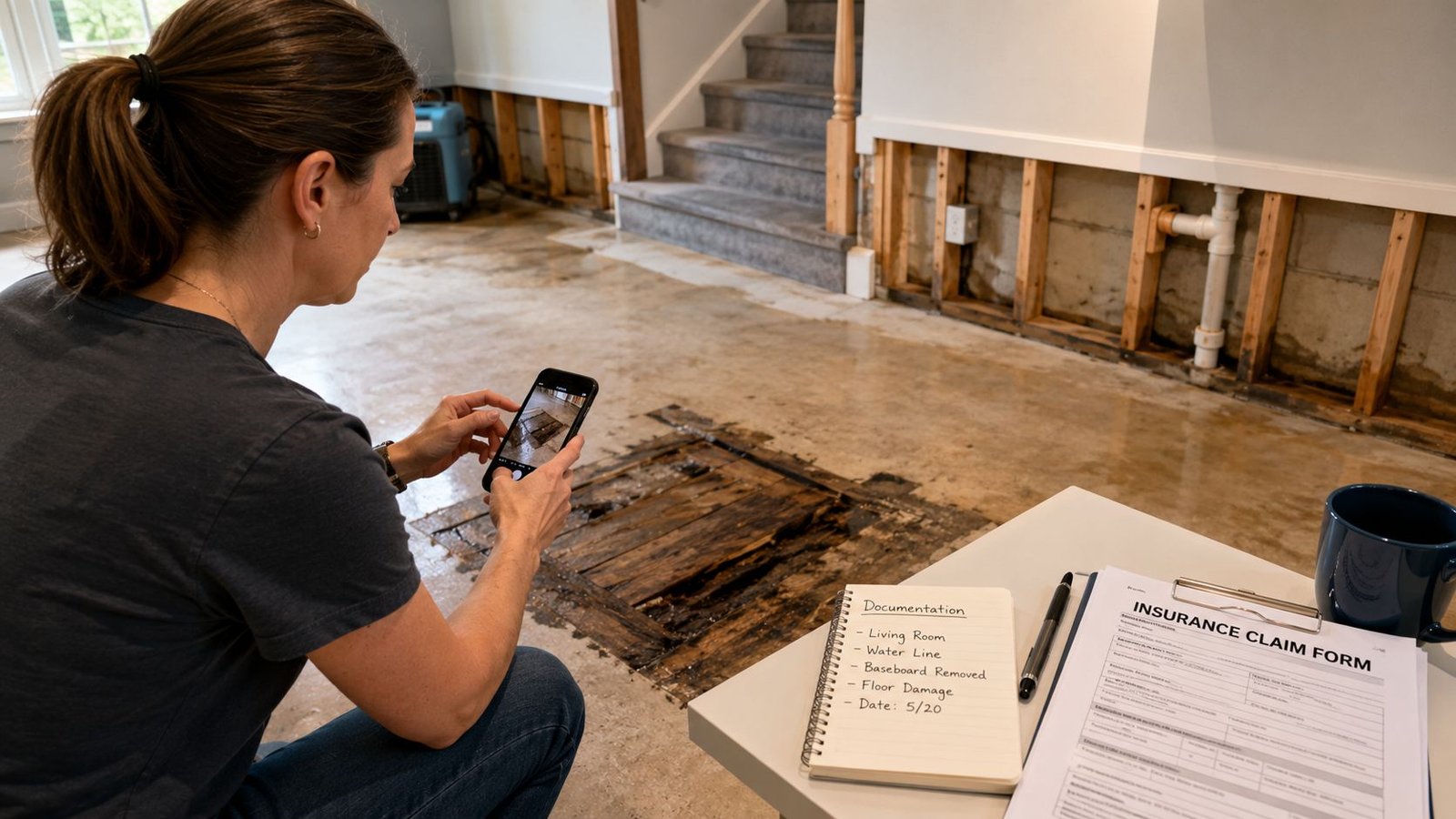
The best insurance documentation starts before anything is thrown out, cut out, or moved. Once the scene changes, you lose evidence.
What to photograph and list
Use your phone and be methodical.
- Wide shots first: Capture the full room, the path of water, and the location of each affected fixture.
- Close-ups next: Photograph baseboards, swollen cabinets, stained drywall, ruined flooring, and contaminated contents.
- Item inventory: List damaged belongings room by room. Include brand, model, approximate age, and what visible damage you can see.
- Disposed material log: If emergency health conditions require immediate disposal, photograph the item before bagging or removal.
Don't forget the less obvious components. In many LA homes, that includes detached garage finishes, laundry platforms, built-in cabinetry, and lower-elevation ADU spaces.
Keep a paper trail from day one
Insurance adjusters and restoration teams both work better when the file is organized.
Create one folder for:
- photos and videos
- plumber findings, if any
- mitigation invoices
- moisture records and work authorizations
- email and call notes with dates
If you want a cleaner process, use a dedicated checklist like this insurance claim documentation guide. It helps homeowners keep the loss file consistent from the emergency stage through rebuild.
For policy shopping or reviewing your current coverage structure, some LA homeowners also compare options for affordable home insurance in LA. That won't solve today's emergency, but it's useful once you're evaluating future protection.
A strong claim file shows what was damaged, where it was damaged, and what had to happen immediately for health and safety reasons.
Why and When to Call a Restoration Professional
If sewage reached flooring, walls, cabinets, contents, or more than a very small isolated area, call a restoration professional. That's the line.
The Insurance Information Institute notes that sewer backups can cause thousands of dollars in damage. Professional estimates commonly put cleanup at about $2,000 to over $15,000, with 1 to 3 days for initial cleanup and up to a week or more for full drying depending on severity (sewage backup cleanup cost overview). That cost range can feel steep in the moment, but this is a major property-loss category, not a housekeeping job.
What professional help changes
A qualified crew brings the tools most homeowners don't have and shouldn't try to substitute:
- Commercial extractors and containment materials to remove contamination without spreading it
- Moisture meters and drying equipment to verify when structural materials are ready for repair
- PPE and disposal procedures for handling contaminated debris
- Claim documentation support so the insurance file matches the work performed
In Los Angeles, response speed matters because sewage events often hit bathrooms, kitchens, laundry areas, garages, and lower rooms with layered finishes and dense contents. The longer contaminated moisture stays in place, the more material you tend to lose.
The situations where DIY is the wrong call
Call for help immediately if any of these are true:
- Multiple fixtures backed up at once
- Sewage touched carpet, drywall, insulation, cabinets, or furniture
- You can't identify or stop the source
- There's standing contaminated water near electrical components
- Anyone in the home is medically vulnerable
Onsite Pro Restoration is one example of a local company that handles this type of emergency work in Los Angeles, including contaminated-water cleanup, dry-back, and insurance documentation support. Whether you use them or another qualified firm, ask direct questions about PPE, disposal standards, disinfection methods, moisture verification, and what they'll document for your claim.
If you need immediate sewer backup cleanup in Los Angeles, Burbank, Glendale, Sherman Oaks, or nearby communities, call 818-336-1800 as soon as the area is isolated.
Frequently Asked Questions About Sewer Backups
What causes sewer backups in older Los Angeles homes
Older LA properties often have aging drain lines, deteriorated laterals, root intrusion, and older plumbing layouts that don't handle surges well. Storm-related events can also push the problem beyond a simple clog. Prevention after cleanup should focus on the failure point itself, including backflow protection, lateral inspection, and keeping stormwater out of the sanitary line.
Is it safe to stay in my house during a sewer backup cleanup
Sometimes yes, sometimes no. It depends on where the sewage went, how much area it affected, whether the contamination can be isolated, and whether vulnerable occupants are present. If bathrooms, kitchens, or major living areas are involved, many homeowners choose to leave during the dirtiest phase of extraction and demolition.
Does homeowner's insurance cover sewer backups
Coverage depends on the policy and endorsements. Many homeowners need specific water-backup coverage rather than assuming a standard policy will respond. Check your declarations page and call your carrier early.
Can I keep my tile floor if sewage covered it
Often, yes, if the tile and underlying assembly can be properly cleaned, disinfected, and dried. The answer changes if contamination reached absorbent layers below or around it.
How do I reduce the chance of another backup
After cleanup, don't stop at disinfection. Find out what failed. The most useful prevention steps are usually backflow protection, sewer lateral inspection, and correcting drainage or line issues that caused the backup in the first place.
If you need immediate Onsite Pro Restoration support for sewer backup cleanup in Los Angeles, call 818-336-1800 for a fast inspection and emergency response.