
The best dog urine cleaner is an enzymatic formula that uses beneficial bacteria to digest the uric acid crystals causing lingering odors. Unlike standard household products that only mask the smell, an enzymatic cleaner eliminates it at the source, making it the most effective solution for pet accidents. For homeowners in Los Angeles, choosing the right product is crucial to protect everything from new carpets to historic hardwood floors.
This guide will walk you through the essential steps for immediate cleanup, how to select the right product for your floors, and when it's time to call in a professional for damage that goes beyond a simple stain.
Table of Contents
- What to Do Immediately After a Pet Accident
- Choosing the Right Cleaner for Your Floors
- How to Permanently Eliminate Urine Odors
- Effective DIY Dog Urine Cleaner Formulas
- When to Call a Professional for Pet Damage
- Frequently Asked Questions
What to Do Immediately After a Pet Accident
Finding a puddle is frustrating, but those first five minutes are absolutely crucial for stopping long-term damage. The goal is simple: get as much liquid out as you can before it has a chance to soak deep into your carpet padding or the pores of your hardwood floors. We see this all the time in homes across Sherman Oaks and Los Angeles—a small spot becomes a big problem because the urine wasn't removed quickly enough.
Your first instinct should be to blot, never, ever rub. Rubbing just grinds the urine deeper into the fibers, making the stain larger and harder to remove.
The Blotting Technique
Start by grabbing a thick stack of paper towels or a clean, white cloth. Lay it directly over the wet spot and apply firm, steady pressure. Don't be afraid to stand on the towels; using your body weight is the best way to maximize absorption.
Once a towel becomes saturated, swap it for a fresh, dry one and repeat the process. Keep going until you can press down on the spot and the cloth comes away dry. This is how you know you’ve pulled out as much of the liquid as possible.
For a deeper dive into tackling set-in stains, take a look at our complete guide on how to remove urine stains from carpet.
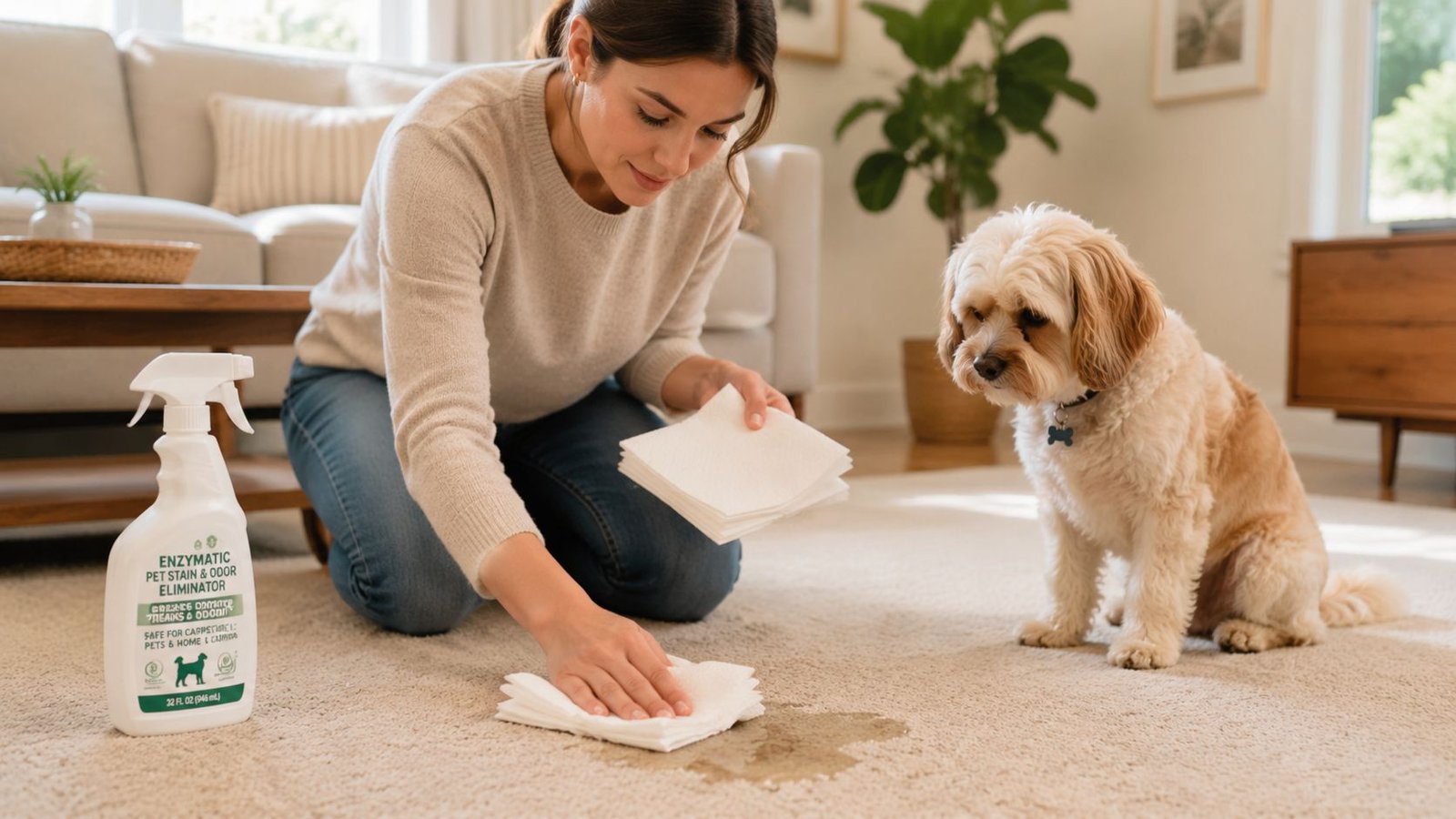
Alt text: A woman blotting a fresh pet stain on a carpet with paper towels to demonstrate how to use a dog urine cleaner.
A Critical Mistake to Avoid
Here’s one of the biggest mistakes we see homeowners make: using heat. Never use a steam cleaner or hot water on a urine stain. The heat actually cooks the proteins in the urine, chemically bonding them to the carpet or fabric fibers. According to the Environmental Protection Agency (EPA), heat can permanently set both the stain and the odor, making it a nightmare to remove later, even for professionals. Always stick to cool or lukewarm water when you're cleaning.
In our experience restoring homes in Burbank and Glendale, we’ve seen countless cases where improper initial cleaning made a small spot a major problem. Blotting immediately and avoiding heat are the two most important actions you can take.
Of course, prevention is always the best strategy. Understanding the behaviors that lead to accidents is key. For some excellent proactive measures, this guide offers valuable information to stop cats from peeing on carpet, and many of the principles apply to dogs as well.
Choosing the Right Dog Urine Cleaner for Your Floors
Choosing the right dog urine cleaner isn't just about grabbing the first bottle you see. It's about knowing what works safely on your specific floors. The gorgeous vintage hardwoods in a historic Los Angeles home require a completely different approach than the durable concrete in a garage. Using the wrong product can cause irreversible damage, turning a simple cleanup into a nightmare repair.
At the heart of the matter are two main types of commercial cleaners: enzymatic and oxidizing formulas. Both are designed to dismantle urine on a molecular level, but they get the job done in very different ways.
Enzymatic vs. Oxidizing Cleaners
Enzymatic cleaners are the gold standard for anything porous—think carpets, upholstery, and even the grout between your tiles. They work by using beneficial bacteria and enzymes to literally "eat" the uric acid crystals, which are the stubborn compounds that cause that lingering ammonia smell. By destroying the source, they eliminate the odor for good. These are a type of biological cleaner.
Oxidizing cleaners, which often rely on hydrogen peroxide, work through a chemical reaction. They release oxygen to break down the stain and odor molecules. These are fantastic for hard, non-porous surfaces like sealed tile, linoleum, and finished concrete. A word of caution, though: they can have a bleaching effect, so you have to be very careful using them on carpets or colored fabrics.
In my experience, the single biggest mistake I see homeowners make is reaching for an all-purpose cleaner for a highly specialized job. A product that makes your kitchen tile sparkle might permanently discolor an antique rug. Matching the cleaner to the material is non-negotiable.
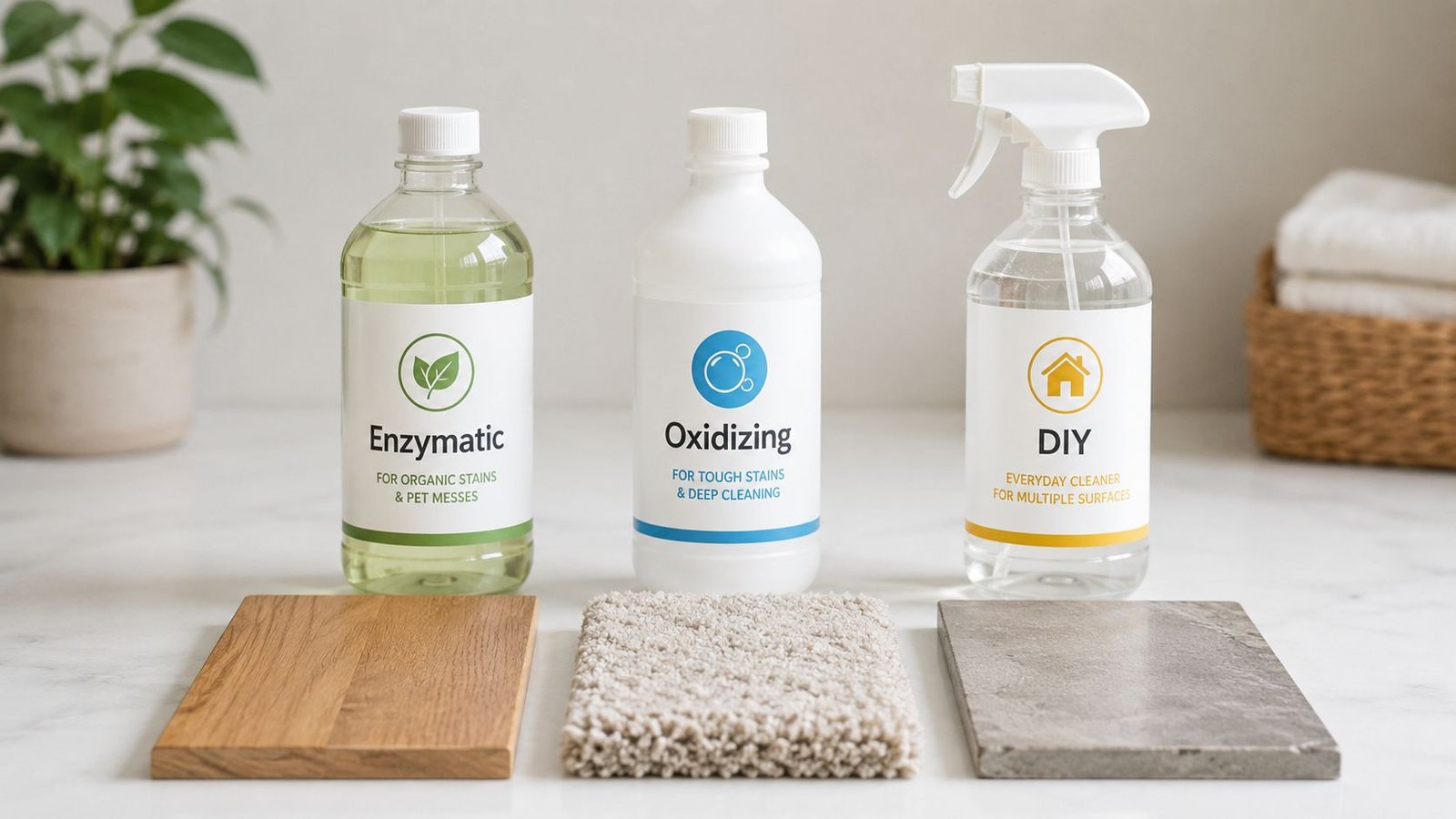
Alt text: A collection of professional-grade dog urine cleaner bottles next to samples of carpet, tile, and wood flooring.
Matching Cleaner to Surface
So, how do you pick the right tool for the job? Here’s a quick breakdown:
- Carpets & Upholstery: Always go with a high-quality enzymatic cleaner. These formulas are made to saturate deep into fibers, reaching hidden urine crystals without damaging the fabric itself. For a deeper dive, check out our guide on carpet cleaning for pet odors.
- Sealed Hardwood & Laminate: An enzymatic cleaner is still your best bet here, but you must find one specifically labeled as safe for hardwoods. The key is to never let any liquid pool on the surface, as moisture is the enemy of wood floors. For more tips on specific surfaces like this, some experts focus entirely on professional pet stain cleaning Reno and offer great insights.
- Tile, Vinyl & Sealed Concrete: This is where an oxidizing cleaner can really shine. It’s a powerful and effective way to clean and disinfect these durable, non-porous surfaces without much fuss.
The market is flooded with products, and not all are created equal. Independent testing has shown that the real secret to success isn't just the product, but how you use it. Allowing proper dwell time—anywhere from 15 minutes for a light spot to over 12 hours for a deeply soiled area—is absolutely critical. And don't be surprised if some stubborn stains require more than one application to fully disappear.
How to Permanently Eliminate Urine Odors
A visible stain is just the tip of the iceberg. The real challenge with dog urine is the lingering odor—that stubborn, ammonia-like smell that signals to your dog, "This is the spot!" To get rid of that smell for good, you have to go deeper than a surface spritz. You need to completely destroy the uric acid crystals left behind.
This is why there’s a whole category of dog urine cleaner products on the market. Standard household cleaners just can't cut it because they don't break down the source of the odor. Urine soaks through carpet fibers and into the padding and even the subfloor. As experts at animal welfare organizations will tell you, once urine reaches the padding, the job gets a lot harder. You can read expert advice on removing pet stains and odors to see just how crucial the right cleaner is.
Find Every Hidden Spot
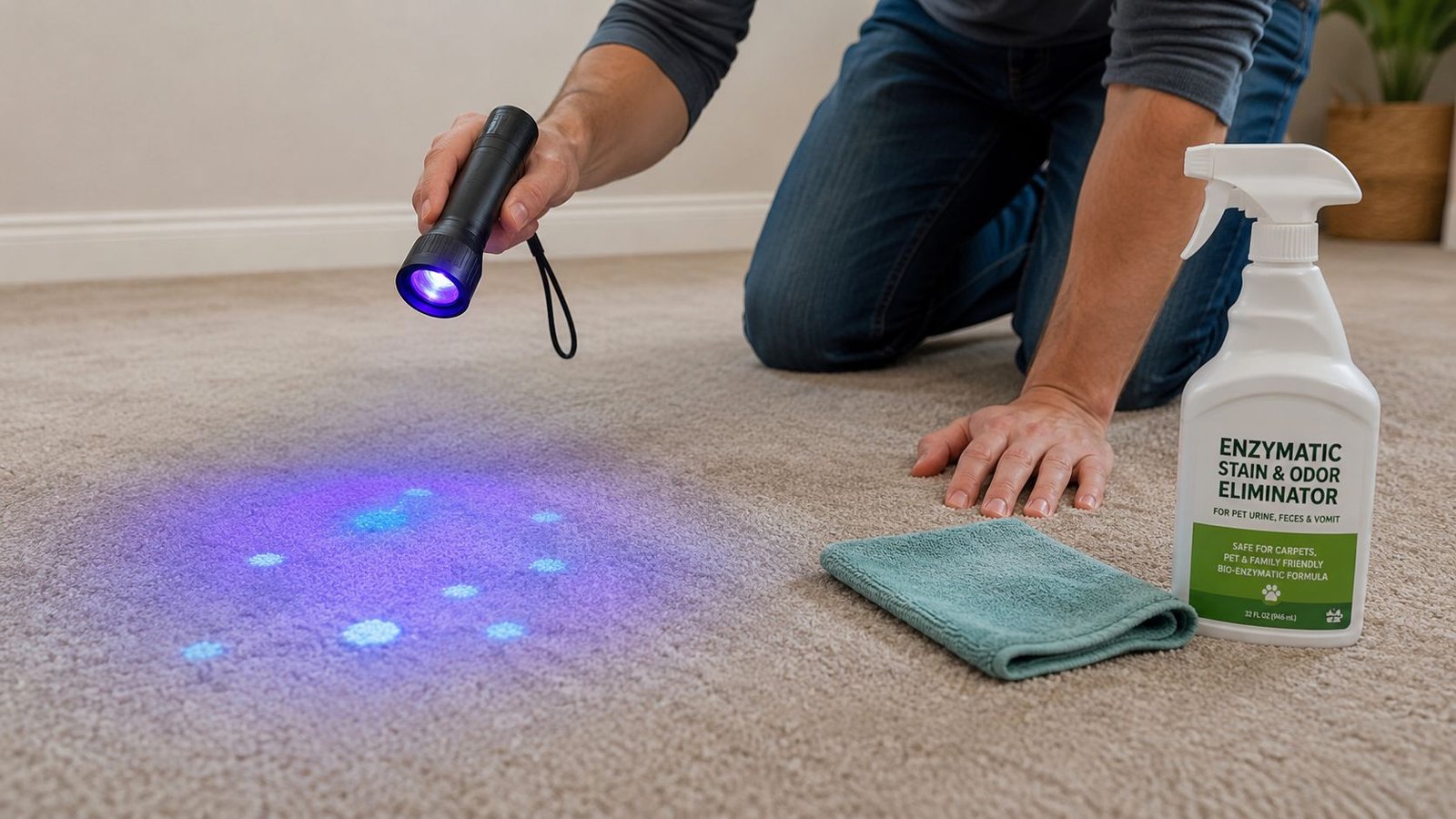
Before you can treat the odor, you need to find every single spot. This is where a UV blacklight becomes your new best friend. Wait until dark, kill the lights, and do a slow sweep of your floors, furniture legs, and baseboards. Old urine stains will glow a ghostly yellowish-green, revealing problem areas you never even knew you had.
As you find each spot, mark it with a small piece of painter's tape. This makes them easy to find again once the lights are back on. Don't be shocked if you find more spots than you expected; it happens to the best of us.
Saturate, Dwell, and Extract
Once you’ve mapped out your targets, it’s time to bring out the enzymatic cleaner. Now is not the time to be conservative with the product.
- Saturate: Don’t just lightly spray the surface. You need to pour the cleaner on, ensuring it soaks as deeply as the urine did. For carpets, always treat an area slightly larger than the visible stain to account for how the urine spreads outward underneath.
- Dwell: Let it sit. This "dwell time" is critical—it's when the good bacteria and enzymes are actively breaking down and consuming the uric acid crystals. This could take 30 minutes or several hours, depending on the product’s instructions and how bad the stain is.
- Extract: Once the dwell time is up, use clean towels to blot the area and soak up the excess liquid. Just lay the towels down and apply pressure by standing on them. Let the spot air dry completely, which can take a day or more.
For more hands-on advice about dealing with pet smells, be sure to check out our complete guide on how to get rid of dog smell in your house.
In our experience treating pet damage in Los Angeles homes, homeowners consistently underestimate how far urine spreads into the padding. A small surface stain often hides a much larger problem underneath. To test the depth, gently pull back the corner of the carpet near the stain and check the padding and subfloor.
Effective DIY Dog Urine Cleaner Formulas
We’ve all been there—that sinking feeling when you find a fresh pet accident. When you need a quick fix right from the pantry, a few household staples can work as an effective dog urine cleaner in a pinch. Think of these DIY solutions as first aid for your floor; they’re great for immediate, surface-level messes, but it's important to understand their limits.
Your go-to pantry solution is a simple mix of equal parts white vinegar and water. The acid in the vinegar is perfect for cutting through the ammonia in fresh urine, which is what causes that initial sharp odor. After you’ve blotted the spot with a dry towel to absorb as much as you can, just spritz this mixture on, let it sit for five to ten minutes, and blot it dry with a fresh cloth.
For More Stubborn Stains
If you're dealing with something a bit more challenging, you can step it up with baking soda and hydrogen peroxide. This combination packs more of a punch, but you absolutely have to be careful, especially on colored carpets or upholstery.
Here's the process I recommend:
- First, after blotting the urine, sprinkle a generous layer of baking soda directly onto the spot. It’s fantastic at drawing out lingering moisture and odors.
- Next, in a separate spray bottle, mix a half-cup of 3% hydrogen peroxide with about a teaspoon of plain, unscented dish soap.
- Gently spray this peroxide solution over the baking soda. You’ll see it start to fizz, which means it's working to lift the stain.
- Use your fingers or a soft-bristled brush to gently work the paste into the fibers, but don't scrub aggressively. Let it sit until it's completely dry—this can take several hours—then vacuum up the residue.
Critical Safety Warning: Always test the hydrogen peroxide solution on a hidden, inconspicuous spot first (like inside a closet or under a sofa cushion) to ensure it doesn't cause discoloration. This is especially important for homes in areas like Sherman Oaks with diverse and sometimes older carpeting.

These home remedies have been around forever, and you'll even see how a major brand details these DIY methods, but they always come with a caveat. While they're great for emergencies, DIY solutions don’t contain the biological components needed to break down the uric acid crystals in urine—the source of that stubborn, recurring smell.
For a deeper understanding of what makes professional products so much more powerful, it's worth exploring our guide on how an enzyme cleaner for urine works on a molecular level to eliminate odors for good.
When to Call a Professional for Pet Damage
Even the most powerful store-bought dog urine cleaner has its limits. As a Los Angeles homeowner, you can pour endless effort into DIY cleaning, but there comes a point where you're just fighting a losing battle. Knowing when to hand the problem over to a professional can save you from permanent damage, stubborn odors, and much bigger repair bills down the road.
If you’ve cleaned the same spot over and over but the smell always comes back, that's your first major red flag. It’s a clear sign the urine has gone far deeper than the carpet fibers. It has likely soaked right into the padding, the subfloor, and maybe even the baseboards and drywall. Once moisture gets trapped in those structural layers, no amount of surface cleaning will ever truly fix it.
Signs You Need Professional Help
The issue has graduated from a simple stain to a serious contamination problem when you see these specific warning signs. From our experience across Los Angeles, from Beverly Hills to the Valley, these are the tell-tale indicators that it’s time to call for backup:
- Lingering Odors: You’ve hit the spot multiple times with a good enzymatic cleaner, yet the smell reappears, especially on humid days. This is because the uric acid crystals are embedded deep in the subfloor or padding, and they keep getting reactivated by moisture in the air.
- Damage to Subfloor or Baseboards: If you pull back a corner of the carpet and see dark stains, discoloration, or rotting on the wood or concrete beneath, the damage is severe. The same goes for baseboards that look swollen, stained, or warped—the urine has wicked up into the wood and drywall.
- Overwhelming Scale: Sometimes the problem isn't a single accident but the result of multiple spots over a long period. When the contamination becomes widespread, a spot-by-spot approach is no longer effective. You're dealing with a much larger, hidden problem.
At Onsite Pro Restoration, we treat severe pet urine contamination as a biohazard cleanup. Once urine soaks into structural materials, it's no longer just a stain. It requires a professional response to decontaminate the area and make your home safe and sanitary again.
The Professional Restoration Process
For deep-seated pet damage in Los Angeles homes, professional restoration is the only way to guarantee a permanent fix. This isn't just cleaning; it's a full-scale remediation process. It involves industrial-grade equipment to neutralize odors, often requiring the removal of affected carpet and padding.
From there, we may need to seal the subfloor to lock in any remaining odor-causing molecules and use structural drying equipment to remove every last bit of moisture.
If the problem feels too big to handle, it probably is. The next step is understanding the financial side of a professional solution. You can learn more about what to expect by reading our guide to professional pet odor removal service costs. When your own efforts stop working, calling an expert is the smartest—and safest—move you can make.
Frequently Asked Questions
We get these questions all the time from frustrated homeowners in Los Angeles. When it comes to pet accidents, there's a lot of bad advice out there. Here are the straight answers you need to tackle the problem correctly.
Can I Just Use Bleach to Clean Up Dog Pee?
Absolutely not. Using bleach on dog urine is one of the most dangerous cleaning mistakes you can make. Urine already contains ammonia, and when you add bleach, the two chemicals create toxic chloramine gas. Inhaling this can cause serious respiratory damage.
Stick with a dedicated enzymatic dog urine cleaner. These products are specifically designed to be safe and effective, breaking down the odor-causing compounds at a molecular level instead of just covering them up. A simple vinegar and water solution is also a much safer alternative.
Will the Dog Urine Smell Eventually Go Away on Its Own?
Unfortunately, the smell will never truly disappear on its own. The culprit is the uric acid crystals left behind after the liquid evaporates. These crystals are not water-soluble and can lie dormant for years.
Anytime they're exposed to moisture—even just the humidity in the air on a damp LA day—they reactivate, releasing that foul urine odor all over again. The only way to get rid of the smell for good is to use an enzymatic cleaner that actually destroys the crystals.
Why Does My Dog Keep Peeing in the Same Spot?
If your dog keeps returning to the scene of the crime, it's because their powerful sense of smell is telling them to. Even if you can't smell anything, they can still detect the faint pheromones left from the last accident. It's like a signpost that says, "This is the toilet."
Most standard carpet shampoos only mask the odor temporarily. You need to use a high-quality enzymatic cleaner and be sure to completely saturate the spot, allowing it to reach deep into the carpet padding. This is the only way to fully eliminate the scent marker and break the behavioral cycle.
From our experience, if a dog can smell even a trace of a previous accident, they will almost always go back to that spot. Complete odor elimination isn't just about cleaning; it's about breaking a deeply ingrained habit.
Is Dog Urine Damage Covered by Homeowners Insurance?
Typically, no. Standard homeowners insurance policies consider pet damage, including urine stains and odors, to be a preventable maintenance issue and will not cover it.
However, there can be rare exceptions. For instance, if a covered event like a burst pipe soaks a carpet and spreads old, dried urine, causing new damage, you might have a case for partial coverage. It’s always best to review the specifics of your policy, but don't count on it.
If you're dealing with stubborn odors that just won't go away in your Los Angeles home, the problem has likely soaked into your subfloor or padding. For a professional assessment and a permanent solution, call Onsite Pro Restoration today at 818-336-1800 for a free inspection or learn more about our advanced pet odor removal services.