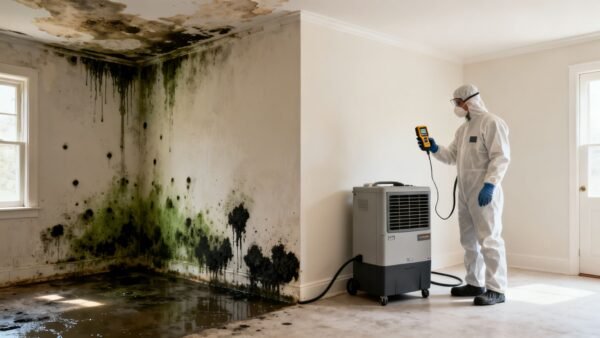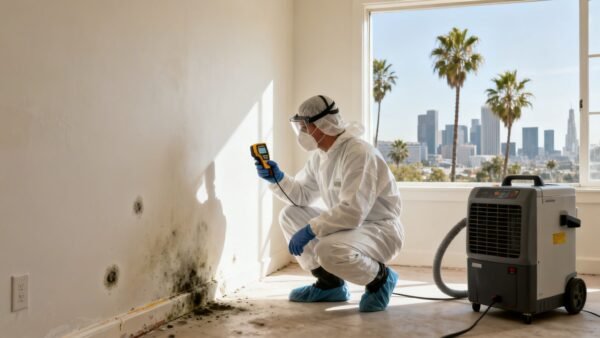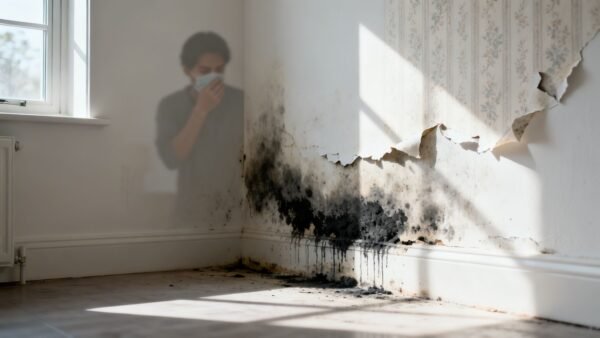

That musty smell in your basement or the dark spots blooming near a leaky window are more than just an eyesore; they're clear warning signs of a hazard needing immediate attention. Proper removal mold isn't a simple cleaning chore—it's a critical step in protecting your property and your family from serious health risks. It's a process that demands you fix the moisture source, contain the affected area, and safely get rid of the colonies for good.
If you suspect you have a mold problem, don't wait for it to get worse. Our team of IICRC-certified professionals can help you identify the source and create a safe remediation plan.
The Hidden Dangers of Indoor Mold
Finding mold often kicks in a sense of urgency, and with good reason. What starts as a small, harmless-looking patch can explode into a widespread problem, compromising your home’s structure and your family’s health. At its core, the presence of mold points to a bigger issue: an unaddressed moisture problem.
Think about a minor pipe leak hidden inside a wall of a Sherman Oaks home. It can saturate the drywall and insulation, creating a perfect breeding ground for mold in as little as 24 to 48 hours. Long before you see anything, airborne spores can travel through your HVAC system, tanking your indoor air quality and spreading to other parts of your property.
Health Risks Linked to Mold Exposure
The number one concern with indoor mold is its impact on your health. For many people, exposure can trigger nagging allergic reactions that just won't go away.
- Chronic coughing and sneezing
- Itchy, watery eyes
- Skin rashes and irritation
- Worsening asthma or other respiratory conditions
Beyond allergies, some types of mold produce mycotoxins, which can lead to more severe health issues with long-term exposure. This is why immediate action isn't just recommended; it's essential for keeping your home safe. Understanding the full scope of why mold removal is important in Los Angeles helps put the urgency into perspective.
The financial hit can also be huge. As people have become more aware of the health hazards, the demand for professional help has skyrocketed. The global mold remediation market was valued at USD 1,340.3 million in 2024 and is projected to climb past USD 1,751.9 million by 2032, with residential cases being a major driver.
Knowing who's on the hook for fixing the problem is key for both homeowners and renters. There are specific landlord responsibilities for repairs that often come into play when mold becomes a serious issue. Ignoring it doesn't just put health at risk—it can lead to massive structural repair bills down the road.
How to Tell If You Need Professional Remediation
Before you can even think about mold removal, you have to put on your detective hat. Getting a handle on the problem is half the battle, especially since mold loves to hide in places you rarely look. Your best tools, right at the start, are your own senses.
The most obvious clue is seeing the stuff. Mold can show up as black, green, or even white splotches, usually clustered together on a damp surface. But don't be fooled—it can also look like a simple stain or discoloration on your drywall, ceiling, or wood trim. It’s easy to write these off as old water stains, but if they’re getting bigger or changing, you've got an active problem.
Telltale Signs Beyond the Visible
Often, the very first sign of a hidden mold issue is that unmistakable musty, earthy smell. That distinct odor comes from microbial volatile organic compounds (MVOCs), which are gases that mold releases as it grows. If you catch a whiff of that smell in a specific area—like the basement, attic, or under a sink—it’s a massive red flag that mold is hiding nearby, even if you can’t see it.
Any sign of a water problem is another clue. Keep an eye out for:
- Peeling or bubbling paint: This is a classic sign that moisture is trapped behind the surface, creating a perfect little greenhouse for mold.
- Warped walls or floors: When drywall and wood get soaked, they start to buckle and warp. It's a dead giveaway of a long-term moisture issue.
- Condensation: Seeing moisture building up on windows or pipes means your humidity is too high, which is like rolling out the welcome mat for mold. This is a huge issue in coastal spots like Santa Monica where the fog just hangs in the air.
When to Suspect a Deeper Problem
Not all mold is a five-alarm fire. A little mildew on your shower tile is usually a surface-level issue you can scrub away yourself. The real trouble starts when mold gets its roots into porous materials like drywall, insulation, or the wood framing of your house.
The rule of thumb we use in the industry, and it's backed by the EPA, is simple: if the mold covers more than 10 square feet—think a 3×3 foot patch—it's too big for a DIY job. At that point, the risk of kicking up a massive cloud of spores and spreading them all over your house is just too high.
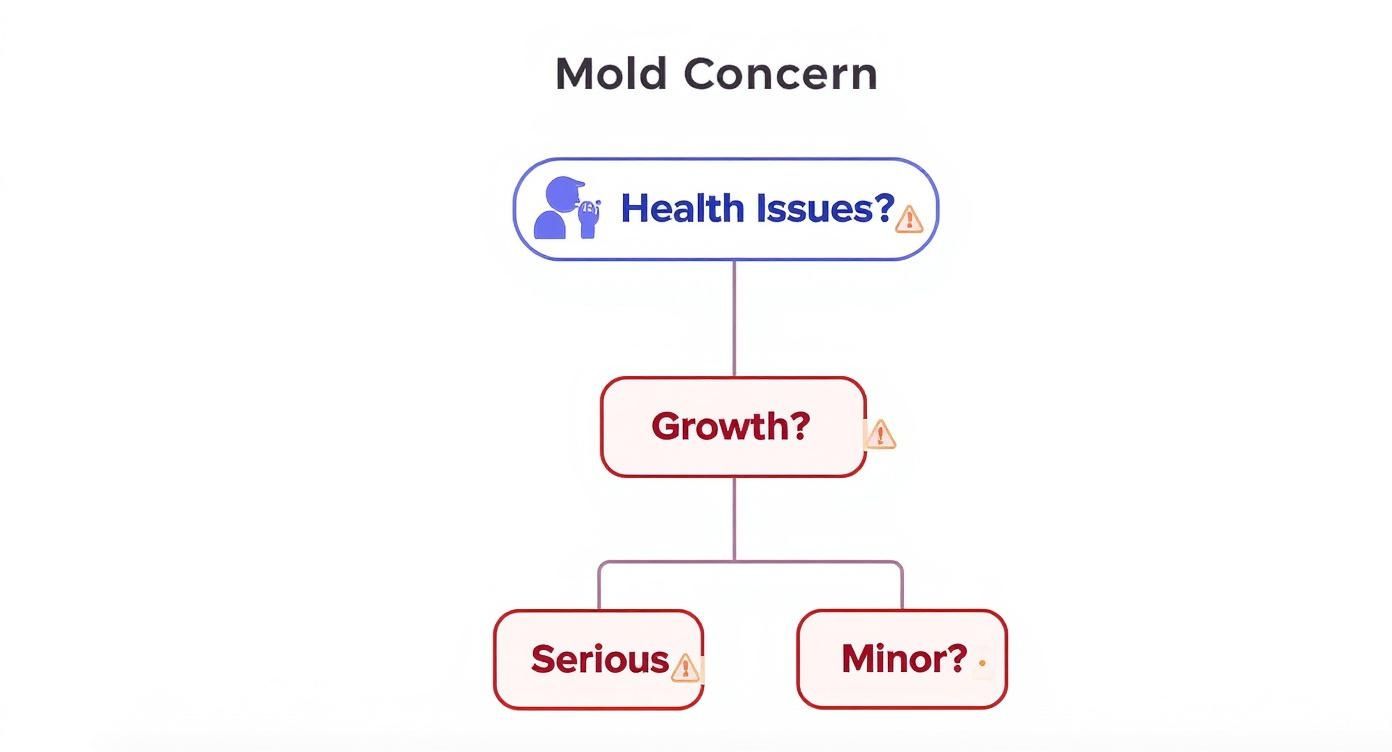
This decision tree infographic can help you figure out if you're dealing with a minor annoyance or something that needs a professional.
Here's a quick checklist you can use to assess the situation yourself. It helps you gauge the risk level and decide whether to grab your cleaning gear or pick up the phone.
Mold Risk Assessment Checklist
| Symptom or Location | Potential Risk Level | Recommended Action |
|---|---|---|
| Small mildew spots on shower tile or grout | Low | DIY cleaning with a store-bought mildew remover. Improve ventilation. |
| Musty smell in a closet, but no visible mold | Medium | Empty the closet, inspect for hidden leaks, and use a dehumidifier. If the smell persists, consider a professional inspection. |
| Visible mold patch (less than 10 sq. ft.) on drywall | Medium | DIY is possible with proper PPE, but you must fix the moisture source first. If unsure, call a pro. |
| Discoloration or mold on ceiling under an attic or roof | High | This likely points to a significant roof or HVAC leak. Professional assessment is highly recommended to find the source. |
| Any mold growth in an area with a known sewer backup | Severe | Do not attempt to clean this yourself. This is contaminated water requiring professional biohazard cleanup. |
| Visible mold patch larger than 10 sq. ft. | High to Severe | Professional remediation is necessary to prevent cross-contamination and ensure complete removal. |
| Anyone in the home experiencing new or worsening respiratory issues | High to Severe | Prioritize health. Call a professional for immediate inspection, regardless of the size of the visible mold. |
The key takeaway is that if anyone is feeling sick and you can see mold, the problem immediately escalates to "serious" and needs a professional.
If you even suspect the problem is bigger than what you can see, the smartest move is to get an expert assessment. You can learn more about what that involves in our guide to mold inspection services near you. A pro can use specialized tools to find hidden mold and tell you exactly what you're up against, so nothing gets missed.
Preparing for Mold Removal Like a Pro
Jumping into a mold cleanup without the right prep is a recipe for disaster. It's like trying to put out a grease fire with water—you'll just spread the problem everywhere. Before you even think about touching that moldy wall, the first and most critical step is to create a totally controlled environment. This is non-negotiable, as it keeps those microscopic mold spores from going airborne and turning the rest of your home into a contamination zone.
Think of it like a surgeon prepping an operating room. Your goal is to completely isolate the affected area. This protects your health and keeps the mold contained. I've seen homeowners skip this step, and what started as a small patch of mold in the bathroom quickly became a whole-house nightmare.
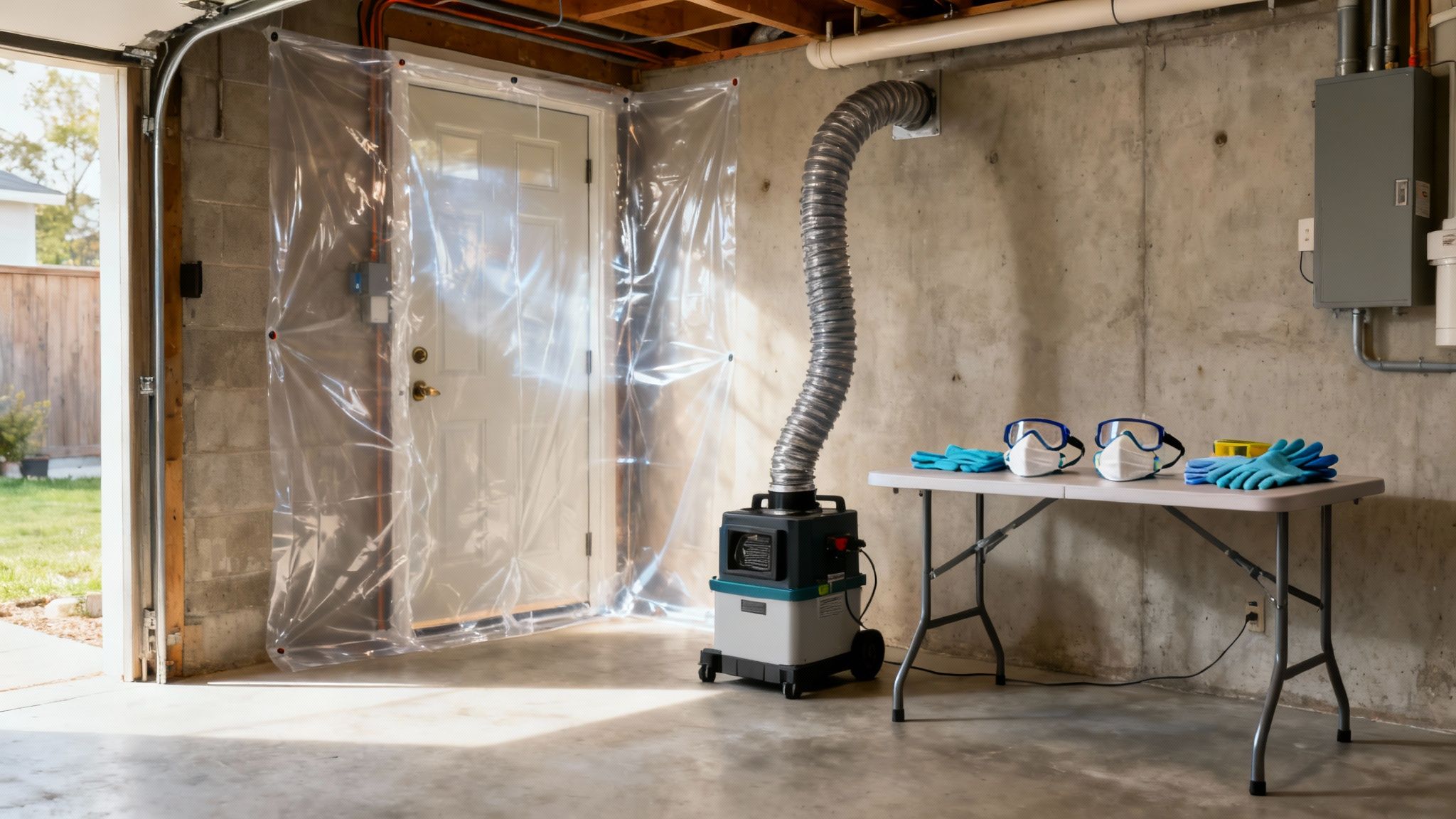
Essential Personal Protective Equipment
Let's get one thing straight: your health comes first. Personal protective equipment (PPE) isn't optional here. When you disturb mold, it releases a cloud of spores that can cause serious respiratory issues and allergic reactions. Don't even start the work without the right gear.
Here's your essential PPE checklist:
- N95 or P100 Respirator: This is your most important piece of gear. It’s designed to filter out the fine mold spores you can't see. A simple paper dust mask is not going to cut it.
- Safety Goggles: Grab a pair of non-vented goggles. They create a seal around your eyes, preventing spores from causing nasty irritation.
- Durable Gloves: Long, disposable gloves, preferably made of rubber or nitrile, are a must. They protect your hands from direct contact with both mold and the cleaning chemicals you'll be using.
- Disposable Coveralls: These are worth every penny. They keep spores off your clothes so you don't accidentally track them through your house later.
Creating a Secure Containment Zone
Once you're geared up, it's time to lock down the area. This means physically sealing it off from the rest of your house to stop cross-contamination before it starts.
You’ll want to cover any doorways and vents with heavy-duty plastic sheeting. Use painter's tape to secure all the edges, creating an airtight seal. For larger jobs, you might even want to create a double barrier or an airlock for extra security.
Professionals take this a step further by using a negative air machine. This is basically a powerful fan with a HEPA filter that pulls air from the contaminated room and vents it safely outside. This creates negative pressure, making it nearly impossible for airborne spores to escape the containment zone.
Pro Tip: Before you tape up a single piece of plastic, shut down your HVAC system. A running furnace or air conditioner is the fastest way to distribute mold spores throughout your entire ductwork, turning a small project into a massive remediation job. If things get out of hand quickly, knowing where to find emergency mold removal services near you can be a real lifesaver.
And remember, containment is only half the battle if you haven't fixed the source of the moisture. If your mold problem started from a leak, you need to stop the water intrusion immediately. Calling for emergency roof repair services is often a critical first step. Otherwise, the mold will just come right back after all your hard work.
Choosing the Right Mold Removal Method
Not all removal mold techniques are created equal. Far from it. The right approach depends entirely on the type of surface you’re dealing with and just how far the growth has spread. What works wonders on a non-porous bathroom tile might be completely useless—or even make things worse—on porous drywall.
Getting this part right from the start is the difference between solving the problem and just painting over it.
The professional mold abatement market is booming for a reason. Property owners are finally grasping the seriousness of this issue. The global market is expected to jump from USD 15.8 billion in 2025 to a staggering USD 25.1 billion by 2033. This isn't just a trend; it's a direct response to a better understanding of the health risks and an increase in the water damage incidents that fuel mold growth.
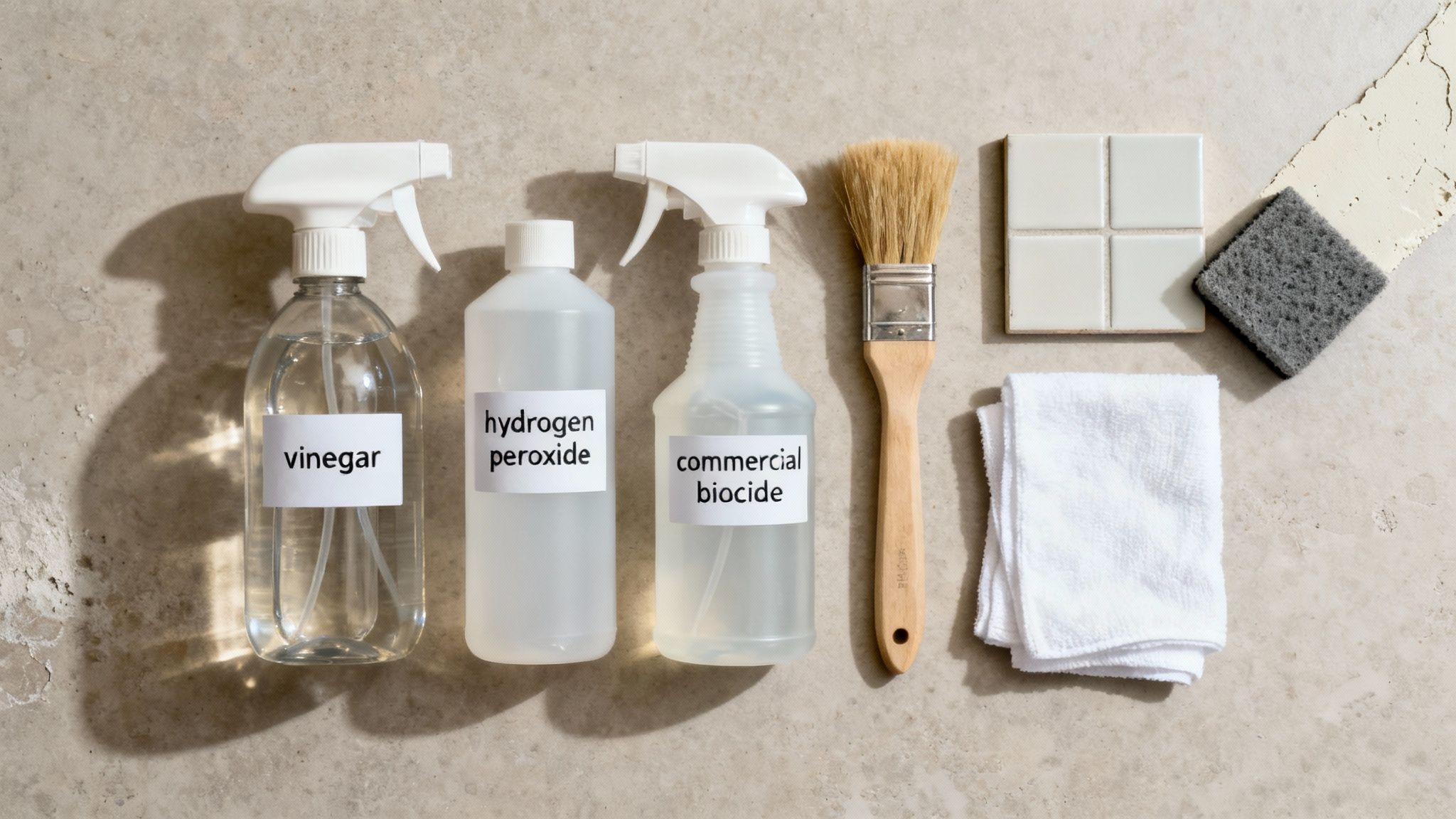
Cleaning Agents: A Head-to-Head Comparison
When people see mold, their first instinct is often to grab the bleach. This is one of the biggest mistakes I see in the field, especially on porous materials. Sure, bleach can kill surface mold on hard, non-porous surfaces like glass or tile, but its water base can actually feed the mold's roots (hyphae) embedded deep inside materials like wood and drywall.
A strong chlorine smell doesn't mean the problem is gone. It usually just means you’ve whitened the visible mold, leaving the underlying structure intact and ready to regrow. We've got a whole guide that dives into why you should think twice before you learn if bleach can kill black mold.
A much better approach involves picking the right tool for the job. Here’s a quick breakdown of what actually works:
- Commercial Biocides: These are EPA-registered products designed specifically for killing mold. They’re incredibly effective but demand strict adherence to the directions, including proper ventilation and full PPE.
- Vinegar: The acetic acid in simple white vinegar is surprisingly effective at killing many common mold species. It's a great option for semi-porous surfaces where it can penetrate just enough to kill the roots.
- Hydrogen Peroxide: A standard 3% solution is a fantastic antifungal and antiviral agent. It’s less harsh than bleach and works well on all kinds of surfaces, from wood studs to concrete.
Key Takeaway: The effectiveness of any cleaning agent is all about the surface. For hard, non-porous surfaces, a good scrub with detergent and water often does the trick. For anything porous, you need a solution that can get to the root of the problem.
When Cleaning Just Isn't Enough
There’s a clear line between cleaning and removal. For some materials, once mold takes hold, they are simply unsalvageable. Trying to clean them is a waste of time and risks leaving dormant spores behind to cause trouble later.
These materials almost always need to be completely removed and replaced:
- Drywall and Plaster: Think of these materials like a sponge. Once mold gets inside, you'll never get it all out.
- Insulation: Whether it's fiberglass, spray foam, or cellulose, contaminated insulation has to be carefully bagged up and thrown out.
- Carpet and Padding: The dense fibers are a perfect hiding place for mold, trapping it deep within where no cleaning solution can effectively reach.
For semi-porous materials like wood studs, it's a judgment call. If the wood is still structurally sound, it can often be saved. The process involves scrubbing it with a wire brush, HEPA vacuuming the debris, and then sealing it with an antimicrobial sealant. But if you see any signs of rot, that wood has to go.
Successful mold removal isn't just about what you clean; it's about knowing what you have to throw away.
Long-Term Strategies to Prevent Mold from Returning
Finishing a mold removal project feels like a huge win, but the job isn’t truly done. The real victory is making sure that mold never comes back. Preventing regrowth is all about one simple, ongoing commitment: controlling moisture. By building a few key habits and making smart adjustments to your home, you can create an environment where mold just can't get a foothold.
This proactive mindset is catching on, as more property owners understand the financial and health toll of repeated mold problems. In fact, the global mold remediation service market was valued at around USD 1,234.6 million in 2023 and is expected to climb to USD 1,659 million by 2031. This isn't surprising, given the growing focus on indoor air quality and the unfortunate increase in water damage incidents. You can read the full research on the mold remediation market for a deeper dive.
Mastering Indoor Humidity
Your first line of defense is the air inside your home. Mold absolutely loves damp, humid conditions, so your main goal is to keep those humidity levels consistently low.
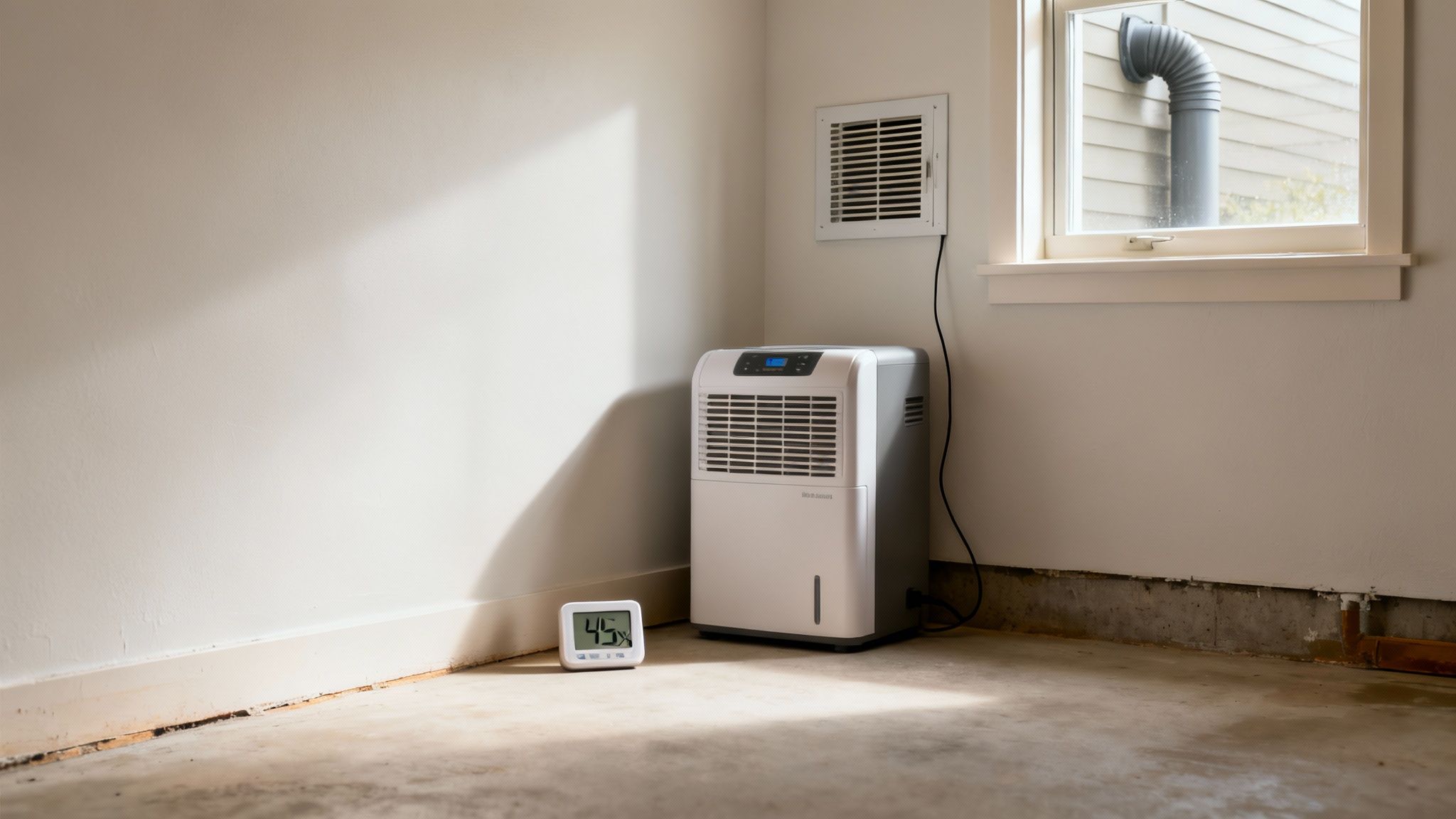
An ideal indoor humidity level is between 30% and 50%. Go any higher, and you’re basically rolling out the welcome mat for mold spores to wake up and start growing. A simple, inexpensive tool called a hygrometer will help you keep a close eye on your home's levels.
Here are a few practical ways to manage that airborne moisture:
- Run Dehumidifiers: Place them in those naturally damp spots like basements, laundry rooms, and crawl spaces. They make a massive difference.
- Ventilate, Ventilate, Ventilate: Always use exhaust fans when you're cooking in the kitchen or showering in the bathroom. Let them run for a good 20-30 minutes after you finish to pull all that moist air out.
- Promote Air Circulation: Something as simple as opening windows for a little while each day helps cut down on moisture buildup, especially in rooms that feel a bit stagnant.
Proactive Moisture Management
Beyond just the air, you have to be vigilant about potential water sources. It only takes one tiny, persistent leak to undo all the hard work you put into a removal mold project.
A classic trouble spot that’s often out of sight and out of mind is the crawl space. Any dampness down there can slowly wick its way up into your home’s structure. To get a handle on this specific issue, check out our guide on the benefits of crawl space dehumidification.
Other crucial steps to stay on top of things include:
- Inspect and Repair Leaks Immediately: Make it a habit to periodically check under sinks, around toilets, and near appliances like your fridge and washing machine for any sign of drips or moisture.
- Maintain Your Gutters: Keep them clean and make sure the downspouts are channeling water far away from your home’s foundation.
- Check Your Outdoor Grading: Take a look at the soil around your foundation. It should slope away from the house. This prevents rainwater from pooling against the walls and seeping into your basement or crawl space.
By folding these strategies into your regular home maintenance routine, you shift from reacting to mold problems to proactively stopping them before they start. That vigilance is the ultimate key to a healthy, mold-free home.
Your Top Mold Removal Questions, Answered
Even when you feel prepared, a mold cleanup project always brings up new questions. Getting the right answers can save you from making a costly mistake or, worse, putting your health at risk. Let's tackle some of the most common questions we hear from homeowners.
Q: Can I Just Paint Over Mold?
A: Absolutely not. Slapping a coat of paint over a mold problem is one of the worst things you can do. While there are some specialty paints designed to encapsulate treated surfaces, regular paint does nothing to kill the mold or fix the underlying moisture issue. What really happens is the mold continues to grow and feed on the drywall right underneath that fresh paint. Before you know it, the paint will start to bubble and peel, and you’ll be right back where you started, only with an even bigger, uglier mess. The first rule of any real mold removal is to eliminate the mold and its water source before you even think about cosmetic fixes.
Q: How Can I Tell the Difference Between Dirt and Black Mold?
A: It can be tough to tell them apart just by looking. Simple dirt or grime will usually wipe away clean with a basic household cleaner. Mold, on the other hand, is a bit more stubborn. It often leaves a stain behind and can have a fuzzy or even slimy texture. If you’re not sure, here's a quick field test you can try on a small, hidden spot: dip a cotton swab in a bit of diluted bleach and dab it on the area. If the spot starts to lighten or disappear within a couple of minutes, you’re likely dealing with mold. If nothing happens, it’s probably just dirt. Keep in mind, this is just a clue, not a scientific diagnosis. If you have a large or persistent spot that’s worrying you, professional mold testing is the only way to know for sure what it is.
Q: Is a Musty Smell Always a Sign of Mold?
A: That distinct, earthy smell is one of the biggest red flags for hidden mold. The odor comes from gases called microbial volatile organic compounds (MVOCs), which are released by active mold colonies as they grow. While a musty smell is almost always tied to mold, it can sometimes be caused by other things like damp wood rot or just general high humidity. Either way, you should treat that smell as a serious warning. It’s telling you there’s a moisture problem somewhere that needs to be tracked down and fixed—and where there’s moisture, mold is rarely far behind.
Q: What Should I Do If I Find Mold Behind My Wallpaper?
A: Finding mold behind wallpaper is a serious issue that needs careful handling. Wallpaper is a classic moisture-trapper; it seals water against the drywall, creating a dark, damp paradise for mold to thrive. The wallpaper and the contaminated drywall underneath will almost always have to be removed and replaced by a professional. Whatever you do, don't just start ripping the paper off yourself. Doing so can send a massive cloud of mold spores airborne, spreading the problem throughout your house. The best move is to seal off the area, put on PPE if you have to be near it, and call a remediation company to handle it safely.
If you're dealing with a mold issue that feels like too much to handle, or if you just want the job done right, Onsite Pro Restoration is here to help. Our IICRC-certified technicians have seen it all and can take care of any mold problem, big or small.