
Water is spreading across the kitchen floor. A ceiling stain just turned into a drip. Smoke from a stove fire is still hanging in the hallway. If you searched property restoration near me in Los Angeles, you’re probably not researching casually. You’re trying to keep a bad situation from getting worse.
That urgency is justified. In restoration, delay changes the job. What starts as extraction and drying can turn into demolition, mold cleanup, odor removal, and a much harder insurance conversation. The right response in the first hour protects safety, limits damage, and gives you a documented path back to normal.
This playbook walks through the crisis in order, from the first 60 minutes to the final repair decision, so you know what to do and why it matters.
Disaster Strikes What to Do in the First 60 Minutes
A common Los Angeles call starts like this. A pipe bursts in a hillside home above the living room, water runs behind drywall, a recessed light starts dripping, and nobody knows whether to grab towels, kill power, or call insurance first. Panic is normal. Random action is what causes mistakes.
Start with three moves.
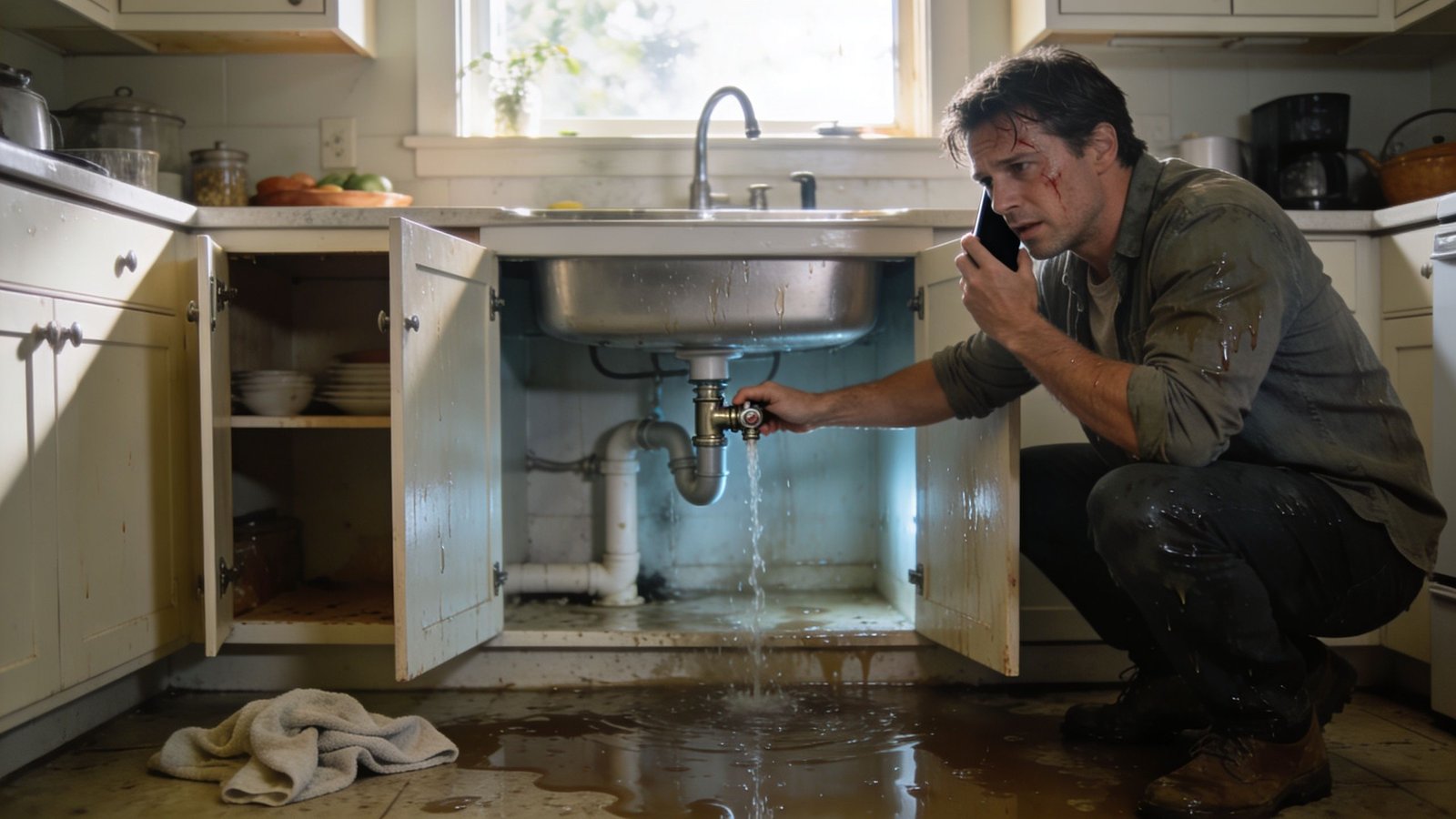
Stop the source if you can do it safely. Shut off the local fixture valve or the main water line. If there’s a fire event, follow fire department instructions and stay out until the space is safe to enter.
Avoid electrical and slip hazards. Don’t walk into standing water where outlets, power strips, appliances, or extension cords are involved. If the affected area is near electrical service, leave it alone until a qualified professional says it’s safe.
Protect people, pets, and critical items. Move occupants out of the wet or smoky area. Pick up medications, phones, wallets, laptops, and irreplaceable documents if you can reach them without risk.
After that, the next step is professional mitigation. The reason is simple. The first 24 to 48 hours are the window that determines whether moisture is contained or turns into microbial growth, and professional structural drying can cut the process from weeks to 3 to 5 days under IICRC-aligned water damage protocols.
Practical rule: Don’t wait to “see if it dries on its own” when water has reached drywall, cabinets, flooring, or insulation.
If you want a simple checklist to keep on hand, save this emergency response plan template for property damage. In a real emergency, a written sequence helps people slow down and make better decisions.
What Professional Property Restoration Really Means
Many homeowners think restoration means cleanup. Mops, fans, open windows, maybe a shop vacuum. That can help with surface water, but it doesn’t solve the underlying problem once moisture moves into cavities, under flooring, inside insulation, or behind cabinetry.
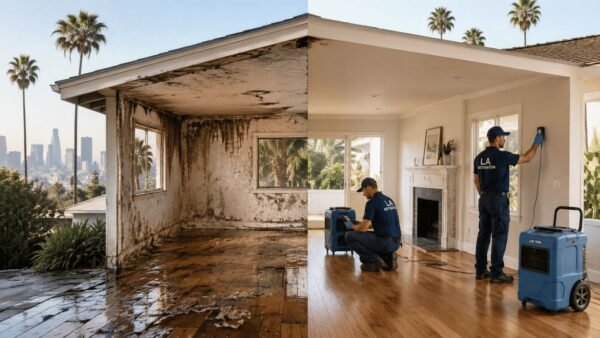
Professional restoration is a measurement-driven drying and contamination-control process. The crew isn’t guessing whether materials are dry enough to save. They’re checking conditions, mapping moisture, documenting what’s affected, and deciding what can be restored versus what needs removal.
Why DIY drying often falls short
Los Angeles homes make this tricky. Older plaster walls in neighborhoods like Hancock Park behave differently than newer drywall in Valley remodels. Engineered wood flooring, hardwood, baseboards, stone subfloors, and flat-roof leak paths all hold moisture differently. Surface dryness doesn’t tell you what’s happening below.
A homeowner usually sees:
- Visible water
- A damp smell
- Minor staining
- Warping at the edges
A restoration technician looks for:
- Hidden migration paths behind walls and under floors
- Secondary damage risk in absorbent materials
- Whether containment is needed to stop contamination spread
- What documentation an adjuster will require later
The science behind the process
Professionals use tools such as infrared cameras, hygrometers, moisture meters, air movers, dehumidifiers, and HEPA filtration depending on the loss. Drying isn’t just “blowing air around.” It’s about controlling the environment so wet materials release moisture safely and predictably.
That’s why certification matters. If you’re comparing companies, this guide on what IICRC certification means in restoration work gives a useful baseline. Certification doesn’t guarantee craftsmanship by itself, but it does tell you the company is working from recognized restoration standards instead of improvising on your property.
Open windows can help with odor perception. They don’t replace containment, drying verification, or contamination control.
What a proper scope should include
A real restoration scope should answer practical questions, not just promise “full service.”
| What should be identified | Why it matters |
|---|---|
| Source of loss | If the source isn’t stopped, damage continues |
| Affected materials | Determines what can be dried and what must be removed |
| Safety risks | Electrical, structural, soot, sewage, and air quality issues change the protocol |
| Drying or cleanup plan | Shows how the property will move toward pre-loss condition |
| Documentation approach | Supports communication with insurance and other stakeholders |
That’s the difference between a cleanup crew and a restoration company. One removes what you can see. The other addresses what the structure is still holding.
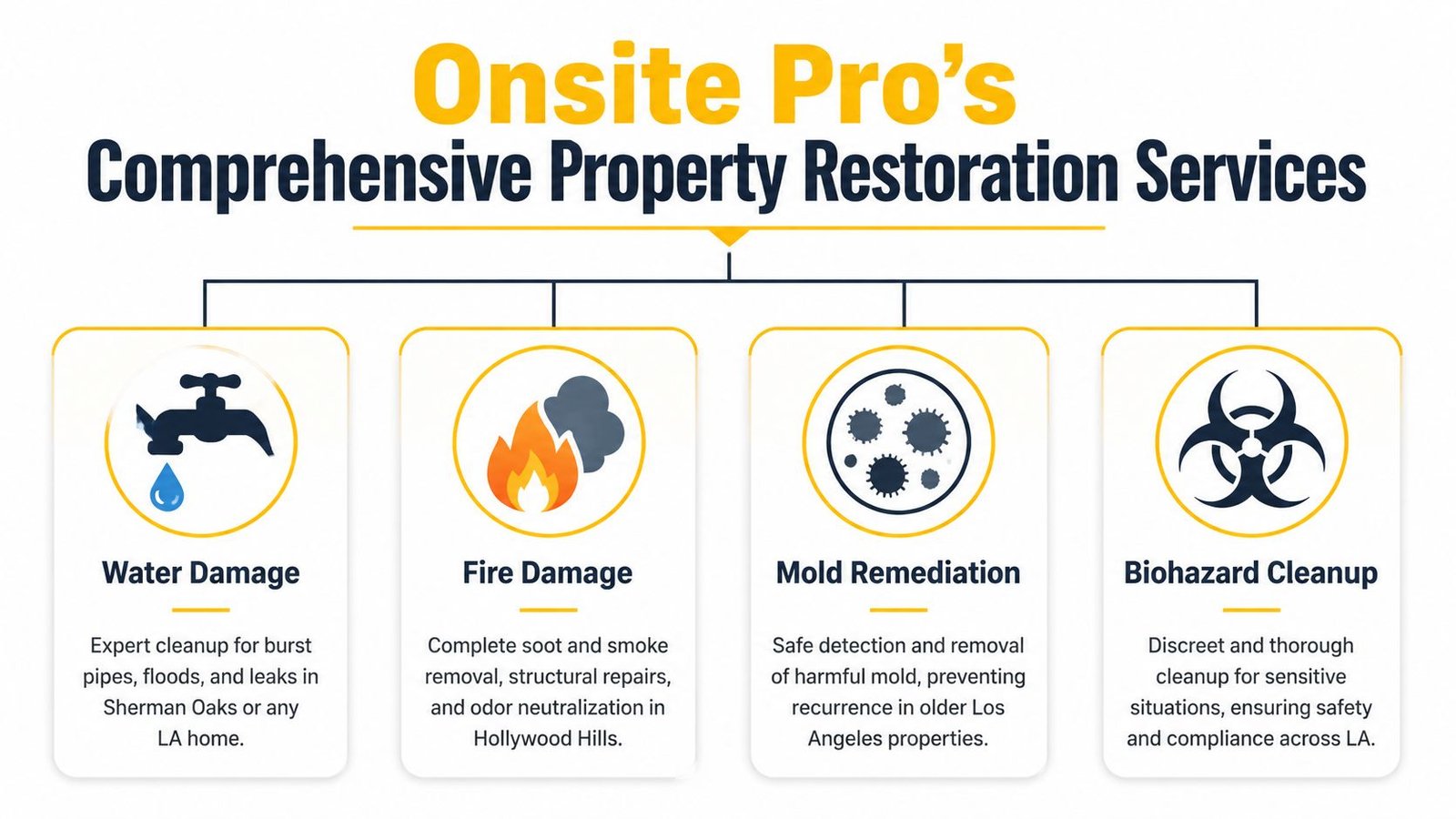
Navigating Water Fire Mold and Biohazard Scenarios
Different losses look similar at first. Wet drywall is wet drywall to a homeowner. In practice, the response changes sharply depending on whether the source was a supply line, smoke event, long-term humidity problem, or sewer backup.
Water damage in older Los Angeles homes
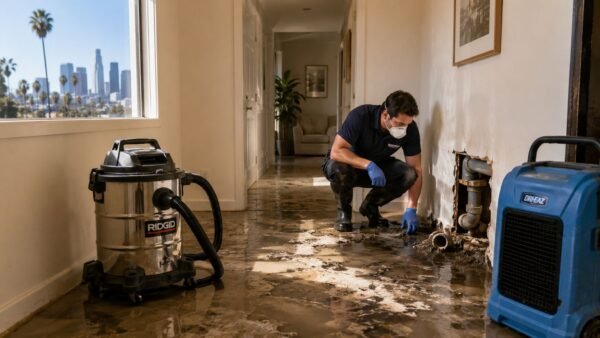
A burst pipe in Sherman Oaks or a failed angle stop under a bathroom sink often sends water into more places than people expect. It runs along framing, drops into lower ceilings, wicks up drywall, and settles under flooring. The first job is extraction. Then the team isolates the wet zones, removes unsalvageable materials if needed, and starts structural drying.
The target isn’t “looks dry.” The target is dry enough to restore safely.
That matters if hardwood was affected. In some cases, drying saves the floor. In others, boards cup, stain, separate, or transfer moisture into the subfloor and adjacent rooms. If the finish phase includes wood flooring decisions, this resource on professional floor repair after water damage is useful for understanding what restoration versus replacement can look like.
Fire and smoke damage in condos and hillside homes
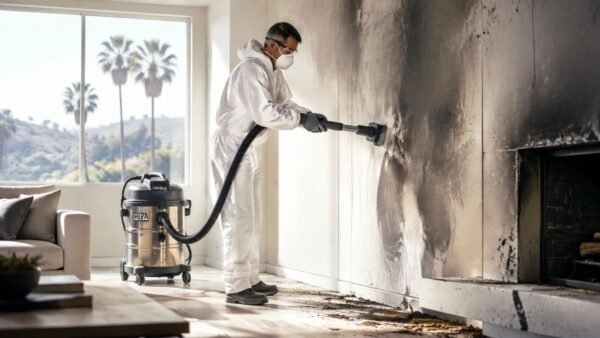
A kitchen fire in a West Hollywood condo may be contained quickly, but smoke doesn’t stay put. It migrates into cabinets, HVAC pathways, textured ceilings, soft goods, and painted surfaces. Soot type matters. Dry soot, oily residues, and protein smoke all behave differently, and the wrong cleaning method can smear residues deeper into finishes.
A proper fire restoration response usually includes:
- Stabilizing the site if firefighters opened walls, ceilings, or the roof
- Removing loose soot correctly before aggressive wiping damages surfaces
- Cleaning salvageable contents and structural materials
- Deodorization aimed at residue removal, not scent masking
What doesn’t work well is household all-purpose cleaner on every surface. That often spreads residue and makes final cleaning harder.
Smoke odor comes from particles and residues left behind. Fragrance products cover the smell for a while. They don’t remove the source.
Mold remediation after hidden moisture and coastal humidity
Mold jobs in Los Angeles often start with a slow leak, poor bathroom exhaust, a window intrusion, or a wall cavity that stayed wet after a smaller water event. Santa Monica and other coastal areas add another challenge because persistent humidity and marine air can keep materials from drying fully without intervention.
Homeowners often face issues using bleach, paint-over attempts, or tearing out contaminated material without containment. Professional mold remediation requires containment and HEPA filtration, and IICRC S520-based guidance calls for negative air machines during removal to prevent cross-contamination. That same guidance notes that post-flood mold colonies can expand 100 to 1,000 times in 48 hours when relative humidity is above 60%.
What proper mold work includes
- Isolation of the affected area so spores aren’t spread through the home
- HEPA air filtration during removal and cleanup
- Controlled demolition where drywall, insulation, or other porous materials can’t be restored
- Moisture correction so the same condition doesn’t come back
- Clear post-remediation decision making before rebuild starts
A remediator who starts tearing into drywall without containment is creating a second problem while trying to solve the first.
Biohazard cleanup after sewer backups and contaminated water
Sewer backups, toilet overflows involving waste, and contaminated standing water are not regular water losses. They’re sanitation events. The concern isn’t only what got wet. It’s where contamination spread, what porous materials were exposed, and whether the occupied space can be made safe.
The response usually involves:
- Restricting access immediately
- Removing contaminated porous materials
- Cleaning and disinfecting structural surfaces
- Drying the assembly
- Deodorizing once the contamination source is gone
In multifamily buildings and mixed-use properties, this work also has an occupancy and liability component. A sloppy response can spread contamination into hallways, adjacent units, or shared systems.
The Restoration Timeline From Call to Completion
The biggest fear after a loss is uncertainty. People don’t just want the house fixed. They want to know what happens next, when the noise stops, when they can use the room again, and whether the project is moving forward.
The first call and on-site assessment
The call should establish the source, the affected areas, immediate safety concerns, and whether active water or contamination is still present. On arrival, the team typically inspects the visible damage, checks for hidden migration, identifies what must be protected first, and lays out the initial scope.
A good early conversation sounds calm and specific. You should hear what they’re seeing, what they need to document, and what happens in the next few hours.
Mitigation and stabilization
This phase is about stopping further loss. For water, that means extraction, selective removal if necessary, equipment placement, and monitored drying. For fire or sewage, it can also mean containment, debris removal, air filtration, and sanitation.
According to the same water damage restoration guidance on professional drying timelines, properly managed drying often lands in the 3 to 5 day range when conditions and materials cooperate. Some losses move faster. Others don’t, especially when water has been sitting unseen or multiple assemblies are involved.
The timeline you should trust is the one tied to readings, condition changes, and written updates. Not the one based on optimism.
Clearance to repair and reconstruction
Once the property is dry, clean, and stable, the work shifts from mitigation to repair. That can mean drywall replacement, insulation, paint, trim, flooring decisions, cabinet work, or odor follow-up depending on the original loss.
A simple version of the sequence looks like this:
| Phase | What happens |
|---|---|
| Emergency response | Safety, containment, source control |
| Mitigation | Extraction, drying, cleaning, filtration |
| Verification | Readings, inspection, scope confirmation |
| Rebuild | Repairs and finish restoration |
The important thing to understand is that mitigation and reconstruction are related, but they’re not the same trade. Fast mitigation limits how much reconstruction you’ll need later.
Simplifying Your Insurance Claim for Property Damage
The insurance claim starts long before the adjuster arrives. It starts the minute the loss is discovered. In Los Angeles, I see the same problem over and over. Homeowners are focused on the mess in front of them, but the claim often turns on what was documented in the first few hours, what was said about the cause, and whether the mitigation work can be tied to visible conditions and job records.

Why documentation changes the outcome
Carriers usually want the same basic answers. What caused the damage. When did it happen. What materials were affected. What was done right away to prevent the loss from spreading.
That is why a solid restoration file matters. It should include photos taken before and during mitigation, moisture readings where water is involved, notes on affected materials, equipment logs when drying equipment is used, and an itemized scope that separates emergency mitigation from later repairs. Without that paper trail, a covered loss can turn into an argument about whether the work was necessary, delayed, or unrelated.
Policy language also makes cause matter. Standard HO-3 policies generally treat sudden and accidental water events differently from long-term seepage or neglect. Mold remediation is often limited or excluded unless it grew from a covered event, according to guidance on restoration-related policy exclusions. A small wording mistake from a stressed homeowner can shift that conversation in the wrong direction.
For example, “the pipe burst this morning and we shut the water off immediately” tells a very different story than “that stain has been there for a while.”
What helps a claim move with fewer disputes
The goal is simple. Give the carrier a clean timeline and support every mitigation decision with facts from the job.
- Document the cause early. If a supply line failed, roof leaked during a storm, or sewage backed up, record that while the conditions are fresh and visible.
- Keep mitigation and upgrades separate. Drying wet drywall is one issue. Choosing to remodel the room is another. Mixing those together creates avoidable pushback.
- Save condition records. Moisture maps, photos, containment notes, and disposal records help explain why materials had to be removed, cleaned, or dried.
- Report promptly. Delays raise predictable questions about secondary damage, especially with water intrusion in walls, cabinets, and flooring.
- Track every conversation. Write down claim numbers, adjuster names, call dates, and what was approved or discussed.
Roof-related losses often create the most confusion because the carrier may examine storm damage, deferred maintenance, and interior water damage as separate issues. If that is part of your loss, you can learn about roof replacement insurance to see how insurers usually evaluate cause, age, and repair versus replacement.
Why the right restoration partner matters to insurance
A good restoration company does more than dry the structure. It builds the file that supports the claim. That means organized photos, readable moisture documentation, a scope that matches the visible damage, and updates that an adjuster can review without guessing what happened on site.
That matters even more in Los Angeles properties with layered issues, such as older plumbing, shared walls, slab leaks, and roof systems that have been patched multiple times. The cleaner the documentation, the easier it is to show what belongs to this loss and what does not.
Homeowners who want a clearer picture of reporting, inspection, and settlement can review this step-by-step home insurance claim process after property damage before speaking with the carrier in detail.
How to Choose a Restoration Company in Los Angeles
At this stage, the immediate emergency is under control. Now the risk shifts. The wrong contractor can miss hidden moisture, blur the line between mitigation and repairs, or leave you with weak documentation when the adjuster starts asking for support. In Los Angeles, that happens more often in older homes, hillside properties, condos with shared assemblies, and buildings with a long history of patchwork repairs.

Required criteria
Use this checklist before you sign a work authorization.
- 24/7 live response. Water and smoke damage do not wait for business hours. You need a company that can dispatch, answer technical questions, and start containment or drying without delay.
- IICRC-certified technicians. Certification matters because the job has to follow recognized restoration standards, especially when drying, cleaning, or contamination control will later be reviewed by an adjuster or third-party consultant, as noted in this industry overview of restoration standards and fire loss costs.
- Clear separation between mitigation and rebuild. Homeowners should know who is doing emergency work, who is pricing repairs, and how approvals will be handled.
- Strong documentation habits. Good companies record moisture readings, equipment placement, photos, and daily progress in a format insurance carriers can follow.
- Local building experience. Los Angeles properties are not uniform. Lathe and plaster, crawlspaces, slab construction, flat roofs, shared walls, and tight urban access all affect how a loss should be handled.
That last point matters in practice. A crew that mainly works in newer suburban homes may overlook how moisture travels behind old plaster, under original hardwood, or through a duplex wall assembly.
Questions worth asking before authorizing work
Ask plain questions. Listen for specific answers.
| Ask this | What a strong answer sounds like |
|---|---|
| How do you determine what is wet or contaminated? | They mention meters, thermal imaging, inspection cuts when needed, and a written drying or cleanup plan |
| Will you give me a scope before additional work starts? | They explain what can be approved immediately, what may need change orders, and how they document hidden damage |
| How do you handle insurance communication? | They describe photos, readings, room-by-room notes, and direct updates tied to the claim |
| What happens if you find mold, asbestos concerns, or sewage impact? | They explain containment, testing or abatement referrals where required, and how the protocol changes |
A lot of homeowners also want a fast visual primer before they call around. This short video is a useful checkpoint.
Price matters, but scope matters more
Low bids often leave out the work that controls the loss. I see this on fire jobs where odor removal is priced lightly, on water losses where cabinets or insulation are assumed dry without testing, and on mold or sewage jobs where containment is treated like an add-on instead of part of the safety plan.
Ask what is included. Ask what is excluded. Ask how they will prove the structure is dry or clean enough to move to repairs.
If your home has finish materials that may be salvageable, ask that question early too. Hardwood is a common example. The decision to dry, refinish, replace, or phase the work depends on moisture levels, cupping, contamination, and how long the material stayed wet. This is also where specialized finish work such as UV-cure hardwood floor restoration may come into the conversation after the structure is stable.
If you are comparing local options, this roundup of what to look for in disaster restoration companies near you is a useful second filter after you verify licensing, certifications, and response process.
Your Next Step Toward Restoring Your Property
Property damage feels chaotic because everything happens at once. Safety, cleanup, moisture, odors, insurance, repairs, and daily life all collide. The way through it is to treat the event in order. Stop the source. Secure the area. Get the right people involved early. Document everything.
If your loss affects hardwood finishes or you’re thinking ahead to the cosmetic restoration stage after the structure is stable, it also helps to understand what specialized finish recovery can involve. This guide to UV-cure hardwood floor restoration is a good example of how the finish phase differs from emergency mitigation.
The key point is simple. Fast, professional action limits structural damage, lowers the chance of contamination spreading, and puts you in a better position when insurance starts asking questions.
Frequently Asked Questions About Property Restoration
What’s the difference between mitigation and reconstruction
Mitigation is the emergency phase. It stops further damage through extraction, drying, containment, sanitation, and cleanup. Reconstruction happens after the property is stable and can include drywall replacement, paint, trim, flooring, and other finish repairs.
Homeowners often expect those phases to blend together, but they shouldn’t. Repair decisions are more reliable once the structure is dry, clean, and fully inspected.
Can I stay in the house during restoration
Sometimes yes, sometimes no. A small isolated water loss may allow limited occupancy in unaffected rooms. Fire residue, mold containment zones, or sewer contamination change that answer quickly.
The right question isn’t convenience. It’s whether the occupied area can be kept safely separate from the work zone, noise, equipment, and air quality concerns.
If the loss involves contamination, assume access will be restricted until the site is evaluated properly.
How can I tell whether water damage is old or new
You can make observations, but you shouldn’t make coverage or safety decisions from appearance alone. Fresh damage may look wet and sharply defined. Older moisture problems often show staining rings, musty odor, softened drywall, rust at fasteners, or repeated paint failure.
Those clues are useful, but they aren’t a substitute for inspection. Hidden moisture often behaves differently than visible staining suggests.
Why do professionals check behind walls before rebuilding
Because visible dryness means very little if the wall cavity or subfloor still holds moisture. Mold can develop within 24 to 48 hours if humidity persists after water damage, and professionals use infrared cameras and hygrometers to detect hidden moisture and verify complete drying before reconstruction begins, according to this overview of post-water-loss drying and mold prevention.
Rebuilding too early traps the problem inside the assembly. That usually leads to odor, material failure, or mold returning behind the finished surface.
Should I throw away wet contents immediately
Not always. Some contents can be cleaned, dried, or documented for evaluation before you discard them. But don’t leave wet textiles, cardboard, rugs, or upholstered items piled in place while you decide. Those materials hold moisture and can worsen odor and contamination.
If the source involved sewage or heavy contamination, be much more cautious. Porous items exposed to contaminated water often aren’t good candidates for simple DIY salvage.
If you need immediate help, contact Onsite Pro Restoration. They’re licensed, IICRC-certified, available 24/7 in Los Angeles, and can guide you from emergency response through documentation and restoration. Call (818) 336-1800 or use the contact form on their website to take control of the situation now.