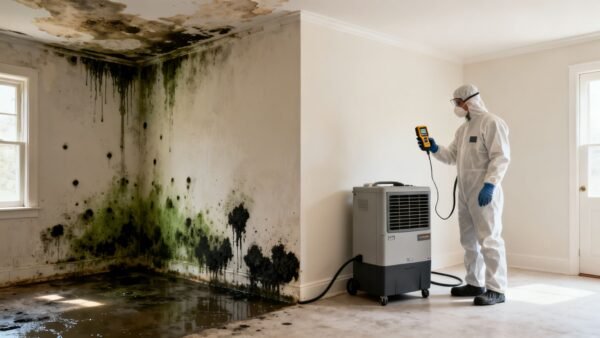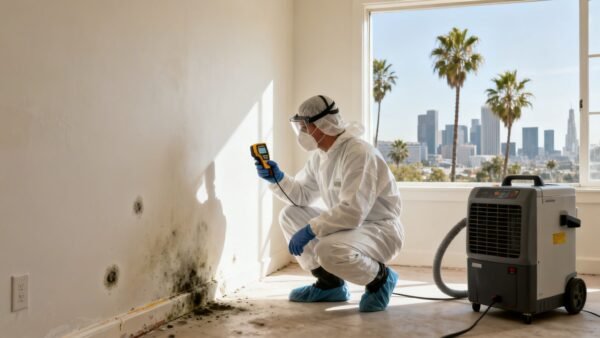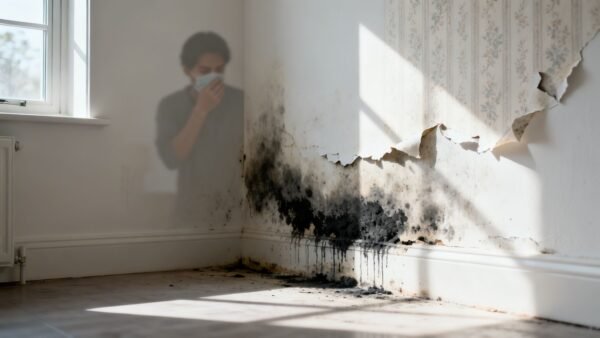

Finding mold in your Los Angeles home can be alarming. It’s not just an unsightly stain; it’s a potential threat to your property's structure and your family's health. Ignoring a musty smell from a flat-roof leak in Sherman Oaks or discoloration from coastal fog in Santa Monica is a mistake. What begins as a small issue can rapidly escalate, leading to widespread contamination, decreased property value, and significant health risks. Professional mold testing and removal is the only definitive way to understand the scope of the problem and ensure your home is safe.
This guide will walk you through the essential steps, from identifying hidden signs of mold to choosing a qualified remediation company in the Los Angeles area.
Get a Free Mold Inspection in Los Angeles
The Hidden Dangers of Indoor Mold
That faint, earthy smell in your garage or the slightly peeling paint near a window might seem minor. But in our experience serving Los Angeles homeowners, these are often the first clues to a much bigger problem festering behind your walls. Professional mold testing and removal isn’t just another expense; it’s a proactive investment in your property and the well-being of everyone inside.
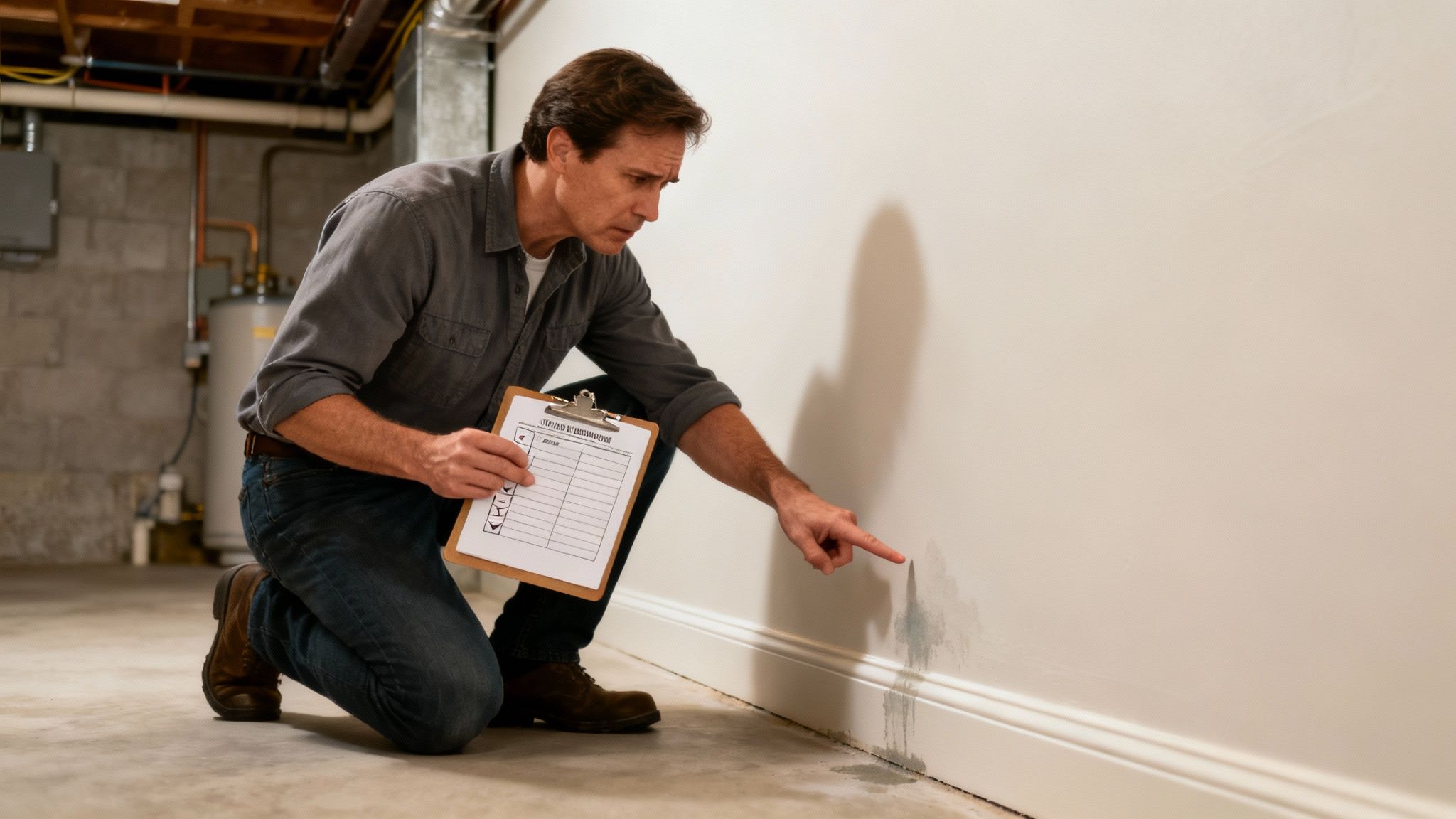
Tackling mold is about more than aesthetics. It's about preventing long-term consequences that can be both costly and dangerous.
- Protecting Your Property Value: Unchecked mold consumes building materials. It can rot wooden studs, degrade drywall, and even compromise your home's foundation. A documented, professional remediation helps preserve—and often restore—your property’s market value, a crucial factor in the competitive Los Angeles real estate market.
- Ensuring Your Family's Health: For many people, especially children and the elderly, mold exposure is a serious health concern. It can trigger allergies, asthma attacks, and a range of respiratory problems. Complete removal is the only way to guarantee healthy indoor air quality.
- Preventing Future Damage: A proper remediation project doesn't just clean the mold; it identifies and rectifies the underlying moisture source. This crucial step stops the cycle of regrowth and prevents far more expensive structural repairs down the line.
Awareness of these risks is growing. The global mold remediation service market was valued at USD 1,234.6 million in 2023 and is projected to reach nearly USD 1,516.8 million by 2030, driven by a greater understanding of mold-related health issues.
Key Takeaway: Stop viewing mold remediation as a cost. See it as a necessary investment in your property's health, safety, and financial security.
This principle of prevention also applies to your valued possessions. Just as you'd use proper photo album storage to protect memories from humidity, you should apply that same proactive mindset to your entire home.
How to Tell If You Need Professional Mold Testing
Spotting mold isn't always as simple as finding a patch of black spots. Often, the most serious issues reveal themselves in subtle ways that are easy to dismiss. Recognizing these early warnings is your first line of defense, signaling that it’s time to call for professional mold testing and removal services.
The most common—and most frequently ignored—sign is a persistent, musty odor. If you repeatedly smell something earthy or damp, especially in a specific area like under a sink, in a closet, or near an HVAC vent, it's a major red flag. This odor is caused by Microbial Volatile Organic Compounds (MVOCs), which are gases released by active mold colonies. Don't just mask it with an air freshener; treat it as a serious clue.
This growing concern for indoor air quality has fueled industry growth. The global mould detection service market grew from USD 1.2 billion in 2023 and is projected to hit USD 2.3 billion by 2032. This shows that homeowners are finally understanding the health hazards. You can read the full research about mould detection market trends to learn more.
Visual Clues That Point to Deeper Issues
Beyond smell, your eyes can detect signs of hidden moisture—the fuel mold needs to thrive. Pay close attention to seemingly minor cosmetic flaws, as they often indicate trouble brewing within your walls, floors, or ceilings.
- Warped or Stained Baseboards: Wood and MDF baseboards absorb moisture readily. If you see them pulling away from the wall, bubbling, or discolored, it’s a strong indicator of a leak or high humidity at the floor level.
- Peeling or Bubbling Paint and Wallpaper: Paint and wallpaper require a dry surface. When moisture penetrates the drywall behind them, it causes the surface layers to blister and peel. This is extremely common in bathrooms, kitchens, and areas with poor ventilation.
- Recurring Condensation: While some window condensation is normal, persistent moisture on walls or windows (especially outside the bathroom) indicates that your home’s humidity is too high, creating an ideal breeding ground for mold.
These visual signs are often just the tip of the iceberg. What you can't see is frequently more dangerous, which is why understanding the risks of hidden mold behind walls is so critical for any homeowner.
The disconnect between what is visible and what might be happening is a significant risk. A small, seemingly harmless spot can mask a much larger contamination problem. This table breaks down what those surface-level signs could really mean.
Visible Signs vs. Hidden Dangers of Mold
| Observable Sign | What It Could Mean in Your LA Home | Recommended Action |
|---|---|---|
| Musty Smell | Active mold growth is releasing MVOCs, likely from a hidden source like a leaky pipe or poor ventilation. | Pinpoint the area with the strongest odor, then call for a professional inspection with air quality testing. |
| Peeling Wallpaper | Moisture is trapped in the drywall, creating a hidden breeding ground for mold. | Do not simply repaint. A professional should use a moisture meter to assess the wall cavity before any action is taken. |
| Water Stains | An active or past leak has saturated building materials, compromising their structural integrity. | Identify and fix the leak source immediately. The stained area requires professional drying and mold testing. |
| Warped Baseboards | Water is wicking up from the floor or from behind the wall, a common issue in homes with slab foundations. | This is a high-priority sign. It often points to a slab leak or foundation issue requiring immediate inspection. |
These are not just cosmetic flaws; they are warnings. Ignoring them allows hidden problems to worsen, leading to more extensive and costly remediation.
Expert Insight: Any unexplained stain on your drywall that feels soft, damp, or cool to the touch requires immediate attention. Even without visible mold, the conditions are perfect for growth.
When to Suspect Mold After a Water Incident
Any history of water damage—no matter how minor it seemed—should put you on high alert. A slow-dripping pipe, a minor roof leak after a storm, or an overflowed bathtub can all leave behind enough moisture for a mold colony to start.
The rule of thumb in the restoration industry is this: if an area wasn't professionally dried within 24-48 hours, you must assume mold growth is not just possible, but probable. The longer moisture sits, the greater the risk, making a professional inspection a non-negotiable step to ensure your home is truly dry and safe.
Book Mold Testing for Your Property
The Professional Mold Removal Process Unpacked
So, a professional inspection confirmed you have a mold problem. What happens next is a highly controlled process called remediation. This is a far cry from a simple cleanup; it’s a meticulous, multi-stage operation designed to get rid of the contamination for good and make sure it doesn’t come back. Effective mold removal is a science, where every single step is deliberate and follows strict industry protocols.
The first thing a professional team does is set up containment. You absolutely cannot just start ripping out drywall. Doing that would launch millions of microscopic spores into the air, turning a contained issue into a whole-house nightmare. Instead, technicians build a sealed-off zone around the moldy area using thick plastic sheeting and specialized tape.
Establishing a Safe Work Zone
To keep every last spore locked inside this zone, the crew establishes negative air pressure. They use a powerful, HEPA-filtered fan that blows air out of the contained area, usually through a window. This constant outward airflow creates a vacuum effect, acting like a one-way door that prevents any contaminated air from drifting into the rest of your home while they work.
Inside this controlled bubble, the real removal work begins. Non-porous materials like metal or glass can usually be cleaned and saved. Porous materials, however, are a different story.
- Drywall and Insulation: These are like sponges for moisture and mold roots. They have to go. Technicians carefully cut them out, bag them up, and haul them away.
- Contaminated Wood Studs: If mold is growing on the framing, it has to be physically removed. This is often done by wire brushing, sanding, or media blasting (using something like dry ice) to strip the contamination off the surface.
Expert Insight: Proper containment is the single biggest thing that separates professional remediation from a DIY job. Skip this step, and you’re practically guaranteed to spread the problem, making things much, much worse.
Cleaning, Sanitizing, and Final Clearance
Once the contaminated materials are gone, the job is far from over. The entire contained area, including any remaining structural wood, has to be deep-cleaned and sanitized. It all starts with a thorough HEPA vacuuming. Unlike your shop vac, a HEPA (High-Efficiency Particulate Air) filter is fine enough to actually capture tiny mold spores instead of just blowing them around.
After vacuuming, an EPA-registered antimicrobial agent is applied to all surfaces inside the containment zone. This is a critical step that kills off any straggling mold and helps stop it from growing back. This systematic approach ensures no corner is missed. To see exactly what this entails, you can learn about our comprehensive mold remediation service.
The infographic below shows the kind of testing that helps us build such a detailed remediation plan in the first place.
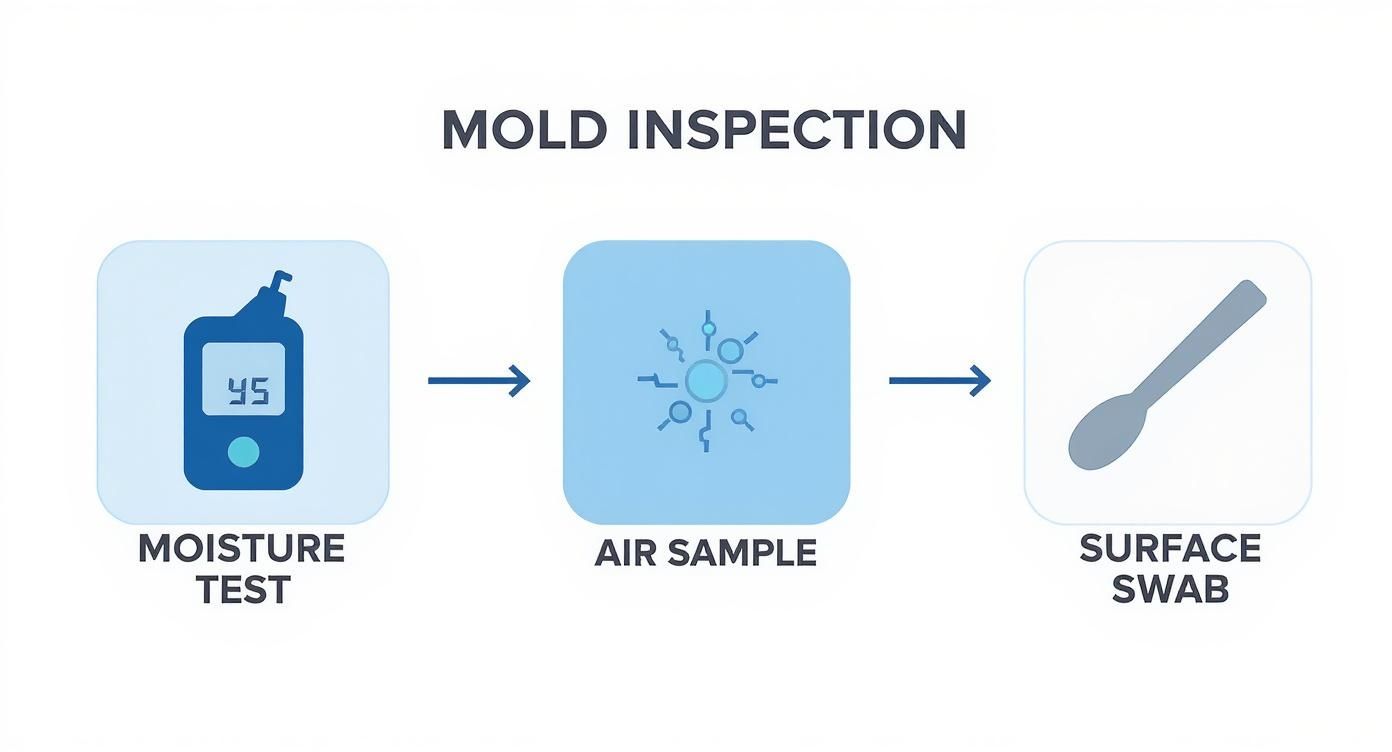
This scientific, multi-pronged testing is what gives us the data needed to create a targeted and effective removal strategy.
Finally, large HEPA filtration units called "air scrubbers" are left running inside the contained area for at least 24 to 48 hours. These machines just cycle the air over and over, catching any spores that might still be floating around. Only after this step—and usually after a final air test comes back clean—is the containment taken down. This is the only way to truly hit the reset button and get your home back to a healthy state.
Choosing the Right Los Angeles Mold Removal Company
Hiring a professional for mold testing and removal is a critical decision. The right company restores your home to a safe, healthy state. The wrong one can make the problem ten times worse by spreading spores and leaving you with a bigger, more expensive mess. Your goal is to find a qualified, transparent partner who is an expert in local conditions.
First Things First: Verify Their Credentials and Insurance
This is the absolute baseline and a non-negotiable step. Don't even consider a company that cannot provide these documents.
- Look for IICRC Certification: The Institute of Inspection, Cleaning and Restoration Certification (IICRC) is the gold standard in this industry. It proves that technicians have been trained on the latest, safest protocols for mold remediation. No IICRC certification? It's a hard pass.
- Insist on Proper Insurance: Ask for their certificate of insurance. You need to verify two things: general liability and, more importantly, pollution liability insurance. The second one is critical—it specifically covers issues related to contaminants like mold. A company operating without it is taking a massive risk, and so are you.
These credentials aren't just for show. They are your assurance that the team understands the science behind safely and effectively removing mold from your home.
Watch Out for the Conflict of Interest
This is one of the biggest traps homeowners fall into: hiring one company to perform the initial mold testing and the removal work. This creates a significant conflict of interest.
Think about it: if a company's main profit comes from the remediation project, they have an incentive to find a "major" mold problem, whether it's truly there or not.
Expert Insight: Always hire an independent, third-party inspector for your initial assessment and for the final clearance testing after the work is done. Their job is to give you unbiased, factual data. With that report in hand, you can hire a separate remediation company and then bring the inspector back to verify the job was done right.
This two-step approach keeps everyone honest. The scope of work is based on objective lab results, not a sales pitch, protecting you from overpaying for unnecessary work.
Break Down the Remediation Estimate
A legitimate estimate is more than just a price. It should be a detailed plan of action. A trustworthy quote will clearly outline every single step, from setting up containment to the specific cleaning methods they'll use.
If the estimate is vague or the contractor becomes evasive when you ask for details about their process, walk away.
Here's what should be clearly defined:
- The type of containment to be built (e.g., negative air pressure chambers).
- Their exact methods for removing contaminated materials.
- The specific EPA-registered antimicrobial agents they plan to use.
- Confirmation that they require post-remediation verification (clearance testing) to prove the job is complete.
Finding reputable, pre-vetted professionals is key. A great place to start is by reviewing a list of qualified local mold removal contractors to see who serves the Los Angeles area. Taking time to make an informed choice now will save you from serious headaches and expenses later.
FAQs About Mold Testing and Removal in Los Angeles
Q: How long does the mold remediation process typically take?
A: The timeline depends entirely on the scope of the problem. A small, contained issue in a single bathroom might take 1-3 days. However, a more extensive problem, like mold in a basement or crawlspace after a leak, could take a week or more. The process involves containment, removal of materials, cleaning, sanitizing, and final air clearance testing, and none of these steps can be rushed. A professional company will give you a realistic timeline after the initial inspection.
Q: Is it safe to stay in my house during mold removal?
A: For a minor job isolated to one room, it's usually safe to stay, as the work area will be completely sealed off under negative air pressure to prevent cross-contamination. However, if the mold is widespread, affects multiple rooms, or has entered your HVAC system, we strongly recommend that you and your pets temporarily relocate to ensure you are not exposed to airborne spores during the removal process.
Q: Can I just use bleach to clean the mold myself?
A: While bleach can kill surface mold on non-porous materials like tile, it is ineffective on porous surfaces like drywall or wood. The roots of the mold, called hyphae, grow deep into these materials. Bleach, being mostly water, can actually feed the underlying mold. Furthermore, DIY removal without proper containment can spread millions of spores throughout your home, making the problem much worse.
Q: Does homeowners insurance cover mold testing and removal in California?
A: It depends on the source of the moisture. Most standard California homeowners insurance policies will cover mold removal if it’s the result of a "covered peril," such as a burst pipe. However, they typically exclude mold caused by long-term issues like persistent humidity, slow leaks, or flooding (which requires separate flood insurance). Always review your policy and consult with your insurance agent.
Q: What is the difference between mold testing and a mold inspection?
A: A mold inspection is a visual assessment to find signs of mold and moisture issues. A professional uses tools like moisture meters and thermal cameras. Mold testing involves taking physical samples (air or surface swabs) and sending them to a lab to identify the type and concentration of mold spores. A comprehensive assessment usually includes both an inspection and testing to create a complete picture of the situation.
Ready to get clear answers and a professional assessment of your property? The team at Onsite Pro Restoration is available 24/7 to provide a free inspection and a detailed plan to make your home safe again. Don't wait for the problem to get worse—book your free mold inspection now!