
That moment of dread when you spot a strange discoloration on your carpet—is it just a spilled drink, or is it something much worse? For Los Angeles homeowners, discovering mold on carpet is a serious red flag. It’s almost never just a surface issue; it’s a warning sign of a much bigger problem lurking in the padding and subfloor beneath. Ignoring it allows the problem to spread, leading to far more expensive repairs and potential health risks.
This guide breaks down how to identify mold, the risks it poses to your LA home, and the professional steps required for safe and permanent removal.
The Hidden Dangers of Indoor Mold on Carpet
Visible mold is truly just the tip of the iceberg. What you can see on the carpet fibers is a sign that a fungal colony has already taken root, feeding on the organic materials in your carpet, its backing, and the spongy padding below.
Think of it like a weed in your garden. You can pull the top off, but the roots are still there, ready to grow back. Surface cleaning mold on a carpet is the same—it does little to solve the real problem.
The real danger with mold on carpet is how it thrives out of sight. Carpet padding acts like a giant sponge, trapping moisture from spills, leaks, or even the persistent coastal humidity we get here in areas like Santa Monica. This creates the perfect breeding ground: dark, damp, and warm. Mold spores, which are always in the air, find this environment and a feast begins.
For those of us in Los Angeles, a few common scenarios are repeat offenders:
- Slab Leaks in Older Homes: So many mid-century homes in the San Fernando Valley were built on concrete slabs. A tiny, hidden plumbing leak can slowly saturate the subfloor, wicking moisture right up into your carpet from below.
- High Humidity and Poor Ventilation: Our famous "June Gloom" isn't just a mood—it drives up indoor humidity. Without great airflow, carpets in coastal homes from Malibu to Long Beach can feel constantly damp, creating an open invitation for mold.
- Appliance Malfunctions: A leaking dishwasher in a Beverly Hills condo or an overflowing washing machine in a new build can soak flooring in an instant. All mold needs is 24-48 hours of moisture to flourish.
Understanding these risks is the first step. Mold isn't just an ugly stain or a musty smell. It’s a symptom of an underlying moisture issue that can compromise your home’s structure and your family's health. It's also critical to know where you stand with your policy, so be sure to read our guide on whether homeowners insurance covers mold.
Key Takeaway: Carpet mold is not a cleaning issue you can solve with a store-bought spray. It's a clear signal of a deeper moisture problem that demands a professional game plan to find the source, remove the contamination safely, and make sure it never comes back.
How to Identify Mold Growth on Your Carpet
Finding mold on carpet isn't always as straightforward as spotting a giant, discolored patch. Long before you see a visible colony, your home usually sends out subtle clues that a problem is brewing under the surface. Learning to pick up on these early warnings is the single best way to keep a small moisture issue from turning into a massive remediation project.
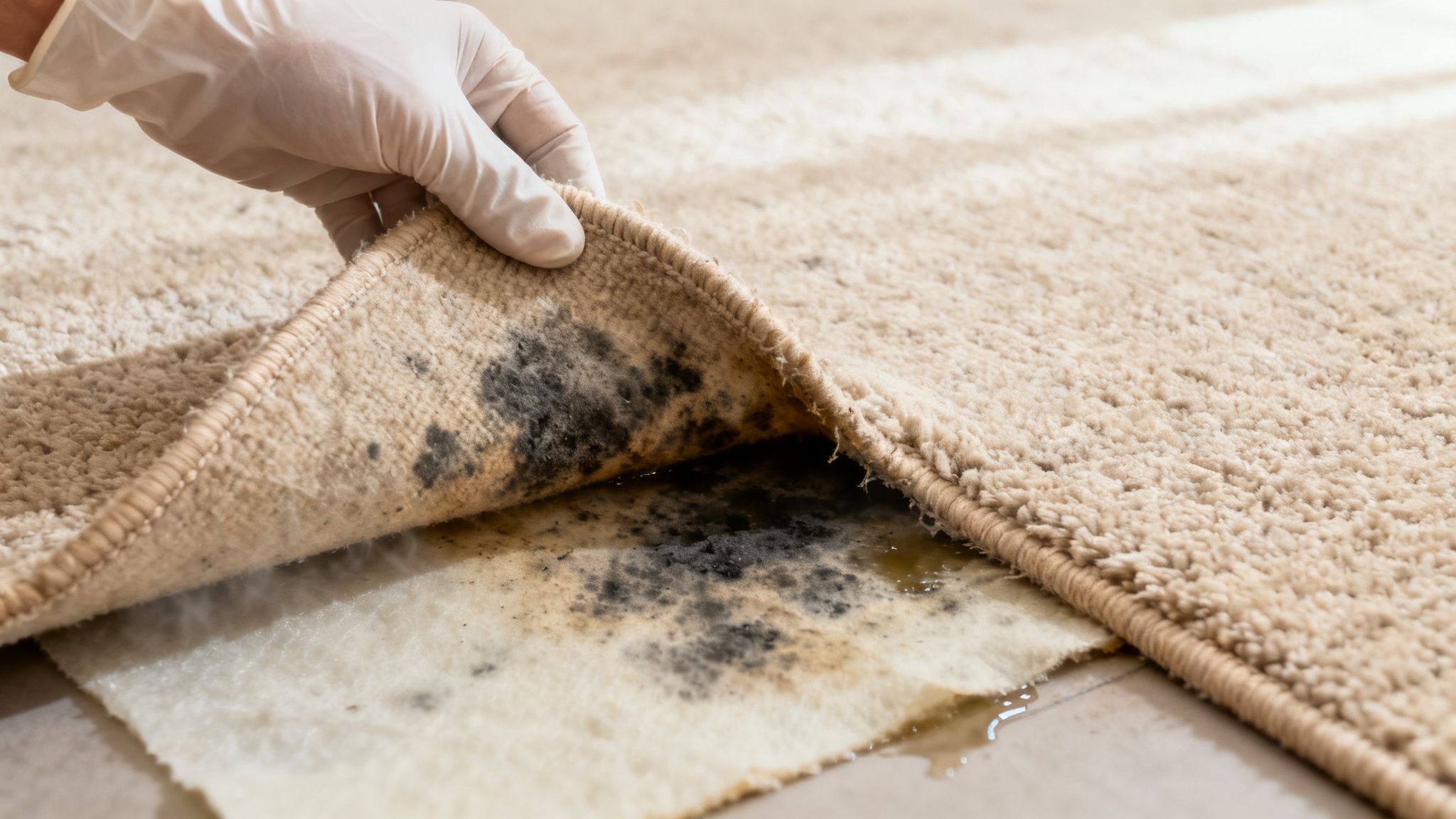
Mold almost always gets its start in the dark, damp space between the carpet padding and the subfloor, completely hidden from sight. By the time it breaks through to the surface, the infestation is usually well-established.
Trust Your Senses: A Musty Odor Is a Major Clue
Your nose is one of the best tools you have for detecting hidden mold. A persistent musty or earthy smell—often described as being like damp soil or old books—is a dead giveaway for microbial growth.
This unique odor comes from microbial volatile organic compounds (MVOCs), which are gases mold releases as it grows and feeds. If that smell is stronger in one particular spot, like a corner in a Sherman Oaks bedroom, you're probably zeroing in on the source.
Never write off a musty odor as just "old house smell." It's an active signal that something is wrong. And while you're focused on the carpet, it helps to understand a broader list of critical home inspection points, as other moisture issues can easily contribute to the problem.
Look for Visual and Textural Changes
Even without the classic black or green spots, other visual cues can point to a mold problem. You have to keep an eye out for subtle shifts in how your carpet looks and feels.
Key Visual and Physical Indicators:
- Discoloration: Look for faint shades of green, black, brown, or even patches of white fuzz. Mold sometimes shows up as a slimy film or a powdery texture on the carpet fibers.
- Persistent Dampness: If a section of your carpet feels mysteriously damp or cool and just never seems to dry out completely, that’s a red flag for trapped moisture. We see this a lot with carpets laid directly on concrete slabs.
- Brittleness or Deterioration: In more advanced stages, mold will actually eat away at the carpet's backing and fibers. This causes them to become brittle, frail, and easy to pull apart.
- Unexplained Allergy Flare-Ups: Are your allergies or asthma suddenly acting up inside your home for no reason? Mold spores are powerful allergens. A spike in sneezing, coughing, itchy eyes, or other respiratory issues can be your body reacting to airborne mold.
Is It Mold, Mildew, or Just a Stain?
It's easy to mistake a simple spill for a more serious fungal issue. While mildew is a type of surface mold, a true mold infestation goes much deeper, penetrating the padding and the subfloor.
Here's a quick way to tell the difference.
| Characteristic | Stain | Mildew | Mold |
|---|---|---|---|
| Appearance | A flat discoloration from a spill. | A powdery, surface-level growth, usually gray or white. | Fuzzy or slimy in texture, often green, black, or brown. |
| Penetration | Sits on top of the carpet fibers. | Stays on the surface of the carpet. | Grows deep into the carpet, padding, and subfloor. |
| Odor | Usually no smell unless it's a recent spill. | A mild, musty odor. | A strong, persistent earthy or musty smell. |
| Removal | Can often be removed with standard carpet cleaner. | Can sometimes be cleaned from the surface. | Cannot be removed by surface cleaning; requires professional remediation. |
Knowing these distinctions helps you gauge the severity of the problem. A simple stain is a DIY job, but if you're looking at signs of deep-seated mold, it's time to call in a professional.
CRITICAL WARNING: Never try to rip out or aggressively scrub a carpet you suspect has mold. Doing so can disturb the colony and release millions of spores into the air. This will contaminate your home's HVAC system and spread the problem everywhere. If you've spotted these signs, the safest next step is a professional inspection. For a deeper dive into how we find hidden moisture, check out our guide on how to read moisture meter readings.
Health Risks and Structural Threats of Carpet Mold
Ignoring mold on carpet is a mistake many homeowners make. They see a small stain or smell a musty odor and figure it’s just a cosmetic problem. In reality, that visible sign is often the tip of the iceberg, signaling much deeper issues that can threaten your family’s health and your home's structural integrity.
Think of a mold colony as a tiny, relentless factory. Its one job is to grow and reproduce, and it does this by releasing microscopic spores into the air. These spores are so small and light they get picked up by the slightest air current and are easily inhaled. According to the Centers for Disease Control and Prevention (CDC), these airborne particles are powerful allergens and irritants. For many, they trigger persistent health issues that seem to appear out of nowhere.
The Impact on Your Family's Health
When mold spores begin circulating through your home's HVAC system and living spaces, they can set off a wide range of allergic reactions and respiratory problems. This is especially dangerous for the most vulnerable members of your household—children, the elderly, and anyone with a compromised immune system.
Common Health Symptoms Linked to Mold Exposure:
- Persistent Coughing and Wheezing: A constant tickle in your throat or a shortness of breath that seems to get worse whenever you're inside.
- Asthma Attacks: Mold is a well-known trigger that can lead to more frequent and severe asthma flare-ups.
- Nasal Congestion: That frustrating feeling of a head cold that just won't go away, complete with a stuffy or runny nose.
- Skin and Eye Irritation: Unexplained itchy eyes, watery discharge, or skin rashes are all common signs of a sensitivity to mold.
If that moldy carpet is in a bedroom, you're breathing in those harmful spores for hours every single night. That kind of prolonged exposure dramatically increases the risk of developing more serious respiratory conditions over time.
The Hidden Damage to Your Home's Structure
As alarming as the health risks are, the structural threat from mold on carpet is equally destructive. Mold isn’t just sitting there; it's a living organism whose sole purpose is to decompose organic material. Unfortunately, your home is filled with its favorite foods.
A visible mold problem on your carpet is a clear sign that an underlying moisture issue has been active for some time. The real danger lies in what that moisture is doing to the hidden parts of your home that you can't see.
Mold doesn’t just live on surfaces—it eats them. It will consume the jute backing of your carpet, break down the adhesives holding it in place, and, most critically, begin to rot the wooden subfloor underneath.
Imagine a common scenario for a Los Angeles home: a slow, unnoticed leak from a faulty pipe inside a wall. Water trickles down the framing and pools under the carpet in the corner of a room. For months, the only clue might be a faint, musty smell. But beneath the surface, mold is feasting on the plywood subfloor, causing it to soften, rot, and lose its strength.
By the time the mold on carpet finally becomes visible, the subfloor could already be dangerously compromised. What might have been a straightforward remediation job has now turned into a major structural repair project.
Ultimately, dealing with carpet mold isn't just about cleaning a stain. It’s about protecting your two most important assets: your family's health and the very foundation of your home.
Why Los Angeles Homes Are Prone to Carpet Mold
It seems strange, right? Los Angeles is all about sunshine and warm weather, not the damp, dreary conditions you’d associate with mold. And yet, mold on carpet is a problem we see in homes here all the time. The truth is, Southern California’s unique climate and common building styles create a perfect storm, turning otherwise comfortable homes into ideal incubators for fungus.
It often starts with our coastal climate. We don't get constant rain, but the marine layer rolls in, bringing persistent humidity—especially during "May Gray" and "June Gloom." That moist air seeps into our homes, and without great ventilation, it gets trapped. Porous materials like drywall, furniture, and especially carpets just soak it all up.
The Problem with Local Architecture
So many homes across the Los Angeles area, particularly the post-war builds you see from Sherman Oaks to Lakewood, sit on concrete slab foundations. It was an efficient way to build, but it comes with a major vulnerability: slab leaks.
A tiny, pinhole-sized leak in a water pipe running under that concrete can go completely unnoticed for months, even years. Water slowly escapes, saturates the slab, and then wicks straight up into the carpet padding and fibers above it. What you get is a constant source of dampness in a dark, hidden space—exactly what mold needs to explode.
How Carpets Contribute to the Problem
The carpeting itself is the final piece of the puzzle. Carpet and its padding act like a giant sponge, trapping not only moisture but also organic food for mold—dust, skin cells, and pet dander.
This problem gets bigger when you consider how popular wall-to-wall carpeting is. The global market for carpets and rugs is huge, valued at roughly USD 55.87 billion, and it's still growing, with North America leading the way. That trend means more homes are covered in vast surfaces of porous, moisture-trapping material, which ramps up the risk of a widespread mold problem. You can read more about the growth of the carpet and rug market and see just how common this is.
Key Insight: The combination of Southern California's coastal humidity, common architectural flaws like slab leaks, and the absorbent nature of wall-to-wall carpeting creates a unique triple threat for Los Angeles homeowners.
This convergence of factors means that even a small, seemingly minor issue can set off a major mold outbreak.
Common Triggers for Carpet Mold in LA Homes:
- Slow Appliance Leaks: A dishwasher or refrigerator ice line with a slow drip can saturate the subfloor and carpet over a long period before anyone notices.
- Window Condensation: Single-pane windows, common in older homes, often "sweat" with temperature changes. That moisture drips right down onto the carpet below.
- Poor Bathroom Ventilation: Steam from a hot shower easily escapes and settles into hallway carpets, creating a chronic moisture spot.
Since LA homes are so susceptible to humidity, knowing the best flooring for humid climates can be a game-changer, especially if you're replacing flooring that’s already been damaged by mold. Ultimately, the very things we love about our homes—soft carpets and a cool coastal breeze—can conspire to create a serious mold on carpet issue if you’re not careful.
Our Step-by-Step Professional Mold Remediation Process
When you find mold on carpet, reaching for household cleaners just isn't going to solve the problem. Real, effective remediation is a careful, multi-step process that puts safety and total removal first. Our IICRC-certified technicians stick to a strict protocol that’s designed to get rid of the mold for good, fix the moisture issue that caused it, and get your home’s air quality back to where it should be.
Trying to rip out a moldy carpet yourself is a huge risk. The moment you disturb that colony, you send a cloud of microscopic spores into the air. Those spores can get sucked into your HVAC system and spread all over your house, turning one contained problem into a massive, home-wide contamination. Professional remediation isn't just about cleaning; it's about containment.
Step 1: Detailed Inspection and Assessment
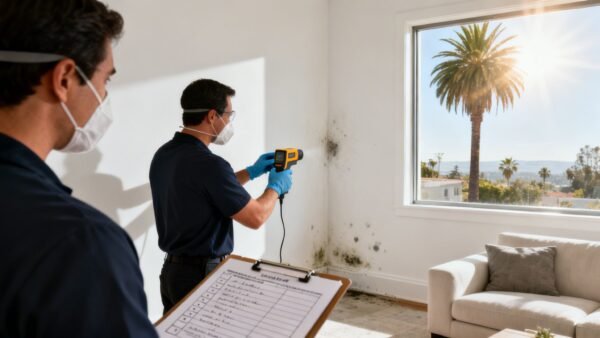
First things first, we need to understand exactly what we're dealing with. Our team shows up ready to conduct a thorough visual inspection, but we don't just rely on our eyes. We use advanced tools like moisture meters and thermal imaging cameras to see what's hidden from view—like moisture trapped under the subfloor, behind your baseboards, or inside the walls.
This assessment is like creating a map of the damage. It shows us how far the water and mold have spread and, most importantly, helps us pinpoint the source of the moisture. Whether it’s a slow slab leak, a burst pipe, or just high humidity, finding and fixing the source is the only way to make sure the mold doesn't come right back.
Step 2: Containment and Air Filtration
Before we touch a single contaminated thing, we set up a secure containment zone. Think of it as a quarantine for the affected area. We use heavy-duty plastic sheeting to seal it off from the rest of your home and then create negative air pressure with specialized machines.
A negative air pressure environment works like a one-way valve. It makes sure that any airborne particles—especially mold spores—are sucked into powerful HEPA air scrubbers instead of drifting into other rooms. This is an absolutely non-negotiable step for safe and effective mold removal.
This critical step keeps the contamination locked down, protecting your family and preventing a small problem from getting much bigger during the cleanup.
Step 3: Safe Removal of Contaminated Materials
With the area fully contained, we can begin the careful work of removing the mold on carpet. In almost every single case, carpet and padding with mold growth are a lost cause. They’re so porous that it's impossible to guarantee we've removed every last spore, so they have to go.
Our technicians gear up in full personal protective equipment (PPE) before carefully cutting, bagging, and removing the affected carpet and pad. We do this methodically to minimize kicking up spores. All the contaminated materials are sealed tight in heavy-duty bags before they're carried out of your home for proper disposal.
The infographic below shows how common issues here in Los Angeles, like humidity and hidden leaks, create the perfect storm for mold to take over absorbent materials like carpet.
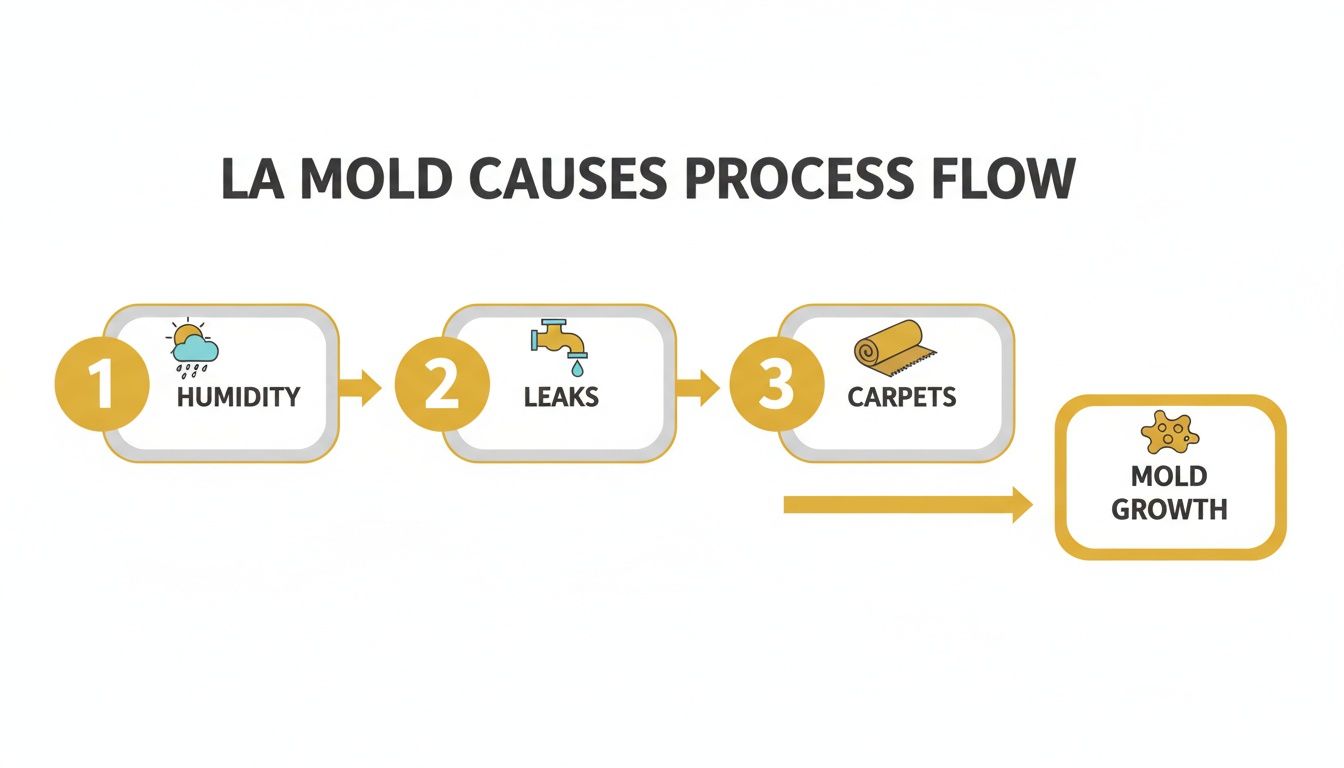
This visual really drives home why just pulling up the carpet isn't enough. You have to break the cycle by fixing the underlying moisture problem.
Step 4: Subfloor Treatment and Cleaning
Once the carpet and pad are gone, our focus shifts to the structure underneath. The subfloor gets a deep, thorough cleaning and decontamination using a couple of key methods:
- HEPA Vacuuming: We bring in special vacuums with HEPA (High-Efficiency Particulate Air) filters. These aren't your average vacuums; they're powerful enough to capture the tiniest mold spores from the subfloor and all the surrounding surfaces.
- Antimicrobial Treatment: Next, we apply an EPA-registered antimicrobial agent. This doesn't just kill any lingering mold; it also helps prevent any new growth from starting up.
Step 5: Advanced Structural Drying
This is the final—and arguably most crucial—step. We have to completely eliminate the moisture that fed the mold in the first place. We set up an array of commercial-grade dehumidifiers and high-velocity air movers to aggressively dry the subfloor, wall framing, and any other damp structural parts.
To get a better sense of this vital stage, you can learn more about how to dry wet carpet fast and the professional techniques behind it. By making sure the environment is bone-dry, we make it impossible for mold to survive, giving you a lasting solution for your home.
How to Prevent Future Mold Growth in Your Carpets
Getting rid of mold on carpet is a huge relief, but the job isn't done yet. Now, the focus shifts to making sure it never comes back. Prevention isn’t a one-time fix; it’s an ongoing strategy. For Los Angeles homeowners, this means getting serious about managing the very conditions that let mold get a foothold in the first place.
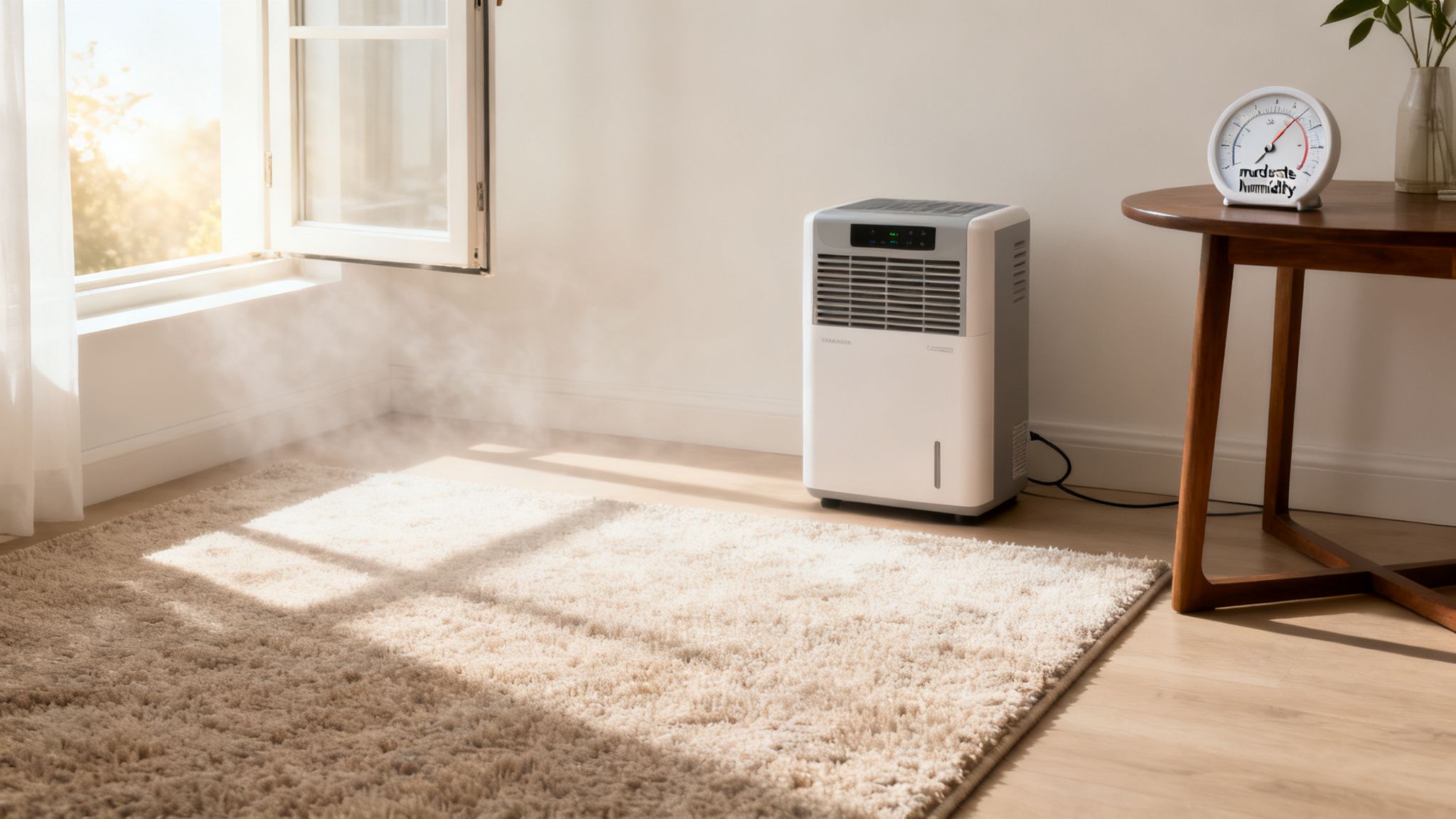
The entire game of mold prevention boils down to one simple rule: control moisture. Without water, mold cannot survive. If you can keep your home consistently dry, you’re making it a place where fungus simply can't survive. This comes down to managing your indoor climate, keeping up with maintenance, and even the products you buy.
Actively Control Indoor Humidity
Here in Los Angeles, our coastal air can easily push indoor humidity way past the 50% threshold where mold starts to thrive. Your first and best defense is to actively manage that airborne moisture.
- Run Dehumidifiers Strategically: Place dehumidifiers in those naturally damp spots—basements, laundry rooms, and bathrooms without good ventilation. Keep them running to maintain a relative humidity between a safe 30% and 50%.
- Boost Your Ventilation: Always use the exhaust fans when you’re cooking or showering. If you can, crack open the windows for at least 15 minutes each day to let fresh air circulate and push out that trapped, humid air.
- Attack Leaks Immediately: That tiny drip under the sink or a small leak in the roof is a formal invitation for mold. Do regular walk-throughs and fix any water intrusion you find, no matter how small it seems.
Choose Smarter Cleaning and Flooring Options
How you clean your floors—and what they’re made of—plays a massive role in long-term mold prevention. Old-school carpet cleaning methods can actually make things worse by leaving the fibers saturated with water for too long.
Pro Tip: Time is your enemy. Any carpet that stays damp for more than 24 hours becomes a potential mold factory. This is exactly why professional, rapid drying techniques are so critical after any water event.
The professional cleaning industry has even started shifting its technology to tackle this exact problem. The market is seeing huge growth in low-moisture cleaning machines that slash drying times, closing the window of opportunity mold needs to colonize.
When it's time to replace your flooring, think mold-resistant. There are newer carpets with antimicrobial properties that are much less hospitable to fungal growth. Better yet, in high-moisture zones like basements or entryways, switching to hard surfaces like tile or luxury vinyl plank eliminates the risk almost completely.
For a deeper dive into proactive strategies, check out our complete guide on how to prevent mold after water damage.
Frequently Asked Questions About Carpet Mold
Finding mold on your carpet is stressful, and we get it. Homeowners in Los Angeles call us with a lot of the same questions. To give you some immediate clarity, here are our straightforward answers to the most common concerns.
Q: Can I Just Bleach the Mold on My Carpet and Be Done With It?
A: That’s a definite no. Using bleach is not only ineffective but also a bad idea for your carpet's health and yours. It might seem like it's working by fading the surface stain, but it can't get into the porous backing or the pad underneath where the real mold problem is hiding. Worse, bleach can ruin your carpet fibers and release some nasty fumes. Professionals use EPA-approved antimicrobial treatments that are made specifically for porous materials, ensuring the mold is gone for good without damaging your home.
Q: Does Homeowners Insurance Cover Carpet Mold Removal in California?
A: It really depends on where the moisture came from. If the mold is the result of what insurers call a "covered peril"—like a pipe that suddenly bursts—your policy will likely step in to cover the costs. However, if the mold grew because of a slow, gradual leak, neglected maintenance, or just general high humidity, it's almost always excluded from coverage. We have years of experience working with adjusters and can provide all the right documentation to support your claim.
Q: Is It Ever Okay to Keep a Carpet That’s Had Mold?
A: Honestly, in nearly every situation, the answer is no. Once mold gets its roots deep into the carpet and its backing, you can never truly get every single spore out. The industry gold standard, set by the IICRC, is clear: contaminated porous materials like carpet and padding have to go. Removing and safely disposing of the affected carpet is the only way to guarantee the problem won't just come right back and to restore your home's healthy air quality. You can get a better sense of what this involves with a professional Los Angeles mold inspection.
Q: How Long Does Professional Carpet Mold Remediation Take?
A: The timeline is all about the extent of the damage. For a small, contained spot, we can often have the whole thing wrapped up in 1-3 days. But if the moisture and mold have worked their way into the subfloor and nearby walls, the job gets more complex. In those cases, the process could take 5-7 days or even a bit longer. We’ll always give you a detailed scope of work and a clear timeline after our first on-site inspection.
Key Insight: The good news is that carpet materials are getting smarter. Today, about 25% of carpets are made from recycled materials like PET (from plastic bottles), which naturally have better antimicrobial properties. These newer materials can significantly reduce the risk of mold ever taking hold. You can learn more about advances in carpet materials and how they help homeowners make better choices for preventing future growth.
If you've spotted mold on your carpet, waiting only makes it worse. Contact Onsite Pro Restoration today for a fast, free, and thorough assessment.