
A fresh approach to how to remove smoke smell from house in Los Angeles doesn’t have to be complicated. By weaving together open windows, a quick scrub-down, targeted air cleaning, and smart odor neutralizers, you can cut smoke odors dramatically—often in just hours. At dawn, for instance, throw open the east- and west-facing windows, aim a box fan toward the outside, and feel the room clear out by **50%** within a few hours.
[Call (818) 336-1800 Now](tel:8183361800) for a Free Smoke Odor Assessment
## Quick Overview Of Removing Smoke Smell From House
Here’s what really moves the needle:
- Cross-ventilation: Create a natural breeze by opening windows and positioning fans.
- Surface cleaning: Wipe away tar and soot with gentle detergents or TSP.
- Air filtration: Let HEPA and activated-carbon filters trap particles and VOCs.
- Deodorizing: Sprinkle baking soda or set out charcoal to soak up odors.
On their own, each method helps. Used together, they work even faster.
Timing varies by tactic. On average:
- Cross-ventilation delivers **instant** air exchange in about **1–3 hours**.
- Surface cleaning shows results in minutes, though some spots need a second pass.
- Air filtration runs best for **24–72 hours** to catch fine particles.
- Deodorizing often takes an overnight session following product instructions.
That blend of speed and depth stops odors from coming back. Meanwhile, a Glendale homeowner opened windows at sunrise and let a box fan blow out the stale air. Three hours later, the stale smoke had fizzled by **50%**, making the living room feel fresh again.
### Smoke Smell Removal Methods At A Glance
Below is a quick comparison to help you pick your go-to tactics.
| Method | Primary Action | Effectiveness |
|---------------------|------------------------------|-----------------------------|
| Cross-Ventilation | Exchange stale with fresh air| **High** in a few hours |
| Surface Cleaning | Remove tar and soot | **Moderate** after scrubbing|
| Air Filtration | Trap particles and VOCs | **Strong** over several days|
| Deodorizing | Neutralize lingering odors | **Varies** by product |
> Targeted ventilation often gives the fastest relief, but thorough cleaning keeps odors from sneaking back in.
If the smell lingers despite your best DIY efforts, it’s time to call in the pros.
### Next Steps After Quick Fixes
Once you’ve aired and scrubbed the worst away, here’s how to lock in that freshness:
- Walk each room, checking walls and fabrics for stubborn staining.
- Swap out HVAC filters every one to two weeks until the air stays clear.
- Wash curtains, linens, and cushion covers with an odor-neutralizing detergent.
- Book a professional duct cleaning—dirty vents can reintroduce trapped smoke.
- Run a dehumidifier during cleanup to slow VOC off-gassing.
- Consider an inspection from [Onsite Pro Restoration](https://onsitepro.org) for certified deodorizing.
Act now for lasting comfort. Call (818) 336-1800 Now to schedule your free assessment and breathe easy tomorrow.
## Ventilation And Air Filtration Strategies for Smoke Smell Removal
Clearing smoky air starts with bringing in fresh breeze and running the right filters. Open windows alone won’t cut it—you need a planned airflow path and filters designed to trap fine soot and gases. For more ventilation guidelines, see the EPA Indoor Air Quality: Removing Tobacco Smoke Indoors.
Aim to cycle a room’s air every **1–2 hours** by combining intake and exhaust fans. That exchange whisks out airborne particles fast and keeps odors from settling.
Public health experts agree: airing out buys you time but doesn’t tackle residues on walls, carpets, or upholstery. Only a mix of ventilation, filtration, and thorough cleaning gives you lasting relief. For detailed smoke-reduction findings, visit the [CDC Secondhand Smoke Home Page](https://www.cdc.gov/tobacco/secondhand-smoke/home.html).
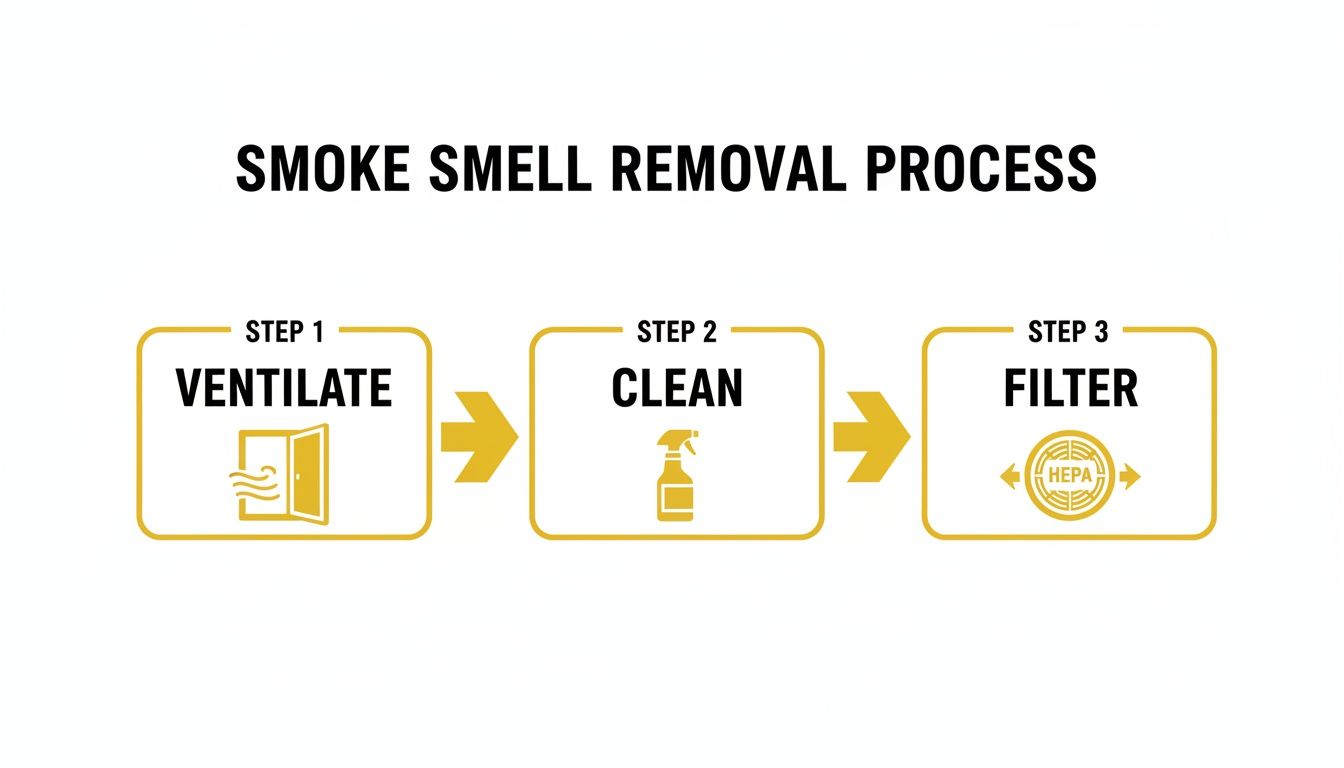
The infographic highlights how ventilation, cleaning, and filtration team up to knock out stubborn odors.
### Cross Breeze Ventilation Setup
Creating a balanced airflow slashes indoor concentrations of soot and VOCs.
• Position an intake fan on the **upwind side** to bring cooler air in.
• Face an exhaust fan on the opposite window to push smoky air outdoors.
• In summer, run attic fans to supercharge the stack effect and lower indoor temperatures.
• In winter, consider a heat-recovery ventilator (HRV) to swap stale air while keeping the warmth inside.
### Choosing HEPA And Carbon Filters
Not every filter can handle smoke. The right combo makes all the difference.
• HEPA filters capture **99.97%** of particles down to 0.3 microns—ideal for ash and fine soot.
• Activated-carbon layers adsorb VOCs and nicotine residues that HEPA alone can’t trap.
• MERV **11–13** filters fit most HVAC systems and portable purifiers.
• Swap filters every **4–6 weeks** when you’re actively combating smoke.
• Seal gaps around filter housings to prevent dirty air from sneaking by.
One homeowner in Burbank left a bedroom purifier humming overnight after a nearby wildfire. By morning, the smoky residue scent dropped by **60%**, and the room felt noticeably fresher.
> Running purifiers continuously at low settings helps maintain air quality long term.
**Call (818) 336-1800 Now** to learn about our HEPA and carbon filter rental options, and pair this with occasional deep-cleaning of surfaces, carpets, and drapes to remove settled residues.
- Optimize airflow patterns to clear out smoke rapidly.
- Choose filters that trap both **particles** and **gases**.
- Maintain purifier operation overnight for deeper odor removal.
- Sync ventilation, filtration, and cleaning for lasting freshness.
Breathe cleaner air with confidence today.
## Surface And Textile Cleaning Techniques
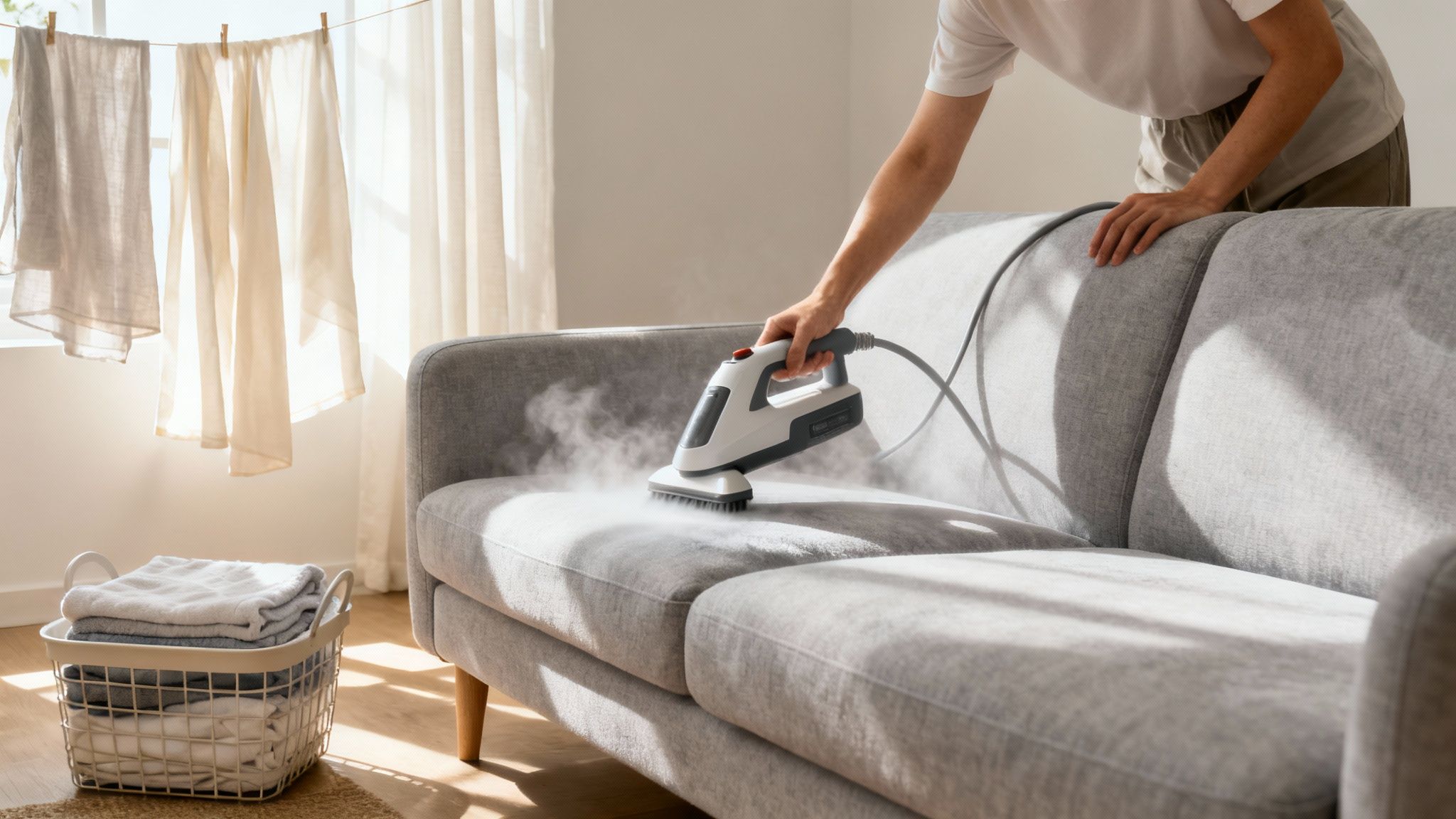
Smoke residue doesn’t vanish with the last wisp of smoke. It seeps into paint, fabrics, and porous surfaces, clinging to every nook. Yet with targeted cleaning, you can lift nicotine and tar without harming your home.
At a Sherman Oaks residence, one family tackled their painted walls using a TSP scrub, then washed their curtains—worry-free and unshrunk. Their secret was **careful spot-testing** and smart tools.
### Painted Wall Cleaning
Removing sticky deposits from walls is your first line of defense against lingering odor. Always begin by mixing trisodium phosphate cleaner (TSP) with warm water, following the product directions. Don **protective gloves**, then test on a hidden patch for at least **15 minutes**.
Gather your supplies:
- Warm water blended with TSP powder
- Soft-bristle scrub brush for gentle agitation
- Microfiber cloths for rinsing and wiping
Work in vertical strokes to keep streaks at bay. After scrubbing, rinse with clean water and blot dry using cotton towels. If any smells remain, finish with a **stain-blocking primer** to seal in residual molecules.
Multiple studies show that tobacco smoke leaves measurable nicotine and toxic residues on surfaces long after smoking stops, meaning removing the smell often requires more than airing out a room and may necessitate washing or replacing contaminated materials. Read the full research about smoke residues (https://pmc.ncbi.nlm.nih.gov/articles/PMC3666918/)
For advanced wall-cleaning methods, check out our guide on [soot removal from walls](https://onsitepro.org/soot-removal-from-walls/) for expert tips.
### Wood Trim Gentle Solutions
Years of smoke can darken wood trim and door frames, but you don’t need harsh solvents to restore them. A mild solution of **warm water** and dish soap can lift the film without raising the grain.
Try this routine:
- Mix a teaspoon of dish soap into a bucket of warm water
- Lightly dampen a soft cloth—avoid soaking the wood
- Wipe trim and immediately buff dry to prevent moisture damage
- For stubborn spots, gently sand and finish with a wood-safe cleaner
> Gentle cleaning protects wood integrity while banishing odor-clinging particles.
Wrap up by applying a **wood-friendly polish**. This step locks out future smells and brings back natural shine.
### Upholstery And Drapes Cleaning
Fabric acts like a sponge for oily tar. The best home remedy combines HEPA vacuuming with a wet extract-and-rinse system. Always pre-vacuum to pull out loose soot before any wet treatment.
Essential steps:
- Pre-vacuum with a **HEPA vacuum** to remove dry debris
- Spray upholstery shampoo evenly with a pump sprayer
- Run a steam or rinse extractor, flushing fibers with clean water
Once cleaned, hang drapes outdoors on a shaded line. Natural sunlight disinfects and speeds up drying without bleaching fabrics.
### Case Study Curtain Restoration
In a Burbank home, decades of indoor smoking left pleated drapes coated in tar. The residents alternated high-pressure steam cleaning with a gentle enzyme spray. After two passes, the tar turned nearly translucent and the odor fell by **50%**.
Their process:
- Pre-treat with enzyme degreaser for **10 minutes**
- Steam clean on a high-pressure setting
- Rinse fabrics outside and hang in the shade to finish
This method saved the drapes from replacement and cut odor-testing from days to mere hours.
### Laundering Smoke-Soaked Linens
Linens like sheets and cushion covers demand a careful wash cycle to avoid shrinkage yet remove deep-seated residues. Stick with **cold water** and an enzyme laundry detergent.
Laundering tips:
- Add **1 cup of baking soda** to neutralize odors
- Run an extra rinse cycle to flush out loosened particles
- Hang dry or tumble on low heat to protect fibers
After drying, press your nose close to the fabric. If you still catch a whiff of smoke, repeat using a **vinegar soak** followed by another baking soda wash.
### When To Replace Carpets And Cushions
Sometimes, porous items hold onto smoke in ways cleaning can’t fix. Carpets older than **five years** or cushions with deep-set discoloration often need replacement.
Keep an eye out for:
- Yellowing or brownish tint in padding or backing
- A close-range smell test that reveals stale odor
- Minimal improvement after a professional steam cleaning
If cleaning barely makes a dent, budget for new flooring or cushions. Fresh materials offer a clean slate—both visually and aromatically.
Always document each step of your cleaning process. Detailed notes help you refine your technique and arm you with the right information if you ever call in professional restoration services.
## Advanced Deodorizing Methods And Products
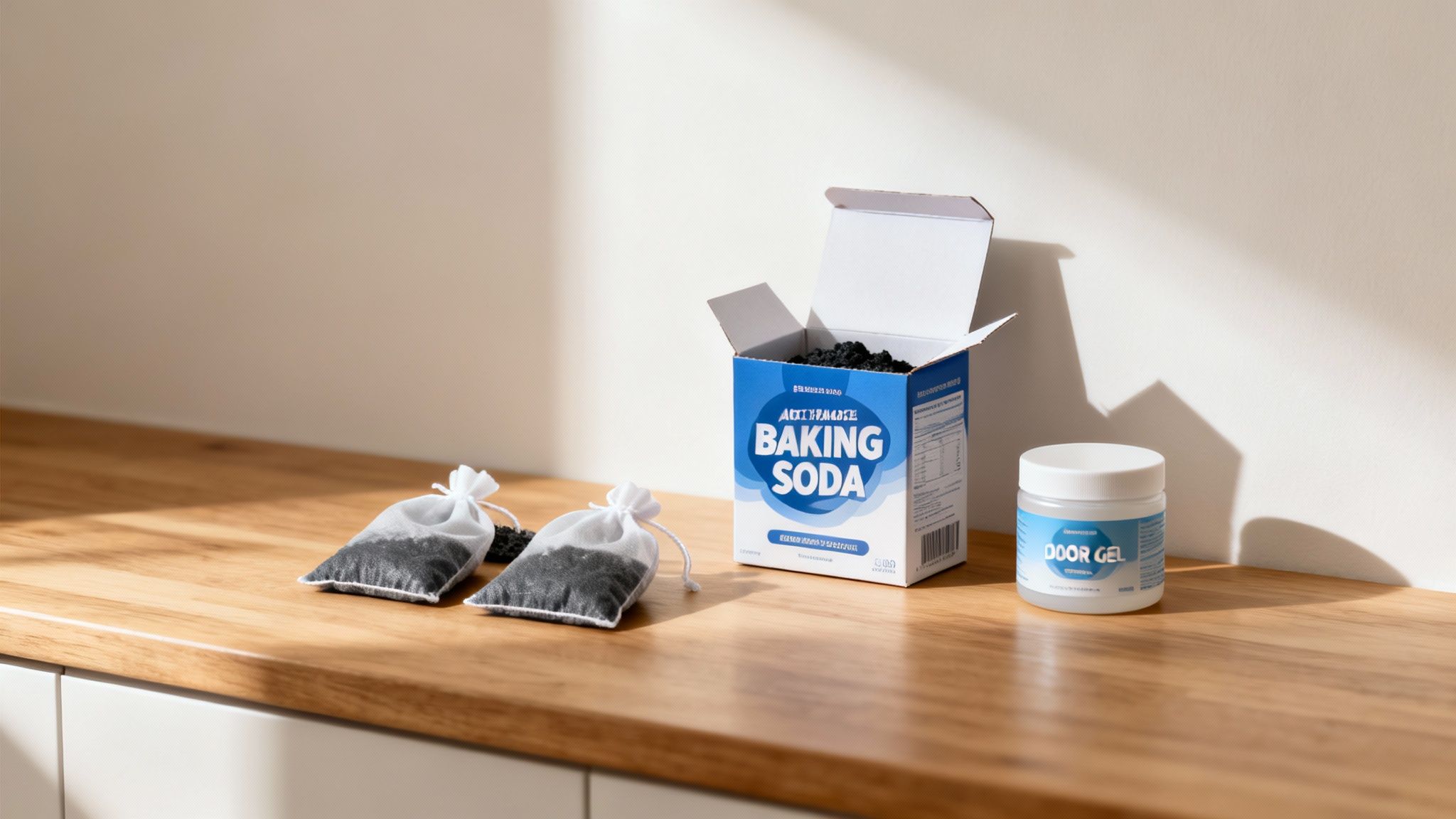
When scrubbing surfaces and opening windows still can’t banish that smoky scent, it’s time to reach for more specialized solutions. Pantry staples like **activated charcoal** and **baking soda** trap VOCs and soot molecules at a microscopic level. They’re cheap, non-toxic, and surprisingly effective for an overnight pick-me-up—just tuck shallow bowls under furniture and let them work their magic.
### Natural Odor Absorbers
• Baking soda neutralizes acidic smoke residues when lightly sprinkled on carpets, then vacuumed away.
• Activated charcoal in breathable pouches offers continuous adsorption of persistent VOCs.
• Distribute several small containers around living and sleeping areas for even coverage.
• Swap or refresh absorbers every **24–48 hours** to maintain peak performance.
### Odor Encapsulating Sprays And Gels
If you’d rather spray or tuck something away, odor-encapsulating products come into play. These formulas wrap odor molecules in a thin film, rendering them inert. Gels release a gentle fragrance and seal off trapped VOCs—perfect for cabinets or closets.
Homeowners often notice a **40%** quicker turnaround in freshness versus baking soda alone. Always follow the manufacturer’s directions and trial a small patch first to rule out any staining.
> “Thermal fogging sealed in soot odors before repainting and cut lingering smoke by 80%” — a rental-property case in Burbank highlights the power of fogging.
### Ozone Generators And Thermal Fogging
For deeper remediation, ozone and thermal fogging penetrate where sprays can’t reach. Ozone generators fracture odor molecules, but you must vacate the space and ventilate thoroughly afterward. Thermal fogging delivers a fine mist that seeps into cracks, locking in smoky residues and prepping surfaces for paint.
One landlord fogged a two-bedroom rental and found fresh paint adhered flawlessly—no ghosting or bleed-through. A compact ozone unit rental typically runs **$60–$80 per day**, while professional fogging services start at **$150** for a small room, excluding labor.
#### Cost Breakdown For Thermal Fogging
| Service | Cost Range |
|---------------------------------|---------------------------|
| Small room treatment | **$150** per single fog |
| Larger areas (2+ rooms) | **$300–$500** total |
| DIY fogger rentals | **$80** per day |
| Solution refills | Varies by manufacturer |
### Air Purifier Options And Maintenance
Air cleaners are another line of defense. Portable HEPA purifiers with activated-carbon stages range from **$100** to **$600**, while whole-house systems can cost **$1,200–$3,000** depending on capacity.
| Unit Type | Initial Cost | Filter Change Interval |
|-------------------|--------------|------------------------|
| Budget HEPA | **$100** | Every 3 months |
| Premium HEPA | **$400** | Every 6 months |
| Whole-House System| **$1,200** | Annually |
Read also: Check out our guide on [air scrubber rental](https://onsitepro.org/air-scrubber-rental/) for flexible equipment solutions.
It’s no surprise that residential purifier shipments climbed from about **6 million units in 2015 to 21 million in 2021**, as more homeowners invest in clean-air strategies. For further reading on industry trends, see these [indoor air quality statistics](https://housefresh.com/indoor-air-quality-statistics/).
Compact ionizers may promise rapid odor removal, but they often underperform against real smoke VOCs. Keeping filters fresh and giving units a weekly wipe-down is crucial. In humid climates, consider models with built-in dehumidification to prevent mold and maintain airflow. Running purifiers on a low setting around the clock delivers the most consistent results.
### Safety And Best Practices
• Wear gloves, goggles, and a respirator when handling ozone or fogging agents.
• Keep children and pets out of treated zones until air quality is verified.
• Follow all manufacturer instructions—timing and dilution matter.
• Open windows and cross-ventilate immediately after advanced treatments.
• Measure ozone levels before re-entry to ensure a safe environment.
If the smoky odor still lingers, reach out to Onsite Pro Restoration for expert support and on-site guidance.
## When To Seek Professional Smoke Smell Removal Help
Smoke odor can settle deep into ductwork or bond with paint, making it nearly impossible to banish with a sponge and cleaner. When nicotine stains and persistent smells refuse to budge, it’s time to bring in experts.
Homeowners often attempt DIY fixes, only to discover the odor returns or spreads. That’s your cue: call a certified **smoke damage restoration** team.
### Early Warning Signs You Need Professional Help
- Odors that come back after cleaning
- **Yellow stains** on walls or ceilings
- Lingering third-hand smoke in rental units
- Musty or chemical-like VOC smells after DIY treatments
These red flags usually point to volatile organic compounds (VOCs) and tar trapped in hidden cavities. A qualified technician will measure surface nicotine levels and recommend targeted encapsulation or sealing.
### Credential Verification For Restoration Teams
Don’t hire on a whim—verify credentials first. Confirm IICRC certification and ask for documented training in smoke remediation.
Professionals with the right certification adhere to industry standards for deep HVAC duct cleaning and structural sealant application.
> “Certified technicians guarantee transparent estimates and warranty coverage,” says a Los Angeles homeowner who learned the hard way after replacing DIY sealants.
### Cost Estimates And Warranty Considerations
A clear, detailed quote shields you from surprise fees later. A thorough estimate should cover:
- Inspection and testing fees
- Equipment rental and labor costs
- Materials for sealants or primers
- Warranty on workmanship and materials
Many Onsite Pro Restoration packages include a **one-year warranty** on odor encapsulation. That means if the smell creeps back, you can call them back at no extra charge.
### Case Study: Vacation Home Refresh
A North Hollywood family inherited a smoke-saturated vacation home near Malibu. After several DIY attempts fell short, they reached out to Onsite Pro.
The restoration team:
- Tested nicotine levels in paint and carpet
- Cleansed ducts with high-pressure HEPA vacuums
- Applied a specialized sealant on all painted surfaces
Within days, the house smelled neutral and passed a tenant move-in inspection without issues. The family applauded the transparent final bill—no hidden charges, just a fresh start.
### Red Flag Scenarios And Actions
| Red Flag Scenario | Recommended Action |
|-------------------------------------|---------------------------------------------------------|
| Odors Persist After Deep Cleaning | Duct cleaning and air testing |
| Yellowed Walls Or Ceiling Staining | Surface encapsulation and recoat |
| Rental Unit With Health Complaints | Third-hand residue assessment and biohazard cleaning |
| HVAC Emits Foul Smoke Odor | Component disassembly and system-level sanitation |
Learn more about professional smoke remediation in our detailed [smoke damage restoration guide](https://onsitepro.org/smoke-damage-restoration-guide/) to see full service offerings.
#### Next Steps After Professional Restoration
Once the crew wraps up, give your home a few days to settle and monitor the air quality closely.
- Change HVAC filters to new MERV **13** or higher within 48 hours
- Run HEPA air purifiers on low for **72** hours to capture any stray VOCs
- Open windows briefly each morning to balance indoor air
- Document any lingering odors and reach out to your contractor if needed
These simple follow-up steps ensure the benefits of expert cleaning and sealants last. Keep an eye on daily air checks, and you’ll enjoy a clean, safe environment long after treatment. Stay vigilant. Breathe easy every day.
## Smoke Smell Removal FAQs
**Q: How long should I ventilate my home after a heavy smoke event?**
A: Aim for cross-ventilation for at least 2–3 hours, with fans running. Continue HEPA filtration on low for 24–48 hours to catch leftover fine particles.
**Q: What should I do if I find smoke residue deep in my HVAC system?**
A: Stop using the system and schedule professional duct cleaning. Dirty vents can recirculate smoke odors and VOCs continuously.
**Q: Are ozone generators safe around pets?**
A: Ozone can irritate lungs—both human and animal. If you choose ozone treatment, clear the room of everyone (furry friends included), then air it out with fans and open windows for at least an hour before re-entry.
**Q: Can I remove smoke smell from house fabrics without bleaching or damage?**
A: Yes. Use cold-water enzyme detergents, add baking soda, and hang fabrics outdoors in the shade. Always spot-test before full treatment.
**Q: When should I replace carpets and cushions instead of cleaning them?**
A: Replace if items are older than five years, show yellowing, or have deep-set odors that professional steam cleaning can’t fully remove.
**Q: How do I know if I need professional odor encapsulation?**
A: If yellow stains reappear, odors return after deep cleaning, or third-hand smoke complaints persist in rentals, call certified pros for encapsulation and sealing.
Read also our [Odor Removal Service FAQs](https://onsitepro.org/services/odor-removal-service/faq/) for more advanced advice and details.
[Book a Professional Smoke Odor Removal Service Today](https://onsitepro.org)
---
**Onsite Pro Restoration** is available 24/7 to assess, contain, and eliminate smoke odors in Los Angeles homes. Visit https://onsitepro.org for a free inspection and quote promptly today.
Restoration & Remediation Posts

LA Water Damage Home Repair: Get Help Fast
A pipe lets go under the sink in Sherman Oaks. You hear it before you see it. Then you open the cabinet and find water spreading across the kitchen floor,