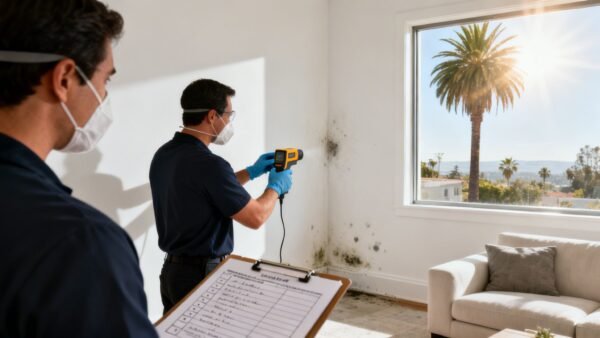

Getting the smoke smell out of your house for good is a marathon, not a sprint. It’s a process that combines fast action, deep cleaning everything with the right stuff (like vinegar solutions or professional-grade cleaners), and tackling the hidden spots like your HVAC system. The only way to win is to be methodical and focus on destroying the odor particles, not just covering them up. Knowing how to remove fire smoke smell from house effectively is the first step to restoring your property's safety and comfort.
Need Immediate Smoke Damage Help?
Our IICRC-certified team is available 24/7 to handle smoke and soot cleanup in the Los Angeles area.
Your First Moves After a Fire to Stop Smoke Odor
The first few hours after a fire are everything. What you do—or don't do—right away will decide if that smoke smell is a short-term headache or a problem that sticks around for months. Before you even touch a sponge, your mindset needs to be all about safety and containment. Every move you make should be focused on stopping those tiny, greasy soot particles from digging any deeper into your Los Angeles home.
Your first line of defense is proper gear. Never walk back into a smoke-damaged home without an N95 respirator mask, safety glasses, and gloves. The gunk floating in the air is seriously hazardous to your lungs and can irritate your skin and eyes.
The Science of Smoke Damage
To beat the enemy, you have to know the enemy. Smoke isn't just a smell; it's a nasty mix of microscopic solids, liquids, and gases. When things burn, they shoot out these particles, which are usually oily and acidic. They float through the air and latch onto every single surface—walls, ceilings, and deep down into the fibers of your carpets and couches.
This is exactly why spraying air freshener is a total waste of time. It’s like putting a bandage on a broken arm; it does nothing to fix the actual problem.
The real fight is with porous materials. Drywall, wood, fabrics, and even the insulation in your walls act like sponges, soaking up these smelly particles. If you're in a humid area like Santa Monica, the problem can be even worse because moisture helps those particles get in deeper. Your mission is to get rid of and neutralize these particles before they bond permanently.
The Role of Ventilation and Containment
Ventilation is a bit of a double-edged sword, so you have to handle it right. As soon as it’s safe and the air outside is clear, open up the windows. Get some box fans running, but make sure they're pointing out of the house. This is your first step to push out all the loose, airborne soot.
But containment is just as critical.
- Seal Off Unaffected Areas: Close the doors to any rooms that weren't hit hard by the smoke. Shove towels under the door gaps to stop the smell from creeping in.
- Turn Off Your HVAC System: This is a big one. Your heating and air conditioning system can become a superhighway for spreading soot and smoke odor everywhere through the ductwork. Shut it down immediately.
For homeowners dealing with the immediate aftermath, knowing what to do and what to avoid is crucial. The wrong moves can make the situation worse, while the right ones can set you up for a much smoother recovery.
Immediate Smoke Damage Response Do's and Don'ts
| Action | Do | Don't |
|---|---|---|
| Safety | Wear an N95 mask, gloves, and safety glasses before re-entering. | Enter without proper PPE, as airborne particles are hazardous. |
| Ventilation | Open windows and use fans to push air out of the house if outdoor air is clean. | Turn on the HVAC system, as it will spread soot and odor through the ducts. |
| Containment | Close doors to unaffected rooms and block gaps to prevent cross-contamination. | Leave doors open, allowing smoke and soot to migrate to clean areas. |
| Cleaning | Wait for professional assessment before cleaning surfaces. | Wipe down walls or furniture, which can smear oily soot and make it harder to remove. |
| Documentation | Take photos and videos of all damage before moving or cleaning anything. | Throw away damaged items before your insurance adjuster has seen them. |
Following these simple rules can make a huge difference in controlling the damage and simplifying the restoration process ahead.
Research after major events like the Marshall Fire in Colorado showed how wildfire smoke could get deep into homes miles away, leaving behind dangerous volatile organic compounds (VOCs). It proved that sometimes, just opening windows to air things out was more effective than some fancy cleaning methods. You can learn more about the science behind smoke hazards from this Caltech professor's insights.
For a more complete checklist on securing your home right after a fire, check out our guide on what to do after a house fire. Acting fast and smart in these first few moments will make the entire job of removing that fire smoke smell much, much easier.
A Practical Room-By-Room Cleaning Strategy
To get the fire smoke smell out of your house for good, you need to be methodical. This isn't a job for a quick wipe-down; you have to go room by room. Smoke and soot are invasive, and they stick to different materials in different ways, so your cleaning plan has to adapt as you go.
Before you even mix a single cleaning solution, there are three critical things you must do first. The flowchart below lays it out.
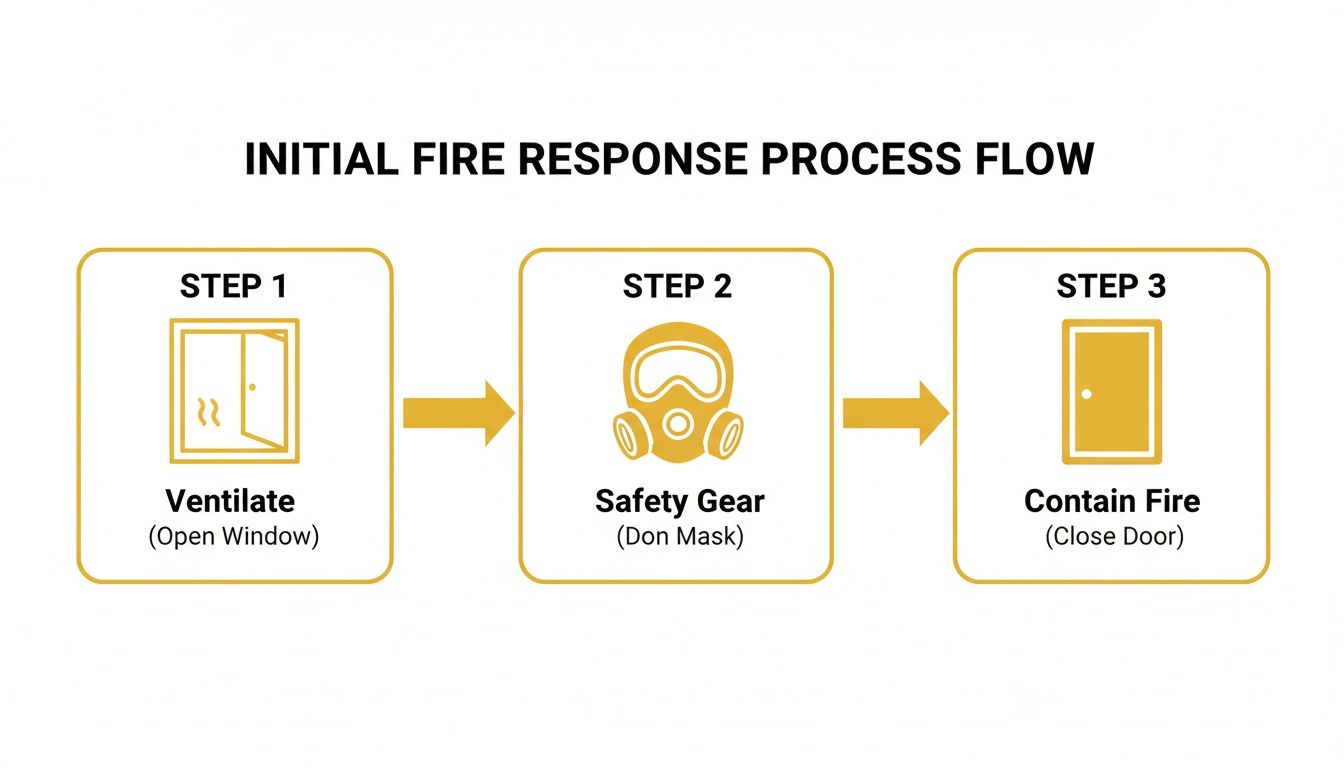
Ventilation, personal safety, and containing the mess—get those right, and the rest of the job will go much smoother.
Cleaning Hard Surfaces: Walls, Ceilings, and More
Soot loves to settle on hard surfaces like walls, ceilings, countertops, and wood floors. But here's something most people don't realize: not all soot is the same. Your cleaning method has to match the kind of residue you're dealing with.
One of the biggest mistakes I see homeowners make is grabbing a wet rag and immediately start scrubbing. This is a disaster with oily soot. You'll just smear it around, pushing it deeper into the paint and making it ten times harder to remove.
The right way to start is with dry cleaning. Get yourself a dry chemical sponge (often called a soot sponge) or use a HEPA-filter vacuum with a brush attachment. Your goal is to lift the loose soot particles off the surface without smearing them.
Only after the loose stuff is gone should you move on to wet cleaning. For light, powdery residue, a simple mix of one part white vinegar to one part water often does the trick. But for that tough, greasy soot, you’ll need a degreasing agent. Years ago, everyone used Trisodium Phosphate (TSP), but today there are powerful and much safer TSP alternatives that cut right through the grime.
Tackling Soft Surfaces: Carpets, Upholstery, and Drapes
Fabrics are absolute magnets for smoke odor. Materials like carpets, curtains, and upholstered furniture are porous, meaning they soak up microscopic smoke particles deep into their fibers. Here in Santa Monica, the humidity makes that absorption happen even faster, locking in odors that are incredibly stubborn.
Here’s your game plan for soft surfaces:
- HEPA Vacuuming: Vacuum every fabric surface, and do it thoroughly. Move slowly and use the upholstery attachment to suck up as many loose particles as you can.
- Baking Soda Treatment: Don't underestimate this step. Sprinkle baking soda generously over your carpets and furniture. You need to let it sit for at least 24 hours to really absorb the odors before you vacuum it all up.
- Steam Cleaning: For durable upholstery and carpets, steam cleaning is a game-changer. The hot water extraction process is great for flushing out those deeply embedded soot and odor particles.
Carpets are notorious for holding onto smoke particles. To win the battle, you have to effectively remove carpet odors with techniques that go far beyond a surface clean.
Key Insight: Wildfire smoke is a different beast altogether. Research shows its harmful particles can infiltrate homes with 33-76% efficiency, even when the fire is hundreds of miles away. These particles get stuck in fabrics and dust, off-gassing odors for weeks and posing real health risks. In some post-fire studies, high levels of contaminants were found 14 months later, proving that your average DIY cleaning just won't cut it.
Don't Forget the Hidden Spaces
Smoke odor is sneaky. It hides in places you'd never think to look. If you want to truly get the fire smoke smell out of your house, you have to be obsessive about cleaning these overlooked spots.
- Inside Cabinets and Drawers: Empty them completely. Every last thing. Wipe down all the interior surfaces with your degreasing cleaner, then leave the doors and drawers wide open to air out before putting anything back.
- Light Fixtures: Soot coats everything, including light fixtures and bulbs. Take off any glass covers or shades and wash them. Carefully wipe down the fixtures themselves.
- Closets: Smoke odor clings to clothes like nothing else. You'll need to take everything out, launder what you can, and send the rest for professional dry-cleaning. Then, give the closet's interior walls, shelves, and rods a deep clean before you even think about returning your clothes.
This methodical process—hard surfaces first, then soft surfaces, and finally the hidden spots—is the only way to systematically eliminate the sources of the odor instead of just covering them up. It’s a ton of work, but it’s the only way to get your home smelling fresh and clean again.
Tackling Hidden Odors in Your HVAC System
You’ve scrubbed every surface, aired out every room, and washed every piece of fabric you own. So why do you still catch that sharp, lingering smell of smoke? It’s time to look at the one place you can’t see: your HVAC system.
Your home’s heating and cooling system is its respiratory system. During a fire, it breathes in soot and smoke, circulating those nasty particles through every vent and turning your ductwork into a hidden reservoir of odor.
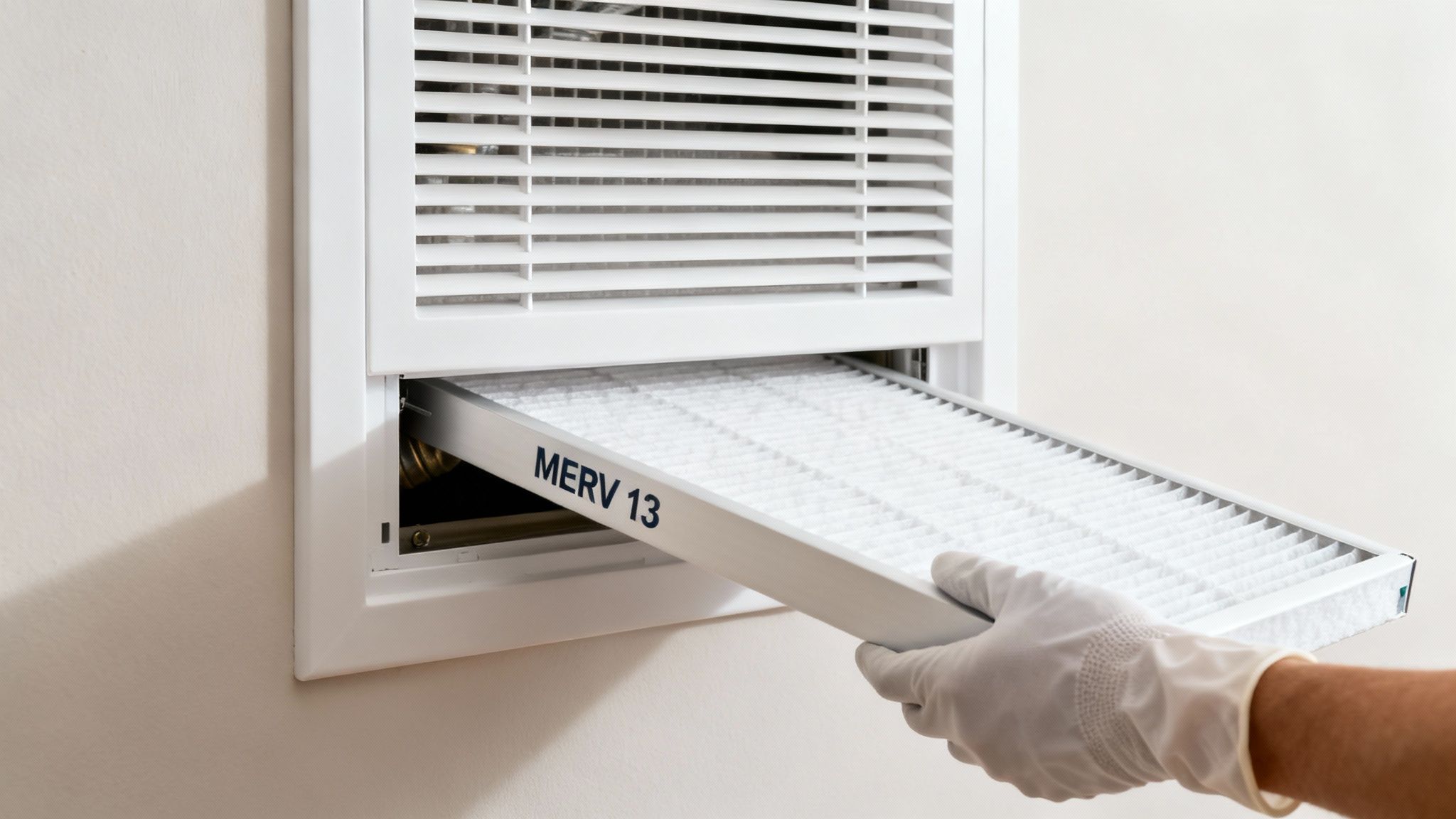
A lot of homeowners think a new air filter is the magic bullet. While that’s an essential first step, it’s almost never enough to truly remove the fire smoke smell from your house. The problem is the fine, oily soot that sticks to the inside of your ducts. Every time your system kicks on, it reactivates that smell and blows it right back into your clean home.
Immediate HVAC Actions Post-Fire
First things first, and this is critical: shut down your HVAC system immediately. Don't even think about turning it back on until a professional has cleared it. Running the system will just re-contaminate every room you’ve worked so hard to clean.
With the system off, your next move is to replace the air filter. This isn’t the time for a cheap, standard filter; you need something that can actually trap microscopic smoke particles.
- Upgrade to a High-Efficiency Filter: Look for a filter with a MERV 13 rating or higher. MERV stands for Minimum Efficiency Reporting Value, and it’s a measure of how well a filter catches airborne particles. A MERV 13 is designed to trap the fine stuff like smoke and soot.
- Check Filter Size and Fit: Make sure the new filter is the right size and fits snugly. Any gaps around the frame will let contaminated air sneak past, completely defeating the purpose.
This new filter is a great defensive move, but it won’t solve the existing problem. It only catches particles passing through it—it does nothing about the soot already caked inside your ductwork.
Why Professional Duct Cleaning Is Non-Negotiable
Spraying a can of air freshener into your vents is a classic mistake. At best, it masks the odor for a few hours. At worst, it mixes with the soot to create a new, funky chemical smell. The only way to get rid of the odor for good is to physically remove the source.
Professional Insight: When we clean ducts after a fire, we don’t just bring a big vacuum. We use specialized equipment like high-powered negative air machines, rotating brushes, and air whips that scrub the inside of the ducts, dislodging soot from every corner and crevice. It’s about total source removal.
For families in places like Burbank or West Hollywood, clean air is already a top priority. After a fire, making sure your HVAC system is truly free of contaminants is non-negotiable for your family’s health. A professional cleaning not only removes the soot but can also include applying a sealant to lock down any remaining microscopic particles for good.
While the ducts are being cleaned, you also need to deal with the particles that get stirred up in the air. For homeowners who want to guarantee the air is safe during the restoration, looking into an air scrubber rental is a smart move. These machines act like supercharged air purifiers, capturing tiny contaminants that would otherwise settle back onto your clean surfaces.
Ultimately, cleaning your HVAC system after a fire is not a DIY job. The complexity of the ductwork and the hazardous nature of soot demand professional tools and expertise to restore healthy air to your home safely and completely.
Understanding Professional Odor Removal Technology
So you’ve scrubbed, aired out, and deep-cleaned everything, but that stubborn smoke smell just won't quit. It’s a frustrating sign that the problem has gone way beyond what you can fix with household methods. This is exactly when professional-grade restoration technology becomes non-negotiable.
The equipment we use isn't just a stronger version of what you have at home. It’s scientifically designed to attack smoke odor at the molecular level, hunting down particles that have burrowed deep into your home’s structure, your furniture, and even inside the walls.
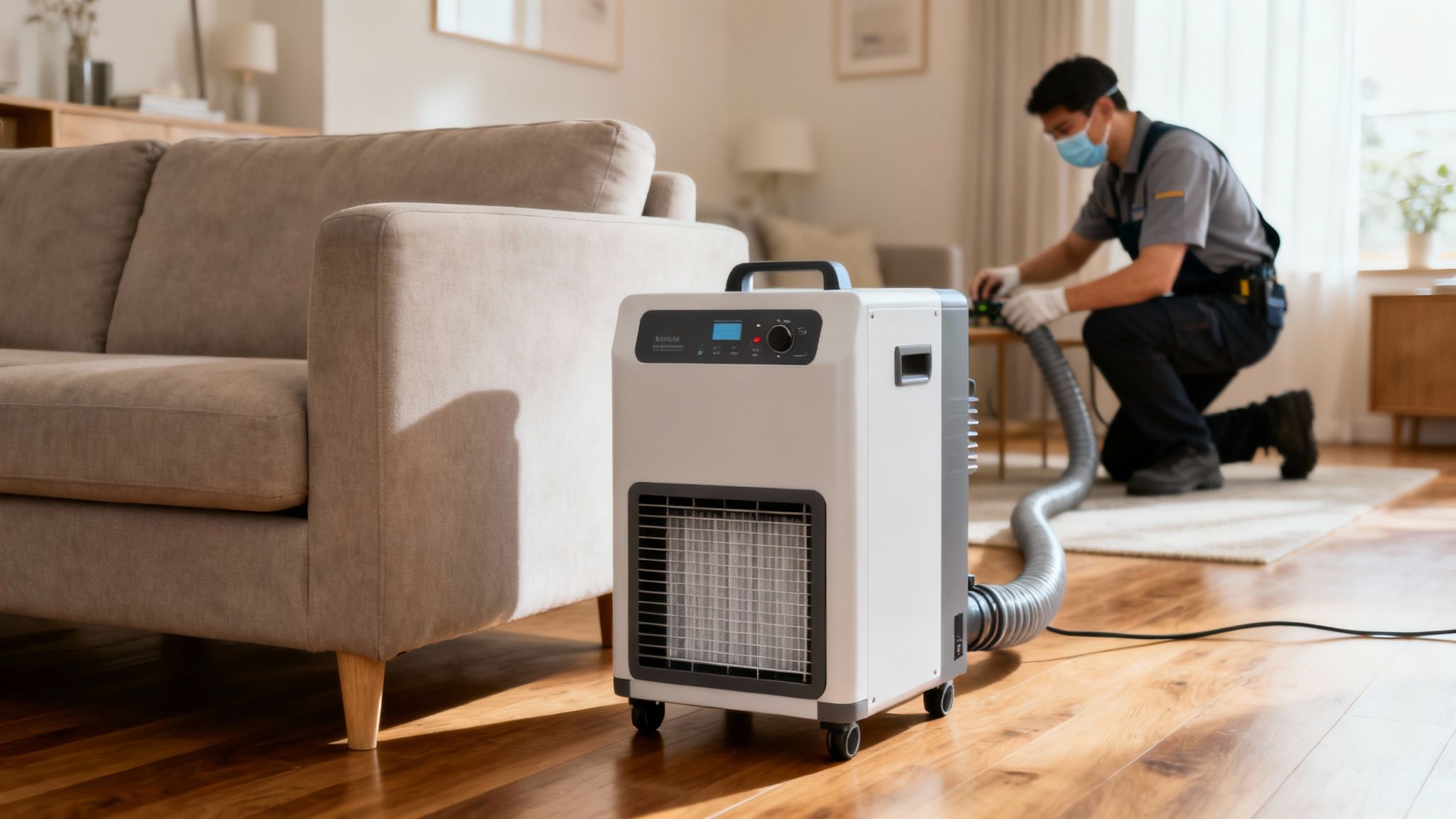
Understanding these tools helps explain why they succeed where DIY efforts often fall short. Each machine has a specific job in the fight to remove fire smoke smell from a house for good.
HEPA Air Scrubbers for Particle Capture
After a fire, the air you’re breathing is filled with invisible enemies: microscopic soot, ash, and volatile organic compounds (VOCs). An air scrubber is essentially a high-powered lung for the room. It’s a portable filtration machine that pulls in contaminated air, trapping those harmful particles.
The real magic is the HEPA (High-Efficiency Particulate Air) filter inside. These filters are absolute powerhouses, capturing 99.97% of particles as small as 0.3 microns. That includes the nasty VOC-bound particles that create those lingering smells and pose health risks. Research has actually shown these filters can cut down indoor particle levels by over 90% during smoke events, making them a critical first step to restoring healthy air.
Thermal Fogging to Neutralize Embedded Odors
Smoke particles are incredibly tiny and, driven by the fire's heat, they force their way into the deepest pores of materials like wood, drywall, and insulation. To get to those hidden odors, you can’t just wipe the surface. You have to follow the same path the smoke took.
That’s where thermal fogging comes in. A special machine heats a solvent-based deodorizer, turning it into a fine mist that behaves just like smoke. This "fog" has a similar particle size, allowing it to penetrate porous surfaces and neutralize the odor molecules it finds on contact.
- How it Works: A fogger heats a deodorizing agent to create a dry, smoke-like mist.
- Application: Our technicians direct this fog throughout the affected areas, ensuring it gets into every crack, crevice, and wall cavity.
- Result: The deodorizing particles bond with and neutralize the smoke odor molecules, destroying the smell at its source.
Expert Insight: Thermal fogging isn't about masking the smell with a fragrance. It’s a chemical process that mimics the fire's behavior to deliver a neutralizing agent directly to the problem, no matter how deeply it's hiding.
Ozone and Hydroxyl Treatments for Severe Cases
For the most stubborn and pervasive smoke odors, we bring out the heavy hitters: advanced oxidation technologies like ozone or hydroxyl generators. These machines generate powerful oxidizing molecules that literally break down odor-causing compounds in the air and on surfaces.
Ozone Generators
Ozone (O3) is a highly reactive gas that is incredibly effective at destroying organic molecules, including those from smoke. Because high concentrations of ozone are harmful to people, pets, and even plants, this treatment requires the property to be completely empty. It’s a powerful but carefully controlled process reserved for aggressive odor removal.
Hydroxyl Generators
A gentler but still powerful alternative is a hydroxyl generator. It uses UV light to create hydroxyl radicals (•OH), which are safe to use in occupied spaces. These radicals react with and dismantle airborne odors and VOCs. While it works more slowly than ozone, hydroxyl treatment is an excellent choice for continuous air purification during the restoration process without having to displace the occupants.
Here’s a quick comparison of these advanced technologies:
| Technology | Best For | Safety Protocol | Speed |
|---|---|---|---|
| Ozone Generator | Severe, set-in odors in unoccupied spaces | Property must be vacant during and after treatment | Fast-acting |
| Hydroxyl Generator | Continuous air purification in occupied spaces | Safe to operate around people, pets, and plants | Slower, gradual process |
Choosing the right technology is all about the specific situation. For example, a small kitchen fire in a Burbank apartment might only need air scrubbers and some thermal fogging. But a more significant structural fire in a Beverly Hills home would likely require a combination of all these methods to get the job done right.
This advanced equipment, when used by IICRC-certified professionals, is what truly separates a house that just looks clean from one that is genuinely free of smoke odor. If you have more questions about how we tackle tough smells, check out our frequently asked questions on odor removal services.
Knowing When to Call a Restoration Professional
It’s one of the toughest calls a homeowner has to make: where do my DIY efforts stop and the pros take over? After a fire, that line gets incredibly blurry. You might have the energy and drive to start cleaning, but smoke damage is a different kind of beast—it’s an invasive, complex problem that usually takes more than elbow grease to fix.
Learning to spot the signals that you’re in over your head is absolutely critical. It’s not just about protecting your property’s value, but about safeguarding your family’s health. Making the right call isn’t just about cleaning; it’s about ensuring a complete and safe recovery.
Clear Signs You Need an Expert
A small kitchen flare-up is one thing, but a significant fire leaves behind damage you can see and, more importantly, damage you can't. If you’re running into any of these issues, it’s a clear sign that it’s time to bring in certified experts who know exactly how to remove fire smoke smell from house for good.
- The Smell Just Won’t Quit: You’ve cleaned every surface, washed every curtain, and aired out the house for days, but that sharp, smoky odor is still hanging in the air. This is the #1 sign that smoke particles have worked their way deep into porous materials like drywall, insulation, and wood studs—places your household cleaners will never reach.
- Widespread, Oily Soot: If you’re seeing heavy, greasy soot staining your walls and ceilings, especially across multiple rooms, stop what you’re doing. Trying to wipe this kind of residue without the right chemical agents will just smear it, causing permanent stains and pushing the problem deeper into the paint and drywall.
- It Was a Major Structural Fire: If the fire department was on the scene, professional restoration isn’t a choice—it’s a necessity. The damage extends far beyond what you can see. You're now dealing with potential structural compromises, fried electrical systems, and hazardous materials left behind from burned plastics and synthetics.
- Your HVAC System Was On: Was your heat or AC running during or after the fire? If so, your entire ductwork system has just become a delivery service for smoke and soot. This isn't something a shop vac can fix; it requires specialized equipment to properly clean and decontaminate the whole system.
The Value of a Professional Assessment
Even if the damage looks like it's contained to one room, the invisible threat is often the biggest. Getting a professional assessment from an IICRC-certified technician is an invaluable first step. They don’t just look; they use tools like moisture meters and thermal cameras to find hidden problems that will absolutely cause long-term issues later.
Key Takeaway: Professionals don't just clean what's visible; they investigate. They can identify soot trapped inside wall cavities, find compromised insulation that’s acting like a sponge for odors, and detect hidden moisture from firefighting efforts that is a ticking time bomb for mold growth.
This kind of thorough inspection gives you the full picture of the damage, something a DIY approach can never deliver. It creates a strategic roadmap for restoration, making sure no surprise problems pop up months down the line.
Navigating the Insurance Claim Process
For many people, dealing with the insurance claim is more stressful than the cleanup itself. This is another arena where a professional restoration company becomes your most important partner. Insurance companies run on detailed, precise documentation, and a certified team knows exactly how to provide it.
- Detailed Documentation: Professionals build an ironclad file for your claim, complete with photos, moisture readings, and a detailed scope of work. This gives your adjuster clear, undeniable proof of the damage.
- Direct Communication: Established companies like Onsite Pro Restoration have years of experience working directly with all the major insurance providers in the Los Angeles area. We speak their language, which helps streamline communication and get approvals faster.
- Accurate Estimates: We use the same industry-standard software as the insurance carriers to build detailed, line-item estimates they recognize and trust. This prevents the back-and-forth and helps ensure you get every dollar you're entitled to.
For homeowners in communities from Beverly Hills to North Hollywood, having a pro on your side can make all the difference in getting your claim approved fairly and without delays. It turns what feels like a confusing, uphill battle into a structured, manageable recovery. If you're facing a tough situation, understanding what a restoration pro brings to the table will help you make a confident, clear-headed decision to protect your home.
Frequently Asked Questions About Smoke Odor Removal
After a fire, the questions can feel as overwhelming as the cleanup itself. Here are answers to the questions we hear most often from Los Angeles homeowners, giving you the clarity you need to move forward.
How long does it take to get rid of smoke smell after a fire?
A: The timeline depends entirely on the severity of the fire. A small, contained kitchen incident might take a few days of aggressive DIY cleaning and ventilation. However, for significant fires, professional remediation including deep cleaning, HVAC decontamination, and advanced deodorization can take anywhere from several days to a few weeks to completely resolve the issue and restore healthy air quality.
Is it safe to stay in a house that smells like smoke?
A: It is strongly advised against. A lingering smoke odor indicates the presence of harmful microscopic particles and volatile organic compounds (VOCs) in the air and embedded in surfaces. These contaminants can cause respiratory issues, headaches, and eye irritation. For your safety, it's best to stay elsewhere until the property has been professionally restored and the air quality is confirmed to be safe.
Will homeowner's insurance cover professional smoke odor removal?
A: In most cases, yes. Standard homeowner's insurance policies cover losses from fire, which includes the resulting smoke and soot damage. This coverage typically pays for the professional services required to return your home to its pre-loss condition, such as structural cleaning, content restoration, and specialized deodorization treatments.
Can I just paint over smoke stains to seal the smell?
A: This is a common and costly mistake. Oily soot residue will eventually bleed through standard latex paint, leaving you with ugly stains and the trapped odor. The correct process involves thoroughly cleaning the surface with a degreasing agent, applying a specialized oil-based, stain-blocking primer to seal any remaining particles, and only then applying the final coats of paint.
What's the difference between smoke from a house fire and wildfire smoke?
A: Smoke from a house fire is often dense with soot from synthetic materials like plastics and foams, making it oily and sticky. Wildfire smoke is composed of burned organic matter (wood, brush) and can travel for miles, leaving behind fine, pervasive particles that are less greasy but can penetrate deep into a home's structure and HVAC system, posing significant health risks over time.
How do I clean smoke-damaged electronics?
A: Do not attempt to turn on or clean electronics yourself. Soot is acidic and conductive, and wiping it can cause short circuits and permanent damage. Electronics should be assessed and cleaned by a professional restoration specialist who uses specific techniques to safely remove corrosive soot without harming the internal components.
Eliminate Smoke Odor for Good
Don’t let smoke damage linger. The IICRC-certified experts at Onsite Pro Restoration have the technology and experience to eliminate smoke odor at its source, ensuring your Los Angeles home is safe, clean, and fresh again.