
Getting rid of smoke odor in an apartment is about more than just airing the place out. It’s a deep-cleaning mission to tackle the sticky, toxic residue known as thirdhand smoke that works its way into absolutely everything. To truly succeed and eliminate smoke odor in your apartment, you have to clean the walls, fabrics, and even the HVAC system to kill the odor at its source for good.
If you're facing a stubborn smell that just won't go away, professional intervention might be the fastest solution. Onsite Pro Restoration offers IICRC-certified odor removal services across the Los Angeles area.
Get a Free Odor Removal Assessment Now
Why Smoke Smell Lingers in Your Apartment
That stale, musty smell you just can't seem to get rid of isn't just floating in the air. It's the result of a stubborn, oily film that clings to nearly every surface—a problem we in the restoration industry call thirdhand smoke (THS). This is exactly why opening a window or spraying an air freshener only offers a few minutes of relief. The source of the smell is still embedded in your home.
The Science Behind Persistent Odors
Smoke particles are incredibly small and tacky. When someone smokes inside, these particles don't just vanish. They settle and create a yellowish-brown film on walls, ceilings, and furniture. This residue then continuously releases smelly chemicals back into the air in a process called "off-gassing."
This is a huge problem in places like Los Angeles, where new tenants often inherit the habits of the previous ones. You might move into a perfectly clean-looking unit in Sherman Oaks, but on the first warm day, that stale cigarette scent comes right back as the walls start to off-gas. For a closer look at how this gunk bonds to surfaces, our guide on soot removal from walls explains the science behind the cleaning process.
Key Takeaway: You're not fighting a smell in the air; you're fighting a physical residue that has chemically bonded with the surfaces in your apartment. This distinction is crucial for choosing the right cleaning methods.
Where Smoke Odor Hides
The porous nature of everyday household materials makes them magnets for smoke particles. The worst offenders for trapping these odors include:
- Drywall and Paint: These surfaces act like a giant sponge, soaking up smoke and holding onto that smell long after it's gone.
- Carpets and Padding: Fabric fibers are notorious for trapping odor particles deep down, making simple surface cleaning a waste of time.
- HVAC Systems: Air ducts are a superhighway for smoke smell. They circulate contaminated air, spreading the odor through the entire apartment—even into rooms where no one ever smoked.
- Soft Furnishings: Curtains, upholstered furniture, and even lampshades can hold onto that smoky residue for years.
This is a global problem. Projections from 2022 suggested the number of tobacco smokers could hit 1.6 billion by 2025, which only makes the challenge worse in shared living spaces like apartments. Research has shown how thirdhand smoke chemicals build up, with total tobacco-specific nitrosamines (TSNAs) being almost eight times higher in dust from homes with smokers. You can explore the full study on thirdhand smoke contaminants to see the data for yourself. Understanding this is the first step toward getting your apartment's air quality back.
First Steps to Eliminate Smoke Odor in an Apartment
Before you even think about a deep, top-to-bottom clean, your first moves are all about getting some immediate relief. Acting fast can make a huge difference, cutting down that overwhelming smell and making your apartment livable again.
These first-response strategies are designed to hit the problem from two angles: aggressively airing out the space and tackling the easy-to-reach surface residue with cleaning solutions you probably already have. The goal here is to get some breathing room—literally—before you dig into the tougher, more embedded smoke particles.
This simple diagram shows exactly why smoke odor is so stubborn. It doesn't just float away; it finds a home on every surface it touches.
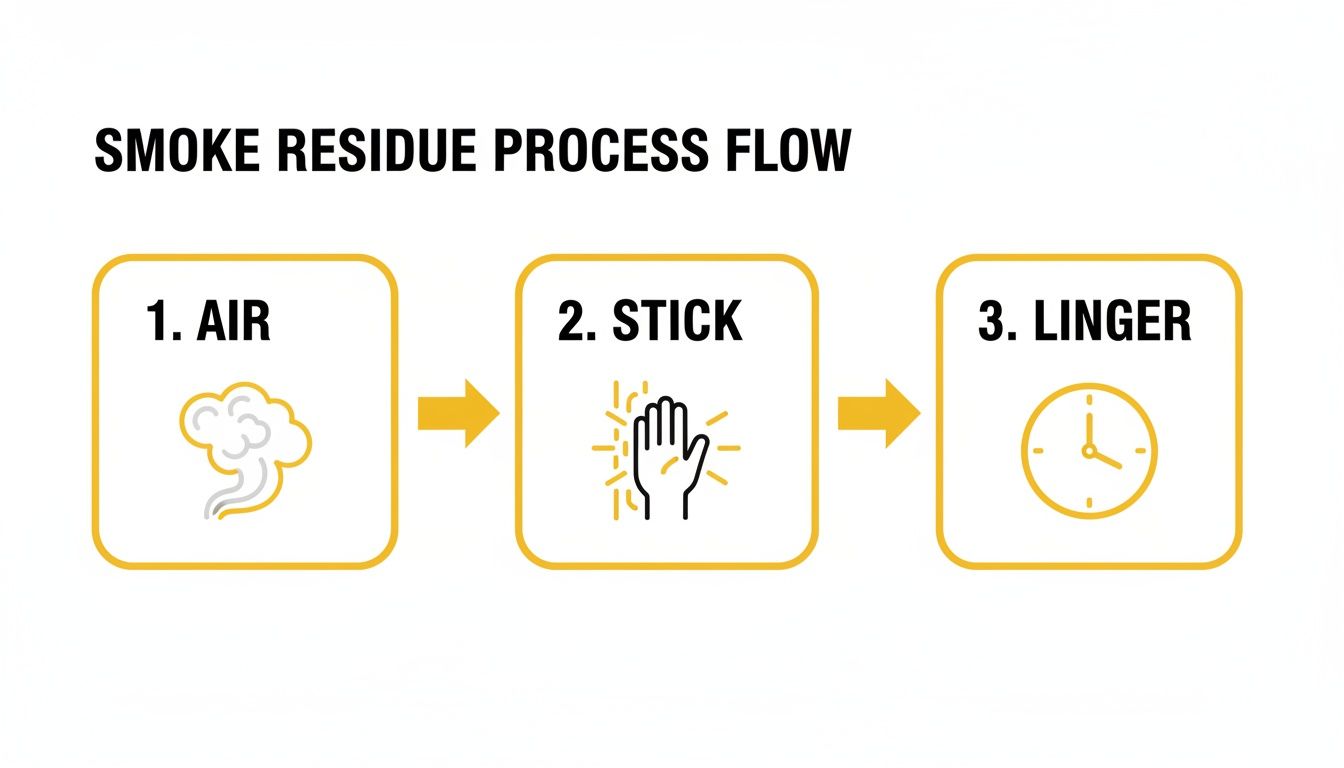
As you can see, those airborne particles don't stay airborne for long. They stick to walls, floors, and furniture, and then they linger, constantly releasing that stale odor. That’s why your first priorities must be ventilation and surface cleaning.
Ventilate Like You Mean It
Your first and most important job is to get the air moving. I’m not just talking about cracking a window open. You need to create a powerful cross-breeze that actively forces the smoky, stale air out and pulls fresh air in.
Start by opening windows on opposite sides of your apartment. Next, grab a box fan, place it in one of the windows, and face it outward. This creates an exhaust system, pulling the contaminated air out while fresh air rushes in from the other windows.
Let this run for as long as you possibly can, especially while you’re cleaning. It's a simple move, but it’s incredibly effective.
DIY Smoke Odor Cleaning Solutions at a Glance
Before you start scrubbing, it helps to know which household items work best for different surfaces. This quick-reference table breaks down your best DIY options for tackling that initial layer of smoke residue.
| Cleaning Agent | Best For | Application Method | Effectiveness |
|---|---|---|---|
| White Vinegar | Walls, ceilings, countertops, hard floors | Mix 1:2 with warm water, wipe down, then rinse | High – Cuts through oily residue and deodorizes |
| Baking Soda | Carpets, upholstery, mattresses | Sprinkle generously, let sit for hours, vacuum up | High – Absorbs and neutralizes acidic smoke odors |
| Rubbing Alcohol | Windows, mirrors, metal fixtures | Spray lightly and wipe with a microfiber cloth | Moderate – Good for cleaning grime but less deodorizing |
| Dish Soap (Dawn) | Greasy buildup on kitchen cabinets, backsplashes | Mix with warm water, scrub gently, rinse clean | Moderate – Excellent for greasy soot but not a deodorizer |
While specialized cleaners have their place, you can make a serious dent in the problem with just vinegar and baking soda. Focus your energy there first.
Wash Down Hard Surfaces
Next up: attack that sticky, yellowish film clinging to your walls, ceilings, and other hard surfaces. A simple mix of white vinegar and warm water is one of the most effective tools in your arsenal. Vinegar is a natural deodorizer that does a fantastic job of cutting through the oily residue that smoke leaves behind.
Here’s the game plan:
- The Mix: In a bucket, combine one part white vinegar with two parts warm water.
- The Wipe-Down: Grab a sponge or microfiber cloth and start cleaning every single hard surface. Always work from the ceiling down to the walls. Gravity is your friend here.
- The Rinse: Once you're done washing a section, go back over it with a different cloth dampened with plain water. This removes any leftover vinegar solution and the grime it loosened up.
This step is non-negotiable. I've seen too many people try to just paint over smoke-stained walls, and it never works. That smell will always find a way to bleed through the new paint. Don't forget to look down, either—odors can seep deep into wood. You can find some great strategies for removing stubborn odors from hardwood floors that build on these same principles.
Deodorize Carpets and Furniture
If hard surfaces are a problem, soft surfaces are a complete magnet for smoke particles. Your carpets, rugs, and upholstered furniture have likely soaked up a ton of odor. This is where baking soda comes in to save the day. Its alkaline nature is perfect for neutralizing acidic smoke smells.
Go to town with it. Sprinkle a thick, generous layer of baking soda over all your carpets and fabric furniture. You really can’t use too much here—you want to cover every inch. Let it sit for at least a few hours. If you can leave it overnight, even better. The longer it sits, the more odor it can absorb.
Pro Tip: After sprinkling the baking soda, use a soft brush to gently work it into the carpet or fabric fibers. This helps it make contact with the smoke particles that are trapped deep down, making it much more effective.
Once it’s had time to work its magic, vacuum it all up. Make sure you’re using a vacuum with a clean filter and powerful suction to pull up not just the powder, but also the odor molecules it’s now holding onto. If you find these initial steps aren't enough, our more comprehensive guide on the best way to get smoke out of a house explores some more advanced techniques.
Using Advanced Tools for Stubborn Smoke Odors
So, you’ve scrubbed every surface in sight, but that stubborn smoke smell just keeps coming back. It’s a frustratingly common problem. Basic cleaning gets rid of the surface soot and grime, but the real issue is the microscopic particles floating in the air and gassing off from deep inside porous materials.
This is where you have to escalate your efforts and bring in the right tools. We're no longer just cleaning; we're treating the air itself.
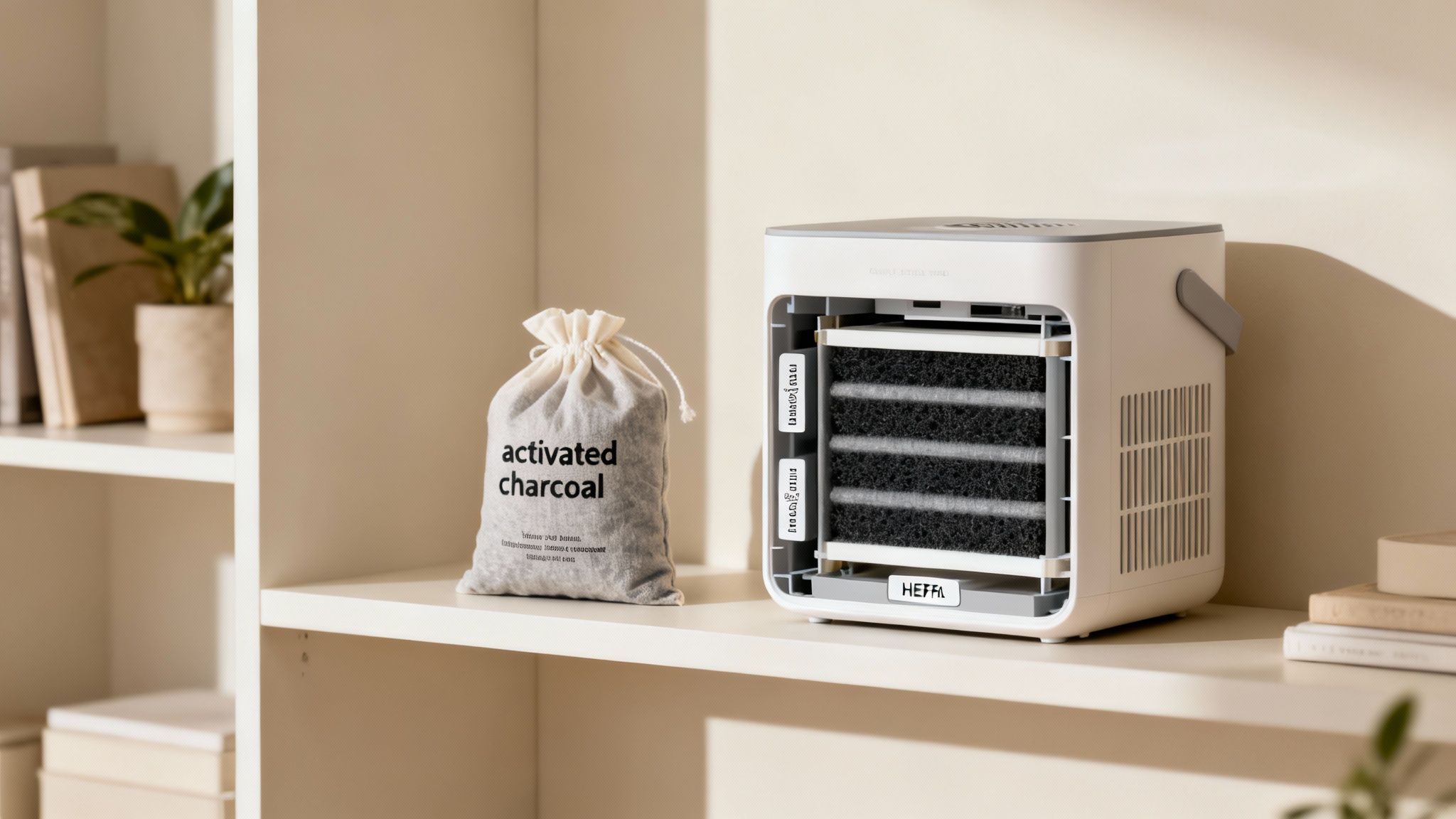
When you're trying to eliminate smoke odor in an apartment, you’re fighting an invisible battle against volatile organic compounds (VOCs). These are the chemical gases that create the smell, and they require a lot more than a simple wipe-down.
Harnessing the Power of Activated Charcoal
One of the most effective and affordable solutions is activated charcoal. Its magic lies in its incredibly porous structure. Think of each little piece of charcoal as a sponge with millions of microscopic pores that trap and absorb those odor-causing VOCs right out of the air.
For this to really work, don't just toss one bag in the middle of the room. You need to be strategic. Place several bags throughout the apartment, especially in smaller, enclosed spaces where odors tend to concentrate.
- Closets and Pantries: Hang a bag inside to pull odors out of clothing and confined spaces.
- Near Furniture: Place bags under sofas or near curtains to tackle off-gassing from fabrics.
- By Air Vents: Position a bag near a return air vent to help capture odors as the air circulates.
This isn’t just some old folk remedy; it’s proven science. The health risks of secondhand smoke are serious, especially for apartment dwellers who can get smoke infiltration from neighboring units. A few well-placed charcoal bags can make a real difference, adsorbing up to 50% of VOCs within 72 hours. The CDC provides extensive resources on the dangers, and it’s worth a read. Learn more about the health effects of secondhand smoke from the CDC.
Choosing the Right Air Purifier
While charcoal is great for passively absorbing smells, an air purifier actively pulls contaminated air through a series of filters, trapping particles and neutralizing odors. But here’s the thing: not all air purifiers are created equal. To truly tackle smoke odor, you need a unit with a specific dual-filter system.
Key Insight: A standard HEPA filter is designed to capture solid particles like dust, dander, and soot down to 0.3 microns. That’s essential, but it won't do a thing for the gaseous VOCs that cause the smell. You need a second layer of defense.
This is why a combination filter is non-negotiable. A true smoke-remediation air purifier must have both:
- A HEPA Filter: This captures the tiny physical smoke particles.
- An Activated Carbon Filter: This is the same material as the charcoal bags but built right into the purifier. It’s designed to absorb the smelly gases and VOCs that slip right through the HEPA filter.
For really severe cases, you might even need to step up to a professional-grade unit. Our guide on air scrubber rental options breaks down how these powerful machines work. It's also helpful to see how pros handle other tough smells; you can find some valuable methods used in specialized pet stain and odor removal services. Using these advanced tools gives you the power to finally clear the air for good.
Cleaning the Hidden Source: Your HVAC System
You've scrubbed every wall, cleaned every carpet, and aired the place out for days, but you still catch that faint, stale whiff of smoke. Don't throw in the towel just yet. The problem isn't your cleaning—it's likely coming from the one place you can't see: your apartment's HVAC system.
This network of ducts and filters is the number one reason DIY smoke odor removal fails. It acts like the building's lungs, and if it's been breathing in smoky air, it's going to keep exhaling it right back into your freshly cleaned rooms.
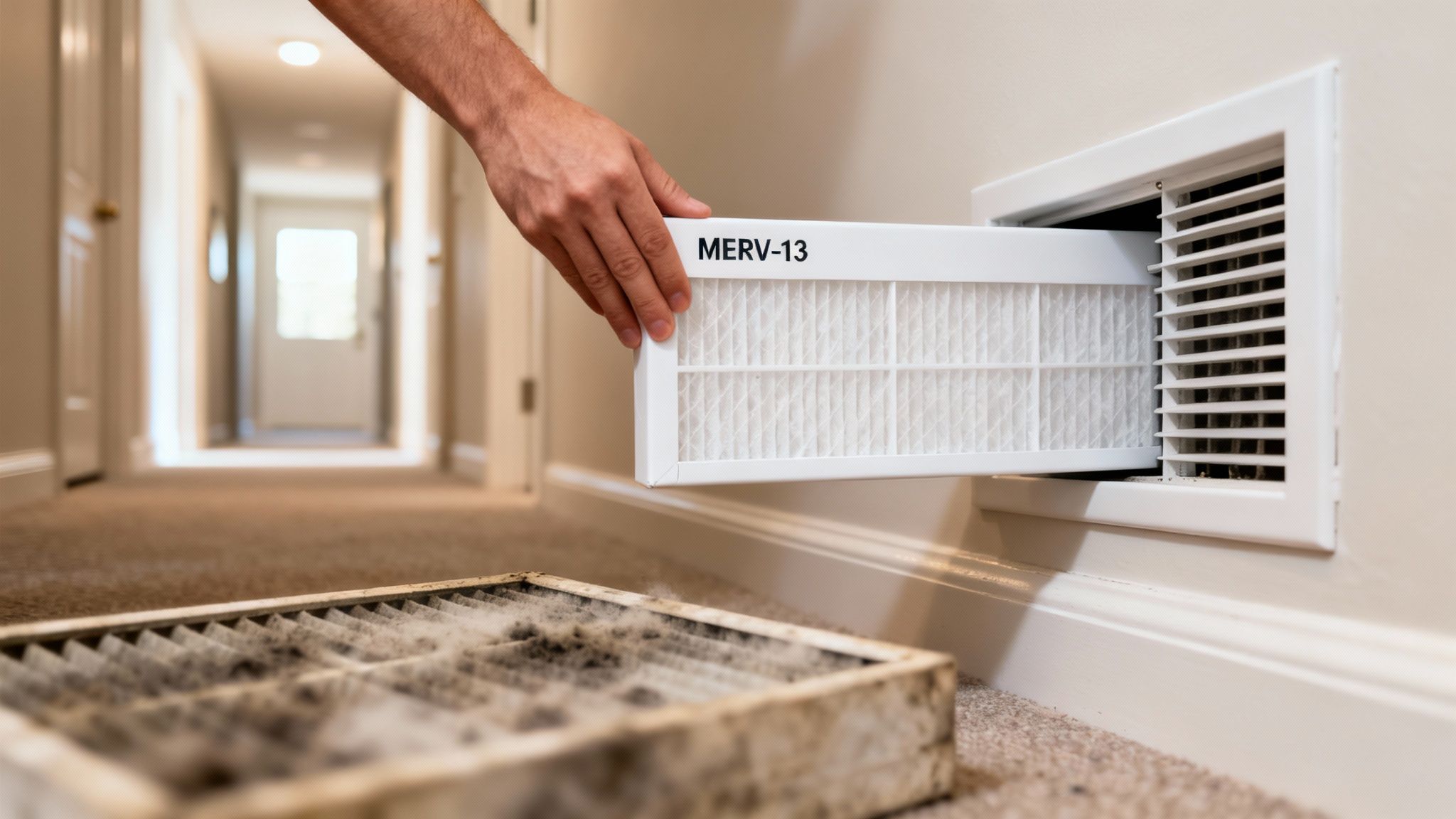
Over time, the same sticky tar and nicotine residue that coats walls builds up inside your vents, turning the entire system into a constant source of odor.
Start with the Air Filter
Your first move is simple, cheap, and makes a huge difference: replace the air filter. This is non-negotiable. The standard fiberglass filter that comes in most apartments is only designed to catch large dust particles; microscopic smoke residue sails right through.
To actually trap these tiny odor-causing particles, you need an upgrade.
- Go for a MERV-13 rated filter: MERV stands for Minimum Efficiency Reporting Value. A rating of 13 is the sweet spot for residential systems—it’s powerful enough to capture smoke, bacteria, and allergens without choking your HVAC's airflow.
- Get the size right: Before you head to the store, check the dimensions printed on the side of your current filter. An ill-fitting filter is useless, as smoky air will just sneak around the gaps.
Skipping this step is like mopping the floor with muddy boots on. You're just undoing all of your hard work.
Expert Insight: When you swap the filter, take an extra two minutes to wipe down the intake vent cover and as far as you can reach inside the duct with a vinegar-and-water solution. You'd be shocked at how much sticky residue collects right at the entrance.
When to Call for Professional Duct Cleaning
A new filter is a great start, but if the apartment was home to a heavy smoker for years, there’s likely a thick layer of gunk deep inside the ductwork. If the smell hangs around even after running your system with a new filter for a few weeks, it's time to bring in the pros. This is especially true for older Los Angeles apartment buildings where ventilation systems can be decades old.
Professional duct cleaners use specialized equipment like high-powered vacuums and long, rotating brushes to physically scrub the inside of your ducts, removing buildup that no DIY method can touch.
For a typical one-bedroom apartment here in the LA area, a professional air duct cleaning usually costs between $300 and $500. It's an investment, but it’s often the final, critical step to permanently eliminate smoke odor in an apartment.
If you're dealing with a severe case and want to understand the full professional process, check out our comprehensive smoke damage restoration guide. A professional duct cleaning is the definitive solution when the smell is buried deep inside your apartment’s ventilation.
When to Call Professionals for Smoke Odor Removal
You’ve scrubbed, aired everything out, and shampooed the carpets, but that stale, stubborn smoke odor just won’t quit. This is usually the point where DIY efforts hit a brick wall.
When the smell has worked its way deep into porous materials like drywall, insulation, and even the subfloor, it’s a sign that household cleaners just aren't going to cut it. A persistent odor after you've already deep-cleaned multiple times is the #1 signal you need professional help.
Other red flags? Heavy, yellow-brown nicotine stains on the walls and ceilings are a dead giveaway. Or maybe the smell gets worse on humid days in Santa Monica—that’s a clear indicator the odor molecules are trapped deep inside the structure of your apartment. For severe cases, like a place that housed a heavy smoker for years, calling a certified team isn't just a good idea; it's the only real solution.
Advanced Treatments the Pros Use
Professional restoration companies come armed with technology that goes way beyond what you can find at the store. These methods don’t just cover up the smell—they get to the source and destroy the odor molecules for good.
Here are a few of the heavy hitters:
- Ozone Generators: These machines are serious business. They pump out ozone (O3), a highly reactive gas that chemically breaks down the compounds causing the smoke smell. Ozone is incredibly effective, but it’s also harmful to people, pets, and even plants, so the apartment has to be completely empty during treatment.
- Thermal Fogging: This is a clever technique where a specialized solvent is heated into a super-fine mist. This "fog" acts just like smoke, creeping into all the same tiny cracks and porous surfaces where the original smoke particles are hiding. The deodorizing agents in the fog then latch onto the odor molecules and neutralize them on the spot.
- Hydroxyl Generators: Think of this as a safer, gentler alternative to ozone. Hydroxyl generators use UV light to create hydroxyl radicals—powerful oxidizing agents that break down odors and VOCs without forcing you to vacate the property. They are great for situations where you can’t completely move out.
What to Expect for Costs and Service
Hiring a professional is really an investment in getting your apartment’s air quality back to normal. Costs can vary a lot depending on the size of your place and how bad the damage is, but there are some general ranges.
For instance, just treating the air ducts for cigarette smoke in a mid-sized apartment can run between $200 and $500. But if the job is more extensive and requires things like repainting and replacing fabrics, the costs can easily climb into the thousands.
Pro Tip: Professional ozone generators, often running at 5,000-10,000 mg/h, can knock out heavy odors in just 24-48 hours. It’s no wonder they’re used in an estimated 40% of post-tenant turnovers to give new renters a fresh start.
When you’re looking for a company in the Los Angeles area, make sure they are IICRC-certified. The Institute of Inspection, Cleaning and Restoration Certification is the gold standard, and it guarantees their technicians know what they’re doing.
A reputable company will always give you a detailed assessment and a clear quote before they start any work. To see what a full-scale professional job involves, check out our dedicated odor removal service page. Don’t let a lingering smoke smell take over your home—letting the experts handle it is the quickest way to breathe easy again.
FAQ: Questions on How to Eliminate Smoke Odor in an Apartment
Even after you've scrubbed, aired things out, and washed every fabric in sight, some tricky situations can leave you with lingering questions. Getting rid of smoke odor for good isn’t always a simple A-to-B process, especially when you’re dealing with a shared building.
Here are some of the most common hurdles people face and how to clear them.
Q: How do I deal with smoke from a neighbor’s apartment?
A: This is one of the toughest spots to be in because you can't control the source. Smoke is a sneaky traveler—it will find its way through shared ventilation, tiny gaps under your front door, and even through the walls via electrical outlets. Your best defense is to seal your apartment. Use a quality door sweep and weatherstripping, and install foam gaskets behind outlet covers on shared walls. If the problem persists, document it and speak with your property manager.
Q: Are scented candles or air fresheners a good solution for smoke odor?
A: No. While scented candles, wax melts, and aerosol sprays give you a moment of relief, they only mask the odor. They do absolutely nothing to eliminate the source. The smoke particles and tar are still clinging to your walls and fabrics, and the smell will come roaring back the second the fragrance fades. Focus on deep cleaning and air purification instead.
Q: Will painting over smoke-stained walls get rid of the smell?
A: This is a classic mistake that almost never works. Nicotine and tar are oily residues that will bleed right through regular paint. To do it right, you must first thoroughly scrub the walls with a strong cleaning solution like TSP. Once clean and dry, you must use an odor-blocking primer. Products like Kilz or Zinsser B-I-N create an impermeable barrier that traps any remaining odor molecules.
Q: How long does it take to completely remove smoke odor?
A: The timeline depends entirely on the severity of the smoke exposure. For light exposure, a weekend of deep cleaning may be enough. For moderate exposure (a light smoker for a year), expect a week or more of consistent effort, including repainting. For heavy, long-term exposure, you are looking at a multi-week project that will almost certainly require professional help, including ozone treatments and HVAC cleaning, to fully eradicate the odor.
If you've thrown everything you have at that stubborn smoke smell and it just won’t budge, it's time to bring in the pros. Onsite Pro Restoration offers professional, IICRC-certified odor removal services across Los Angeles. We use advanced technology and proven techniques to permanently destroy smoke odor at its source.