
To truly get the smoke smell out of your house, you have to act fast. The winning formula is immediate and aggressive ventilation paired with a multi-step cleaning plan that addresses every surface, textile, and even your HVAC system. A can of air freshener just puts a flimsy mask on the problem; true removal means eliminating the microscopic soot particles that have already worked their way into your home's materials. If you’re a homeowner in Los Angeles or the San Fernando Valley, understanding how to get smoke smell out of your house is critical, whether it's from a kitchen mishap or a nearby wildfire.
Onsite Pro Restoration offers 24/7 emergency services for professional smoke damage cleanup and deodorization. Contact us for a free assessment and let our certified experts restore your home.
Your Immediate Smoke Removal Action Plan
The first few hours after smoke infiltrates your home are absolutely critical. This is the window where you either set yourself up for a straightforward cleanup or a long, drawn-out battle with a stubborn odor that loves to reappear on humid days. What you do right away can make a huge difference, especially for homeowners in places like Sherman Oaks or Glendale who might deal with smoke from nearby events.
Before you lift a finger, make sure the property is even safe to enter. Once you get the all-clear, your very next call should be to your insurance company to give them a heads-up. Documenting everything before you start cleaning is non-negotiable for your claim. Pull out your phone and take clear photos and videos of all the affected areas.
Prioritizing Ventilation and Surface Cleaning
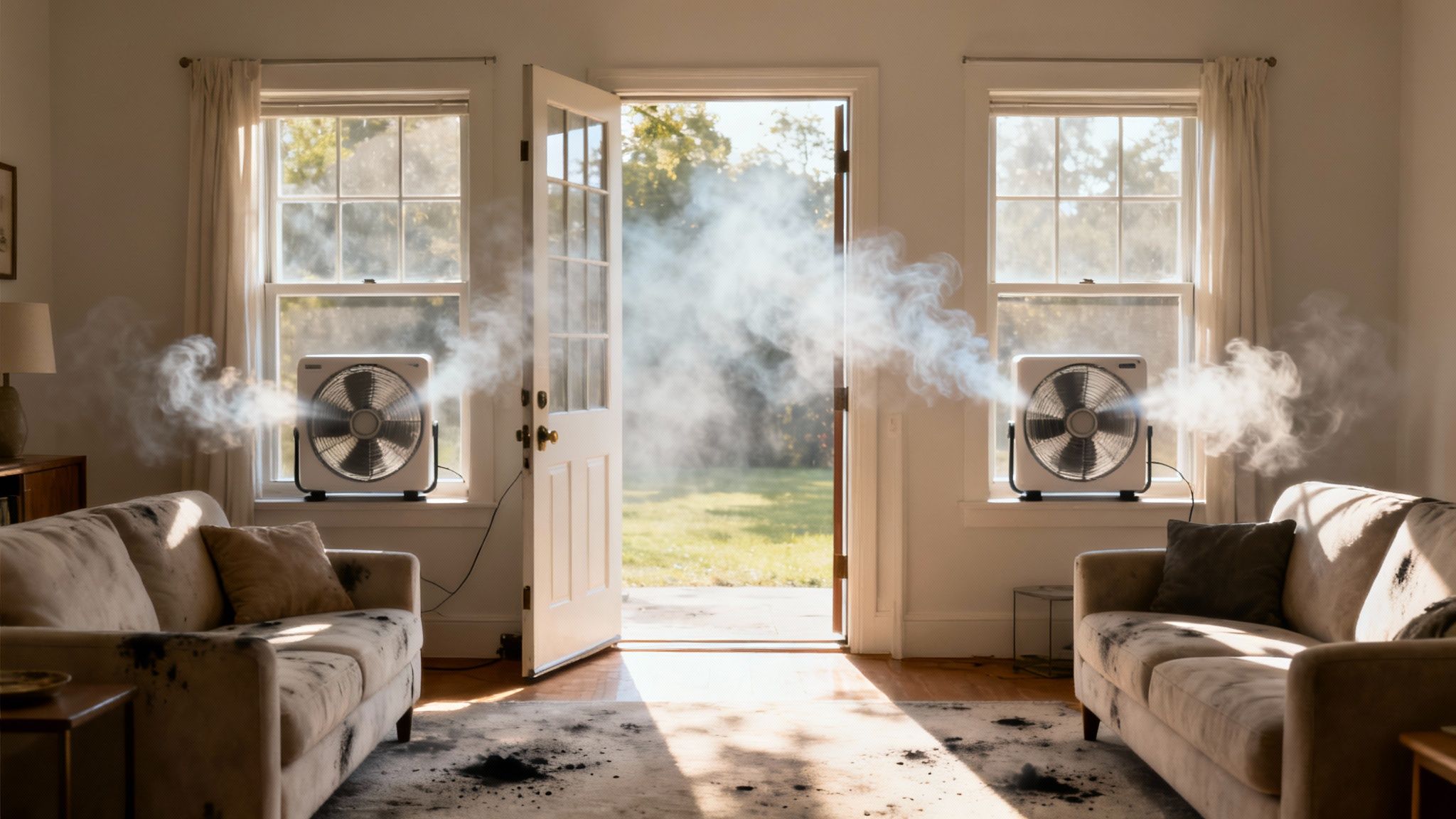
Your first mission is simple: get the smoky air out and stop soot from settling any deeper into your belongings. This is where aggressive ventilation comes in. Open every single window and door you can to create a powerful cross-breeze.
To really get things moving, put box fans in the windows, facing out. This actively pushes the contaminated air outside. One of the biggest mistakes I see people make is turning on their central AC. Don't do it. Your HVAC system will just suck in all those fine, oily soot particles and blast them throughout your ductwork, effectively driving the smell into the lungs of your home.
While the house is airing out, you can start a light cleaning of hard, non-porous surfaces. Think countertops, tables, and sealed wood furniture. Grab a dry chemical sponge (often called a soot sponge) or just a clean, dry cloth and gently wipe away any loose soot. Whatever you do, don't use water or liquid cleaners yet. Moisture will just smear the soot, creating a greasy mess that can cause permanent stains.
This initial wipe-down is a crucial first step in our guide on what to do after a house fire because it removes that top layer of gunk before it has a chance to bond to surfaces. If we have to come in later, this makes our job much easier.
This infographic breaks down the essential first moves you need to make.
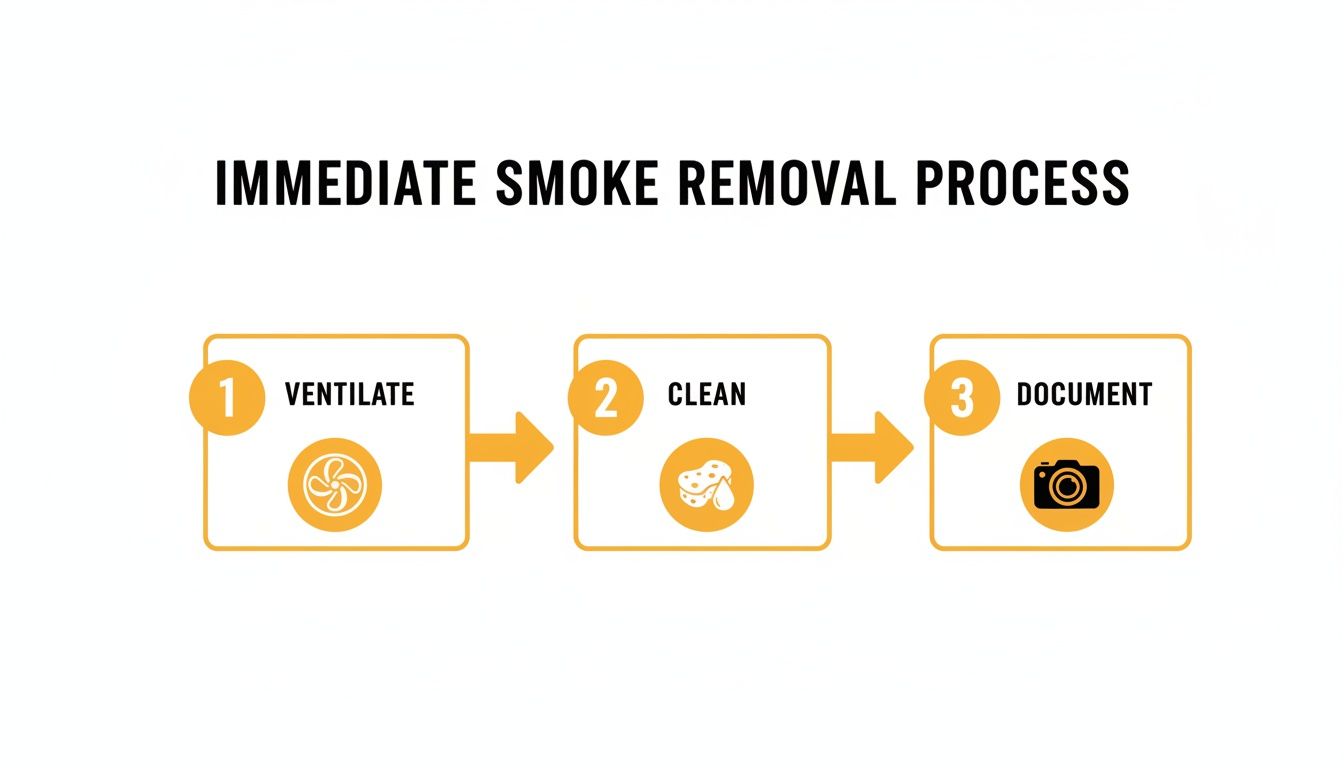
Nailing these three actions—Ventilate, Clean, and Document—is a powerful first response that protects your property and strengthens your insurance claim.
Key Actions to Avoid in the First 24 Hours
Just as important as what you do is what you don't do. A few common missteps can turn a manageable problem into a nightmare.
- Do Not Use Water on Soot: I can't stress this enough. Mixing water with oily soot creates a sludge that’s nearly impossible to remove and will likely stain for good.
- Do Not Turn On Ceiling Fans: This just kicks up soot particles and sends them flying, letting them settle on new surfaces you'll have to clean later.
- Do Not Attempt to Clean Porous Items: Leave the carpets, upholstery, and drapes alone for now. Using the wrong cleaning method can permanently lock that smoke odor into the fibers.
Key Takeaway: In the first few hours, your goal isn't to get rid of the smell completely—it's to stop it from getting worse. By focusing on ventilation, dry cleaning hard surfaces, and documenting everything, you’re taking the right first steps to get control and prep your home for a much deeper cleaning process. This initial response is the critical first chapter in your home's recovery story.
Why Smoke Smell Is So Hard to Remove
You know how the smell of a campfire seems to latch onto your jacket and follow you home for days? Now, picture that same stubborn odor, but amplified a thousand times and trapped inside your house.
Trying to get smoke smell out of a house is such a battle because you're not just fighting an odor—you're fighting a physical substance. It’s an invasion of microscopic, oily particles, many of which are smaller than a single micron. These tiny particles carry volatile organic compounds (VOCs) that don't just settle on surfaces; they worm their way deep into anything and everything porous.
The Science Behind That Lingering Smell
Think about how a sponge soaks up water. The porous materials all over your home—drywall, wood framing, carpets, insulation—act just like that sponge, but for smoke. The particles are so ridiculously small they can travel through the tiniest cracks, finding a permanent home deep inside your walls or the fibers of your furniture.
This is exactly why spraying an air freshener is like putting a Band-Aid on a broken leg. Sure, it might cover up the smell for a little while, but it does absolutely nothing to get rid of the millions of oily soot particles that are the real source. As soon as the fragrance fades, the smoke smell comes roaring back.
For homeowners in Los Angeles, this became a harsh reality during events like the 2020 Bobcat Fire, which scorched over 115,000 acres. Smoke from massive wildfires like that can infiltrate homes for miles, seeping into every crevice and recirculating through HVAC systems long after the skies have cleared. You can learn more about how these particles embed themselves in our comprehensive smoke damage guide.
Not All Smoke Is Created Equal
It’s crucial to understand that the type of smoke you’re dealing with makes a huge difference. What burned dictates the kind of residue left behind, and each type demands a completely different cleaning strategy. Figuring this out is a core part of any professional restoration plan.
- Natural Smoke (Wood, Paper): This kind of fire produces a powdery, dry soot. While it’s a bit easier to wipe off surfaces, it still penetrates deep into porous materials.
- Protein Smoke (Burnt Food): If you've ever burned a roast, you know this smell. It leaves a greasy, nearly invisible film that is incredibly pungent and a real pain to remove.
- Synthetic Smoke (Plastics, Rubber): This is the worst of the worst. It creates a thick, black, oily smudge that smears at the slightest touch and is packed with a nasty cocktail of chemicals. This type of residue almost always requires professional-grade intervention.
Expert Insight: The longer smoke particles sit, the more they oxidize and literally bond with surfaces. This makes them exponentially harder to remove. It’s why taking immediate, correct action is so critical to getting the smoke smell out of a house for good.
The real challenge is reaching every single spot these microscopic particles have settled. It's not just about cleaning what you can see. It's about getting to the unseen soot behind walls, inside your ductwork, and deep within the fibers of your carpets and furniture. This is the only way to truly eliminate the odor for good.
Practical DIY Methods to Get Smoke Smell Out of a House
When you're dealing with a less severe smoke problem—say, from a kitchen flare-up or wildfire smoke that drifted into your Burbank home—you don't always need to call in the pros right away. A focused DIY strategy can make a huge difference. With the right approach and a bit of elbow grease, you can knock down those lingering odors yourself.
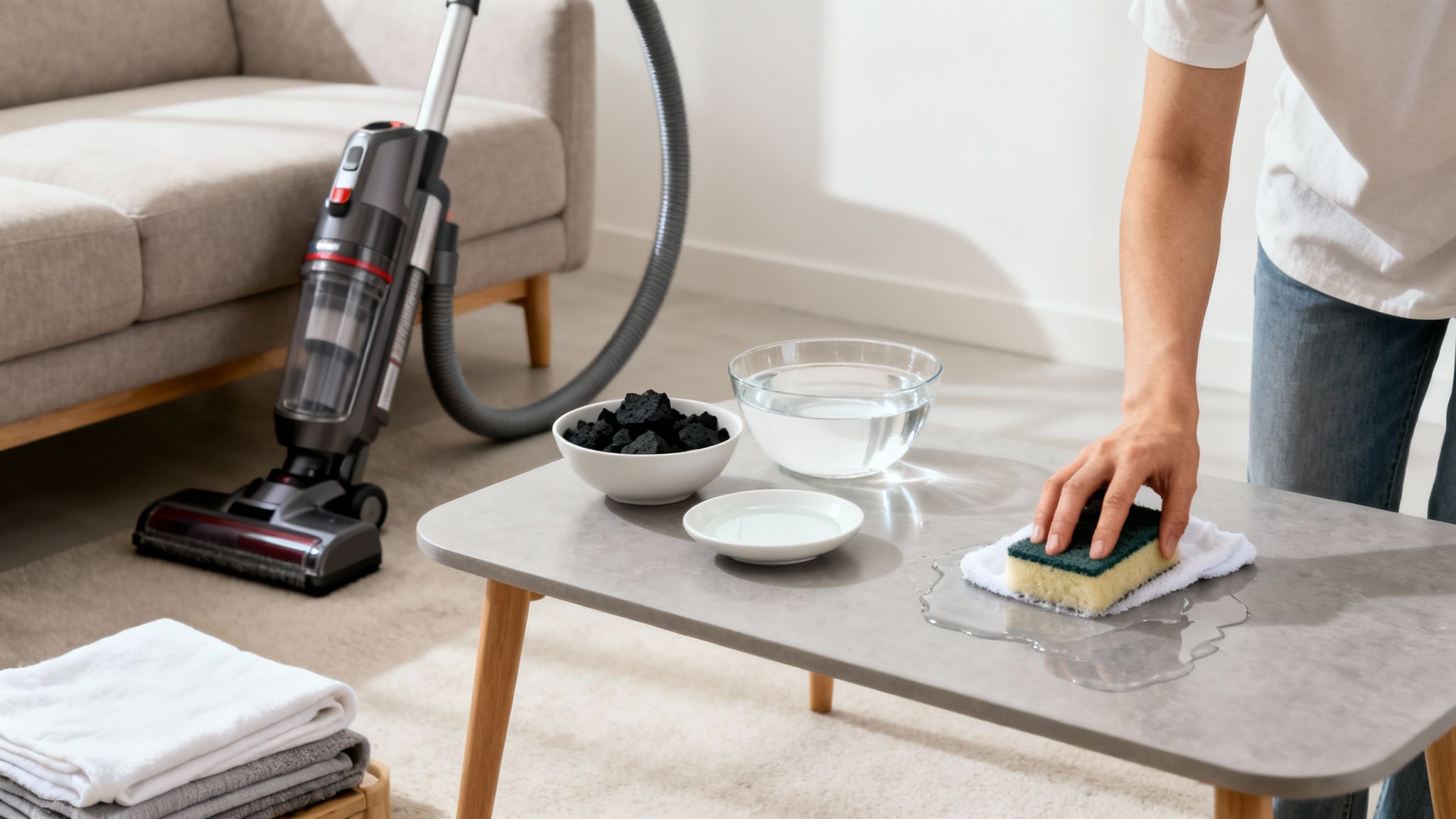
The absolute first step is to get rid of the source: the soot particles. Your regular vacuum isn’t going to work here. You must use a vacuum with a HEPA filter. This is non-negotiable. Soot particles are so incredibly fine that a standard filter will just suck them up and spit them right back into the air, making your problem even worse.
Be methodical. Vacuum every single surface in the affected area. That means carpets, furniture, drapes, and even hard floors. Use your vacuum's attachments to get into every nook and cranny where those microscopic particles are hiding.
Building Your Cleaning Arsenal
After you've vacuumed up all the loose soot, it's time to wash down every hard surface. You don't need a cabinet full of harsh chemicals for this; some of the best cleaning agents are probably already in your kitchen. A simple mix of equal parts white vinegar and warm water does a fantastic job of cutting through the greasy film that smoke often leaves behind.
For more stubborn spots, try making a paste with baking soda and a little water. Apply it to the area, let it sit for a few minutes to soak up the odor, and then gently scrub it away with a soft sponge. This trick works wonders on countertops and backsplashes.
Pro Tip: Always test your cleaning solution on a small, hidden spot first, especially on painted walls or finished wood. You need to make sure it won't cause any discoloration or damage. Let the test area dry completely before you tackle the whole surface.
For a deeper look at eliminating different kinds of smoke, this comprehensive guide on removing cigarette smoke odor has some great advice. While it's focused on cigarette smoke, many of the techniques work just as well for other types.
Tackling Fabrics and Textiles
Smoke particles have a nasty habit of burrowing deep into the fibers of anything soft. For items you can wash, like clothing, curtains, or bedding, a slightly different laundry routine is in order.
- Add Vinegar to Your Wash: Pour one cup of white vinegar directly into the washing machine with your usual detergent. The acetic acid is brilliant at breaking down and neutralizing those stubborn odor molecules.
- Try a Pre-Soak: For really smelly items, let them soak in a tub of water with a cup of baking soda for an hour or so before you wash them.
- Dry Outside if Possible: Sunshine and fresh air are nature’s best deodorizers. Hanging your laundry outside allows the sun's UV rays to help break down any leftover odor compounds.
Carpets are a different beast. Once you've given the area a thorough HEPA vacuuming, sprinkle baking soda generously all over the carpet. Use a stiff brush to work it down into the fibers, then let it sit for several hours—overnight is even better. You'll be surprised how much odor the baking soda absorbs. Just be sure to vacuum it all up afterward.
Natural Deodorizing Solutions
Even after a good cleaning, you can use a few passive tricks to absorb any smells still hanging in the air. This is a simple but powerful way to get the smoke smell out of your house for good.
- Activated Charcoal: Leave a few bowls of activated charcoal around the affected rooms. Its porous surface is like a magnet for airborne odor molecules. You can find it at pet stores or your local North Hollywood hardware store.
- Bowls of White Vinegar: Setting out some small bowls of white vinegar can also help neutralize smells. Don't worry, the vinegar scent will disappear as it dries, and it'll take the smoke smell with it.
- Coffee Grounds: Fresh (unused) coffee grounds are another fantastic natural absorber. Just place them in a few open containers and let them do their work.
These DIY methods require a bit of patience, but for minor smoke issues, they are incredibly effective. Consistency is everything—you might need to repeat a few steps, especially the baking soda treatment on your carpets, to get rid of the odor completely. If you find soot stains on your walls are putting up a real fight, our guide on professional soot removal from walls offers more advanced strategies.
Clearing Smoke Odor from Your HVAC System
If you ignore your home's HVAC system after a fire or smoke event, you're setting yourself up for a long, frustrating battle with odor. Your heating and air conditioning system is like your home's lungs—if it breathes in smoke, it’s going to keep exhaling that same stale, smoky air every single time it kicks on. To truly get the smoke smell out of your house, you have to clean this central hub of air circulation.
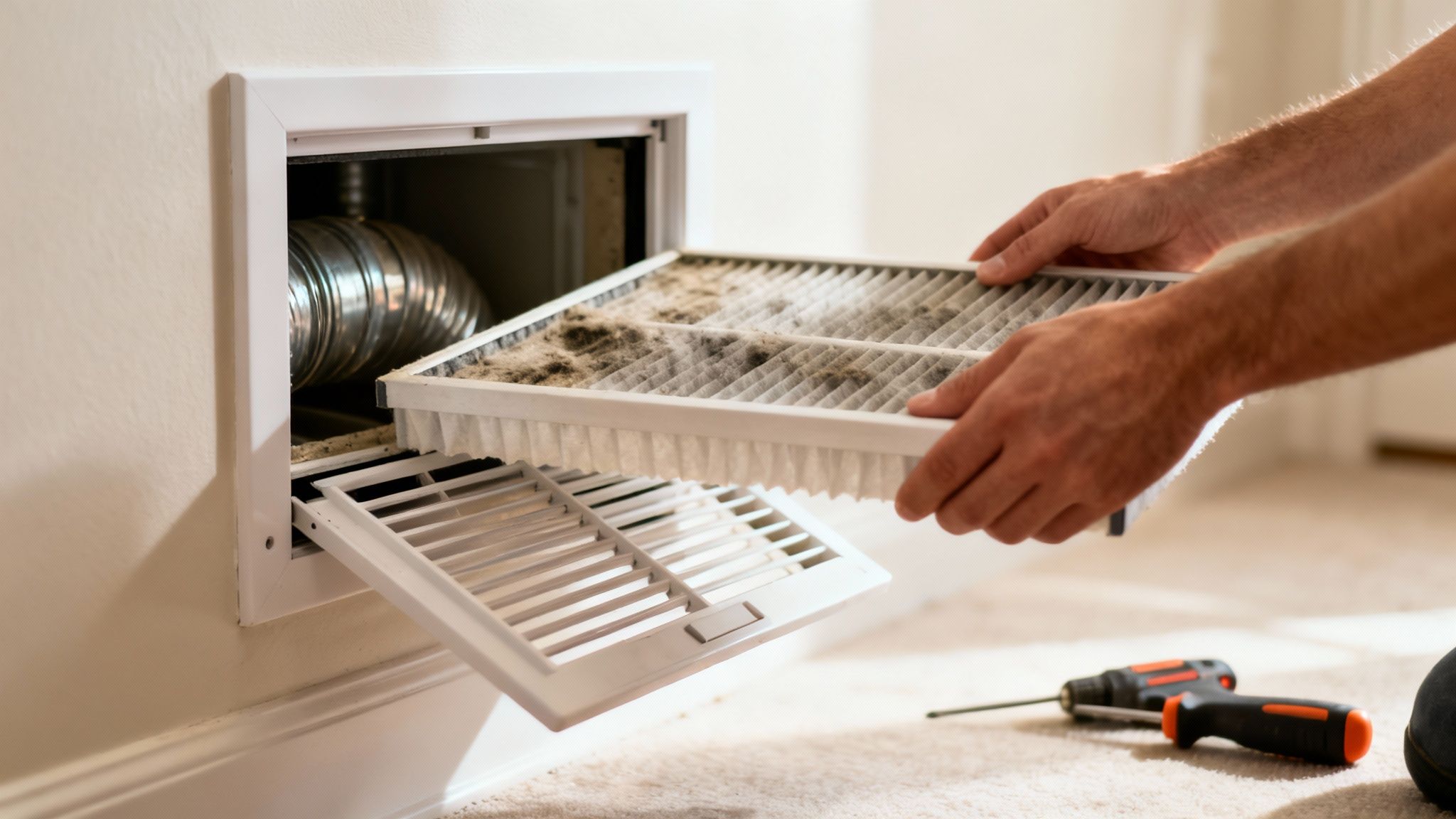
The first, non-negotiable step is to replace every single air filter in the system. Don't just look at them and decide they're okay—swap them out, even if they appear clean. Soot particles are microscopic and will keep releasing odors long after the smoke has cleared. This is your first and easiest line of defense.
Next, you can tackle the parts of the system you can actually reach. Start by turning off your HVAC at the thermostat for safety. Then, go room by room and unscrew the vent covers (also called registers). Take them outside and give them a good scrub with a degreasing soap and warm water. While they’re off, use a vacuum cleaner with a long hose attachment to suck out any dust and soot from the duct opening.
Knowing When to Call HVAC Professionals
While these DIY steps are a good start, they can only take you so far. You can only clean what you can see and reach, but the real source of the lingering smell is often buried deep within the hundreds of feet of ductwork running through your home.
This is where you need to bring in the pros. If the smoke was particularly heavy or the smell just won't quit after your initial cleaning, it’s time to call an HVAC cleaning specialist. For homeowners in places like Beverly Hills or West Hollywood dealing with smoke from nearby wildfires, professional cleaning is often the only permanent solution.
Expert Insight: Professional duct cleaning is a world away from just sticking a vacuum hose in a vent. Technicians use specialized tools like high-powered negative air pressure systems. This equipment creates a vacuum seal on your ductwork, guaranteeing that all the dislodged soot and debris get captured instead of being blown back into your living space.
The Professional Duct Cleaning Process
When a professional crew shows up, they follow a systematic process that's far more intense than a simple cleaning. Here’s a rundown of what you should expect:
- Inspection: They’ll often start by feeding a small camera into the ducts to get a clear picture of how bad the contamination is.
- Agitation: Using high-powered rotary brushes or compressed air whips, they scrub the interior walls of the ductwork to break loose any soot that's bonded to the surface.
- Extraction: The powerful negative air pressure vacuum then sucks all those loosened contaminants out of the system and into a contained unit, usually parked outside your home.
This process ensures the entire system gets a deep clean, from the return vents to the main trunk line. For really stubborn smells, they might also fog the system with a professional-grade deodorizer to neutralize any remaining odor-causing particles. This is how you permanently get smoke smell out of your house.
Smoke odors can be tricky because the particles embed themselves into every surface, and sometimes they mix with other smells. For a deep dive into identifying and fixing other potential odors coming from your AC, check out this guide on Why Does My AC Smell? Quick Fixes for Common Odours.
In wildfire-prone areas, new technologies are also making a huge impact. Systems like bi-polar ionization (BPI) can be installed directly into your HVAC to neutralize smoke particles as they circulate. Tests have shown these systems can slash odors by up to 90%. When the air is thick with contaminants, an industrial-grade machine might be necessary. You can learn more about bringing in heavy-duty equipment like an air scrubber rental to purify the air in your home.
When to Call Professionals to Get Smoke Smell Out of Your House
There comes a point where elbow grease and vinegar just won't cut it. I’ve seen homeowners spend days scrubbing, airing out the house, and trying every trick online, only to have that sour, stale smoke smell return the moment the weather gets warm or humid.
Knowing when you’ve hit the wall with DIY methods is crucial. It saves you time, frustration, and ultimately, gets your home back to normal faster.
If the odor is still there after you've deep-cleaned everything, or if the fire involved plastics and synthetic materials, it’s time to make the call. The biggest red flag? Widespread soot that smears when you touch it. That’s a clear sign smoke particles have worked their way deep into porous surfaces like drywall, insulation, and wood framing—places no sponge will ever reach.
Understanding Advanced Restoration Technology
When a professional restoration company shows up, they’re not just bringing stronger cleaners. They arrive with an arsenal of specialized equipment designed to destroy odor at a molecular level. It's a scientific approach, and the first step is always to assess the specific type of smoke residue to choose the right tool for the job.
One of the most common and effective tools we use is thermal fogging. A special machine heats a solvent-based deodorizer, turning it into a dense fog. The key is that these microscopic particles are the same size as smoke particles. They travel the same path, penetrating deep into tiny crevices and neutralizing the odor-causing particles on contact. It's like sending a search-and-destroy mission for smells.
Key Takeaway: Professional deodorization isn’t just surface cleaning. It uses technology that mimics smoke's behavior to follow its path and neutralize odor particles embedded inside walls, attics, and other structural materials.
Molecular-Level Odor Destruction
For really stubborn, pervasive odors, we have to go a step further. We use powerful oxidizing agents that don't just cover up the smell—they chemically dismantle the molecules causing it. These are heavy-duty treatments, and they require the home to be completely empty for safety.
- Ozone Treatment: An ozone (O₃) generator floods the sealed-off space with ozone gas. That extra oxygen atom is highly reactive; it attaches to odor molecules and shatters them through oxidation.
- Hydroxyl Treatment: This is a newer, safer alternative. A hydroxyl generator uses UV light to create hydroxyl radicals (•OH), which are the same molecules that naturally clean our atmosphere. They are safe for people, pets, and contents, and they actively seek out and eliminate smoke particles and VOCs.
This is not DIY territory. Misusing an ozone generator can permanently damage plastics, rubber, and electronics in your home. It’s a job that demands certified technicians who know exactly what they’re doing. You can learn more about how we apply these advanced methods safely in our breakdown of professional restoration services.
Dealing with Charred Surfaces and Soot
Sometimes, the problem is more than just an invisible smell. When materials are physically charred and caked with soot, cleaning isn't enough. Here, we use methods like soda blasting or dry ice blasting. These techniques strip away the damaged, smelly layer of wood or masonry without using water or harsh chemicals. It physically removes the source of the odor and preps the surface for the final step.
After blasting, we often apply a specialized encapsulating sealant. Think of it as a super-powered primer that creates an airtight barrier, permanently locking in any lingering odor molecules inside structural materials like studs or subfloors. This ensures the smell can never come back.
The hard reality is that fire damage is complex. A small kitchen fire can lead to a cleanup costing $500, while a more significant structural fire can easily exceed $100,000 in restoration costs. Professionals rely on proven technologies like ozone (O3) treatments and ultrasonic cleaning for delicate items. Leaving smoke residue untreated doesn't just leave a bad smell; it can seriously damage your property value, making professional help a critical investment. This smoke restoration guide from United Policyholders offers more great insights. Choosing the right team means the job gets done completely, protecting both your health and your home's future.
FAQs: How to Get Smoke Smell Out of a House
Even when you have a solid game plan, tackling smoke damage brings up a lot of questions. I hear these all the time from homeowners who are trying to get their homes back to normal. Let's clear up some of the most common concerns.
How long does it take for smoke smell to go away?
There’s no single answer here—it all comes down to the severity of the smoke and the types of materials in your home. A minor kitchen flare-up might leave a smell that airs out in a few days with good ventilation and some surface cleaning. But for a significant fire, that odor can stick around for months or even years if not professionally treated. Smoke particles get trapped deep inside porous materials like drywall, wood, and insulation, and the smell will reappear when the temperature or humidity rises.
Is it safe to sleep in a house that smells like smoke?
It's strongly advised against. That lingering odor isn't just unpleasant; it’s a sign that microscopic soot particles and volatile organic compounds (VOCs) are still in the air. Breathing them in can irritate your lungs, eyes, and sinuses. For children, the elderly, or anyone with asthma or other respiratory issues, the risk is even greater. Professional deodorization is essential for restoring healthy indoor air quality.
Can painting over a wall get rid of smoke smell?
No, this is one of the biggest mistakes homeowners make. Simply painting over a smoky wall only hides the problem temporarily. Standard latex paint is porous, and odor molecules will eventually work their way through. First, the walls must be thoroughly washed with a powerful degreaser like Trisodium Phosphate (TSP) to remove oily residue. Then, you must apply a specialized stain-blocking, odor-sealing primer to create a permanent barrier before applying the final coat of paint.
Will an air purifier remove smoke odor completely?
An air purifier helps but isn't a complete solution. To be effective against smoke, it needs both a HEPA filter to capture solid soot particles and an activated carbon filter to absorb the gassy VOCs that cause the odor. While a high-quality purifier improves the air you breathe, it can't pull smoke particles out of your couch, carpets, or drywall. It's a great tool to use alongside a deep cleaning process, not instead of one.
Does homeowners insurance cover smoke damage cleanup?
In most cases, yes. Standard homeowners insurance policies typically cover damage from fire and smoke, including the cost of professional cleaning, deodorization, and repairs. However, it's crucial to document everything with photos and videos before you start cleaning and to contact your insurance agent immediately to start the claims process. Policies can vary, so always check your specific coverage details.
What's the difference between thermal fogging and ozone treatment?
Both are professional techniques, but they work differently. Thermal fogging heats a deodorizing agent into a fog that mimics smoke's behavior, penetrating porous materials to neutralize odor on contact. Ozone treatment uses a generator to fill a sealed area with ozone (O3) gas, which chemically breaks down odor molecules through oxidation. Ozone requires the property to be completely vacant, while newer technologies like hydroxyl treatment are safe for use around people and pets.
If you've tried everything and that smoke smell just won't quit, it's a sign that the problem is deeper than DIY methods can reach. Onsite Pro Restoration offers 24/7 emergency services for professional smoke damage cleanup and deodorization. Contact us for a free assessment and let our certified experts restore your home and your peace of mind.