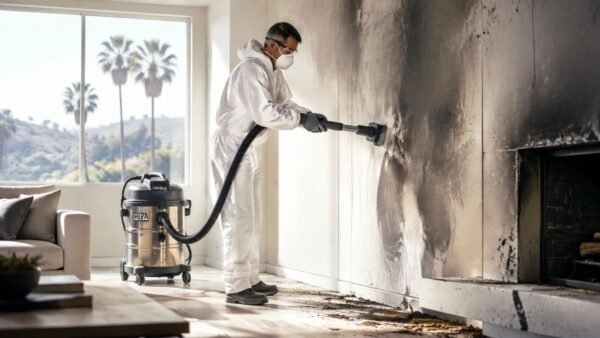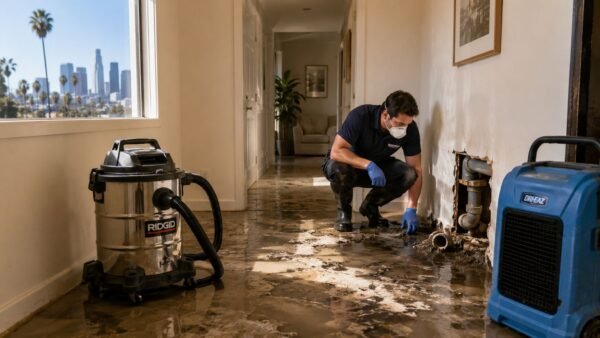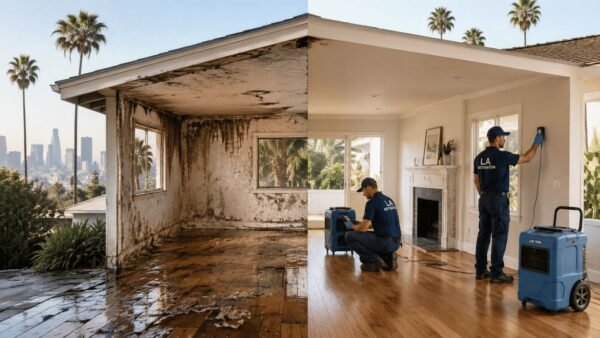

You've got water under the cabinets, soot in the vents, a sewage smell in the hallway, or smoke that won't leave the drywall. In emergency restoration Los Angeles, the right first move is simple, stop the source if you can, then document everything before the crew starts work. In a city with slab-foundation homes, flat roofs, wildfire smoke intrusion, and storm-driven secondary damage, the first 24 to 72 hours decide whether this stays a mitigation job or becomes a rebuild.
Meta description: Emergency restoration Los Angeles guide for water, fire, mold, and sewer losses, with first steps, costs, insurance, and hiring tips.
SEO title tag: Emergency Restoration Los Angeles Guide
What Counts as Emergency Restoration in Los Angeles
A North Hollywood homeowner usually doesn't call because they want “restoration.” They call because a supply line burst behind a 1950s vanity, the hallway smells like sewer gas, or smoke drifted into the bedrooms after a brush fire. The first two moves are always the same, stop the active source if it's safe, then document the damage with timestamped photos.
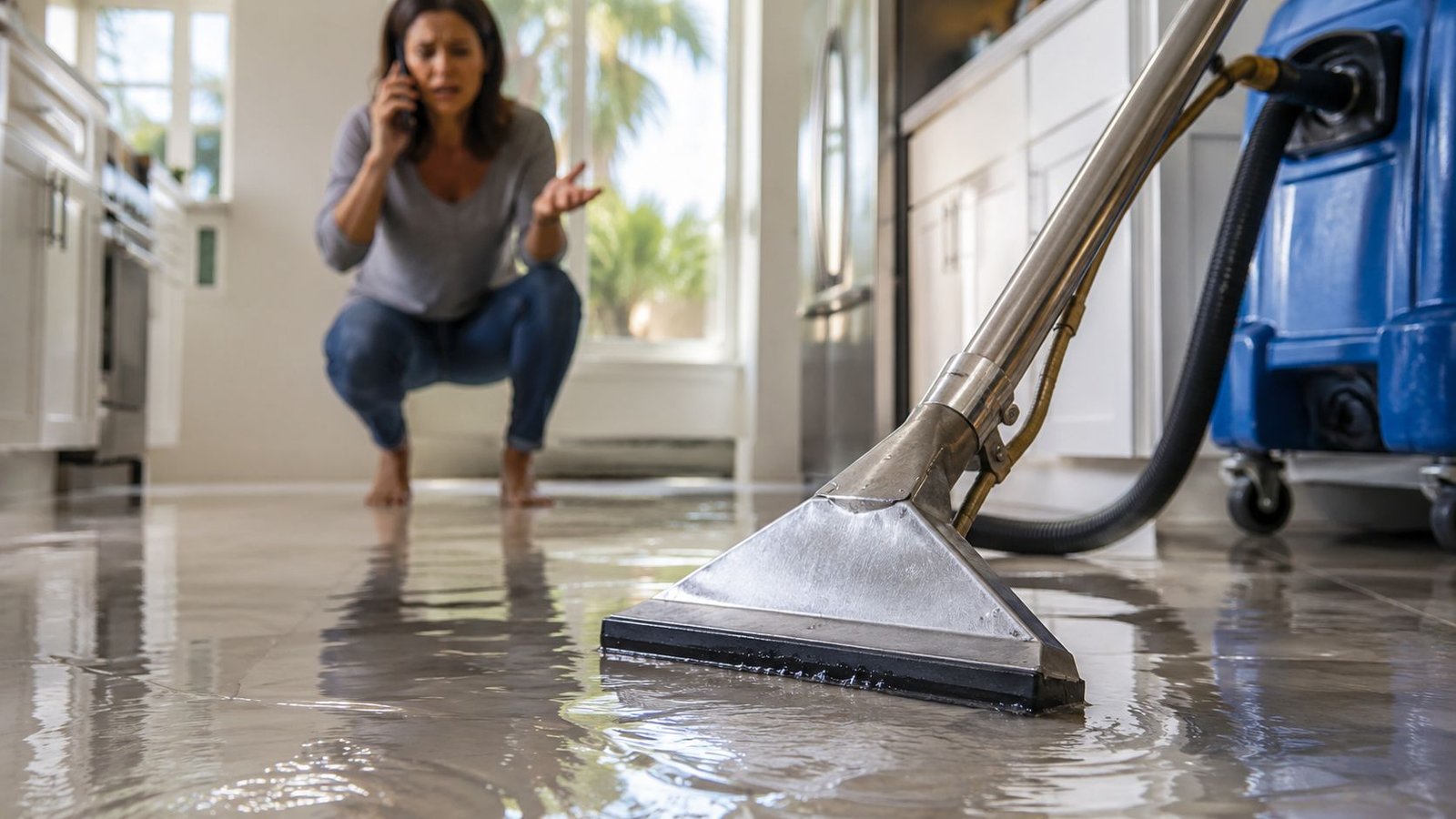
In Los Angeles, emergency restoration usually means more than drying a wet floor. It includes water extraction, structural drying, mold remediation, fire and smoke cleanup, sewer remediation, odor removal, and biohazard cleanup. The city's housing stock makes that mix more complicated, because older 1940s to 1960s slab-foundation bungalows, flat-roof multifamily buildings, and dense utility layouts can hide moisture in walls, subfloors, and chases longer than people expect.
The scale of regional emergencies shows why speed matters. During the 2024 winter storm response, StreetsLA reported 8,937 pothole service requests closed, 1,075 land-and-mudslide requests closed, 16,256 tree-emergency requests closed, and 5,535 palm-frond requests closed between February 4 and March 12, 2024, plus 13,287 individual pothole repairs covering 169,220 square feet. That same kind of disruption is why water intrusion, access issues, and tree or slope hazards often stack on top of a property loss in this market. Los Angeles StreetsLA current statistics and data
Later in the recovery cycle, the 2025 Palisades and Eaton fires added another benchmark. California reported 37,469 acres burned, approximately 16,255 structures destroyed, and 205,000 evacuations at the height of the emergency, while permit and rebuild tracking stayed slow into 2026. LA County recovery data and tracking tools That's a Los Angeles pattern, emergency mitigation starts fast, but recovery can drag on for months.
Practical rule: if water, smoke, or sewage has reached porous materials, the job is already on the clock. The first day is about control, not cleanup aesthetics.
The part homeowners underestimate is the gap between a dry-out and a rebuild. If the damage gets stabilized quickly, the work may stay in the lower range of the project. If moisture sits in walls, cabinets, or insulation, or if smoke residue migrates through HVAC, the scope can expand into demolition, containment, testing, and permit-driven reconstruction.
An intake page like what is water mitigation helps some owners separate the emergency phase from the rebuild phase, but the practical difference is simple. Emergency restoration controls damage now. Reconstruction comes later, after the hazard is documented and the site is stable.
What the first call should cover
- Water source: where it started, whether it's still active, and whether the shutoff is accessible.
- Damage spread: which rooms, cabinets, ceilings, or floors are affected.
- Safety issues: electrical exposure, sewage, smoke, or structural collapse risk.
- Access limits: pets, locked gates, tenants, or HOA requirements.
- Insurance status: whether a claim has been opened or is about to be opened.
A short intake like that gives the dispatcher enough to send the right crew, not just a truck. That matters in neighborhoods like Sherman Oaks, Burbank, Glendale, Studio City, and Van Nuys, where the same call can turn into drying, mold containment, or a fire-related odor job depending on what's behind the wall.
First Steps After Water, Fire, or Mold Damage in LA
The first hour after a loss is about safety, separation, and proof. If the issue is a burst pipe, shut off the water at the meter if you can reach it safely. If the panel is accessible and dry, isolate affected electrical circuits, but don't stand in water to do it. If there's active fire, heavy smoke, or Category 3 sewage, evacuate first and let responders control the scene.
A lot of homeowners open windows, run fans, or start wiping surfaces immediately. That can help in a very narrow set of situations, but it can also make things worse if there's soot, sewage, or hidden mold risk. During a mold event, don't open HVAC registers to “air it out”, because that can push spores and residue through the whole house.
Document before disturbance. Adjusters want to see the original condition of the loss, not a cleaned-up version with no moisture readings and no context.
The IICRC-based emergency window is the first 24 to 72 hours after intrusion. That's when a certified crew will identify the water category, map affected materials, extract standing water, remove unsalvageable porous Category 3 material when needed, place drying equipment, and record baseline psychrometric data with follow-up moisture checks. IICRC standards overview
A homeowner can do a lot in that same window without making the claim file messy. One useful reference is an emergency response plan template, but the basic field sequence is straightforward.
- Make the scene safe. Shut off water, isolate power if safe, and leave the structure if there's active fire, severe smoke, or sewage exposure.
- Take photos and video. Capture every affected surface, the source area, and close-ups of damage before anything moves.
- Preserve the failed part. Keep the burst hose, failed supply line, or appliance component if it's still available.
- Call for containment. Board-up, shoring, tarping, and temporary stabilization are allowed for immediate hazard abatement.
- Do not start permanent repairs. Permanent reconstruction usually needs permits and documentation afterward.
- Protect contents. Move dry items away from wet zones, but don't throw out materials until they're documented.
- Note smells and residue. Smoke, mold, and sewer issues often create evidence that disappears after cleaning.
- Save utility readings. Instrument readings, moisture logs, and photos belong in the claim file.
- Limit traffic. Every footstep can spread contamination or flatten important moisture signatures.
- Keep a call log. Record who you spoke with, when, and what they promised.
In Los Angeles, the legal and operational line is clear. Temporary hazard abatement can happen right away, but permanent repairs usually follow permits, inspection, and documentation once the site is controlled. That sequence protects the house and the claim file at the same time.
The Core Emergency Restoration Services Explained
A lot of people search for one “restoration company,” but the job splits into five very different service lines. The right crew depends on whether the loss is wet, burned, contaminated, or mainly an indoor air problem. In a market like Los Angeles, those distinctions matter because a slab leak in Sherman Oaks calls for a different workflow than smoke intrusion in Glendale or a sewer backup in a Studio City duplex.
Water, mold, and the drying clock
For water intrusion, the work is emergency extraction and structural drying. The crew should map moisture with thermal imaging and pin or pinless meters, pull out standing water, remove unsalvageable porous materials if contamination demands it, and set the air movers and dehumidifiers to match the loss. The point isn't to make the place feel dry. It's to get materials back to target moisture levels and document the numbers.
That's where emergency water damage restoration in Los Angeles fits, along with water damage restoration services and, when hidden growth is suspected, mold remediation services or mold testing services. In a slab leak, the source can run under flooring or base plates long before the stain shows up on the surface.
Fire, smoke, sewer, and biohazard
Fire and smoke losses are different. Crew members need to remove soot, stabilize odor, contain affected zones, and protect clean areas from cross-contamination. That often means negative-air containment, HEPA filtration, and deodorization before any rebuild.
For sewer backups, sewer remediation service covers Category 3 cleanup, contaminated material removal, and sanitation of affected surfaces. Biohazard jobs are even more controlled, because trauma scenes, hoarding-related contamination, and similar losses require biohazard cleanup in Los Angeles rather than ordinary janitorial cleanup.
The broader menu is summarized on Pro restoration services, which is useful when the loss crosses categories. And if the odor itself is the problem, not just the visible damage, odor removal service becomes the right path.
A helpful outside reference for property owners comparing treatment types is choosing a commercial mold treatment from VirusFAQ.com, because many homeowners confuse surface cleaning with actual remediation. The difference is containment, documentation, and whether the source has been addressed.
Operator note: if the company only talks about “cleaning,” but never mentions containment, moisture logs, or clearance testing where needed, you're probably buying the wrong scope.
What Emergency Restoration Costs in Los Angeles
LA pricing moves fast because labor, access, demo, and equipment time all stack together. A small, clean water loss can stay relatively contained, while the same square footage contaminated by sewage or hidden behind cabinets can jump in scope quickly. In practice, two homes with the same floor area can land far apart on price because one loss is a dry carpet event and the other needs demolition, drying, containment, and rebuild prep.
For a local pricing anchor, homeowners often check an aggregate like compare restoration service costs, then compare that against the actual loss category and materials involved. The number is driven by contamination, demolition, and how long the equipment has to run.
LA Emergency Restoration Cost Drivers
| Damage Type | Typical LA Range | Key Cost Drivers |
|---|---|---|
| Clean water extraction and dry-out | Lower mitigation range | Source stop, square footage, flooring type, equipment days, moisture mapping |
| Category 3 sewage cleanup | Higher mitigation range | Contamination level, removal of porous materials, sanitation, containment |
| Fire and smoke cleanup | Variable, often wider range | Soot migration, odor treatment, HVAC impact, contents cleaning |
| Mold remediation after water intrusion | Higher range if hidden growth is present | Testing, containment, demolition, clearance documentation |
| Biohazard cleanup | Specialized pricing | PPE, regulated handling, decontamination, disposal requirements |
A lot of the cost spread comes from the materials. Hardwood swells and cups. Drywall wicks moisture. Carpet can sometimes be salvaged, but padding often can't. Cabinets, baseboards, and insulation add hidden labor because they slow access to the wet cavity.
Insurance also changes the out-of-pocket picture. A homeowner with a sudden pipe break and solid documentation often has a very different experience from someone dealing with gradual seepage, missing maintenance records, or a mold exclusion. Code-upgrade endorsements and water-backup coverage can change what gets paid, but the claim file has to show the original source, the affected areas, and the mitigation sequence.
The fastest way to overspend is to wait on diagnosis. The second fastest is to hire a crew that tears out too much before they know whether the material can dry. In Los Angeles, the best quote is not always the cheapest one. It's the one that matches the loss category and the documentation standard.
How Insurance Claims Actually Work After an LA Loss
In California, the claim usually starts with a phone call, but the file starts when the first photos, moisture readings, and notes get captured. For many homeowners, the key split is between sudden and accidental water, which is commonly covered under an HO-3-style policy, and gradual leaks or flood, which are often excluded. HO-5 forms tend to be broader in some areas, but the policy language still controls the outcome, not the label on the brochure.
The practical question is what the adjuster sees in the first 48 hours. They want the source documented, the affected rooms identified, the drying plan explained, and the estimate tied to the actual loss. If mold, water-backup, or code-upgrade endorsements exist, those details belong in the file early, not after the demo dust settles.
Onsite Pro's home insurance claim process is the type of workflow that keeps files organized, because the contractor and carrier are looking at the same facts. A thorough mitigation report can shorten cycle time because it reduces back-and-forth about what was wet, what was removed, and what still needs to be dried.
What to save and what to document
- Save the failed part: hose, valve, appliance line, or pipe section if it's available.
- Save the photos in order: source, spread, contents, and drying equipment setup.
- Save moisture logs: baseline and follow-up readings belong in the claim file.
- Save psychrometric notes: temperature and humidity data help explain drying goals.
- Save receipts: emergency board-up, hotel, or temporary storage can matter later if covered.
What not to do is just as important. Don't toss damaged materials before they're photographed. Don't let a rebuild contractor blur into the mitigation scope before the adjuster has reviewed the dry-out. Don't assume an initial denial means the file is closed. In LA claims, the strongest files are the ones that show a clean chain from loss to stabilization to repair.
Claim file rule: if it can't be explained by a photo, a meter reading, or a dated note, don't expect the adjuster to treat it as settled fact.
How to Choose a Certified Restoration Contractor
A restoration company is not interchangeable with a general cleanup crew. The difference shows up in the paperwork, the equipment, and the way the technician explains the loss. A legitimate mitigation contractor should be able to show IICRC certification, a verifiable CSLB license, appropriate liability coverage, and a documented process that matches S500, S520, and S700 standards. What IICRC certification means is worth knowing before you authorize work.
The red flags are usually visible on day one. Verbal-only estimates, no moisture map, no documented drying goals, no follow-up readings, no third-party clearance testing after mold work, and pressure for a big upfront cash deposit all point to weak controls. If a crew shows up before the insurance call is even logged, that's another warning sign, because the claim file may never match the work performed.
Five questions to ask before you sign
- What standard are you following? The answer should reference IICRC-based mitigation, not generic cleanup language.
- How will you document drying? Look for meter readings, photos, and daily logs.
- Who handles insurance communication? The crew should know how to provide documentation directly to the carrier when needed.
- What happens after mitigation? Mitigation and rebuild are different scopes, and the handoff should be clear.
- Will you give me a written work authorization? If not, walk away.
The difference between mitigation and rebuild matters too. Mitigation secures and dries the site. Rebuild replaces what was removed. If those two scopes blur together too early, homeowners lose negotiating power, and adjusters lose clarity.
A practical scheduling note also helps in Los Angeles. Families often compare remediation dates against school calendars, especially when kids are displaced and the house can't be occupied. For that kind of planning, a public reference like the full LA school year calendar can help a parent coordinate temporary housing and cleanup timing without guessing around semester breaks.
Response Time, Coverage Area, and the Local FAQ
Los Angeles customers don't just want a nice explanation, they want to know who can get there now. Major providers in the area advertise 24/7 emergency response, with dispatch windows around 45 to 60 minutes in the greater metro, and Onsite Pro Restoration serves a 25-mile radius around North Hollywood that includes Glendale, Burbank, Sherman Oaks, Van Nuys, Encino, Studio City, West Hollywood, Beverly Hills, and Woodland Hills. In an emergency, that response window can be the difference between a clean dry-out and a bigger teardown.
Prevention still matters, especially in older LA homes. Annual water-heater checks, washer-hose replacement, gutter cleaning before winter storms, and attic smoke-detector maintenance during red-flag warnings are small tasks that cut down on the kind of call nobody wants at 2 a.m. They won't stop every loss, but they reduce the odds of a failure that spreads across multiple rooms.
Local FAQ
What if my insurance denies the claim?
Don't assume the first answer is final. Ask for the reason in writing, keep the photos, moisture logs, and receipts, and compare the policy language to the damage source.
Is this mold or just mildew?
If the growth is limited and surface-level, it may be a smaller issue, but if there's staining, odor, or repeated moisture, bring in testing and a remediation plan instead of guessing.
What should renters and landlords keep?
Both sides should save photos, repair notices, vendor reports, and dated communication. Landlords should also keep mitigation records and any clearance or rebuild documents.
What if no crew can arrive within an hour?
Shut off the source, document everything, isolate the area, and ask for the soonest dispatch window with temporary stabilization instructions.
For water, fire, mold, sewer, odor, or biohazard losses, the fastest next step is a real emergency call, not a shopping exercise. If the damage is active in Los Angeles, call 818-336-1800 and ask for the service that fits your loss, then keep your photos and notes aligned with the crew's mitigation report.
If you need emergency restoration in Los Angeles, Onsite Pro Restoration handles water extraction, fire and smoke cleanup, mold remediation, sewer remediation, odor removal, and biohazard cleanup with the documentation insurance files need. Visit Onsite Pro Restoration to request help now, or call 818-336-1800 if the loss is active and you need a crew dispatched quickly.