
You usually don't call for mold remediation in Los Angeles because you want a cleanup. You call because a leak, flood, or stubborn musty smell has already turned into a problem you can't ignore, and you need to know what's damaged, what it'll cost, and whether the fix will hold. In LA, that job is rarely just about wiping visible growth. It's about finding the moisture source, stopping it, and proving the space is safe again.
A Sherman Oaks homeowner with a slab leak, a Glendale condo with a wall cavity that stayed damp after a storm, or a North Hollywood rental with mold near the HVAC all face the same reality. If the moisture stays, the mold comes back. That's why local remediation has to be treated like a moisture-control project first and a cleaning project second.
What Mold Remediation Means in Los Angeles
A few years ago, I walked a Valley homeowner through a job that started as a small stain behind a bathroom vanity and ended up involving drywall removal, drying, and clearance testing. That's typical here. In Los Angeles, mold remediation usually begins where water entered, not where the stain showed up.
Why LA jobs escalate fast
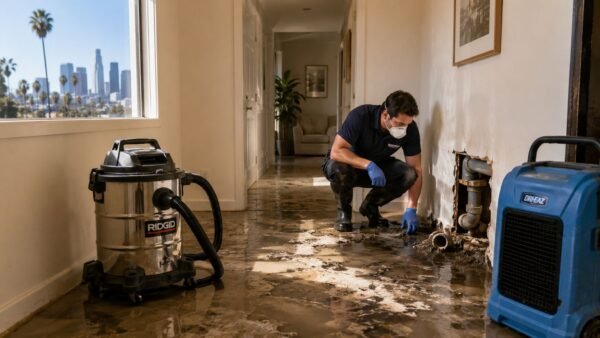
Los Angeles homes and small buildings often have the kind of construction that hides moisture well. Stucco exteriors, slab foundations, older crawlspaces, and compact HVAC runs can trap water in places a homeowner won't notice until odors or discoloration show up. Once wet materials stay wet, the problem moves quickly, and local guidance says moisture can become a mold issue within 24 to 48 hours Los Angeles County Public Health.
That short window changes how we plan a job. If you're in Burbank, Sherman Oaks, or Glendale, the work is rarely just surface treatment. It's often containment, demolition of damaged porous materials, drying, and then verification that the area is clean.
Practical rule: if the source of water isn't fixed, the mold problem isn't fixed.
Why the local price premium is real
LA remediation also costs more than many homeowners expect because the market is structurally different, not because contractors invented a luxury line item. One 2026 cost guide puts most Los Angeles projects at $596 to $7,151, and says that's about 19% above the $2,500 national average Los Angeles cost guide. Another local pricing analysis puts average remediation at $2,573, with most homeowners paying $1,590 to $3,850 same source.
That spread tells the full story. Mold remediation in Los Angeles isn't one price because it isn't one kind of job. A small affected closet is one thing, but hidden wall damage, HVAC contamination, or whole-home growth moves you into a much larger restoration process.
Signs of Mold and Hidden Moisture in LA Homes
The first clue is often smell, not sight. In homes with central air, ducts can move musty odors from a crawlspace or wall cavity into the living area long before anyone sees visible growth. If the house smells stale after the AC kicks on, don't treat that as normal.
What to look for before the stain spreads
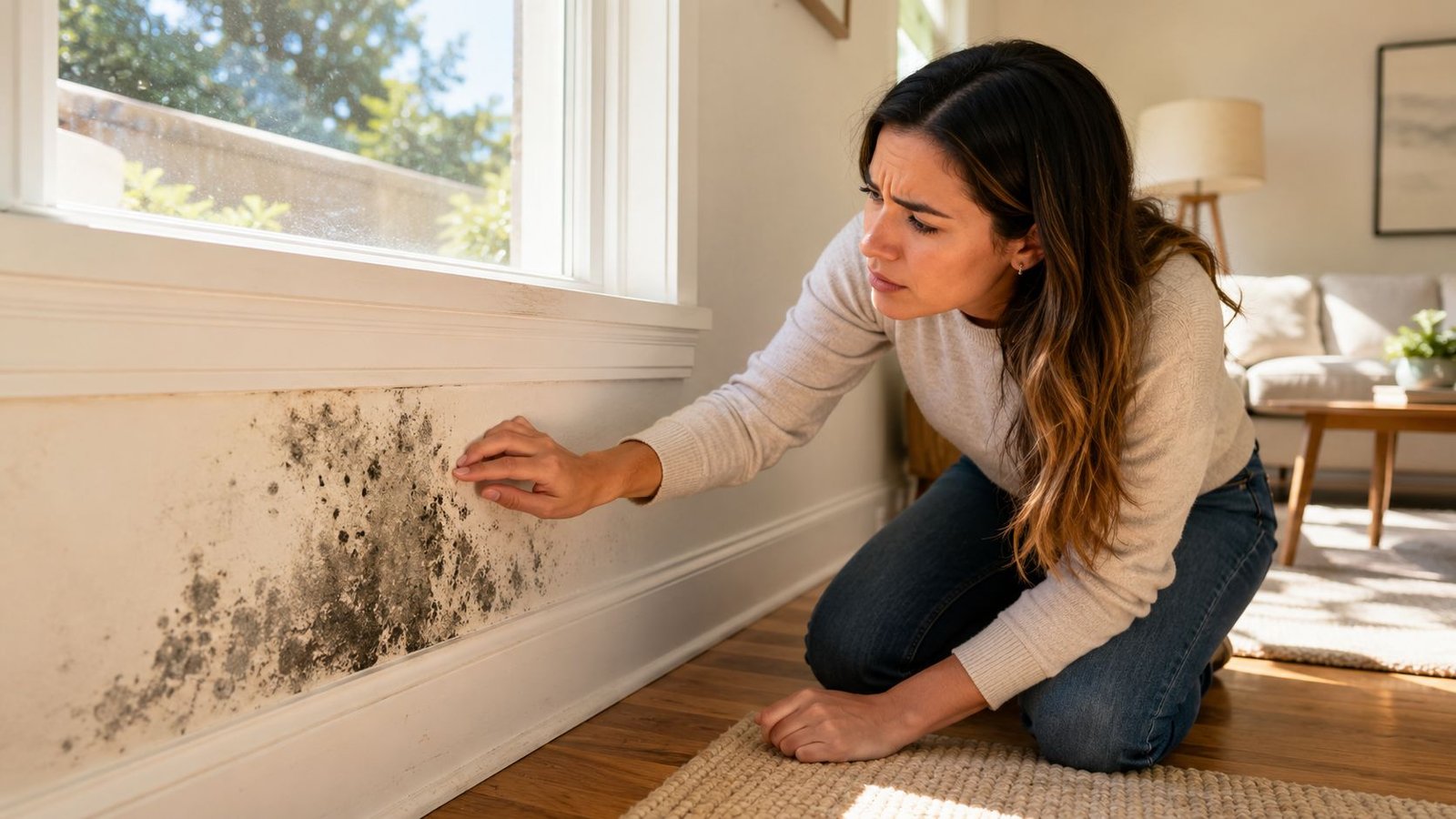
Visible mold usually shows up as dark spotting, fuzzy growth, or discoloration on drywall, trim, baseboards, or around windows. In older Pasadena homes, condensation on single-pane windows can feed repeated growth. In Valley properties with raised foundations, moisture can migrate under the floor and keep the same area damp after every minor leak.
A simple self-check helps. Walk the house and pay attention to the places water likes to hide, especially behind toilets, under sinks, around laundry hookups, near exterior walls, and below windows. If you see peeling paint, swollen baseboards, or a patch that keeps coming back after “repair,” the cause probably wasn't fully solved.
For a deeper look at how water may be entering the structure, a guide to plumbing leak detection can help you think through the common failure points before you call in a remediation crew.
A recurring stain is usually telling you the same thing, the moisture path is still active.
When hidden moisture matters more than visible mold
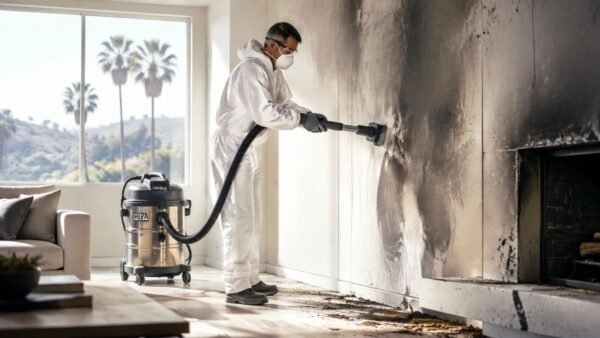
Post-fire water damage can also create mold conditions. Fire crews and sprinklers may stop one problem while leaving wet framing, insulation, or subfloors behind. That's why the cleanup can look minor at first but still turn into a larger job.
If the odor, staining, or humidity keeps returning after a previous repair, the issue has likely moved beyond a simple surface problem. In those cases, a certified inspector can confirm whether you're dealing with a localized area or a larger hidden moisture failure.
Mold Inspection and Testing in Los Angeles
A visual inspection tells you where the problem seems to be. Testing tells you what's present and how much documentation you have for a claim, sale, or clearance report. In Los Angeles, those are not the same service, and the difference matters.
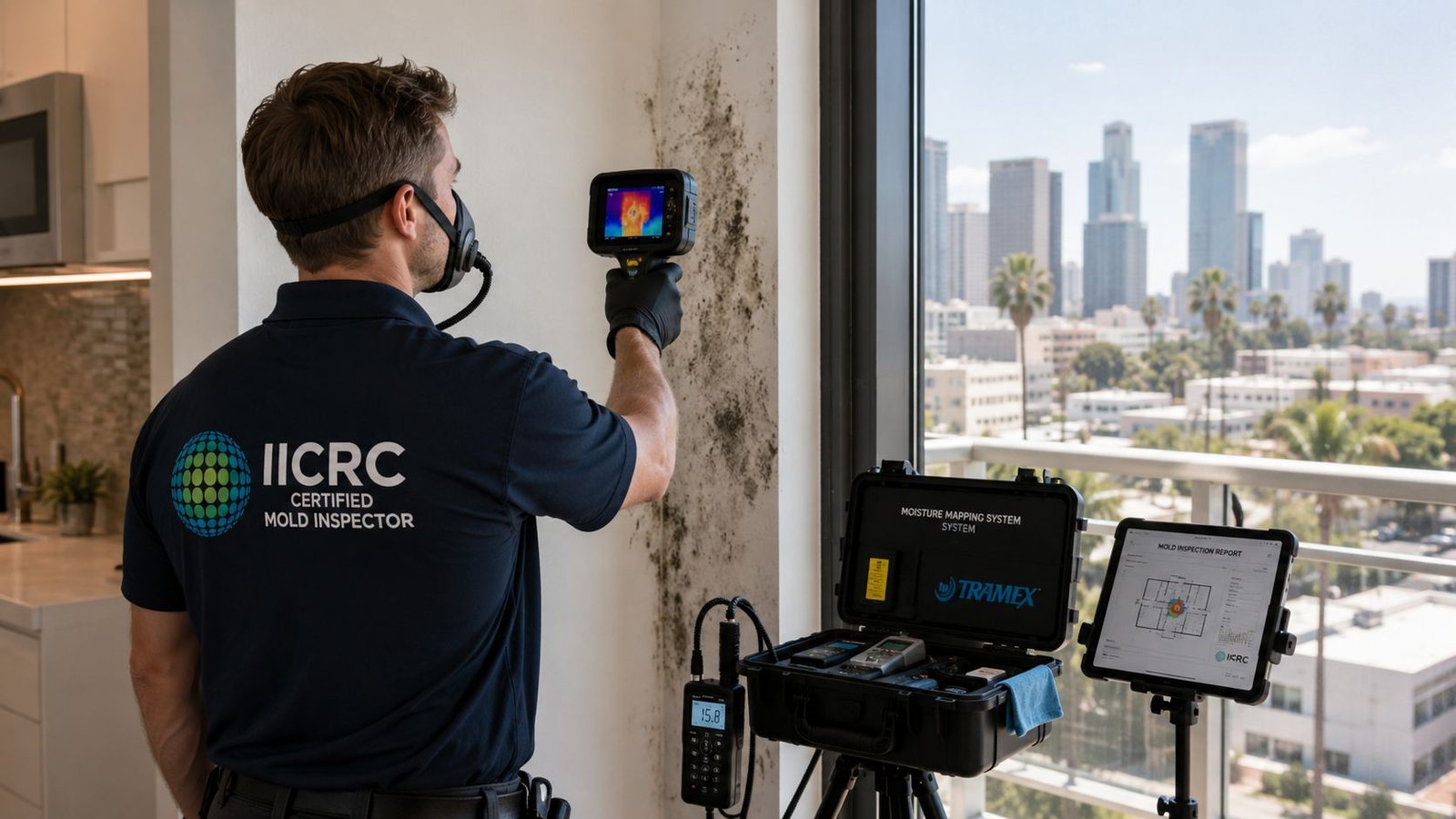
A trained inspector starts by mapping moisture, not just scanning for spots. That usually means visual assessment, moisture meter readings, and targeted use of thermal imaging to identify cold or wet areas inside walls and ceilings. If the problem is broad enough, surface sampling or air sampling may be used to build a record of what's happening indoors.
California guidance says final air sampling is required for remediation projects larger than 100 square feet California mold guidance. That makes clearance testing a real benchmark, not an upsell. On a project that size, a contractor who skips verification is leaving the job incomplete.
The most useful reports include photos, moisture readings, and a written scope. That paperwork helps with insurance, and it also helps when a buyer, seller, or property manager needs proof that the issue was handled correctly.
A certified mold inspection service like Onsite Pro's certified mold inspector can be a useful starting point when the damage is visible but the source isn't. In Los Angeles, that first visit often determines whether the job stays small or becomes a full containment and removal project.
Later in the process, a lab-backed report can matter more than the initial visual findings.
For homeowners, the value of testing is documentation. For insurers, it shows the extent of the loss. For a real estate transaction, it gives a paper trail that the problem wasn't guessed at, it was measured.
The Professional Remediation Process From Start to Finish
Work starts after the inspection. If you're comparing quotes, this is the sequence you want to hear described clearly, because the order matters as much as the equipment.
What a proper job includes
The first step is containment. The affected area gets sealed so spores and dust don't move into clean spaces. Then negative air and HEPA filtration help control airborne contamination while demolition or cleaning is happening. That's the difference between targeted work and a whole-house mess.
Next comes removal of materials that can't be reliably cleaned. Porous items like damaged drywall, insulation, and carpet padding usually have to come out if they've been saturated or heavily contaminated. Framing, concrete, and other salvageable surfaces can often stay, but only after proper treatment.
After that, structural drying and moisture correction come first, because mold remediation that ignores the moisture source is incomplete. California guidance says the underlying cause has to be corrected or fungal growth will recur California mold guidance. In practice, that means leak repair, drying, and sometimes HVAC or ventilation work before any rebuild starts.
If a contractor talks about paint before drying, you're hearing the wrong sequence.
Los Angeles County vendor specifications require water-damage restoration and mold remediation to follow ANSI/IICRC S500 and S520 and to be done by an IICRC-certified firm LACounty vendor specs. That standard is the local baseline for serious public-sector and commercial work, and it's the right reference point for homeowners too.
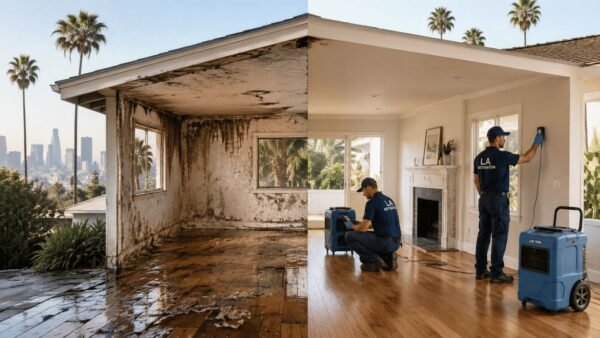
In our experience on LA jobs, the cleanest projects are the ones where the crew documents everything as they go, containment setup, material removal, drying, and clearance. That paper trail protects the owner as much as the building does.
A negative air setup, like the one described on Onsite Pro's negative air pressure system, is one of the clearest signs a contractor understands how contamination moves.
How Much Mold Remediation Costs in Los Angeles
Price in Los Angeles tracks with scope, access, and how much of the home got wet. The local market is wide because a small wall cavity and a whole-house event are different jobs, even if the stain looks similar at first glance.
Cost tiers that make sense in LA
For smaller affected areas, professional work often runs $11 to $27 per square foot Los Angeles pricing analysis. The same source says the average local remediation cost is $2,573, with most homeowners paying $1,590 to $3,850 same source.
For severe or whole-home contamination, the numbers jump. One pricing guide estimates whole-house remediation at $10,880 to $32,640, while another says severe or whole-house cases can reach $15,000 to $30,000+ Los Angeles cost guide.
Here's the practical breakdown:
| Job Scope | Typical LA Cost | What Drives the Price |
|---|---|---|
| Small affected area | $11 to $27 per square foot source | Containment, localized demolition, drying |
| Mid-range residential job | $1,590 to $3,850 average range source | Hidden moisture, room count, access |
| Average local cost | $2,573 source | Inspection, labor, cleanup, documentation |
| Whole-home or severe loss | $10,880 to $32,640 source | HVAC, crawlspace, demolition, rebuild |
| Severe whole-house case | $15,000 to $30,000+ source | Broad contamination, reconstruction, clearance |
Why the quote moves
A low quote usually means somebody trimmed scope. That can mean less containment, no clearance testing, or a guess about hidden damage. In Los Angeles, those shortcuts are expensive later because they let the moisture problem keep spreading.
If you're pricing a job in North Hollywood, Encino, or Woodland Hills, ask what the estimate includes before you compare totals. The cheapest number is often missing the steps that keep mold from returning.
For a cleaner frame on what belongs in a real estimate, what mold remediation costs is worth reviewing before you sign anything.
DIY Cleanup vs Professional Mold Remediation
Some mold situations are small enough that a homeowner can safely address them. Most aren't. The decision comes down to surface type, size, and whether the problem is tied to a larger moisture event.
Where DIY stops making sense
California guidance says the moisture source has to be fixed, and damp materials need to be dried, removed, or cleaned quickly CDPH mold booklet. If the growth is on a hard, non-porous surface and the affected area is very small, a homeowner may decide it's manageable. Once the issue spreads into drywall, insulation, carpet padding, or HVAC, that changes.
Anything following sewage, flooding, or a long-hidden leak deserves professional containment. That's because spores, dust, and contaminated debris don't stay put during cleanup. The job can spread before it looks solved.
When a contractor is the safer call
A professional crew is essential when you have:
- Hidden growth behind walls or ceilings, because the surface stain is rarely the full problem.
- HVAC involvement, since ductwork can move contamination through the home.
- Multiple rooms affected, which usually means a larger moisture event.
- Health-sensitive occupants, where you need containment and documented clearance.
- Rental housing or code issues, where the owner needs a documented response.
If you're a tenant and the owner won't act in a reasonable time, California guidance says to notify the property owner or manager first, then contact local code enforcement for an inspection CDPH mold booklet. In Los Angeles County, renters can also report mold problems by calling 888-700-9995 LA County Public Health.
For the small stuff, the best way to clean mold can help you understand why surface treatment alone doesn't solve a leak-driven problem.
How to Choose a Certified Mold Contractor in LA
The right contractor should sound organized before they sound confident. A real remediation bid in Los Angeles should show you the scope, the containment plan, the drying plan, and the clearance process in writing.
What to ask before you sign
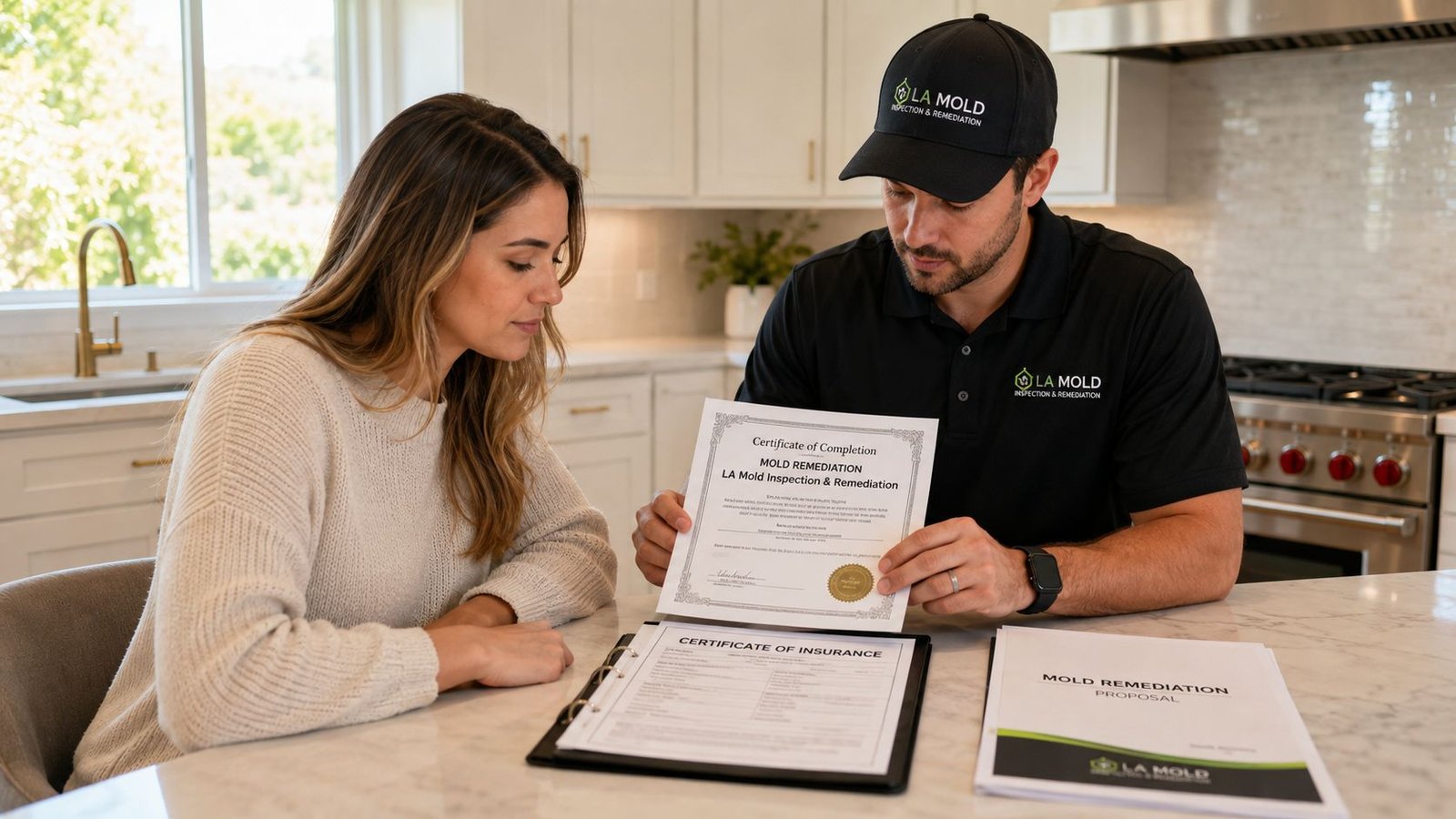
Start with licensing and certification. Ask whether the firm is IICRC-certified, whether the lead technician has mold training, and whether the estimate references S520 and negative-air containment. Then ask who does the clearance testing, because self-clearance is a red flag.
Documentation matters just as much. You want moisture logs, photos, itemized scope, and a written record of materials removed. That's what supports insurance and protects you if the property changes hands later.
Red flags that usually mean trouble
Watch for these:
- Verbal-only quotes, because they leave too much room for scope gaps.
- No containment plan, which suggests the crew may not control spread.
- No third-party clearance, which leaves you with no proof of completion.
- A bid far below the local norm, which often means omitted labor, omitted testing, or omitted rebuild items.
One practical option in the city is a contractor that handles inspection, testing, and remediation in one workflow. Onsite Pro Restoration offers mold-related services in Los Angeles, and the value is in the documentation chain, not the sales pitch.
If you want a useful reference while you compare providers, browse pest control solutions is not the right mold vendor, but it's a reminder that you should expect the same standard of responsiveness and call handling from any contractor you hire.
Insurance, Permits, and Your Next Steps in Los Angeles
Homeowners insurance usually gets complicated when mold follows a sudden water event. That's why day-one photos, moisture readings, and a clean timeline matter. If the source was a burst pipe, failed appliance, or other covered water loss, the mold work may fit into the larger claim, but the details need to be documented from the start.
Los Angeles County Public Health gives renters a direct reporting path at 888-700-9995 and online reporting for mold problems LA County Public Health. For any contractor you're evaluating, verify the license with the California Contractors State License Board and look for the right remediation credentials in the IICRC framework. Those checks are basic, but they keep you from hiring a crew that can't back up its scope.
Bottom line: if the moisture source is still active, the loss is still growing.
For coverage questions, review whether mold remediation is covered by insurance before you assume the bill will land in one bucket or another. Waiting almost always makes the claim and the repair bigger.
If you need help in Los Angeles, CA, call 818-336-1800 and ask for a mold inspection that starts with moisture control, not just surface cleanup. Onsite Pro Restoration handles containment, testing, remediation, and documentation for homeowners who need the job done right the first time.
If your home in Los Angeles has a mold smell, a leak history, or visible growth that keeps coming back, schedule an inspection before the damage spreads further. Onsite Pro Restoration can assess the moisture source, contain the affected area, and document the work so you're not guessing about the next step.