
Shut off the main water valve to the house immediately. Then deal with electrical safety, because a burst pipe is a plumbing emergency until water reaches outlets, fixtures, or wiring, and then it becomes a shock hazard too.
If you're hearing water rush inside a wall, watching a ceiling bubble, or stepping into a spreading puddle in your kitchen, you don't need a theory lesson. You need a calm order of operations that protects your home and your insurance claim at the same time. That's what burst water pipe repair comes down to in Los Angeles homes: stop the flow, make the area safe, document the damage, and only then move into cleanup and permanent repair.
In older properties around Sherman Oaks, Glendale, and parts of Burbank, I've seen the same mistake over and over. Homeowners lose precious time trying to find the exact leak before shutting down the house water. That delay usually makes the damage worse. Start with the main valve. Everything else follows from there.
Your First 30 Minutes Emergency Actions for a Burst Pipe
The standard emergency sequence for a burst pipe is clear: isolate the supply at the main shutoff, de-energize any circuits exposed to water, open taps and flush valves to drain the lines, and document the damage before permanent repair begins, because that workflow reduces pressure, limits secondary flooding, and makes entry safer for the plumber or restoration crew, as outlined in this burst pipe response guide from G&C Plumbing.
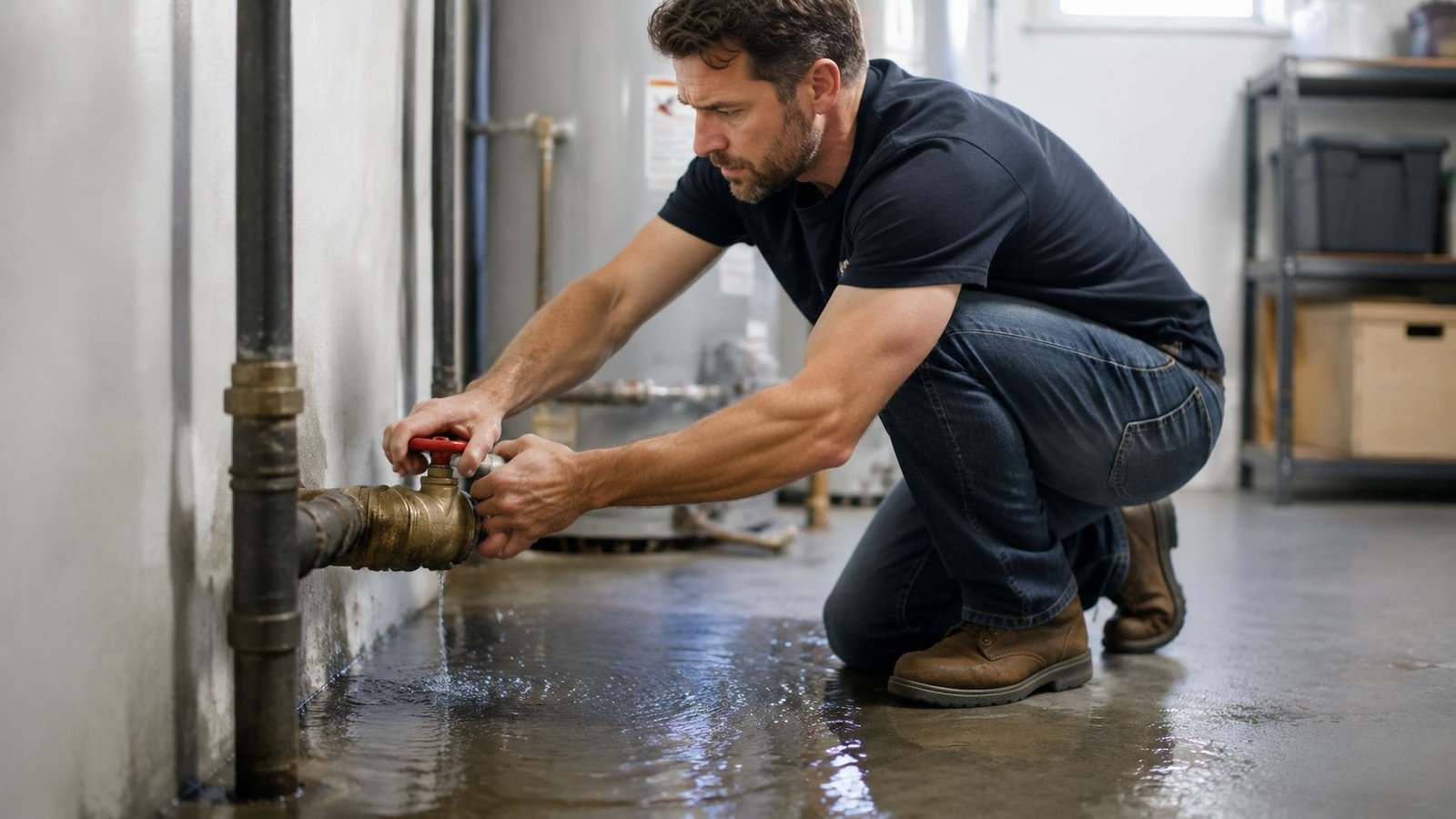
Shut off the house water first
Don't hunt for the cracked section first. Don't start mopping first. Go straight to the main shutoff and close it.
If you're not sure where that valve is, use this guide on where to find the main water shut off. In many Los Angeles homes, it's near the water meter, garage, exterior wall, or where the main line enters the structure.
Treat electricity as the second emergency
If water is near outlets, light fixtures, appliances, or the electrical panel, shut off power to the affected area only if you can do it without stepping into water. If the area around the panel is wet, back away and wait for qualified help.
Practical rule: If you have to choose between saving flooring and avoiding a shock hazard, choose safety every time.
A wet hallway and a live circuit is a different kind of emergency. Homeowners underestimate this part because the visible problem is water, but the invisible risk is electrical current moving through that water path.
Relieve pressure in the lines
After the main valve is off, open faucets and flush toilets to drain the remaining water out of the plumbing system. This matters more than people think.
A pressurized line can keep pushing water through even a small split. When you drain the lines, you reduce hydraulic pressure and make the site safer for inspection and temporary control.
Protect people, then contents
In the first half hour, move fast on these basics:
- Keep people out of the wet zone. Children, pets, and anyone barefoot shouldn't be walking through standing water.
- Move nearby valuables. Pick up rugs, electronics, paperwork, and anything porous that's still salvageable.
- Watch ceilings and wall cavities. If water is coming from above, don't stand under sagging drywall.
A swollen ceiling usually means water has spread farther than the visible stain.
Don't start permanent repair yet
Panic often leads to bad decisions. Don't cut blindly into walls. Don't glue fittings onto a line you haven't fully located. Don't assume the first visible drip is the whole problem.
A sound repair choice comes only after the damaged section is fully located and pressure has been relieved. That's especially important when the burst may be behind tile, inside a wall chase, or below finished flooring.
Damage Control Temporary Repairs and Water Removal
Temporary control buys you time. The goal is to slow damage, protect salvageable materials, and preserve a clean record for your insurance file without doing anything that makes the final repair harder.
Before cleanup changes the scene, document it in a way an adjuster can follow. Take wide photos of the room, then closer shots of the failed pipe, water lines on walls, swollen baseboards, buckled flooring, wet contents, and any staining that shows how far the water traveled. Record short video as you walk the path of damage. If you remove rugs, cut out pad, or open a wet cabinet toe-kick, photograph that first. Los Angeles claims go more smoothly when the carrier can see both the source and the spread, not just the aftermath.
A short-term patch can help on an accessible line, but only if the pipe condition supports it.
| Temporary measure | Best fit | Limitation |
|---|---|---|
| Repair clamp | Small to moderate leaks on a solid pipe section | Will not hold a badly split, crushed, or heavily corroded line |
| Repair tape | Pinholes or very small leaks | Fails easily on wet, dirty, or uneven surfaces |
| Epoxy putty | Small cracks after the surface is cleaned and dried | Holds only as a short-term control |
| Full section replacement | Severe visible damage with proper access | Requires the right material, fittings, and installation skill |
Trade-offs matter here. Tape and putty are fast, but they depend on surface prep that is hard to get right during a flood. Clamps hold better on round, stable pipe, but they are still temporary control, not a finished burst water pipe repair. If the line is split open, deformed, or corroded along more than one spot, patching wastes time.
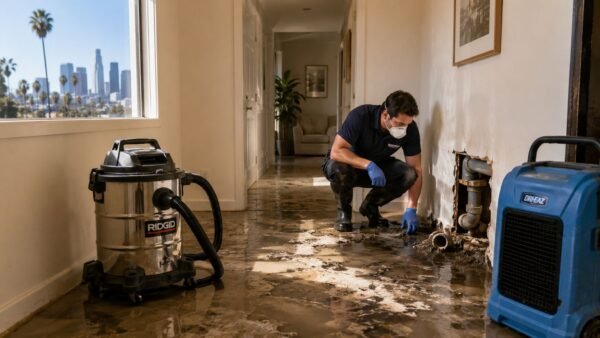
Once the damage is documented, remove standing water in layers. Start with what is deepest and easiest to reach, then work toward trapped moisture at edges and transitions. A wet/dry shop vacuum, mop, towels, and buckets are useful first-response tools, but professional water extraction equipment pulls far more moisture from carpet backing, pad, subfloors, and other materials that stay wet after the surface looks dry.
Focus your effort where water keeps spreading:
- Open floor areas: Pull water off tile, wood, laminate, and concrete before foot traffic pushes it farther.
- Perimeters: Check baseboards, drywall bottoms, cabinet bases, and closet corners where water collects and lingers.
- Under and inside contents: Lift furniture, empty lower drawers if they are wet, and separate items so air can move around them.
- Absorbent materials: Rugs, pads, cardboard boxes, and upholstered items hold water long after the sheen disappears.
Do not use a regular household vacuum on standing water. It is unsafe and it does not extract enough water to matter.
Watch for hidden retention. Engineered wood can cup from below. Drywall can wick moisture several inches above the visible line. Cabinet toe-kicks and vanity bases often trap water where homeowners do not look until odor starts. If you are keeping notes for your claim, write down what you found, what you moved, and when you started water removal. Keep damaged parts if you cut out a small section for access, unless a plumber or carrier tells you otherwise.
Temporary repair is reasonable in a narrow set of conditions: the pipe is exposed, the leak point is obvious, pressure is off the line, and the pipe around the leak is still sound enough to hold a clamp or wrap for a short period. It is a poor bet when the source is concealed, the line is under a slab, the rupture is wide, or multiple building materials are already wet.
If a room flooded, plan for more than a patch.
When to Call a Pro for Burst Water Pipe Repair
Some situations leave room for a short-term homeowner response. A true burst water pipe repair usually doesn't.
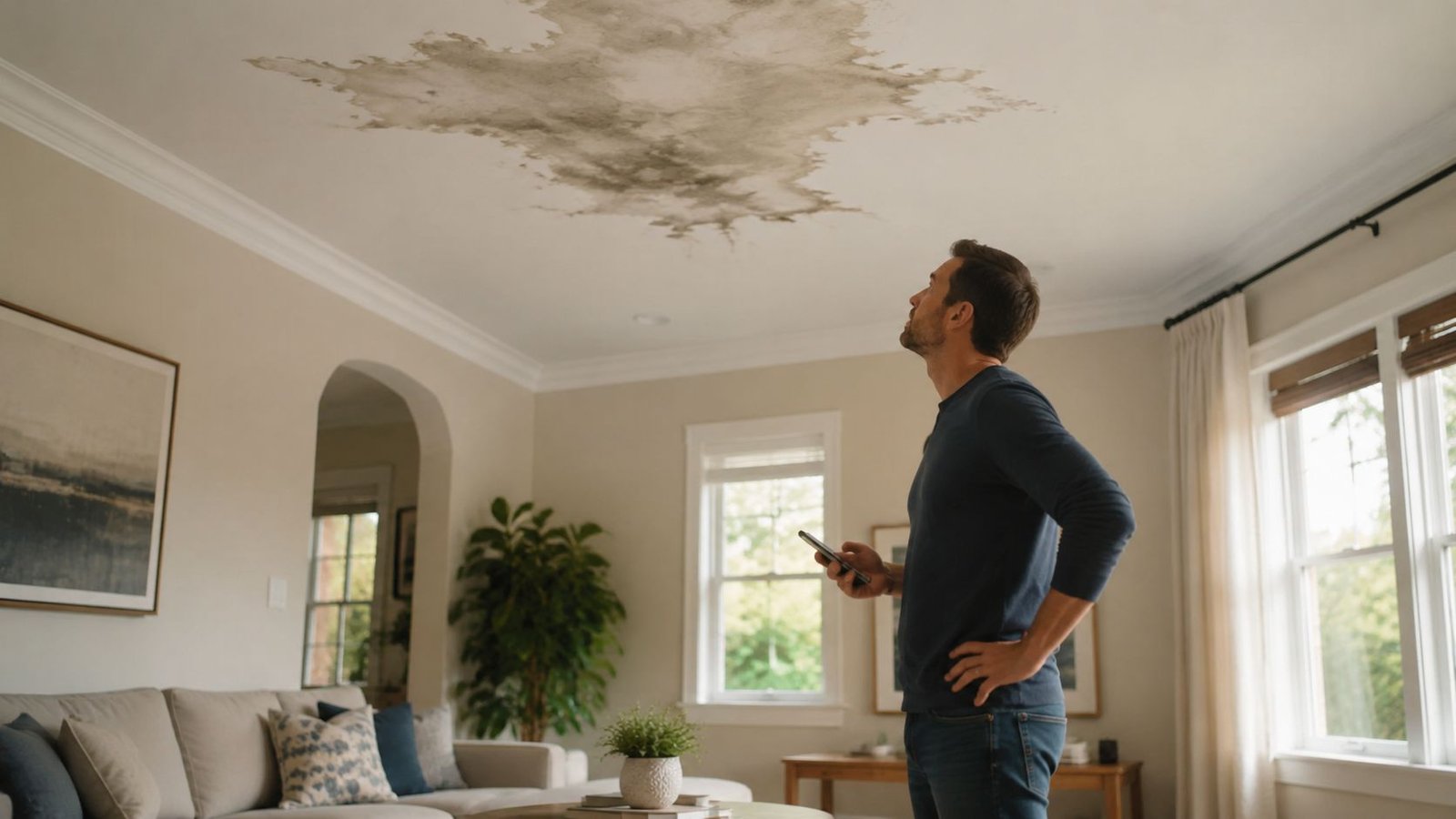
If the leak is hidden, the pipe is ruptured, the damage has spread into walls or ceilings, or you can't confirm the full extent of the water path, professional diagnosis stops guesswork. That's even more important in Los Angeles neighborhoods with older plumbing runs and slab construction.
Clear signs you need professional help now
Call a pro immediately if any of these apply:
- The source is concealed. Water is showing on drywall, ceilings, or flooring, but the pipe itself isn't visible.
- The line is under a slab. Hidden slab leaks need specialized location methods, not trial-and-error demolition.
- The rupture is severe. A blown section, split copper, or failed fitting usually requires section replacement.
- You still have active leaking after shutoff steps. That points to valve issues, trapped water, or a larger system problem.
- Multiple materials are wet. Flooring, insulation, framing, drywall, and cabinets all hold water differently.
Existing content rarely addresses concealed slab leaks, yet they account for up to 15% of residential water damage in Los Angeles, and slab bursts cause 3x more structural drying time and insurance claim delays than visible leaks. That's why hidden leak diagnosis can't rely on guesswork alone.
Why slab leaks change the decision
In parts of LA County, especially homes with older supply lines or remodeled interiors, the leak you see may not be where the pipe failed. Water can travel under flooring, along foundation edges, and into adjacent rooms before it becomes visible.
That's why slab-related events often need tools such as acoustic leak detection, moisture mapping, and targeted opening strategies rather than broad demolition. A visible stain in Glendale may trace back to a hidden line path. A warm floor in Sherman Oaks may point to a different section than the one the homeowner suspects.
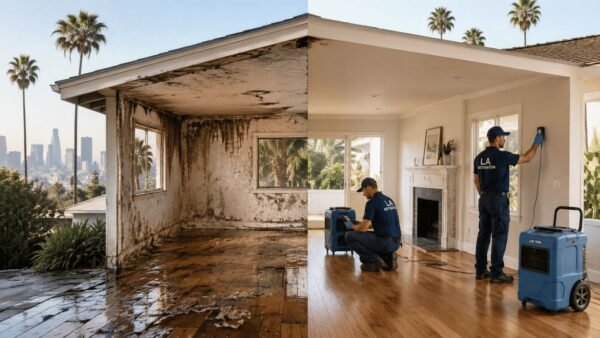
Here's a quick visual overview of what that kind of damage can turn into:
What a plumber and restoration team do differently
A plumber focuses on stopping and repairing the failed line. A restoration team focuses on what the water touched after the failure.
That split matters. If you only fix the pipe and ignore trapped moisture, you haven't finished the job. If you only dry the room and haven't confirmed the line repair method, you haven't solved the cause.
In homes with ceiling leaks, wall saturation, or hidden slab moisture, bringing in a restoration professional for burst pipe-related damage helps separate the plumbing repair from the drying and documentation work that follows.
The Professional Water Damage Restoration Process
When the emergency call is over and the crew arrives, most homeowners finally get to exhale a little. The pace changes from panic to procedure.
In our experience restoring homes in Burbank, Glendale, and North Hollywood, the first thing people want to know is whether the damage is as bad as it looks. The honest answer is that visible damage is only part of the story. We check where the water went, what materials absorbed it, and what can be dried in place versus what needs removal.
First visit and moisture mapping
A proper restoration visit starts with inspection, not fan placement. Technicians use moisture meters and infrared tools to track the spread into drywall, flooring, cabinets, and adjacent rooms.

That early mapping shapes the drying plan. If water stayed on a bathroom tile floor, the response is one thing. If it moved under engineered wood into a hallway and closet, the response changes fast.
Extraction, opening, and airflow
After assessment, the next priorities are water extraction and controlled drying. That usually includes commercial extractors, air movers, and dehumidification equipment set to match the affected materials and layout.
A professional crew may also remove baseboards, drill access points, or open limited sections of drywall when moisture is trapped inside cavities. Those steps can look invasive, but they're often what prevents a small incident from becoming a long moisture problem.
Drying a home isn't about making the room feel less damp. It's about removing moisture from materials you can't see into.
One option homeowners in Los Angeles often use is Onsite Pro Restoration's water damage restoration process, which outlines how inspection, extraction, drying, and documentation are handled on burst pipe losses and similar water intrusions.
Why repair details matter at this stage
The plumbing side has to be right too. A detailed repair walkthrough emphasizes steps many people miss: cut out the damaged segment, deburr pipe edges, measure the replacement piece carefully, and verify the fitting type before restoring water. Burrs and poor fit can compromise the seal and lead to repeat leakage.
That's why a real repair isn't just “patch and turn the water back on.” It's controlled removal, proper fitting, pressure-aware reassembly, and then coordinated drying of the affected structure.
Navigating Your Insurance Claim in Los Angeles
A burst pipe claim is won or lost on documentation quality long before the adjuster makes a final decision. The physical repair matters, but the paper trail matters too.
In Los Angeles, where slab leaks and concealed moisture can expand a small plumbing event into a larger restoration project, insurers want to see a clear chain of evidence. They want to know what failed, what got wet, what was done immediately, what was temporary, and what permanent work was recommended.

What causes delays
40% of water damage claims are delayed due to inadequate documentation of repair scope, especially when homeowners rely on temporary fixes instead of professional slab repairs. Recent 2025 trends also show insurers requiring pre-loss condition photos and professional repair certifications for slab-related claims.
That changes how you should handle the first day of loss. If you wipe everything down, throw materials away, and apply a quick patch without preserving evidence, you make the adjuster's job harder and your own position weaker.
What to gather before the adjuster visit
Keep the file simple and organized. That usually means:
- Photo evidence: The burst point, standing water, wet finishes, damaged contents, and affected rooms.
- Video walkthrough: A slow walk-through that shows how water moved through the home.
- Timeline notes: When you discovered the leak, when the water was shut off, and when contractors were contacted.
- Repair records: Temporary mitigation, plumbing findings, and permanent repair recommendations.
- Drying records: Moisture readings, equipment logs, and scope notes from restoration work.
The strongest claim file tells one consistent story from discovery to final drying.
Policy language and local reality
Most homeowners expect all water damage to be treated the same. It isn't. Insurers often draw a line between a sudden plumbing failure and a long-term maintenance issue. That distinction matters when a home in West Hollywood or Beverly Hills shows signs of prior moisture around the same area.
If you're trying to understand coverage language before you speak with your carrier, this guide on whether homeowners insurance covers burst pipes is a useful place to start. And if you're reviewing broader policy options for investment property or higher-value real estate, it can also help to find tailored property insurance that fits the risk profile of Los Angeles properties.
FAQ Common Burst Pipe Repair Questions
Can I repair a burst pipe myself
A homeowner can sometimes slow a small, exposed leak after the water is off and the line is drained. That can buy time.
It does not finish the job. Tape, clamps, and epoxy are temporary control measures, not permanent repairs, and insurers may ask whether the damaged area was properly opened, dried, and documented after the leak stopped.
If the pipe is inside a wall, above a ceiling, under flooring, or under concrete, bring in a licensed plumber and a restoration team. In Los Angeles homes, the repair decision and the claim file usually rise or fall together. A clean plumbing diagnosis, moisture readings, and photo documentation from the same window of time make disputes less likely later.
How long does burst water pipe repair take
The pipe repair itself might be short or it might require access work first. Replacing an exposed section under a sink is one job. Opening finished drywall to reach a failed line is another. Slab leaks take longer because the actual break point has to be confirmed before anyone chooses a repair method.
Drying often outlasts the plumbing work. That surprises many homeowners.
The line can be repaired in a day, while cabinets, subfloor, drywall, and insulation still need several days of extraction, dehumidification, and moisture checks. The house is not fully back to normal until materials test dry and the affected areas are ready for rebuild.
Will insurance cover the damage
Coverage depends on the cause of loss and the wording in the policy. A sudden pipe break is often treated differently from a leak that appears to have been present for weeks or months.
The practical move is to document first and discard later. Keep photos, videos, invoices, plumber findings, drying logs, hotel receipts if you had to leave the house, and notes showing when the leak was discovered and when the water was shut off. If you work around claims, contractor referrals, or restoration operations, this article on strategies for insurance restoration leads gives a useful view of how communication and claim handling often connect on the service side.
What if the pipe burst under concrete
Treat it as a hidden water loss until proven otherwise. Water from a slab leak rarely shows up exactly above the failed pipe.
You may see cupping floors, damp baseboards, lifted flooring, warm spots, or moisture at room edges. Those clues help, but they do not confirm the break location. A plumber may need electronic leak detection, pressure testing, or thermal imaging before recommending a spot repair, reroute, or repipe. For insurance purposes, keep the sequence clear: visible symptoms, plumber findings, mitigation work, and drying documentation.
How do I prevent another burst pipe in Los Angeles
Los Angeles has fewer freeze-related pipe failures than colder markets, but older supply lines, pressure problems, poor prior repairs, and corrosion are common causes here. Prevention starts with the parts of the system that already show stress.
Use this checklist:
- Know the main shutoff: Every adult in the home should be able to close it fast.
- Check known weak points: Water heater connections, angle stops, washing machine hoses, under-sink supplies, and any past repair locations deserve regular inspection.
- Pay attention to early warning signs: Musty odor, staining, floor movement, reduced pressure, and a higher water bill often show up before a major break.
- Test older plumbing systems: In many Los Angeles neighborhoods, aging copper, galvanized lines, and mixed-material repairs create recurring failure points that a plumber can identify before the next loss.
What should I say when I call for help
Start with the facts that change the response. Say whether water is still running, whether electricity may be affected, where the leak appears to be, what materials are wet, and whether the source is visible or hidden.
Then give the timeline. Tell them when you found it, whether the main is off, and whether you have taken photos or video for the claim.
That lets the plumber arrive ready to stop and repair the failure, and it lets the restoration crew arrive ready to document, extract, and start drying without losing the story of the loss.
If you're dealing with an active leak, ceiling stain, hidden slab moisture, or flood damage from a broken line, call Onsite Pro Restoration at 818-336-1800 for a free inspection. They serve Los Angeles, CA and nearby communities with emergency water extraction, structural drying, and documentation support for burst pipe losses.