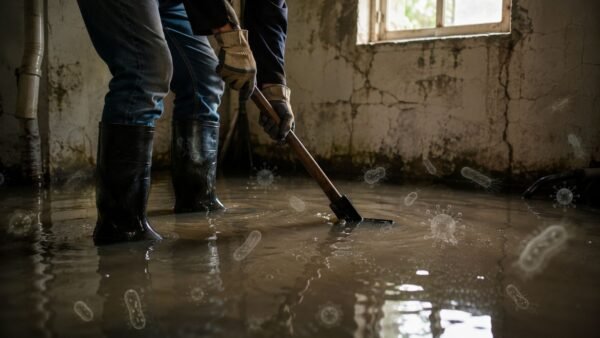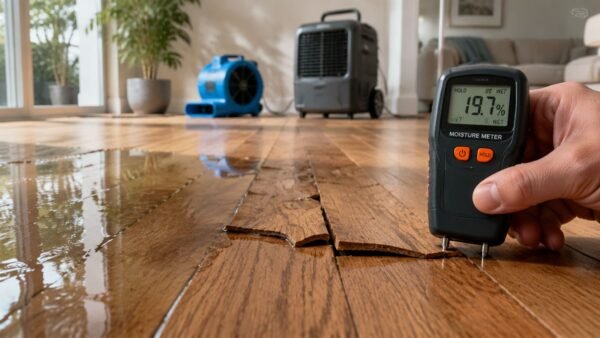

When a fire is out, the smoke might seem like the main problem, but it's what the smoke leaves behind that poses the most stubborn threat: soot from smoke. Soot is a pervasive, oily film that sticks to everything, stains deeply, and continues to damage your home and health long after the flames are gone. This is not simple dust you can just wipe away.
Tackling soot from smoke requires understanding its different forms, the serious health risks it presents, and knowing when to call in professionals. For anyone in Los Angeles, from a kitchen flare-up in Glendale to wildfire smoke drifting into a Sherman Oaks home, dealing with soot correctly is critical to restoring your property and protecting your family.
What Is Soot and Why Is It So Dangerous?
Soot is the fine, black, carbon-based residue created when things don't burn completely. Whether it’s from a kitchen fire, a major house fire, or even heavy smoke from nearby wildfires, the aftermath always includes soot.
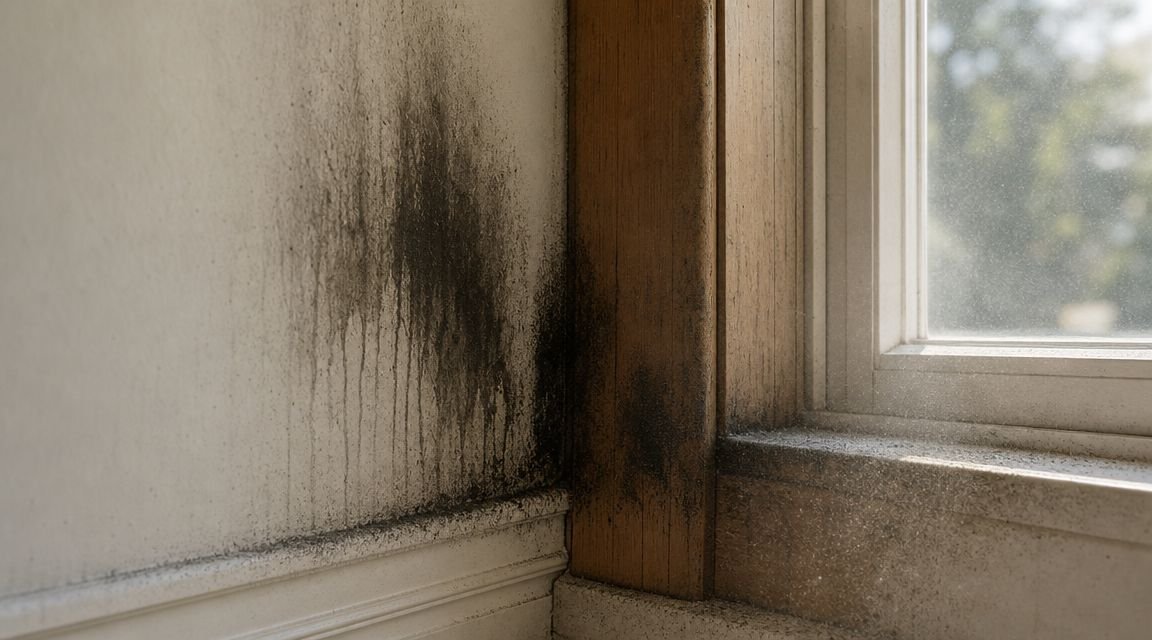
Alt Text: Dark soot from smoke staining a white wall and window frame, showing property damage.
Unlike the dry ash in a fireplace, the soot from a house fire is often acidic and greasy. A modern fire consumes a cocktail of synthetic materials like plastics, foams, and fabrics, creating a complex and toxic residue that clings stubbornly to surfaces.
Damage to Your Property and Health
This oily residue doesn't just make a mess—it actively corrodes and destroys. The acidic nature of soot can etch glass, tarnish metal, and permanently stain plastics and painted walls within days. For homeowners in areas like Burbank or Glendale, this means everything from your appliances to your window frames is at risk.
In our experience as LA-based restoration experts, the biggest mistake we see is underestimating how far soot travels. These microscopic particles ride air currents into every nook and cranny of your home, far from the original fire.
The health risks are even more serious. Soot's danger was first documented in 1775, and we now know that these particles can be as small as 2.5 microns—tiny enough to be inhaled deep into the lungs. The same grime discoloring your walls also contaminates the air you breathe, creating a major respiratory risk.
This is why professional soot cleanup is both a restoration project and a critical health measure. The presence of soot is a clear signal that you need a professional assessment. You can learn more about our comprehensive smoke and soot cleanup services to understand the full scope of what's involved in making your home safe again.
Identifying the Different Types of Soot in Your Home
After a fire or smoke event in your Los Angeles home, you'll notice the residue. But not all soot is the same. The type of soot clinging to your walls tells a crucial story about what burned and how hot the fire was.
Figuring out what you're dealing with is the most important step before attempting cleanup. Using the wrong method can easily turn a manageable situation into a permanent, smeared-on disaster.
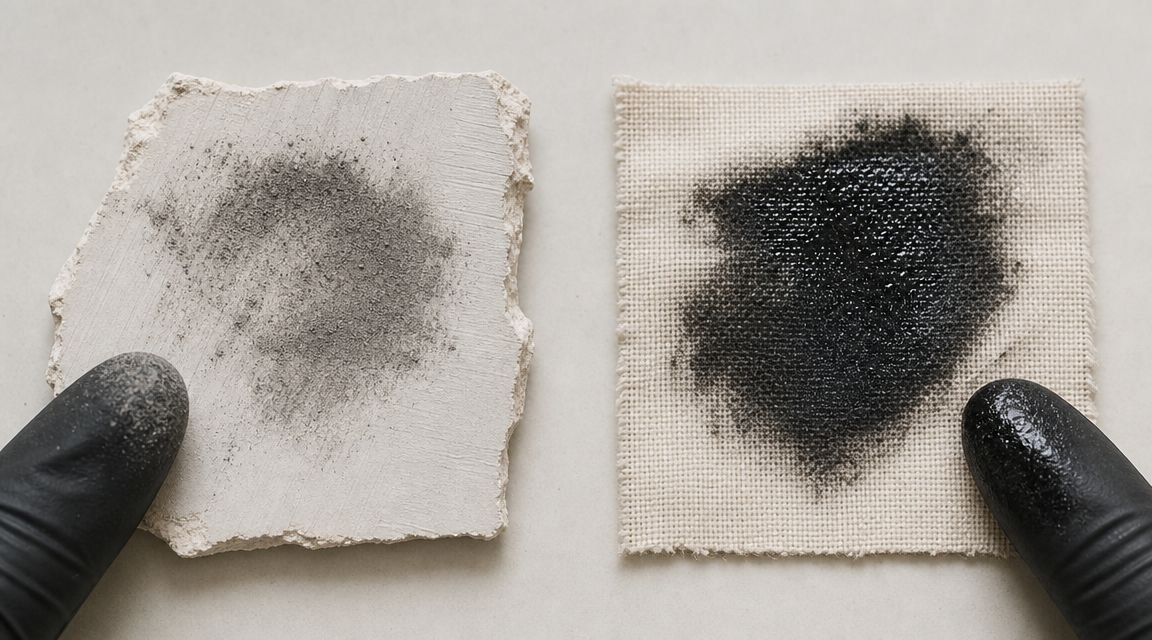
Alt Text: A gloved hand showing the sticky, smearing nature of oily soot from smoke.
Cleaning one type of soot is like dusting fine powder. The other is like trying to wipe up bacon grease with a wet paper towel—it just smears and makes things worse.
Dry Soot
When a fire burns hot and fast with plenty of oxygen, it produces dry soot. This is common from fires involving natural materials like wood, paper, or natural fibers.
- Appearance: Fine and powdery, like black chalk dust. Usually dark gray or black.
- Source: High-oxygen fires, like a fireplace flare-up or a fire that consumed paper products.
- The Cleanup Problem: It goes airborne easily. Wiping it can grind the particles deep into porous surfaces like drywall or unfinished wood.
Oily (Wet) Soot
This is the soot we see most often in house fires from Burbank to Sherman Oaks, and it's far more destructive. Oily soot comes from slow-burning, low-oxygen fires that smolder and consume synthetic materials.
- Appearance: Greasy, sticky, and smeary. Can be black but is often a nasty brownish-yellow, and it carries a powerful, unpleasant odor.
- Source: The smoldering of plastics, rubber, and synthetic textiles—things found in nearly every modern home.
- The Cleanup Problem: It's a nightmare. This acidic residue bonds to surfaces, and cleaning it with water-based products usually creates a gooier mess that sets the stain permanently.
Dry Soot vs. Oily Soot Identification Guide
| Characteristic | Dry Soot | Oily (Wet) Soot |
|---|---|---|
| Appearance | Powdery, flaky, and fine like dust. Looks like black or gray powder. | Sticky, greasy, and smeary. Can be black, brown, or even yellowish. |
| Feel | Feels light and dusty. Easily disturbed and goes airborne. | Feels tacky or greasy to the touch. |
| Smell | Minimal odor on its own. The smell is more like a typical campfire. | Strong, acrid, and pungent odor that is very difficult to remove. |
| Source Fire | Fast-burning, high-oxygen fires. | Slow-burning, low-oxygen, smoldering fires. |
| Materials Burned | Natural materials: wood, paper, cotton, and other organic items. | Synthetic materials: plastics, rubber, foams, and synthetic fabrics. |
| Cleanup Method | Dry methods are best: special dry-cleaning sponges and HEPA vacuums. | Requires specialized chemical solvents to dissolve the oily residue safely. |
Knowing the type of soot you have is essential because it dictates the entire restoration strategy. For more examples, this Phoenix homeowner guide to fire soot has excellent visuals. If you're unsure, our guide on how to properly clean soot from walls explains why professional assessment is so critical.
The Hidden Health Risks of Lingering Soot Particles
That dark film left behind by soot from smoke is more than an ugly stain. The real problem is the millions of microscopic particles that get kicked into the air and linger on every surface. These tiny invaders are often smaller than a red blood cell, meaning your body’s natural defenses can’t filter them out.
When you breathe them in, these fine particles burrow deep into your lungs. According to the U.S. Environmental Protection Agency, these particles are so small they can pass from the lungs into your bloodstream, carrying toxins throughout your body.

Dealing with soot is a critical health decision, not just a cleaning chore. The unseen threat can affect your family long after the smoke has cleared.
Immediate and Long-Term Effects
Health effects from soot exposure can show up right away or develop slowly. It’s easy to mistake the initial symptoms for a cold or allergies, especially with the fluctuating air quality we see around Los Angeles.
Right after exposure, you might notice:
- Respiratory issues like a persistent cough, wheezing, or shortness of breath.
- Irritation in your eyes, nose, and throat.
- Worsening of conditions like asthma and bronchitis.
Long-term risks are more serious. Consistent exposure has been linked to chronic bronchitis, reduced lung function, heart disease, and cancer. These particles are like tiny toxic sponges, delivering dangerous chemicals straight into your system. Understanding these risks is the first step in proper hazardous materials cleanup.
Our Expert Perspective on Soot Dangers
After handling countless soot cleanup projects across Los Angeles, from Sherman Oaks to Glendale, we've seen firsthand how families underestimate these risks. Children, the elderly, and anyone with existing respiratory problems are always the most vulnerable. A thorough, professional cleanup isn't about making things look good again; it’s about restoring a safe, healthy environment for your family.
When DIY Soot Cleanup Is Safe and When to Call a Pro
After finding soot in your Los Angeles home, the instinct is to start scrubbing. But acting too fast can be a costly mistake. The decision between DIY and calling a pro depends on the type and amount of soot.
A DIY approach is only safe for a very small, contained patch of light, dry soot—think a few square inches on a non-porous surface. Even then, you must protect yourself.
Before you touch anything, you need Personal Protective Equipment (PPE):
- An N95 respirator mask is essential.
- Safety goggles will shield your eyes.
- Gloves are a must.
For minor cleanup, your best tool is a dry-chem sponge (soot sponge). It's designed to lift powdery soot without smearing. Never use water first; it will turn the powder into a permanent stain.
The Red Flags That Demand a Professional
There are several clear signs you're facing a problem that's beyond a simple wipe-down. Pushing forward on your own can make the damage worse and create serious health risks.
Call a restoration professional if you notice:
- The Soot Is Sticky or Oily: This is the number one sign you need a pro. This greasy residue requires specific chemical solvents to dissolve it without wrecking the surface.
- The Affected Area Is Large: If soot covers more than a few square feet or has spread to multiple rooms, the scale is too big for a DIY fix.
- A Persistent Smoke Odor Remains: That stubborn smell means soot particles are deep in porous materials like drywall, carpet, and furniture.
- Soot Is in Your HVAC System: If you suspect soot got into your air vents, do not turn on your HVAC. Doing so will blast toxic particles everywhere.
Research from Brookhaven National Laboratory shows that soot particles age and change chemically as they travel. For us in Southern California, that means soot from a wildfire miles away can drift into a home in Glendale, but by the time it settles, it has mixed with other pollutants and become far more complex. You can learn more about these complexities of airborne soot findings. This is why what you see on the surface is rarely the whole story.
In my experience, homeowners who attempt to clean widespread soot from smoke themselves almost always cause more damage, leading to a higher final repair bill.
How Professionals Erase Soot and Eliminate Smoke Odor
Professional restoration is less about elbow grease and more about science—using methodical processes and the right technology to make your home safe again. Here's how experts tackle tough soot from smoke damage.
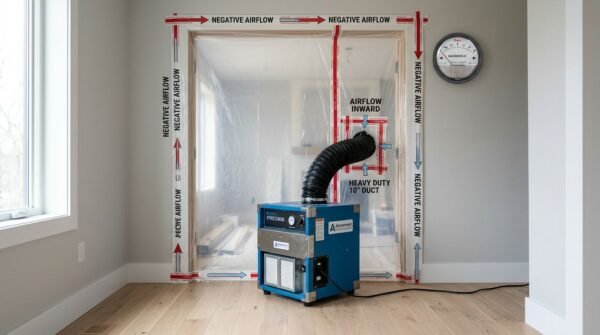
First, we establish containment. We seal off the affected area with thick plastic sheeting and create negative air pressure. This critical step ensures that microscopic soot particles don't escape and contaminate the rest of your home.
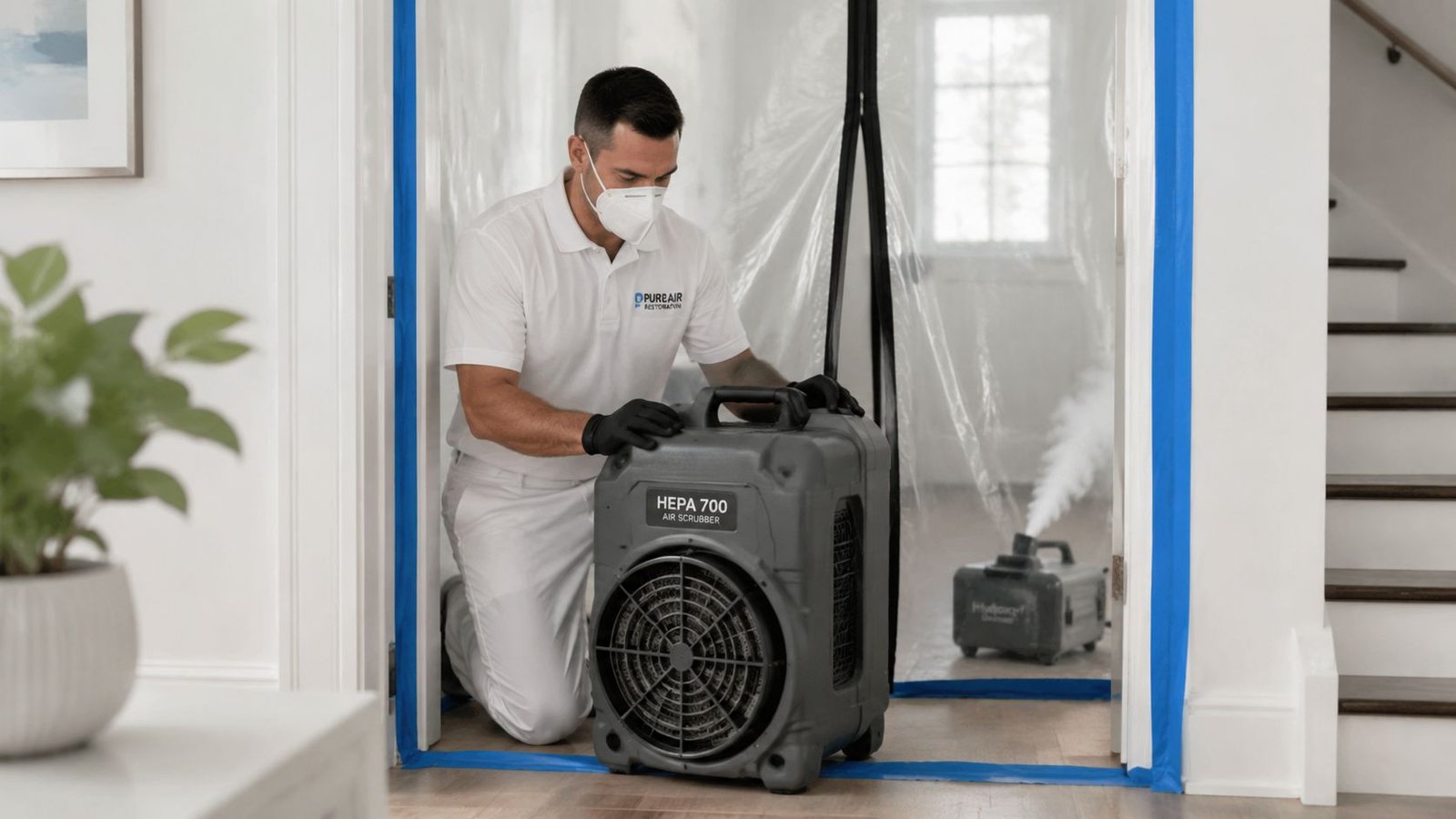
Next, we bring in industrial-grade HEPA air scrubbers. These powerful machines run continuously, capturing 99.97% of airborne particles. This cleans the air while we work. You can learn more about these units in our guide to air scrubber rentals.
Advanced Soot Removal and Deodorization
Now, the hands-on cleaning begins. We use specialized chemical formulas chosen for the specific type of soot.
Our process includes:
- Targeted Cleaning Agents: We match the solvent to the surface, whether it’s historic woodwork in an older home or modern laminate in a new condo.
- Detailed Debris Removal: Damaged, porous materials are carefully bagged and removed according to local regulations.
- Surface-Specific Techniques: Delicate items are hand-wiped, upholstery is treated, and hard surfaces get a deep clean with powerful degreasers.
Finally, we tackle the smell. This is often the most challenging part.
In our experience restoring homes across Los Angeles, we know if the smell isn't gone, the job isn't done. We use thermal fogging, which heats a deodorizer into a vapor. This "fog" behaves like the original smoke, penetrating deep into walls and carpet to neutralize odor molecules at their source.
Your HVAC system also needs attention. Soot in the ductwork can be recirculated for months. A professional home duct cleaning service is almost always a necessary final step to make your home feel fresh, healthy, and safe again.
Navigating Your Insurance Claim for Soot Damage
Dealing with an insurance claim on top of soot damage is overwhelming, but here's good news for Los Angeles homeowners: damage from soot from smoke is almost always a covered event under standard policies. The difference between a smooth claim and a frustrating one is what you do in the first few hours.
Before you clean anything, document everything. Take wide shots of every room and close-ups of soot on walls, furniture, and electronics. This visual proof is the foundation of your claim.
Working With Your Insurance Adjuster
When the adjuster visits, be prepared:
- Have a detailed inventory of all damaged items, room by room.
- Show them your complete photo and video library.
- Provide reports from professionals, like an initial inspection from a restoration company like Onsite Pro.
A professional damage report is your single greatest advantage. It gives the insurer a clear, expert-vetted scope of work, preventing arguments over what’s necessary. It shifts the conversation from a debate to a factual plan. Getting familiar with the home insurance claim process can give you a major confidence boost.
From our years of experience, we've seen that insurers are far more likely to approve a claim without delays when it's backed by a certified restoration company's report. It takes the guesswork out of the equation.
We work directly with all major insurance carriers across the LA area. We know what they need and can help package your claim to avoid pitfalls. Getting professional advice for lasting home freshness is a crucial part of making your house feel like home again. We can be your advocate, ensuring the job gets done right.
Frequently Asked Questions About Soot From Smoke
Here are some common questions we get from homeowners grappling with the aftermath of smoke.
How Long Does It Take for Soot to Cause Permanent Damage?
Soot starts to cause damage right away. Within hours, its acidic nature can etch metal, glass, and even stone countertops. For porous materials like drywall or furniture, the particles begin to set in, making stains and odors much more difficult to remove later. Time is not on your side.
Can I Just Paint Over the Soot Stains?
This is a classic DIY mistake, and the answer is always no. The oily film from the soot will bleed through the new paint, leaving ugly streaks. Even worse, you'll trap the toxic, smoky smell underneath, which will continue to off-gas into your home. The surface must be professionally cleaned and sealed with a stain-blocking primer before painting.
Is Soot From a Small Kitchen Fire Still Dangerous?
Absolutely. Even a minor flare-up from burning cooking oil or a melted plastic handle produces a uniquely greasy and stubborn soot. Those tiny particles can travel on air currents, settling on surfaces in rooms far from the kitchen, and they carry the same health risks and cleaning challenges as soot from a larger fire.
What Is the Cost of Professional Soot Removal in Los Angeles?
The final cost depends on the situation: the size of the affected area, the type of soot (dry or oily), and the materials needing cleaning. A fire contained to one room is very different from a home where soot has circulated through the HVAC system.
At Onsite Pro Restoration, we provide a free, no-pressure inspection to give Los Angeles homeowners a clear and accurate estimate for their specific needs. Call us at (818) 336-1800 to schedule your assessment and get the expert help you need to make your home safe again.