
A child gets sick on the living room carpet at 2 a.m. By morning, the stain looks darker, the odor has spread, and the padding underneath may already be contaminated. In the field, that is the difference between a small spot-cleaning job and a restoration issue.
Knowing how to get vomit stains out of carpet starts with treating the mess as a contamination event, not just a visible stain. Vomit is acidic organic matter. It can bond to carpet fibers, wick into the backing, and leave proteins behind that keep producing odor even after the surface looks clean. Aggressive scrubbing and over-wetting usually make the job harder, especially on carpet that dries slowly or already has residue in the pile.
A small, fresh incident is often manageable with careful DIY cleanup. Once bodily fluids soak through, the odor returns after drying, or illness may be involved, the job moves into biohazard handling and sanitation. That distinction is important in Los Angeles homes and apartments, where warm indoor conditions, limited airflow, and dense padding can trap moisture and speed up bacterial growth.
If the area gets saturated, drying becomes part of the cleanup, not a separate concern. Use the same discipline you would for any moisture event, including proper airflow and quick evaporation, as outlined in this guide on how to dry wet carpet fast.
For homeowners looking for a basic consumer reference, Neat Hive Cleaning's advice covers the early cleanup steps well. The professional standard adds a second question. Are you removing a stain, or are you containing a bio-contaminant that may require extraction, disinfection, and insurance documentation?
Your First Response to a Carpet Vomit Incident
A child gets sick at 2 a.m. or a guest misses the trash can during a party. In that moment, speed matters, but control matters more. The first response should contain a bodily fluid, protect anyone handling it, and keep the contamination from being pushed deeper into the carpet and pad.
Start by putting on disposable gloves and keeping other people and pets out of the area. Gather white towels or paper towels, a plastic spoon or spatula, a trash bag, and baking soda or cornstarch. Open a window or turn on exhaust ventilation if it helps with odor and airflow.
Remove solids with light pressure
Lift the bulk material straight up and off the carpet. A plastic spoon or spatula works well because it gives you control without roughing up the pile. Scrubbing at this stage spreads residue across clean fibers and forces organic matter lower, which makes odor removal and sanitation harder later.
Use a simple rule. Lift, bag, and blot.
After the solids are removed, press white towels into the damp area to absorb as much liquid as possible. Change to a clean section of towel each time. If you keep pressing with a saturated towel, you are just redistributing the contamination.
If you want a basic consumer reference alongside this professional process, Neat Hive Cleaning's advice covers the early containment steps well.
Reduce moisture before any stain treatment
Once the visible material is up, apply a light layer of baking soda or cornstarch to the damp spot. Let it absorb surface moisture, then vacuum it only after the material has dried enough to remove cleanly. This step lowers the chance of over-wetting the carpet during cleanup, which is one of the biggest reasons a simple stain turns into a lingering odor problem.
I treat this as a triage step, not a full cleaning. If the vomit soaked through to the backing, if illness is involved, or if the carpet stays damp, the issue shifts from spot cleaning to contamination control. In Los Angeles apartments and tightly sealed homes, trapped moisture in the pad can hold odor and support bacterial growth faster than many homeowners expect.
If too much liquid has already gone into the carpet, deal with the moisture immediately using a proven method for drying wet carpet fast. Drying is part of the cleanup, not a separate chore.
A calm, controlled response gives you the best chance of saving the carpet. Aggressive scrubbing, heavy rinsing, and scented household cleaners cause many of the callbacks I see after DIY vomit cleanup.
How to Get Fresh Vomit Stains Out of Carpet
Fresh vomit is easier to remove than dried residue, but only if you keep the cleaning controlled. The two big mistakes are using too much water and attacking the spot with heat right away. Heat can set protein-heavy soils, and excess liquid can drive contamination below the visible stain.
A simple process works better.
Use an outside-in cleaning pattern
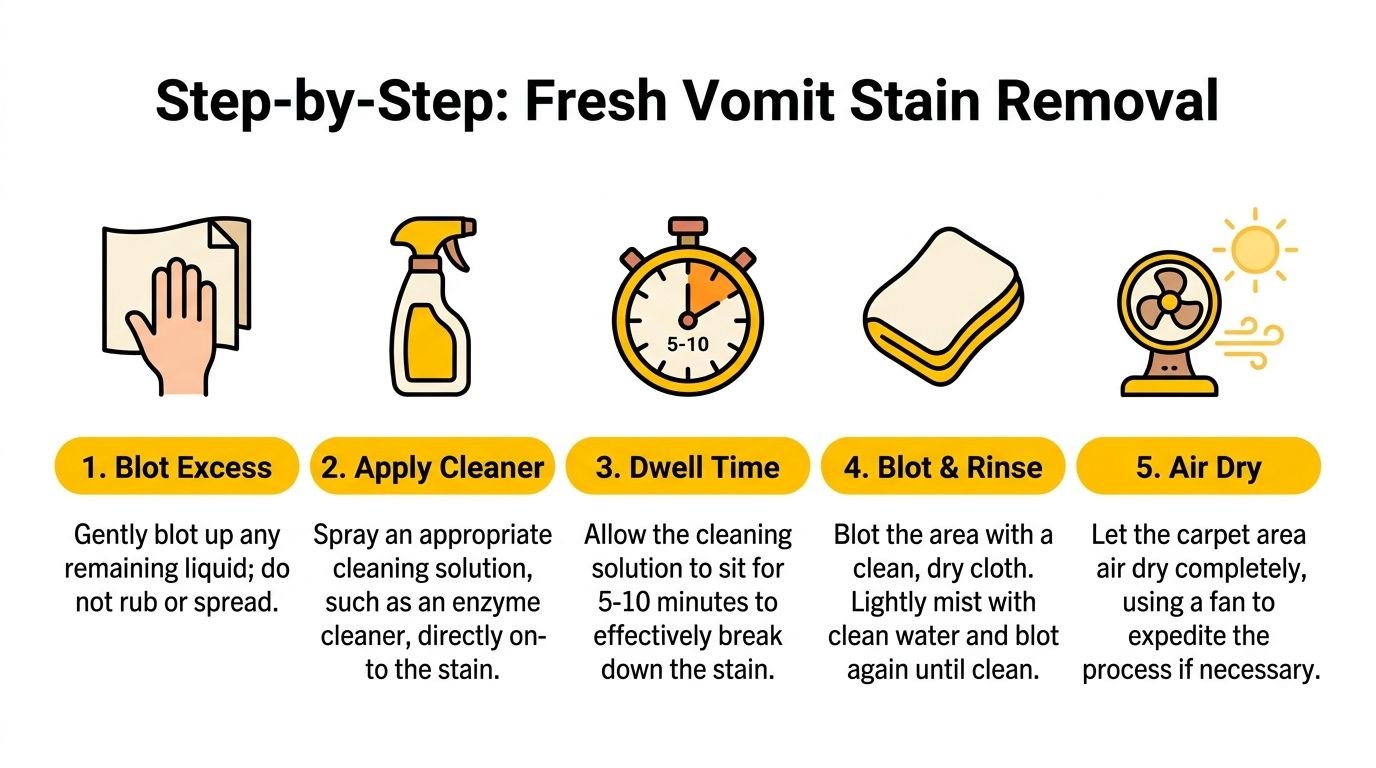
After you’ve removed solids and blotted up the loose moisture, apply your cleaner to the affected area without flooding it. For fresh organic stains, an enzyme product is the best choice because it targets the proteins and starches left behind. Mist or lightly saturate the pile. Don’t pour cleaner directly into the carpet.
Work from the outside edge toward the center. That prevents the stain from spreading into clean fibers. Blot with a white towel, rotate the towel, and repeat.
Use this sequence:
- Blot remaining liquid: Press with a white towel until you stop pulling up visible moisture.
- Apply the cleaner evenly: Cover the stained fibers, but keep the backing as dry as possible.
- Let the chemistry work: Give the product time to break down the residue.
- Blot again: Lift suspended soil out of the pile.
- Rinse lightly if needed: A fine mist of clean water followed by more blotting removes residue from the cleaner.
This quick visual can help if you want a simple walkthrough before you start:
Drying matters as much as cleaning
Once the spot looks clean, dry it aggressively. Set a fan on the area. If the carpet feels damp below the surface, keep air moving until it feels fully dry by hand. In coastal Los Angeles neighborhoods and homes that don’t ventilate well, the drying step often decides whether a “cleaned” spot stays clean.
If a stain disappears but the smell returns after the carpet dries, residue is usually still sitting lower in the pile or pad.
That same pattern shows up with other organic contamination. If you’ve dealt with pet accidents before, the logic is similar to removing deep-set odor from carpet. This guide on eliminating urine odor explains why surface cleaning often misses what’s below.
Fresh vomit cleanup is mostly a race against absorption. Keep the liquid under control, keep the agitation gentle, and don’t leave detergent behind.
Tackling Dried Vomit Stains and Lingering Odors
You usually find dried vomit hours later, after the room has warmed up and the smell has set into the carpet. At that stage, the job changes. The visible crust is only part of the contamination. Organic residue often sits lower in the pile, and in some cases it has already reached the backing or pad.
Start with dry removal. Use a spoon or dull plastic scraper and lift off as much brittle material as possible without fraying the carpet tips. Aggressive scraping can distort the pile and grind residue deeper, especially on cut-pile carpet.
Then rehydrate the area in controlled passes. Lightly mist the spot with water or an appropriate cleaner so the residue softens enough to release. Keep the application tight to the stain. Overwetting is the mistake that turns a manageable surface cleanup into a deeper odor problem.
Work in short cycles. Mist, wait briefly, blot with white towels, and check what is transferring out of the fibers. Repeat until the towel stops picking up visible residue. Scrubbing is a poor trade-off here. It spreads contamination, roughens the carpet face, and can push moisture into the backing.
A simple process looks like this:
- Remove dry crust before adding moisture
- Mist only enough to soften the residue
- Blot straight down with clean white towels
- Repeat several light passes instead of one heavy treatment
- Dry the area quickly so remaining moisture does not carry odor lower
Lingering odor is the part that frustrates homeowners. A carpet can look much better and still smell bad because the source is below the surface. In restoration work, that is the point where appearance stops being a reliable indicator of success.
If the odor returns after the carpet dries, assume residue remains in the lower pile, backing, or pad. Surface deodorizer will only mask that. Professional odor control is based on removal first, then targeted treatment. If you want a clearer picture of what persistent smells usually indicate, this odor removal FAQ for carpet and soft-surface contamination is a useful reference.
There is also a health side to consider. If the vomit came from someone with a stomach virus, the concern is no longer just staining and smell. It may require disinfection of nearby hard surfaces and a more cautious cleanup approach. For that reason, review effective norovirus disinfectants if illness is part of the incident.
Dried vomit can often be handled with careful spot treatment. Once odor keeps returning, the stain has spread beyond what DIY surface cleaning can reliably fix. In Los Angeles homes with dense carpet, thick pad, or poor drying conditions, that is usually the line where an IICRC-trained restoration company gives you a better result and lowers the risk of leaving bio-contamination behind.
Choosing Your Cleaner DIY vs Professional Enzyme Solutions
The cleaner you choose determines whether you are removing residue or just making the room smell better for a few hours.
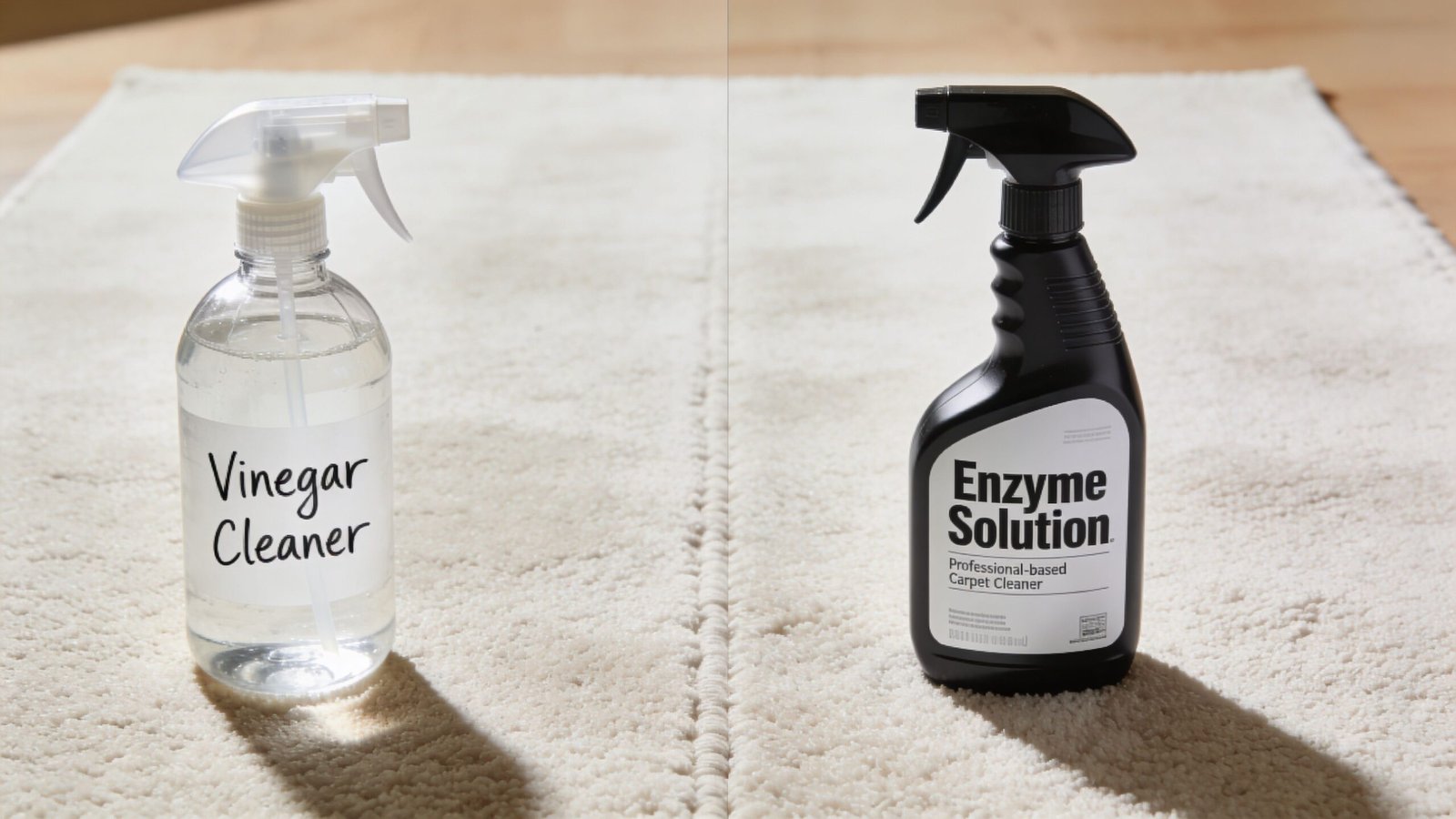
Homeowners usually start with vinegar, baking soda, or a general carpet spotter because those products are easy to grab. That can be reasonable for a small, fresh incident where the material stayed near the surface and no one in the home is sick. Baking soda helps absorb leftover moisture. Vinegar may reduce some surface odor. Neither one breaks down organic contamination the way an enzyme product is designed to.
That difference matters on vomit stains because the problem is protein-based soil, acid residue, and moisture worked into carpet yarns. If residue remains in the backing or pad, a household remedy often leaves behind the part that keeps feeding odor.
What DIY products can do, and where they fall short
DIY cleaning has a place. For a minor accident, it can reduce visible staining and improve the room enough that no further work is needed.
The trade-off is depth.
Household products are surface tools. They are useful for blotting, light deodorizing, and small spots that have not spread. They are weaker when the contamination has soaked below the face fibers, when the carpet is wool or stain-resistant synthetic with specific chemistry requirements, or when repeated cleaning has already over-wet the area.
Peroxide-based spotters can help with discoloration on some carpets, but they also carry dye risk. Test in an inconspicuous area first and follow the label. On wool or other delicate fibers, I would be cautious.
Why enzyme solutions are usually the better choice
An enzyme cleaner is built for organic matter. It needs contact time to work, and that is where many DIY attempts fail. People spray, scrub, and wipe too soon. The residue stays in place, and the odor returns after drying.
Used correctly, an enzyme product is the stronger option for ordinary vomit cleanup because it targets the source of the stain instead of only shifting the smell. It still has limits. If the contamination has reached the carpet pad, if the area was heavily saturated, or if the incident involved illness, a bottle from the grocery store may not be enough.
At that point, the job starts to overlap with professional biohazard cleanup for carpet and soft-surface contamination, especially in homes with children, seniors, shared bedrooms, or high foot traffic.
| Cleaner type | Best use | Limitation |
|---|---|---|
| Vinegar and baking soda | Small fresh spots, moisture absorption, light surface odor | Limited effect on embedded organic residue |
| Enzyme cleaner | Breaking down organic staining and odor at the source | Needs proper dwell time, careful rinsing, and full drying |
| Peroxide-based spotter | Correcting some visible discoloration on colorfast carpet | Can affect dyes or fibers if misused |
Deodorizing is not the same as disinfecting
A carpet can smell cleaner and still need a more cautious response. That is the line homeowners miss.
If vomiting may be tied to a stomach virus, choose products based on the label claim and the surface being treated, not on fragrance or marketing language. For nearby hard surfaces and illness-related cleanup decisions, this guide to effective norovirus disinfectants is a useful reference.
My rule is straightforward. Use absorbents to remove moisture. Use enzyme chemistry to break down residue. Use disinfectants where illness risk justifies them and where the product is appropriate for the surface. If the contamination is heavy, widespread, or medically concerning, skip the guesswork and treat it like a restoration problem, not a basic spot-cleaning job.
Health Risks When Vomit Is a Potential Biohazard
A child gets sick on the bedroom carpet at 2 a.m. The visible mess gets cleaned up, the room smells better by morning, and everyone assumes the problem is over. In illness-related incidents, that assumption can be risky.
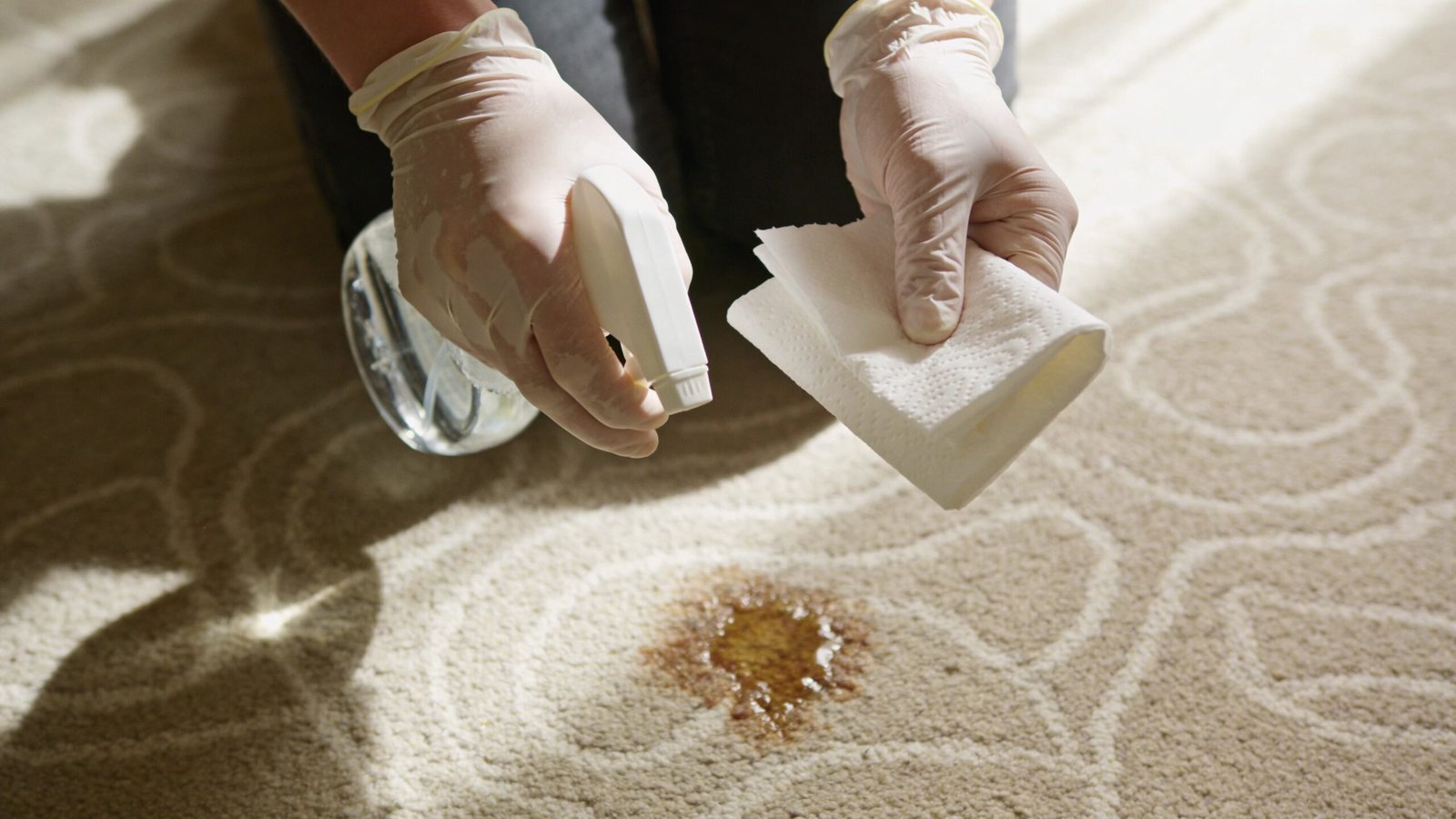
Some vomit incidents need to be handled as contamination, not routine spotting
Vomit from a stomach illness, a medically fragile occupant, or a shared household event belongs in a different category than an isolated food-related accident. The concern is no longer just staining. It is contact with potentially infectious organic material in a porous surface that can hold residue below the face fibers.
That distinction is critical because carpet, backing, and pad do not clean up like a countertop. Liquid can move down, spread out, and stay trapped where towels and surface sprays never reach. In homes with kids, seniors, pets, or frequent foot traffic, exposure risk increases because more people come into contact with the area.
Treat the incident more cautiously when any of these apply:
- Vomiting is linked to suspected illness: Gastrointestinal symptoms raise the contamination risk.
- The affected area is a bedroom, nursery, hallway, or family room: Repeated contact changes the cleanup standard.
- Moisture likely reached the backing or pad: Surface treatment will not address what soaked below.
- There is repeat vomiting or more than one contaminated spot: The job shifts from stain removal to loss assessment.
- A strong odor remains after drying: Residue is often still present in the carpet system.
Professional cleanup follows a different standard
IICRC-guided restoration work is built around containment, material assessment, extraction, cleaning, and controlled drying. That process is designed to remove as much contamination as possible while limiting fiber damage and reducing the chance of odor returning from the pad or backing.
DIY cleanup can improve appearance. It does not reliably reproduce subsurface extraction, measured chemistry, or documented sanitation steps used during a professional biohazard cleanup process for carpet and soft-surface contamination.
In Los Angeles, I also watch for a second problem. Overwetting a carpet during home cleanup can leave moisture in the pad, and that creates its own restoration issue. The result may be lingering odor, wicking, adhesive problems, or microbial growth if drying is delayed.
Not every vomit stain requires a biohazard crew. Illness-related events, contamination that spread below the surface, and situations involving vulnerable occupants deserve a more careful response than basic spot cleaning.
When to Call a Professional Restoration Company
You clean the visible mess, the carpet looks better for a few hours, and by the next day the room still smells sour. That is usually the point where a vomit incident stops being simple spot cleaning and starts looking more like restoration work.
I tell Los Angeles property owners to call a professional sooner when the goal is not just appearance, but full removal of contamination from the carpet system. Vomit can soak past the face fibers into the backing and pad. Once that happens, surface treatment often leaves behind the material causing the odor.
Signs DIY cleanup has reached its limit
A restoration company is the right call when any of these conditions apply:
- The affected area is more than a small spot: Larger losses are harder to rinse, extract, and dry without overwetting.
- The carpet is wool, custom, or otherwise sensitive: Wrong chemistry or aggressive agitation can set the stain or damage the fiber.
- Odor returns after the area dries: Residue is still present below the surface.
- Staining keeps wicking back: Contamination remains in the backing or pad.
- The incident is tied to illness or repeated vomiting: The job may require biohazard controls, not just deodorizing.
- DIY cleanup used a lot of liquid: Excess moisture creates a second problem if the pad or subfloor stays wet.
At that stage, IICRC-guided work matters. A qualified restoration team inspects the depth of contamination, extracts with the right equipment, applies the correct chemistry for the fiber, and dries the area to reduce odor return and secondary damage.
Insurance and documentation can affect the outcome
Insurance questions often come up after a failed cleanup, not before. The outcome of a failed cleanup changes the claim. What started as a localized bodily fluid incident can turn into pad damage, subfloor moisture, or microbial growth if the area is over-saturated and not dried properly.
That does not mean every vomit stain becomes an insurance loss. It means severe or illness-related incidents should be documented early, especially in rental properties, commercial spaces, or homes with vulnerable occupants. Photos, timing, scope, and professional moisture findings carry more weight than trial-and-error cleaning.
If you need help vetting a company, this guide on how to find the best water damage restoration company near me gives a practical standard for what qualified response should include.
For a general consumer perspective, this Aussie guide to carpet vomit cleanup is useful, but severe losses still need a restoration-level assessment.
Professional help protects more than the carpet. It protects indoor hygiene, reduces the chance of recurring odor, and gives you a documented response if the incident turns into a larger property damage issue.
Frequently Asked Questions About Vomit Stain Removal
Can I use a steam cleaner right away
Not as a first move. Fresh vomit contains protein-heavy residue, and immediate high heat can make cleanup harder. Remove solids, blot, and use the right cleaner first. Extraction has a place later, but only after the residue has been loosened and treated.
Is baking soda enough on its own
No. Baking soda is useful for absorption and surface deodorizing, but it doesn’t fully break down the organic material causing the stain and smell. It’s a support step, not a complete remedy.
What if the carpet is wool
Be cautious. Wool is more sensitive than many synthetic carpets, especially with stronger spotters or peroxide-based products. Test any cleaner in an inconspicuous area first and avoid aggressive scrubbing.
Why does the smell come back after it dries
That usually means residue remains lower in the carpet or pad. Surface cleaning improved the appearance, but it didn’t fully remove the contamination. Reappearing odor is one of the clearest signs that deeper extraction or professional treatment may be needed.
Should I replace the carpet pad
Sometimes. If the vomit soaked through and remained there long enough to produce recurring odor, pad replacement can make more sense than repeated topical cleaning. The answer depends on how much liquid got through and how quickly the area was dried.
Are general carpet cleaning guides from other countries still useful
Some are. Chemistry and carpet behavior don’t change by location, even if products vary. For another practical homeowner reference, this Aussie guide to carpet vomit cleanup offers a straightforward comparison of basic cleanup methods and when to step up your approach.
If you’re dealing with a vomit stain that won’t come out, a recurring odor, or a sickness-related carpet contamination issue, Onsite Pro Restoration provides IICRC-certified help for Los Angeles homeowners and property managers. Their team handles emergency assessment, biohazard cleanup, odor removal, structural drying, and insurance documentation when a simple DIY cleanup isn’t enough.